
 0
0
 EN
EN  English
 عربى
عربى Español
 русский
If you need any help, please feel free to contact us
Home / Author / Cai Shurong — After-Sales Project Coordinator / Hygienic Electromagnetic Flow Measurement for High-Speed Filling and Batch Dosing
Hygienic Electromagnetic Flow Measurement for High-Speed Filling and Batch Dosing
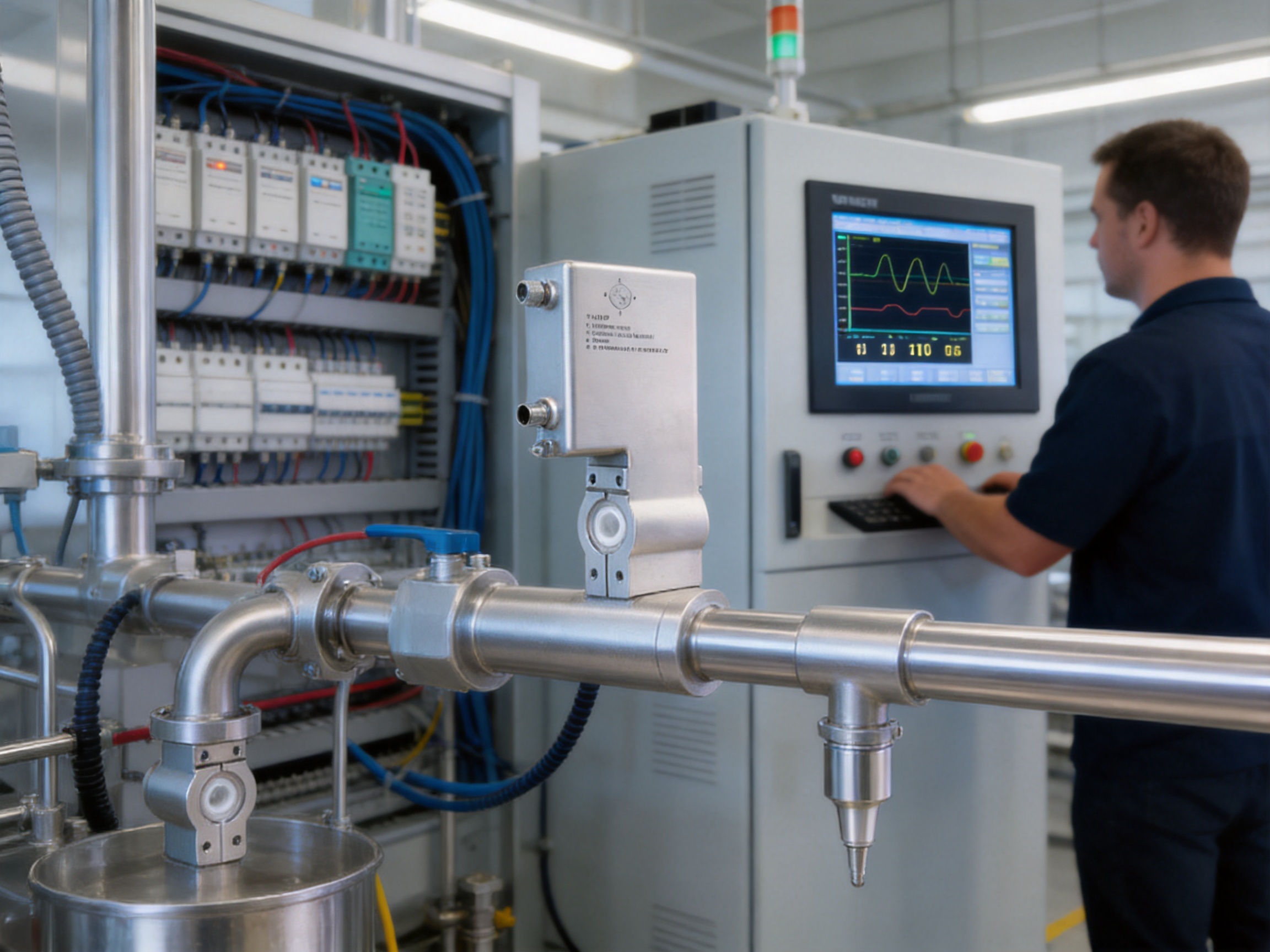
Modern food, beverage, dairy, pharmaceutical, and sanitary processing lines depend on accurate, repeatable, and cleanable liquid dosing. A filling machine may operate through thousands of short production cycles every hour. During each cycle, a valve opens, liquid accelerates through the process line, the target quantity is delivered, the valve closes, and the system immediately prepares for the next container. In this environment, a flowmeter must do much more than measure a stable continuous flow. It must respond quickly, maintain a reliable signal during rapid start-stop operation, tolerate frequent cleaning and sterilization, and provide a practical interface for the machine control system.
The SEF700 filling-type electromagnetic flowmeter has been developed for this demanding duty. It is a hygienic, compact electromagnetic instrument designed for short-cycle dosing and high-repeatability filling applications. Rather than being positioned as a general-purpose bulk flowmeter, it is optimized for the specific operating conditions found on rotary and linear filling machines, aseptic production systems, hot-fill lines, and other sanitary processes where every dose must be consistent.
With a nominal size of DN15, zirconia ceramic measuring tube, stainless steel housing, IP65 protection, and pulse output reaching up to 5 kHz, the SEF700 provides a focused solution for compact filling circuits. Its stated accuracy of ±0.3% of reading, combined with a straight-through, dead-leg-free measuring path, supports dependable batch control while helping reduce concerns associated with product retention and difficult-to-clean internal geometry.
The instrument is also designed for CIP and SIP environments. The standard process temperature range is –20°C to +80°C, while a high-temperature option extends the process range to –20°C to +140°C. Within defined time and temperature limits, the meter can withstand CIP at 140°C for one hour and SIP at 150°C for one hour. These capabilities make it suitable for production facilities that must repeatedly clean and sterilize the process path without removing the meter from the line.
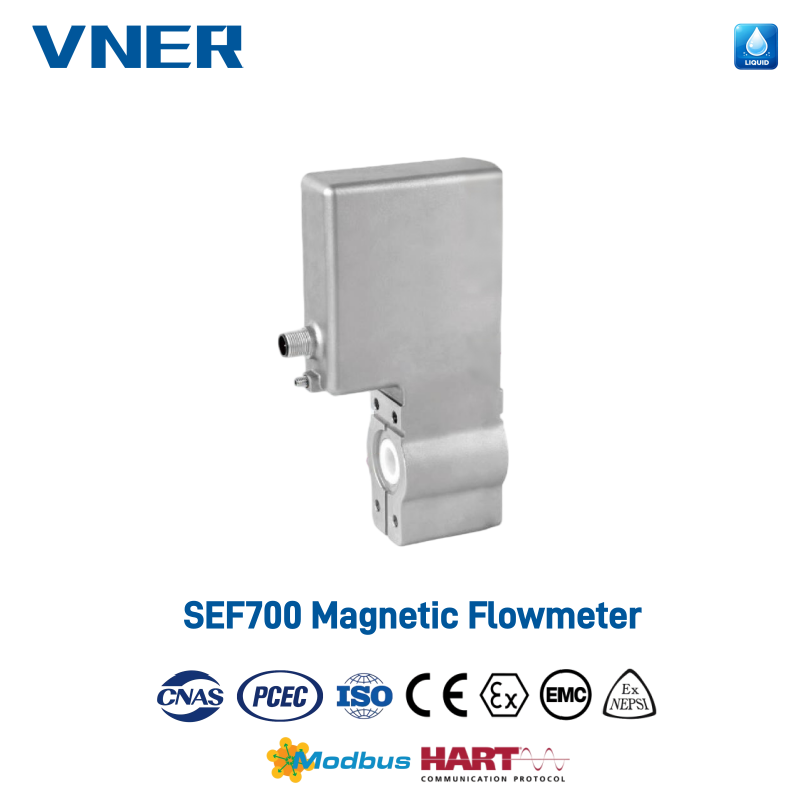
SEF Filling-Type Electromagnetic Flowmeter
Why Filling Applications Require a Specialized Flowmeter
Continuous process measurement and filling measurement are related but not identical tasks. In a continuous process, the flowmeter may monitor a relatively stable stream over an extended period. Small variations in response time or signal filtering may have limited impact because the process is not repeatedly starting and stopping. A filling line presents a different challenge. The instrument must accurately capture the beginning and end of each dose while handling rapid changes in velocity and valve position.
In a short-cycle filling application, the total delivered quantity may be determined by the accumulated flow signal over a brief interval. Any delay in signal response, unstable zero behavior, excessive filtering, or inconsistent pulse generation can affect the final fill quantity. If the product is expensive, a small overfill can create significant material losses across thousands of containers. If the product is underfilled, the result may be rejected products, regulatory concerns, or customer dissatisfaction.
Filling systems also create demanding hydraulic conditions. Pumps, valves, nozzles, and control components may produce rapid acceleration, deceleration, pressure changes, and intermittent flow. The selected meter therefore needs a stable measuring principle and a control output that can be processed quickly by the machine controller. The flowmeter must also remain dependable when the line is repeatedly exposed to hot cleaning water, chemical cleaning agents, sterilization temperatures, and production fluids with changing viscosity or composition.
The SEF700 addresses these conditions by combining electromagnetic measurement with a high-resolution pulse output and a sanitary straight-through tube. The design emphasis is repeatability during rapid operating cycles rather than simply providing a reading for a slowly changing process. This application-specific approach gives the meter a practical advantage over instruments selected only from a general flow range table.
Electromagnetic Measurement for Conductive Sanitary Liquids
The SEF700 operates according to Faraday’s law of electromagnetic induction. When a conductive liquid moves through a magnetic field, it generates a voltage proportional to its velocity. Electrodes detect this voltage, and the transmitter converts the signal into flow information. Because the measurement does not require a mechanical rotor, turbine, or obstruction placed in the flow path, electromagnetic technology is well suited to many sanitary liquid applications.
A major advantage is that the measuring principle has no moving parts exposed to the process liquid. Mechanical wear, bearing deterioration, rotor imbalance, and changes in mechanical friction are therefore not central concerns. This is valuable in filling lines that operate at high cycle rates and may be expected to remain in service for long production schedules.
The meter also introduces minimal pressure loss because the measuring tube is designed as a straight-through passage. Lower pressure loss can help preserve available pump pressure and reduce disturbances in compact filling circuits. It can also support more predictable valve and nozzle behavior, which is important when the machine depends on a repeatable relationship between flow signal, valve timing, and delivered dose.
Electromagnetic measurement is suitable for water-based products and many conductive liquids, provided that the liquid meets the minimum conductivity requirement. The SEF700 specifies a minimum conductivity of 5 μS/cm, with 20 μS/cm or higher recommended for more favorable application conditions. Product conductivity, air content, solids concentration, temperature, and piping arrangement should all be considered during application selection.
Unlike a turbine meter, the electromagnetic meter does not rely on a rotor turning at a rate proportional to flow. This can reduce sensitivity to mechanical contamination and wear. Unlike a thermal mass meter, it is not primarily dependent on thermal properties or heat transfer behavior. Unlike many ultrasonic arrangements, it does not require acoustic transmission through the liquid and pipe wall in the same way. These differences make electromagnetic measurement a strong option for conductive sanitary liquids that require stable, repeatable dosing.
Application-Focused Design of the SEF700
The SEF700 is built around the practical requirements of high-speed filling. Its DN15 nominal size is suited to compact dosing branches and smaller product paths commonly found near filling heads, manifolds, and machine-mounted valve assemblies. A compact meter can be easier to integrate into equipment where space is limited and where long upstream or downstream pipe runs are not always available.
The straight-through measuring tube is especially important for sanitary service. Internal steps, pockets, recesses, and dead legs may retain product or cleaning fluid. These areas can complicate hygiene management and make validation more difficult. A smooth, direct measuring path helps reduce the possibility of stagnant zones and supports more effective cleaning flow through the instrument.
The zirconia ceramic measuring tube provides a robust process-contact surface for demanding applications. Ceramic materials can offer strong resistance to corrosion and wear when correctly matched with the process liquid and operating conditions. The use of stainless steel for the housing further supports the mechanical and environmental requirements of production areas, where washdown, humidity, and repeated handling are common.
With an IP65 protection class, the instrument is protected against dust ingress and water projected by a nozzle from applicable directions. IP65 protection is appropriate for many industrial environments, although the complete installation should still be designed according to the plant’s cleaning procedures. Cable glands, connectors, mounting orientation, and enclosure interfaces should be selected and installed so that the protection level is maintained in actual service.
The meter’s stated accuracy is ±0.3% of reading under applicable reference and installation conditions. Accuracy alone does not determine filling performance, but it is an important part of the overall dosing system. Repeatability, response time, signal resolution, valve characteristics, pump stability, and the control algorithm must be considered together. A meter with a reliable and high-resolution output can help the machine controller make more consistent cut-off decisions from one cycle to the next.
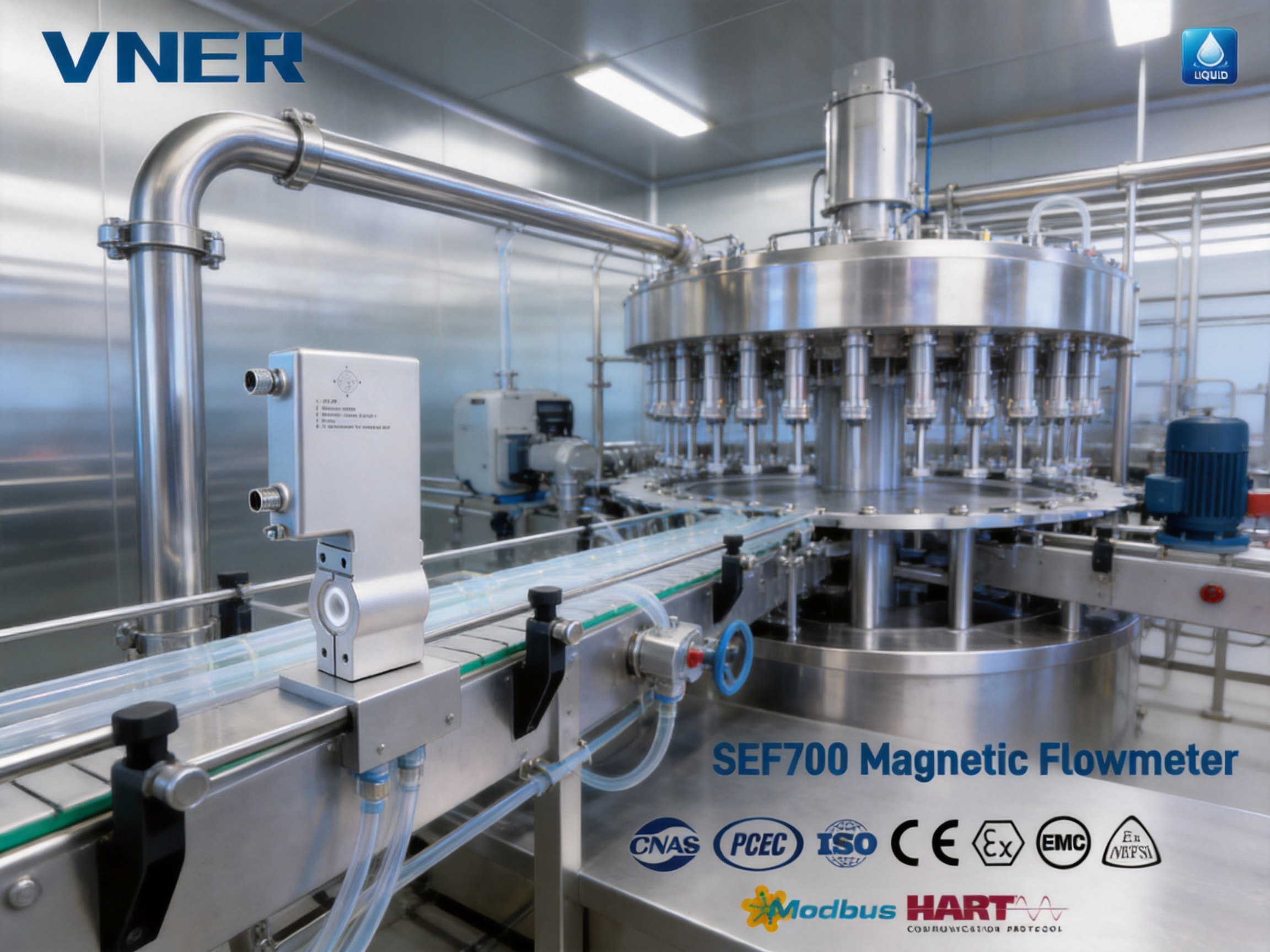
High-Resolution Pulse Output for PLC-Based Filling Systems
Filling equipment commonly uses a programmable logic controller to monitor the delivered quantity and control the filling valve. For this purpose, a frequency or pulse output is often more practical than a slow analog signal. Each pulse can represent a defined increment of volume, while the PLC’s high-speed counter can accumulate pulses during the filling interval.
The SEF700 provides a passive frequency or pulse signal up to 5 kHz. This enables direct connection to a PLC high-speed counter input when the electrical interface and configuration are correctly matched. A high pulse frequency provides finer resolution during short filling cycles. The controller can receive more measurement points within the same time period, improving its ability to determine when the target dose has been reached.
Pulse output also supports clear digital communication between the meter and the machine controller. In a basic batch system, the PLC can start a filling sequence, count pulses while the valve is open, and issue a closing command when the preset count is reached. More advanced systems may apply pre-actuation compensation, slow-fill stages, or cutoff correction based on historical filling behavior.
For reliable performance, the electrical installation must account for cable length, shielding, grounding, input impedance, pulse scaling, and the characteristics of the PLC counter. The meter should be configured so that the selected pulse value is appropriate for the target batch size and maximum flow rate. Excessively low pulse resolution may limit dosing precision, while an unsuitable pulse frequency may exceed the controller’s counting capability.
The passive nature of the signal can be useful in industrial control architectures, but the power supply and input circuit must be checked before commissioning. A properly designed interface protects signal integrity and prevents false counts caused by electrical noise, switching equipment, or poor grounding. The meter should also be installed with suitable separation from high-power motor cables and variable-frequency drive wiring where necessary.
Repeatability During Rapid Start-Stop Cycles
High-speed filling is often judged by repeatability rather than by a single laboratory accuracy result. A filling machine must deliver similar quantities repeatedly while operating under changing production conditions. The meter must therefore maintain a stable signal when flow begins, when the valve is modulated, and when the stream stops.
The SEF700 is designed for frequent start-stop operation. Its electromagnetic measurement principle avoids the mechanical inertia associated with rotating measurement elements. Its straight-through tube supports predictable flow behavior, while its high-resolution pulse signal gives the control system detailed information during the dosing event.
Several installation factors still influence repeatability. The measuring tube should remain full during measurement, because a partially filled tube can produce an unreliable signal. Air bubbles should be minimized, especially in products that foam or release dissolved gas. The meter should be positioned according to the process piping arrangement, and valves should be located so that the meter does not drain or fill unpredictably between cycles.
The pump and upstream supply system should provide sufficient stability for the intended filling rate. If pressure fluctuates substantially from one cycle to the next, the meter may correctly report changing flow while the machine experiences inconsistent fill behavior. In such cases, the flowmeter is only one part of the solution; pump control, buffer tank level, valve response, nozzle geometry, and product temperature must also be evaluated.
When the complete system is properly engineered, the meter can help the filling machine achieve a consistent relationship between measured volume and actual container content. This is particularly important for products sold by volume, products with strict package specifications, and operations where overfill represents a direct cost.
Hygienic Construction and Dead-Leg-Free Flow Paths
Sanitary process equipment must be designed to prevent contamination and support effective cleaning. A flowmeter installed in a hygienic line should not become a source of product accumulation or a barrier to cleaning fluid. Internal geometry, surface condition, connection design, drainage, and installation orientation all influence sanitary performance.
The SEF700 uses a smooth, straight-through measuring tube intended for sanitary processing. The absence of unnecessary internal obstructions helps maintain a direct flow path and reduces areas where liquid could remain after the production cycle. This design is particularly relevant for lines that handle dairy products, beverages, syrups, juices, and other liquids that may leave residues if not properly removed.
A dead-leg-free concept does not eliminate the need for correct piping design. The complete system must be evaluated, including gaskets, valve cavities, branch connections, reducers, sample points, and filling nozzles. Any component connected to the meter can affect cleanability. The meter should be installed in a way that allows the process fluid and cleaning fluid to contact the relevant surfaces at suitable velocity and temperature.
Sanitary design also supports product changeover. Filling lines may switch between different recipes, flavors, colors, or product categories. A clean, direct flow path can simplify the transition between products and reduce the risk of carryover. In high-throughput facilities, shorter and more predictable cleaning cycles may contribute to improved equipment availability.
The stainless steel housing is appropriate for the demanding physical environment around filling machinery. It provides a durable external structure and supports resistance to routine industrial exposure. The housing should still be protected from impacts, incorrect chemical concentrations, and cleaning practices outside the specified operating limits.
CIP and SIP Compatibility
Clean-in-place and sterilize-in-place systems are essential in many sanitary facilities. Removing equipment for manual cleaning would reduce availability and create additional opportunities for installation errors. A flowmeter used on these lines must tolerate repeated exposure to elevated temperatures and cleaning conditions without losing measurement stability or mechanical integrity.
The SEF700 is specified for CIP at 140°C for one hour and SIP at 150°C for one hour within the defined operating limits. The standard process temperature range is –20°C to +80°C, and a high-temperature option is available for applications requiring operation up to +140°C. These specifications should be reviewed against the actual cleaning recipe, including ramp rates, exposure duration, chemical concentration, pressure, and the number of cycles expected during the meter’s service life.
CIP compatibility improves operational efficiency because the meter can remain installed while the line is cleaned. SIP compatibility is important for aseptic and hygienic processes where sterilization temperatures must be maintained throughout the product path. The instrument’s materials and construction should be matched to the plant’s validation requirements and the applicable hygienic engineering standards.
Temperature changes can affect both the process and the measuring system. During a cleaning cycle, the meter may experience rapid transitions from cold water to hot water and then back to ambient conditions. Correct installation, suitable gaskets, and proper thermal expansion allowances help protect the system. Operators should also verify that the transmitter and external electrical components remain within their specified ambient temperature range, which is –40°C to +60°C for the instrument environment.
Cleaning procedures should not exceed the stated limits. A component described as CIP or SIP compatible is not automatically suitable for every chemical, temperature, pressure, or exposure duration. The user should confirm compatibility with alkaline cleaners, acid rinses, disinfectants, steam quality, and any special sanitation additives used at the site.
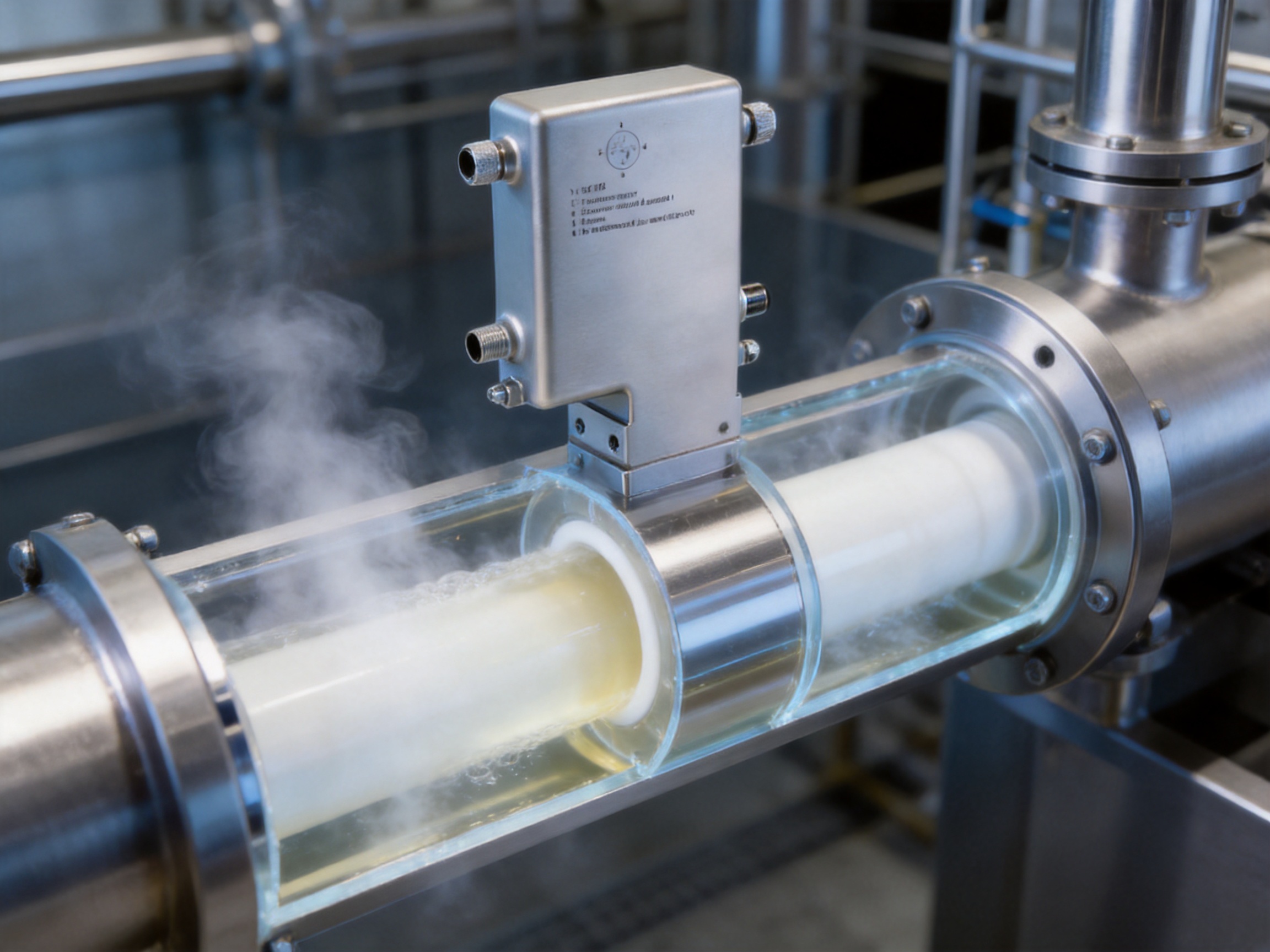
Performance Specifications
The following table summarizes the principal technical data supplied for the SEF700 filling-type electromagnetic flowmeter.
| Parameter | Specification | Application Significance |
|---|---|---|
| Measuring principle | Electromagnetic measurement based on Faraday’s law | Suitable for conductive liquids without moving process parts |
| Nominal size | DN15 | Designed for compact filling and dosing branches |
| Accuracy | ±0.3% of reading | Supports accurate quantity control when installation conditions are suitable |
| Minimum conductivity | ≥ 5 μS/cm; ≥ 20 μS/cm recommended | Defines the liquid conductivity required for dependable measurement |
| Maximum flow velocity | Up to 10 m/s, application-dependent | Allows high-speed dosing when hydraulic conditions are appropriate |
| Standard process temperature | –20°C to +80°C | Suitable for many normal sanitary liquid processes |
| High-temperature option | –20°C to +140°C | Extends suitability for elevated-temperature service |
| CIP resistance | 140°C for 1 hour | Supports repeated in-line cleaning within defined limits |
| SIP resistance | 150°C for 1 hour | Supports in-line sterilization requirements |
| Ambient temperature | –40°C to +60°C | Defines the allowable external environmental range |
| Pressure rating | PN16, 1.6 MPa | Provides a defined pressure boundary for process integration |
| Measuring tube | Zirconia ceramic | Provides a robust process-contact material for compatible liquids |
| Housing | Stainless steel | Supports durability in sanitary and industrial environments |
| Protection class | IP65 | Protects against dust and water jets under applicable conditions |
| Output | Passive frequency or pulse up to 5 kHz | Enables high-speed counting by PLC control systems |
Advantages Compared with Other Flowmeter Technologies
Compared with Turbine Flowmeters
Turbine flowmeters use a rotor that turns as liquid passes through the meter. They can provide useful performance in clean, stable liquids, but the rotating assembly introduces moving parts into the process. Bearing wear, rotor contamination, changes in friction, and damage from particles may affect long-term repeatability. In a filling line with frequent cycling and repeated cleaning, these factors may increase maintenance requirements.
The SEF700 has no process rotor and therefore avoids the mechanical wear mechanism associated with turbine measurement. Its straight-through path also reduces the risk that a mechanical element will interfere with cleaning or retain product. For conductive sanitary liquids, electromagnetic measurement can offer a more robust alternative when the application requires frequent start-stop dosing and repeated sanitation.
Compared with Vortex Flowmeters
Vortex flowmeters determine flow by sensing vortices generated behind a bluff body. They are widely used for gases, steam, and some liquids, but their performance depends on appropriate flow conditions and sufficient velocity. In short-cycle filling service, low-flow behavior, valve-induced disturbances, and the need for a clean sanitary passage may limit their suitability.
The SEF700 is designed specifically for liquid dosing and does not require a bluff body inside the measuring path. This supports a smoother internal geometry and makes the instrument more suitable for sanitary liquids where cleanability and low obstruction are priorities.
Compared with Coriolis Flowmeters
Coriolis meters can provide highly accurate mass flow measurement and may also measure density. However, they are often more complex, heavier, and more expensive than necessary for a compact conductive-liquid filling branch. Their installation requirements and pressure drop may also be less convenient for certain high-speed filling machines.
When the primary objective is repeatable volumetric dosing of a conductive sanitary liquid, the SEF700 can provide a more focused and potentially more economical solution. Its DN15 format and pulse output are aligned with machine integration, while its electromagnetic principle avoids the need for vibrating tubes or other complex mechanical structures.
Compared with Ultrasonic Flowmeters
Ultrasonic flowmeters measure flow by analyzing the propagation of sound through the liquid. Their performance can be influenced by gas bubbles, suspended solids, pipe material, acoustic coupling, and installation conditions. In filling applications involving aeration, foaming, or compact piping, maintaining reliable ultrasonic transmission may be challenging.
The electromagnetic meter uses an electrical measurement method and can be advantageous when the liquid has adequate conductivity. Its direct process tube and lack of acoustic coupling requirements simplify the measurement concept for many conductive sanitary liquids.
Compared with Thermal Mass Flowmeters
Thermal mass flowmeters are mainly used for gases and rely on heat transfer characteristics. They are not generally the first choice for liquid filling applications. An electromagnetic meter is more naturally matched to conductive liquid measurement, especially where high-temperature cleaning and liquid volume dosing are central requirements.
Advantages over General-Purpose Flow Measurement Solutions
The main competitive distinction of the SEF700 is not simply that it is an electromagnetic flowmeter. Its value comes from the way its features are aligned with high-speed filling. A general-purpose meter may provide a suitable flow range but lack the output resolution, sanitary geometry, compact form, or cleaning resistance needed by a filling machine.
The SEF700 combines several relevant characteristics in one instrument: DN15 compact construction, ±0.3% reading accuracy, pulse output up to 5 kHz, a straight-through ceramic tube, stainless steel housing, IP65 protection, and CIP/SIP capability. Each feature addresses a specific challenge in the application. Together, they create a more integrated solution than choosing a bulk process meter and adapting it to a filling line.
Its filling-oriented design may reduce engineering effort during machine development. The pulse output can be connected to a high-speed counter, the compact body can fit in a dosing manifold, and the sanitary tube can be incorporated into a cleaning circuit. These characteristics can simplify system architecture and reduce the need for additional signal conversion or complex mechanical adaptations.
The instrument also supports a more predictable maintenance strategy. With no moving process parts, the primary maintenance focus can shift toward checking electrical connections, verifying calibration, inspecting seals and process connections, and confirming that installation conditions remain suitable. Fewer wear components can be an advantage for equipment operating continuously or in multi-shift production.
Manufacturing and Engineering Strengths
The manufacturer is a specialized industrial flowmeter producer based in Yangzhou, China, with experience in electromagnetic, Coriolis, vortex, swirl, turbine, thermal mass, ultrasonic, and rotameter technologies. This broad product capability is significant because it reflects an understanding of different measurement principles and the application conditions under which each technology performs best.
Since 2011, the company has focused on flow measurement for liquid, gas, and slurry applications in real industrial environments. Its experience covers sectors including oil and gas, petrochemical production, polysilicon, power generation, water and wastewater, and other process industries. Although the SEF700 is designed for sanitary filling, the engineering discipline required for demanding industrial measurement supports the development of a reliable and application-focused product.
The company operates approximately 23,000 square meters of facilities across three plants and has a technical team of more than 150 people. This scale provides a foundation for product development, manufacturing coordination, quality control, calibration, and project support. A substantial technical organization can also help address application-specific requirements such as sizing, material selection, output configuration, process temperature, and integration with plant control systems.
More than 2,000 engineering projects in over 30 countries have contributed to the company’s experience with different operating environments, industry expectations, and installation practices. International project exposure is valuable because flowmeter performance depends not only on the instrument but also on the process design, local standards, commissioning procedures, documentation, and service expectations.
The company supports EPC contractors, end users, and OEM partners. For filling machine builders, OEM support is particularly important. A meter may need to be integrated into a standardized machine platform, supplied with repeatable configuration, documented electrical characteristics, and consistent mechanical dimensions. For end users, the priorities may include replacement compatibility, calibration records, troubleshooting assistance, and long-term technical support.
Calibration, Quality, and Traceability
Flowmeter accuracy depends on disciplined manufacturing and calibration. Electromagnetic meters require controlled verification of signal response, electronics performance, coil excitation, electrode behavior, and the relationship between flow condition and output. In-house calibration capability can help the manufacturer control these activities within its own production system rather than relying entirely on external resources.
Calibration also supports traceability. A meter supplied for a filling application should have clearly defined technical data, configuration information, and test records appropriate to the customer’s requirements. Traceable documentation helps users establish confidence during commissioning and provides a reference for future verification or maintenance.
Certified quality processes contribute to consistency across production batches. This is important for OEM users that may install several meters on similar machines. If the instruments have consistent construction, output scaling, and performance characteristics, machine programming and spare-parts management become easier.
Engineering-driven sizing and selection provide another advantage. The correct meter cannot be selected solely by nominal pipe size. The liquid conductivity, normal and maximum flow, minimum flow, process temperature, pressure, valve behavior, air content, cleaning conditions, and control-system interface should all be reviewed. A manufacturer with experience across multiple flow technologies is better positioned to identify unsuitable conditions and recommend an appropriate configuration.
Automated and Consistent Production
Increasingly automated manufacturing can improve repeatability in assembly and testing. Controlled production procedures help reduce variation in component installation, enclosure assembly, wiring, sealing, and instrument configuration. For a product used on high-speed filling equipment, manufacturing consistency is important because a small difference in signal behavior or output configuration can affect machine commissioning.
Automation should be supported by engineering controls and inspection. The most useful manufacturing system is one that combines repeatable equipment operation with documented procedures, incoming material verification, process checks, calibration, and final testing. This combination helps ensure that production efficiency does not come at the expense of measurement reliability.
For sanitary instruments, material and surface control are also significant. The ceramic measuring tube, stainless steel housing, seals, process connections, and internal geometry must be produced and assembled according to the intended application. The final instrument should be evaluated as a complete hygienic assembly, not merely as an electronic transmitter attached to a pipe section.
Installation Considerations for Filling Lines
Correct installation is essential for achieving the performance expected from the SEF700. The measuring tube should be filled with liquid during measurement. The piping arrangement should avoid conditions that allow the tube to drain between cycles unless the control strategy and meter design specifically account for that behavior.
Air entrainment should be minimized. Air bubbles can affect the electrical continuity of the liquid and may create unstable or irregular measurement conditions. Pump suction design, tank level, valve sequencing, pipe slope, and deaeration should be evaluated if the product is prone to foaming or if the process introduces air during filling.
The meter should be located where it receives a representative flow profile and where it can be cleaned effectively. Although the meter is designed for filling service, upstream and downstream piping disturbances can still influence system behavior. The placement of control valves, reducers, elbows, pumps, and branches should be considered during machine design.
Grounding and electrical bonding are important for electromagnetic measurement. The installation should provide a suitable reference for the measuring signal and follow the manufacturer’s wiring instructions. Shielded cables, correct cable routing, and separation from sources of electrical interference help preserve pulse signal quality and prevent false counts.
The pulse scaling should be selected according to the target dose, maximum flow, PLC counter capacity, and desired resolution. Commissioning should include a comparison between the meter’s accumulated quantity and a calibrated reference method. Several consecutive fill cycles should be checked at normal operating speed, including start-up, steady filling, cutoff, and post-fill behavior.
Applications in Food and Beverage Production
The SEF700 is suitable for beverage, dairy, juice, syrup, and related liquid dosing applications when the liquid conductivity and process conditions meet the specified requirements. These products are often handled in systems where hygiene, rapid changeover, temperature control, and accurate package filling are all important.
In beverage filling, the meter can support the dosing of water-based drinks, concentrates, flavored liquids, and other conductive formulations. The high-resolution pulse output can help coordinate the flow signal with filling valves and container indexing. For syrups and products with higher viscosity, the user should confirm that the selected flow velocity, pressure, temperature, and line design provide stable filling behavior.
Dairy applications may involve frequent CIP cycles and strict requirements for product cleanliness. The direct measuring path and cleaning resistance are valuable in these conditions. Product composition and conductivity should be checked, particularly when recipes vary or when the line handles both low-conductivity and higher-conductivity products.
Juice and hot-fill applications can combine elevated temperature with frequent sanitation. The high-temperature option and stated CIP/SIP resistance provide a basis for evaluation, but the full thermal profile must be reviewed. The user should consider the highest actual product temperature, cleaning temperature, sterilization exposure, and the ambient conditions around the transmitter.
Rotary and Linear Filling Machines
Rotary filling machines operate multiple filling positions around a rotating platform. Each position may open and close rapidly as containers pass through the filling zone. Space is often restricted, and the machine builder may need compact, repeatable components that can be installed in a standardized arrangement.
The DN15 format is suitable for many small dosing branches used in rotary equipment. Its pulse output can be connected to the machine controller or a dedicated high-speed counter. The meter can therefore participate directly in the control sequence rather than serving only as a remote monitoring device.
Linear filling machines use a series of filling heads arranged along a production path. They may fill several containers simultaneously or in timed groups. The same requirements apply: stable signal response, consistent cutoff, cleanability, and easy integration with the control system.
In either machine type, the meter should be selected according to the actual flow rate and dose size. The maximum stated velocity is up to 10 m/s depending on the application, but operation near the maximum may not always be ideal for every liquid or sanitary process. A balanced design should consider product behavior, pressure drop, nozzle performance, and the desired cycle time.
Technical Selection Checklist
Before ordering or installing the meter, the user should confirm that the liquid is conductive enough for electromagnetic measurement. The minimum specified conductivity is 5 μS/cm, with 20 μS/cm or higher recommended. Conductivity may change with temperature, concentration, recipe, or cleaning fluid, so the lowest expected production value should be considered.
The required flow range should be calculated from the target dose and filling cycle. The normal flow, maximum flow, minimum controllable flow, valve closing behavior, and desired pulse resolution should be documented. If the product flow is too low, the signal may not provide the required practical resolution; if it is too high, pressure loss and valve response may become concerns.
Process and cleaning temperatures must be compared with the standard or high-temperature configuration. The user should distinguish between normal product temperature, short-duration process excursions, CIP exposure, and SIP exposure. Pressure should also remain within the PN16 rating of 1.6 MPa under all operating and cleaning conditions.
The mechanical connection and installation orientation should be checked against the filling machine design. The meter must fit within the available space while allowing access for inspection and maintaining a hygienic, drainable arrangement. The electrical output should be matched to the PLC input, including passive pulse requirements and the maximum counting frequency.
Finally, the complete system should be assessed for regulatory, hygienic, and validation requirements. Depending on the application and market, the customer may require material certificates, calibration records, surface documentation, cleanability evidence, or additional sanitary approvals. These requirements should be defined before production rather than after installation.
Operation, Maintenance, and Verification
A properly installed electromagnetic flowmeter generally requires less mechanical maintenance than a meter with moving parts. Routine attention should focus on verifying the process connections, inspecting seals, checking the housing and cable entries, confirming grounding, and reviewing the output signal during scheduled production checks.
Cleaning procedures should be monitored to ensure that temperature, duration, pressure, and chemical concentration remain within the stated limits. If the plant changes its cleaning recipe, the compatibility of the meter materials and seals should be reviewed. Repeated exposure outside the specified conditions can shorten service life even when the meter initially appears to function normally.
Verification may be performed by comparing the meter output with a calibrated weighing system, reference vessel, gravimetric test, or another approved method. For filling machines, verification should ideally be performed under real operating conditions rather than only at a low test flow. The test should include multiple consecutive cycles so that repeatability can be evaluated.
If fill quantities begin to drift, possible causes include product temperature changes, air entrainment, valve wear, pump instability, incorrect pulse scaling, grounding problems, changes in conductivity, or a partially filled measuring tube. Troubleshooting should begin with the entire dosing system rather than assuming that the flowmeter alone is responsible.
Value for OEMs, EPC Contractors, and End Users
For OEM filling machine manufacturers, a compact and application-focused meter can reduce integration complexity. The instrument can be incorporated into a repeatable machine design with defined electrical and mechanical interfaces. High-speed pulse output supports common PLC architectures, and the hygienic construction is aligned with the expectations of food and beverage equipment users.
For EPC contractors, the product offers a clear technical basis for specifying a flowmeter in sanitary dosing packages. The published conductivity, temperature, pressure, accuracy, output, and protection data help engineers evaluate suitability at the design stage. The manufacturer’s broader experience in industrial flow measurement can also support alternative selection if the process conditions change.
For end users, the key benefits include repeatable dosing, reduced dependence on mechanical wear components, in-line cleaning compatibility, compact installation, and support from a specialized flowmeter supplier. These advantages can contribute to lower material waste, improved production consistency, easier maintenance planning, and more dependable line performance.
The most important value is achieved when the meter is treated as part of a complete filling system. Accurate measurement, stable hydraulics, suitable valve control, correct pulse configuration, and effective cleaning must work together. The SEF700 provides a strong measurement foundation for that system.
Questions and Answers
What type of product is the SEF700?
The SEF700 is a hygienic filling-type electromagnetic flowmeter designed for short-cycle, high-repeatability dosing of conductive sanitary liquids. It is intended for high-speed filling machines rather than only for general bulk flow monitoring.
What is the nominal size of the meter?
The nominal size is DN15. This compact size is suitable for many filling machine branches, dosing lines, manifolds, and smaller sanitary process connections.
What accuracy can the meter provide?
The stated linearity accuracy is ±0.3% of reading under applicable reference and installation conditions. Actual filling performance also depends on piping, valve control, product properties, calibration, and the machine’s dosing algorithm.
What liquid conductivity is required?
The minimum specified conductivity is 5 μS/cm, while 20 μS/cm or higher is recommended. The lowest conductivity expected during production should be checked because conductivity can change with product formulation and temperature.
Can the SEF700 be used with nonconductive liquids?
Electromagnetic flowmeters require a conductive liquid to generate a measurable signal. If the product is below the conductivity requirement, another measurement technology may be more appropriate. Application data should be reviewed before selection.
What output does the meter provide?
The meter provides a passive frequency or pulse output up to 5 kHz. This output can be connected to a PLC high-speed counter when the electrical interface, power arrangement, and controller input specifications are compatible.
Is the meter suitable for CIP and SIP?
Yes. The supplied specifications state CIP resistance at 140°C for one hour and SIP resistance at 150°C for one hour, within defined limits. The user must confirm that the complete cleaning recipe, chemical concentration, pressure, and cycle duration remain within the approved conditions.
What is the process temperature range?
The standard process temperature range is –20°C to +80°C. A high-temperature option extends the range to –20°C to +140°C. The correct version should be selected according to both production and cleaning temperatures.
What is the pressure rating?
The pressure rating is PN16, equivalent to 1.6 MPa. The process pressure, transient pressure, pump pressure, and cleaning pressure should all remain within the applicable rating.
Why is the straight-through measuring tube important?
A straight-through tube reduces internal obstruction and supports a smooth flow path. In sanitary applications, this can help reduce product retention, minimize dead-leg concerns, and improve the effectiveness of CIP and SIP procedures.
Does the meter contain moving parts?
The electromagnetic measuring principle does not require a process rotor or other moving mechanical element. This can reduce concerns about mechanical wear and contamination associated with rotating flowmeters.
Which filling machines can use the SEF700?
The meter is intended for rotary and linear filling machines, aseptic and hot-fill lines, beverage and dairy systems, juice and syrup dosing, and other high-throughput applications with frequent start-stop cycles and cleaning operations.
What installation conditions should be checked?
The user should check that the measuring tube remains full, air entrainment is minimized, the liquid conductivity is adequate, the piping supports effective cleaning, the grounding is correct, and the PLC input is compatible with the pulse output. Flow range, temperature, pressure, valve behavior, and cleaning conditions should also be reviewed.
How does the meter compare with a turbine flowmeter?
The electromagnetic meter has no process rotor, so it avoids rotor and bearing wear. It also provides a straight-through measuring passage, which can be advantageous for sanitary cleaning and frequent start-stop dosing. A turbine meter may still be suitable for some clean liquids, but its mechanical components should be evaluated carefully in high-cycle service.
Can the meter measure gas?
The SEF700 is a liquid electromagnetic flowmeter and is intended for conductive liquids. Gas measurement requires a flowmeter technology designed for gas service, such as a gas turbine, vortex, thermal mass, or another suitable instrument.
Conclusion
High-speed filling requires a flowmeter designed around short-cycle dosing, not simply a general-purpose instrument placed in a small pipe. The SEF700 responds to this need with electromagnetic measurement, a hygienic straight-through tube, high-resolution pulse output, compact DN15 construction, and compatibility with repeated CIP and SIP operations.
Its ±0.3% reading accuracy, conductivity range, up to 10 m/s application-dependent velocity, PN16 pressure rating, zirconia ceramic measuring tube, stainless steel housing, and IP65 protection provide a strong technical foundation for sanitary filling systems. The passive pulse output up to 5 kHz supports direct integration with PLC high-speed counters and enables fine measurement resolution during rapid dosing cycles.
Compared with turbine, vortex, Coriolis, ultrasonic, and thermal technologies, the SEF700 offers a focused balance of sanitary design, compact integration, repeatability, and practical control-system connectivity for conductive liquids. Its advantages are especially relevant to rotary and linear filling machines, beverage and dairy lines, aseptic production, hot-fill operations, and processes that require frequent cleaning and sterilization.
These product capabilities are reinforced by the manufacturer’s experience in industrial flow measurement, in-house calibration, engineering-based selection, quality processes, automated production development, international project experience, and support for EPC, OEM, and end-user customers. When correctly sized, installed, commissioned, and maintained, the SEF700 can help filling system operators improve dose consistency, reduce overfill losses, simplify sanitary integration, and achieve reliable performance over demanding production cycles.
References
1. Product technical information for the SEF700 hygienic filling-type electromagnetic flowmeter.
2. Manufacturer-provided specifications for electromagnetic measurement, process temperature, pressure rating, pulse output, and protection class.
3. General principles of electromagnetic flow measurement based on Faraday’s law of electromagnetic induction.
4. Hygienic process engineering practices for food, beverage, dairy, aseptic, and hot-fill equipment.
5. General guidance for clean-in-place and sterilize-in-place system design and validation.
6. Industrial instrumentation practices for PLC high-speed counter inputs and pulse-based batch dosing.
7. General flowmeter selection principles covering conductivity, flow velocity, pressure, temperature, installation, and repeatability.
Product: SEF Filling-Type Electromagnetic Flowmeter

We offer all our products and services at international standards.
Products
Contact Information
-

+86-18652789521
+86-18052582295
+86-0514-83633600 / 83633900 -

+86-0514-83633600 / 83633900
-

shawn@vnerflow.com
info@vnerflow.com -

No. 11 Xingye Road, Chenji Town Industrial Park, Yizheng, Yangzhou, China
