
 0
 EN
 English
 عربى
 Español
 русский
If you need any help, please feel free to contact us
Home / Author / Cai Shurong — After-Sales Project Coordinator / LWQ Series Gas Turbine Flowmeter: Accurate, Compensated Measurement for Modern Gas Systems
LWQ Series Gas Turbine Flowmeter: Accurate, Compensated Measurement for Modern Gas Systems
Accurate gas measurement is essential wherever natural gas, compressed air, nitrogen, oxygen, hydrogen, carbon dioxide, fuel gas, or other clean industrial gases are purchased, distributed, processed, or consumed. A reliable meter supports fair billing, stable process operation, energy optimization, equipment protection, emissions management, and production planning. For these applications, the LWQ Series Gas Turbine Flowmeter combines a proven velocity-measurement principle with integrated pressure and temperature compensation, digital communication, and a compact industrial design.
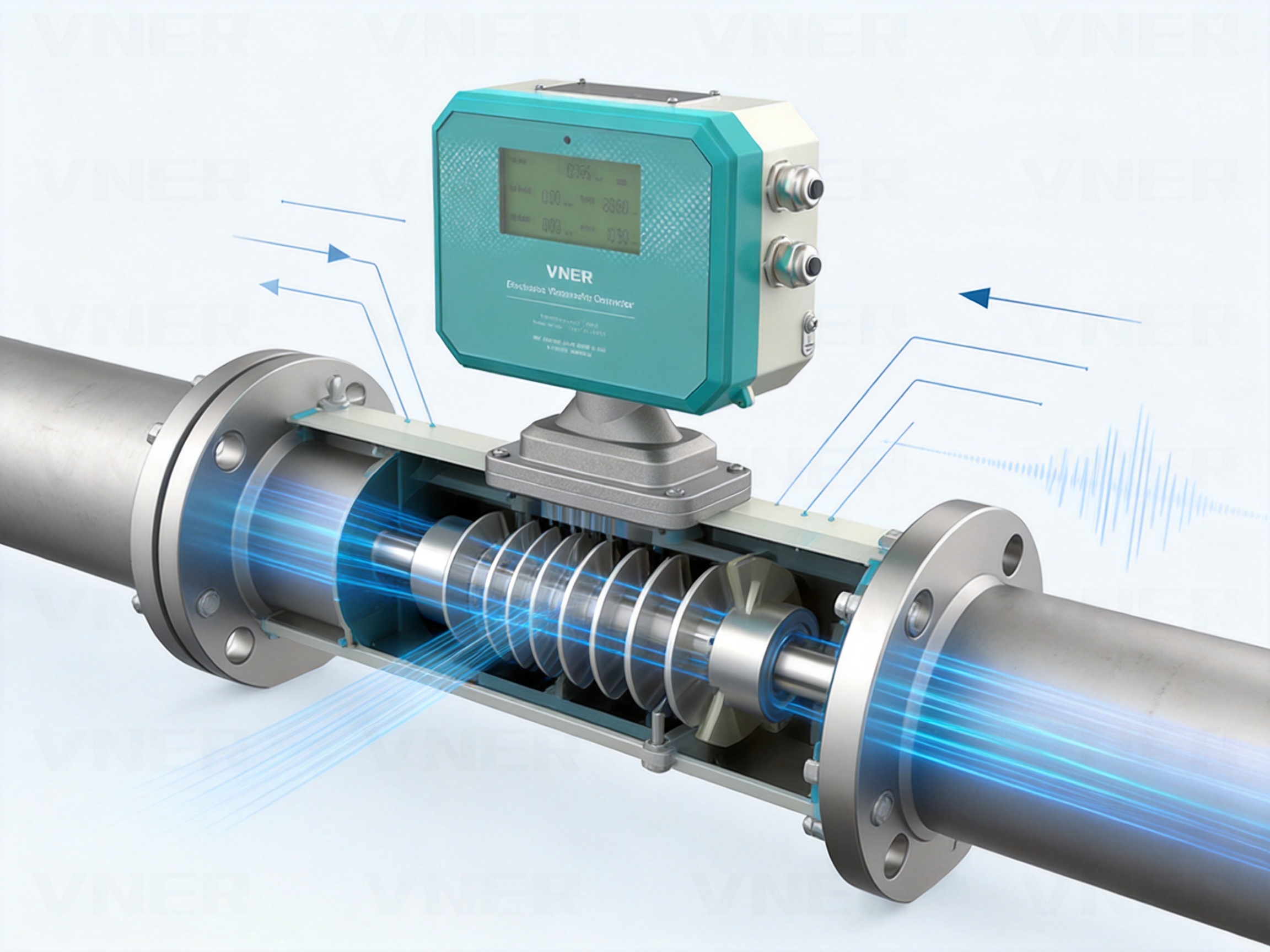
The meter is designed around the kinetic energy of flowing gas. Incoming gas passes through an inlet flow straightener that reduces swirl and turbulence before the conditioned stream reaches a precision turbine rotor. As gas velocity changes, the rotor speed changes proportionally. An inductive or magnetic pickup detects rotor movement and converts it into a frequency signal related to volumetric flow. The integrated transmitter then processes the signal and, when pressure and temperature compensation are enabled, calculates standard volume flow under changing operating conditions.
This architecture gives the LWQ Series a practical balance of accuracy, response speed, repeatability, installation flexibility, and total system value. Unlike a basic mechanical meter that reports only uncorrected volume, the LWQ can support compensated measurement in standard volume units such as Nm³/h. Unlike a measurement system assembled from separate flow, pressure, temperature, and display instruments, the integrated design reduces component count and simplifies field installation.
Manufactured by Jiangsu Vner Electronic Technology Co., Ltd., the product benefits from the engineering capabilities of a specialized flow measurement company. The manufacturer develops electromagnetic, Coriolis, vortex, swirl, turbine, thermal mass, ultrasonic, and rotameter solutions for liquid, gas, and slurry applications. Its production resources include three modern plants, approximately 23,000 square meters of facilities, a technical team of more than 150 people, in-house calibration capabilities, certified quality processes, and experience supporting engineering projects in more than 30 countries.
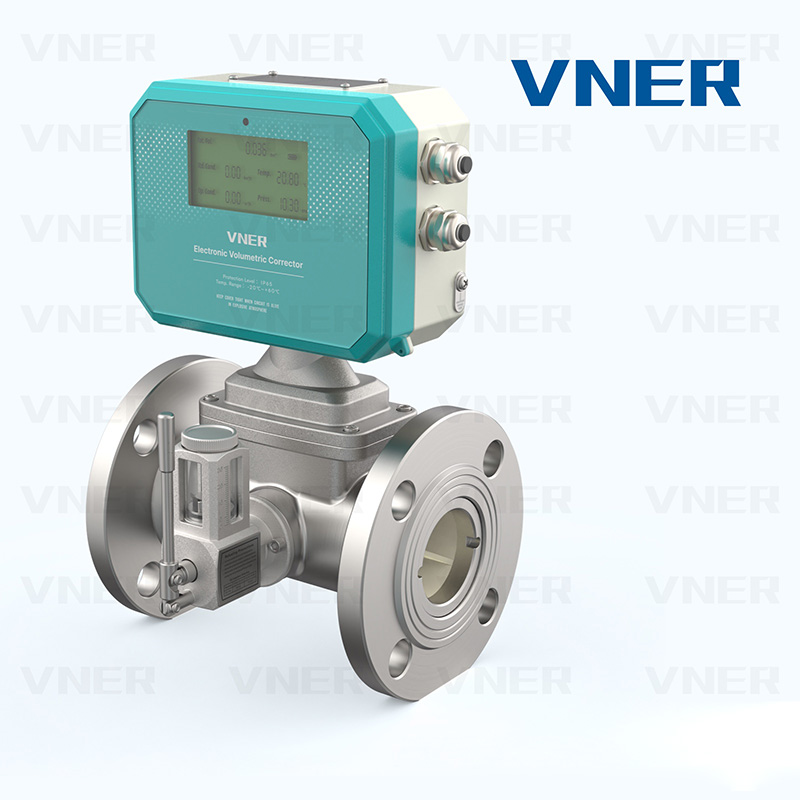
LWQ Series Gas Turbine Flowmeter-副本
1. The Measurement Challenge in Industrial Gas Applications
Gas flow is more difficult to measure than many liquid applications because gas volume changes significantly with pressure and temperature. A fixed amount of gas may occupy very different volumes as it moves through a pipeline, passes through a regulator, enters a boiler, or is consumed by a process. If a measurement system records only actual operating volume, the result may not be suitable for energy accounting, commercial settlement, or comparison between operating periods.
For this reason, industrial users commonly need both actual volume flow and standardized or corrected volume flow. Actual volume describes the gas volume at the meter’s present pressure and temperature. Standard volume converts that reading to an agreed reference condition. The conversion requires reliable pressure and temperature data, a suitable compensation algorithm, and a transmitter capable of processing the signals continuously.
Gas flow measurement also has to deal with disturbances in the pipeline. Elbows, valves, reducers, tees, regulators, filters, and partially open isolation valves can introduce swirl and uneven velocity profiles. These disturbances may cause a conventional sensor to produce unstable or biased readings. A well-designed inlet flow straightener helps condition the gas before it reaches the rotor, improving the quality and repeatability of the measurement.
In many facilities, the meter must work continuously in environments where maintenance access is limited. Operators therefore look for a device with low starting flow, low pressure loss, a readable display, reliable signal processing, and communication capabilities that connect with supervisory systems. The LWQ Series addresses these requirements through an integrated turbine sensing and electronic compensation platform.
2. Operating Principle of the LWQ Series
2.1 Flow conditioning
The measurement process begins at the inlet. The incoming gas enters a flow straightener that reduces rotational motion and moderates turbulence. This internal component is important because the turbine rotor is intended to respond primarily to the forward velocity of the gas. By improving the flow profile, the straightener helps the rotor receive a more consistent and predictable flow pattern.
Flow conditioning is particularly valuable in compact industrial piping systems, where upstream fittings may be close to the meter. Although installation should always follow the recommended straight-pipe and flow-direction requirements, the internal straightener provides an additional level of protection against common flow disturbances. This contributes to stable output and helps the meter perform consistently in practical plant conditions.
2.2 Turbine rotor response
After conditioning, the gas passes through the multi-blade turbine rotor. The moving gas applies force to the blades, causing the rotor to turn. Within the designed operating range, rotor speed is proportional to gas velocity. Because the pipe cross-sectional area is known, velocity can be converted into volumetric flow.
The turbine principle offers a direct and fast response to changing flow. This makes it suitable for applications in which operators need to observe consumption changes, detect abnormal demand, supervise combustion systems, or manage gas distribution across multiple production lines. The rotating element also provides a frequency-based measurement signal that can be processed by digital electronics.
2.3 Signal detection
An inductive or magnetic pickup detects rotor movement. Each rotor revolution produces a corresponding electrical event, creating a frequency signal related to flow rate. The transmitter interprets this frequency, applies the relevant meter calibration relationship, and calculates the flow value.
Frequency transmission is useful in industrial environments because it can provide good resistance to signal degradation over suitable cable distances. The digital transmitter can also accumulate pulses to calculate totalized volume, display operating data, and provide outputs for external monitoring or control equipment.
2.4 Pressure and temperature compensation
The LWQ Series can integrate temperature and pressure measurement so that the instrument calculates standard volume flow in real time. This is a major advantage over an uncompensated turbine meter, which may report only the gas volume at the current line condition.
Pressure and temperature compensation is especially important in natural gas distribution, compressed air systems, industrial gas networks, and energy management. A change in pipeline pressure can alter gas density and actual volume. Likewise, ambient or process temperature changes can produce measurable differences in volume. The integrated pressure transmitter and temperature sensor provide the data required for correction, while the digital electronics execute the compensation algorithm.
For users, the result is more meaningful data. Consumption can be compared across shifts, production campaigns, seasons, or facilities using a common reference condition. Billing and internal cost allocation can also be based on a more consistent measurement basis, provided the installation, calibration, reference conditions, and applicable standards are properly defined.
3. Main Product Advantages
3.1 Integrated compensated measurement
The most significant advantage of the LWQ Series is the combination of gas flow measurement, pressure measurement, temperature measurement, compensation, display, and communication in one instrument platform. A traditional installation may require a separate flowmeter, pressure transmitter, temperature sensor, signal processor, and local display. Each additional component creates another point for wiring errors, calibration differences, signal mismatch, and maintenance effort.
By integrating these functions, the LWQ reduces system complexity. The instrument can provide actual flow, compensated flow, cumulative flow, pressure, and temperature in a coordinated data set. This is useful for plant engineers who need to establish a measurement point without designing a large collection of separate instruments.
3.2 Low starting flow
Many gas applications experience large changes between minimum and maximum demand. A meter that requires excessive starting flow may fail to record low-load consumption, causing errors in night-time monitoring, leak assessment, pilot gas measurement, or low-rate process operation. The LWQ Series is designed with low starting flow characteristics so that it can respond to lower gas movement within its intended range.
Low starting flow can improve the usefulness of energy management data. For example, a facility may use totalized readings to investigate gas usage outside production hours. If the meter does not respond adequately at low demand, small but cumulative consumption may be missed. A responsive turbine assembly helps provide a more complete picture of gas use.
3.3 Low pressure loss
Pressure loss is an important operating cost in compressed gas systems. Excessive restriction forces compressors or upstream equipment to work harder, increases energy consumption, and may reduce the pressure available to downstream users. The LWQ Series uses a streamlined flow path and flow-conditioning design intended to keep pressure loss low.
Low pressure loss makes the meter suitable for compressed air networks, fuel gas lines, industrial gas distribution, and other applications in which available pressure is limited. It also supports easier system sizing because engineers can account for the meter without introducing an unnecessarily large pressure penalty.
3.4 High repeatability
Repeatability describes the ability of the meter to produce consistent results when the same operating condition is repeated. This is important for process control, consumption analysis, production comparisons, and custody-related measurement. The LWQ Series combines a defined rotor response, frequency signal processing, integrated flow conditioning, and digital calculation to support repeatable measurement.
Repeatability is not the same as accuracy, and both depend on correct sizing, installation, calibration, gas cleanliness, operating range, and maintenance. However, a repeatable meter gives users a dependable foundation for calibration verification and process trending. Stable readings also make it easier to identify genuine process changes rather than instrument noise.
3.5 Digital display and communication
The segment LCD provides local access to important operating information. The display can show real-time flow rate, cumulative flow, pressure, and temperature. Its specified readability down to ambient temperatures of -30°C supports outdoor and cold-climate installations where operators may need to inspect the meter without connecting a laptop or portable communicator.
RS485 Modbus communication allows the LWQ to exchange data with supervisory control and data acquisition systems, distributed control systems, building management platforms, and industrial Internet of Things gateways. Remote users can retrieve process values, monitor totalized consumption, and integrate gas data with broader plant management systems.
Pulse, frequency, and 4–20 mA analog outputs are available as optional output forms. This gives system designers flexibility. Pulse output can be used for totalization, frequency output can support certain control or acquisition systems, and the analog signal can be connected to conventional control loops or monitoring equipment.
3.6 Compact integrated construction
A compact instrument is valuable when a pipeline has limited space or when a retrofit must fit within an existing equipment layout. The LWQ integrates sensing and electronic functions into a single instrument body, reducing the footprint compared with a multi-device measurement skid.
The integrated design can also shorten installation work. Fewer external components mean fewer mounting points, cables, junction boxes, and potential connection errors. For engineering contractors and maintenance departments, this may reduce the time required to bring a measurement point into service.
4. Comparison with Alternative Gas Measurement Approaches
Every flowmeter technology has a suitable application range. The purpose of comparing technologies is not to claim that one instrument is universally superior, but to identify where the LWQ Series provides a practical advantage.
| Measurement approach | Typical strength | Common limitation | LWQ Series advantage |
|---|---|---|---|
| Basic uncompensated turbine meter | Direct volumetric measurement and fast response | May not provide standard volume under changing pressure and temperature | Integrated pressure and temperature compensation can provide corrected gas flow |
| Separate flowmeter, pressure transmitter, and temperature sensor | Flexible system architecture | More wiring, calibration coordination, and installation work | Combines key measurement functions in one instrument body |
| Vortex flowmeter | No conventional rotating rotor and broad industrial use | Performance may depend strongly on velocity, piping conditions, and application design | Low starting flow and turbine frequency response support gas consumption monitoring over the intended range |
| Thermal mass flowmeter | Direct mass-flow measurement for selected clean gases | Gas composition, contamination, and heat-transfer behavior can affect application suitability | Volumetric turbine measurement with pressure-temperature correction is familiar for pipeline gas applications |
| Coriolis mass flowmeter | Direct mass measurement and high functionality | Often higher investment and greater installation considerations for large gas lines | Compact turbine construction can offer a cost-effective option for clean, dry gas service |
| Mechanical positive displacement meter | Useful for certain low-flow and commercial applications | May involve more moving parts and higher pressure loss | Streamlined path and low pressure drop support compressed gas systems |
The comparison shows the main position of the LWQ Series. It is intended for clean and dry gases where users need a responsive velocity meter, practical installation, standard-volume compensation, and digital connectivity. It is not intended to replace every other technology. For wet gas, heavily contaminated gas, highly varying gas composition, or applications outside the turbine meter operating envelope, another technology may be more suitable.
5. Suitable Gas Media and Applications
5.1 Natural gas distribution
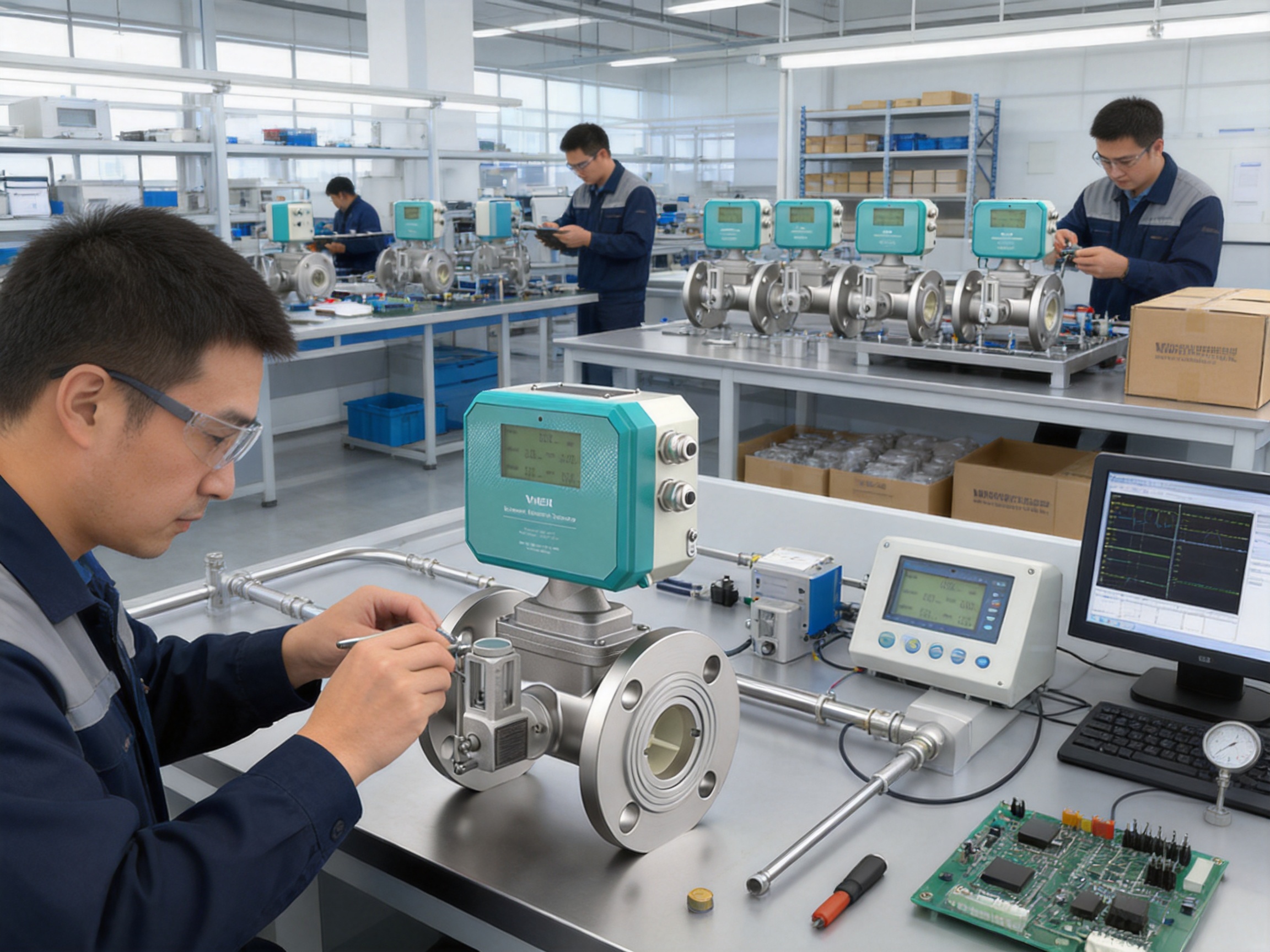
Natural gas is used in commercial buildings, industrial boilers, furnaces, combined heat and power units, and process heating systems. The LWQ Series can measure gas consumption in distribution pipelines and provide compensated volume information for energy management or commercial accounting.
For a gas distribution system, a meter should be selected according to line size, flow range, pressure, gas cleanliness, temperature, required reference conditions, and communication architecture. When correctly sized, the LWQ can support local indication as well as remote acquisition through Modbus or optional output signals.
5.2 Chemical and petrochemical plants
Chemical facilities use nitrogen for inerting and blanketing, hydrogen in selected process operations, and various process gases in reaction, heating, and separation systems. Reliable flow information helps operators maintain process ratios, protect equipment, and control operating costs.
The LWQ is suitable for clean, dry gas service in these environments. Its integrated pressure and temperature measurement is useful where process conditions vary. Before selection, engineers should confirm gas compatibility, hazardous-area requirements, installation classification, and the impact of any contaminants or condensable materials.
5.3 Oil and gas facilities
Oil and gas operations require measurement of fuel gas, instrument air, flare gas, and other utility or process streams. Monitoring flare gas can support environmental management, while fuel gas measurement helps evaluate burner performance and energy consumption. Instrument air measurement can reveal leaks or unusual demand.
For custody-related service, the complete measurement system must be engineered carefully. Meter sizing, upstream and downstream piping, calibration, pressure and temperature reference conditions, flow computer settings, inspection procedures, and local regulations all influence the final measurement uncertainty. The LWQ provides the sensing and compensation foundation, while the application design determines whether it meets the required commercial or regulatory standard.
5.4 Power generation and energy plants
Boilers, furnaces, gas engines, turbines, and cogeneration units depend on stable fuel supply. Flow measurement can be used to regulate combustion, calculate efficiency, compare fuel consumption with power output, and detect abnormal operating conditions.
Because the LWQ can display flow, totalized volume, pressure, and temperature, operators can review several related variables at one measurement point. Remote communication also allows the readings to be integrated into plant dashboards and energy performance systems.
5.5 Industrial gases
Oxygen, nitrogen, argon, carbon dioxide, and compressed air are common in manufacturing. These gases may be supplied to welding stations, cutting equipment, furnaces, laboratories, packaging lines, pneumatic tools, or production reactors.
For industrial gas networks, consumption data can support allocation by department, cylinder or bulk supply verification, leak detection, and production-cost calculation. The LWQ is intended for clean and dry gases, so filtration, drainage, and upstream gas-quality control should be considered where moisture, oil, or particles may be present.
5.6 HVAC and utilities
Gas-fired heating systems and cogeneration units require dependable fuel monitoring. A flowmeter can help verify burner demand, compare consumption among buildings, and improve seasonal energy analysis. The local display is useful for maintenance personnel, while the communication interface supports building or utility management systems.
5.7 Steel, metallurgy, textile, and manufacturing processes
Steel and metallurgical facilities use different gases in furnaces, converters, reheating systems, and protective atmospheres. Textile and general manufacturing plants may consume gas for drying, heating, coating, cutting, or other process operations. In each case, accurate consumption data can help stabilize production and identify inefficient equipment.
The LWQ can be used to supervise gas feed, monitor line-by-line consumption, and verify that process equipment receives the intended supply. Its compact form is useful for retrofits where multiple measurement points must be installed within existing plant infrastructure.
6. Manufacturing and Engineering Strengths Behind the Product
6.1 Specialized flow measurement focus
The manufacturer is focused on industrial flow measurement rather than treating flowmeters as a minor product category. Its portfolio covers electromagnetic, Coriolis, vortex, swirl, turbine, thermal mass, ultrasonic, and metal tube rotameter technologies. This breadth gives engineers access to different measurement principles for liquid, gas, and slurry applications.
For the LWQ Series, this broader technical background is useful because gas measurement problems often involve more than the meter itself. Engineers may need to assess gas composition, line conditions, pressure loss, pipe layout, communication requirements, and the relationship between the gas meter and other plant instruments. Experience across multiple technologies supports more objective product selection.
6.2 Modern production facilities
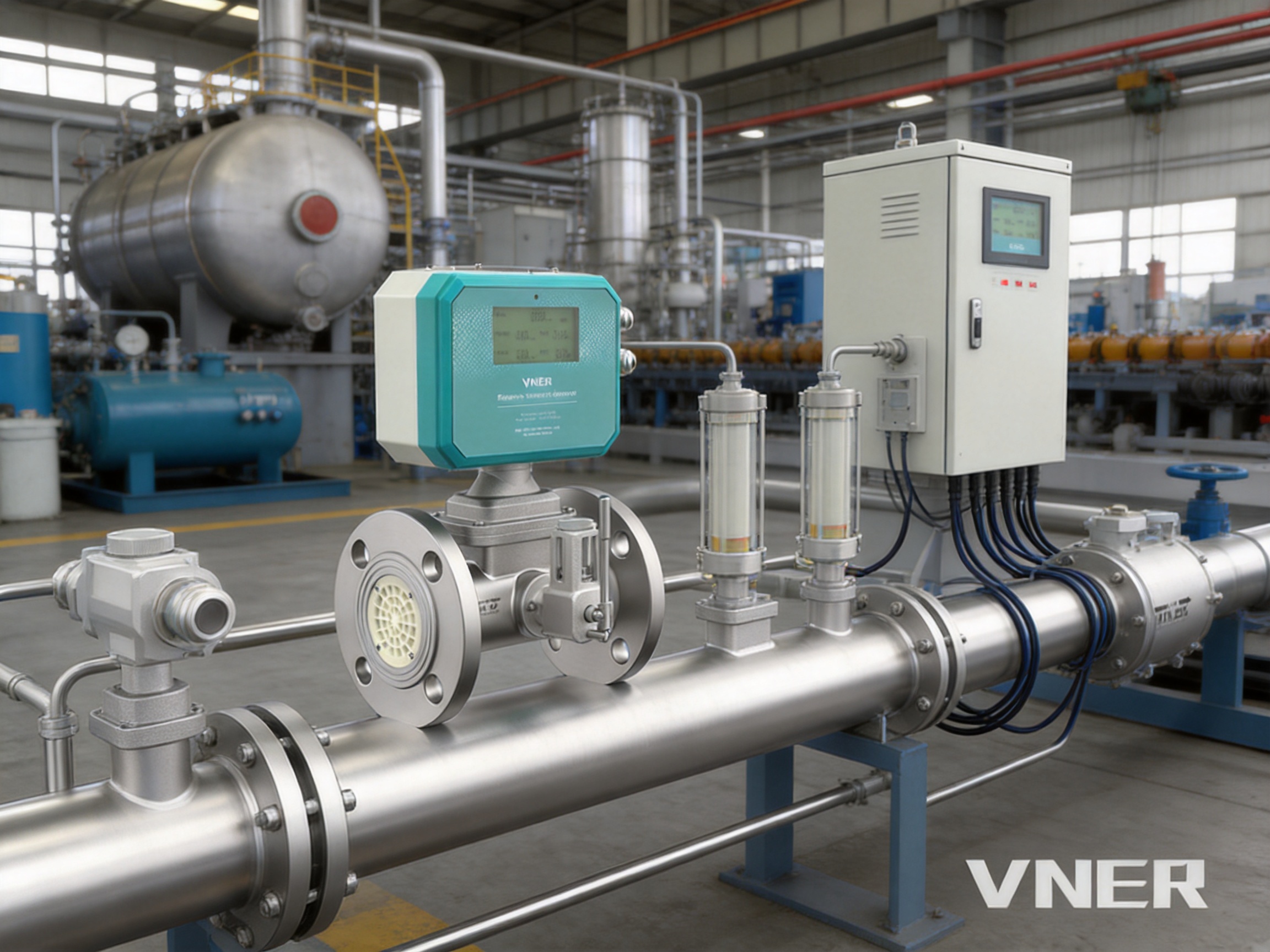
The company operates approximately 23,000 square meters of modern facilities across three plants. A multi-facility production base can support dedicated manufacturing, assembly, testing, storage, and administrative functions. It also provides the physical capacity required for repeatable production of different flowmeter families.
For customers, manufacturing scale matters when projects include multiple sizes, different connection configurations, or several measurement technologies. Consistent production resources can help support project schedules, product continuity, and coordinated delivery.
6.3 Technical personnel and engineering support
With a technical team of more than 150 people, the manufacturer can support product development, application engineering, calibration, production improvement, and after-sales service. Flowmeters are application-sensitive instruments, so technical support is especially important during sizing and selection.
Engineering assistance may include reviewing the gas medium, minimum and maximum flow, normal flow, operating pressure, temperature, pipe size, installation location, output requirements, and compensation needs. A technically correct selection is more valuable than simply choosing a meter based on nominal pipe diameter.
6.4 In-house calibration
In-house calibration is a significant manufacturing capability. Calibration connects the physical response of the turbine rotor and pickup with the electronic output used by the transmitter. A controlled calibration process helps establish the meter’s measurement relationship and provides traceability for quality documentation.
Calibration should be considered part of the product lifecycle rather than a one-time factory activity. Users may need periodic verification depending on service criticality, local regulations, gas cleanliness, operating conditions, and internal maintenance procedures. A manufacturer with calibration resources is better positioned to support both initial delivery and later service requirements.
6.5 Certified quality processes
Certified quality processes help organize design control, purchasing, manufacturing, inspection, calibration, documentation, and corrective action. For industrial instruments, quality is not limited to the appearance of the enclosure. It includes sensor consistency, electronic assembly, sealing, output verification, display operation, communication performance, and the accuracy of supplied documentation.
Process-based quality management is especially important for projects involving many similar meters. Consistency among instruments helps users simplify commissioning, establish common maintenance procedures, and compare readings across production areas.
6.6 Engineering project experience
The manufacturer has delivered more than 2,000 engineering projects in over 30 countries. This experience exposes the engineering organization to different climate conditions, plant standards, communication systems, pipeline layouts, and industry requirements. Such exposure can improve practical understanding of how flowmeters are applied beyond a laboratory environment.
Customers may include EPC contractors, end users, and OEM partners. Each customer type has different needs. EPC contractors often require technical submittals, coordinated documentation, and schedule reliability. End users focus on operation, maintenance, and long-term stability. OEM partners may require product integration, customized interfaces, and repeatable supply. Experience with all three groups supports a more complete approach to product delivery.
7. Installation and Commissioning Considerations
7.1 Confirm the application before ordering
Before selecting an LWQ meter, the user should provide the gas type, gas cleanliness, normal flow, minimum flow, maximum flow, operating pressure, operating temperature, pipe size, connection requirements, required accuracy, and output or communication preferences. The reference conditions for standard volume calculation should also be defined.
Natural gas, nitrogen, hydrogen, oxygen, compressed air, and carbon dioxide may have different densities, compressibility behavior, safety requirements, and material compatibility considerations. The meter should be selected for the actual service rather than the pipe size alone.
7.2 Observe flow direction and piping requirements
The meter must be installed according to the marked flow direction. Upstream and downstream piping should be arranged to provide a stable flow profile. Valves, elbows, reducers, tees, regulators, and other disturbances should be located in accordance with the manufacturer’s installation guidance and the requirements of the measurement application.
The internal flow straightener helps reduce swirl, but it does not eliminate the need for proper piping design. A poor installation can cause unnecessary turbulence, uneven velocity, vibration, or pulsation. These conditions may reduce measurement stability and shorten the service life of mechanical components.
7.3 Prevent contamination and condensation
The LWQ is intended for clean and dry gases. Solid particles, oil, water droplets, and condensate can affect the rotor, bearings, pickup, or flow path. Where necessary, the pipeline should include suitable filtration, moisture separation, drainage, and upstream conditioning.
Condensation is especially important when gas temperature changes or when the pipeline passes through a cold environment. The installation should be arranged so that liquid cannot collect in the meter body. A maintenance plan should also address filter condition and any contamination observed during inspection.
7.4 Consider pressure and temperature sensor placement
Integrated pressure and temperature measurement supports compensation, but the validity of the result depends on the measured conditions representing the gas at the flowmeter. The instrument should be installed where pressure and temperature are stable and representative of the measured stream. Sudden pressure drops, strong heat sources, or unusual thermal gradients near the meter should be evaluated during design.
7.5 Plan electrical and communication connections
The system designer should determine whether the application requires pulse, frequency, 4–20 mA, RS485 Modbus, or a combination of outputs. Cable routing should minimize exposure to strong electrical interference, and grounding or shielding should follow the applicable installation practice.
For Modbus networks, the communication address, baud rate, parity, wiring arrangement, and master-system configuration should be confirmed during commissioning. The displayed values and remotely transmitted values should be compared before the measurement point is released for operational use.
7.6 Commissioning checks
Commissioning should include a visual inspection, verification of flow direction, confirmation of pipe filling and gas quality, checking of electrical connections, review of pressure and temperature readings, and comparison of local and remote values. The meter should be observed at low, normal, and higher operating conditions where practical.
If the reading appears unstable, engineers should check for pulsation, upstream disturbances, excessive vibration, gas contamination, loose wiring, incorrect parameter settings, or operation outside the intended flow range. Troubleshooting the complete installation is generally more effective than replacing the meter without investigating the process conditions.
8. Digitalization and Energy Management
Industrial organizations increasingly need more than a single instantaneous flow reading. They need historical consumption, production-normalized energy data, alarm conditions, equipment comparisons, and information that can be shared among operations, maintenance, finance, and sustainability teams. The LWQ Series supports this trend through digital display, totalization, RS485 Modbus communication, and optional analog or pulse outputs.
In a boiler house, for example, the meter can provide gas consumption data while the control system records steam production. Engineers can compare fuel input with useful output and identify changes in combustion efficiency. In a compressed air network, multiple meters can reveal which production lines consume the most air and whether consumption continues during shutdown periods.
In a chemical plant, nitrogen flow data can be associated with production batches, inerting cycles, or storage-tank operations. Unexpected changes may indicate a valve problem, a leak, an incorrect setpoint, or a process deviation. In an oil refinery, flare gas monitoring can support operational review and environmental reporting, subject to the requirements of the relevant measurement system and regulations.
The value of digital measurement increases when data is consistent. Integrated pressure and temperature compensation makes standard-volume data more suitable for comparison. A compact instrument with a common communication protocol also makes it easier to build a network of measurement points across a facility.
9. Maintenance, Reliability, and Lifecycle Value
A flowmeter’s lifecycle value depends on more than its purchase price. Installation time, commissioning effort, pressure loss, energy consumption, calibration, spare parts, troubleshooting, and data integration all contribute to the total cost of ownership. The LWQ Series addresses several of these factors through its integrated design and low-pressure-loss flow path.
Routine maintenance should include checking for abnormal noise, vibration, unstable readings, communication errors, blocked filters, condensation, and unexpected changes in pressure loss. The display can help maintenance personnel compare flow rate, totalized volume, pressure, and temperature during inspection.
Because the product contains a rotating turbine element, gas cleanliness and correct operating range are important. A clean, dry gas stream reduces the risk of deposits or mechanical interference. If the meter is installed in a demanding service, the maintenance interval should be established according to operating experience, criticality, and the manufacturer’s guidance.
Periodic verification may include comparing the meter with a reference instrument, reviewing totalized values against supply records, checking pressure and temperature readings, and confirming communication data. In custody-related applications, formal calibration and documentation procedures should be followed as required by the contract or applicable regulations.
10. Selection Guidance for Different User Groups
10.1 For plant owners
Plant owners should focus on measurement purpose, reliability, energy value, data ownership, and future expansion. If the goal is internal energy management, standard volume flow and remote data collection may be the most important features. If the meter supports commercial settlement, calibration, documentation, and regulatory requirements become more demanding.
10.2 For EPC contractors
EPC contractors should define the complete instrument specification early. This includes line size, pressure class, connection type, material requirements, display orientation, output configuration, communication protocol, hazardous-area requirements, documentation, inspection, and calibration certificates. The compact integrated design may simplify piping and instrumentation design, but the complete installation still requires careful review.
10.3 For OEM equipment builders
OEMs can use the LWQ Series as an integrated gas measurement component in boilers, heating systems, gas skids, compressed air packages, and process equipment. The available output choices allow the meter to connect with different control architectures. OEMs should establish consistent parameter settings, wiring standards, and acceptance tests for each equipment model.
10.4 For maintenance departments
Maintenance teams should consider display readability, accessibility, spare-part availability, communication diagnostics, calibration support, and the training required for technicians. The local LCD and integrated measurement functions can reduce dependence on separate portable instruments during routine checks.
11. Why the LWQ Series Is a Strong Competitive Choice
The LWQ Series competes effectively because it combines several advantages that are often purchased separately. It provides the familiar and responsive turbine measurement principle, while adding integrated pressure and temperature compensation. It offers local indication and digital communication without requiring a separate flow computer for basic compensated measurement. It also emphasizes low starting flow, low pressure loss, repeatability, and compact construction.
Compared with a simple turbine meter, it provides a more complete data set. Compared with a multi-instrument installation, it can reduce wiring and integration work. Compared with some higher-complexity mass measurement solutions, it may offer a practical and economical approach for clean, dry gas pipelines where volumetric measurement with compensation is appropriate.
The product is also supported by a manufacturer with a broad industrial flowmeter portfolio, modern production facilities, a sizeable technical team, in-house calibration, certified quality processes, and international project experience. These capabilities matter because the best instrument is not useful if it cannot be correctly sized, delivered, commissioned, supported, and maintained.
Its competitive value is therefore based on the combination of product design and manufacturing strength. The instrument addresses the technical needs of gas measurement, while the manufacturer’s engineering and production infrastructure supports consistent supply and application assistance.
12. Questions and Answers
Q1: What type of gas is the LWQ Series designed to measure?
The LWQ Series is intended for clean and dry gases, including natural gas, nitrogen, hydrogen, oxygen, argon, carbon dioxide, compressed air, fuel gas, instrument air, and selected process gases. The actual selection must consider gas composition, pressure, temperature, flow range, cleanliness, material compatibility, and safety classification.
Q2: Does the meter measure mass flow directly?
The LWQ is a gas turbine flowmeter that measures volumetric flow through rotor speed and frequency detection. With integrated pressure and temperature measurement, it calculates corrected or standard volume flow. It is not a direct Coriolis mass flowmeter, so users requiring direct mass measurement should evaluate the application and compare alternative technologies.
Q3: Why are pressure and temperature compensation important?
Gas volume changes as pressure and temperature change. Compensation converts the measured operating volume into a standard reference volume, making data more consistent for billing, energy management, process comparison, and consumption analysis.
Q4: Can the LWQ communicate with a control system?
Yes. RS485 Modbus communication is available for integration with SCADA, DCS, and IIoT systems. Depending on the configuration, pulse, frequency, and 4–20 mA outputs can also be provided.
Q5: What information can be shown on the display?
The segment LCD can show real-time flow rate, cumulative flow, pressure, and temperature. Its specified readability at ambient temperatures down to -30°C supports use in cold operating environments.
Q6: Is the meter suitable for compressed air systems?
Yes, provided the air is clean and dry and the meter is correctly sized for the pressure and flow range. Its low pressure drop is beneficial in compressed air systems because unnecessary restriction can increase compressor energy consumption.
Q7: Can the meter be used for custody-related measurement?
The product is suitable for custody-related and process gas measurement applications when the complete installation meets the required accuracy, calibration, piping, documentation, legal, and contractual requirements. Application engineering and formal verification are essential for commercial service.
Q8: What should be done if the gas contains moisture or particles?
The pipeline should be evaluated for filtration, separation, drainage, and gas conditioning. The LWQ is intended for clean and dry gas, so liquid or solid contamination may affect the rotor, sensor, pressure loss, and measurement stability.
Q9: How should the meter be selected?
Selection should be based on gas type, minimum and maximum flow, normal flow, operating pressure, operating temperature, pipe size, connection requirements, required reference conditions, communication needs, and installation environment. Selecting only by nominal pipe diameter may result in poor low-flow response or excessive operating-range limitations.
Q10: What manufacturing capabilities support the product?
The manufacturer operates approximately 23,000 square meters of facilities across three plants and has a technical team of more than 150 people. It supports in-house calibration, certified quality processes, engineering-driven sizing and selection, and production of multiple flowmeter technologies for industrial applications.
Q11: Can the meter be used in a retrofit project?
Its compact integrated design can be advantageous in retrofit projects with limited space. However, the existing pipe layout, straight-run requirements, pressure rating, connection dimensions, electrical system, and communication network must be checked before installation.
Q12: What is the main competitive advantage of the LWQ Series?
Its main advantage is the combination of responsive turbine measurement, low starting flow, low pressure loss, integrated pressure and temperature compensation, local display, digital communication, and compact construction. This combination provides a complete gas measurement solution without the complexity of assembling several separate instruments.
13. Final Evaluation
The LWQ Series Gas Turbine Flowmeter is designed for industrial users who need dependable measurement of clean, dry gases under changing operating conditions. Its turbine rotor provides a direct and responsive measurement principle. The inlet flow straightener helps reduce the influence of swirl and turbulence. The inductive or magnetic pickup produces a frequency signal for digital processing. Integrated pressure and temperature sensors allow the transmitter to calculate standard volume flow in real time.
Its practical advantages include low starting flow, low pressure loss, repeatable performance, cold-environment display readability, RS485 Modbus communication, optional pulse, frequency, and 4–20 mA outputs, and a compact integrated construction. These features make it suitable for natural gas distribution, chemical and petrochemical processes, oil and gas facilities, power plants, industrial gas networks, HVAC utilities, steel production, textiles, and general manufacturing.
The product is strengthened by the capabilities of Jiangsu Vner Electronic Technology Co., Ltd., a specialized industrial flowmeter manufacturer with broad technology coverage, modern facilities, a substantial technical team, in-house calibration, quality processes, and international engineering experience. This combination of product functionality and manufacturing competence gives users a practical option for process measurement, energy management, remote monitoring, and custody-related gas applications.
As with any flowmeter, the final performance depends on correct sizing, suitable gas quality, proper installation, calibration, and maintenance. When these factors are addressed, the LWQ Series can provide stable and useful gas flow data throughout the operating life of an industrial measurement point.
References
1. Industrial Flow Measurement Principles: Turbine, Vortex, Thermal, Ultrasonic, and Coriolis Technologies.
2. Gas Flow Measurement and Standard Volume Conversion: Pressure, Temperature, and Reference Conditions.
3. Engineering Practice for Flowmeter Installation in Gas Pipeline Systems.
4. Industrial Instrumentation Quality Control, Calibration, and Measurement Traceability.
5. Modbus Serial Communication Principles for Industrial Automation Networks.
6. Energy Management Practices for Natural Gas, Compressed Air, and Industrial Utility Systems.
7. Application Materials for the LWQ Series Gas Turbine Flowmeter.
Product: LWQ Series Gas Turbine Flowmeter-副本



Products
Contact Information
-

+86 18652789521
+86-0514-83633600 / 83633900 -

+86-0514-83633600 / 83633900
-

s@vner.com.cn
katherine@vner.com.cn -

No. 11 Xingye Road, Chenji Town Industrial Park, Yizheng, Yangzhou, China
