
 0
 EN
 English
 عربى
 Español
 русский
If you need any help, please feel free to contact us
Home / Author / Cai Shurong — After-Sales Project Coordinator / SR41 Series Metal Tube Rotameter: Reliable Flow Measurement for Demanding Industrial Processes
SR41 Series Metal Tube Rotameter: Reliable Flow Measurement for Demanding Industrial Processes
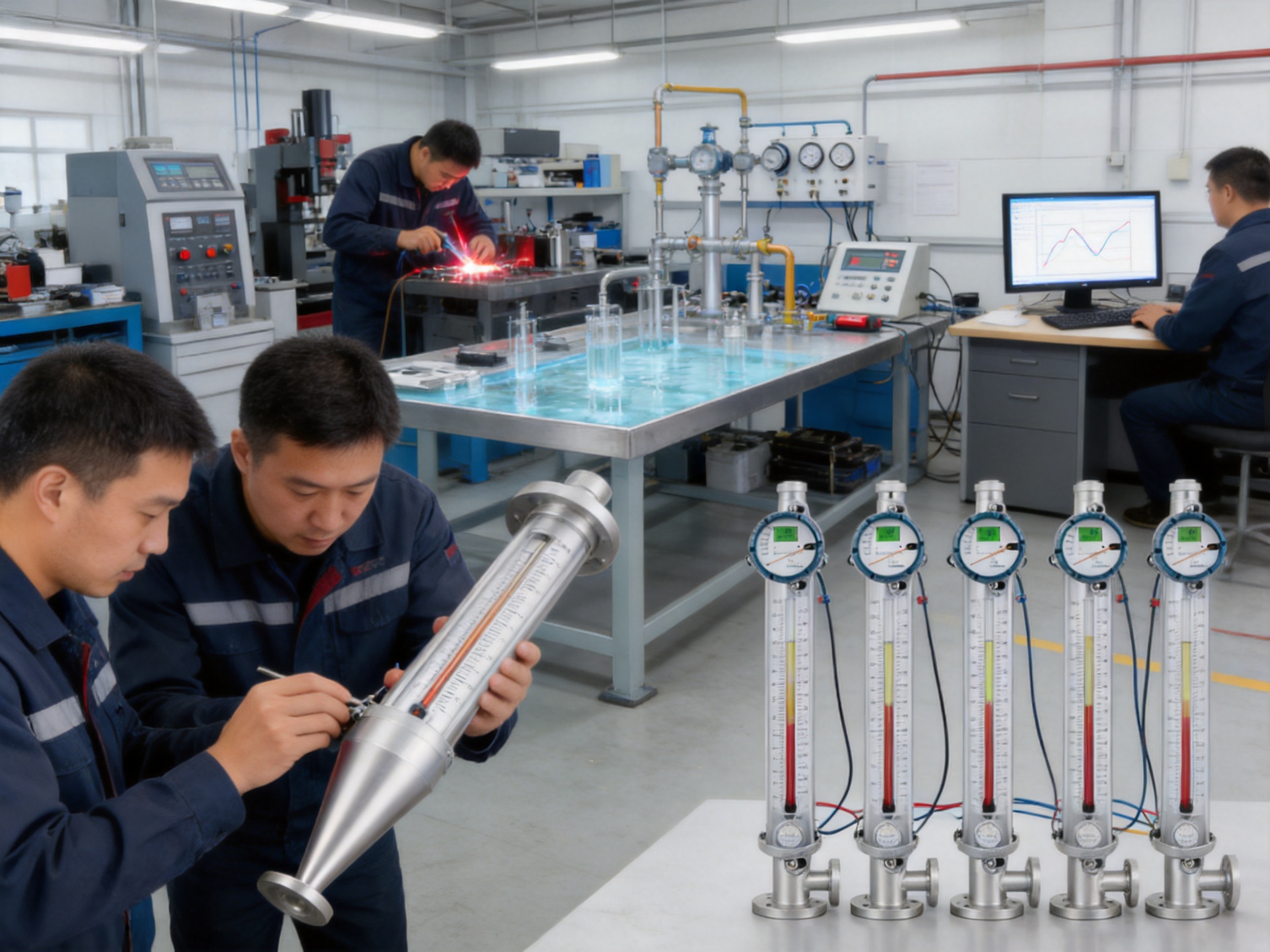
Accurate flow measurement is essential for safe operation, production consistency, energy management, and equipment protection. In many industrial installations, the measurement point may be exposed to elevated pressure, high temperature, vibration, corrosive media, changing process conditions, or strict hygiene requirements. Under these circumstances, a conventional glass or plastic rotameter may not provide the mechanical strength, durability, or process compatibility required for long-term service.
The SR41 Series Metal Tube Rotameter is designed for these demanding applications. It is an all-metal variable area flowmeter for measuring liquids, gases, saturated steam, and superheated steam. Its fully welded metallic construction, precision-formed conical measuring tube, magnetic coupling, and optional electronic transmitter provide a practical combination of local visibility, mechanical durability, measurement stability, and control-system connectivity.
Unlike simple visual flow indicators intended mainly for low-pressure utility services, the SR41 is engineered as an industrial process instrument. It can be supplied with mechanical indication for applications that require no external power, or with electronic functions such as 4-20 mA output, optional HART® communication, alarm outputs, compensation, and basic diagnostics. This flexibility allows one product family to serve both straightforward local monitoring points and more integrated automation systems.
Manufactured by Jiangsu Vner Electronic Technology Co., Ltd., the SR41 reflects the company’s broader experience in electromagnetic, Coriolis, vortex, swirl, turbine, thermal mass, ultrasonic, and variable-area flow measurement. The company combines product engineering, in-house calibration, quality control, application support, and modern manufacturing resources to supply flow instruments for industrial customers, EPC contractors, system integrators, and OEM equipment builders.
1. The Role of Metal Tube Rotameters in Industrial Measurement
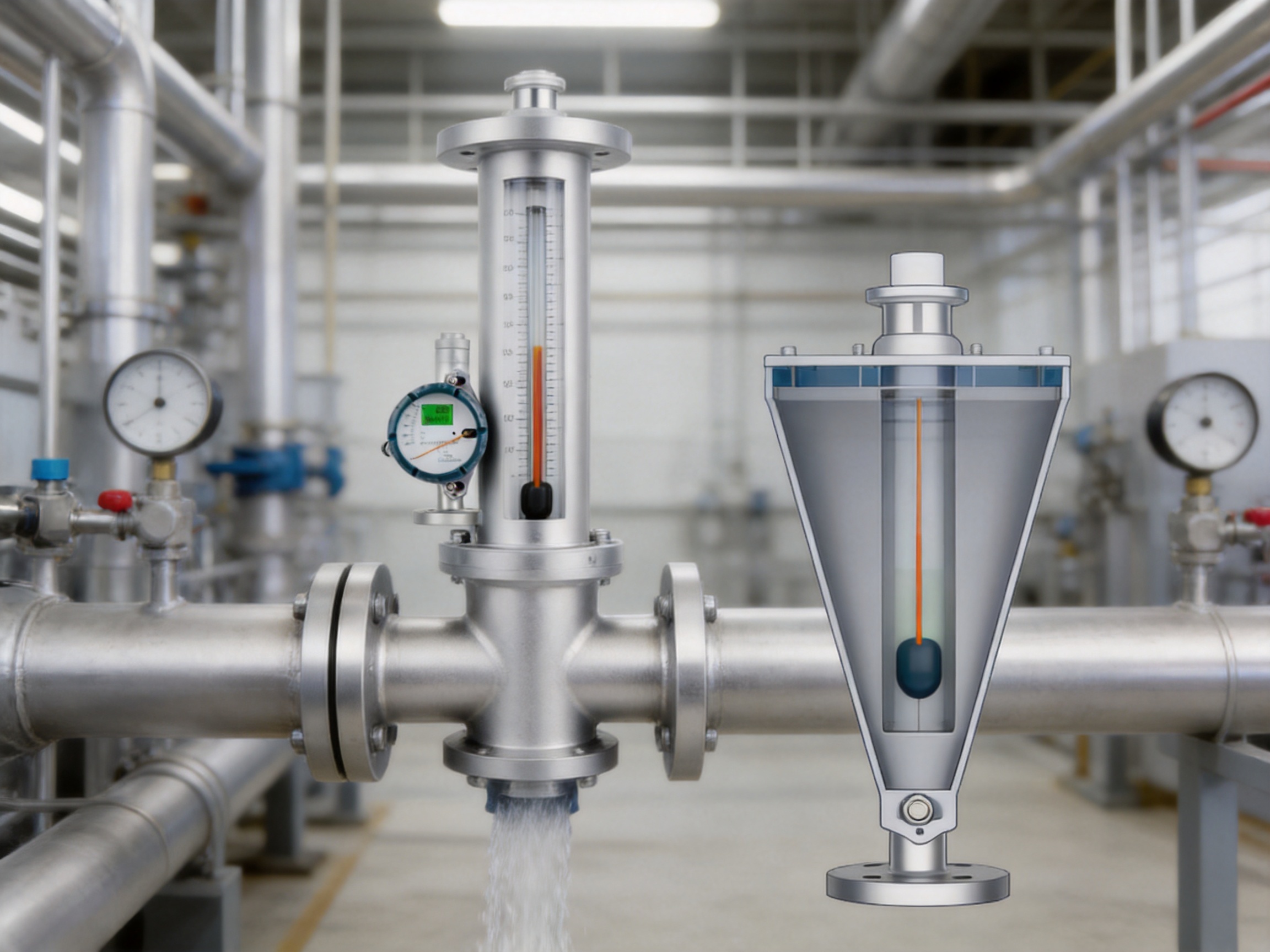
A rotameter, also known as a variable area flowmeter, measures flow by allowing a float to move inside a tapered measuring tube. As the flow rate increases, the fluid lifts the float. The float reaches a position where the upward force generated by the flowing medium balances the float’s weight and other forces. The height of the float is related to the flow rate and is displayed on a calibrated scale or converted into an electrical signal.
This operating principle is simple, direct, and highly useful. It does not require a high-speed rotating turbine, ultrasonic transducers, electrodes, or a complicated primary sensing assembly. Because the measurement is produced by the interaction between the fluid and the float, a variable area meter can provide immediate local indication without an external power supply.
Traditional glass-tube rotameters are common in laboratories, light-duty utility lines, and low-pressure equipment. They are inexpensive and easy to read, but glass can become unsuitable when the process involves high pressure, high temperature, vibration, mechanical impact, or aggressive installation environments. Plastic tubes may offer better impact resistance than glass, but they can have limitations related to temperature, pressure, chemical compatibility, ultraviolet exposure, and long-term dimensional stability.
A metal tube rotameter addresses these limitations by replacing the transparent tube with a robust metallic measuring body and transferring the float position to an external indicator through magnetic coupling. The operator can read the flow locally while the process fluid remains contained inside the pressure boundary. This design is especially valuable when the process line must remain mechanically strong and leak-resistant.
The SR41 is therefore suited to process lines where a basic glass rotameter would be vulnerable, but where operators still value the simplicity and immediacy of a local variable-area display. It provides a balance between traditional direct-reading measurement and modern electronic instrumentation.
2. Product Overview
The SR41 Series Metal Tube Rotameter is intended for vertical installation with upward flow as the standard arrangement. It is available for nominal pipe sizes from DN15 to DN100 and can be configured for liquids, gases, and steam. Depending on the selected size, fluid, pressure, temperature, material, and calibration conditions, the instrument can cover a wide range of industrial flow rates.
Typical water flow capacity is approximately 2.5 to 100,000 liters per hour, while typical air flow capacity is approximately 0.07 to 1,000 cubic meters per hour at 0.1 MPa and 20°C. These figures are representative ranges rather than universal values. The final measuring range must be selected according to the medium’s density, viscosity, operating pressure, operating temperature, pipe size, required accuracy, and installation conditions.
The standard accuracy class is ±1.5% of full scale, with an optional ±2.5% of full-scale class for applications where a wider tolerance is acceptable. Typical rangeability is 10:1. The instrument can be supplied with a mechanical pointer and no external power, or with an LCD indicator and electronic transmitter for applications requiring signal transmission, parameter display, alarm functions, or communication.
| Parameter | Typical Specification | Application Significance |
| Measurement principle | Variable area with a float in a vertical conical tube | Simple, direct, and suitable for continuous local indication |
| Measured media | Liquids, gases, saturated steam, and superheated steam | Supports process, utility, energy, and service applications |
| Accuracy | ±1.5% F.S. standard; ±2.5% F.S. optional | Allows selection according to process requirements and budget |
| Typical rangeability | 10:1 | Provides useful measurement over a practical operating range |
| Nominal diameter | DN15 to DN100 | Suitable for small branches, utility lines, and process skids |
| Standard process temperature | -40 to +250°C | Supports many industrial liquid, gas, and steam services |
| High-temperature version | -40 to +350°C | Extends use in demanding thermal applications |
| PTFE-lined version | -40 to +80°C | Provides additional corrosion resistance for compatible services |
| Operating pressure | 1.6, 2.5, or 4.0 MPa | Suitable for a wide range of pressurized process lines |
| Process connections | DIN, ANSI, and other flanges; hygienic options available | Supports industrial, sanitary, and retrofit installations |
| Ingress protection | IP67 | Protects the enclosure against dust and temporary water exposure |
| Outputs | Local indication, 4-20 mA, alarms, and optional HART® | Allows use from simple visual monitoring to PLC and DCS integration |
3. Fully Welded Metallic Construction
One of the principal advantages of the SR41 is its all-metal welded construction. The measuring assembly and enclosure are designed to withstand demanding industrial environments where mechanical damage, vibration, temperature variation, and pressure loading may affect less robust instruments.
A metal pressure boundary offers an important safety advantage in comparison with fragile transparent tubes. When a process line carries hot steam, pressurized gas, or chemically active liquid, the instrument must maintain containment even when installed near pumps, compressors, valves, rotating machinery, or heavy equipment. The welded construction reduces reliance on exposed glass and supports use in locations where impact resistance is a primary concern.
The metallic design also supports long-term installation in outdoor or plant environments. With IP67 protection for the indicator enclosure, the SR41 can be used in areas exposed to dust, rain, washdown, and changing weather conditions, provided that the selected configuration is appropriate for the installation. Proper cable sealing, grounding, mounting, and process connection practices remain essential to achieving reliable field performance.
The instrument can be manufactured with wetted parts in SS304, SS316L, Hastelloy C, titanium, or stainless steel with PTFE lining, depending on the selected version. SS304 is often suitable for general utility and industrial services. SS316L is frequently selected for improved corrosion resistance and for applications involving cleaner process conditions. Hastelloy C and titanium may be considered for more demanding chemical environments, subject to compatibility verification. PTFE lining can provide an additional barrier for compatible corrosive media within its temperature range.
Material selection should never be based only on the name of the chemical. Concentration, temperature, pressure, impurities, velocity, cleaning procedure, and exposure time can all influence corrosion performance. The engineering team should verify wetted-material compatibility before final selection.
4. Precision-Formed Conical Measuring Tube
The conical measuring tube is central to the performance of a variable area flowmeter. Its geometry determines how the available flow area changes as the float rises. A carefully formed and calibrated tube helps create a stable relationship between float position and flow rate.
In the SR41, precision-forming and controlled manufacturing of the measuring tube support repeatable measurement characteristics across the specified range. Consistent geometry is important because small deviations can affect the scale, float movement, pressure drop, and repeatability. The tube must also be manufactured to maintain smooth internal flow behavior and reliable movement of the float.
The float itself must be selected according to the measured medium and operating conditions. Density, viscosity, pressure, temperature, and required range all influence float design and calibration. A float suitable for water cannot automatically be used for gas or steam without recalculation. For gas and steam applications, pressure and temperature correction are particularly important because density can vary significantly with operating conditions.
For this reason, the SR41 should be ordered with complete process data. Required information normally includes the medium, minimum and maximum flow, normal flow, operating pressure, operating temperature, density or molecular weight for gases, viscosity for liquids, desired material, connection standard, and whether electronic output is required.
5. Magnetic Coupling and Protected Indication
The SR41 uses magnetic coupling to transfer float movement to the external indicator. The float remains within the process passage while the indicator remains outside the pressure boundary. This arrangement allows the operator to observe the measurement without exposing a transparent tube to process pressure or temperature.
Magnetic coupling provides an important separation between the wetted measuring area and the display mechanism. It reduces the need for a direct mechanical shaft passing through the pressure boundary and helps preserve enclosure integrity. It also allows the indicator to be designed for clear local reading while the process tube is designed primarily for containment and flow measurement.
The mechanical pointer version operates without an external power supply. This is valuable for remote utility points, temporary installations, basic flow verification, and plants that prefer simple instruments with minimal maintenance requirements. The operator can inspect the local indication during rounds, commissioning, troubleshooting, or routine process checks.
When more functionality is required, an LCD version can display multiple parameters and work with an intelligent transmitter. The electronic version may provide a 4-20 mA output, alarm or switch outputs, optional HART® communication, and basic diagnostic information. These features allow the SR41 to become part of a plant-wide monitoring system rather than remaining only a local indicator.
6. Electronic Integration for Modern Control Systems
Many industrial plants still need local indication, but local indication alone may not be sufficient for modern process management. Operators may need to view flow from a control room, record consumption, configure alarms, compare performance between lines, or integrate measurements into a supervisory system. The SR41 can be configured to support these requirements.
The 4-20 mA analog output is widely used for PLC, DCS, SCADA, panel, and data acquisition integration. A live current signal provides a robust method of transmitting the measured value over industrial cable runs. Alarm and switch outputs can be used to indicate low flow, high flow, equipment status, or other configured conditions.
Optional HART® communication can provide remote configuration, parameter read-out, and diagnostic access when used with compatible infrastructure. This reduces the need for technicians to visit each instrument for basic setup or verification. It can also help maintenance teams identify abnormal status information before a measurement problem becomes a process problem.
For gas and steam services, electronic compensation can improve the usefulness of the reported value when pressure and temperature vary. The available compensation functions may include density, temperature, and pressure correction, depending on the selected transmitter and configuration. These functions do not eliminate the need for correct sizing and calibration, but they can improve indication stability under changing operating conditions.
Electronic features should be selected according to the actual control strategy. A mechanical-only version may be the best choice for a simple local utility point. An electronic version is more appropriate when the flow value must be transmitted, archived, alarmed, or used in a control calculation.
7. Advantages Over Glass and Plastic Rotameters
The most direct comparison for the SR41 is with conventional glass and plastic variable-area flowmeters. Each technology has a valid application range, but metal tube construction offers several advantages in demanding environments.
7.1 Improved Mechanical Strength
Glass tubes can be vulnerable to impact, thermal shock, overpressure, and accidental damage. Plastic tubes can deform or lose performance when exposed to excessive temperature, pressure, or certain chemicals. A metal tube provides a stronger pressure boundary and is more suitable for industrial lines exposed to mechanical stress.
7.2 Higher Temperature Capability
The standard SR41 configuration supports process temperatures from -40 to +250°C, while a high-temperature version can support up to +350°C. This makes it suitable for steam, hot utility water, heated process liquids, and other services where common plastic instruments cannot be used and glass instruments may require special protection.
7.3 Better Suitability for Pressurized Services
With operating pressure options of 1.6, 2.5, and 4.0 MPa, subject to design verification and selected configuration, the SR41 can serve pressurized process and utility lines. Higher pressure designs may be available after technical review. The final pressure rating depends on the materials, connection class, temperature, wall thickness, and design requirements.
7.4 Safer Containment of Process Media
The process medium remains inside a metallic pressure boundary rather than behind a fragile transparent tube. This is particularly important for hot, toxic, corrosive, or pressurized fluids. Although all process instruments must be installed and maintained according to applicable safety procedures, a robust metal enclosure can reduce the vulnerability associated with exposed glass.
7.5 Better Resistance to Vibration and Industrial Conditions
Industrial equipment often generates vibration through pumps, compressors, motors, fans, and rotating machinery. A fully welded metal design is generally more appropriate for these environments than a delicate transparent tube. Correct support, alignment, and piping design remain necessary, but the instrument itself is intended for demanding field conditions.
7.6 Flexible Materials and Connections
The availability of SS304, SS316L, Hastelloy C, titanium, and PTFE-lined versions allows the instrument to be adapted to different media. DIN, ANSI, and other flange standards support installation in diverse plants. Hygienic connections can be considered for food, beverage, pharmaceutical, and biotechnology utility services.
8. Advantages Over More Complex Flow Technologies
The SR41 should not be viewed as a replacement for every flowmeter technology. Electromagnetic flowmeters, Coriolis meters, vortex meters, turbine meters, thermal mass meters, and ultrasonic meters each provide specific capabilities. However, a metal tube rotameter can be more practical when the application prioritizes direct local indication, simple operation, moderate accuracy, low maintenance, and cost-effective installation.
Compared with a Coriolis flowmeter, the SR41 generally has a simpler operating principle and may be more economical for basic flow monitoring. A Coriolis meter can provide highly accurate mass flow and density measurement, but not every utility line requires that level of functionality. For a local steam branch, cooling-water circuit, or compressed-air line, a metal tube rotameter may provide sufficient information with less configuration complexity.
Compared with a vortex flowmeter, the SR41 does not depend on vortex shedding and electronic signal processing. This can be advantageous for low-flow local monitoring, start-up checks, or applications where the operator primarily needs a visual indication. Vortex meters remain valuable for broader ranges and certain steam and gas measurement duties, but application conditions determine which instrument is more appropriate.
Compared with a turbine flowmeter, the SR41 has no rotating turbine rotor that must maintain reliable mechanical movement. Turbine meters can provide good accuracy for clean, stable fluids, but they may be more sensitive to upstream flow conditions, fluid cleanliness, bearing condition, and wear. A variable-area instrument can be attractive where simplicity and visual verification are more important than pulse output or high-speed measurement.
Compared with a thermal mass flowmeter, the SR41 can measure liquids as well as gases and steam. Thermal mass meters are particularly useful for gas mass flow, but their performance depends on gas composition, thermal properties, sensor condition, and installation requirements. The SR41 provides a broader traditional process-indication role across different media.
Compared with an ultrasonic flowmeter, the SR41 generally requires a shorter and more conventional installation arrangement. Ultrasonic instruments can be highly useful for large pipes, non-invasive measurement, and difficult retrofit situations, but they may require careful transducer placement, signal quality, and pipe condition. A flanged SR41 is a direct inline device that can be specified as part of a new skid or replacement spool.
The correct comparison is therefore not simply about which technology is most advanced. It is about selecting the instrument that best fits the measurement objective, process conditions, accuracy requirement, lifecycle cost, maintenance strategy, and control architecture.
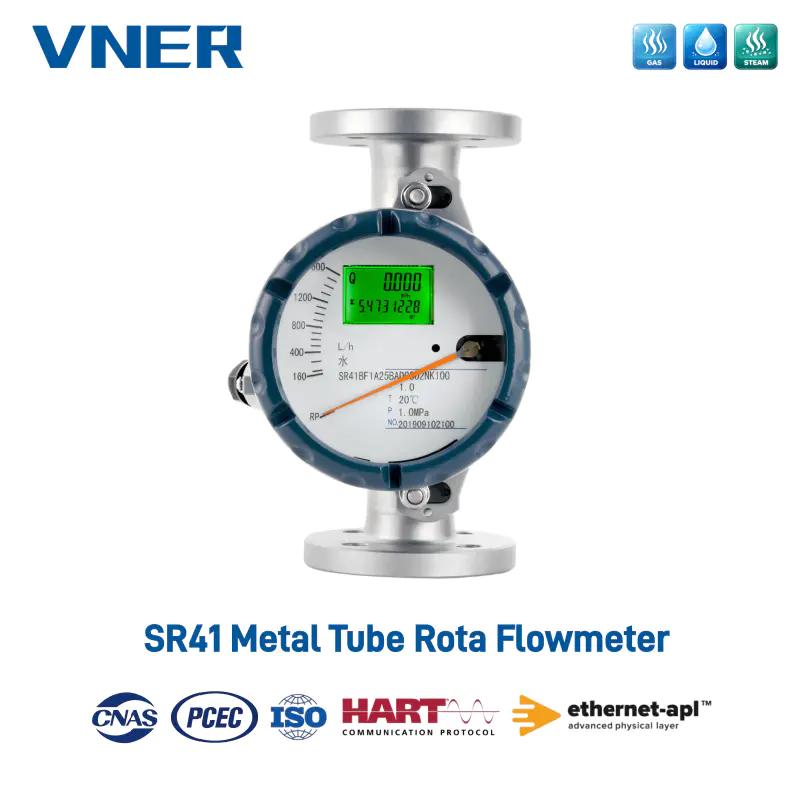
SR41 Series Metal Tube Rotameter
9. Applications Across Industrial Sectors
9.1 Power Generation and Energy Utilities
Power plants and industrial energy facilities use flowmeters throughout boiler systems, steam distribution networks, cooling circuits, fuel systems, and auxiliary utilities. The SR41 can be installed on individual steam branches to provide local indication and, when equipped with a transmitter, 4-20 mA feedback to the control system.
Branch-level measurement helps operators verify that steam reaches the intended users and identify unusual consumption, restrictions, or partial line blockage. Flow information can support energy balance calculations, maintenance planning, and troubleshooting of valves, traps, and downstream equipment.
Cooling-water monitoring is another important application. Furnaces, induction heaters, quench tanks, generators, and heat-treated components may depend on a minimum cooling flow. A local metal tube rotameter allows operators to confirm that the circuit is operating within the expected range. An optional alarm output can provide additional warning when the flow falls below a configured threshold.
9.2 Chemical and Petrochemical Processing
Chemical and petrochemical plants require instruments that can withstand process chemicals, elevated temperature, pressure, and continuous operation. The SR41 can be supplied with corrosion-resistant wetted materials or PTFE lining when appropriate for the medium and temperature.
Typical services include process liquids, inert gases, nitrogen, instrument air, flushing liquids, and chemical dosing streams. The mechanical pointer provides immediate local confirmation, while electronic output allows the value to be connected to a PLC, DCS, or SCADA system. The instrument can be used on process lines, utility headers, skid packages, and packaged treatment systems.
For chemical dosing, the rotameter can be installed downstream of a dosing pump to verify whether the actual flow remains within the specified range. This helps operators identify an empty tank, blocked injection point, pump wear, valve misadjustment, or changes in liquid viscosity. The instrument should be sized for the actual dosing conditions, especially where the chemical concentration or viscosity varies.
9.3 Oil and Gas Facilities
Oil and gas production and treatment facilities use local flow indication for fuel gas, gas lift, flushing liquids, instrument air, nitrogen, and utility services. In these environments, mechanical durability, enclosure protection, and hazardous-area options may be important selection factors.
The SR41 can be configured in non-Ex, intrinsically safe, or flameproof versions according to the selected model and applicable certification requirements. Hazardous-area selection must be verified against the site classification, gas group, temperature class, installation method, and local regulatory requirements.
Panel-mounted and skid-mounted installations can benefit from the compact face-to-face length and direct local reading. For remote or unmanned equipment, a transmitter can provide a signal to the supervisory system, reducing the need for routine physical inspection while preserving a local indication for service personnel.
9.4 Food and Beverage Processing
Food and beverage plants use process water, clean steam, compressed air, cleaning chemicals, and cleaning-in-place media. Flow confirmation is important for cleaning effectiveness, sterilization procedures, utility distribution, and production consistency.
The SR41 can be supplied with hygienic process connections on request. Material and surface requirements must be reviewed according to the sanitary standard, cleaning method, and regulatory expectations of the installation. Clean steam and CIP applications also require attention to condensate, temperature, pressure, drainability, and calibration conditions.
On clean-steam branches feeding sterilization equipment or SIP/CIP stations, the metal construction offers a robust alternative to glass instruments. The local display helps operators verify flow during commissioning and routine operation, while electronic output can support batch records, alarm management, or utility monitoring.
9.5 Pharmaceutical and Biotechnology Facilities
Pharmaceutical and biotechnology plants require careful control of purified water, clean steam, compressed gases, and other critical utilities. Flowmeters may be used for visual verification, process support, equipment protection, and backup indication.
The SR41 can be considered for utility services where its materials, connection type, surface finish, accuracy, and cleanability meet the project requirements. It is important to distinguish between general utility monitoring and critical process measurement. Critical applications may require additional documentation, calibration records, sanitary design review, and validation support.
For clean steam and purified-water services, engineering teams should verify the compatibility of the selected wetted materials, seals, connection design, and cleaning procedure. The instrument’s mechanical strength can be beneficial, but sanitary suitability depends on the complete configuration rather than the metal tube alone.
9.6 Pulp, Paper, Steel, and Metallurgy
Pulp and paper plants use process water, chemicals, bleaching liquids, washing streams, and low-viscosity liquor. Steel and metallurgy facilities use cooling water, purge gases, shield gases, and utility flows around furnaces, casting equipment, rolling mills, and heat-treatment systems.
These environments can be challenging because of vibration, heat, dust, changing operating conditions, and equipment access limitations. The SR41 offers direct indication at the line while maintaining a robust process enclosure. Depending on the medium, SS316L, specialized alloys, or lined versions may be considered.
Cooling-water circuits are particularly suitable for local flow indication because the operator often needs to confirm that a minimum flow is maintained rather than obtain highly detailed process analytics. In combination with an alarm output, the instrument can contribute to protection against overheating and unplanned equipment shutdown.
9.7 General Industry and OEM Equipment
General industrial plants, machine builders, test benches, packaged utilities, and OEM skids often require a compact and dependable flow indicator. The SR41 can be integrated into compressor systems, water treatment packages, air distribution systems, heating equipment, and process test units.
OEM users benefit from selectable flange standards, a range of materials, mechanical or electronic indication, flexible power options, and common cable entries such as M20 × 1.5 or 1/2-14 NPT. These options simplify adaptation to different equipment designs and regional installation practices.
10. Manufacturing Strengths and Engineering Capability
Product performance depends not only on the final instrument design but also on the manufacturing systems used to produce, inspect, calibrate, and document it. Jiangsu Vner Electronic Technology Co., Ltd. operates as a specialized industrial flowmeter manufacturer based in Yangzhou, China. Since 2011, the company has developed flow measurement products for liquids, gases, slurries, steam, and other industrial media.
The company’s product portfolio includes electromagnetic, Coriolis, vortex, swirl, turbine, thermal mass, ultrasonic, and rotameter technologies. This broad portfolio is valuable because application engineers can compare different measurement principles rather than forcing every application into one technology. A customer requiring a metal tube rotameter for local indication can also receive technical guidance on alternative technologies when the application demands mass flow, non-invasive measurement, slurry handling, or advanced diagnostics.
The company reports modern facilities totaling approximately 23,000 square meters across three plants, supported by a technical team of more than 150 people. It has delivered more than 2,000 engineering projects in over 30 countries. This project experience contributes to product selection, application review, export documentation, customization, and support for international installation practices.
10.1 Controlled Fabrication and Welding
The SR41’s fully welded construction requires consistent fabrication, dimensional control, and inspection. Welding quality affects pressure integrity, alignment, appearance, and long-term reliability. Controlled welding procedures and inspection practices help ensure that the completed body meets the intended mechanical and process requirements.
For industrial flowmeters, manufacturing control should extend beyond the weld itself. Tube geometry, connection alignment, surface condition, float movement, indicator coupling, enclosure sealing, and nameplate information must all be checked. A well-made product is the result of multiple controlled steps rather than a single fabrication operation.
10.2 Calibration and Verification
Calibration is essential for variable-area flowmeters because the scale and transmitter output must correspond to actual flow under defined conditions. The company’s in-house calibration capability supports product verification before shipment and helps maintain consistency between instruments.
Calibration conditions must be understood correctly. A water calibration may not directly represent gas or steam service. Gas and steam require consideration of pressure, temperature, density, compressibility, and reference conditions. Liquid viscosity can influence float movement and pressure drop. Therefore, the final calibration and scale should be based on the specified medium and operating state.
Calibration documentation can support customer quality systems, commissioning, maintenance records, and project acceptance. For regulated or critical applications, customers may require additional certificates, traceability, inspection records, material certificates, or witness testing.
10.3 Engineering-Driven Sizing and Selection
Incorrect sizing is one of the most common causes of poor flowmeter performance. An instrument that is too large may operate near the bottom of the scale, reducing reading resolution. An instrument that is too small may create excessive pressure loss or exceed the practical operating range.
VNER’s engineering approach includes reviewing flow conditions, medium properties, pressure, temperature, viscosity, connection requirements, materials, signal type, and installation orientation. This process helps ensure that the selected SR41 configuration is appropriate for the actual service rather than chosen only by nominal pipe size.
For gas and steam, engineering review is especially important. Flow may be expressed in actual volume, standard volume, mass flow, or another reference state. The instrument scale must match the customer’s reporting basis. For liquids, density and viscosity can vary with temperature and composition. These factors must be considered before manufacturing.
10.4 Quality Process and Traceability
Industrial customers increasingly require traceability from raw materials to final inspection. Product consistency is important for repeat orders, replacement instruments, multi-unit projects, and OEM production. Controlled documentation, model coding, serial-number management, inspection records, and calibration data help support this requirement.
Traceability also improves maintenance. If a customer needs to replace a transmitter, verify a material grade, confirm the original range, or investigate a measurement deviation, accurate product records can reduce downtime and simplify technical communication.
10.5 Automated and Modernized Production
Increasingly automated manufacturing can improve repeatability, production efficiency, and process control. Automation does not eliminate the need for experienced engineers and inspectors; instead, it supports consistent execution of repeatable operations while allowing technical personnel to focus on design review, quality verification, application engineering, and improvement work.
For a product such as the SR41, manufacturing modernization may support more consistent tube fabrication, enclosure assembly, electronics integration, labeling, inspection, and order management. The objective is not simply to increase output but to improve product consistency and delivery reliability for project customers.
11. Installation Considerations
The standard installation orientation for the SR41 is vertical mounting with upward flow. This orientation allows the float to respond correctly to the balance between buoyancy, drag, and gravity. Installing the instrument in a horizontal line or with downward flow can produce incorrect indication unless a specially engineered version is supplied.
The piping should be properly supported so that the flowmeter is not subjected to excessive mechanical load, bending force, or pipe misalignment. Flanges should be aligned before bolts are tightened. Gaskets must be suitable for the medium, temperature, pressure, and connection standard. During installation, foreign material should be prevented from entering the measuring tube.
Upstream and downstream piping should be arranged to avoid unnecessary turbulence, pulsation, or severe flow disturbance. A variable-area flowmeter is generally less demanding than some velocity-based technologies, but stable flow still improves indication. Rapidly opening valves, reciprocating pumps, two-phase flow, and strong pulsation may affect the float position.
For steam applications, condensate management is important. The piping arrangement should prevent unwanted water accumulation, water hammer, and thermal shock. The meter must be selected for the actual steam pressure and temperature, and the installation should follow the plant’s steam-system safety practices.
For gas applications, the customer must clarify whether the requested range is based on actual volume, standard volume, or mass flow. Pressure and temperature at the meter are required for meaningful sizing and calibration. If operating conditions vary substantially, electronic compensation may improve the transmitted value.
For liquids with higher viscosity, the allowable viscosity limits must be respected. The stated reference limits are up to 5 mPa·s for DN15 and up to 250 mPa·s for DN25 through DN100, depending on the version and calibration. A high-viscosity liquid may require a special scale, larger meter, different float, or an alternative measurement technology.
12. Electrical and Hazardous-Area Options
The mechanical version does not require an external power supply. This makes it useful where no instrument power is available or where the customer wants to minimize electrical complexity. Selected LCD versions may use 24 V DC or battery power, depending on the configuration.
Common electrical interfaces include M20 × 1.5 or 1/2-14 NPT cable entries. The appropriate entry should be selected for the cable system and regional installation standard. Unused entries must be sealed correctly, and wiring should be protected against moisture, vibration, chemical exposure, and mechanical damage.
For hazardous areas, the available configuration may be non-Ex, intrinsically safe, or flameproof, depending on the model. The selection must be made before ordering because enclosure, electronics, certification, wiring, and installation requirements may differ. Site personnel must verify that the instrument’s certification is valid for the intended hazardous location.
Grounding, shielding, cable routing, power quality, and signal separation are important for electronic versions. A stable 4-20 mA signal depends on correct loop design and appropriate transmitter configuration. When HART® communication is used, the control-system and loop components must be compatible with the communication requirements.
13. Maintenance and Operational Reliability
The SR41 is designed for straightforward maintenance. The external indicator can be inspected during routine operator rounds, and the optional transmitter can provide basic status or alarm information. Because the process tube is metallic and the display is magnetically coupled, the instrument does not depend on a fragile glass viewing tube.
Routine maintenance should include checking for external leakage, corrosion, loose connections, damaged cable glands, abnormal pointer movement, and unexpected changes in indication. The operator should compare the local reading with the control-system value when an electronic output is installed. Significant disagreement may indicate a calibration issue, transmitter problem, process change, or installation condition.
The process line should be isolated and depressurized before removing or servicing the flowmeter. Hot steam, pressurized gas, corrosive chemicals, and contaminated liquids may create serious hazards. Maintenance procedures must follow the plant’s lockout, isolation, flushing, decontamination, and personal-protection requirements.
If the float becomes unstable or fails to move correctly, possible causes include contamination, excessive viscosity, two-phase flow, incorrect installation orientation, pulsation, magnetic coupling problems, or operation outside the specified range. Troubleshooting should begin with process conditions and installation checks before replacing components.
14. Choosing the Correct SR41 Configuration
Successful selection begins with a complete process data sheet. The following information should be reviewed before the order is finalized:
Fluid name and composition.
Minimum, normal, and maximum flow rate.
Operating pressure and design pressure.
Operating temperature and design temperature.
Density, viscosity, molecular weight, or specific gravity.
Whether the flow is liquid, gas, saturated steam, or superheated steam.
Required accuracy and rangeability.
Pipe size and process connection standard.
Required wetted-part material.
Mechanical-only or electronic indication.
Power supply and output requirements.
Hazardous-area classification, if applicable.
Ambient temperature, humidity, vibration, and outdoor exposure.
Sanitary, cleaning, or documentation requirements.
The nominal pipe size should not be the only selection criterion. A DN50 pipe, for example, may require a DN50 meter in one application but a reduced or enlarged meter in another, depending on the flow range and pressure-drop limits. The meter should operate in a useful portion of its scale during normal conditions.
Likewise, the highest possible accuracy is not always the most economical choice. If the instrument is used only for local confirmation of utility flow, the standard mechanical version may be sufficient. If the flow value is used for energy accounting, batch control, or critical protection, an electronic version with compensation and communication may be justified.
15. Business Value and Lifecycle Benefits
The SR41 can provide value beyond the initial purchase price. Its local indication helps reduce troubleshooting time because operators can inspect the process point directly. The electronic version can reduce manual data collection and support centralized monitoring. Robust construction can reduce the frequency of replacement caused by broken transparent tubes or unsuitable plastic components.
For energy-intensive facilities, branch-level monitoring may reveal compressed-air leaks, abnormal steam consumption, cooling-water restrictions, or process distribution problems. Even when each individual meter measures a modest flow, the combined information can support energy conservation and production improvement programs.
For OEMs and packaged-equipment manufacturers, a configurable industrial flowmeter can simplify standardization. The same product family can be adapted to water, gas, steam, chemical, and air services through appropriate sizing, materials, connections, and transmitter options. Standardized procurement can reduce spare-parts complexity and improve operator familiarity.
For EPC contractors, engineering support and documentation are important lifecycle factors. Consistent model coding, calibration records, material options, connection standards, and international project experience can help reduce specification risk during design, procurement, installation, and commissioning.
16. Frequently Asked Questions
Q1. What is the SR41 Series Metal Tube Rotameter used for?
The SR41 is used for measuring and locally indicating the flow of liquids, gases, saturated steam, and superheated steam. Typical applications include cooling water, compressed air, nitrogen, fuel gas, process liquids, chemical dosing, clean steam, boiler steam branches, and general plant utilities.
Q2. Why choose a metal tube rotameter instead of a glass rotameter?
A metal tube rotameter is better suited to high-pressure, high-temperature, vibrating, outdoor, or mechanically demanding environments. It provides a stronger process boundary and avoids the vulnerability of an exposed glass tube. The SR41 also offers electronic output and optional communication features that are not available on many basic glass instruments.
Q3. Does the mechanical SR41 require power?
No. The mechanical pointer version operates without an external power supply. This makes it suitable for simple local indication and remote locations. Electronic versions may require 24 V DC or another specified power source, while selected LCD versions may support battery operation.
Q4. Can the SR41 provide a 4-20 mA signal?
Yes. An electronic configuration can provide a 4-20 mA analog output for connection to PLC, DCS, SCADA, or other control systems. Optional alarm or switch outputs may also be available.
Q5. Is HART® communication available?
HART® communication is available as an option with the intelligent transmitter configuration. It can support remote configuration, parameter read-out, diagnostics, and maintenance activities when the complete control-system loop is compatible.
Q6. Can the SR41 measure steam?
Yes. The product is designed for saturated and superheated steam applications. Correct sizing requires steam pressure, temperature, flow range, density or operating-state information, and the required connection and material details. Steam installations should also address condensate and thermal-shock risks.
Q7. What is the maximum process temperature?
The standard version supports approximately -40 to +250°C. A high-temperature version can support approximately -40 to +350°C. PTFE-lined versions have a lower temperature range of approximately -40 to +80°C. The actual allowable temperature depends on the complete configuration, materials, pressure, seals, and certification.
Q8. What materials are available for wetted parts?
Available materials may include SS304, SS316L, Hastelloy C, titanium, and stainless steel with PTFE lining. The correct material depends on the medium, concentration, temperature, pressure, and corrosion conditions. Compatibility should be confirmed by technical review.
Q9. Can the flowmeter be used in hazardous areas?
Model-dependent options include non-Ex, intrinsically safe, and flameproof configurations. The selected version must match the site’s hazardous-area classification, gas group, temperature class, wiring method, and applicable certification requirements.
Q10. What installation orientation is required?
The standard installation is vertical with upward flow. This orientation allows the float to move correctly under gravity and fluid forces. Alternative orientations should not be used unless specifically engineered and approved for the application.
Q11. How should a gas flow range be specified?
The customer should identify whether the gas flow is expressed as actual volume, standard volume, normal volume, or mass flow. Operating pressure, temperature, gas composition, density, and compressibility may be required for accurate sizing and calibration.
Q12. Can the SR41 be used for viscous liquids?
It can be used for liquids within the specified viscosity limits and calibration conditions. The reference limits are up to 5 mPa·s for DN15 and up to 250 mPa·s for DN25 through DN100. Higher viscosity applications require technical evaluation and may require a special design or another flowmeter principle.
Q13. What are the main advantages for OEM equipment builders?
OEMs can benefit from flexible flange standards, multiple material options, mechanical or electronic indication, common electrical interfaces, compact installation, and a product family that covers several industrial media. Engineering support can assist with sizing, customization, documentation, and repeat orders.
Q14. Does the company provide calibration and engineering support?
The manufacturer supports in-house calibration, product inspection, sizing and selection, technical review, and project documentation. Customers should specify the required calibration certificate, material documentation, inspection level, and application standards during the quotation and ordering stages.
Q15. Is the SR41 suitable for sanitary applications?
Sanitary or hygienic process connections are available on request. Suitability depends on the complete configuration, including wetted materials, surface condition, seals, connection design, cleaning method, temperature, and documentation. Each sanitary application should be reviewed individually.
17. Conclusion
The SR41 Series Metal Tube Rotameter provides a durable and adaptable solution for flow measurement in industrial environments where basic glass or plastic rotameters may not be adequate. Its variable-area measurement principle remains simple and easy to understand, while its all-metal welded body, precision-formed measuring tube, magnetic coupling, and protected indicator improve suitability for pressure, temperature, vibration, and mechanical stress.
The product can be configured for liquids, gases, saturated steam, and superheated steam across DN15 to DN100 nominal sizes. Standard accuracy of ±1.5% of full scale, typical 10:1 rangeability, IP67 protection, multiple materials, several pressure classes, and optional hygienic connections allow it to serve diverse process and utility applications.
Its greatest practical advantage is flexibility. A mechanical version can provide dependable local indication without external power. An electronic version can provide LCD display, 4-20 mA output, alarm functions, optional HART® communication, compensation, and basic diagnostics. This allows the instrument to fit both traditional plant rounds and modern PLC, DCS, and SCADA architectures.
The manufacturing and engineering capabilities behind the product are equally important. Jiangsu Vner Electronic Technology Co., Ltd. combines broad flowmeter technology experience, in-house calibration, quality processes, engineering-driven sizing, modern production facilities, and international project support. These capabilities help ensure that the selected flowmeter is not only manufactured consistently but also matched correctly to the customer’s medium and operating conditions.
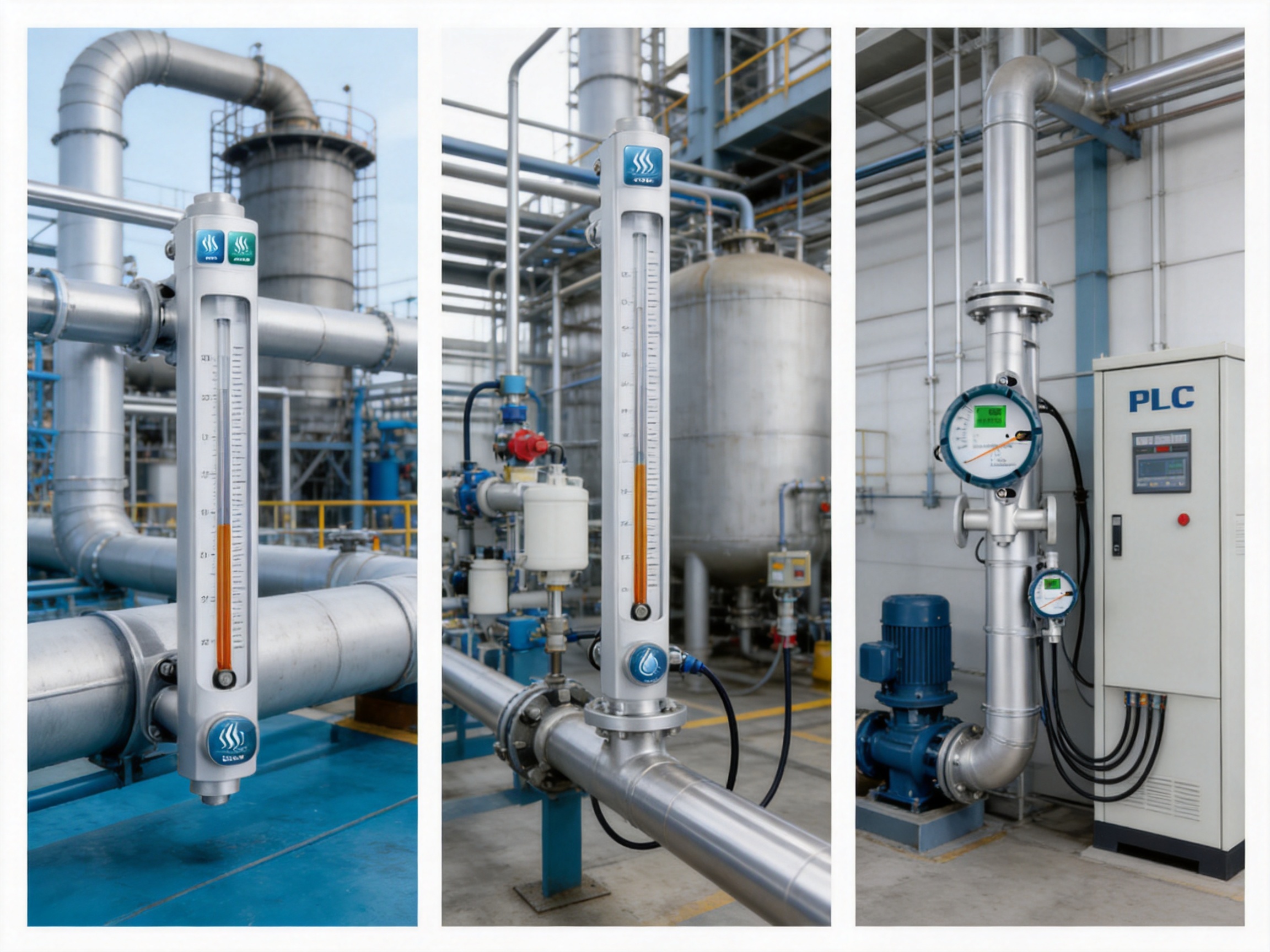
For power plants, chemical facilities, oil and gas installations, food and beverage operations, pharmaceutical utilities, metallurgy plants, water-treatment systems, and OEM skids, the SR41 offers a practical combination of robustness, visibility, connectivity, and lifecycle value. When correctly sized, installed, calibrated, and maintained, it can provide reliable flow information for process control, equipment protection, energy management, and day-to-day plant operation.
References
1. Manufacturer product information for the SR41 Series Metal Tube Rotameter, including operating ranges, materials, process connections, and electronic options.
2. Manufacturer technical information covering variable-area flow measurement, industrial flowmeter selection, calibration, and application engineering.
3. General engineering principles for variable-area flowmeters, float measurement, density correction, viscosity effects, and pressure-drop evaluation.
4. Industrial practices for the installation and maintenance of flowmeters in liquid, gas, steam, chemical, utility, and sanitary services.
5. International instrumentation practices for 4-20 mA analog signaling, HART® communication, hazardous-area equipment, ingress protection, and process connection selection.
6. General process safety guidance for pressurized equipment, hot steam systems, hazardous chemicals, electrical installations, and maintenance isolation procedures.
7. Application engineering references for flow measurement in power generation, chemical processing, oil and gas, food and beverage, pharmaceutical, metallurgy, and water-treatment facilities.
Product: SR41 Series Metal Tube Rotameter



Products
Contact Information
-

+86 18652789521
+86-0514-83633600 / 83633900 -

+86-0514-83633600 / 83633900
-

s@vner.com.cn
katherine@vner.com.cn -

No. 11 Xingye Road, Chenji Town Industrial Park, Yizheng, Yangzhou, China
