
 0
 EN
 English
 عربى
 Español
 русский
If you need any help, please feel free to contact us
Home / Author / Cai Shurong — After-Sales Project Coordinator / VE12 Electromagnetic Heat Meter for Accurate Thermal Energy Measurement
VE12 Electromagnetic Heat Meter for Accurate Thermal Energy Measurement
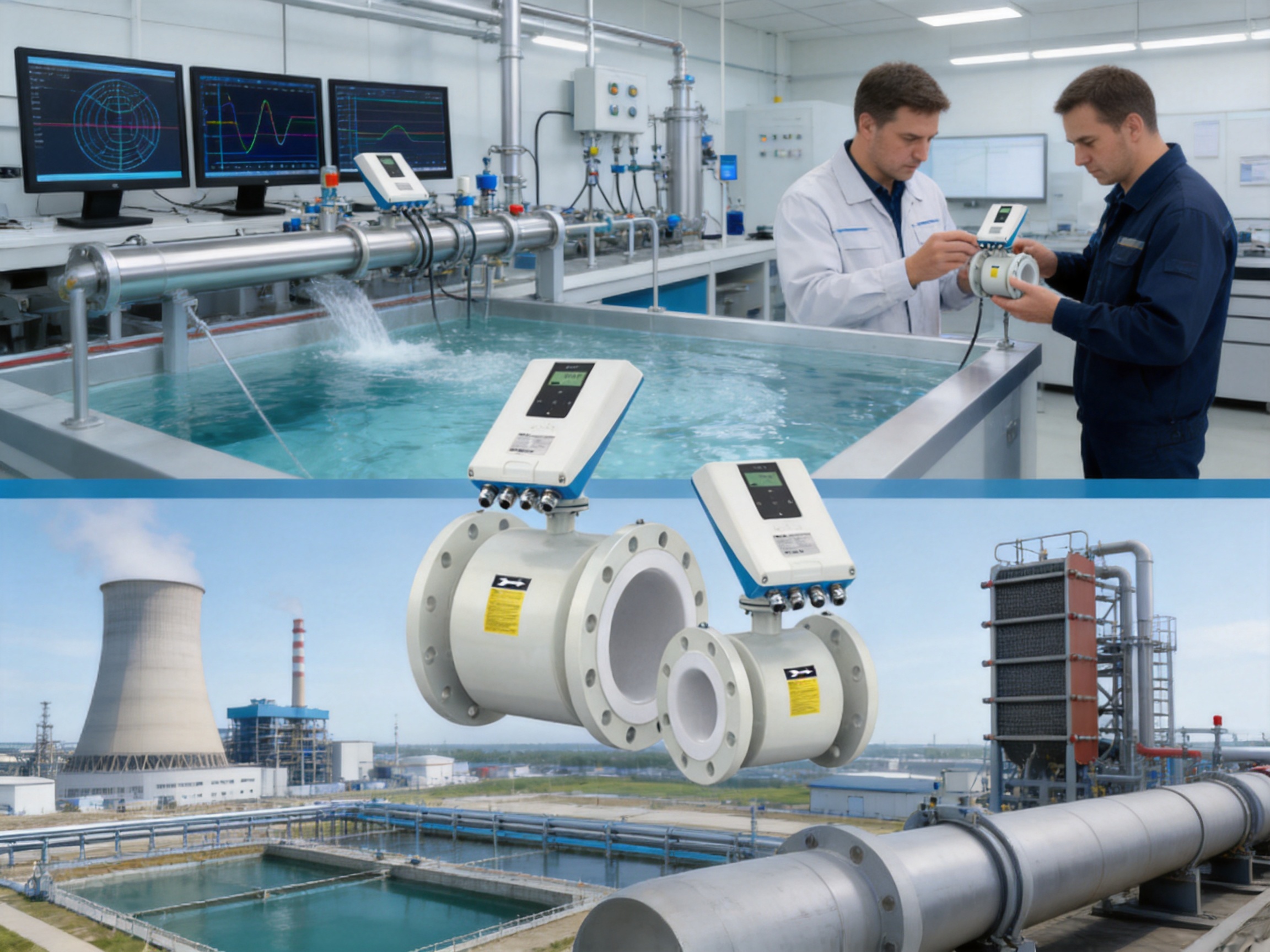
Thermal energy measurement has become increasingly important as building owners, district energy operators, industrial plants and utility companies seek better control of heating and cooling costs. Reliable measurement is needed not only for billing, but also for energy balancing, equipment optimization, maintenance planning and compliance with efficiency targets. The VE12 Electromagnetic Heat Meter is designed to provide the flow measurement component of a complete thermal energy metering system for hot water, chilled water and other electrically conductive liquid circuits.
Operating according to Faraday’s law of electromagnetic induction, the VE12 measures liquid flow without internal moving parts. When its flow data is combined with supply and return temperature measurements through a dedicated heat calculator, the system can determine the amount of thermal energy transferred through a heating or cooling circuit. This makes the VE12 suitable for district heating substations, district cooling networks, commercial buildings, residential complexes, industrial heat exchangers, central utility plants and process energy management systems.
Unlike mechanical meters that depend on turbines, impellers or other moving components, the VE12 uses an unobstructed measuring bore. This design minimizes pressure loss, reduces mechanical wear and supports stable operation over a long service life. It also provides measurement that is largely independent of liquid density, viscosity, pressure and temperature, provided that the liquid meets the required electrical conductivity conditions and the selected lining and electrode materials are appropriate for the application.
Why Thermal Energy Measurement Requires a Reliable Flow Sensor
Thermal energy is transferred whenever a fluid moves through a system with a temperature difference between the supply and return lines. In a heating circuit, hot water carries energy from a boiler, heat exchanger or district heating network to a building or process. In a cooling circuit, chilled water absorbs heat from air-handling units, fan-coil units, process equipment or production areas and returns to the chiller plant at a higher temperature.
The quantity of transferred energy depends on several variables, including flow rate, fluid heat capacity and the difference between supply and return temperature. A heat meter therefore requires more than a temperature sensor. It needs an accurate and repeatable flow measurement device installed in the appropriate supply or return line, together with matched temperature sensors and a calculator capable of processing the measured values.
If the flow measurement is unstable, the calculated energy value can fluctuate even when the actual system load is constant. If the meter introduces excessive pressure loss, pumps must work harder and the energy used to circulate the fluid increases. If a mechanical meter becomes affected by wear, deposits or changing viscosity, its readings can drift over time. The VE12 addresses these concerns through electromagnetic measurement, a full-bore construction and a configuration range intended for different pipe sizes, pressures, temperatures and installation environments.
Electromagnetic Measurement Principle
The VE12 operates on Faraday’s law of electromagnetic induction. When an electrically conductive liquid flows through a magnetic field, a voltage is generated perpendicular to both the direction of flow and the magnetic field. Electrodes installed in the meter body detect this induced voltage. The signal is proportional to the average velocity of the liquid passing through the measuring tube.
The electronic converter processes the electrode signal, compensates for relevant operating conditions and converts the result into a flow value. Depending on the selected configuration, the instrument can provide a 4–20 mA output, pulse or totalizer information, and Modbus RS-485 communication. These signals can be transmitted to a building management system, supervisory control and data acquisition platform, programmable logic controller or thermal energy calculator.
Because the measurement principle does not require a moving rotor, the meter can operate with very little mechanical disturbance to the fluid. The bore remains open, which is particularly valuable in heating and cooling systems where low pressure loss is important. The absence of rotating components also eliminates a major source of mechanical friction and wear.
Electromagnetic flow measurement is suitable for conductive liquids such as hot water, chilled water, water containing glycol and selected process liquids or slurries. The application must be reviewed carefully because non-conductive liquids, gases and steam cannot be measured using this principle. Correct grounding, appropriate installation and adequate pipe filling are also necessary for stable performance.
Key Product Specifications
| Item | Specification |
|---|---|
| Measuring principle | Electromagnetic measurement based on Faraday’s law |
| Product type | Electromagnetic flow sensor for thermal energy metering systems |
| Measured media | Electrically conductive liquids and slurries, including hot water, chilled water and glycol mixtures |
| Accuracy | Typically ±0.5% of rate |
| Repeatability | Typically 0.16% of rate |
| Flow velocity range | 0.3 to 10 m/s |
| Nominal diameter | DN6 to DN2000, approximately 1/8 inch to 80 inches |
| Process connection | Flanged connection according to DIN and ANSI/ASME standards |
| Nominal pressure | 0.6 to 4 MPa; ANSI 150 or ANSI 600 depending on model |
| Medium temperature | -40°C to +200°C, depending on lining and design |
| Flow direction | Bidirectional, including forward and reverse flow |
| Lining options | PTFE, FEP and PFA |
| Electrode options | 316L stainless steel, Hastelloy and titanium |
| Body material | Stainless steel 304 or 316 |
| Protection class | IP65, IP67 or IP68 depending on version |
| Power supply | 24 V DC or 220 V AC |
| Outputs | 4–20 mA, pulse and totalizer; Bluetooth option available |
| Digital communication | Modbus RS-485 |
| Electrical connection | M20×1.5 or 1/2-14 NPT |
| Certifications | ISO, CE and ATEX depending on model and region |
Full-Bore Construction and Low Pressure Loss
One of the most important advantages of the VE12 is its unobstructed measuring tube. The internal passage does not contain a turbine rotor, mechanical paddle or other restriction that interrupts the flow. This construction helps maintain a low permanent pressure drop across the meter.
Low pressure loss has a direct effect on system operating cost. In a district heating or building HVAC network, pumps must provide sufficient pressure to overcome the resistance of pipes, valves, heat exchangers and meters. A flowmeter with unnecessary internal resistance can increase pump duty and electrical consumption. By maintaining an open bore, the VE12 supports efficient hydraulic design and allows engineers to select a meter without adding a significant pressure penalty to the circuit.
The full-bore design is also helpful when the measured liquid contains small suspended particles or treatment additives. There is no rotor clearance that can become blocked by deposits. However, the liquid must still be compatible with the selected lining and electrodes, and the pipeline should be designed to prevent severe scaling, sediment accumulation or air entrainment.
Compared with many mechanical meters, the unobstructed structure is especially beneficial in larger pipe sizes. As nominal diameters increase, pressure loss and mechanical wear can become more costly. The VE12 range extending from DN6 to DN2000 allows the same basic electromagnetic measurement concept to be considered for small branch circuits and large district energy pipelines.
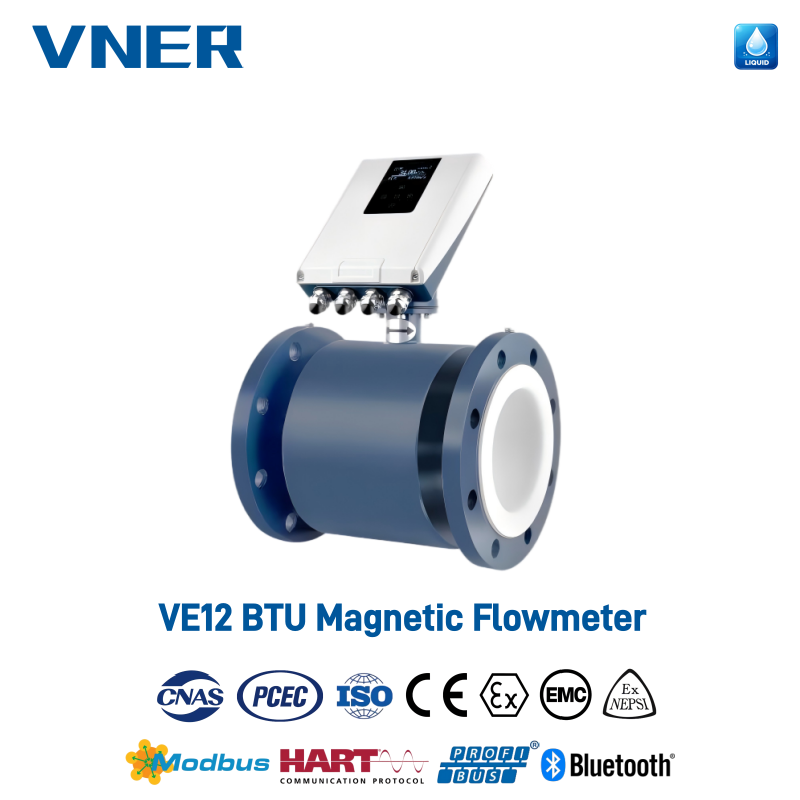
VE12 Electromagnetic Heat Meter (BTU)
Advantages Compared with Mechanical Flowmeters
Mechanical flowmeters can provide useful performance in many applications, but they typically contain moving components. Turbine, paddlewheel and other mechanical designs may be affected by bearing wear, contamination, viscosity variation and changes in flow profile. Their accuracy may also decline if the moving assembly becomes damaged or obstructed.
The VE12 has no internal moving parts, so there is no rotor bearing to lubricate and no impeller to replace as part of normal measurement operation. This can reduce maintenance requirements and improve long-term availability, particularly in systems that operate continuously or are installed in difficult-to-access locations.
Mechanical meters can also introduce a pressure drop as fluid passes through the sensing element. The VE12’s open bore minimizes this concern. This gives it an advantage in applications where pumping energy, hydraulic balance and low operating cost are priorities.
Another distinction is the influence of fluid properties. Mechanical meters are often more sensitive to viscosity, density and mechanical friction. Electromagnetic measurement is primarily related to liquid velocity and electrical conductivity. As a result, the VE12 can be suitable for water-based heating and cooling media across a broad range of operating temperatures and for glycol mixtures when the conductivity remains sufficient for measurement.
Electromagnetic meters also provide bidirectional measurement. This is useful during commissioning, flushing, temporary reversal of flow, system changeover or troubleshooting. Forward and reverse totals can be handled through the converter and control system, helping operators distinguish normal energy transfer from reverse circulation.
Advantages Compared with Ultrasonic Flow Measurement
Ultrasonic meters can be attractive for certain applications, particularly temporary measurement or situations where external installation is preferred. However, their performance may depend strongly on acoustic conditions, pipe material, liquid properties, installation quality and the presence of bubbles or suspended solids. Clamp-on systems may also require careful positioning and signal verification.
The VE12 is installed directly in the process line and measures through electrodes and a controlled magnetic field. Once properly sized, grounded and installed, it provides a stable in-line measurement arrangement. Its flanged process connection and broad range of lining and electrode options make it suitable for permanent installations where long-term repeatability is more important than rapid removal.
For thermal energy systems that already have defined pipework, permanent metering points and control cabinets, an in-line electromagnetic meter can offer a predictable engineering solution. The choice between electromagnetic and ultrasonic technology should still be based on application conditions, but the VE12 is particularly strong where the liquid is conductive and a robust full-bore meter is desired.
Materials for Heating, Cooling and Industrial Media
The VE12 can be configured with PTFE, FEP or PFA lining materials. Lining selection is important because the lining separates the conductive liquid from the metal body and must withstand the expected temperature, chemical environment and pressure conditions.
PTFE is widely used for chemically demanding services and for a broad temperature range. FEP and PFA can be selected when specific chemical resistance, manufacturing requirements or application conditions make them appropriate. The correct material depends on the liquid composition, concentration, temperature and operating pressure. For glycol-water mixtures, treated process water or other heat transfer fluids, engineers should verify both compatibility and conductivity before final selection.
Electrode materials include 316L stainless steel, Hastelloy and titanium. Stainless steel is suitable for many conventional water applications. Hastelloy can be considered for more aggressive chemical conditions, while titanium may be appropriate where corrosion resistance and compatibility with the measured liquid are important.
Stainless steel 304 or 316 bodies provide a durable mechanical structure. The choice between these body materials can be based on ambient conditions, external corrosion exposure, process requirements and project standards. For outdoor district energy installations, corrosive environments or washdown areas, the selected body, enclosure and connection design should be evaluated as part of the complete installation.
Accuracy, Repeatability and Measurement Stability
The stated accuracy of the VE12 is typically ±0.5% of rate, with repeatability typically around 0.16% of rate. Accuracy describes how closely the indicated flow corresponds to the actual flow under defined reference conditions. Repeatability describes how consistently the meter produces the same result when the same conditions are repeated.
Both characteristics matter in thermal energy metering. Accuracy supports fair allocation of heating and cooling costs and improves the credibility of energy reports. Repeatability supports trend analysis, equipment comparison and detection of changes in system performance. A meter that provides consistent data can help operators identify fouling heat exchangers, leaking valves, blocked strainers, pump degradation or abnormal operating schedules.
Actual field performance depends on correct sizing, sufficient upstream and downstream straight pipe, full-pipe conditions, proper grounding and stable electrical installation. Air pockets, partially filled pipes, excessive vibration and strong electromagnetic interference can affect measurement. The meter should therefore be treated as part of an engineered measurement point rather than as an isolated component.
The velocity range of approximately 0.3 to 10 m/s supports a variety of pipe sizes and operating conditions. Engineers should select the nominal diameter so that normal operating flow falls within a practical part of this range. Oversizing may reduce velocity and signal strength, while undersizing may create excessive velocity or pressure conditions. Proper sizing is one of the most effective ways to achieve reliable performance.
Integration with Thermal Energy Calculators
The VE12 is a flow sensor within a complete heat metering arrangement. It does not independently determine thermal energy unless it is connected to temperature measurement devices and a suitable heat calculator or energy management system. The usual arrangement includes a flowmeter, a pair of matched temperature sensors and a calculator that determines the energy transferred from the flow and temperature difference.
In a heating application, one temperature sensor is installed in the supply line and another in the return line. The heat calculator combines the temperature difference with the measured volumetric flow and the relevant fluid properties. In a cooling application, the direction of energy transfer is reversed, but the same general principle applies.
Integration may be performed through pulse output, 4–20 mA signals or Modbus RS-485 communication. Pulse and totalizer outputs can be useful for basic energy accumulation, while digital communication can provide more detailed data for supervisory systems. Modbus connectivity enables the flow value, totalized quantity, diagnostic information and other configured parameters to be read by an automation or building management platform.
A Bluetooth interface is available as an option for compatible versions. This can simplify local configuration, commissioning or service activities where wireless access is appropriate. Site security policies and local regulations should be considered when enabling wireless communication.
For billing applications, the complete system should be verified according to the applicable project standards and legal metrology requirements. Flowmeter accuracy alone does not define the accuracy of the entire thermal energy meter. Temperature sensor matching, calculator performance, installation quality and calibration procedures are also important.
Applications in District Heating
District heating networks distribute hot water from a central production plant to substations, buildings or industrial users. At each delivery point, accurate measurement helps the operator determine how much energy has been supplied and supports transparent billing or internal energy allocation.
Installed in a main supply or return line, the VE12 measures the volume of hot water passing through the substation. When paired with supply and return temperature sensors, the system calculates the thermal energy delivered to the building or consumer. The bidirectional function can also help during commissioning and abnormal operating conditions when the direction of circulation changes.
The low pressure loss of the electromagnetic design is valuable in district systems because pumps often serve long networks with substantial elevation and friction losses. Avoiding an additional restrictive element helps preserve available hydraulic capacity. The absence of moving parts can also reduce service interventions at remote substations.
For large distribution lines, the available diameter range up to DN2000 supports project-specific engineering. Pressure class, lining, electrode material and enclosure protection can be selected according to the network design and installation environment.
Applications in District Cooling and Building HVAC
District cooling plants circulate chilled water to commercial buildings, campuses, hospitals, hotels and industrial facilities. Building-level heat meters can determine the cooling energy consumed by a tenant, floor, department or process area. This supports cost allocation and encourages more efficient use of chilled water.
In HVAC systems, the VE12 can be installed in circuits serving air-handling units, fan-coil units, heat exchangers or complete building zones. Flow data can be sent to a building management system, where it is compared with supply and return temperatures, valve positions, pump speed and indoor comfort conditions.
Operators can use this information to identify underperforming equipment. For example, an unexpected reduction in flow may indicate a blocked filter, faulty control valve, pump issue or air problem. A normal flow rate combined with a small temperature difference may indicate inadequate heat transfer, low load or a fouled coil. The flowmeter therefore contributes not only to billing but also to practical HVAC diagnostics.
For multi-tenant buildings, individual meters can support transparent allocation of heating and cooling expenses. Accurate submetering can also help property managers establish energy benchmarks, compare operating schedules and verify the effect of retrofit projects.
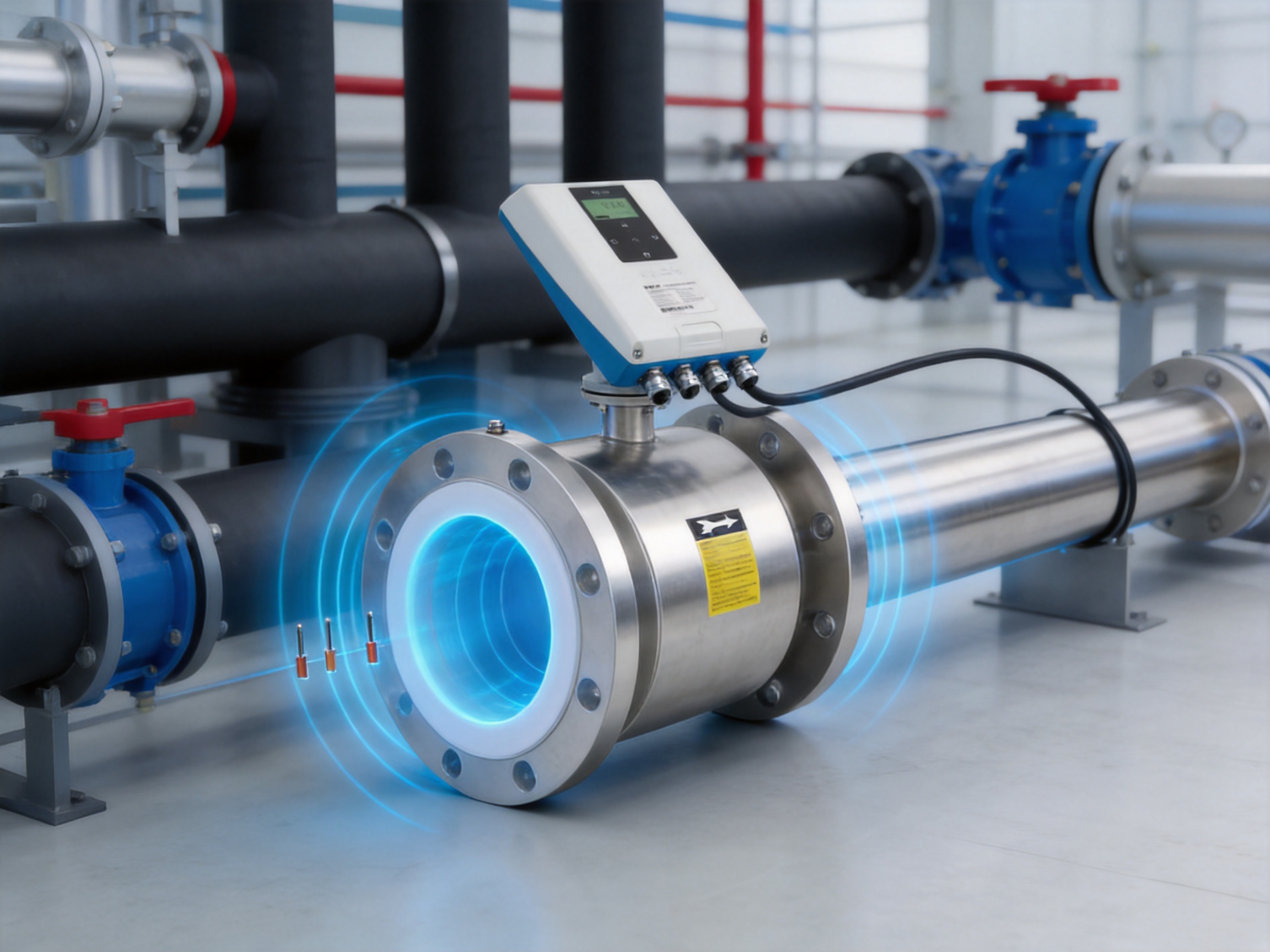
Industrial Energy Management and Heat Exchanger Monitoring
Industrial facilities frequently use hot water, chilled water or glycol mixtures in process heating and cooling circuits. These systems may include heat exchangers, reactors, dryers, ovens, cooling jackets, compressors and production machinery. Monitoring the flow through each circuit helps plant engineers understand how energy is distributed and where performance is changing.
The VE12 can be installed on the primary or secondary side of a heat exchanger. Combined with temperature measurement, it helps calculate the amount of energy transferred. If the calculated transfer falls while the flow remains stable, the exchanger may be fouled or the temperature difference may have changed. If the flow itself declines, the cause may be a valve, pump, strainer or control problem.
By providing continuous data, the meter supports condition-based maintenance. Maintenance teams can establish normal operating trends and investigate deviations before they become production interruptions. This approach may reduce unnecessary routine servicing while improving the ability to identify developing faults.
Glycol mixtures are commonly used where freeze protection is required. Because conductivity varies with concentration and formulation, the liquid should be checked to confirm that it meets the electromagnetic meter’s measurement requirements. The lining and electrode materials should also be selected based on chemical compatibility and operating temperature.
Manufacturing and Engineering Strengths
Jiangsu VNER Electronic Technology Co., Ltd. is an industrial flow measurement manufacturer based in Yangzhou, China. Since 2011, the company has developed and supplied electromagnetic, Coriolis, vortex, swirl, turbine, thermal mass, ultrasonic and metal tube rotameter products for liquid, gas and slurry applications.
The company operates modern facilities across three plants, with approximately 23,000 square meters of manufacturing space and a technical team of more than 150 people. This scale supports product development, assembly, testing, calibration and project coordination within an organized industrial environment.
Its product range covers different measurement principles rather than relying on a single technology. This is important for engineering selection because no flowmeter is suitable for every medium. Conductive liquids may be measured electromagnetically, gases may require vortex, turbine or thermal mass technology, and high-value multi-variable liquid applications may benefit from Coriolis measurement. The ability to work across these technologies gives the engineering team a broader basis for recommending the appropriate instrument.
VNER reports delivery of more than 2,000 engineering projects in over 30 countries. Experience across oil and gas, petrochemical, polysilicon, power, water and wastewater applications can help the company understand the practical requirements of industrial installations, including process conditions, communication requirements, documentation and project schedules.
For the VE12, manufacturing strength is not limited to assembling a converter and flow tube. A dependable electromagnetic flowmeter requires controlled preparation of the tube, consistent lining quality, accurate electrode installation, stable coil performance, reliable signal processing and complete calibration. Each of these areas can influence final field performance.
In-House Calibration and Quality Control
Calibration is a central part of flowmeter manufacturing. A flowmeter should be compared with a traceable reference under defined conditions so that its output can be evaluated and adjusted. In-house calibration capabilities allow the manufacturer to test instruments before shipment and provide product documentation for the customer.
For electromagnetic flowmeters, calibration helps verify the relationship between actual flow and the electrical signal generated by the instrument. It can also identify assembly or electronic issues before the meter reaches the installation site. Calibration records support traceability and provide a technical reference for commissioning and future service.
Quality control should cover incoming materials, body machining, lining processes, electrode installation, electronic assembly, enclosure sealing, pressure integrity and final performance testing. A controlled process reduces variation between individual units and supports consistent product behavior across different production batches.
VNER emphasizes certified quality processes, engineering-driven sizing and selection, traceability and product consistency. These practices are particularly relevant for energy metering, where measurement data may be used for financial settlement, internal cost allocation or regulatory reporting.
Automated and Repeatable Manufacturing Processes
Increasing automation can improve production consistency when it is combined with skilled engineering supervision and suitable inspection procedures. Automated or semi-automated processes can help control repetitive assembly operations, reduce variation and improve production efficiency.
For electromagnetic meters, repeatable manufacturing may include controlled coil assembly, standardized converter testing, consistent terminal and cable installation, and structured inspection of the measurement tube. Automated data collection can also connect production results with serial numbers, supporting product traceability throughout the service life.
Automation does not replace application engineering. Each project may require a different diameter, lining, electrode material, pressure class, power supply, communication interface or enclosure rating. A strong manufacturing system therefore needs both standardized processes for quality and flexible configuration for project requirements.
The VE12 can be supplied with 24 V DC or 220 V AC power, different electrical connections, multiple output choices and several protection classes. This configuration flexibility allows the instrument to be adapted to control cabinets, building services panels, outdoor substations and industrial installations.
Installation Considerations
Correct installation is essential for reliable electromagnetic flow measurement. The pipe should remain full at the measurement point, and the meter should not be installed where air can accumulate. In open or partially filled systems, a different measurement arrangement may be required.
The flow direction marked on the meter should be considered during installation, even though the VE12 can measure bidirectionally. Adequate straight pipe sections upstream and downstream help stabilize the flow profile. The exact requirements depend on the piping arrangement, nearby valves, pumps, elbows, reducers and other disturbances.
Grounding is especially important because the meter detects a small voltage generated in the liquid. The installation should include appropriate grounding rings, grounding electrodes or connection methods according to the pipe material and system design. Poor grounding can lead to unstable readings or increased electrical noise.
The meter should be positioned where it remains accessible for inspection, configuration and service. If the instrument is installed outdoors or in a humid area, the selected IP65, IP67 or IP68 version should match the expected environmental exposure. Cable glands and electrical connections should be installed correctly to preserve enclosure protection.
Before commissioning, engineers should confirm the liquid conductivity, pipe filling, flow direction, temperature, pressure, power supply and signal wiring. The heat calculator should also be configured with the correct meter factor, temperature sensor information, engineering units and communication settings.
Selection Guidance for Project Engineers
Selection begins with the measured medium. The VE12 is intended for electrically conductive liquids and suitable slurries, including water-based heating and cooling media. Engineers should identify the chemical composition, conductivity, normal temperature, minimum and maximum temperature, pressure range and presence of solids or additives.
The next step is to determine the operating flow range and pipe diameter. The meter should be selected so that the expected flow velocity is within the stated range and provides a sufficient signal during normal operation. Maximum flow, minimum flow, start-up flow and possible reverse flow should all be considered.
Process connection and pressure class must match the pipeline. Flanged versions can be specified according to DIN or ANSI/ASME requirements. For higher-pressure systems, the appropriate pressure rating must be confirmed for the complete meter assembly, including lining, flange and temperature conditions.
Temperature affects material selection and installation planning. The stated medium range extends from approximately -40°C to +200°C depending on lining and design. High-temperature heating circuits should be evaluated carefully to ensure that the selected lining, converter separation arrangement and cable configuration are suitable.
Finally, the project team should define the output and communication requirements. A basic system may use 4–20 mA and pulse outputs, while a networked building or industrial system may prefer Modbus RS-485. Totalizer functions are useful for energy accumulation, and optional Bluetooth can support local setup where permitted.
Lifecycle Value and Maintenance
The lifecycle value of a flowmeter includes purchase price, installation, energy consumption, calibration, maintenance, downtime and replacement cost. A low initial price does not necessarily result in the lowest total cost if the device creates pressure loss, requires frequent service or produces unreliable data.
The VE12’s fixed electromagnetic sensing structure avoids routine replacement of moving wear components. Its open bore can reduce hydraulic losses, while the selection of corrosion-resistant materials can extend service life when matched correctly to the liquid. These features may contribute to lower maintenance demand over the operating period.
Routine maintenance should still include visual inspection, checking of electrical connections, confirmation of grounding, review of diagnostic information and comparison of readings with expected system conditions. The absence of moving parts does not eliminate the need to maintain the pipeline, valves, pumps or temperature sensors that influence the complete heat metering system.
Periodic verification or recalibration may be appropriate depending on the application, legal requirements and customer quality system. For billing or contractual energy measurement, the verification schedule should be defined in advance and supported by appropriate documentation.
Comparison of Measurement Technologies
| Feature | VE12 Electromagnetic | Mechanical Turbine or Paddlewheel | Ultrasonic |
|---|---|---|---|
| Moving parts | None | Usually includes rotating components | None |
| Pressure loss | Very low due to unobstructed bore | May be significant depending on design | Generally low |
| Suitable media | Conductive liquids and selected slurries | Liquids compatible with mechanical assembly | Liquids or gases depending on design |
| Influence of viscosity | Generally low within application limits | Can be more significant | Depends on acoustic properties |
| Bidirectional flow | Supported | May require special design | Often supported, depending on model |
| Maintenance exposure | Low mechanical wear; electrical checks required | Moving components may require service | Installation and signal quality require attention |
| Large pipe suitability | Available up to DN2000 | May become costly or restrictive at large sizes | Available in many configurations |
| Permanent installation | Well suited | Well suited but maintenance may be higher | Suitable depending on design and installation |
Project Support and Customization
Industrial flow measurement projects often require more than a standard catalog item. The supplier may need to review process data, propose a nominal diameter, select materials, confirm pressure and temperature ratings, configure outputs and prepare documentation for the project team.
VNER supports EPC contractors, end users and OEM partners with engineering-driven sizing and selection. This type of support is valuable when the meter must be integrated into a larger heating, cooling, water treatment or industrial control system. Project documentation may include technical specifications, calibration information, wiring details, installation guidance and communication parameters.
Customization can include the nominal diameter, lining, electrode material, body material, power supply, process connection, enclosure protection, cable entry and communication interface. The correct configuration should always be based on the actual operating conditions rather than selected solely by pipe size or purchase price.
For OEM and packaged-system applications, consistent dimensions, repeatable electrical interfaces and stable documentation can simplify integration. For EPC projects, coordinated technical review can help avoid problems related to incompatible flanges, inadequate pressure ratings, incorrect signal types or unsuitable materials.
Q&A: VE12 Electromagnetic Heat Meter
What does the VE12 measure?
The VE12 measures the volumetric flow rate of electrically conductive liquids. It is used as the flow sensor in a thermal energy metering system. To calculate heating or cooling energy, the flow signal must be combined with supply and return temperature measurements through a heat calculator.
Can the VE12 measure hot water and chilled water?
Yes. It is designed for conductive liquids such as hot water and chilled water. Water-glycol mixtures and other heat transfer fluids may also be suitable if their conductivity, temperature and chemical compatibility meet the application requirements.
Does the VE12 contain a turbine or other moving part?
No. The electromagnetic measuring principle uses a magnetic field and electrodes rather than a rotor or impeller. This reduces mechanical wear and helps maintain a low pressure loss through the full-bore measuring tube.
Can it measure reverse flow?
Yes. The VE12 supports bidirectional flow measurement. Forward and reverse flow information can be used for commissioning, system diagnostics, changeover operations and applications where the direction may occasionally reverse.
What accuracy can be expected?
The typical stated accuracy is ±0.5% of rate, with repeatability typically around 0.16% of rate. Final field performance depends on correct sizing, installation, grounding, pipe filling, calibration and the operating conditions of the complete metering system.
What pipe sizes are available?
The nominal diameter range is approximately DN6 to DN2000, or about 1/8 inch to 80 inches. The suitable size should be selected according to the actual operating flow range, not only the connected pipe diameter.
Which lining materials are available?
Available lining options include PTFE, FEP and PFA. Selection depends on liquid composition, temperature, pressure and chemical compatibility. The supplier should review the application before the final material is chosen.
Which electrode materials can be specified?
The available electrode materials include 316L stainless steel, Hastelloy and titanium. Stainless steel suits many water services, while Hastelloy or titanium may be preferred for more demanding corrosion or compatibility conditions.
What outputs and communication options are available?
The VE12 can be configured with 4–20 mA, pulse and totalizer outputs. Modbus RS-485 digital communication is available, and Bluetooth is offered as an option for compatible versions. The selected interface should match the heat calculator, building management system or industrial control platform.
Can the VE12 be used for billing?
It can serve as the flow measurement component of a billing or energy allocation system. However, billing performance depends on the complete system, including temperature sensors, heat calculator, installation, calibration and applicable legal metrology requirements. The project specification should define the required approvals and verification procedures.
What power supplies are supported?
Typical power supply options are 24 V DC and 220 V AC. The correct version should be selected according to the available site power, control cabinet design and local electrical requirements.
What protection classes are available?
Depending on the version, protection classes include IP65, IP67 and IP68. The selection should reflect whether the meter is installed indoors, outdoors, in a damp plant room, in a pit or in another environment with possible water exposure.
Why is grounding important?
The induced measurement signal is relatively small, so grounding helps provide a stable electrical reference and reduce interference. The grounding method depends on the pipe material, lining, process conditions and installation design.
How does the VE12 compare with a mechanical flowmeter?
The VE12 has no moving parts, creates very little pressure loss and is generally less affected by mechanical wear, viscosity changes and density variation. A mechanical meter may be suitable for some applications, but its moving components can require more maintenance and may be more sensitive to deposits or friction.
What should be checked before ordering?
The main items are medium conductivity, chemical composition, minimum and maximum flow, pipe diameter, pressure, temperature, process connection, lining, electrode material, power supply, output signals, communication protocol, enclosure protection and certification requirements.
Conclusion
The VE12 Electromagnetic Heat Meter provides a stable and practical flow measurement solution for thermal energy systems. Its Faraday-based measurement principle, unobstructed bore, lack of moving parts, bidirectional capability and broad configuration range make it suitable for district heating, district cooling, building HVAC and industrial energy management.
Its value is strongest when it is selected as part of a complete engineered system. Combined with matched temperature sensors and a dedicated heat calculator, it supports measurement of delivered or consumed thermal energy. Connected to a building management system or industrial control platform, it can also support energy analysis, equipment diagnostics and performance improvement.
The product’s competitive advantages include low pressure loss, reduced mechanical wear, broad diameter coverage, flexible lining and electrode materials, multiple communication options and compatibility with demanding permanent installations. These benefits are supported by the manufacturing and engineering capabilities of Jiangsu VNER Electronic Technology Co., Ltd., including modern production facilities, in-house calibration, controlled quality processes, traceability, technical project experience and an extensive portfolio of flow measurement technologies.
For engineers and operators seeking dependable flow measurement in conductive heating and cooling circuits, the VE12 offers a combination of measurement stability, installation flexibility and lifecycle practicality. Correct application review, sizing, material selection, grounding and commissioning remain essential, but with these conditions properly addressed, the meter can provide reliable data for energy billing, system balancing and long-term operational improvement.
References
1. Faraday, M. Principles of electromagnetic induction and their application to electrical measurement.
2. International Organization for Standardization. Measurement of fluid flow in closed conduits and general flowmeter performance principles.
3. International Electrotechnical Commission. Requirements and environmental protection classifications for electrical equipment enclosures.
4. International Organization for Standardization. Quality management systems and production traceability practices.
5. Building energy management engineering practices for heating, ventilation and air-conditioning systems.
6. District heating and district cooling system design principles for thermal energy measurement.
7. Industrial instrumentation guidelines for electromagnetic flowmeter installation, grounding and commissioning.
Product: VE12 Electromagnetic Heat Meter (BTU)



Products
Contact Information
-

+86 18652789521
+86-0514-83633600 / 83633900 -

+86-0514-83633600 / 83633900
-

s@vner.com.cn
katherine@vner.com.cn -

No. 11 Xingye Road, Chenji Town Industrial Park, Yizheng, Yangzhou, China
