
 0
 EN
 English
 عربى
 Español
 русский
If you need any help, please feel free to contact us
Home / Author / Cai Shurong — After-Sales Project Coordinator / Straight-Tube Coriolis Mass Flowmeters for Precise, Clean and Stable Process Measurement
Straight-Tube Coriolis Mass Flowmeters for Precise, Clean and Stable Process Measurement
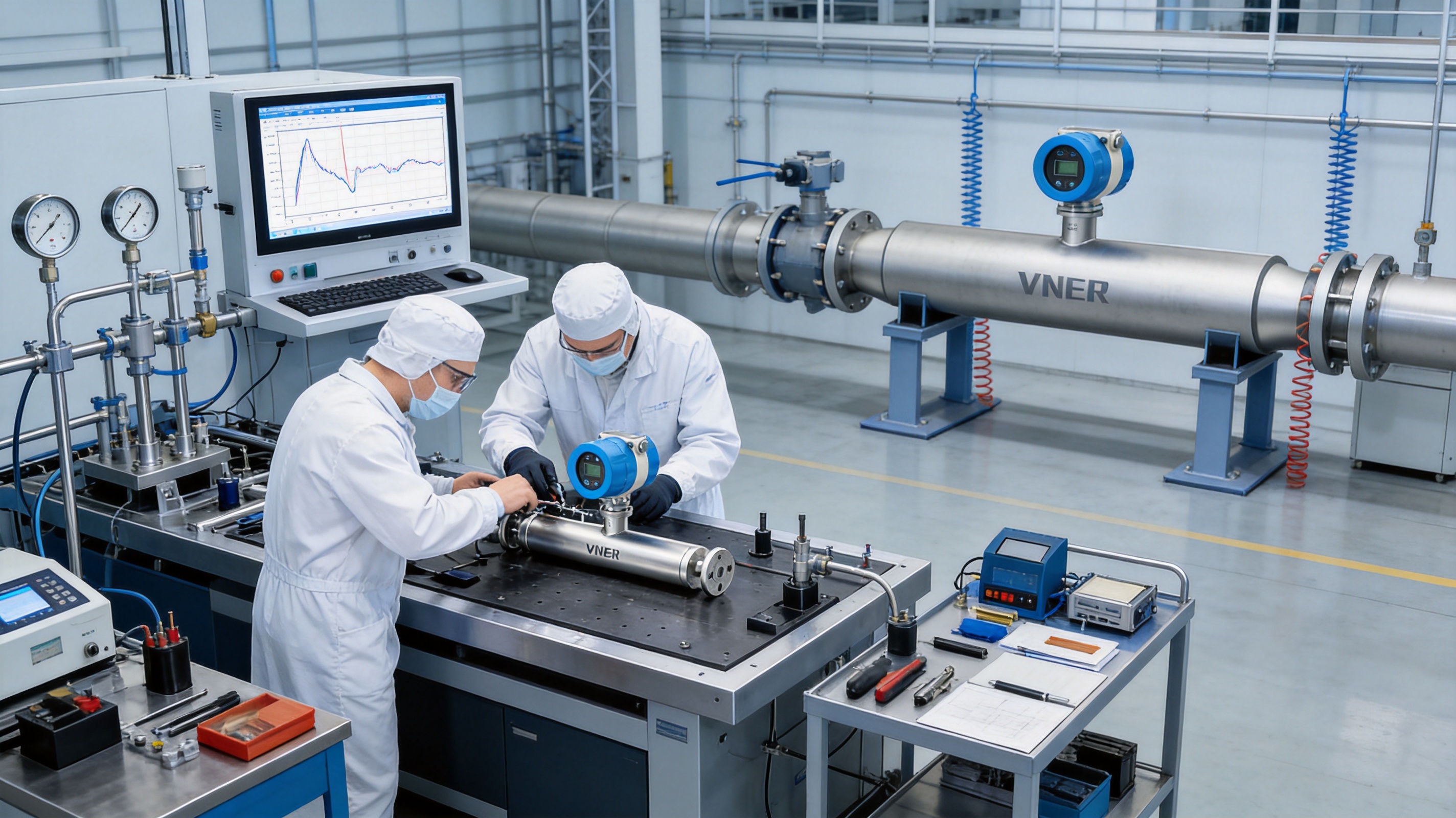
Accurate flow measurement is essential wherever production quality, material balance, energy efficiency, safety, and regulatory compliance depend on knowing exactly how much fluid is moving through a process. Conventional volumetric flowmeters can perform well in stable, predictable conditions, but many modern applications require more information than volume alone. Operators may need direct mass flow, density, temperature, and calculated volume flow from one instrument, even when the medium is viscous, corrosive, shear-sensitive, hygienic, or subject to changing process conditions.
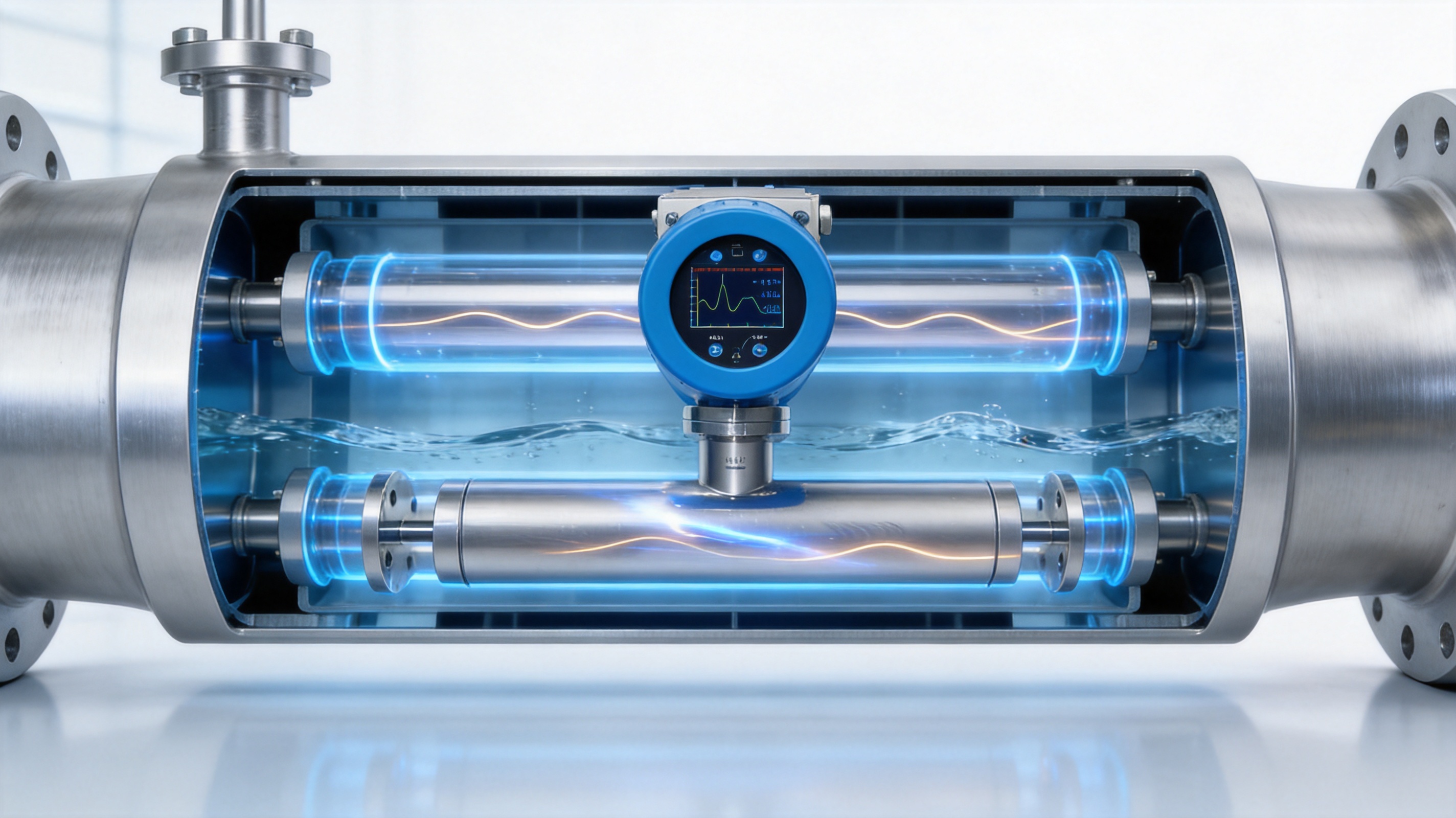
The KSMF-S Series Coriolis Mass Flowmeter is designed for these demanding measurement requirements. It is a high-precision straight-tube Coriolis meter intended for liquids, gases, and liquefied gases. Its dual parallel measuring tubes are driven into controlled oscillation. As fluid passes through the tubes, Coriolis forces generate a measurable phase difference between the inlet and outlet portions. This phase difference is proportional to mass flow, while the tube oscillation frequency provides information about fluid density. Integrated temperature sensing further expands the instrument’s process measurement capability.
Unlike many traditional meters that infer mass flow from a combination of volumetric flow, temperature, pressure, and assumed density, a Coriolis meter measures mass flow directly. This fundamental operating principle gives the KSMF-S a strong advantage in process control, batching, dosing, blending, custody-related measurement, and production monitoring. It also makes the meter less dependent on flow profile, fluid conductivity, or external compensation systems.
The straight dual-tube construction adds another important advantage. The internal flow path contains no impeller, turbine rotor, flow splitter, or other moving obstruction. This results in low pressure loss, low shear, excellent drainability, and simplified cleaning. The design is particularly valuable in food and beverage, pharmaceutical, biotechnology, chemical, semiconductor, and other industries where hygiene, product recovery, and rapid changeover are important.
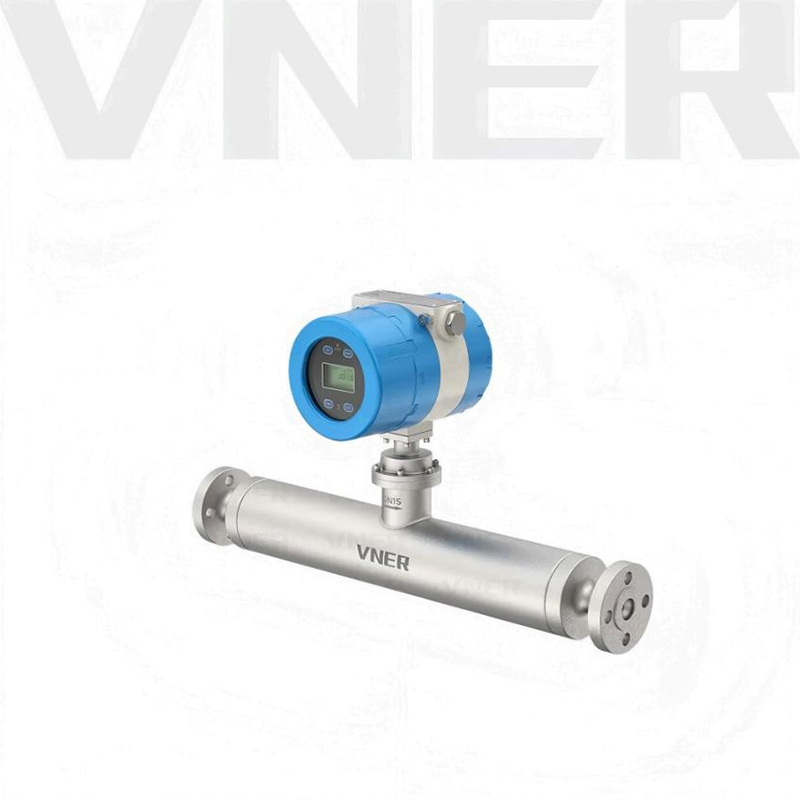
KSMF S-Series Coriolis Mass Flowmeter-副本
Direct Mass Measurement for Modern Industrial Processes
Volumetric flow varies when temperature, pressure, composition, or density changes. A liquid that occupies a particular volume at one temperature may have a different mass at another temperature. Gas measurement is even more sensitive to pressure and temperature variation. If a process depends on material quantity rather than occupied volume, direct mass measurement is usually the more reliable basis for control.
The KSMF-S measures the mass flow effect created by the interaction between moving fluid and vibrating measuring tubes. When there is no flow, the inlet and outlet sections of the tubes oscillate in phase. Once fluid begins to move, the Coriolis effect causes the tube motion to twist or shift slightly. Sensors detect the difference between the inlet and outlet signals, and the transmitter converts this differential phase shift into a mass flow value.
This measurement method does not require the user to know the fluid’s exact density in advance. It can therefore support processes involving changing concentrations, blended liquids, variable product formulations, or fluids whose properties fluctuate during production. The same instrument can continuously monitor mass flow while also providing measured density and process temperature.
For batching, direct mass measurement can reduce the number of instruments and calculations required. A filling or dosing system can stop at a target mass rather than relying on a volume-based estimate. In blending systems, the controller can compare the mass contribution of multiple ingredients. In chemical dosing, the meter can help maintain a consistent active-material ratio even when the carrier liquid changes in temperature or composition.
Mass Flow, Density, Temperature and Volume Flow
The KSMF-S supports multi-variable process monitoring. Mass flow is the primary measurement, while density and temperature provide additional information about product condition and process stability. Volume flow can be calculated from the measured mass flow and density, allowing operators to view the process in the engineering unit most useful for a specific application.
Density data can reveal concentration changes, dilution errors, entrained gas, product substitution, or formulation instability. For example, a beverage producer can use density trends to monitor syrup consistency, while a chemical plant can observe whether a solution is being prepared within the intended concentration range. A pharmaceutical process may use density as an additional batch verification parameter rather than relying only on flow totalization.
Temperature measurement is equally important because many industrial fluids change viscosity and density as their temperature changes. A built-in process temperature signal can improve monitoring and reduce the need for a separate temperature sensor at the same measurement point. When mass flow, density, and temperature are viewed together, the operator gains a more complete understanding of the process.
How the Straight Dual-Tube Design Works
The measuring element contains two parallel tubes arranged for structural symmetry. An excitation system causes both tubes to oscillate at a controlled frequency. The transmitter continuously evaluates the signals from sensors positioned at the inlet and outlet portions of the tube assembly.
When the process is static, the signals remain synchronized. When fluid flows through the vibrating tubes, the Coriolis forces cause the upstream and downstream sections to respond differently. The resulting time or phase shift is extremely small, but modern electronic processing can measure it accurately and convert it into a stable mass flow output.
The natural frequency of the vibrating system is influenced by the mass of the tubes and the fluid contained inside them. Because fluid density affects the overall vibrating mass, the measured oscillation frequency can be used to determine density. The instrument therefore obtains two important process variables from the same measuring structure: phase difference for mass flow and frequency response for density.
This arrangement differs from a conventional mechanical flowmeter, where a rotating element or obstruction must interact with the fluid. It also differs from an electromagnetic flowmeter, which requires a conductive liquid and primarily measures velocity-based volume flow. The Coriolis principle provides a broad application range for conductive and non-conductive liquids, gases, and liquefied gases, provided that the selected meter size and process conditions are suitable.
Balanced Mechanical Structure
The parallel tube structure is designed to improve mechanical balance. Symmetrical tube movement helps reduce the influence of external vibration and supports a stable zero point. A stable zero is important because mass flowmeters must distinguish between genuine low flow and small signal changes caused by mechanical or environmental disturbances.
Reduced zero drift can improve repeatability during intermittent operation, batching, and start-stop processes. It is also valuable when the meter is installed in a low-flow application where the measured signal is relatively small. The transmitter’s signal processing, together with proper installation and commissioning, allows the instrument to maintain dependable performance in demanding industrial environments.
Advantages Over Conventional Flow Measurement Technologies
Every flowmeter technology has a suitable operating range, and selection should always consider the fluid, pressure, temperature, line size, accuracy target, and installation conditions. The strength of a Coriolis meter is its ability to measure mass flow directly while offering density and temperature information in the same device.
| Measurement Technology | Primary Measurement | Typical Limitation | Key KSMF-S Advantage |
|---|---|---|---|
| Electromagnetic | Volumetric flow of conductive liquids | Cannot measure non-conductive liquids or gases; density is not measured directly | Measures mass flow and density for a wider range of fluids |
| Vortex | Volumetric flow based on vortex frequency | May require suitable velocity, stable flow conditions, and compensation for changing density | Direct mass measurement with additional density and temperature data |
| Turbine | Volumetric flow based on rotor speed | Moving parts can wear and may be sensitive to contamination or viscosity | No internal moving parts and lower maintenance demand |
| Rotameter | Local volumetric indication | Limited automation, data integration, and application flexibility | Electronic multi-variable output for advanced process control |
| Ultrasonic | Velocity or transit-time flow | Performance can depend on fluid properties, installation, and acoustic conditions | Direct mass flow and density measurement through tube vibration |
| Thermal mass | Mass flow of gases or selected fluids | Application range may be affected by gas composition and thermal properties | Suitable for liquids, gases, and liquefied gases with density measurement |
| Coriolis | Direct mass flow and density | May involve higher initial investment than basic volumetric meters | Combines measurement depth, low maintenance, and high process value |
The comparison does not mean that one technology is universally superior. Instead, it demonstrates why the KSMF-S is particularly useful when the process requires direct mass information, density monitoring, hygienic design, or stable measurement under changing fluid conditions. The additional data can reduce reliance on separate instruments and improve the quality of process decisions.
Low Pressure Loss
Pressure loss affects pumping energy, system capacity, product handling, and process stability. The straight measuring path of the KSMF-S avoids abrupt restrictions and internal flow obstructions. This supports lower pressure loss than many meters with significant internal structures, which is valuable in gravity-fed systems, low-pressure transfer lines, and applications involving viscous products.
Lower pressure loss can also reduce the need for oversized pumps. In liquid transfer systems, minimizing unnecessary resistance helps preserve available pressure for other process equipment. In delicate products, a smoother flow path may reduce unwanted stress and support more controlled handling.
Low Shear and Product Protection
Some materials are sensitive to shear. Emulsions, biological suspensions, polymer solutions, creams, syrups, and other structured fluids may change characteristics when exposed to excessive mechanical action. Because the KSMF-S has no rotor or internal flow divider, it can provide a gentler measurement path than many mechanically obstructed devices.
Lower shear is not a substitute for complete process validation, but it can be a meaningful design advantage where product texture, particle integrity, viscosity, or biological performance must be protected. It also supports applications where the meter should introduce as little disturbance as possible into the process stream.
No Upstream or Downstream Straight-Run Requirement
Many flowmeters require a specific length of unobstructed pipe upstream and downstream to develop a stable flow profile. Elbows, valves, pumps, reducers, and other fittings can distort the flow and reduce accuracy if the installation does not provide sufficient straight pipe.
The KSMF-S is less dependent on the incoming flow profile because its measurement principle responds to the tube vibration and Coriolis effect rather than relying primarily on a fully developed velocity profile. This provides greater flexibility when space is limited or when the piping arrangement cannot easily be redesigned.
Although good installation practice remains important, the reduced straight-run requirement can simplify retrofit projects. It may also lower installation cost in compact skids, hygienic production lines, and equipment packages where every section of pipe is carefully planned.
Hygienic Design and CIP/SIP Compatibility
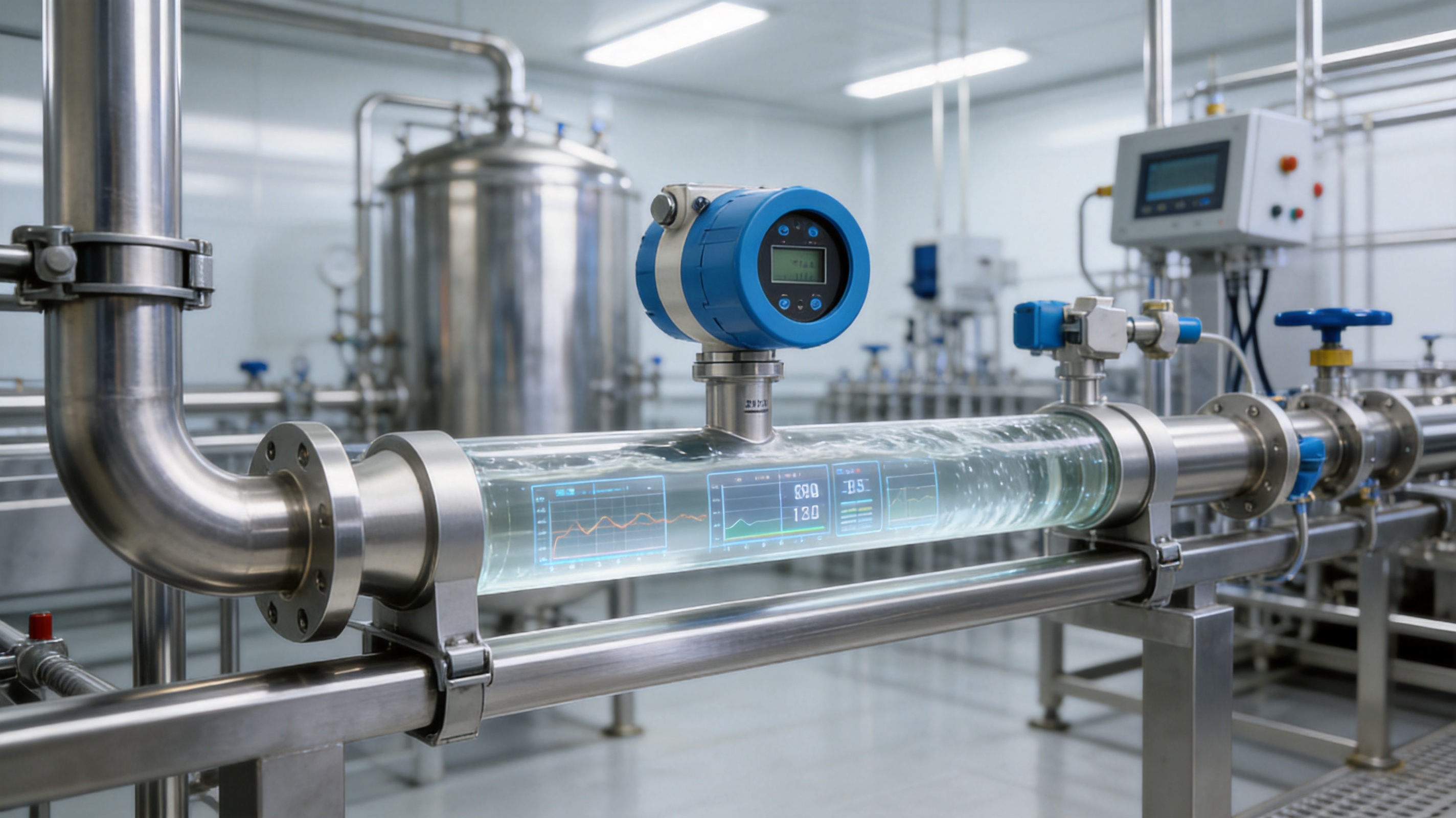
Hygienic processes require more than accurate measurement. The meter must support cleaning, sterilization, drainage, material compatibility, and contamination control. The straight-tube geometry of the KSMF-S is well suited to applications where product residue cannot be allowed to collect inside the meter.
With a clean, unobstructed flow path, the instrument can support full drainability and rapid cleaning. This is especially important in dairy plants, beverage facilities, pharmaceutical production, biotechnology, and high-purity chemical handling. In these environments, the time required for cleaning and changeover directly affects plant availability and production cost.
Clean-in-Place systems circulate cleaning solutions through the installed equipment without dismantling the process line. Steam-in-Place systems use controlled steam conditions for sterilization. The KSMF-S design can be selected for applications requiring CIP and SIP practices, subject to the specific pressure, temperature, sealing, connection, and material requirements of the installation.
A meter that cleans effectively can help reduce cross-batch contamination risks. It can also improve product recovery by minimizing dead zones and retained material. The straight-tube design is therefore not only a mechanical feature; it contributes to a broader hygienic process strategy.
Materials for Aggressive and Sensitive Fluids
Process fluids may contain acids, alkalis, solvents, chlorides, additives, or other chemically active components. The KSMF-S can be supplied with high-grade stainless steel or Hastelloy options for applications requiring improved corrosion resistance. Material selection should be based on the complete chemical composition, concentration, operating temperature, pressure, cleaning agents, and expected service life.
High-grade materials are important in pharmaceutical and chemical processing, where corrosion can affect measurement stability, contaminate the product, or create an unplanned maintenance event. They are also useful in applications where frequent cleaning cycles expose the wetted parts to aggressive solutions.
For high-purity services, the wetted construction, surface condition, connections, seals, and cleaning procedure should be evaluated as a complete system. The meter should be specified together with the piping and process equipment rather than treated as an isolated component.
Applications Across Multiple Industries
Food and Beverage Processing
Food and beverage plants handle liquids with widely varying viscosity, density, temperature, and composition. Syrups, glucose solutions, edible oils, dairy products, alcohols, flavorings, and concentrated ingredients often require accurate dosing and cleanable equipment.
The KSMF-S can measure the mass of an ingredient directly, helping operators maintain recipe consistency. A mass-based recipe is less affected by temperature-related volume changes than a purely volumetric recipe. Density data can also provide an additional indication of concentration, dilution, or product uniformity.
In dairy processing, the clean straight-tube geometry can support hygienic design objectives. In syrup production, low pressure loss can help preserve pumping efficiency. In edible oil handling, mass measurement can improve inventory reconciliation and filling control.
Pharmaceutical and Biotechnology Production
Pharmaceutical and biotechnology processes often require careful control of batch quantities, traceability, contamination prevention, and cleaning validation. Liquids may include solvents, active pharmaceutical ingredients, buffers, fermentation media, and high-purity process chemicals.
Direct mass measurement can support accurate formulation and filling. Density and temperature monitoring can provide supplementary evidence that a batch is within specification. The instrument’s suitability for CIP and SIP-oriented processes makes it relevant to lines where rapid sterilization and reliable drainage are essential.
In sterile filling or transfer operations, stable low-flow performance is important because small deviations can affect batch yield and dosage accuracy. The absence of internal moving parts also reduces concerns associated with rotor wear or particle generation from mechanical movement inside the flow path.
Chemical Processing
Chemical plants need instruments that can handle changing density, corrosive fluids, high viscosity, and complex mixtures. Organic acids, solvents, alkalis, additives, and specialty chemicals may require corrosion-resistant wetted materials and dependable measurement despite changing operating conditions.
The KSMF-S can measure mass flow while monitoring density and temperature in chemical dosing skids, blending systems, reaction feeds, and transfer lines. The density output may help identify concentration changes or unexpected material substitution. When a process depends on a precise ratio between multiple components, direct mass measurement can improve control accuracy.
For corrosive service, material compatibility must be reviewed carefully. Hastelloy or suitable stainless-steel construction may improve resistance, but no material should be selected without checking the actual chemical composition and operating conditions.
Water and Wastewater Treatment
Water treatment systems use coagulants, flocculants, neutralizers, disinfectants, acids, and alkalis. Precise dosing is necessary to maintain treatment performance while avoiding unnecessary chemical consumption.
A Coriolis meter can help verify the mass of chemical delivered to a dosing point. This is useful where solution concentration changes over time or where temperature affects density. In ultrapure water systems, semiconductor facilities, and specialized treatment plants, the meter can support controlled delivery of high-value or highly reactive chemicals.
Energy and Biofuel Applications
Ethanol, biodiesel, thermal oils, and blended fuels can vary in density and composition. A volumetric meter may require additional compensation when the product changes with temperature or when several components are blended together.
The KSMF-S provides direct mass flow and density information for blending, transfer, inventory control, and process monitoring. In biofuel production, accurate ratio control can help maintain product consistency. In thermal oil systems, temperature measurement provides valuable context for interpreting flow behavior and equipment performance.
Pulp, Paper and Textile Production
Pulp and paper plants use bleaching agents, sizing liquids, coatings, additives, and process chemicals. Textile plants handle dye solutions and specialty additives that may be viscous, chemically active, or sensitive to contamination.
The KSMF-S can support dosing accuracy and help maintain consistent chemical ratios. Its unobstructed flow path may reduce clogging concerns compared with meters containing narrow internal passages or moving elements. Proper material selection remains essential where chemicals are corrosive or where solids may be present.
Semiconductor and Clean Industries
Semiconductor manufacturing requires precise delivery of high-purity and often aggressive chemicals. Stable measurement, material compatibility, cleanability, and traceability are central to the process design.
The KSMF-S can be considered for ultrapure chemical handling, dosing, and transfer where its direct mass measurement and density monitoring provide useful process information. The selected configuration should be evaluated against the facility’s purity standards, connection requirements, surface finish expectations, cleaning protocols, and chemical compatibility criteria.
Typical Process Use Cases
High-Viscosity Syrup Dosing
In beverage production, syrup dosing must be repeatable and hygienic. Temperature changes can affect viscosity and volume, while product residue can create cleaning challenges. A straight-tube Coriolis meter can measure the syrup by mass, reduce flow obstruction, and support CIP procedures.
The density signal may also provide a useful indication of syrup consistency. If the measured density moves outside the expected range, operators can investigate dilution, temperature, formulation, or upstream mixing conditions before a large quantity of off-specification product is produced.
API Flow Monitoring
During pharmaceutical filling or formulation, accurate delivery of active ingredients and process liquids is critical. A Coriolis meter can provide a direct mass signal for batch control while temperature and density values offer additional monitoring parameters.
Because the instrument has no internal rotor, there is no mechanical impeller that must be cleaned, inspected, or replaced. The straight flow path supports cleaning and sterilization planning, although the complete installation must still comply with the facility’s validation requirements.
Acid and Alkali Dosing
Chemical dosing skids often handle concentrated or diluted acid and alkali solutions. The mass of chemical delivered may be more important than its volume, particularly when concentration and temperature vary. A Coriolis meter can help maintain the desired dosing ratio while providing density data that may indicate solution strength.
Correct wetted-material selection, appropriate seals, and compatible process connections are essential. The meter should also be installed with suitable isolation, flushing, pressure relief, and maintenance provisions.
Disinfectant Management in Ultrapure Water Systems
Ultrapure water systems may require precise chemical addition and strict control of contamination. The KSMF-S can support real-time monitoring of disinfectant flow and provide a stable measurement basis for automated dosing.
When used in a clean production environment, the meter’s construction, surface condition, connection type, and cleaning method should be coordinated with the rest of the system. Measurement accuracy is important, but cleanliness and compatibility are equally significant.
Biofuel Blending
Biofuel blending requires accurate component ratios and dependable measurement under changing temperature and density conditions. Direct mass measurement can simplify blend calculations and improve repeatability.
The density output helps operators observe changes in the blended product. When combined with automated valves, pumps, and control software, the KSMF-S can become part of a closed-loop blending or transfer system designed for consistent product quality.
Manufacturing Strengths and Engineering Approach
Product performance depends not only on the measurement principle but also on manufacturing discipline. Tube geometry, welding quality, sensor placement, material consistency, electronic calibration, sealing, pressure testing, and final verification all influence the reliability of a Coriolis flowmeter.
Jiangsu VNER Electronic Technology Co., Ltd. is a specialized industrial flowmeter manufacturer based in Yangzhou, China. Since 2011, the company has focused on flow measurement products for liquid, gas, and slurry applications. Its product portfolio includes electromagnetic, Coriolis, vortex, swirl, turbine, thermal mass, ultrasonic, and metal tube rotameter technologies.
The company operates modern facilities covering approximately 23,000 square meters across three plants and maintains a technical team of more than 150 people. Its engineering experience includes over 2,000 projects in more than 30 countries. This project exposure is valuable because flowmeter performance must be matched to actual process conditions rather than selected solely by nominal pipe size.
In-House Calibration
Calibration is central to the quality of any flowmeter. A controlled calibration process provides the relationship between the actual test flow and the instrument’s indicated value. For Coriolis meters, calibration also supports verification of mass flow response, density behavior, zero stability, and transmitter performance.
In-house calibration allows the manufacturer to maintain closer control over production feedback. If a test identifies a deviation, engineering and production teams can investigate the cause, adjust the product, and verify the correction within the same manufacturing system. This contributes to product consistency and reduces dependence on disconnected external processes.
Calibration records also support traceability. For industrial users, traceable documentation can be important during commissioning, quality audits, maintenance reviews, and process validation. The exact documentation supplied should be confirmed during quotation and technical specification.
Engineering-Based Sizing and Selection
Correct sizing is more important than simply choosing a meter that matches the pipe diameter. A flowmeter should be evaluated according to minimum and maximum flow, normal operating flow, fluid density, viscosity, pressure, temperature, gas content, corrosiveness, cleaning conditions, and required output signals.
VNER’s engineering-oriented approach supports the selection process by considering the actual application. This can help avoid common problems such as selecting a meter that is too large for the normal flow range, overlooking pressure loss, choosing incompatible wetted materials, or failing to account for two-phase conditions.
For a KSMF-S application, the customer should provide as much process information as possible. This may include fluid name and composition, density range, viscosity, line size, flow range, operating and design pressure, operating and cleaning temperature, connection standard, required accuracy, power supply, output type, communication protocol, and hazardous-area requirements if applicable.
Certified Quality Processes and Traceability
Industrial users increasingly require product traceability, controlled documentation, and repeatable inspection procedures. Certified quality processes help organize manufacturing activities around defined requirements rather than informal inspection alone.
Traceability can cover materials, components, production stages, calibration results, inspection records, and final product identification. This is particularly important for pharmaceutical, chemical, energy, and EPC projects where equipment documentation must be reviewed before commissioning.
Automated and Consistent Production
Increasingly automated manufacturing can improve repeatability in assembly, testing, and inspection. Automation does not eliminate the need for skilled engineering; instead, it helps reduce variation in repeatable operations while allowing technical personnel to focus on process design, verification, and improvement.
For Coriolis flowmeters, production consistency matters because the measuring tubes and supporting structures must maintain controlled mechanical characteristics. Consistent welding, assembly alignment, sensor installation, and electronic configuration all contribute to stable instrument behavior.
Support for EPC, OEM and End-User Projects
A flowmeter manufacturer may serve several types of customers, including EPC contractors, equipment builders, distributors, and end users. Each group has different expectations. EPC contractors often require technical submittals and documentation. OEM customers may need repeatable dimensions, configuration support, and private-label or integrated solutions. End users may need application review, commissioning support, spare parts, and long-term service.
VNER’s experience across industrial projects enables it to support these different purchasing models. The company’s broader product portfolio can also simplify supplier coordination when a project requires several flow measurement technologies for different lines.
Installation and Application Considerations
Although Coriolis meters are comparatively tolerant of flow-profile disturbances, installation quality remains important. The meter should be supported properly, protected from excessive external vibration, and installed so that the measuring tubes remain filled during liquid service.
For liquid applications, the selected orientation should help prevent gas accumulation and ensure complete filling. For gas applications, the piping should be designed to avoid unwanted liquid collection. Isolation valves and bypass arrangements may be considered where maintenance or verification is required without shutting down the complete process.
The meter should not be used as a structural support for heavy piping. Pipe strain, thermal expansion, and vibration from pumps or compressors can affect zero stability and long-term reliability. Flexible connections or suitable supports may be required depending on the installation.
Where the fluid may contain entrained gas, solids, or two-phase flow, the application should be reviewed carefully. Coriolis meters can measure many challenging fluids, but excessive gas voids, unstable phase distribution, or severe flashing may reduce measurement performance. Proper upstream process control and equipment selection are essential.
Electrical installation should follow the transmitter’s power, grounding, signal, and environmental requirements. Output configuration should be matched to the plant control system. Depending on the selected model, users may require current output, pulse or frequency output, alarm functions, totalization, or digital communication.
Maintenance and Long-Term Reliability
The KSMF-S has no internal moving parts such as a turbine rotor or mechanical paddle. This reduces wear-related maintenance and eliminates the need to inspect a rotating element for damage or fouling. In many applications, routine maintenance can focus on external inspection, electrical connections, process seals, zero verification, and periodic performance checks.
Cleanability is another contributor to service life. If the process can be cleaned effectively, the risk of deposit buildup and cross-contamination is reduced. The appropriate cleaning temperature, chemical concentration, flow velocity, and contact time should be established according to the process and meter materials.
Zero verification may be useful after installation, maintenance, or a major change in process conditions. The exact procedure depends on the instrument configuration and should be performed with the measuring tubes filled and the process flow fully stopped. Stable isolation and controlled conditions are important for obtaining a meaningful zero value.
Periodic verification can be scheduled according to the criticality of the application, the required uncertainty, regulatory expectations, and the operating environment. High-value batching, custody-related measurement, and validated pharmaceutical processes may require more formal verification than general utility monitoring.
Selection Guide for the KSMF-S Series
Choosing the correct KSMF-S configuration begins with defining the process rather than the product name alone. The following questions help establish a reliable specification:
What is the fluid, and does its composition change during operation?
What are the minimum, normal, and maximum mass or volume flow rates?
What are the normal and maximum operating pressure and temperature?
What are the fluid density and viscosity ranges?
Is the fluid corrosive, abrasive, shear-sensitive, high-purity, hygienic, or prone to crystallization?
Can the line contain entrained gas, suspended solids, or intermittent two-phase flow?
Is direct mass measurement required, or are density and temperature also needed for control?
What are the required process connections, materials, seals, enclosure rating, and certification?
What output signals and communication functions are required by the control system?
Will the instrument be exposed to CIP, SIP, steam, aggressive cleaning chemicals, outdoor weather, or hazardous-area conditions?
Answers to these questions help the manufacturer select an appropriate line size, tube material, transmitter configuration, process connection, and output arrangement. They also reduce the possibility of later modifications caused by incomplete process information.
Why Direct Mass Measurement Improves Process Economics
The value of a flowmeter should be measured not only by purchase price but also by its contribution to total process performance. A meter that provides direct mass flow and additional process variables may reduce the need for separate density, temperature, and compensation equipment. It may also decrease manual sampling, product giveaway, batch errors, and unplanned maintenance.
In dosing applications, improved accuracy can reduce overuse of expensive ingredients or treatment chemicals. In blending systems, correct component ratios can reduce off-specification production. In filling operations, direct mass control can improve package consistency and material accountability.
Lower pressure loss can contribute to reduced pumping energy, particularly in systems operating continuously or handling viscous products. The absence of internal moving parts can reduce spare-part consumption and maintenance labor. Easier cleaning can shorten changeover time and increase productive operating hours.
The most important economic benefit may be better process visibility. Density, temperature, mass flow, and volume flow provide a more complete data set for operators and control systems. This information can support predictive maintenance, quality monitoring, energy management, and continuous improvement programs.
Q&A
What is a Coriolis mass flowmeter?
A Coriolis mass flowmeter measures the mass of fluid moving through vibrating tubes. The movement of the fluid creates a Coriolis-induced phase shift between signals at different points on the tubes. The phase shift is proportional to mass flow, while the vibration frequency can be used to determine density.
What fluids can the KSMF-S measure?
The KSMF-S is designed for liquids, gases, and liquefied gases. Suitability depends on the selected meter size, pressure, temperature, density, viscosity, material compatibility, and the presence of gas or solids. The application should be reviewed before ordering.
Does the meter measure volume flow?
The primary measurement is mass flow, but volume flow can be calculated using the measured mass flow and density. This allows users to monitor both mass-based and volume-based process values when required.
Can it measure density and temperature at the same time?
Yes. The KSMF-S uses the vibration response of the measuring tubes to determine density and includes integrated temperature sensing. These values can be used for process monitoring, compensation, quality control, and advanced automation.
Why use a straight-tube design?
A straight-tube design provides a smooth, unobstructed flow path. It can reduce pressure loss, lower shear, improve drainability, simplify cleaning, and reduce the risk of clogging associated with internal mechanical parts or flow splitters.
Does the KSMF-S require long straight pipe sections?
The straight dual-tube Coriolis design is less dependent on upstream and downstream straight pipe runs than many velocity-based flowmeters. However, proper support, full-pipe conditions, vibration control, and suitable installation remain important for reliable operation.
Is the meter suitable for hygienic applications?
It can be selected for hygienic applications involving food, beverage, pharmaceutical, and biotechnology processes. The straight geometry supports drainability and CIP/SIP-oriented design. The complete specification, including connections, materials, surface condition, seals, and cleaning requirements, should be confirmed for each application.
What materials are available for corrosive fluids?
High-grade stainless steel and Hastelloy options are available for different service requirements. Material selection must be based on the actual fluid composition, concentration, pressure, temperature, cleaning chemicals, and expected service life.
Does the meter contain a rotor or impeller?
No. The measurement is based on vibrating tubes and electronic signal analysis. The absence of an internal rotor or impeller reduces mechanical wear, clogging concerns, and routine maintenance associated with rotating elements.
Can the meter be used for batching?
Yes. Direct mass measurement is well suited to batching, filling, dosing, and recipe control. A controller can use the mass flow signal and totalized mass to stop the process at a specified target quantity.
What information should be provided when requesting a quotation?
Users should provide the fluid name and composition, flow range, density, viscosity, pressure, temperature, line size, connection requirements, material requirements, cleaning conditions, output signals, power supply, environmental conditions, and any certification or documentation requirements.
How does the manufacturer support industrial projects?
Jiangsu VNER Electronic Technology Co., Ltd. supports EPC contractors, OEM partners, distributors, and end users through application-based sizing, in-house calibration, quality-controlled production, technical documentation, and project experience across multiple industries and countries.
Conclusion
The KSMF-S Series Coriolis Mass Flowmeter combines direct mass measurement with density and temperature monitoring in a straight dual-tube structure. Its operating principle provides a strong alternative to conventional volumetric flowmeters when fluid properties change or when the process requires more than a simple volume reading.
The meter’s main advantages include low pressure loss, low shear, no internal moving parts, reduced sensitivity to flow-profile disturbance, excellent cleanability, and suitability for a wide range of liquid, gas, and liquefied-gas applications. These characteristics make it suitable for hygienic processing, chemical dosing, pharmaceutical production, high-purity chemical handling, energy applications, water treatment, and industrial blending.
Manufacturing quality is equally important. In-house calibration, engineering-based sizing, certified quality processes, traceability, modern production facilities, and experience across thousands of industrial projects provide a foundation for consistent product performance. With a technical team and production system focused on real process requirements, the manufacturer can support customers from initial selection through installation and long-term operation.
For users seeking a dependable measurement platform for mass flow, density, temperature, and volume calculation, the KSMF-S offers a practical combination of measurement capability, hygienic design, mechanical simplicity, and application flexibility. Correct sizing, material selection, installation, and commissioning will ensure that these advantages are fully realized in the operating plant.
References
1. International Organization for Standardization. Measurement of Fluid Flow in Closed Conduits: General Principles of Flow Measurement.
2. International Organization for Standardization. Measurement of Fluid Flow by Means of Coriolis Meters.
3. International Organization for Standardization. Hygienic Design Principles for Food and Pharmaceutical Process Equipment.
4. International Society of Automation. Industrial Process Measurement and Control Practices.
5. Manufacturer Technical Materials. KSMF-S Series Straight-Tube Coriolis Mass Flowmeter Product Information.
6. Manufacturer Quality and Application Information. Industrial Flow Measurement, Calibration, Product Selection, and Project Engineering Practices.
Product: KSMF S-Series Coriolis Mass Flowmeter-副本



Products
Contact Information
-

+86 18652789521
+86-0514-83633600 / 83633900 -

+86-0514-83633600 / 83633900
-

s@vner.com.cn
katherine@vner.com.cn -

No. 11 Xingye Road, Chenji Town Industrial Park, Yizheng, Yangzhou, China
