
 0
0
 EN
EN  English
 عربى
عربى Español
 русский
If you need any help, please feel free to contact us
Home / Author / Ding Yuchun — Overseas After-Sales Support Engineer / Hygienic Coriolis Mass Flowmeters for Accurate, Cleanable Process Measurement
Hygienic Coriolis Mass Flowmeters for Accurate, Cleanable Process Measurement
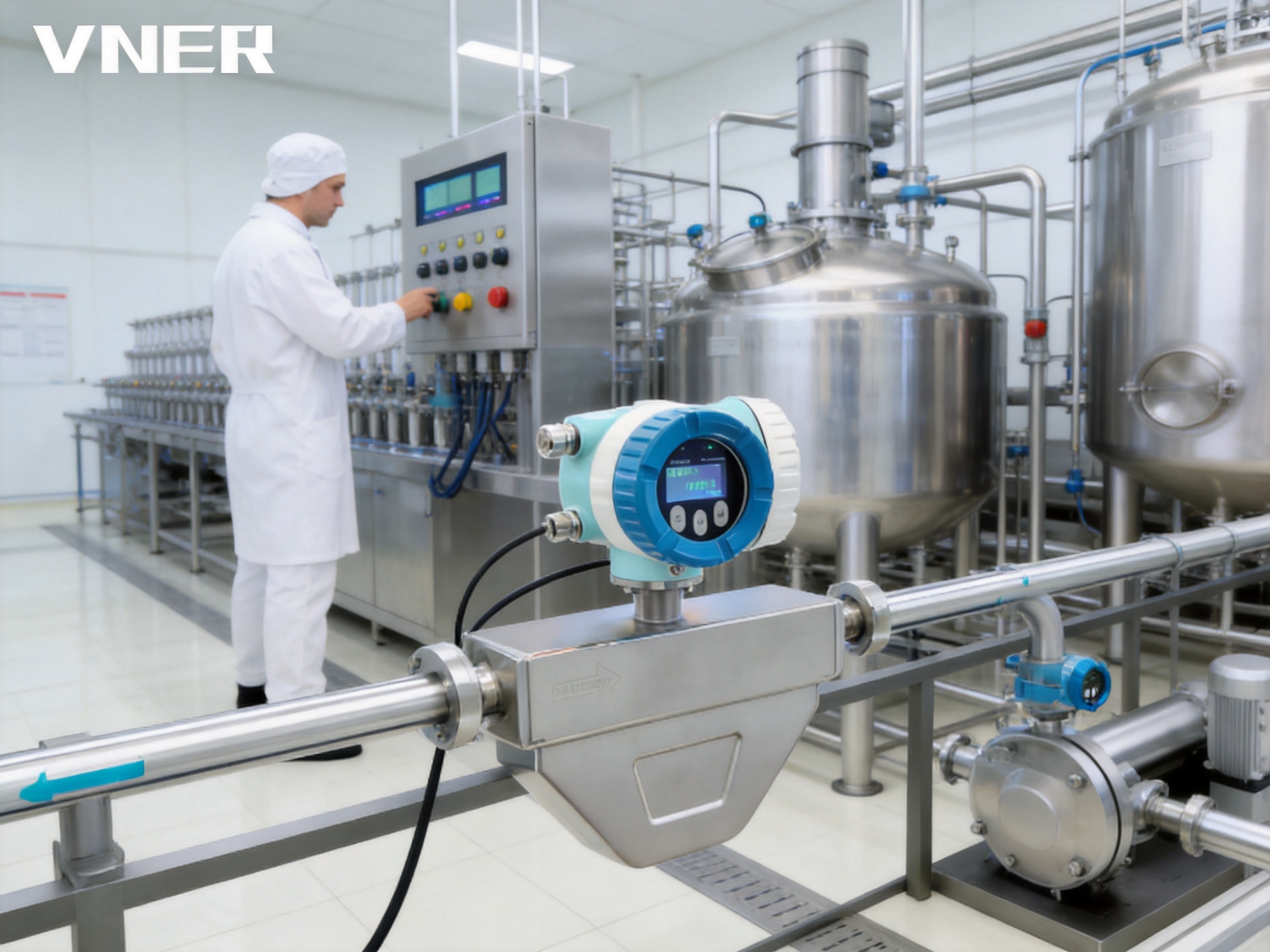
Modern food, beverage, dairy, pharmaceutical, biotechnology and life-science plants require more than a basic flow indication. They need dependable measurement, hygienic construction, repeatable performance, traceable process data and reliable operation through frequent cleaning and sterilization cycles. The AH Hygienic Coriolis Mass Flowmeter is designed to meet these requirements by combining direct mass flow measurement with density and temperature measurement in a sanitary, self-draining instrument.
Unlike conventional volumetric meters, a Coriolis mass flowmeter measures the mass of the process medium directly. This makes it particularly valuable when temperature, density, composition or product concentration can change during production. The instrument can also calculate volume flow and support additional process functions, including concentration measurement, component fraction analysis, viscosity estimation, batch control and bidirectional flow measurement.
The AH Series is intended for sanitary and aseptic process environments where cleanability, material compatibility and measurement stability are essential. Its wetted parts are manufactured from SS316 or SS316L, and its flow path is designed without unnecessary dead zones. Precision-polished surfaces, hygienic connections and CIP/SIP capability help the meter integrate into demanding process systems, including filling machines, dosing skids, blending systems, ingredient preparation lines and critical pharmaceutical utilities.
This article explains the operating principle, construction, technical performance, manufacturing strengths, application benefits and selection considerations of the AH Hygienic Coriolis Mass Flowmeter. It also compares the technology with other common flow measurement methods and answers frequently asked questions from engineers, plant operators and system integrators.
Why Hygienic Flow Measurement Requires a Specialized Design
Sanitary industries operate under conditions that are more demanding than many general industrial applications. A flowmeter may come into contact with milk, cream, syrups, sauces, oils, culture media, buffers, water-for-injection systems or cleaning chemicals. The instrument must measure accurately while remaining easy to clean, resistant to corrosion and suitable for repeated thermal cycles.
In a conventional industrial installation, small cavities, threaded gaps or poorly drained sections may be tolerable. In a hygienic process, they can become contamination risks. Residual product can remain in these locations after production, allowing microbial growth or cross-contamination between batches. For this reason, sanitary flowmeters must be designed with smooth internal surfaces, appropriate materials, self-draining geometry and process connections that support validated cleaning procedures.
Hygienic plants also place high value on batch consistency. A filling line may need to deliver the same mass of product into every container. A dairy plant may need to standardize fat content and solids. A pharmaceutical skid may need to feed buffer solution according to a recipe with limited deviation. In these applications, an instrument that only reports volume may require additional compensation for density and temperature. Direct mass measurement can simplify the control strategy and reduce uncertainty.
The AH Series addresses these needs through an integrated measurement platform. It provides direct mass flow, density and temperature data from one instrument, while its transmitter can calculate volume flow and support advanced process functions. This combination can reduce the number of instruments installed on a skid and simplify signal management in a plant control system.
Operating Principle of Coriolis Mass Measurement
A Coriolis flowmeter contains one or more measuring tubes that are driven into controlled oscillation. When the process medium is stationary, the inlet and outlet sections of the tube respond to the oscillation in a defined manner. When the fluid flows through the vibrating tube, the moving mass generates Coriolis forces that cause a measurable phase shift or deformation between different points on the tube.
The transmitter detects this phase difference using precision sensors. Because the phase shift is related to the mass moving through the tube, the instrument can determine mass flow directly rather than inferring it from velocity and a fixed cross-sectional area. This is the core reason Coriolis technology is useful for products whose density varies with temperature, composition or concentration.
The resonant frequency of the measuring tube is also affected by the density of the fluid inside it. By analyzing the tube response, the transmitter can calculate process density. Temperature sensors mounted on the sensor assembly measure process temperature and allow the electronics to compensate for thermal effects. Volume flow can then be calculated from mass flow and density.
This multi-variable measurement capability is especially valuable in hygienic production. A single AH meter can provide mass flow for dosing, density for quality supervision, temperature for process monitoring and calculated volume for production reporting. Depending on the transmitter configuration, the instrument can also support concentration, component fraction and viscosity-related functions.
Hygienic Construction and Cleanable Flow Paths
The AH Series is designed around a self-draining and dead-zone-free flow path. This design helps minimize areas where product or cleaning fluid could remain trapped. Effective drainage is important not only after production but also during CIP and SIP cycles, because a hygienic system must allow cleaning and sterilization media to contact the relevant internal surfaces consistently.
All wetted parts are manufactured from SS316 or SS316L. These stainless-steel grades are widely used in sanitary processing because of their corrosion resistance, mechanical strength and suitability for polished hygienic surfaces. The material selection supports service with many food products, beverages, pharmaceutical liquids, cleaning solutions and other process media, subject to a complete compatibility review.
The standard surface finish is Ra 0.8 micrometres, with a high-polish option of Ra 0.38 micrometres for applications requiring enhanced cleanability. A smoother surface reduces the opportunity for product adhesion and makes it easier for cleaning media to remove residues. The high-polish option can be particularly appropriate for pharmaceutical, biotechnology and high-purity process systems.
A wide range of hygienic process connections is available. Depending on the selected model and installation standard, options can include Tri-Clamp, ISO 2852, DIN 11851, DIN 11864 and ASME BPE-compatible connections. Selecting the correct connection is important because the connection geometry, gasket arrangement and surface finish must work together as part of the overall sanitary design.
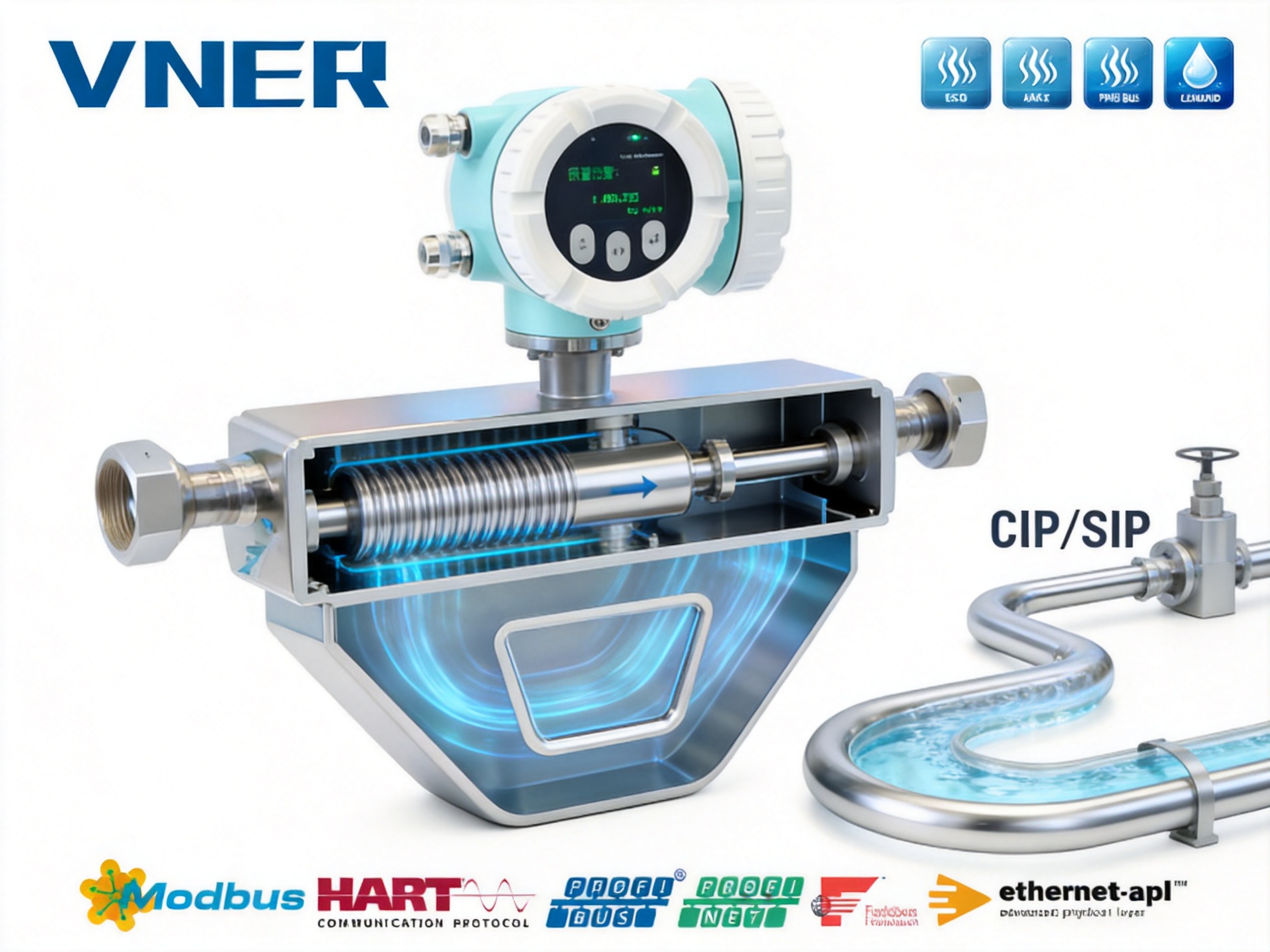
The sensor is designed for CIP and SIP service. Cleaning-in-Place systems circulate cleaning solutions through process equipment without requiring disassembly, while Sterilization-in-Place systems use elevated-temperature media or other validated procedures for sterilization. The AH sensor is intended to maintain measurement performance during repeated cleaning and sterilization cycles within its specified operating limits.
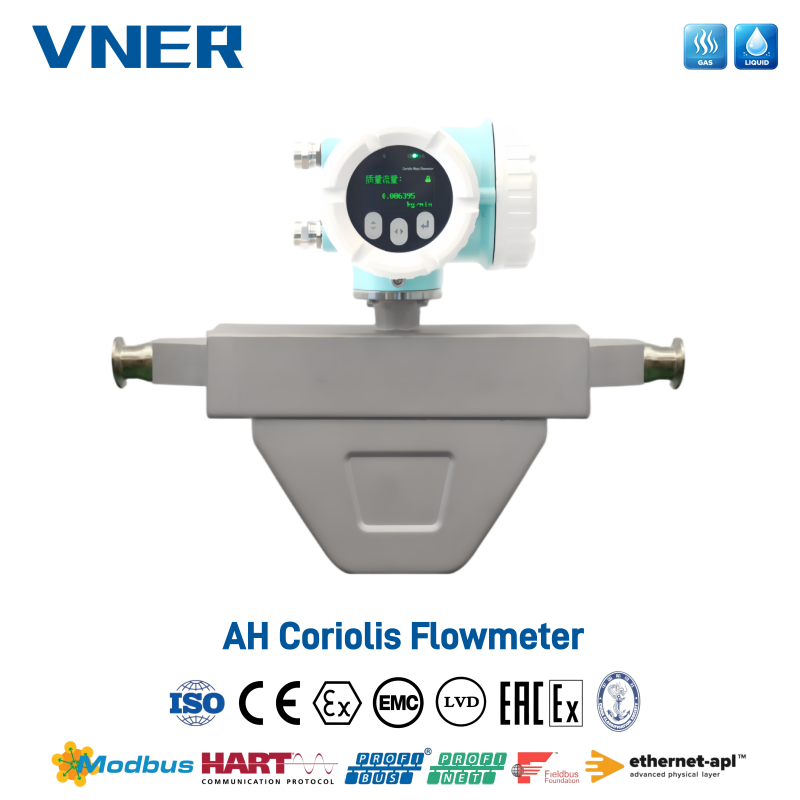
AH Hygienic Coriolis Mass Flowmeter
Measurement Performance and Technical Capability
The AH Series is available with several performance classes so that users can select a suitable balance between accuracy, process conditions and project cost. For liquids and slurries, stated mass flow accuracy options include ±0.05%, ±0.10%, ±0.15% or ±0.20% of rate. The available class depends on the selected configuration, model size, operating conditions and calibration requirements.
Repeatability is equally important in dosing and batch applications. The specified mass flow repeatability options range from ±0.02% to ±0.10% of rate. A highly repeatable meter can support stable control even when the process system is repeatedly started, stopped or adjusted. In filling applications, repeatability helps maintain consistent product quantities from one cycle to the next.
Liquid and slurry volume flow accuracy can also be specified at ±0.05%, ±0.10%, ±0.15% or ±0.20% of rate. Since volume flow is calculated from mass flow and density, the quality of both measurements influences the resulting value. For applications where mass is the primary control variable, direct mass measurement generally remains the preferred output.
Density measurement is available across a range of performance classes. Density accuracy options include ±0.50, ±1.00 or ±3.00 kilograms per cubic metre, while field calibration accuracy can reach ±0.20 kilograms per cubic metre under suitable conditions. The density measuring range is 0 to 5000 kilograms per cubic metre, allowing the instrument to serve a broad variety of liquid and slurry applications.
Density repeatability options include ±0.25, ±0.50 or ±1.50 kilograms per cubic metre. This capability can be used for concentration supervision, product identification, mixture verification and quality-related process decisions. The actual result depends on the fluid, temperature stability, installation conditions and selected calibration class.
Gas measurement is available as an option for applications requiring gas service. Gas mass flow accuracy can be specified at ±0.25%, ±0.50% or ±1.00% of rate, depending on the model and operating conditions. Advanced gas algorithms and multi-frequency drive technology can help maintain measurement stability in selected gas and gas-liquid applications.
Process temperature accuracy is specified at ±1.0 degrees Celsius, with repeatability of ±0.2 degrees Celsius. The standard sensor process temperature range is approximately -100 to +200 degrees Celsius. Ambient operating conditions are approximately -40 to +60 degrees Celsius with relative humidity up to 95% without condensation.
| Parameter | AH Series capability | Application significance |
|---|---|---|
| Measured variables | Mass flow, density and process temperature | Provides direct quantity measurement and additional quality data |
| Calculated variable | Volume flow | Supports production reporting and volumetric control strategies |
| Liquid and slurry mass accuracy | ±0.05%, ±0.10%, ±0.15% or ±0.20% of rate | Suitable for high-accuracy dosing, transfer and batching |
| Density range | 0–5000 kg/m³ | Supports concentration and composition-related monitoring |
| Temperature range | Approximately -100 to +200 °C | Accommodates many process, cleaning and sterilization conditions |
| Recommended turndown | Up to approximately 20:1 for standard accuracy | Allows one meter to cover changing production rates |
| Maximum operating pressure | Up to approximately 10.0 MPa, subject to rating | Supports demanding process and skid installations |
| Secondary containment | Optional housing up to approximately 2.5 MPa | Adds protection where containment is required |
Turndown, Zero Stability and Model Selection
The AH Series is available in model sizes from AH002 through AH080. The approximate nominal flow range across this family is 300 to 135,000 kilograms per hour at about 0.1 MPa pressure drop. Exact capacity depends on model size, fluid properties, pressure drop, accuracy class, process connection and operating temperature.
Recommended turndown can reach approximately 20:1 for standard accuracy. A wide turndown ratio is useful in plants that operate at different production rates, such as facilities that switch between small laboratory batches and full-scale production. However, the lowest measurable flow should not be selected solely from the maximum range. Zero stability, fluid conditions and installation factors must also be evaluated.
Typical zero stability values range from approximately 0.02 kilograms per hour for the AH002 to approximately 6.8 kilograms per hour for the AH080. These values are model-dependent and should be reviewed during sizing. Stable zero performance is important in low-flow dosing, batch cut-off and start-stop operations, because a small zero error can represent a significant percentage of the actual flow.
The maximum operating pressure can reach approximately 10.0 MPa for the AH002–AH080 family, subject to process temperature and connection rating. The selected connection, sensor construction and installation arrangement must always be checked against the actual pressure and temperature envelope. Where additional protection is needed, an optional secondary containment housing can provide a secondary rating of up to approximately 2.5 MPa for applicable models.
Model selection should begin with the normal, minimum and maximum mass flow rates. Engineers should then review fluid density, viscosity, solids content, gas entrainment, process temperature, operating pressure, cleaning conditions and required accuracy. The target pressure drop and available piping size should also be considered. Correct sizing helps avoid excessive pressure loss while preserving measurement sensitivity.
Advantages Compared with Conventional Flowmeter Technologies
Compared with Electromagnetic Flowmeters
Electromagnetic flowmeters are effective for conductive liquids and are widely used in water, wastewater, chemical and hygienic applications. However, they normally measure volumetric flow rather than mass flow, and they require sufficient electrical conductivity in the medium. Products such as oils, many syrups and some low-conductivity liquids may not be suitable for electromagnetic measurement.
The AH Coriolis meter directly measures mass flow and can also measure density. This is an advantage when product composition changes or when the process objective is based on kilograms rather than litres. It can also serve fluids that are not electrically conductive, provided their physical and process properties are compatible with the sensor.
Compared with Turbine Flowmeters
Turbine flowmeters use a rotating element, and their performance can be influenced by viscosity, contamination, wear and flow-profile disturbances. Moving parts may require maintenance, particularly in applications containing particulates or products that can deposit on internal components.
The AH Series has no conventional rotating turbine element. It measures through tube oscillation and electronic signal processing, while simultaneously providing density and temperature. This can reduce mechanical wear concerns and improve the usefulness of the measurement in changing product conditions.
Compared with Vortex Flowmeters
Vortex meters measure the frequency of vortices generated behind a bluff body. They are useful for many gas, steam and liquid applications, but their low-flow performance can be affected by fluid conditions and installation requirements. They also generally provide volumetric flow, with mass flow requiring additional compensation for density and temperature.
A Coriolis meter can provide direct mass flow across a broad range of liquids and selected gas services. It is therefore well suited to dosing and transfer operations where the actual mass delivered is more important than the volume occupied by the product.
Compared with Ultrasonic Flowmeters
Ultrasonic flowmeters can offer non-intrusive or low-maintenance measurement, depending on their design. Their performance can depend on acoustic properties, pipe conditions, fluid homogeneity and installation quality. Some systems provide excellent results, but they may require more application-specific validation for complex sanitary fluids.
The AH Series uses a defined measuring tube and provides direct interaction between the sensor and the process medium. This allows simultaneous mass, density and temperature measurement. The trade-off is that the meter is installed in-line and introduces a pressure drop, so the complete application must be evaluated during selection.
Compared with Positive Displacement Meters
Positive displacement meters can be highly effective for accurately measuring certain clean and viscous liquids. Their mechanical components, however, may require inspection and maintenance. Product particles, unsuitable viscosity or inadequate lubrication can affect service life and performance.
The AH meter offers a solid-state measurement approach without conventional displacement chambers. It can also report density and temperature, which are not normally obtained directly from a basic positive displacement meter. This additional information can support process quality control and reduce the need for separate instruments.
Transmitter Platform and Digital Signal Processing
The AH Series uses an A-Series full-digital transmitter platform. Digital signal processing helps analyze the small phase differences generated by the vibrating tubes and converts them into stable process values. An all-digital drive controls tube excitation and supports consistent sensor operation over changing process conditions.
The transmitter can provide 4–20 mA outputs with HART communication. Outputs can be assigned to important process variables such as mass flow, density, temperature, volume flow or concentration. Pulse and frequency outputs up to 10 kHz are suitable for totalizing, batching and filling systems where a control system requires pulse-based quantity information.
Digital communication options include HART, Modbus RS485, FOUNDATION Fieldbus, PROFINET, PROFIBUS-PA, Ethernet-APL and discrete input/output functions. Up to five configurable I/O channels can be arranged in flexible combinations, depending on the transmitter version. This allows the instrument to fit into both traditional control architectures and newer industrial Ethernet systems.
The transmitter can be supplied in integral, extended-integral, remote or wall-mounted configurations. Integral mounting keeps the instrument compact and convenient for skid systems. Remote mounting is useful when the sensor is installed in a hot, wet, vibrating or difficult-to-access location. Wall-mounted electronics can simplify panel layout and maintenance access.
Diagnostics and Process Transparency
Reliable measurement is not only a matter of accuracy under ideal conditions. Plant personnel also need to know when the process, sensor or installation is operating outside normal conditions. The AH Series supports ILOD intelligent online diagnostics with NAMUR NE107-compliant status and event messaging.
Diagnostics can help identify conditions such as unstable zero, excessive vibration, tube-related problems, sensor contamination, abnormal process conditions, electronic faults or communication issues. Clear status categories help operators distinguish between a maintenance recommendation, an out-of-specification process condition and a critical instrument failure.
Online diagnostics can support predictive maintenance by identifying developing problems before they cause an unplanned shutdown. For example, a gradual change in sensor response, increasing vibration or repeated zero instability may indicate that the installation or process should be inspected. In a hygienic plant, this information can be incorporated into planned maintenance and validation procedures.
Process transparency is also improved when mass flow, density and temperature are available from the same instrument. A change in density may indicate concentration variation, an incorrect recipe, dilution, phase separation or product substitution. Temperature information can help verify heating, cooling and sterilization conditions. The combined data can provide more useful context than a single flow value.
Manufacturing Strengths and Engineering Approach
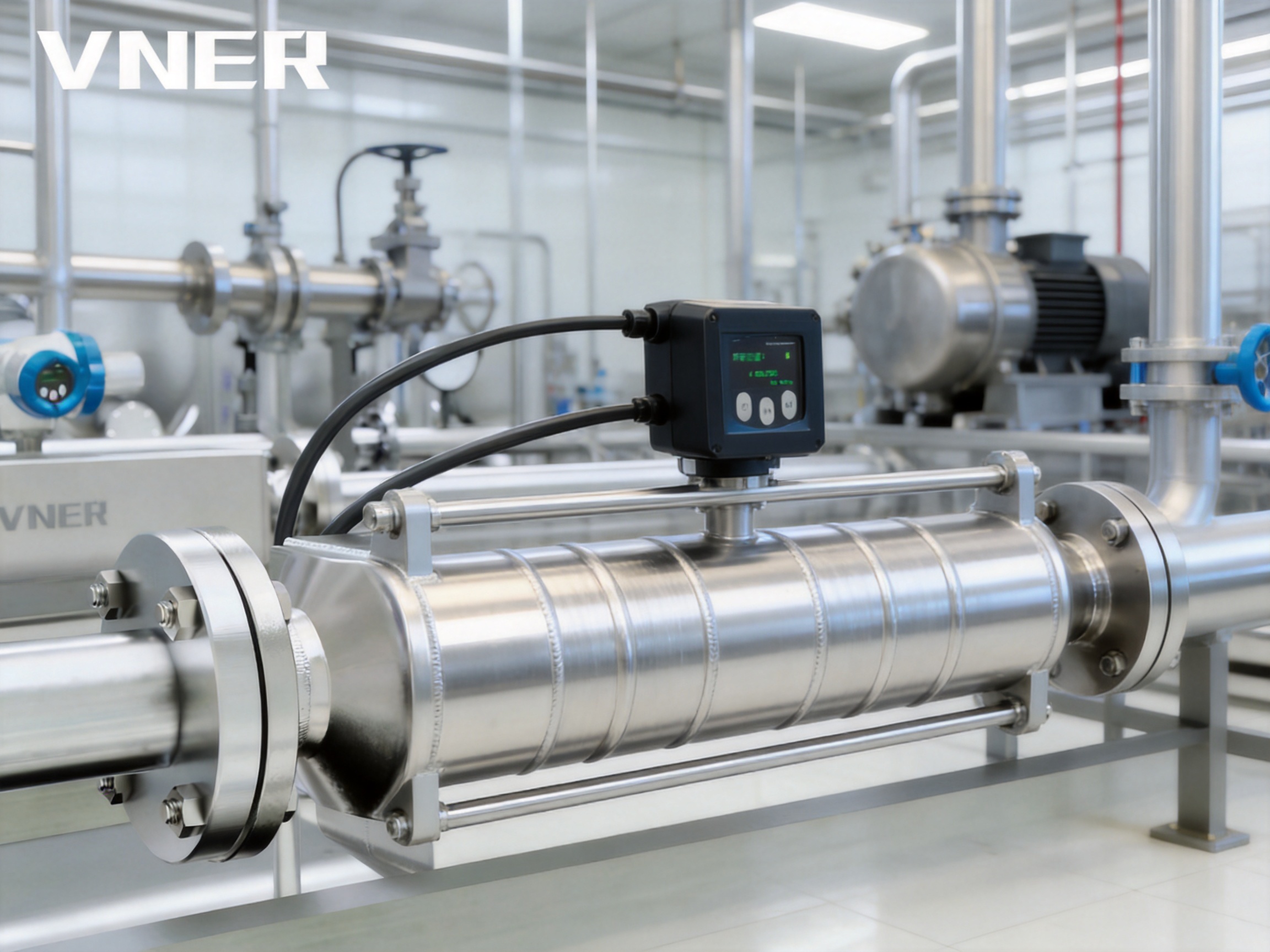
The performance of a hygienic flowmeter depends on more than its published specifications. Sensor geometry, welding quality, tube consistency, surface finish, electronic calibration and final inspection all influence long-term reliability. The manufacturer behind the AH Series has developed its business around industrial flow measurement and supports a broad product portfolio covering electromagnetic, Coriolis, vortex, swirl, turbine, thermal mass, ultrasonic and metal-tube rotameter technologies.
Jiangsu VNER Electronic Technology Co., Ltd. is based in Yangzhou, China, and has focused on flow measurement since 2011. Its manufacturing operation includes approximately 23,000 square metres of facilities across three plants and a technical team of more than 150 people. The company reports experience from more than 2,000 engineering projects in over 30 countries.
This breadth of experience is valuable because flowmeter selection is often application-specific. A company that manufactures multiple flow technologies can evaluate whether Coriolis, electromagnetic, vortex, turbine, thermal or ultrasonic measurement is most appropriate for a particular fluid and process. For the AH Series, this engineering background supports the selection of sensor size, transmitter function, connection type, material, calibration class and communication interface.
Manufacturing begins with controlled material selection. Wetted components must be traceable to the required stainless-steel grade, while gaskets, seals and connection components must be compatible with the process and cleaning chemistry. Material control is particularly important in pharmaceutical and food applications, where the customer may require documentation for every product-contact component.
Tube fabrication is another critical step. Measuring tubes must have consistent geometry and mechanical properties so that their resonant behavior remains predictable. Forming, welding and finishing processes must be controlled to reduce dimensional variation and prevent internal imperfections. Welded areas must be processed carefully because roughness, crevices or inclusions can compromise cleanability and corrosion resistance.
Surface finishing is performed to achieve the specified internal condition. Standard Ra 0.8 micrometre surfaces meet the needs of many hygienic applications, while the optional Ra 0.38 micrometre finish provides a higher level of smoothness for demanding cleanability requirements. Surface verification should be treated as a measurable quality step rather than merely a visual process.
Assembly requires careful alignment of the sensor tubes, drive components and pick-off sensors. The relationship between these components influences the phase signal and therefore the final measurement. Controlled assembly procedures help maintain consistency from one instrument to another.
After assembly, electronic configuration and calibration are essential. Coriolis meters must be calibrated under controlled conditions to verify mass flow, density and temperature performance. In-house calibration capabilities allow the manufacturer to check instruments before shipment and support consistent production quality. The company also reports the use of certified quality processes and calibration rigs verified according to ISO/IEC 17025 principles.
Final inspection can include dimensional checks, pressure testing, electrical safety verification, signal testing, communication checks and review of the configured measurement range. For hygienic projects, documentation may also include material certificates, surface-finish records, pressure ratings, calibration data and connection details.
Increasingly automated manufacturing can improve repeatability in machining, assembly, testing and data recording. Automation does not replace engineering judgment; instead, it helps reduce avoidable variation and creates more consistent production records. Combined with a technical team experienced in industrial projects, this approach supports the stable and repeatable performance expected from process instrumentation.
Applications in Food and Beverage Processing
Dosing and Filling
Accurate filling is one of the most direct applications for the AH Series. Syrups, sauces, edible oils, flavour concentrates and other products may be dosed by mass into bottles, cans, pouches or larger containers. Direct mass measurement helps compensate for changes in density caused by temperature or formulation differences.
The transmitter can provide pulse or frequency output for filling equipment and can support high-speed control functions. Repeatable measurement helps reduce overfill, protect product yield and maintain consistent declared quantities. For high-value products, even a small reduction in overfill can produce meaningful savings over a full production year.
Ingredient Batching and Blending
Food and beverage recipes often contain multiple ingredients that must be added in a defined sequence and quantity. A Coriolis meter can measure the mass of each ingredient directly, while density and temperature data can provide additional confirmation that the correct product is being transferred.
Concentration or component-related measurement functions can support recipe control in selected applications. The meter may be used with a programmable logic controller, distributed control system or batch management platform to record actual quantities and compare them with target values.
Dairy Standardization
Milk and cream processing requires consistent control of fat content, solids and product flow. The AH Series can measure mass flow and density in raw milk, cream, whey and concentrates. These values can support standardization, blending, transfer and inline quality monitoring.
Density measurement does not replace laboratory analysis in every application, but it can provide rapid process feedback. Operators may use the information to identify a deviation earlier, adjust a blending ratio or verify that a transfer stream is behaving as expected.
Brewery and Beverage Production
Wort, beer, soft drinks and carbonated products can benefit from stable mass and density measurement. Typical uses include transfer between process vessels, blending, filtration monitoring, fermentation-related measurement and packaging-line metering.
Gas entrainment and two-phase conditions must be considered carefully in beverage systems. The selected meter and transmitter configuration should be reviewed for the actual process condition, especially when carbon dioxide is present or when the liquid may flash or release dissolved gas. Advanced signal processing can assist in selected gas-liquid applications, but correct piping and process control remain essential.
Applications in Pharmaceutical, Biotech and Life-Science Systems
Pharmaceutical and biotechnology processes place strong emphasis on hygienic design, documentation and repeatability. The AH Series can be applied to purified water, water-for-injection systems, buffer solutions, culture media, intermediates and other high-purity liquids, provided the complete installation meets the applicable process and validation requirements.
In buffer preparation, the meter can measure the mass of water, salts, concentrates or prepared solutions. Density data may provide additional information about concentration, while temperature data supports process records. The result is a more complete measurement point for batch documentation.
In media preparation and feed systems, the meter can support recipe-based control. Accurate mass measurement helps maintain the ratio of components, while repeatability supports consistent conditions from one batch to the next. For pilot plants and process development skids, a compact instrument that measures several variables can reduce the amount of additional instrumentation required.
Pharmaceutical cleaning and sterilization systems also benefit from reliable measurement. CIP and SIP lines may require monitoring of cleaning concentrates, return streams, rinse water or sterilization media. The AH sensor is designed for repeated cleaning and sterilization cycles, subject to the specified temperature, pressure and chemical limits.
For validated processes, users should define the required documentation before purchase. This may include surface-finish records, material certificates, calibration certificates, pressure testing, connection details, software information and installation instructions. The instrument should be integrated into the site validation strategy rather than treated as an isolated component.
Installation Considerations for Hygienic Performance
Even a well-designed flowmeter can perform poorly if it is installed incorrectly. The sensor should be installed in a location where the measuring tubes remain full during normal operation. A vertical installation with upward flow is often beneficial for liquids because it can help reduce gas accumulation and support drainage, although the best arrangement depends on the piping system and process sequence.
For self-draining service, the pipe layout should avoid unnecessary high points, pockets and stagnant branches near the meter. The inlet and outlet connections should be aligned without excessive mechanical stress. External forces from poorly supported piping can affect sensor performance and may damage connections or welds over time.
Sanitary gaskets should be selected according to the process medium, cleaning chemicals, temperature and pressure. Gaskets must be installed correctly and inspected regularly. A damaged or improperly seated gasket can create a contamination risk even when the flowmeter itself has a hygienic internal design.
Gas bubbles, flashing and two-phase flow can influence Coriolis measurement. The process should be designed to minimize uncontrolled gas entry, and the meter should not be installed immediately downstream of a location where pressure drops may cause flashing. If two-phase operation is unavoidable, the application should be reviewed with the manufacturer so that suitable algorithms, sizing and installation practices can be considered.
External vibration can also affect measurement stability. The pipe should be properly supported, and the meter should be separated from strong vibration sources where possible. The AH platform is designed to withstand vibration levels up to approximately 1.0 g across 5–2000 Hz under specified conditions, but installation quality remains important.
Electrical grounding and cable routing should follow the transmitter and plant requirements. Signal cables should be protected from strong electromagnetic interference, and remote electronics should be mounted in a location suitable for the ambient temperature, humidity and wash-down conditions.
Cleaning, Sterilization and Maintenance
A hygienic flowmeter should be included in the plant’s cleaning validation and maintenance program. CIP parameters may include cleaning solution concentration, temperature, flow velocity, exposure time and rinse quality. The process should be confirmed to remove product residues from the sensor and connected piping.
SIP procedures may expose the sensor to elevated temperature for defined periods. The actual sterilization cycle must remain within the instrument’s specified process temperature and pressure ratings. Repeated thermal cycling can place stress on materials and connections, so the installation should allow for expansion and contraction without imposing excessive mechanical load.
Routine maintenance can include inspection of connections, gaskets, cable entries, housing condition, zero stability and diagnostic messages. In a clean process, the internal flow path should not normally require frequent manual cleaning. However, if a product can polymerize, crystallize, dry or adhere strongly, the cleaning procedure should be reviewed during application design.
Zero verification can be useful during commissioning and scheduled maintenance. The meter should be fully filled with a stable, non-flowing medium when zeroing. Valves must isolate the sensor completely, and temperature and pressure should be stable. Poor zeroing conditions can create an error that appears as a measurement problem even when the instrument is functioning correctly.
Calibration intervals depend on application criticality, regulatory requirements, process stability and plant quality procedures. High-value or quality-critical applications may require more frequent verification. The diagnostic system can support maintenance planning by identifying abnormal behavior between formal calibration events.
Integration with Automation and Data Systems
The AH transmitter can be integrated into a wide range of control architectures. A 4–20 mA signal remains suitable for many existing process control systems, while HART communication adds configuration and diagnostic access. Modbus RS485 can be used for digital data exchange in smaller control networks or skid systems.
FOUNDATION Fieldbus, PROFIBUS-PA, PROFINET and Ethernet-APL options support integration into modern plant automation systems. Ethernet-APL is particularly relevant to process industries that require Ethernet communication over field-level distances and in demanding installation environments. The appropriate communication method should be selected according to the plant standard and control system architecture.
Pulse and frequency outputs can be connected to filling and batching controllers. A pulse may represent a defined quantity of product, allowing the control system to stop a pump or close a valve when the target quantity has been reached. For high-speed applications, the available output frequency and response time should be verified against the equipment requirements.
Configurable inputs and outputs allow the meter to adapt to different process roles. Outputs can be assigned to mass flow, volume flow, density, temperature, concentration or diagnostic status. This flexibility helps reduce the need for separate transmitters and can simplify panel wiring.
Recorded data from the flowmeter can support batch reports, production efficiency analysis, material balance calculations and quality investigations. When density and temperature are recorded along with mass flow, engineers can better understand why a process deviated from its target and whether the issue originated in formulation, temperature control, pumping or measurement.
How the AH Series Reduces Total Cost of Ownership
The purchase price of a flowmeter is only one part of its lifecycle cost. Installation, calibration, cleaning, maintenance, spare parts, production losses and quality incidents can have a larger financial effect. The AH Series can help reduce total cost of ownership by combining several measurements in one instrument and supporting long-term digital diagnostics.
Direct mass measurement can reduce the need for separate density compensation equipment. Integrated temperature measurement reduces the number of sensor locations and simplifies wiring. Optional concentration and component functions may reduce the requirement for additional process analysers in selected applications.
The absence of conventional rotating mechanical parts can reduce wear-related maintenance compared with some turbine or positive displacement technologies. Hygienic construction can also reduce cleaning complications when the flowmeter is correctly installed and included in the validated CIP/SIP procedure.
Accurate dosing and filling can reduce product giveaway. In a dairy, beverage or pharmaceutical plant, improved batch consistency can also reduce rework, rejected product and investigation time. These benefits are application-dependent, but they should be considered when comparing technologies solely on initial instrument price.
Local engineering support, configuration assistance and application sizing are also part of lifecycle value. A meter that is correctly selected and commissioned is more likely to achieve its expected performance than one chosen only by line size. The manufacturer’s experience across multiple flowmeter technologies can support a more balanced technical evaluation.
Recommended Specification Checklist
Before ordering an AH Hygienic Coriolis Mass Flowmeter, the user should prepare a complete process data sheet. The following information is normally required:
Normal, minimum and maximum mass flow rate.
Required accuracy and repeatability.
Fluid name, density, viscosity and solids content.
Minimum and maximum process temperature.
Minimum and maximum operating pressure.
Potential for gas entrainment, flashing or two-phase flow.
Required CIP and SIP temperature, pressure, chemicals and cycle duration.
Pipe size and preferred hygienic connection standard.
Required surface finish, such as Ra 0.8 or Ra 0.38 micrometres.
Required transmitter mounting arrangement.
Available power supply and communication protocol.
Need for pulse, frequency, analogue, digital or discrete outputs.
Required density, concentration, viscosity or component measurement functions.
Environmental conditions, wash-down exposure and vibration level.
Calibration, validation and documentation requirements.
Providing this information at the beginning of the project helps the manufacturer recommend the correct sensor size and performance class. It also prevents later changes to connections, electronics or installation arrangements.
Quality, Customization and Project Support
Industrial flow measurement projects often require more than a standard catalogue item. A hygienic skid may need a special connection, remote transmitter, high-polish surface, customized output assignment, specific communication protocol or documentation package. The AH Series is available in a modular configuration that can accommodate different process and automation requirements.
Customization should be controlled carefully. Any change affecting the wetted path, pressure rating, surface finish or measurement electronics must be reviewed against the intended application. Engineering-based customization is preferable to informal modification because it preserves traceability and ensures that the final instrument remains within its validated performance envelope.
The company’s project experience includes support for EPC contractors, end users and OEM partners. This is important for skid builders and equipment manufacturers who need consistent dimensions, stable supply, configuration records and repeatable instrument performance across multiple systems.
In-house calibration and certified quality processes provide a foundation for product consistency. A manufacturer with multiple plants and a dedicated technical team can also support production capacity and engineering coordination for larger projects. However, final selection should always be based on the specific process data, required standards and applicable regulatory obligations.
Q&A: Frequently Asked Questions
What does the AH Hygienic Coriolis Mass Flowmeter measure?
It directly measures mass flow and also measures process density and temperature. The transmitter can calculate volume flow and, depending on the selected functions, may support concentration, component fraction, viscosity, bidirectional flow and batch control.
Why is direct mass measurement useful in sanitary processing?
Mass does not change simply because temperature causes a product to expand or contract. Direct mass measurement is therefore useful for dosing, batching and filling when density varies. It can reduce the need for separate temperature compensation or density correction equipment.
Is the meter suitable for food and beverage applications?
Yes. The AH Series is designed for sanitary applications involving products such as milk, cream, whey, syrups, sugar solutions, sauces, edible oils, flavours, wort, beer and soft drinks. The selected materials, connection type, surface finish and cleaning procedure must match the actual product and plant requirements.
Can it be used in pharmaceutical and biotechnology plants?
It can be used for suitable pharmaceutical, biotech and life-science liquids, including purified water, water-for-injection-related services, buffers, media and intermediates. The complete installation must meet the site’s hygienic, validation, material and documentation requirements.
What surface finishes are available?
The standard surface finish is approximately Ra 0.8 micrometres. A high-polish option of approximately Ra 0.38 micrometres is available for applications requiring enhanced cleanability.
Which hygienic process connections can be supplied?
Available options may include Tri-Clamp, ISO 2852, DIN 11851, DIN 11864 and ASME BPE-compatible connections. The actual option depends on the model, process requirements and project specification.
Can the AH meter handle CIP and SIP cycles?
The sensor is designed for CIP and SIP operation. The exact cleaning and sterilization cycle must remain within the specified process temperature, pressure, chemical compatibility and material limits. The installation should also be included in the plant’s cleaning and validation procedures.
What is the maximum process temperature?
The standard sensor process temperature range is approximately -100 to +200 degrees Celsius. The applicable limit depends on the selected sensor, connection, seals and operating conditions, so the final datasheet should be checked for the specific model.
What is the maximum operating pressure?
The AH002–AH080 family can support pressure up to approximately 10.0 MPa under suitable conditions. The actual rating is subject to sensor size, process temperature and connection rating. An optional secondary containment housing can provide a secondary rating of up to approximately 2.5 MPa for applicable models.
Can it measure gas?
Gas measurement is available as an option. Gas mass flow accuracy can be specified at approximately ±0.25%, ±0.50% or ±1.00% of rate, depending on the model and application. Gas service should be reviewed carefully because pressure, density, velocity and two-phase conditions influence performance.
What communication protocols are supported?
Depending on the transmitter configuration, the available interfaces include HART, Modbus RS485, FOUNDATION Fieldbus, PROFINET, PROFIBUS-PA, Ethernet-APL and discrete I/O. The transmitter can also provide 4–20 mA and pulse or frequency outputs.
How should the meter be installed?
The sensor should remain full of liquid during operation, be installed with suitable support and be positioned to reduce gas accumulation and stagnant areas. The piping should be self-draining where required, and the installation should avoid excessive vibration, mechanical stress and sudden pressure conditions.
How does the manufacturer support product quality?
The manufacturer combines controlled materials, precision sensor assembly, surface-finishing options, in-house calibration, certified quality processes and engineering review. Its broader experience in industrial flow measurement supports application selection across multiple flow technologies and industrial sectors.
Is one Coriolis meter enough for a complete hygienic process?
The meter can provide several process variables from one location, but it does not replace every instrument in a plant. Pressure, level, conductivity, pH, laboratory analysis and safety instrumentation may still be required. The AH Series can reduce instrument count in selected applications while improving the amount of information available from the flow measurement point.
Conclusion
The AH Hygienic Coriolis Mass Flowmeter is a measurement solution for process industries where accuracy, cleanability and product consistency must work together. Its direct mass flow measurement avoids many of the limitations associated with density-dependent volumetric measurement, while integrated density and temperature data provide additional insight into product and process conditions.
Its SS316/SS316L wetted construction, self-draining dead-zone-free flow path, precision-polished surfaces, hygienic connection options and CIP/SIP capability make it suitable for sanitary and aseptic environments. Multiple accuracy classes, model sizes, transmitter arrangements and communication interfaces allow the instrument to be configured for filling lines, batching systems, ingredient skids, dairy processing, beverage production, pharmaceutical utilities, biotechnology systems and life-science research.
Compared with conventional turbine, vortex, electromagnetic, ultrasonic and positive displacement meters, the AH Series offers the distinctive advantage of direct mass measurement together with density and temperature in one instrument. Its digital transmitter, online diagnostics and flexible outputs support modern automation systems and predictive maintenance strategies.
The manufacturing organization behind the product adds further value through industrial flow measurement experience, multiple flow technologies, in-house calibration, controlled quality procedures, engineering support and project experience across international markets. Correct sizing and installation remain essential, but with suitable application data and hygienic process design, the AH Series can provide reliable measurement throughout the operating life of a sanitary production system.
References
1. AH Hygienic Coriolis Mass Flowmeter technical data and application information supplied for this article.
2. General principles of Coriolis-effect mass flow measurement and vibrating-tube sensor operation.
3. Hygienic process design practices for food, beverage, dairy, pharmaceutical and biotechnology equipment.
4. ASME BPE principles for bioprocessing equipment, materials, surface finishes and hygienic process connections.
5. ISO/IEC 17025 principles for competence in testing and calibration laboratories.
6. NAMUR NE107 recommendations for status and diagnostic messaging in process instrumentation.
Product: AH Hygienic Coriolis Mass Flowmeter

We offer all our products and services at international standards.
Products
Contact Information
-

+86-18652789521
+86-18052582295
+86-0514-83633600 / 83633900 -

+86-0514-83633600 / 83633900
-

shawn@vnerflow.com
info@vnerflow.com -

No. 11 Xingye Road, Chenji Town Industrial Park, Yizheng, Yangzhou, China
