
 0
 EN
 English
 عربى
 Español
 русский
If you need any help, please feel free to contact us
Home / Author / Guo Lanyue — Industrial Flow Meter Sales Manager / KSMF-S Straight-Tube Coriolis Mass Flowmeter: Precision Measurement for Demanding Industrial Applications
KSMF-S Straight-Tube Coriolis Mass Flowmeter: Precision Measurement for Demanding Industrial Applications
Introduction
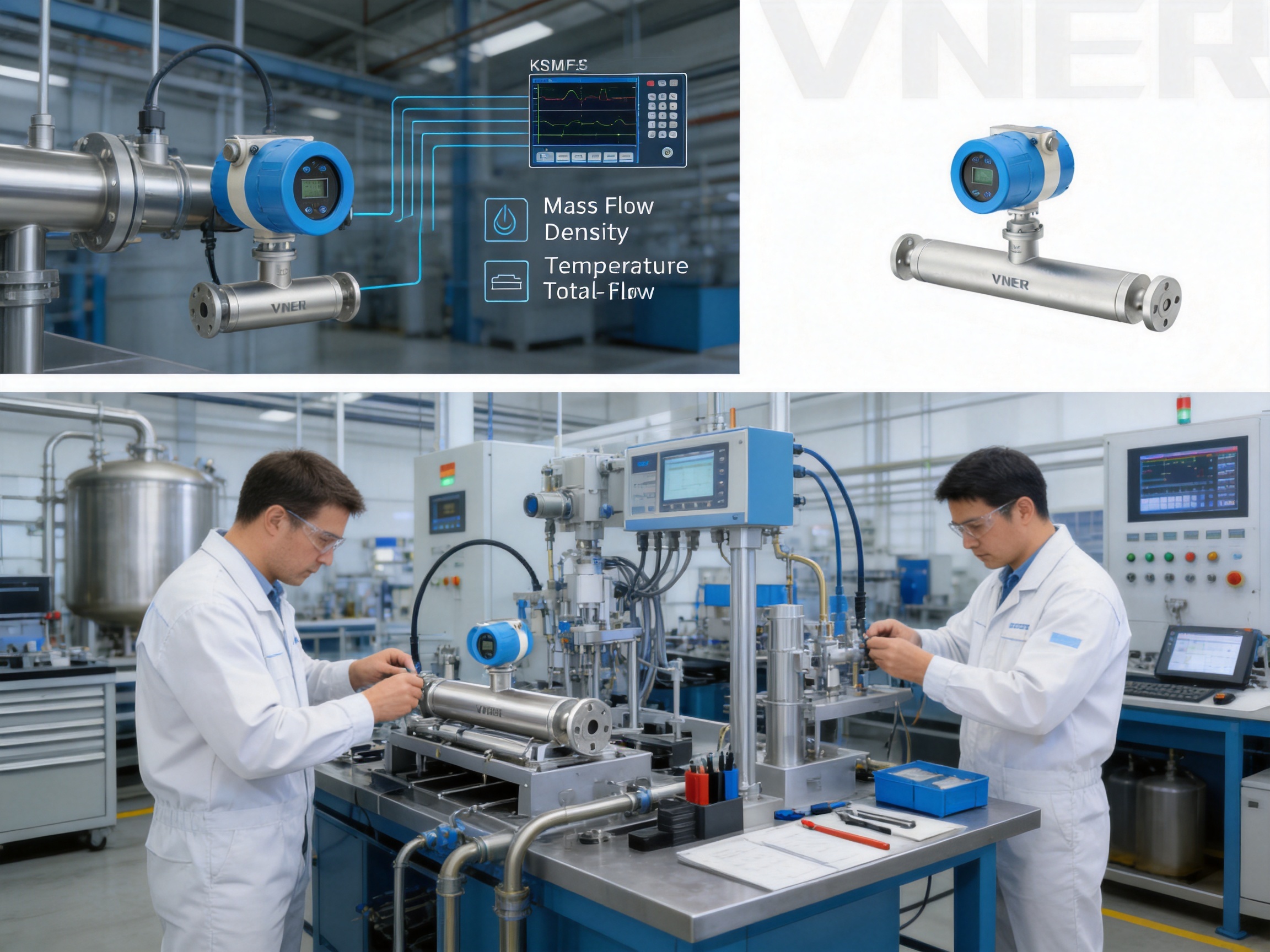
Accurate flow measurement is essential wherever industrial plants must control production, protect equipment, verify product quality, manage energy consumption, or document the transfer of valuable liquids and gases. In many applications, conventional volumetric flowmeters are affected by changes in density, viscosity, temperature, pressure, flow profile, or fluid composition. A Coriolis mass flowmeter addresses these challenges by measuring mass flow directly while also providing valuable information about fluid density and temperature.
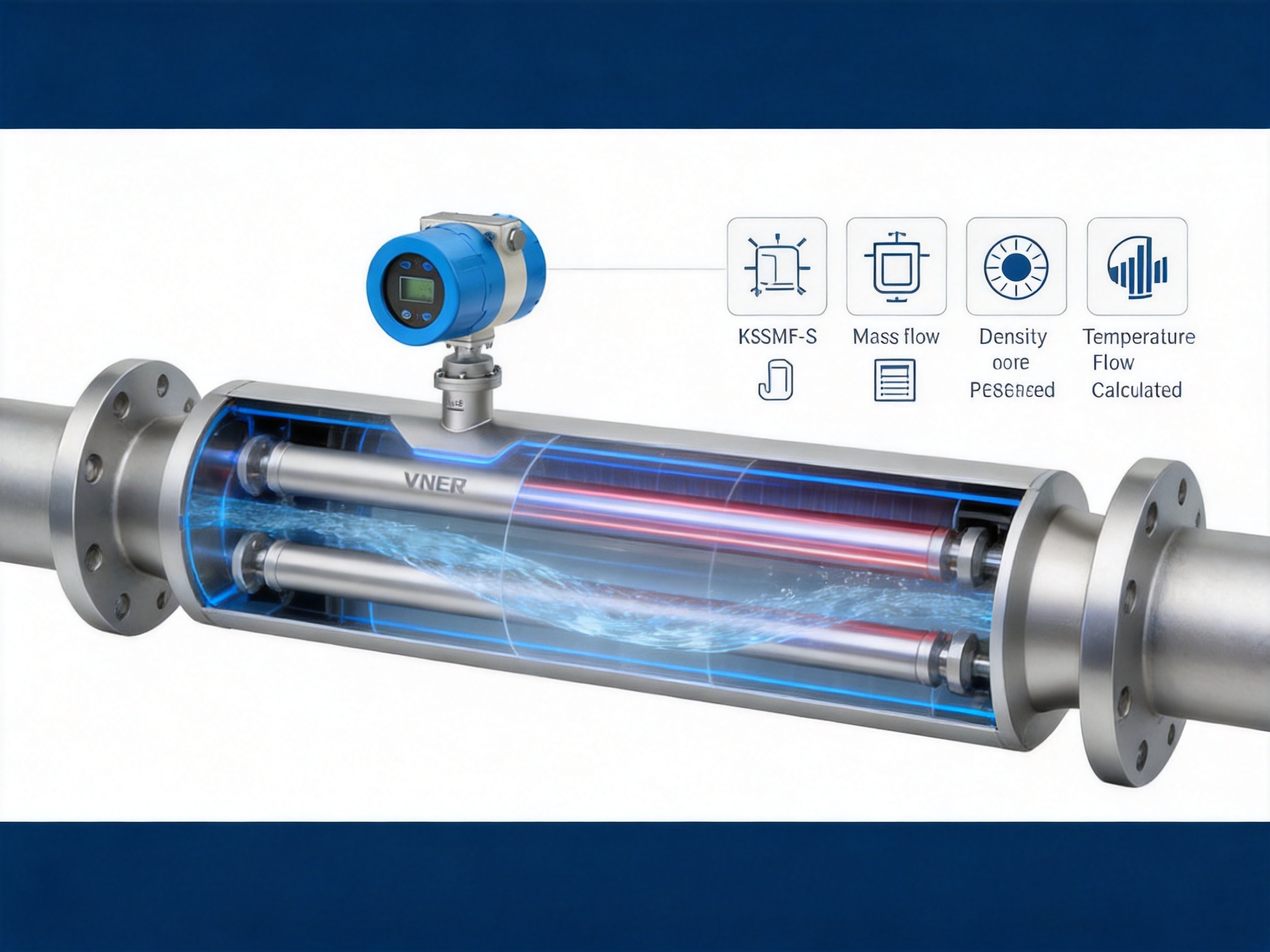
The KSMF-S Series Coriolis Mass Flowmeter is a high-precision straight-tube instrument designed for the measurement of liquids, gases, and liquefied gases. Its dual parallel measuring tubes are driven into controlled oscillation. When the process fluid is stationary, the inlet and outlet sections of the tubes remain in phase. Once fluid begins to flow, Coriolis forces create a measurable phase difference between the two sections. This phase shift is directly related to mass flow.
At the same time, the natural oscillation frequency of the measuring tubes is used to determine fluid density, while integrated temperature sensors monitor process temperature. As a result, one meter can provide mass flow, density, temperature, and calculated volume flow without requiring separate primary instruments for each variable.
The straight dual-tube configuration gives the KSMF-S Series several practical advantages over many conventional curved-tube or obstructed flowmeter designs. It supports low pressure loss, low shear, straightforward cleaning, efficient drainage, and stable performance under changing process conditions. The design is suitable for general industrial control as well as demanding hygienic, chemical, pharmaceutical, energy, environmental, and commercial metering applications.
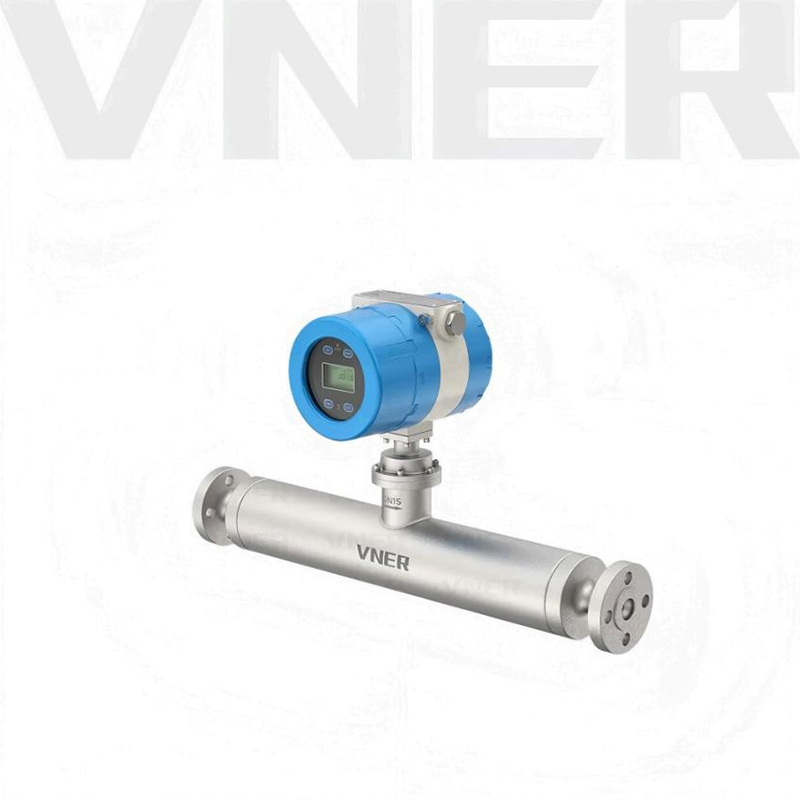
KSMF S-Series Coriolis Mass Flowmeter-副本
What Is a Coriolis Mass Flowmeter?
A Coriolis mass flowmeter is an instrument that measures the mass of a flowing medium by observing the effect produced when that medium passes through vibrating measurement tubes. Unlike a basic volumetric meter, it does not need to infer mass flow from volume flow and a separately entered density value. The measurement is generated from the interaction between tube vibration and the moving process fluid.
Inside the KSMF-S Series sensor, two parallel tubes are excited at a controlled frequency. The tubes are designed to oscillate in a balanced and repeatable manner. With no flow, corresponding points on the inlet and outlet sides move together. When the fluid travels through the vibrating tubes, the Coriolis effect causes a slight twisting or phase displacement. Sensors detect this difference and the transmitter converts it into a mass flow signal.
The same vibrating structure also responds to the density of the medium. A denser fluid changes the oscillation characteristics of the tubes differently from a lighter fluid. By monitoring the resonant frequency, the electronics can calculate density. A temperature sensor compensates for thermal effects and provides a separate process temperature measurement.
This multi-variable capability is particularly useful in processes where fluid composition changes over time. For example, a chemical mixture may become more concentrated, a syrup may be diluted, or a fuel blend may contain varying proportions of its components. A meter that measures only volume cannot fully describe these changes. A Coriolis meter can simultaneously indicate how much mass is being transferred and how the physical properties of the fluid are changing.
Direct Mass Measurement
Mass flow is often the most meaningful process variable for batching, dosing, blending, custody transfer, and recipe control. Temperature and pressure variations can cause a liquid or gas to expand or contract, changing its volume without changing its actual mass. Because the KSMF-S measures mass directly, it reduces the need for complicated compensation systems in many applications.
Density and Temperature Monitoring
Density information can be used for concentration control, product consistency verification, phase identification, and process diagnostics. Temperature measurement supports compensation, alarm management, energy calculations, and quality monitoring. The combination of mass flow, density, and temperature allows operators to understand both the quantity and condition of the process medium.
Versatility Across Fluid Types
The meter is designed for liquids, gases, and liquefied gases. This makes the platform suitable for applications ranging from high-purity pharmaceutical liquids and food products to industrial solvents, chemical solutions, fuels, and process gases. Correct sizing, material selection, pressure rating, temperature rating, and installation configuration remain essential for every application.
Construction and Operating Principle of the KSMF-S Series
The KSMF-S Series is based on a straight dual-tube measuring structure. Two parallel tubes provide the primary flow path and are mechanically arranged to maintain symmetry. An excitation system drives the tubes into controlled vibration, while pickup sensors detect the movement and phase relationship at different positions along the tubes.
The straight path is important because it minimizes internal changes in direction. Compared with designs that use pronounced bends, a straight-tube meter can reduce pressure loss and simplify drainage. The absence of internal flow splitters, impellers, or other moving obstructions also supports reliable operation with viscous, sensitive, or particulate-free process fluids.
When there is no flow, the two measurement signals remain synchronized according to the defined vibration pattern. As flow develops, the Coriolis force produces a differential response. The transmitter processes this very small time or phase difference using high-resolution signal conditioning and digital algorithms. The resulting mass flow value is continuously updated and can be transmitted to control systems or displayed locally.
The electronics also monitor the tube vibration frequency. Changes in this frequency are associated with changes in fluid density. Integrated temperature sensing helps the instrument compensate for thermal changes in the sensor assembly and provides an additional output for process supervision.
Balanced Tube Arrangement
The parallel-tube arrangement provides structural symmetry. Symmetry helps the meter reject some external vibration and reduces mechanical imbalance. It also supports stable zero-point behavior, which is important because even a small zero error can affect low-flow accuracy.
Controlled Oscillation
Controlled excitation allows the transmitter to maintain a stable measurement condition over a wide range of process loads. The instrument continually evaluates sensor signals and adjusts its operating response as needed. This design helps maintain repeatable output when the fluid density, temperature, or flow rate changes.
Digital Signal Processing
High-precision Coriolis measurement depends not only on mechanical construction but also on the quality of signal processing. The transmitter must distinguish the useful phase shift from noise, external vibration, electrical interference, and transient process conditions. Advanced digital processing improves signal stability and supports the simultaneous calculation of multiple process variables.
Principal Advantages Over Conventional Flowmeter Technologies
The KSMF-S Series competes with a wide range of flow technologies, including turbine, vortex, electromagnetic, ultrasonic, thermal mass, and variable-area flowmeters. Each technology has appropriate applications, but the straight-tube Coriolis design offers a combination of direct mass measurement, density measurement, and low-maintenance construction that can be difficult to achieve with a single alternative instrument.
Compared with Volumetric Flowmeters
Volumetric meters measure the amount of space occupied by a fluid. If the fluid temperature, pressure, or composition changes, the relationship between volume and mass also changes. Additional compensation may be required to obtain a reliable mass value. The KSMF-S Series measures mass flow directly, reducing dependence on external density data and simplifying the measurement chain.
Compared with Turbine Flowmeters
Turbine flowmeters contain a rotating element that can be affected by wear, contamination, viscosity changes, and mechanical friction. They may also require flow conditioning and periodic maintenance. The KSMF-S Series has no internal rotating parts, which reduces mechanical wear and eliminates the need to maintain an impeller or rotor. Its direct mass measurement is also advantageous when fluid properties vary.
Compared with Vortex Flowmeters
Vortex meters determine flow from the frequency of vortices formed behind a bluff body. Their performance can be influenced by flow profile, vibration, Reynolds number, and the need for suitable upstream and downstream piping. The KSMF-S Series is less dependent on the development of a vortex pattern and is designed to operate without a mandatory requirement for long straight pipe runs before and after the meter.
Compared with Electromagnetic Flowmeters
Electromagnetic meters are highly useful for conductive liquids, but they cannot normally measure non-conductive hydrocarbons, many gases, or certain solvents. The KSMF-S Series can be applied to a broader range of fluid types, subject to material compatibility and engineering selection. It also provides density and temperature information in addition to flow.
Compared with Thermal Mass Flowmeters
Thermal mass meters are commonly applied to gases and use heat transfer characteristics to determine mass flow. Their accuracy can be influenced by gas composition, thermal properties, contamination, and sensor condition. Coriolis technology measures the mechanical effect of mass moving through vibrating tubes, making it suitable for many liquid, gas, and liquefied-gas services.
Compared with Ultrasonic Flowmeters
Ultrasonic flowmeters can provide non-intrusive or low-maintenance measurement, but their performance may depend on acoustic properties, pipe conditions, flow profile, and installation quality. A Coriolis meter provides a defined primary measurement structure inside the sensor and can offer direct mass flow and density measurement in one instrument.
Low Pressure Loss and Low Shear
The straight flow path minimizes unnecessary changes in direction. This is beneficial for low-pressure systems, pump-limited installations, and processes involving shear-sensitive materials. Reduced pressure loss can lower the energy burden on pumps and may help preserve the physical properties of delicate fluids.
No Internal Moving Parts
The absence of internal moving parts reduces the risk of mechanical wear, bearing failure, and performance degradation caused by friction. It also supports lower routine maintenance requirements. Since there are no flow splitters or rotating elements obstructing the passage, the instrument is less likely to trap material in internal mechanisms.
Hygienic Design and Cleanability
Hygienic processing demands more than accurate measurement. Equipment must be cleanable, drainable, compatible with cleaning chemicals, and capable of supporting validated sanitation procedures. The straight-tube geometry of the KSMF-S Series is well suited to these requirements because it reduces internal pockets and makes it easier for cleaning fluids to contact the measurement surfaces.
For Clean-in-Place operations, the meter can remain installed while cleaning solutions circulate through the process line. This reduces the need for frequent disassembly and helps improve production availability. The straight structure also supports rapid drainage after cleaning, reducing the possibility of residual liquid remaining inside the sensor.
Steam-in-Place applications require careful consideration of temperature rating, pressure rating, material compatibility, gasket selection, and thermal expansion. When correctly specified, the KSMF-S Series can support processes that use controlled steam sterilization. This is important in pharmaceutical manufacturing, biotechnology, food production, beverage processing, and other industries where hygienic integrity is essential.
Low shear is another benefit for sensitive products. Products such as emulsions, syrups, biological media, and certain specialty chemicals may be affected by excessive turbulence or abrupt changes in direction. A straight dual-tube design can provide gentle passage while maintaining accurate mass measurement.
Materials, Pressure, and Temperature Capability
Industrial flowmeter materials must be selected according to the chemical, thermal, and mechanical conditions of the process. The KSMF-S Series can be supplied with high-grade stainless steel or Hastelloy measurement materials for applications involving aggressive or demanding media. The final material selection should consider corrosion resistance, concentration, temperature, pressure, cleaning chemistry, and any regulatory requirements.
Stainless steel is widely used for food, beverage, pharmaceutical, water, chemical, and general process applications. It offers a useful combination of mechanical strength, corrosion resistance, cleanability, and availability. Hastelloy or other specialized alloys may be preferred for aggressive acids, corrosive chemical mixtures, or high-temperature services where standard stainless steel is insufficient.
Pressure and temperature ratings must be evaluated together with the process connection, transmitter configuration, gasket material, and installation environment. A correct engineering selection ensures that the meter remains within its design limits during normal operation, startup, shutdown, cleaning, and abnormal process events.
Liquefied gases require particular attention to pressure stability and vapor formation. The installation should maintain conditions that keep the medium in the intended phase. Proper line sizing, back pressure, insulation, and valve arrangement can help prevent flashing or two-phase flow, which may adversely affect measurement stability.
Applications Across Industrial Sectors
Food and Beverage Processing
Food and beverage plants require accurate dosing, recipe control, traceability, and hygienic operation. The KSMF-S Series can measure dairy products, syrups, glucose solutions, alcohols, edible oils, flavoring ingredients, and other process liquids. Direct mass measurement is valuable when ingredients are purchased, formulated, or billed by weight rather than volume.
In syrup handling, viscosity may change with temperature and concentration. A volumetric meter may require extensive compensation, while a Coriolis meter can directly measure the mass entering a blending or filling process. Density monitoring can also help identify dilution errors or changes in product composition.
Pharmaceutical and Biotechnology Production
Pharmaceutical processes depend on repeatability, contamination control, and batch integrity. Applications may include high-purity solvents, active pharmaceutical ingredient solutions, fermentation media, buffer solutions, and sterile filling systems. The instrument’s cleanable straight-tube structure supports hygienic process design, while multi-variable measurement can provide additional process verification.
For sterile or high-purity services, the complete assembly must be specified according to the plant’s validation procedures. Surface finish, connection type, elastomer selection, cleaning method, and installation orientation should all be reviewed during project design.
Chemical Processing
Chemical plants handle acids, alkalis, solvents, additives, polymers, and mixtures with changing density or viscosity. Coriolis measurement is useful for chemical dosing skids, blending systems, reactor feeds, solvent transfer, and batch production. Density output can help verify concentration and detect changes in formulation.
The availability of corrosion-resistant measurement materials is important in these services. Engineering teams should evaluate the compatibility of wetted materials with the exact chemical composition, including impurities and cleaning agents. Temperature and pressure conditions should also be checked during both normal operation and emergency procedures.
Water and Wastewater Treatment
Water and wastewater facilities use dosing systems for coagulants, flocculants, neutralizers, disinfectants, and pH-control chemicals. Accurate dosing improves treatment efficiency and can reduce chemical consumption. The KSMF-S Series can provide mass-based dosing feedback, which is useful when chemical concentration varies or when operators need to document actual chemical consumption.
For ultrapure water and semiconductor-related treatment systems, stable low-flow measurement, cleanability, material compatibility, and process traceability are especially important. The instrument can be integrated into automated chemical delivery systems where real-time flow and density information support precise control.
Energy and Fuel Systems
Energy applications include ethanol, biodiesel, thermal oils, fuel additives, and blending operations. The density signal can help monitor blend consistency, while mass flow provides a reliable basis for transfer and inventory calculations. In biofuel production, direct mass measurement can support the controlled addition of feedstocks and additives.
Thermal oil systems may operate at elevated temperatures, requiring careful evaluation of sensor ratings, insulation, heat tracing, and installation clearances. Correct thermal management helps prevent unwanted viscosity changes or phase instability in the measuring section.
Pulp and Paper Manufacturing
Pulp and paper plants use bleaching agents, sizing liquids, coatings, retention chemicals, and other additives. Accurate dosing affects brightness, strength, surface quality, and production efficiency. A Coriolis meter can provide stable measurement for chemical feed systems and help identify deviations in concentration or supply conditions.
Textile Manufacturing
Textile processes require controlled delivery of dyes, finishing agents, auxiliaries, and chemical additives. Recipe accuracy is directly related to color consistency and product quality. Multi-variable measurement can help operators verify that the correct amount and concentration of dye solution is being supplied.
Semiconductor and Clean Industries
Semiconductor manufacturing uses ultra-pure chemicals and tightly controlled liquid delivery systems. Measurement equipment must support clean operation, repeatability, and compatibility with aggressive or high-purity media. The KSMF-S Series can be considered for chemical handling and dosing applications when the selected materials, connections, surface condition, and installation meet the required cleanliness standards.
Examples of Practical Process Benefits
In beverage production, a manufacturer may need to dose a high-viscosity syrup into a blending system. Temperature changes can significantly alter viscosity and volume. A Coriolis meter provides a direct mass signal, allowing the control system to maintain the correct ingredient ratio. Its straight, cleanable construction also supports regular CIP procedures.
In pharmaceutical filling, a stable measurement signal can help monitor the transfer of an active ingredient solution. The process team can compare actual mass flow and batch totals with the recipe target. Density and temperature values provide additional information for detecting unexpected changes in the solution.
In a chemical dosing skid, operators may use density output to identify concentration changes in an acid or alkaline solution. If the measured density moves outside the expected range, the control system can generate an alarm before the dosing error affects the larger process.
In an ultrapure water facility, disinfectant or neutralizing chemical delivery must be controlled precisely. A compact, low-maintenance Coriolis meter can provide mass-based dosing feedback while reducing dependence on separate density instruments and manual calculations.
In a biofuel blending station, several components may be combined according to a mass-based recipe. The KSMF-S Series can help manage the quantity of each component and support quality checks using density information. Low pressure loss is beneficial where pumps operate near their available head.
Manufacturing Strengths and Quality Approach
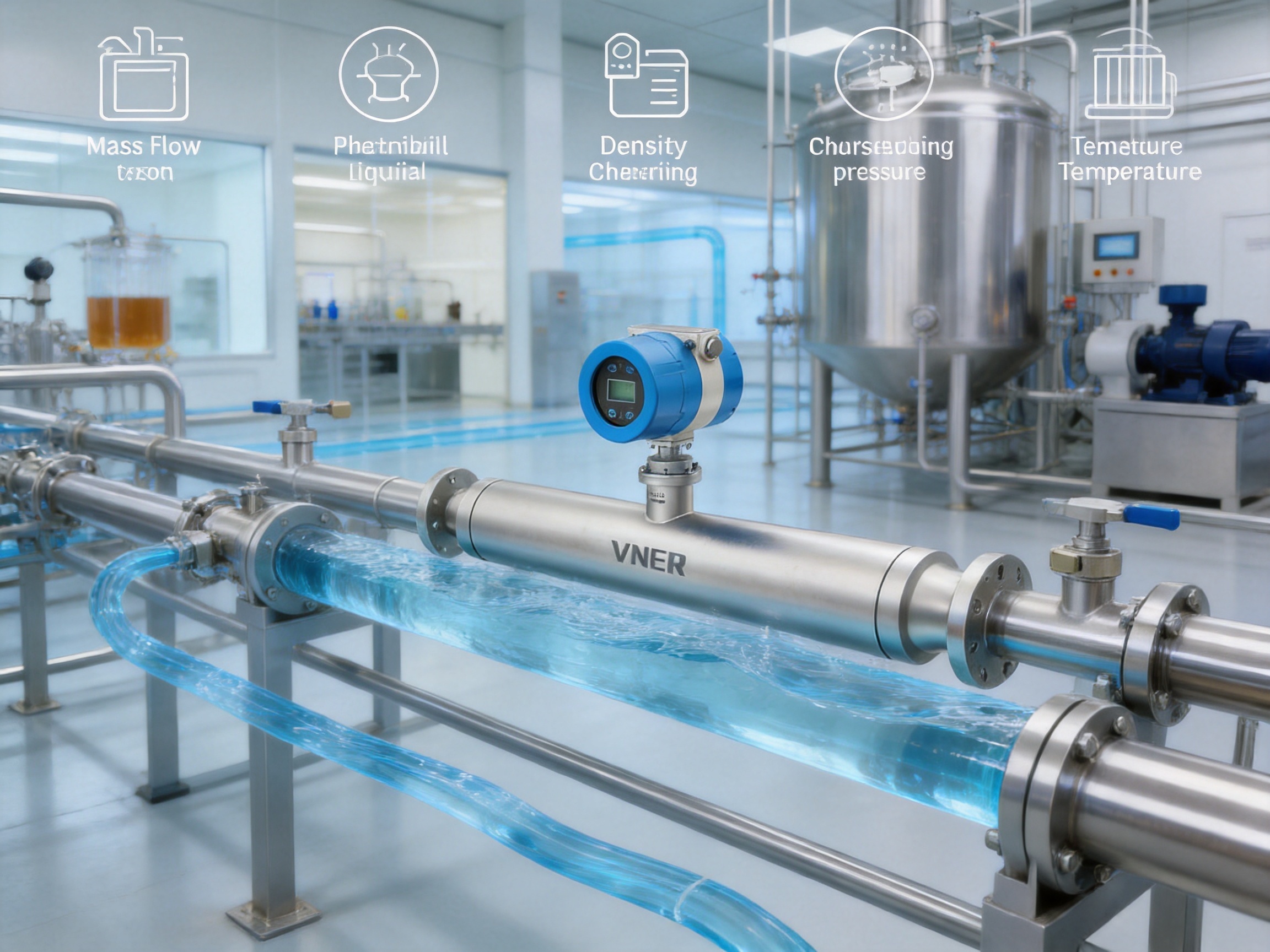
The performance of a precision flowmeter depends on both its design and the manufacturing process used to produce it. Jiangsu VNER Electronic Technology Co., Ltd. operates as a specialized industrial flowmeter manufacturer based in Yangzhou, China. Since 2011, the company has focused on flow measurement products for liquids, gases, and slurries in real industrial environments.
The company’s product portfolio includes electromagnetic, Coriolis, vortex, swirl, turbine, thermal mass, ultrasonic, and variable-area flowmeter technologies. This broad technical scope supports application-based product selection rather than forcing every process into one measurement principle.
With approximately 23,000 square meters of modern facilities across three plants and a technical team of more than 150 people, the manufacturer combines product development, engineering support, production, and testing capabilities. The company has supplied more than 2,000 engineering projects in over 30 countries, serving EPC contractors, industrial end users, and OEM partners.
In-House Calibration
Calibration is a central part of flowmeter manufacturing. A meter must be tested against known reference conditions to verify that its output corresponds to the actual flow. In-house calibration capability allows the manufacturer to control more of the quality process, identify deviations earlier, and maintain better traceability from production to final inspection.
For Coriolis meters, calibration supports verification of mass flow, density response, temperature measurement, zero stability, and transmitter performance. Calibration procedures should be selected according to the meter size, application range, fluid properties, accuracy requirements, and applicable project standards.
Engineering-Driven Sizing and Selection
Correct sizing is essential for Coriolis meter performance. An instrument that is too large may operate at very low flow relative to its range, while an undersized meter may create unnecessary pressure loss or exceed its capacity. Engineering selection should consider normal flow, minimum and maximum flow, density, viscosity, temperature, pressure, gas content, line size, and required output variables.
The manufacturer’s engineering team can support the evaluation of these factors and recommend a suitable configuration. This approach is more reliable than choosing a meter solely by matching the nominal pipe diameter. In many cases, the best meter size is not identical to the connected pipeline size, provided the transition arrangement is properly designed.
Automated and Consistent Production
Increasing automation in manufacturing can improve repeatability in assembly, inspection, and testing. Consistent production methods help reduce variation between units and support stable product quality for OEM and large project orders. Automated or controlled processes may be applied to mechanical assembly, electronic testing, parameter configuration, and final verification.
Traceability and Quality Control
Industrial customers often require documentation covering materials, calibration, inspection, and product configuration. Traceable manufacturing records can support maintenance, regulatory review, commissioning, and future replacement. A quality process that emphasizes consistency and documentation is particularly valuable in pharmaceutical, chemical, energy, and commercial metering applications.
Application Experience
Experience across multiple industries helps the manufacturer understand the practical causes of measurement problems. These may include entrained gas, two-phase flow, vibration, pulsation, excessive temperature variation, incorrect installation, unsuitable materials, or unstable zero conditions. Application knowledge allows the product and installation guidance to address the complete measurement system rather than only the meter body.
Installation Considerations
Although Coriolis meters are less dependent on upstream and downstream straight pipe runs than many velocity-based technologies, installation still affects performance. The sensor should be installed in a location that remains full under normal conditions and avoids unnecessary exposure to external vibration. The piping should be adequately supported without transferring excessive mechanical stress to the meter.
The flow direction must match the marked direction or the configuration specified during commissioning. Valves should be arranged to support zero verification, maintenance isolation, and safe startup. For liquids, the installation should minimize the possibility of air accumulation. For gases and liquefied gases, the system should prevent unwanted condensation, flashing, or two-phase conditions.
Zero verification is an important commissioning step. With the measuring tubes completely filled and the process flow stopped, the transmitter can establish a stable zero reference. The quality of the zeroing process depends on full pipe conditions, absence of vibration, stable temperature, and complete isolation from flow.
External vibration should be evaluated, especially near reciprocating pumps, compressors, motors, and pulsating equipment. The balanced tube design helps resist environmental disturbances, but good plant layout and pipe support remain important. Electrical grounding, cable routing, and signal shielding should also follow the project requirements.
Output, Integration, and Process Control
The KSMF-S Series can provide simultaneous information about mass flow, density, temperature, and volume flow. These values can be displayed locally or transmitted to a distributed control system, programmable logic controller, supervisory system, batching controller, or plant historian.
Mass flow output can be used for dosing, batching, totalization, inventory management, and production reporting. Density output can support concentration control, product verification, and alarm functions. Temperature output can be used for compensation, process monitoring, and equipment protection. Volume flow can be calculated when it is useful for operational reporting or comparison with legacy systems.
For advanced process control, the transmitter can be configured so that different variables drive control loops or alarms. For example, mass flow may control a dosing pump, density may trigger a quality alarm, and temperature may initiate a compensation or shutdown function. This multi-variable capability can reduce the number of separate instruments required around the process.
| Measured or Calculated Variable | Typical Process Use | Primary Benefit |
|---|---|---|
| Mass flow | Dosing, batching, blending, transfer, inventory | Direct measurement of material quantity |
| Density | Concentration control, product verification, phase monitoring | Additional information about fluid composition |
| Temperature | Compensation, quality monitoring, thermal protection | Real-time process condition data |
| Volume flow | Plant reporting, comparison with existing systems, operational control | Convenient volumetric reference derived from measured variables |
| Totalized flow | Batch completion, consumption records, commercial transfer | Reliable cumulative quantity tracking |
Maintenance and Long-Term Reliability
The KSMF-S Series is designed to reduce routine maintenance through its absence of internal rotating parts, flow splitters, and mechanical bearings. This can lower the likelihood of wear-related drift and reduce the number of components requiring service. Nevertheless, regular inspection remains important in any industrial measurement system.
Operators should periodically review zero stability, process trends, alarm history, external wiring, grounding, flange or process connections, and the condition of insulation or heat tracing. If the process changes, the meter should be reassessed for material compatibility, pressure, temperature, and flow range.
Calibration intervals depend on the criticality of the application, company quality procedures, regulatory requirements, fluid characteristics, and historical performance. A meter used for custody transfer or pharmaceutical batch control may require more frequent verification than one used for general utility monitoring.
Sudden changes in measurement behavior should be investigated systematically. Possible causes include gas entrainment, incomplete filling, two-phase flow, excessive external vibration, process pulsation, incorrect zeroing, coating, electrical interference, or changes in fluid properties. The density and temperature outputs can provide useful diagnostic clues during this evaluation.
Selection Guide for Project Engineers
Define the Process Medium
Begin with the exact fluid name and composition. Include concentration ranges, additives, suspended solids, gas content, corrosive components, and cleaning chemicals. Material selection should be based on the complete chemical environment rather than the primary process fluid alone.
Establish Operating Conditions
Document minimum, normal, and maximum flow rates; operating pressure; design pressure; operating temperature; design temperature; density range; viscosity range; and possible startup or shutdown conditions. These values are necessary to evaluate meter size and performance.
Determine Measurement Objectives
Decide whether the primary requirement is mass flow, density, temperature, volume flow, totalized quantity, or a combination. Applications involving concentration control or batch verification should normally consider density output during the initial specification stage.
Review Installation Conditions
Check available space, pipe orientation, support structure, valve locations, drainage requirements, vibration sources, ambient temperature, hazardous-area classification, and access for commissioning. Hygienic applications should also review cleanability, drainability, connection standards, and validation requirements.
Specify Materials and Connections
Select wetted materials, process connections, seals, electrical enclosure, and transmitter arrangement according to the process and site standards. For aggressive chemicals, confirm compatibility using the complete operating temperature and concentration range.
Plan Calibration and Documentation
Define the required calibration range, accuracy documentation, inspection records, certificates, testing procedures, and spare parts. Clear documentation improves project execution and simplifies future maintenance.
Questions and Answers
What does the KSMF-S Series measure?
It measures mass flow and fluid density, while integrated temperature sensing provides process temperature. The transmitter can also calculate or output volume flow and totalized quantities according to the selected configuration.
Can the meter measure both liquids and gases?
Yes. The series is designed for liquids, gases, and liquefied gases. The specific model must be selected according to the medium, flow range, pressure, temperature, density, and installation conditions.
Does the meter require long straight pipe runs?
The straight dual-tube Coriolis design does not require the same type of long upstream and downstream straight pipe runs commonly associated with many velocity-based flowmeters. However, proper installation, full-pipe conditions, stable flow, and adequate pipe support are still important.
What is the main advantage of direct mass measurement?
Direct mass measurement is less affected by changes in fluid temperature, pressure, and density than a basic volumetric measurement. This is useful for dosing, blending, batching, transfer, and applications where the actual material mass is more important than its volume.
Can the meter measure density at the same time as flow?
Yes. The oscillation frequency of the measuring tubes is used to determine fluid density while the phase difference is used to determine mass flow. This allows both values to be monitored from one instrument.
Is the straight-tube design suitable for hygienic applications?
It is well suited to many hygienic applications because the straight flow path supports cleanability, drainability, and low internal obstruction. Final suitability depends on the selected materials, surface condition, connections, temperature rating, cleaning procedure, and project standards.
Can the meter be used for CIP and SIP?
It can be selected for CIP and, where the specified configuration permits, SIP applications. The complete system must be checked for steam temperature, pressure, thermal cycling, gasket compatibility, and validated cleaning requirements.
Does the meter contain a turbine or other rotating component?
No. The measurement is based on vibrating tubes and sensor signal analysis. There are no internal rotating impellers or mechanical flow splitters, which helps reduce wear and maintenance.
What materials are available for corrosive fluids?
High-grade stainless steel and Hastelloy options are available for different process conditions. The correct alloy must be selected after reviewing the fluid composition, concentration, temperature, pressure, and cleaning chemicals.
What should be considered when measuring liquefied gases?
The process must remain within the appropriate pressure and temperature conditions to avoid flashing or unwanted two-phase flow. Line pressure, back pressure, insulation, valve arrangement, and meter sizing should be evaluated during engineering design.
How does the manufacturer support project selection?
Jiangsu VNER Electronic Technology Co., Ltd. provides engineering-driven sizing and selection support. The evaluation can include flow range, density, viscosity, temperature, pressure, materials, connections, outputs, and installation conditions.
Why is in-house calibration important?
In-house calibration allows the manufacturer to verify meter performance under controlled reference conditions and maintain better process traceability. It also helps identify deviations before shipment and supports documentation for industrial projects.
What industries can use this meter?
Typical industries include food and beverage, pharmaceutical and biotechnology, chemical processing, water and wastewater treatment, energy, biofuel, pulp and paper, textile production, semiconductor manufacturing, and general industrial processing.
Can the meter be integrated into an automated control system?
Yes. Mass flow, density, temperature, volume flow, and totalized values can be used by process control, batching, monitoring, alarm, and reporting systems according to the available transmitter outputs and communication configuration.
Conclusion
The KSMF-S Series Coriolis Mass Flowmeter combines direct mass measurement, density measurement, temperature monitoring, and volume flow calculation in a single industrial instrument. Its straight dual-tube architecture provides a practical balance of measurement accuracy, low pressure loss, low shear, cleanability, and mechanical simplicity.
Compared with conventional volumetric, turbine, vortex, electromagnetic, thermal, and ultrasonic technologies, the meter offers a particularly strong solution when the process requires direct mass measurement and reliable information about fluid density. Its lack of internal moving parts can reduce maintenance, while its straight geometry supports hygienic processing, low-pressure systems, and applications involving sensitive or viscous fluids.
The instrument is applicable to a wide range of industries, including food and beverage, pharmaceutical production, chemical processing, energy, water treatment, pulp and paper, textile manufacturing, and semiconductor chemical handling. Correct sizing and specification remain essential, particularly for corrosive media, high-temperature services, liquefied gases, hygienic systems, and processes with possible entrained gas.
Behind the product is a manufacturer with experience in multiple flow technologies, in-house calibration capabilities, engineering-based selection, modern production facilities, and international project experience. Through controlled manufacturing, quality processes, technical support, and application knowledge, Jiangsu VNER Electronic Technology Co., Ltd. positions the KSMF-S Series as a dependable measurement solution for demanding industrial environments.
For plants seeking improved dosing accuracy, stronger process visibility, lower maintenance requirements, and more reliable material accounting, a straight-tube Coriolis mass flowmeter can provide significant operational value. When properly selected, installed, commissioned, and maintained, the KSMF-S Series supports stable measurement and more informed control across the complete production process.
References
1. General principles of Coriolis mass flow measurement and vibrating-tube sensor operation.
2. Industrial practices for flowmeter sizing, installation, zero verification, and calibration.
3. Hygienic process design principles for Clean-in-Place and Steam-in-Place systems.
4. Industrial guidance on material compatibility for stainless steel and nickel-based alloys.
5. Process measurement practices for mass flow, density, temperature, and totalized flow control.
6. Application information supplied for the KSMF-S Series Coriolis Mass Flowmeter.
Product: KSMF S-Series Coriolis Mass Flowmeter-副本



Products
Contact Information
-

+86 18652789521
+86-0514-83633600 / 83633900 -

+86-0514-83633600 / 83633900
-

s@vner.com.cn
katherine@vner.com.cn -

No. 11 Xingye Road, Chenji Town Industrial Park, Yizheng, Yangzhou, China
