
 0
 EN
 English
 عربى
 Español
 русский
If you need any help, please feel free to contact us
Home / Author / Ren Xiaotong — Technical Sales Engineer for Gas Flow Meters / High-Precision Coriolis Mass Flowmeters for Demanding Industrial Applications
High-Precision Coriolis Mass Flowmeters for Demanding Industrial Applications
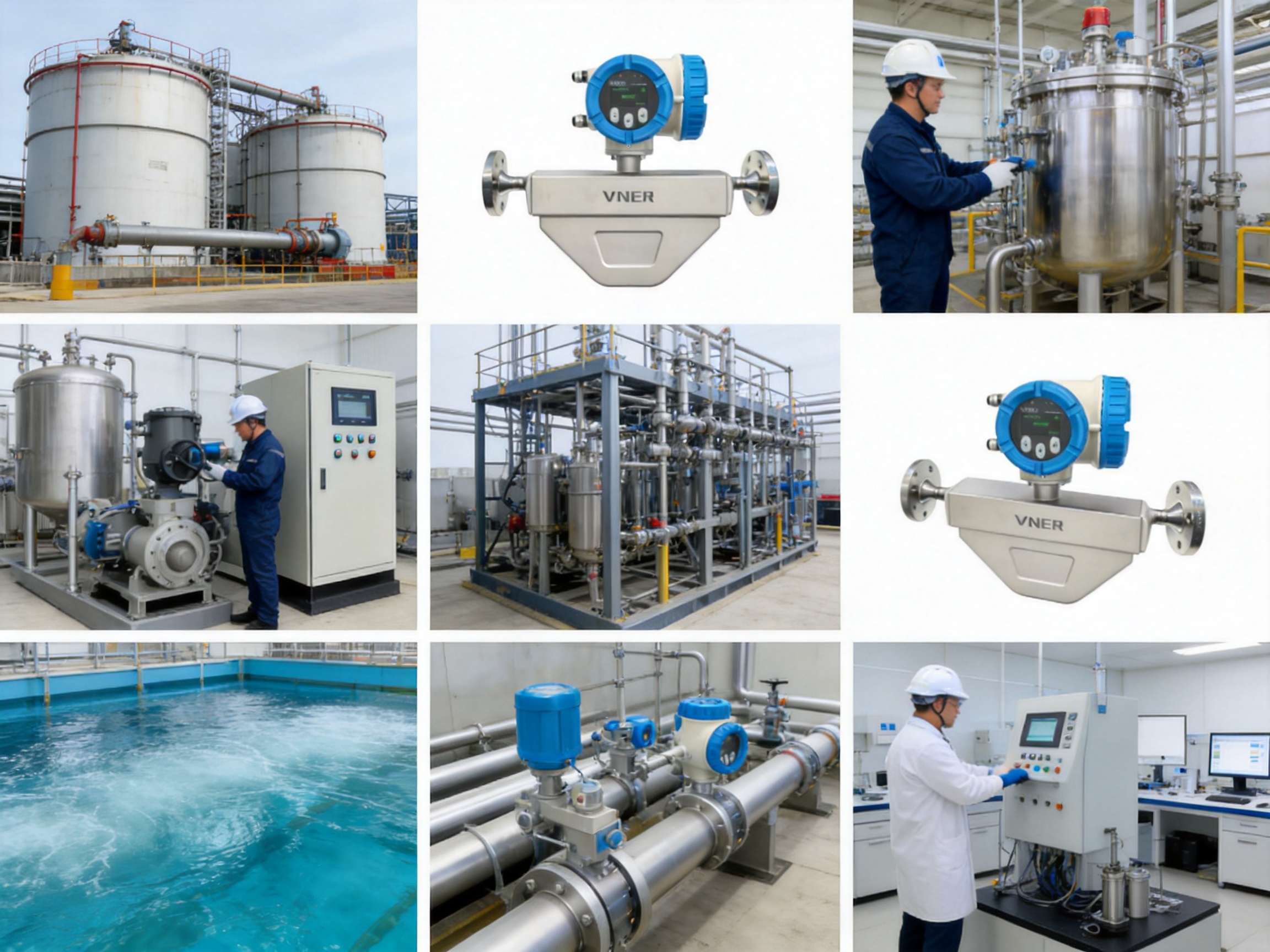
Accurate flow measurement is essential wherever the value, quality, safety, or performance of a process depends on the precise movement of liquids, gases, slurries, or blended products. In modern chemical plants, refineries, energy facilities, food-processing lines, and oil and gas installations, conventional volumetric measurement may not provide enough information for reliable process control. Changes in temperature, pressure, density, viscosity, and composition can cause a measured volume to differ significantly from the actual mass transferred.
The AC Series Coriolis Mass Flowmeter addresses these challenges by measuring mass flow directly while also providing density and temperature data. Volume flow can be calculated in real time, allowing one instrument to support a broad range of process, batching, dosing, blending, and transfer requirements. Its digital measurement architecture, flexible configuration, extended process temperature options, high-pressure capability, and broad communication support make it suitable for applications where measurement stability and traceability are critical.
Manufactured by Jiangsu Vner Electronic Technology Co., Ltd., the AC Series represents an engineering-focused approach to Coriolis measurement. The product combines controlled tube oscillation, advanced digital signal processing, multi-frequency excitation, intelligent diagnostics, and application-specific algorithms for liquids, gases, and selected multiphase services. It is designed not simply as a flow sensor, but as a complete measurement platform that can reduce the number of instruments required in a process system.
Why Direct Mass Measurement Matters
Most traditional flowmeters measure volume. The resulting volume reading can then be converted into mass if the fluid density is known. However, density is rarely constant in real industrial processes. It changes with temperature, pressure, concentration, composition, and the presence of entrained gas. If density is estimated incorrectly, the calculated mass value may also be inaccurate.
A Coriolis flowmeter measures mass flow through the interaction between moving fluid and vibrating measuring tubes. Because the measurement is based on the Coriolis effect rather than on a fixed volumetric relationship, it is less dependent on the fluid’s physical properties than many conventional flow technologies. The meter can simultaneously measure density through tube oscillation frequency and process temperature through integrated resistance temperature detectors.
This direct measurement principle is particularly valuable for refined products, diesel, gasoline, LPG, biofuels, solvents, oils, syrups, chemical additives, and other fluids whose density may vary during production or transfer. It is also useful in dosing systems, where the actual mass delivered is more important than the volume indicated by a conventional meter.
For process engineers, direct mass measurement can simplify control strategies. For plant operators, it can improve batch consistency. For purchasing and logistics teams, it can provide a more reliable basis for material accounting. For quality departments, simultaneous density and temperature data can help identify changes in product composition or process conditions.
Operating Principle of the AC Series
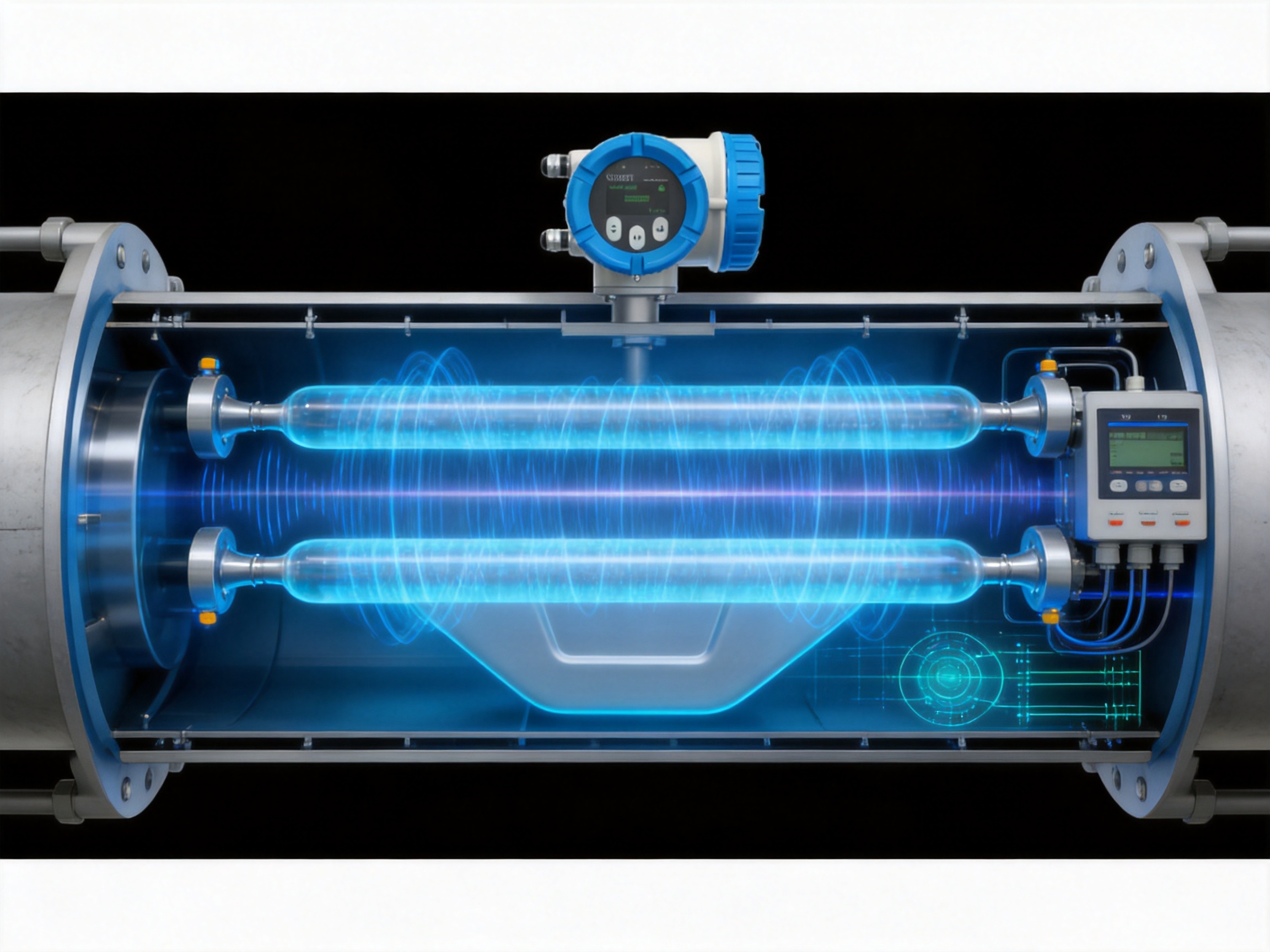
The sensor contains one or more measuring tubes that are driven into controlled oscillation. The tubes generate parallel sinusoidal signals while the transmitter continuously monitors their motion. When fluid is stationary, the inlet and outlet portions of the tubes exhibit a predictable relationship. When fluid begins to flow, Coriolis forces produce a controlled deformation of the tubes.
This deformation creates a measurable phase shift between signals at the inlet and outlet sides of the sensor. The magnitude of the time difference is proportional to mass flow. The transmitter’s digital signal-processing system detects this very small difference, filters unwanted interference, and converts the signal into a stable process value.
The natural frequency of the oscillating tube system is related to the mass of the fluid inside the tubes. Since the fluid mass is influenced by density, the transmitter can determine fluid density from the oscillation frequency. Integrated RTD sensors provide process temperature measurement, while the transmitter uses the available data to calculate volume flow and other configured variables.
This simultaneous measurement capability distinguishes the AC Series from instruments that require separate density meters, temperature transmitters, or external compensation systems. Depending on the application and configuration, one Coriolis meter can provide mass flow, volume flow, density, temperature, concentration-related information, composition estimates, water-cut functions, viscosity-related data, bidirectional measurement, and batch control.
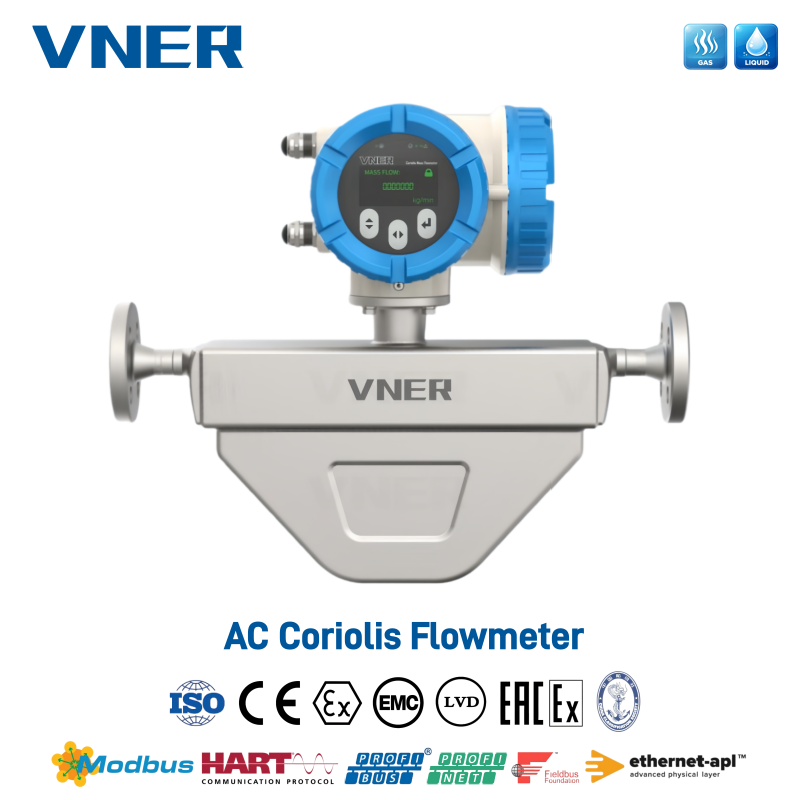
AC Series Coriolis Mass Flowmeter
Measurement Performance and Configuration Flexibility
The AC Series is offered in multiple performance classes so that users can select an appropriate balance between accuracy, range, process conditions, and investment. For liquids and slurries, stated mass flow accuracy options include ±0.05 percent, ±0.10 percent, ±0.15 percent, and ±0.20 percent of rate. The available class depends on the selected model, installation conditions, fluid characteristics, and configuration.
Repeatability is equally important in batch and dosing processes. Depending on the performance class, liquid and slurry repeatability can be as high as ±0.02 percent of rate, with other options including ±0.05 percent, ±0.075 percent, and ±0.10 percent. Strong repeatability helps ensure that repeated batches remain consistent even when the flowrate changes within the operating range.
Volume flow accuracy is available at the same general levels as liquid mass flow accuracy. This allows users to display both mass and volume values when required by production, inventory, or reporting systems. Density accuracy options include ±0.50, ±1.00, or ±3.00 kilograms per cubic meter, with a stated density measuring range of 0 to 5,000 kilograms per cubic meter. Field calibration accuracy can reach ±0.20 kilograms per cubic meter under suitable conditions.
The meter also supports gas measurement. Depending on the model and performance class, gas mass flow accuracy is specified at ±0.25 percent, ±0.50 percent, or ±1.00 percent of rate. Gas repeatability options include ±0.15 percent, ±0.25 percent, and ±0.50 percent. Gas service requires careful sizing because low density, high velocity, pressure conditions, and installation effects can influence performance.
The recommended turndown ratio is up to 20:1 for standard accuracy performance. A larger turndown may be possible, but the practical result depends on zero stability, process noise, mounting, and the selected sensor size. The listed typical zero stability ranges from 0.02 kilograms per hour for the AC002 model to 18.0 kilograms per hour for the AC150 model.
These options allow the AC Series to serve both low-flow chemical injection and larger industrial transfer duties. Correct sizing remains essential. A meter that is too large may operate close to its lower limit, while a meter that is too small may create unnecessary pressure loss or exceed the maximum flow capacity. Application engineers should evaluate normal flow, minimum flow, maximum flow, fluid density, viscosity, temperature, pressure, gas content, and required accuracy before selecting a model.
Advantages Compared with Conventional Flow Technologies
Direct mass flow without density assumptions
Many volumetric flowmeters require compensation when fluid temperature, pressure, or composition changes. The AC Series measures mass flow directly and therefore reduces dependence on assumed fluid properties. This can provide a significant advantage in blending, transfer, filling, and dosing systems where the actual mass of material is the primary control variable.
Simultaneous density and temperature measurement
A separate density meter and temperature sensor may increase installation complexity, maintenance requirements, and total instrumentation cost. The AC Series integrates these measurements into the same instrument architecture. Density information can support product verification, concentration monitoring, quality control, and process optimization.
Performance with viscous and non-Newtonian fluids
Many industrial liquids do not behave like water. Syrups, honey, lubricants, edible oils, specialty chemicals, and other viscous materials may create challenges for technologies that depend strongly on velocity profile or mechanical movement. Coriolis measurement is generally well suited to viscous fluids and selected non-Newtonian services because the measurement is based on tube motion and Coriolis force rather than a simple velocity profile assumption.
Lower dependence on upstream flow profile
Some flow technologies require long straight pipe runs, flow conditioners, or carefully controlled upstream and downstream geometry. Installation requirements still matter for a Coriolis meter, but its measurement principle is less dependent on a fully developed velocity profile than many differential-pressure, vortex, or turbine technologies. This can be valuable in compact skids, crowded process areas, and chemical injection packages.
One platform for multiple process functions
The AC Series can be configured for mass flow, volume flow, density, temperature, concentration, composition, water-cut, viscosity-related measurement, bidirectional flow, and batch functions. Not every function is required in every installation, but the expandable platform gives users flexibility when process requirements change.
Support for challenging two-phase conditions
Gas entrainment and gas-liquid mixtures can destabilize many flow measurement technologies. The AC Series uses MFDTM multi-frequency drive technology in selected configurations to improve stability under gas-liquid two-phase conditions. The transmitter can apply variable-frequency tube excitation to maintain a more reliable measurement response when process conditions are not ideal.
Digital diagnostics and maintenance support
The ILODTM intelligent online diagnostics system provides diagnostic and event messages aligned with the general structure of NAMUR NE107. This can help operators distinguish between sensor, process, installation, and electronics-related conditions. Early identification of abnormal behavior supports planned maintenance and can reduce the risk of undetected measurement drift.
Sensor Construction and Materials
The wetted parts of the AC Series are available in SS316 or SS316L, with Hastelloy C22 and other alloys available on request. Stainless steel provides a practical solution for many water, chemical, food, refining, and energy applications. Hastelloy and other corrosion-resistant alloys may be selected when the process fluid, concentration, temperature, or cleaning regime requires additional material compatibility.
Sensor housing options include SS304, SS304L, SS316, and SS316L. Transmitter housings are available in epoxy-coated aluminum or stainless steel, depending on the environmental and mechanical requirements of the installation. Material selection should be based on process compatibility, ambient exposure, cleaning procedures, hazardous-area requirements, and long-term maintenance expectations.
The product can be configured with optional secondary containment. Containment housings are rated up to 2.5 MPa for AC002 through AC080 and up to 1.5 MPa for AC100 through AC150, subject to model and application conditions. Secondary containment can provide an additional level of protection where leakage management and equipment safety are especially important.
Temperature and Pressure Capabilities
Industrial flow applications can involve cryogenic fluids, hot process streams, steam-heated products, high-temperature oils, or rapidly changing thermal conditions. The AC Series provides several process temperature configurations. Standard sensors support approximately -100 to +200 degrees Celsius. High-temperature versions support approximately -60 to +260 degrees Celsius, while ultra-high-temperature versions extend to approximately -60 to +380 degrees Celsius. Cryogenic configurations support approximately -196 to +100 degrees Celsius.
The transmitter ambient temperature range is approximately -40 to +60 degrees Celsius with relative humidity up to 95 percent, non-condensing. These limits are important when selecting integral or remote electronics and when installing the meter outdoors, in cold rooms, near hot equipment, or in enclosed process areas.
Standard designs support operating pressures up to 10.0 MPa. Higher-pressure models up to 15.0 MPa are available for suitable model and temperature combinations. Pressure ratings must be checked against sensor size, process temperature, flange or connection type, housing configuration, and applicable local codes.
Temperature and pressure capability should never be considered separately from fluid properties. A chemically compatible material may not be suitable at every temperature. Likewise, a sensor rated for a particular pressure at ambient temperature may have a reduced rating at elevated temperature. A complete application review is therefore necessary before ordering.
Transmitter Platform and Communications
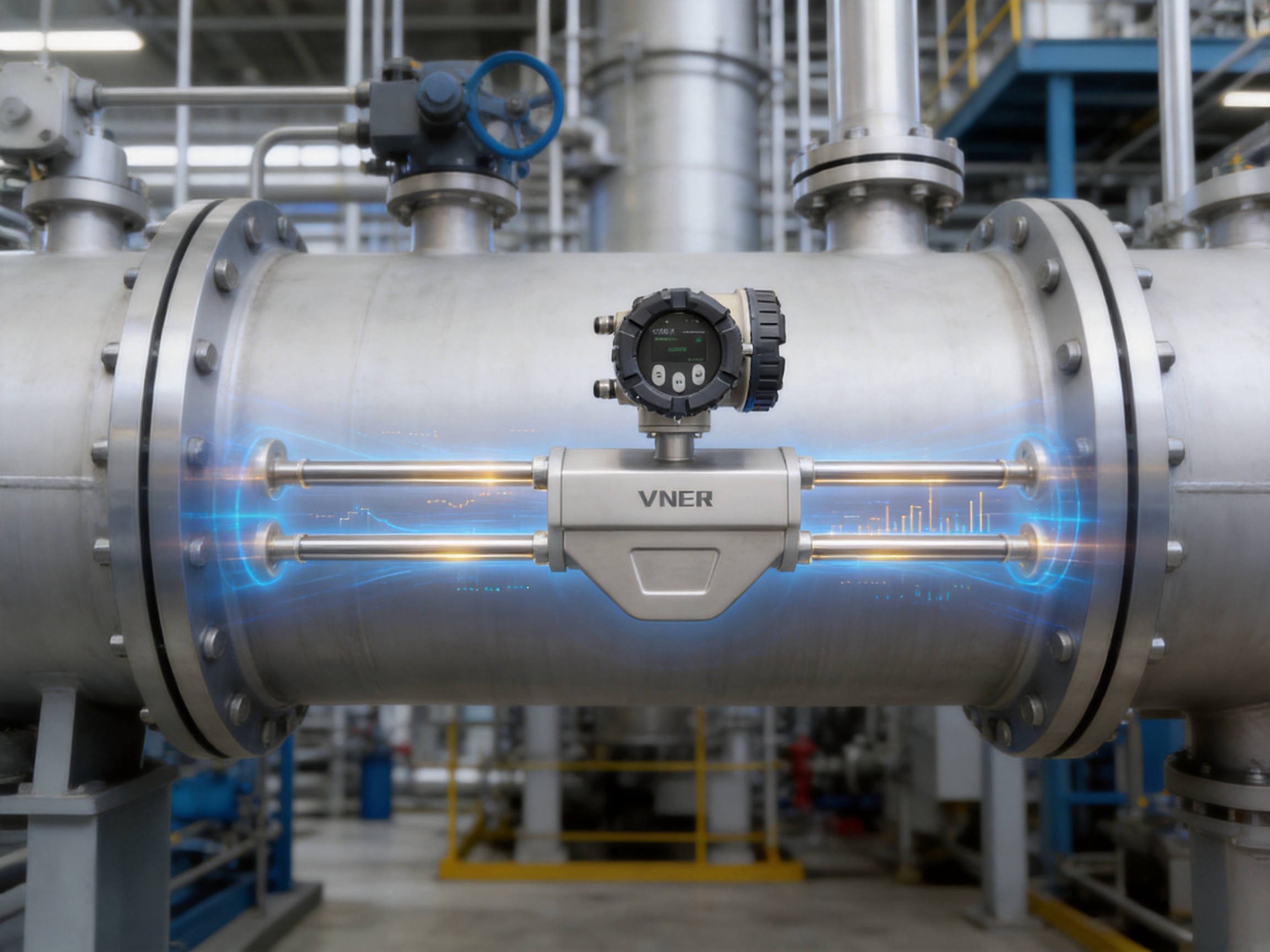
The A-Series transmitter uses a full-digital, digital signal-processing architecture. Digital excitation and signal analysis are particularly valuable when the flow signal is small, the fluid density is low, or the installation is exposed to vibration and electrical interference. The transmitter converts sensor signals into process variables while providing configuration, diagnostic, communication, and output functions.
Analog outputs provide 4-20 mA signaling with HART communication. Outputs can be assigned to mass flow, volume flow, density, temperature, or other configured variables. Pulse and frequency outputs up to 0-10 kilohertz support totalizing, batching, high-speed control, and external counting systems.
Digital communication options include HART, Modbus RS485, FOUNDATION Fieldbus, PROFINET, PROFIBUS-PA, Ethernet-APL, and discrete input or output functions. Up to five configurable input and output channels may be available in flexible combinations, depending on the selected transmitter configuration.
These communication options make the meter suitable for both conventional control systems and modern industrial networks. A plant may use a 4-20 mA signal for the primary control loop, HART for configuration and diagnostics, and a digital network for centralized asset management. In a skid-mounted system, pulse output can support batch totalizing while a digital communication link sends detailed process data to the supervisory system.
Installation formats include integral, extended-integral, remote, and wall-mounted configurations. Integral electronics can simplify compact installations. Extended-integral arrangements can position the transmitter away from hot pipework or high-vibration areas. Remote configurations are useful when the sensor is installed in a difficult location, while wall-mounted transmitters can improve access in large process units.
The display provides multi-line process information, and explosion-proof touch keys support operation without opening the transmitter housing. Low-temperature operation is available down to approximately -40 degrees Celsius, making the interface suitable for cold and hazardous environments when the complete configuration meets the applicable area classification.
Safety, Approvals, and Industrial Reliability
The AC Series is designed with explosion protection options including Ex d, Ex ib, and Ex tb, with IP66 or IP67 ingress protection available depending on configuration. Applicable ATEX and IEC hazardous-area requirements should be confirmed against the exact product certificate, sensor, transmitter, wiring arrangement, and installation zone.
The product information identifies compliance with PED 2014/68/EU and relevant GB and ASME piping codes. These references support pressure equipment and piping evaluation, but the final approval requirements depend on the country, industry, fluid group, operating pressure, temperature, and installation classification.
For custody-related transfer, the meter should be selected and installed according to the applicable local metrology regulations and approval requirements. High accuracy alone does not automatically make an installation suitable for legal trade measurement. The complete system may require approved proving, calibration, sealing, software control, totalizing, and documentation procedures.
Reliability also depends on installation quality. The sensor should be properly supported, filled with liquid where required, protected from excessive vibration, and installed so that gas accumulation or unintended draining does not compromise the measurement. Process valves, pumps, pipe reducers, and control systems should be evaluated as part of the complete measurement loop.
Applications in Refining and Petrochemical Operations
Refineries and petrochemical plants often handle fluids whose composition and density change during production, blending, storage, and transfer. Diesel, gasoline, LPG, aromatics, intermediates, solvents, and additives may be measured by mass, volume, density, or a combination of these variables.
In blending skids, the AC Series can measure multiple hydrocarbon streams and control blend ratios using mass flow. Mass-based blending reduces dependence on changing product density and can help improve final product consistency. Density data can provide an additional quality indicator and may help identify an incorrect stream, unexpected composition, or abnormal process condition.
During loading and unloading, the meter can provide mass totals, volume totals, density, and temperature to the control system. This information supports inventory accounting, batch documentation, and transfer verification. Where custody-related measurement is required, the system must be configured according to the relevant legal and industry standards.
The compact design is also valuable in modular equipment. Skid-mounted blending, additive injection, and loading systems often have limited space. A Coriolis meter that provides multiple process variables can reduce the need for separate instruments and simplify piping and control architecture.
Oil and Gas Chemical Injection
Chemical injection systems often require accurate measurement at low flowrates and elevated pressures. Corrosion inhibitors, hydrate inhibitors, methanol, scale inhibitors, and other treatment chemicals may be injected continuously into pipelines, wells, separators, or production systems.
The AC Series can support high-accuracy low-flow measurement in compact injection skids and manifolds. Direct mass measurement helps maintain the intended chemical dosage even when the chemical density changes with temperature or concentration. The meter’s pressure capability and remote installation options can be useful in confined offshore and onshore equipment layouts.
In chemical injection service, correct sizing is especially important. The meter should be selected based on minimum and maximum injection rates, pulsation from metering pumps, fluid viscosity, pressure, temperature, and the possibility of gas or vapor. A stable zero and appropriate damping configuration are also important when the normal flowrate is close to the lower end of the meter range.
Food, Beverage, and Hygienic Processing
Food and beverage processes frequently depend on repeatable filling, ingredient dosing, recipe control, and product consistency. Syrups, honey, dairy fats, vegetable oils, flavorings, and other viscous products can be difficult to measure with instruments that are highly sensitive to viscosity or changing velocity profiles.
The AC Series provides mass-based measurement for filling and dosing. Because mass is measured directly, the system can help maintain consistent net content when temperature and density vary between production batches. The meter can also provide density and temperature information for quality monitoring and recipe verification.
Materials, connections, cleaning requirements, and hygienic design must be reviewed for each food application. The selected wetted materials should be compatible with the product and the cleaning or sanitation procedure. Process engineers should also consider drainability, installation orientation, pressure drop, and the requirements of the plant’s hygienic standards.
Chemical, Fine Chemical, and Pharmaceutical-Related Processes
Chemical plants handle a wide range of acids, alkalis, solvents, specialty chemicals, and intermediate products. These materials may be corrosive, viscous, temperature-sensitive, or valuable enough that small dosing errors create significant economic losses.
The AC Series can support precision dosing, batch control, density-based quality assurance, and mass-based transfer. Hastelloy C22 and other alloy options may be considered for challenging chemical environments. The transmitter’s diagnostic functions can help maintenance teams identify abnormal sensor behavior, process interruptions, or operating conditions that require attention.
For high-value products, the ability to combine flow, density, and temperature measurement in one instrument can simplify the process design. It can also reduce the number of separate calibration points and decrease the amount of data that must be integrated by the control system.
Biofuels, Energy, and Industrial Fluids
Biodiesel, ethanol, fuel blends, lubricants, and additives may be transferred, blended, dosed, and distributed according to mass, volume, density, or temperature. Their properties can vary with composition and temperature, making direct mass measurement useful for production and logistics.
In biofuel production, the meter can support feedstock dosing, blending, transfer, and finished-product monitoring. Density measurement can provide a process indicator, while temperature measurement helps operators understand changing physical conditions. In industrial facilities, the same platform can be applied to lubricants, coolants, fuel additives, and test fluids.
AdBlue and urea-based solutions are another example of a product that can benefit from accurate dosing and transfer measurement. A mass-based approach can help maintain consistent filling and support automated production records.
Water and Wastewater Treatment
Water and wastewater facilities use chemicals such as coagulants, pH-adjustment chemicals, antiscalants, disinfectants, and other additives. Accurate dosing is necessary to achieve treatment performance while avoiding excessive chemical consumption.
The AC Series can measure chemical mass flow directly and can support closed-loop dosing control. Density data may help identify concentration changes in stored or delivered chemicals. For plants operating several dosing lines, the availability of common transmitter functions and communication protocols can simplify maintenance and integration.
Material compatibility is particularly important because treatment chemicals may be corrosive or reactive. The selected alloy, gasket, connection, and housing configuration should be reviewed against the complete chemical specification, including concentration, temperature, pressure, and cleaning practice.
Mining and Metallurgy
Mining and metallurgical processes use reagents, process chemicals, and selected slurry streams. Mass flow measurement can improve reagent feed control and support material accounting. For slurry applications, the solids concentration, particle size, abrasiveness, gas content, and pipe velocity must be evaluated before selecting the sensor.
The AC Series is suitable for selected slurries within its application limits. It can provide mass flow and density information that supports process monitoring. However, highly abrasive or heavily aerated slurries may require specialized evaluation. The final selection should consider pressure loss, erosion, plugging risk, maintenance access, and the stability of the slurry during operation.
Manufacturing Strengths and Quality Approach
The product is supported by the manufacturing and engineering capabilities of Jiangsu Vner Electronic Technology Co., Ltd. The company operates approximately 23,000 square meters of modern facilities across three plants and has a technical team of more than 150 people. Since 2011, its work has focused on industrial flow measurement for liquids, gases, and slurries.
This concentration on flow instrumentation allows product development, application engineering, calibration, production, and technical support to be connected within one organization. The company has delivered more than 2,000 engineering projects in over 30 countries, serving EPC contractors, end users, and OEM partners in oil and gas, petrochemical, polysilicon, power, water, wastewater, and other industrial sectors.
Manufacturing strength is not limited to assembly capacity. A reliable Coriolis flowmeter requires stable mechanical construction, repeatable tube characteristics, controlled welding and sealing, accurate sensor balancing, electronics verification, software validation, and calibration. Variations in any of these areas can affect zero stability, repeatability, pressure performance, or long-term measurement confidence.
The company’s in-house calibration resources support the verification of finished instruments and application-specific performance. Liquid and slurry performance is identified as being validated on ISO/IEC 17025-certified NIM calibration rigs. Calibration capability is especially important for Coriolis instruments because the sensor and transmitter must function as a matched measurement system.
Certified quality processes and traceability help ensure that production results are repeatable from one instrument to the next. Increasingly automated manufacturing can improve consistency in repetitive operations, while engineering-driven sizing and selection helps prevent unsuitable instruments from being specified for demanding services.
For international customers, the combination of manufacturing scale, technical personnel, calibration capability, and project experience can reduce the risk associated with sourcing specialized flow instruments. OEM customers can also benefit from configurable outputs, installation formats, communication options, and application-specific performance classes.
How the Manufacturing Process Supports Measurement Stability
Measurement stability begins with the sensor’s mechanical design. Measuring tubes must have consistent geometry and controlled elastic behavior so that the transmitter can interpret the oscillation signal accurately. Production controls must therefore address forming, welding, surface condition, pressure integrity, and mechanical balance.
After sensor construction, pressure and leakage checks are necessary to verify the integrity of the wetted pressure boundary. Electronics must be tested for signal processing, output accuracy, communication, display operation, diagnostic behavior, and environmental resistance. The final instrument should then be calibrated under controlled flow and density conditions.
Calibration data provides evidence that the instrument performs within its specified class. It also supports traceability during commissioning, maintenance, and customer audits. When an instrument is used in custody-related transfer, batch production, or high-value chemical dosing, this documentation can be as important as the nominal accuracy value.
Application engineering completes the manufacturing process. A correctly manufactured meter can still perform poorly if it is incorrectly sized, installed in an unsuitable orientation, exposed to excessive vibration, or operated outside the recommended range. Engineering support helps align sensor selection, transmitter configuration, material compatibility, pressure rating, temperature option, and communication requirements with the actual process.
Recommended Selection Procedure
The first selection step is to identify the fluid or mixture. The user should provide the normal, minimum, and maximum density; viscosity; temperature; pressure; composition; solids content; gas content; and any known corrosive or abrasive characteristics.
The next step is to define the flow range. Normal flow is important, but minimum and maximum flow determine the practical turndown and overload requirements. Batch applications should also identify the target batch size, filling time, valve behavior, pump pulsation, and required cutoff accuracy.
Users should then select the required accuracy and repeatability class. A high-accuracy class may be justified for custody-related transfer, high-value products, or precise blending. A standard class may be more economical for general process monitoring. Selecting the highest available accuracy without considering installation and process conditions does not always produce the best system result.
Pressure and temperature ratings must be checked against the complete operating envelope. This includes startup, shutdown, cleaning, emergency conditions, and possible pressure surges. The sensor material and containment option should be evaluated at the highest credible temperature and pressure.
Finally, communication, hazardous-area, housing, display, mounting, and diagnostic requirements should be specified. Early definition of these details prevents costly changes after procurement and ensures that the instrument integrates correctly with the plant’s control and asset-management systems.
Installation and Commissioning Considerations
The meter should be installed in a location where the tubes remain filled under normal operating conditions. For liquids, the piping arrangement should prevent unwanted gas pockets. For gas service, the installation should avoid liquid accumulation and should maintain process conditions appropriate for the selected sensor.
External vibration can interfere with measurement stability. Pumps, compressors, control valves, and unsupported pipe sections should be evaluated during installation design. The sensor should be mechanically supported without transferring excessive stress from the pipework. Thermal expansion should also be considered, particularly for high-temperature and cryogenic installations.
Before commissioning, the process line should be cleaned and checked for debris that could damage or obstruct the meter. Electrical grounding, cable shielding, hazardous-area wiring, and transmitter configuration should follow the applicable installation instructions and local regulations.
A zero verification is normally performed when the sensor is full of process fluid and flow is completely stopped. The zero condition should be stable and free from pump movement, leakage, pressure fluctuations, or trapped gas. Proper zeroing is essential for low-flow accuracy and for applications that operate across a wide turndown range.
Maintenance and Lifecycle Value
Coriolis flowmeters have no internal turbine bearings or mechanical obstructions in the measuring tube path. This can reduce routine wear-related maintenance compared with certain mechanical flow technologies. Nevertheless, regular inspection remains necessary, especially in corrosive, abrasive, high-temperature, or hazardous environments.
Diagnostic information can help operators monitor sensor behavior, tube drive conditions, signal quality, density stability, temperature circuits, and communication status. Maintenance teams can use this information to plan inspections before a measurement problem affects production.
Lifecycle value also comes from instrument versatility. If a process later requires density, concentration, batch, or bidirectional measurement, the existing platform may support additional functions through configuration or optional modules. This can reduce the need to install another instrument or redesign the process skid.
Stable measurement, documented calibration, flexible communications, and accessible diagnostics can reduce the total cost of ownership. The initial purchase price remains important, but the economic value of a flowmeter also depends on product loss, off-specification material, maintenance time, calibration requirements, downtime, and the consequences of inaccurate transfer measurement.
Comparison of Common Measurement Needs
| Application requirement | AC Series capability | Practical benefit |
| Mass-based batching | Direct mass flow measurement with pulse, frequency, or digital outputs | Improves batch repeatability and reduces dependence on estimated density |
| Changing product density | Simultaneous density and temperature measurement | Supports quality monitoring and real-time process analysis |
| Viscous liquids | Coriolis measurement for viscous and selected non-Newtonian fluids | Provides stable measurement where some velocity-based technologies may require additional compensation |
| Gas measurement | A-GASTM gas measurement algorithm and digital signal processing | Improves response to low-density gas and high-velocity conditions when correctly sized |
| Gas-liquid mixtures | MFDTM multi-frequency drive technology in suitable configurations | Enhances measurement stability under selected two-phase conditions |
| Hazardous locations | Available Ex d, Ex ib, and Ex tb configurations with IP66/IP67 options | Supports use in appropriately classified industrial areas |
| Remote installation | Integral, extended-integral, remote, and wall-mounted transmitter options | Adapts the instrument to confined, hot, cold, or difficult-to-access locations |
| Plant integration | HART, Modbus RS485, FOUNDATION Fieldbus, PROFINET, PROFIBUS-PA, Ethernet-APL, and discrete I/O | Supports conventional and modern automation architectures |
Q&A: Frequently Asked Questions
What does the AC Series Coriolis Mass Flowmeter measure?
It directly measures mass flow and can also measure density and process temperature. Volume flow is calculated in real time. Depending on the selected configuration, additional functions may include concentration, composition, crude oil water-cut, viscosity-related measurement, bidirectional flow, and batch control.
Can the meter measure both liquids and gases?
Yes. The product is designed for liquids, slurries, gases, and selected two-phase or multiphase mixtures. Liquid and gas accuracy specifications are different, so the sensor must be sized according to the actual fluid density, pressure, temperature, flow range, and gas or liquid service.
Is the AC Series suitable for crude oil and condensate?
It can be considered for crude oil, condensate, refined products, and related hydrocarbon services when the selected materials, pressure rating, temperature range, accuracy class, and approvals are appropriate. The final application should be reviewed using actual fluid properties and local measurement requirements.
Can it be used for diesel and refined products?
Yes. Diesel, gasoline, LPG, aromatics, intermediates, and biofuels are among the industrial services for which the AC Series can be applied. Mass measurement, density measurement, and temperature measurement are useful for transfer, blending, loading, unloading, and inventory control.
How does the meter handle gas-liquid two-phase flow?
Selected configurations use MFDTM multi-frequency drive technology to improve stability under gas-liquid conditions. Two-phase measurement remains application-dependent. The amount of entrained gas, gas distribution, pressure, flowrate, piping arrangement, and process stability must be evaluated before selection.
What is the maximum operating pressure?
Standard designs support pressures up to approximately 10.0 MPa, while higher-pressure models up to approximately 15.0 MPa are available for suitable models and temperatures. The exact pressure rating must be confirmed from the model datasheet and process conditions.
What process temperatures are available?
Options include standard service from approximately -100 to +200 degrees Celsius, high-temperature service from approximately -60 to +260 degrees Celsius, ultra-high-temperature service from approximately -60 to +380 degrees Celsius, and cryogenic service from approximately -196 to +100 degrees Celsius.
Which materials are available for corrosive fluids?
Standard wetted materials include SS316 and SS316L. Hastelloy C22 and other alloys can be requested for more demanding services. Material compatibility should be checked against the exact chemical composition, concentration, temperature, pressure, and cleaning procedure.
Does the meter require a separate temperature transmitter?
No separate process temperature transmitter is required for the integrated temperature measurement function. The sensor includes RTD temperature measurement, and the transmitter can provide temperature as an output variable. A separate device may still be required if the process or control philosophy calls for independent redundancy.
What communication protocols are supported?
Available options include 4-20 mA with HART, Modbus RS485, FOUNDATION Fieldbus, PROFINET, PROFIBUS-PA, Ethernet-APL, pulse or frequency output, and discrete input or output functions. The exact combination depends on the transmitter configuration.
Is the product appropriate for custody transfer?
The high-accuracy versions can support custody-related transfer applications when combined with suitable approvals, calibration, totalizing, installation, and system procedures. Legal metrology requirements vary by jurisdiction, so the complete system must be evaluated against the applicable local standards.
How should the correct model be selected?
Selection should be based on minimum, normal, and maximum flow; fluid density; viscosity; temperature; pressure; composition; gas or solids content; connection size; material compatibility; accuracy; hazardous-area classification; and communication requirements. A detailed datasheet review and engineering sizing process are recommended.
What manufacturing support is available?
The manufacturer provides flow measurement engineering, in-house calibration, certified quality processes, application-driven sizing and selection, and configurable transmitter and sensor options. Its facilities, technical personnel, project experience, and calibration resources support industrial and OEM requirements.
Conclusion
The AC Series Coriolis Mass Flowmeter provides a comprehensive solution for industrial measurement tasks where direct mass flow, density, temperature, and dependable digital integration are required. Its core advantage is the ability to measure mass directly while also supplying additional process data that would otherwise require several instruments.
Compared with conventional volumetric technologies, the product offers strong value for changing-density fluids, viscous liquids, batch operations, high-value products, chemical dosing, blending, and transfer measurement. Options for gas service, selected multiphase applications, high pressure, cryogenic and high-temperature operation, hazardous areas, remote mounting, and modern communication networks extend its application range.
The product’s performance is supported by an engineering and manufacturing organization with dedicated flow measurement experience, multiple production facilities, a substantial technical team, in-house calibration capability, international project experience, and an emphasis on traceability and repeatable production. These strengths are important because the quality of a Coriolis measurement system depends on the entire chain from sensor construction and electronics development to calibration, selection, installation, and lifecycle support.
For users seeking more than a single flow reading, the AC Series can function as a flexible process measurement platform. With correct sizing, suitable materials, appropriate installation, and verification against the project’s standards, it can help improve product consistency, reduce material loss, strengthen process control, and provide reliable measurement data across demanding industrial environments.
References
1. AC Series Coriolis Mass Flowmeter Product Information and Technical Specification Summary.
2. International Organization for Standardization, General Principles of Industrial Flow Measurement and Calibration Practice.
3. International Electrotechnical Commission, Requirements for Electrical Equipment in Explosive Atmospheres.
4. NAMUR, NE107 Recommendations for Self-Monitoring and Diagnostics of Field Devices.
5. Pressure Equipment Directive 2014/68/EU, Essential Safety Requirements for Pressure Equipment.
6. General Engineering Practices for Coriolis Mass Flowmeter Sizing, Installation, Commissioning, and Maintenance.
7. Industrial Measurement and Control Guidelines for Mass Flow, Density, Temperature, Batch, and Custody-Related Transfer Applications.
Product: AC Series Coriolis Mass Flowmeter



Products
Contact Information
-

+86 18652789521
+86-0514-83633600 / 83633900 -

+86-0514-83633600 / 83633900
-

s@vner.com.cn
katherine@vner.com.cn -

No. 11 Xingye Road, Chenji Town Industrial Park, Yizheng, Yangzhou, China
