
 0
0
 EN
EN  English
 عربى
عربى Español
 русский
If you need any help, please feel free to contact us
Home / Author / Ren Xiaotong — Technical Sales Engineer for Gas Flow Meters / Specialized Coriolis Mass Flow Measurement for CNG and LNG Fueling
Specialized Coriolis Mass Flow Measurement for CNG and LNG Fueling
Natural gas fueling has moved far beyond simple volumetric indication. Compressed natural gas and liquefied natural gas are now used in vehicle refueling, satellite stations, industrial gas distribution, peak-shaving facilities, marine bunkering, and compact custody-related transfer skids. In these environments, a flowmeter is not merely an instrument installed in a pipe. It is a central measurement device that affects billing confidence, station uptime, process safety, operating cost, and customer trust.
The AG CNG/LNG Specialized Coriolis Mass Flowmeter is designed for these demanding applications. It is a dedicated Coriolis mass flow solution for CNG and LNG services, including high-pressure compressed natural gas, cryogenic liquefied natural gas, LNG vapor phase measurement, dispenser metering, refueling station service, trailer unloading, and compact skid integration. Unlike general-purpose flowmeters that must be adapted to natural gas fueling, this specialized meter is engineered around the actual operating challenges of CNG and LNG: high pressure, cryogenic temperature, gas density variation, flashing, boil-off, compact installation space, vibration, hazardous area requirements, and batch measurement accuracy.
Its measuring principle is based on controlled tube vibration and the Coriolis effect. When there is no flow, the inlet and outlet sections of the measuring tube oscillate in phase. When mass moves through the vibrating tube, Coriolis forces create a small phase shift between inlet and outlet signals. This shift is proportional to mass flow. At the same time, the natural frequency of the tube is used to calculate density, while integrated temperature measurement supports process monitoring and compensation. This means the instrument directly measures mass flow rather than inferring it from pressure, temperature, and volume alone.
For CNG and LNG, direct mass measurement is a major advantage. Natural gas density changes with pressure, temperature, composition, and phase behavior. In LNG service, the situation can become even more complex because vapor generation, flashing, or two-phase flow may appear during fueling and unloading. A high-performance Coriolis meter reduces dependence on long straight pipe runs, flow profile correction, and multiple external compensation devices. It gives operators a compact, repeatable, and traceable measurement platform for modern natural gas stations.
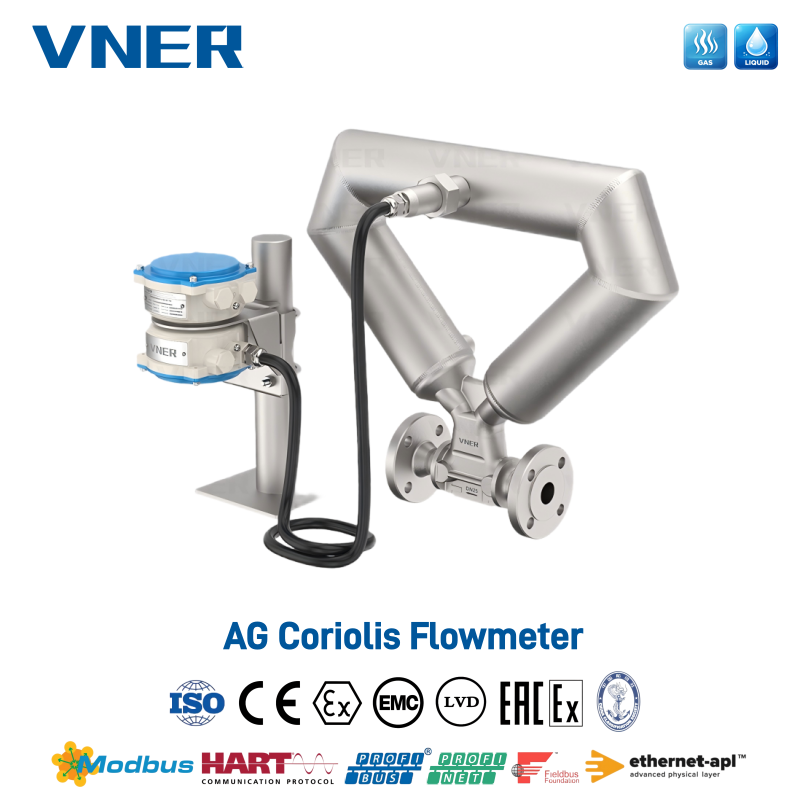
AG CNG/LNG Specialized Coriolis Mass Flowmeter
Why CNG and LNG Fueling Requires Specialized Mass Flow Measurement
CNG and LNG fueling systems operate under conditions that are more severe than many conventional industrial flow applications. CNG dispensers may operate at very high pressure, while LNG systems must handle extremely low temperatures. In both cases, the flowmeter must respond quickly during batch fueling, maintain repeatability over repeated transactions, and provide stable signals even when the process is not ideal.
In CNG applications, the gas is compressed to high pressure. The flow velocity may be high, and the density is much lower than that of liquids. Low density makes signal generation more difficult for some Coriolis instruments, especially if the transmitter cannot resolve small phase differences accurately. Pressure changes also affect the relationship between measured conditions and the final fueling quantity. A meter for CNG service must therefore combine strong mechanical design, high-frequency signal resolution, pressure capability, and reliable batch performance.
In LNG service, the temperature can be close to minus 196 degrees C. Materials shrink, seals and connections are stressed, and thermal gradients can influence measurement stability. LNG may also vaporize when pressure drops or heat enters the system. This creates two-phase flow, where liquid and vapor coexist. Many flowmeters struggle in such conditions because the measurement signal becomes unstable. A specialized Coriolis solution must therefore address cryogenic compatibility and must include advanced drive and signal algorithms that help the measuring tube remain stable during phase disturbances.
Traditional flow technologies can still be useful in many gas and liquid processes, but CNG and LNG fueling place special demands on accuracy, compactness, and custody-related repeatability. Turbine meters may require flow conditioning and can be affected by moving parts, wear, and gas property changes. Vortex meters may need stable flow profiles and sufficient Reynolds number. Differential pressure systems often require pressure and temperature compensation and may have larger installation footprints. Ultrasonic meters can perform well in many gas applications, but compact dispenser layouts and two-phase LNG conditions may be difficult. Coriolis technology, when specifically optimized for CNG and LNG, offers a direct mass measurement approach that helps simplify the station measurement architecture.
Product Overview
The AG CNG/LNG Specialized Coriolis Mass Flowmeter is a natural gas fueling and custody-related measurement instrument built on a Coriolis platform. It is intended for high-pressure CNG, LNG liquid phase, and LNG vapor phase applications. Dedicated models include CNG015 for compressed natural gas, LNG006 for LNG vapor phase service, and LNG025 for LNG liquid phase service. These model distinctions are important because natural gas fueling is not a single uniform application. CNG and LNG require different pressure, temperature, flow range, and signal handling strategies.
The meter measures mass flow, density, and process temperature. With transmitter calculation, it can also provide calculated volume or standard volume. Batch flow accuracy can reach plus or minus 0.50 percent of reading under specified conditions, with batch repeatability of plus or minus 0.25 percent of reading. For fueling stations, repeatability is especially valuable because a dispenser may perform many similar fills every day. Good repeatability helps maintain customer confidence and supports consistent station accounting.
The CNG015 model offers a nominal flow of 6,000 kilograms per hour, approximately 7,600 normal cubic meters per hour, and maximum operating pressure up to 40.0 MPa under appropriate conditions. The LNG006 model is oriented toward vapor phase service with a nominal flow of 55 kilograms per hour. The LNG025 model is designed for liquid phase LNG service with a nominal flow of 12,000 kilograms per hour. LNG006 and LNG025 are suitable for process temperatures down to minus 196 degrees C and up to plus 100 degrees C, while CNG015 supports minus 60 degrees C to plus 150 degrees C. These ranges demonstrate that the instrument is not simply a standard factory flowmeter; it is configured for the realities of natural gas infrastructure.
The wetted parts are made from 316 series stainless steel, selected for compatibility with demanding industrial gas and cryogenic services. The sensor housing uses 304 series stainless steel, while the transmitter housing is epoxy-coated aluminum. The design considers explosion protection, dust protection, ingress protection, vibration resistance, and hazardous-area installation requirements. Protection ratings can reach IP66 or IP67, with explosion-proof and dust-proof options depending on the A-Series platform and certification configuration.
Core Measuring Principle and Its Value
A Coriolis meter is valued because it directly measures mass flow. The AG Series uses precision-engineered vibrating tubes. During operation, the drive system maintains controlled oscillation. Sensors detect the inlet and outlet oscillation signals. When fluid flows through the tube, the moving mass interacts with the oscillation and produces a measurable phase shift. The transmitter converts that phase shift into mass flow.
Density measurement is obtained from the natural frequency of the vibrating tube. A denser medium changes the tube’s resonant behavior compared with a less dense medium. Temperature is measured through integrated sensors so that the transmitter can track process conditions. These simultaneous measurements are very useful in CNG and LNG operations. Operators do not simply receive a flow signal; they receive a richer set of process information that can support diagnostics, compensation, and reporting.
The direct mass measurement method gives the product a competitive advantage over instruments that calculate mass indirectly. In natural gas fueling, pressure and temperature change rapidly during filling. If a measurement system relies on several independent sensors and compensation calculations, each sensor and each correction factor becomes a possible source of uncertainty. Coriolis technology integrates mass, density, and temperature measurement in one device, reducing complexity and improving measurement confidence.
Another benefit is installation flexibility. Many velocity-based meters require upstream and downstream straight runs to stabilize the flow profile. In CNG and LNG stations, space is often limited. Dispenser cabinets, compact skids, pipe bends, valves, filters, and safety devices compete for installation space. A Coriolis meter generally does not require long straight pipe runs, making it easier to integrate into compact layouts. This is a practical advantage for station builders, skid manufacturers, and retrofit projects.
Technical Specification Summary
| Item | Specification or Description | Application Value |
| Application focus | CNG and LNG fueling, refueling stations, custody-related natural gas metering | Designed for real station and transfer conditions rather than only laboratory use |
| Measuring principle | Coriolis effect with controlled tube oscillation | Direct mass flow measurement with density and temperature outputs |
| Measured variables | Mass flow, density, process temperature, calculated volume or standard volume through transmitter | Supports fueling, monitoring, control, and reporting |
| Dedicated models | CNG015, LNG006, LNG025 | Covers high-pressure CNG, LNG vapor phase, and LNG liquid phase |
| Batch flow accuracy | Up to plus or minus 0.50 percent of reading under specified conditions | Supports high-confidence fueling and custody-related measurement |
| Batch repeatability | Up to plus or minus 0.25 percent of reading | Improves transaction consistency and operational trust |
| Temperature accuracy | Plus or minus 1.0 degree C | Useful for process monitoring and compensation |
| CNG015 nominal flow | 6,000 kilograms per hour, approximately 7,600 normal cubic meters per hour | Suitable for high-capacity compressed natural gas fueling |
| LNG006 nominal flow | 55 kilograms per hour vapor phase | Suitable for vapor phase LNG-related measurement |
| LNG025 nominal flow | 12,000 kilograms per hour liquid phase | Suitable for LNG dispenser and transfer service |
| Maximum operating pressure | CNG015 up to 40.0 MPa; LNG006 and LNG025 up to 10.0 MPa, temperature dependent | Supports high-pressure and cryogenic natural gas systems |
| Process temperature range | CNG015 from minus 60 to plus 150 degrees C; LNG006 and LNG025 from minus 196 to plus 100 degrees C | Covers both compressed gas and cryogenic liquefied gas service |
| Ambient conditions | Minus 40 to plus 60 degrees C; 5 to 95 percent relative humidity, non-condensing | Suitable for outdoor station and industrial environments |
| Wetted materials | 316 series stainless steel | Provides durable compatibility for demanding gas service |
| Communication and outputs | 4 to 20 mA, pulse or frequency up to 10 kHz, Modbus RS485, fieldbus options through platform | Integrates with dispensers, controllers, batching systems, and SCADA |
| Installation options | Integral, extended-integral, remote, or wall-mounted transmitter | Provides flexibility for compact and hazardous-area layouts |
Advantages Over Conventional and Competing Flow Measurement Solutions
The AG CNG/LNG Specialized Coriolis Mass Flowmeter competes not only with other Coriolis meters, but also with turbine, vortex, differential pressure, ultrasonic, and general gas flow measurement technologies. Its strongest advantage is the combination of direct mass measurement, dedicated gas algorithms, cryogenic design, high-pressure capability, compact installation, and diagnostic intelligence.
Compared with turbine flowmeters, it has no rotating measuring element in the process stream. Turbine meters can provide good performance in clean and stable conditions, but moving parts can wear, especially when operating cycles are frequent. Bearing condition, contamination, overspeed, and mechanical friction can influence long-term stability. A Coriolis meter avoids these rotating components. For fueling stations that require repeated batch operation, this can reduce maintenance concerns and improve lifecycle reliability.
Compared with vortex flowmeters, the Coriolis principle is less dependent on stable vortex shedding conditions and flow profile. Vortex meters are widely used for steam, gas, and liquid services, but they typically require sufficient flow velocity and may be affected by vibration or low-flow limitations. In fueling applications, low start flow, rapid ramp-up, and batch termination all matter. Coriolis measurement provides direct response to mass flow over a broad range, making it attractive where accuracy and repeatability at changing flow conditions are important.
Compared with differential pressure systems, the AG meter offers a more integrated solution. A differential pressure system may require a primary element, differential pressure transmitter, pressure transmitter, temperature transmitter, flow computer, and careful installation geometry. It can be robust, but the total system can become large and complex. The Coriolis approach combines several measurements in one device and avoids permanent pressure loss associated with some primary elements. In compact skids, this is a meaningful competitive advantage.
Compared with some ultrasonic gas meters, the AG Series is especially valuable where mass-based batch fueling is needed and where LNG two-phase behavior may occur. Ultrasonic meters can be very effective in pipeline gas metering, but performance depends on acoustic path stability, gas composition, flow profile, and installation geometry. A dedicated Coriolis meter can be easier to integrate into small dispenser lines and can provide density information directly.
Compared with general-purpose Coriolis meters, the specialization of the AG Series is critical. Not every Coriolis meter is equally prepared for low-density gas, high-pressure CNG, cryogenic LNG, and two-phase disturbances. The A-Series full-digital transmitter, A-GAS gas measurement algorithm, MFD multi-frequency drive technology, pressure compensation, and ILOD intelligent online diagnostics create a measurement platform aimed at natural gas fueling rather than a broad but less optimized industrial specification.
Advanced Digital Transmitter Platform
The transmitter is a major contributor to measurement performance. The AG Series uses an A-Series full-digital transmitter platform with DSP-based signal processing and all-digital drive. This is important because Coriolis signals in gas service can be small, especially with low gas density and high velocity. A transmitter must distinguish useful phase information from noise, vibration, and process disturbance.
Digital signal processing improves the ability to resolve ultra-low flow signals. It also supports advanced filtering, diagnostic logic, and stable tube excitation. In older or less capable instruments, signal processing limitations may cause unstable zero, noisy output, or poor repeatability during fast batch cycles. A modern digital transmitter helps the flowmeter maintain stability while providing communication outputs for station automation.
The availability of 4 to 20 mA outputs, pulse and frequency outputs up to 10 kHz, and Modbus RS485 communication allows the instrument to connect directly with dispensers, PLC systems, station controllers, batching systems, and SCADA platforms. The pulse output is especially useful for batch control, while digital communication provides access to diagnostic and process variables. This makes the meter suitable for both standalone dispenser integration and larger station-wide automation.
Flexible transmitter mounting is another practical advantage. Integral mounting is convenient where space and environmental conditions allow it. Extended-integral or remote mounting can separate the electronics from extreme temperature zones, difficult access points, or vibration-prone locations. Wall-mounted transmitters can improve operator access and simplify maintenance. These options help engineering teams design systems around real station constraints rather than forcing the station layout to fit the instrument.
Dedicated Gas Measurement Algorithm
Gas measurement with Coriolis technology requires careful attention to signal resolution. Low gas density means the Coriolis force can be much smaller than in liquid applications. High gas velocity can introduce additional dynamic effects. The AG Series addresses this through the A-GAS gas measurement algorithm, which uses ultra-high frequency resolution to minimize errors associated with low density and high velocity.
This algorithmic focus gives the meter a strong advantage in CNG service. During vehicle fueling, flow may change quickly as the dispenser opens, ramps, and closes. Pressure equalization between station storage and vehicle cylinders can cause dynamic operating conditions. A meter with weak gas signal handling may show unstable output or reduced repeatability. A-GAS is designed to support stable gas measurement under these practical conditions.
For station owners, the advantage is not only technical. Better gas measurement stability can reduce disputes, simplify calibration management, and improve financial accountability. When every fueling transaction depends on mass measurement, small errors repeated many times become significant. A meter optimized for gas measurement helps protect revenue and customer confidence.
Two-Phase Handling for LNG Service
LNG is challenging because it is cryogenic and can generate vapor as heat enters the system or pressure changes. During fueling, unloading, or bunkering, liquid and vapor may coexist. This two-phase behavior can disturb many flow measurement technologies. In a Coriolis meter, two-phase flow can affect tube damping, drive stability, and density measurement. A conventional single-frequency drive strategy may struggle when the fluid mixture changes rapidly.
The AG Series uses MFD multi-frequency drive technology to improve stability under gas-liquid two-phase conditions. This technology supports real-time multi-frequency or variable-frequency tube excitation. Instead of treating the measuring tube as if process conditions remain constant, the drive system adapts more intelligently to changing conditions. This is particularly valuable for LNG boil-off or flashing events.
The benefit is not that any flowmeter can completely ignore severe two-phase disturbance. Rather, the advantage is that the instrument is designed to maintain more stable operation when two-phase events occur within practical limits. This helps station operators reduce measurement interruptions, unstable alarms, and batch inconsistency. In LNG dispensers and small-scale bunkering skids, where perfect single-phase flow cannot always be guaranteed, this is a significant practical advantage.
Pressure Compensation and Cryogenic Reliability
CNG and LNG measurement cannot be separated from pressure and temperature. The AG Series supports fully automated online pressure compensation and semi-automatic pressure compensation through manual input. This allows real-time correction of process pressure deviations from calibration conditions. For LNG025, typical process pressure effects are approximately minus 0.15 percent of flow per MPa deviation from calibration pressure. Recognizing and compensating for such effects is important in high-accuracy service.
Temperature effects are also considered. For LNG006 and LNG025, process temperature effects are approximately plus or minus 0.0018 percent of nominal flow per degree C. Since LNG systems operate over extreme temperature ranges, even small temperature-related influences must be understood. The integrated temperature measurement and compensation capability help support stable performance.
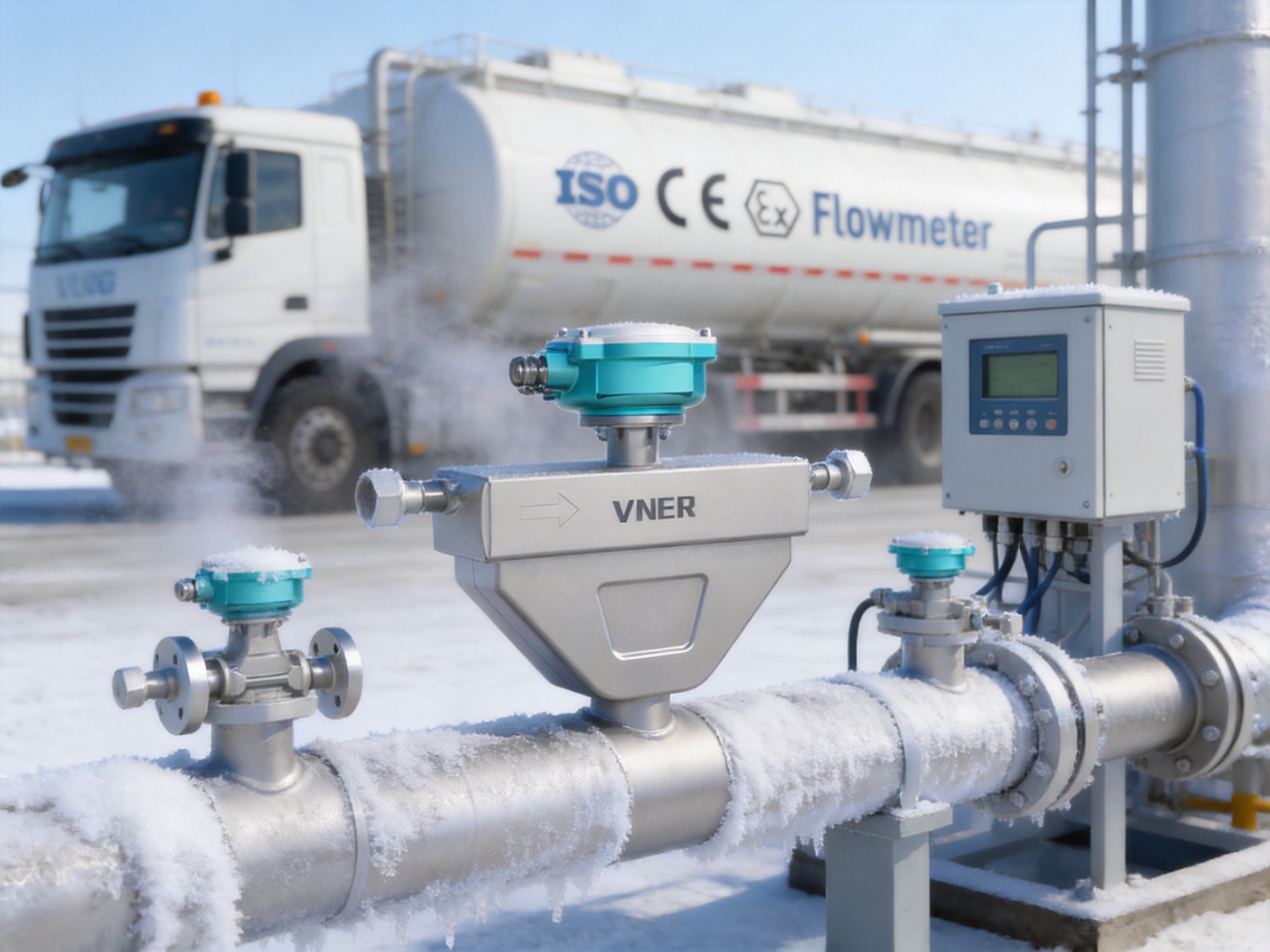
Cryogenic reliability depends on both materials and manufacturing control. Stainless steel wetted components, precise tube geometry, robust welding, stress management, and calibration procedures all influence the ability to perform at minus 196 degrees C. In LNG applications, thermal shock and repeated cool-down cycles can expose weaknesses in material selection or fabrication quality. A specialized LNG meter must therefore be manufactured with strict process discipline, not merely assembled from standard components.
Safety and Hazardous-Area Considerations
CNG and LNG stations are hazardous environments. The instrument must be designed with explosion protection, dust protection, ingress protection, and safe failure considerations. The AG Series platform supports explosion-proof and dust-proof ratings up to Ex db IIC T6 Gb and Ex tb IIIC T80 degrees C Db, with IP66 or IP67 protection depending on configuration and certification. These characteristics make the meter suitable for use in demanding industrial and fueling environments when selected and installed according to applicable certificates and local regulations.
For CNG service, integrated automatic pressure relief is an important safety feature. A rupture disc can support controlled venting in the unlikely event of housing failure. However, this safety feature must be implemented correctly on site, including proper vent routing. Safety in gas systems is never achieved by the instrument alone; it depends on engineering design, installation practice, inspection, operating procedures, and compliance with relevant standards.
The product is designed with reference to standards and regulations such as GB/T 20801, GB 50316, TSG 07-2019, and ASME B31.3. These references show that the design is aligned with industrial piping and pressure-related requirements. For international projects, customers should also consider local metrology, hazardous-area, pressure equipment, and trade measurement approvals. The meter provides a strong technical platform, and final compliance depends on proper project selection and documentation.
Manufacturing Strength Behind the Instrument
A high-accuracy Coriolis meter is not created by design theory alone. Manufacturing quality determines whether the design can be repeated in production. The company behind the AG Series operates as a specialized industrial flow meter manufacturer with years of experience in electromagnetic, Coriolis, vortex, swirl, turbine, thermal mass, ultrasonic, and rotameter technologies. This wide product background is important because real industrial projects often require multiple flow measurement principles. A manufacturer that understands several technologies can recommend suitable solutions rather than forcing one type of meter into every application.
The manufacturing base includes modern facilities across three plants, with a large production area and a technical team of more than 150 people. The company has delivered over 2,000 engineering projects in more than 30 countries, serving EPC contractors, end users, and OEM partners. Industries include oil and gas, petrochemical, polysilicon, power, water and wastewater, and industrial process sectors. This project experience supports practical product development because field feedback from different applications can be translated into better mechanical design, electronics, calibration methods, and documentation.
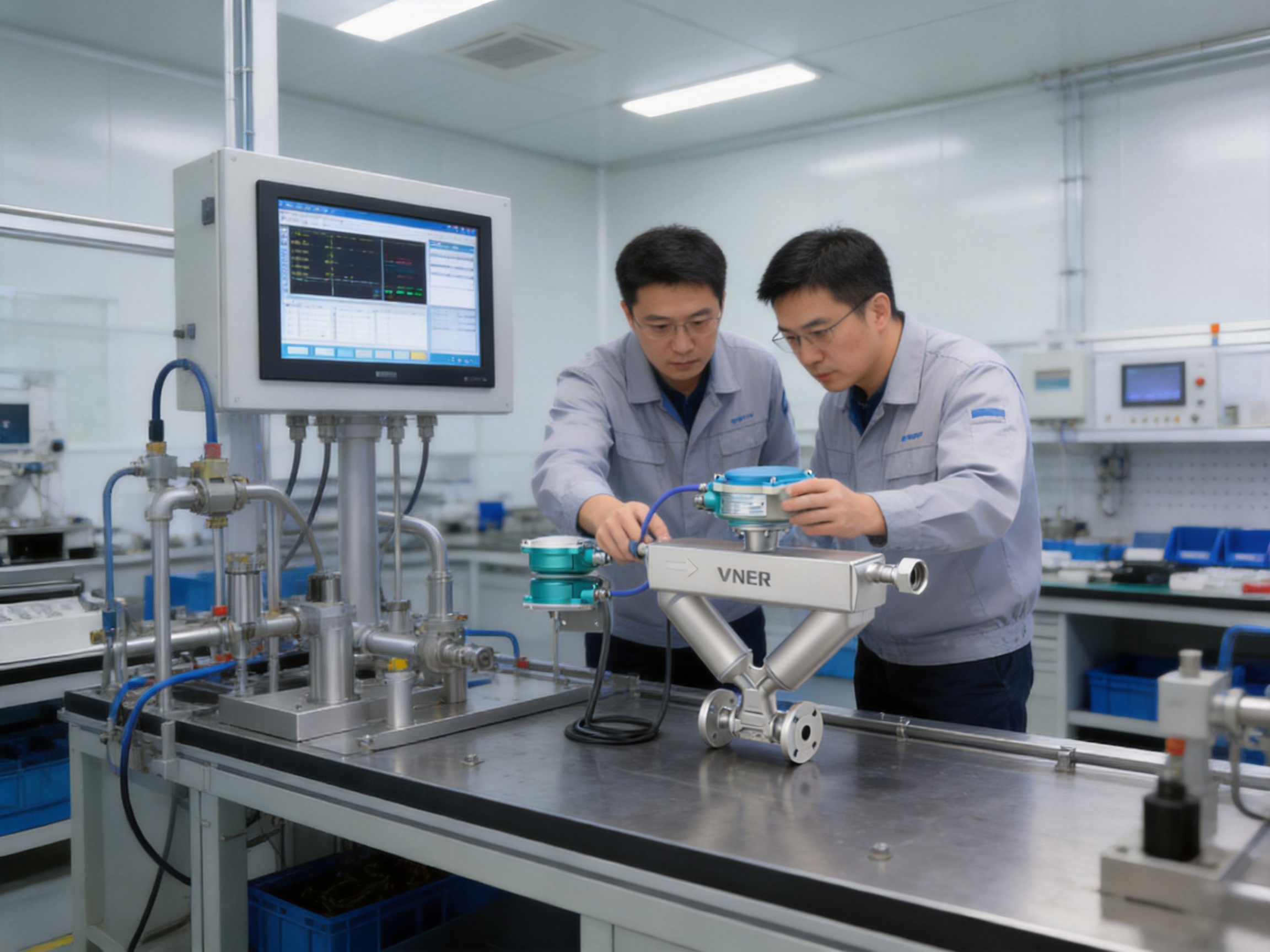
Advanced manufacturing for a Coriolis meter includes precision tube forming, controlled welding, sensor assembly, signal coil installation, mechanical balancing, pressure testing, electronics integration, and calibration. Each step affects final accuracy and repeatability. For a CNG/LNG meter, the requirements are even more demanding because high-pressure and cryogenic conditions can amplify small manufacturing inconsistencies.
In-house calibration is a major advantage. Calibration capability supports traceability, production consistency, and customer confidence. It allows the manufacturer to verify each meter against controlled reference conditions and to maintain records for quality assurance. For customers, this means the delivered instrument is not only built to a specification but also tested as a measurement device. In fueling and custody-related applications, calibration documentation is an essential part of the product value.
Certified quality processes and engineering-driven sizing further strengthen the offering. Flowmeter performance depends heavily on correct sizing. Oversizing can damage low-flow performance and repeatability; undersizing can create excessive pressure drop or velocity concerns. A manufacturer with application engineers can review medium, pressure, temperature, flow range, installation space, communication needs, and regulatory requirements before recommending a model. This reduces selection risk and helps customers avoid costly field changes.
Quality Control and Repeatable Production
Product consistency is especially important for OEM and EPC customers. A single successful prototype is not enough. A station builder or skid manufacturer needs repeatable delivery, consistent dimensions, predictable communication behavior, and stable performance across batches. The company’s focus on increasingly automated manufacturing supports this requirement. Automation can improve repeatability in machining, assembly, testing, and documentation, while experienced technicians handle critical inspection and application-specific configuration.
For Coriolis meters, repeatable tube geometry is central to performance. Small differences in wall thickness, bending symmetry, weld quality, and stress distribution can influence zero stability and sensitivity. Manufacturing discipline must therefore include dimensional inspection, material verification, pressure integrity testing, and signal performance evaluation. The AG Series benefits from a production philosophy that emphasizes long-term reliability rather than one-off instruments.
The company’s experience with multiple industrial meter types also supports comprehensive testing knowledge. Electromagnetic meters require coil and liner control; turbine meters require mechanical precision; vortex meters require bluff body and signal stability; thermal mass meters require sensor thermal characterization; ultrasonic meters require acoustic path management. This broad manufacturing experience creates a culture of measurement detail that benefits Coriolis production as well.
Application Scenario: CNG Dispenser Metering
At a CNG fueling station, the dispenser must transfer a reliable mass quantity of gas into a vehicle cylinder. The process may include rapid pressure changes, pulsation from valves, and repeated batch starts and stops. The CNG015 model is rated up to 40.0 MPa and provides batch measurement accuracy up to plus or minus 0.50 percent of reading with repeatability up to plus or minus 0.25 percent of reading under specified conditions. These specifications make it suitable for dispenser-level mass measurement when used with relevant trade measurement approvals and proper system design.
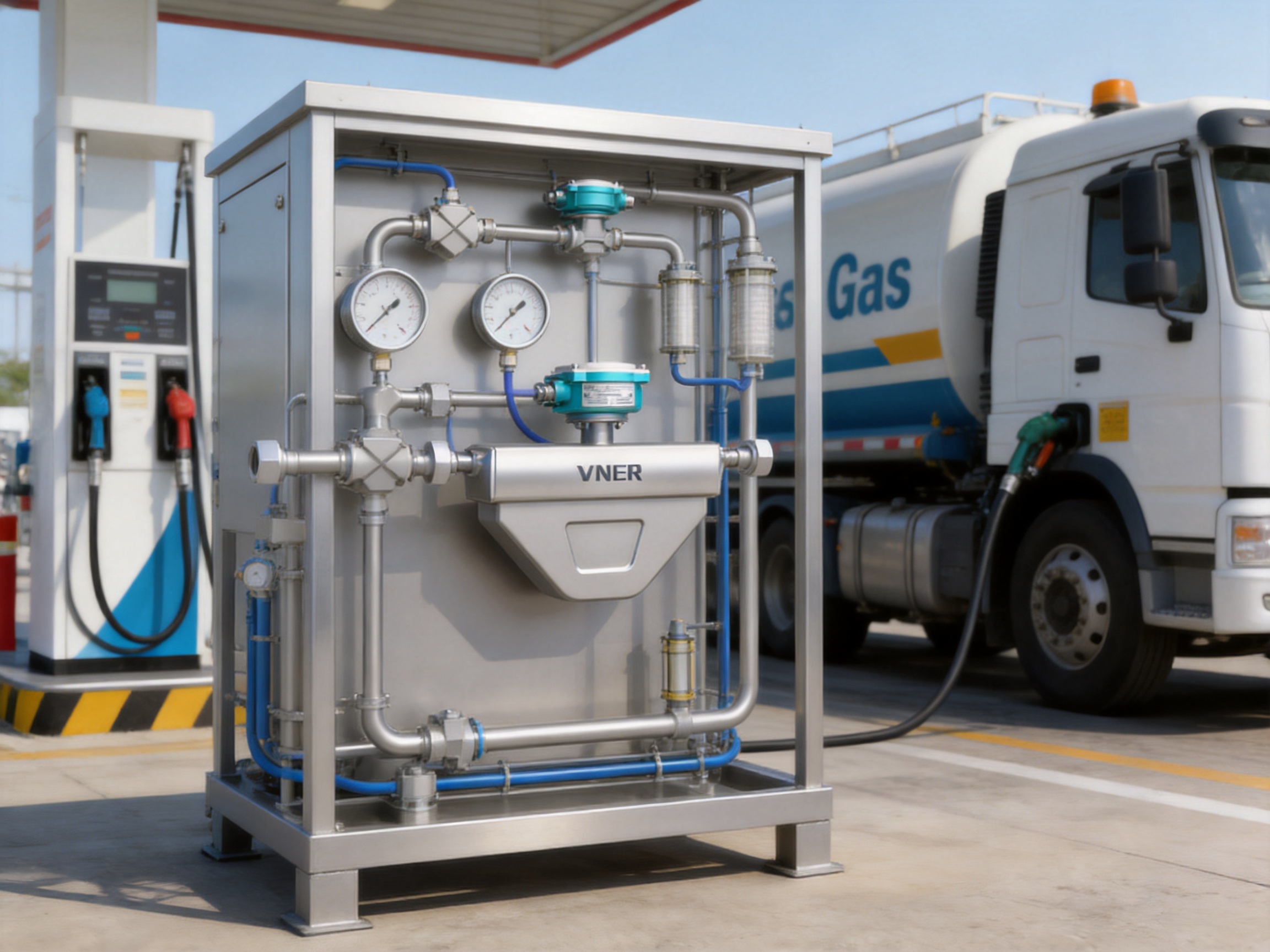
For the station operator, the meter supports transaction confidence. Fueling errors can create financial loss, customer dissatisfaction, or regulatory issues. The direct mass output, pulse signal capability, and Modbus communication allow integration with dispenser electronics and station control systems. The absence of long straight-run requirements helps fit the meter inside compact dispenser cabinets or skid-mounted systems.
Maintenance planning is also improved through intelligent diagnostics. A station may operate long hours, and unexpected shutdowns can be expensive. Diagnostic messages allow operators to detect abnormal conditions earlier and plan intervention more efficiently. This is a strong advantage over simpler meters that provide only a flow output without meaningful health information.
Application Scenario: LNG Vehicle Fueling
LNG vehicle fueling is expanding in heavy-duty transportation, including trucks and buses. LNG provides higher energy density than CNG and can support longer driving ranges. However, LNG fueling introduces cryogenic safety and measurement challenges. The meter must handle low temperature, possible vapor, and rapid batch operation.
The LNG006 and LNG025 models address vapor and liquid phase LNG services. Their process temperature range down to minus 196 degrees C enables use in cryogenic LNG systems. The MFD two-phase handling technology helps maintain stability during flashing and boil-off conditions. For LNG dispensers, this can improve batch consistency and reduce unstable measurement events.
In LNG fueling, density information is also useful. Because LNG composition and temperature can vary, density monitoring supports operational understanding. A Coriolis meter that provides mass flow and density in one instrument offers richer data than a simple volumetric device. This helps station operators manage fueling quality, inventory, and process control.
Application Scenario: Small-Scale Bunkering and Marine LNG
Small-scale LNG bunkering is increasingly important for marine engines and harbor operations. Bunkering systems require compact, accurate, and safe measurement because space is limited and the transferred product has commercial value. The AG Series can be applied within model limits to LNG bunkering skids and LNG-fueled vessel supply lines.
Marine environments can involve vibration, space limitations, and strict safety procedures. The meter’s vibration resistance, compact installation needs, hazardous-area protection, and remote transmitter options are valuable in such systems. The ability to measure mass directly is important because LNG custody-related transfer is usually based on energy or mass accounting, and accurate mass data is a key input.
When integrated into bunkering systems, the meter can provide pulse output for batch totalization and digital data for supervisory control. Diagnostics can support maintenance planning, especially in applications where service access is less convenient than in land-based stations.
Application Scenario: Virtual Pipeline and Satellite Stations
Virtual pipeline systems transport CNG or LNG by trailer to areas without direct pipeline access. Satellite stations receive and distribute the gas for industrial, commercial, or municipal use. Measurement is required during trailer unloading, station feed, send-out, and internal accounting. These systems often use compact skid packages, where installation space is valuable.
The AG Series is suitable for compact skid integration because it does not require long straight runs and offers flexible transmitter mounting. It can deliver mass flow, density, and temperature data for process control and reporting. For satellite station operators, this helps improve accountability between delivered, stored, and distributed gas quantities.
The product’s pressure and temperature capability also supports the range of conditions found in virtual pipeline operations. CNG unloading may involve high pressure, while LNG unloading involves cryogenic conditions and possible vapor management. A specialized Coriolis solution can reduce the number of separate measurement devices needed and simplify skid design.
Application Scenario: City Gas, Industrial Users, and Peak-Shaving
Natural gas supply points for city gas and industrial users often require reliable measurement for monitoring, internal cost allocation, and custody-related transfer. Industrial users may include chemical plants, glass factories, power generation facilities, food processing sites, and other energy-intensive operations. Accurate mass measurement helps operators understand consumption and improve energy management.
LNG peak-shaving facilities store liquefied gas and send it out during periods of high demand. Measurement is needed for LNG send-out and boil-off gas management. The AG Series supports these applications through cryogenic compatibility, gas measurement capability, and diagnostic features. In peak demand scenarios, station uptime is especially important. Intelligent diagnostics and stable measurement help reduce the risk of unplanned downtime.
For city-gate study stations or industrial take-off points, compact and accurate instruments are valuable. The ability to provide mass, density, and temperature data in one device supports process analysis and reporting. When integrated with SCADA, the meter becomes part of a broader digital infrastructure for gas distribution management.
Intelligent Diagnostics and Predictive Maintenance
The AG Series includes ILOD intelligent instrument online diagnostics. This diagnostic system monitors electronic and mechanical components and provides NAMUR NE107-compliant diagnostic and event messages. NAMUR NE107 classifies device status in a way that helps operators understand whether a device is functioning normally, requires maintenance, is outside specification, or has failed.
Diagnostics are increasingly important in modern industrial instrumentation. In the past, operators often discovered instrument problems only after a measurement deviation, alarm, or process failure. Intelligent diagnostics allow earlier detection of abnormal conditions. This supports predictive maintenance, lifecycle traceability, and better planning.
For CNG and LNG stations, uptime is directly tied to revenue. A dispenser that is unavailable during peak fueling hours can cause financial loss and customer dissatisfaction. Diagnostic data can help maintenance teams identify whether the issue is related to electronics, sensor behavior, process conditions, or installation effects. This can reduce troubleshooting time and avoid unnecessary instrument replacement.
Diagnostics also support documentation and quality systems. Event records can help operators understand historical operating conditions, maintenance actions, and recurring issues. For large station networks or OEM dispenser manufacturers, this data can improve fleet management and product support.
Installation Flexibility and Skid Integration
CNG and LNG systems are often installed in tight spaces. Dispensers, safety valves, filters, heat exchangers, pumps, vaporizers, pressure regulators, and control cabinets must fit within limited footprints. The AG Series supports integral, extended-integral, remote, and wall-mounted transmitter configurations. This flexibility allows engineers to place the sensor in the process line while locating the transmitter where it is easier to access, safer, or less exposed to extreme temperature.
No straight-run requirement is a major advantage in compact skids. While good piping practice is always important, eliminating long upstream and downstream requirements allows more efficient layouts. This reduces skid size, lowers fabrication complexity, and can make retrofits easier. For OEM partners, compact integration can improve product competitiveness by reducing cabinet or skid dimensions.
Vibration resistance up to 1.0 g acceleration over 5 to 2000 Hz, compliant with IEC 60068-2-6 and GB/T 2423.10 concepts, supports use in industrial and station environments. Pumps, compressors, vehicle movement, and nearby equipment can introduce vibration. A meter designed to tolerate realistic vibration conditions is better suited to long-term operation.
Economic Benefits for Operators
The economic value of a CNG/LNG Coriolis meter comes from several sources. First, accurate and repeatable batch measurement protects revenue. If a station sells large volumes of fuel, even small measurement deviations can become significant over time. Second, direct mass measurement reduces dependence on complex compensation systems, helping simplify installation and reduce potential error points.
Third, the compact installation profile can lower skid and dispenser manufacturing cost. Less straight pipe, fewer external devices, and flexible mounting can reduce engineering hours and assembly complexity. Fourth, diagnostics reduce maintenance uncertainty. Instead of reacting to failures, operators can plan service based on device status and event information.
Fifth, long-term reliability reduces total cost of ownership. A low-cost meter that requires frequent maintenance, recalibration, or replacement can become more expensive than a robust specialized instrument. For natural gas fueling, where safety, uptime, and transaction confidence are critical, choosing a dedicated measurement solution is often the more economical decision over the life of the station.
Why Manufacturer Capability Matters in Coriolis Technology
Coriolis flowmeters are precision instruments. Their performance depends on mechanical symmetry, electronic resolution, stable drive control, calibration accuracy, and software intelligence. A customer should evaluate not only the data sheet but also the manufacturer’s ability to produce consistently, support projects, and provide after-sales service.
The manufacturer of the AG Series has built its strength around industrial flow measurement since 2011. Its product portfolio covers electromagnetic, Coriolis, vortex, swirl, turbine, thermal mass, ultrasonic, and metal tube rotameter instruments. This broad capability supports application-oriented selection. For example, a water treatment project may need electromagnetic meters, a steam project may need vortex meters, a natural gas system may need Coriolis or thermal mass meters, and a compact mechanical indication point may need a rotameter. A manufacturer with this range can support complete project packages.
The company’s facility scale and technical team also matter. Modern production facilities, engineering support, calibration capability, and project experience help reduce risk for EPC contractors and OEM customers. More than 2,000 engineering projects across more than 30 countries provide exposure to different standards, site practices, climates, and process challenges. This experience is valuable when developing specialized products such as the AG CNG/LNG meter.
Rather than focusing on one-off instruments, the company emphasizes stable, repeatable measurement, product consistency, traceability, and long-term reliability. This philosophy aligns well with the needs of natural gas fueling operators, who require dependable measurement over many operating cycles.
Selection Considerations for Engineering Teams
When selecting an AG CNG/LNG Specialized Coriolis Mass Flowmeter, engineering teams should begin with the medium and phase: high-pressure CNG, LNG liquid phase, or LNG vapor phase. The correct dedicated model should be chosen based on flow range, pressure, temperature, and process behavior. CNG015, LNG006, and LNG025 address different service requirements.
Flow range must be reviewed carefully. The nominal flow should match the expected operating range, including minimum flow, normal flow, maximum flow, and batch profile. Oversizing can reduce low-flow sensitivity, while undersizing may create pressure drop or velocity issues. The manufacturer’s engineering sizing support can help identify the right model and connection options.
Pressure and temperature ratings must be checked against actual operating and design conditions. For CNG, maximum pressure can be high, and pressure relief routing must be properly designed. For LNG, cryogenic temperature compatibility must be reviewed, including cooldown procedures, insulation, and thermal contraction effects.
Communication needs should also be defined early. A dispenser may require pulse output, while a station controller may require Modbus RS485. Some systems may need 4 to 20 mA signals for process variables. Hazardous-area requirements, ingress protection, transmitter mounting, cable routing, and local approvals should be confirmed before procurement.
Operational Best Practices
Even a high-performance flowmeter must be installed and operated correctly. For CNG systems, pressure relief routing, grounding, hazardous-area installation, and mechanical support are essential. The meter should be installed where it is protected from excessive stress, misalignment, and unsupported piping loads. Proper commissioning should include zero verification under no-flow conditions according to the manufacturer’s instructions.
For LNG systems, cooldown procedures are important. Rapid thermal changes can stress equipment if not managed correctly. Insulation, vapor management, and avoidance of unnecessary heat leak help reduce boil-off and improve measurement stability. Operators should understand that two-phase handling technology improves robustness, but good process design is still important to minimize severe flashing.
Regular inspection should include electrical connections, transmitter enclosure condition, grounding, process connections, diagnostic status, and calibration records. Diagnostic messages should not be ignored. They provide early information that can prevent larger problems. For stations with multiple meters, centralized diagnostic monitoring can improve maintenance efficiency.
Q&A Section
What is the main purpose of this specialized Coriolis mass flowmeter?
It is designed for CNG and LNG fueling, refueling stations, compact natural gas transfer skids, LNG vapor or liquid phase measurement, and custody-related natural gas metering. It directly measures mass flow and also provides density and temperature information.
Why is direct mass measurement important for CNG and LNG?
CNG and LNG density changes with pressure, temperature, composition, and phase condition. Direct mass measurement reduces reliance on indirect compensation and provides a more suitable basis for fueling transactions and gas transfer accounting.
Which models are available for different services?
The dedicated models include CNG015 for compressed natural gas, LNG006 for LNG vapor phase service, and LNG025 for LNG liquid phase service. Each model is designed around its pressure, temperature, and flow requirements.
What batch accuracy can the meter achieve?
Under specified conditions, batch flow accuracy can reach plus or minus 0.50 percent of reading, with batch repeatability up to plus or minus 0.25 percent of reading.
How does the meter handle LNG boil-off or two-phase flow?
The AG Series uses MFD multi-frequency drive technology to improve tube excitation stability when gas-liquid two-phase conditions occur, such as flashing or boil-off in LNG service.
What makes it better than a turbine meter in fueling service?
It has no rotating measuring element in the process stream, reducing concerns related to bearing wear, mechanical friction, contamination, and moving-part maintenance. It also directly measures mass rather than relying on volumetric measurement and compensation.
Does the meter require long straight pipe runs?
One of the practical advantages of Coriolis technology is compact installation without long straight-run requirements. This is useful in dispensers, tight station layouts, and skid-mounted systems.
What communication outputs are available?
The meter can provide 4 to 20 mA outputs, pulse or frequency outputs up to 10 kHz, and Modbus RS485 communication. Additional fieldbus options may be supported through the transmitter platform depending on configuration.
Can the transmitter be mounted remotely?
Yes. Installation options include integral, extended-integral, remote, and wall-mounted transmitter configurations. This helps in confined spaces, hazardous areas, and cryogenic installations.
Why is manufacturer capability important for this product?
Coriolis performance depends on precision manufacturing, stable electronics, calibration capability, quality control, and application engineering. The manufacturer’s facility scale, technical team, in-house calibration, and international project experience help ensure consistent product quality and support.
Conclusion
The AG CNG/LNG Specialized Coriolis Mass Flowmeter is a focused solution for modern natural gas fueling and transfer applications. It addresses the key technical challenges of CNG and LNG measurement: high pressure, cryogenic temperature, low gas density, two-phase LNG behavior, compact installation, hazardous-area protection, batch accuracy, and long-term reliability.
Its competitive advantages come from the combination of direct Coriolis mass measurement, dedicated CNG and LNG models, high batch accuracy, gas-specific signal algorithms, multi-frequency two-phase handling, pressure compensation, intelligent diagnostics, and flexible communication. Compared with conventional turbine, vortex, differential pressure, ultrasonic, and general-purpose Coriolis solutions, it offers a more specialized platform for natural gas fueling environments.
Behind the product is a manufacturer with broad industrial flow measurement experience, modern facilities, in-house calibration capability, engineering-driven selection, quality control, and a strong project record. This manufacturing foundation matters because high-performance Coriolis meters require precision, repeatability, and traceability from design through production and service.
For CNG stations, LNG dispensers, small-scale bunkering systems, satellite stations, virtual pipeline projects, city gas applications, and peak-shaving facilities, this specialized Coriolis meter provides a practical path toward accurate, compact, and reliable mass flow measurement. As natural gas infrastructure continues to modernize, instruments that combine measurement performance with diagnostic intelligence and manufacturing consistency will become increasingly important.
References
1. Coriolis Flow Measurement Principles and Industrial Applications, Instrumentation Engineering Handbook.
2. Natural Gas Fueling Station Design Guidelines, Industrial Gas Measurement and Safety Publications.
3. Cryogenic Liquid Measurement Practices, Process Measurement Technical Series.
4. NAMUR NE107, Self-Monitoring and Diagnosis of Field Devices.
5. ASME B31.3, Process Piping Code.
6. IEC 60068-2-6, Environmental Testing: Vibration Test Methods.
7. Industrial Flowmeter Calibration and Traceability Methods, Metrology Practice Reference.
Product: AG CNG/LNG Specialized Coriolis Mass Flowmeter

We offer all our products and services at international standards.
Products
Contact Information
-

+86-18652789521
+86-18052582295
+86-0514-83633600 / 83633900 -

+86-0514-83633600 / 83633900
-

shawn@vnerflow.com
info@vnerflow.com -

No. 11 Xingye Road, Chenji Town Industrial Park, Yizheng, Yangzhou, China
