
 0
0
 EN
EN  English
 عربى
عربى Español
 русский
If you need any help, please feel free to contact us
Home / Author / Ren Xiaotong — Technical Sales Engineer for Gas Flow Meters / High-Accuracy Electromagnetic Flowmeter for Conductive Liquids and Slurry Applications
High-Accuracy Electromagnetic Flowmeter for Conductive Liquids and Slurry Applications
Industrial flow measurement is no longer a simple matter of reading a number on a display. Modern plants need stable data, repeatable process control, reliable communication, and instruments that can survive harsh fluids, difficult installation environments, and long maintenance intervals. For conductive liquids, especially water, wastewater, corrosive chemicals, brine, sludge, and slurry, electromagnetic flowmeters remain one of the most practical and widely adopted technologies because they measure volumetric flow without introducing moving parts into the pipe.
The VE801 General Purpose Electromagnetic Flowmeter is designed for these demanding realities. It is a full-bore electromagnetic flowmeter for conductive liquids, available across a nominal diameter range from DN10 to DN300. It supports accuracy grades of ±0.3% and ±0.5%, repeatability as low as 0.1%, bidirectional measurement, process temperatures from –40°C to +200°C, pressure ratings up to 4.0 MPa, and protection classes up to IP68 for challenging field installations. Its four-electrode design, flexible liner and electrode material options, integral or remote mounting, and support for 4–20 mA, frequency, pulse, HART, and Modbus communications make it suitable for a broad range of industrial and utility applications.
This article examines the product in detail, explaining how it works, where it performs best, what advantages it offers over conventional competing solutions, and how advanced manufacturing and engineering capabilities contribute to long-term measurement stability. It also discusses selection principles, installation considerations, application examples, and frequently asked questions for engineers, procurement teams, plant operators, and system integrators.
VE801 General Purpose Electromagnetic Flowmeter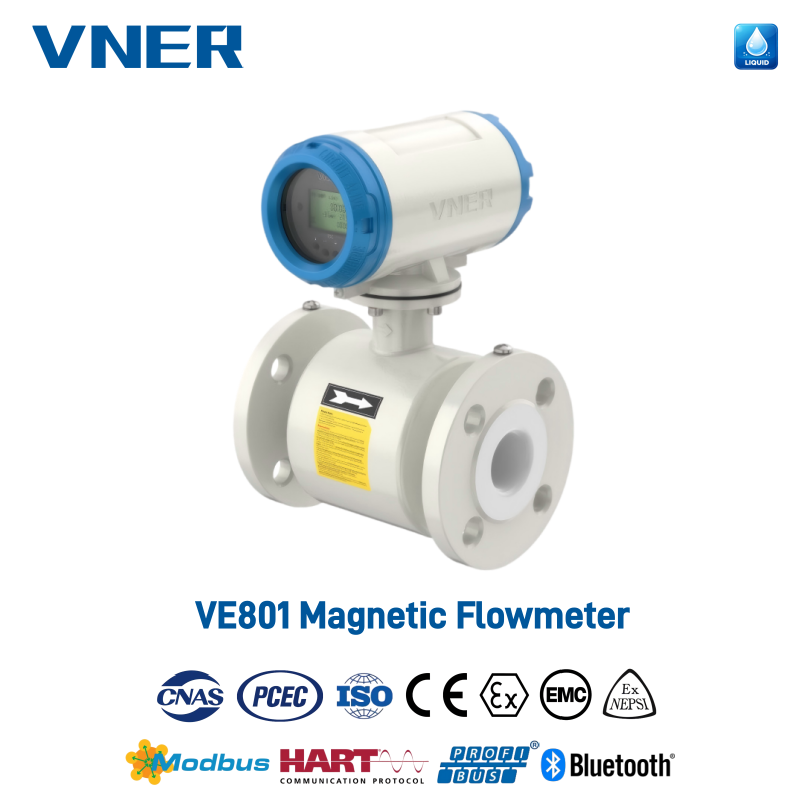
Understanding the Role of Electromagnetic Flow Measurement
Electromagnetic flow measurement is based on Faraday’s law of electromagnetic induction. When a conductive liquid moves through a magnetic field, it generates an induced voltage proportional to the velocity of the fluid. Electrodes installed in the measuring tube detect this voltage, and the converter calculates the flow rate based on the pipe diameter and measured velocity. Because the measuring principle depends on electrical conductivity rather than mechanical rotation or pressure drop, the technology is especially suitable for water-based liquids, wastewater, corrosive liquids, and slurries containing suspended solids.
One of the strongest advantages of electromagnetic flowmeters is the absence of moving parts. Turbine meters, positive displacement meters, and some mechanical flow instruments may be sensitive to wear, fouling, viscosity changes, and suspended particles. In abrasive or dirty fluids, mechanical elements can degrade, leading to maintenance downtime and drifting accuracy. By contrast, a full-bore electromagnetic flowmeter has no obstruction in the flow path. This helps reduce pressure loss, improves durability, and makes it easier to measure fluids that contain solids, fibers, sludge, or slurry.
The VE801 Series takes this established measurement principle and packages it for cost-efficient, reliable industrial use. Its full-bore structure preserves pipeline flow capacity, while its material flexibility allows engineers to choose suitable liner and electrode combinations for various chemical and physical conditions. This is important because the accuracy of a flowmeter is not determined only by electronics; it also depends on the mechanical stability of the sensor, the compatibility of wetted materials, the quality of signal acquisition, and the robustness of installation.
Product Overview
The VE801 General Purpose Electromagnetic Flowmeter is built for conductive liquid measurement across industrial process lines and utility systems. It is designed for water and wastewater treatment, chemical processing, energy production, steel and metallurgy, irrigation, agriculture, desalination, reverse osmosis systems, and slurry monitoring. Its operating range makes it especially valuable where one plant requires a unified flowmeter platform for many different pipelines and fluid conditions.
The instrument measures conductive liquids with a minimum fluid conductivity of 20 μS/cm. It covers DN10 to DN300 nominal diameters and supports flow velocities from 0.3 to 10 m/s. This velocity range is suitable for many practical pipeline systems because it covers low-flow monitoring, common process flow control, and higher-velocity transfer applications. The ability to measure both forward and reverse flow supports systems where flow direction may change during cleaning, backwash, recirculation, or process switching.
The product is available in integral or remote mounting configurations. Integral mounting is convenient when the installation location has moderate ambient conditions and easy access for reading and maintenance. Remote mounting is useful when the pipeline is in a pit, underground chamber, submerged area, high-vibration zone, high-temperature process area, or location where display and electronics are better placed separately from the sensor. This flexibility allows the same measuring platform to be adapted to different project requirements without changing the core measurement principle.
For outputs and communication, the VE801 Series supports 4–20 mA analog output, frequency output, pulse output, HART, and Modbus communication. These options allow connection to PLC systems, DCS platforms, data loggers, batch controllers, and smart monitoring networks. In modern plants, a flowmeter is often part of a larger automation and traceability system, so communication compatibility is a major advantage.
Key Technical Specifications
| Parameter | Specification | Practical Meaning |
|---|---|---|
| Measured Fluid | Conductive liquids | Suitable for water, wastewater, acids, alkalis, brines, sludge, and slurry where conductivity is sufficient |
| Accuracy | ±0.3% or ±0.5% | Supports high-confidence process control and utility measurement |
| Repeatability | 0.1% or 0.16% | Helps maintain stable readings during repeated operating cycles |
| Fluid Conductivity | ≥ 20 μS/cm | Ensures the liquid can generate a measurable electromagnetic signal |
| Nominal Diameter | DN10 to DN300 | Covers small process lines and larger utility pipelines |
| Flow Velocity Range | 0.3 to 10 m/s | Suitable for many industrial pipeline velocities |
| Flow Direction | Bidirectional | Measures forward and reverse flow without reconfiguration |
| Process Temperature | –40°C to +200°C | Suitable for cold environments and many elevated-temperature processes |
| Operating Pressure | 0.6, 1.0, 1.6, or 4.0 MPa | Allows selection according to pipeline pressure class |
| Ambient Temperature | –25°C to +60°C | Supports typical outdoor and indoor industrial environments |
| Relative Humidity | 5% to 90% | Suitable for many plant environments when installed correctly |
| Communication | 4–20 mA, frequency, pulse, HART, Modbus | Enables integration into automation, monitoring, and control systems |
| Mounting | Integral or remote | Adapts to installation, access, temperature, and environmental requirements |
Major Advantages Over Competing Flow Measurement Options
No Moving Parts for Reduced Wear
Compared with turbine and other mechanical flowmeters, the VE801 Series has a major structural advantage: there are no moving parts in the measuring tube. This is particularly valuable in wastewater, sludge, and slurry service. Suspended solids, fibers, sand, or abrasive particles can damage bearings, rotors, and mechanical assemblies in other technologies. A full-bore electromagnetic sensor avoids these internal rotating components, reducing wear-related failure modes and helping maintain stable performance over time.
This is especially important in mining slurry, pulp, municipal wastewater, and industrial effluent lines. In such applications, the fluid may not be clean, homogeneous, or gentle. A flowmeter that performs well only with clean water may require frequent cleaning or replacement when exposed to abrasive or dirty fluids. The VE801 Series is positioned for more realistic field conditions, where solids and chemical variation are common.
Low Pressure Loss Through Full-Bore Design
Many differential pressure flow elements, such as orifice plates and some nozzles, introduce a restriction into the pipe. That restriction creates pressure loss, which can increase pumping energy consumption. The VE801 Series uses a full-bore measuring tube, so it does not intentionally narrow the pipeline. This helps reduce unnecessary energy loss and supports efficient hydraulic design.
For water supply, wastewater pumping, cooling circuits, and large circulation systems, pressure loss is not a minor concern. Even small permanent pressure losses can accumulate into significant energy costs over years of operation. By maintaining an unobstructed flow path, the electromagnetic design supports both measurement and energy efficiency.
High Accuracy and Repeatability
The VE801 Series provides accuracy options up to ±0.3% and repeatability down to 0.1%. Accuracy is important for custody-like monitoring, dosing control, chemical consumption tracking, water balance, production efficiency analysis, and environmental compliance. Repeatability is equally important because many process control loops depend on consistent readings rather than occasional perfect readings.
In competing low-cost instruments, poor repeatability can create unstable control behavior. A dosing pump may overcorrect, a valve may oscillate, or a supervisory control system may misinterpret process variation. Stable repeatability helps operators distinguish real process changes from instrument noise. The four-electrode design of the VE801 Series contributes to signal stability and long-term reliability, supporting dependable measurement even in complex fluids.
Bidirectional Flow Measurement
Some flowmeter technologies require specific configuration or physical orientation for reverse flow measurement. The VE801 Series supports bidirectional flow measurement, allowing it to measure forward and reverse flow accurately. This is useful in backwash systems, recirculation loops, tank transfer lines, chemical cleaning systems, and process lines where flow direction can change according to operation mode.
Bidirectional measurement can reduce instrumentation complexity. Instead of installing separate meters or additional sensors, the same instrument can support multiple operating states. For facilities that value simpler maintenance and streamlined inventory, this flexibility is a practical advantage.
Wide Application Range
The VE801 Series covers DN10 to DN300, pressure ratings from 0.6 to 4.0 MPa, and process temperatures from –40°C to +200°C. This range allows the instrument family to be used across many lines in a single facility. A plant may need small meters for chemical dosing, medium meters for process water, and larger meters for cooling or wastewater discharge. Using a consistent instrument platform simplifies training, spare parts management, configuration, and documentation.
Competitors may offer specialized instruments for narrow conditions, but the advantage of a general-purpose electromagnetic flowmeter is broad applicability. When engineered correctly with suitable liner, electrode, pressure, and mounting selections, the VE801 Series can support water, acids, alkalis, brines, sludge, effluent, seawater, permeate, and slurry applications.
Flexible Materials for Chemical Compatibility
Material compatibility is central to electromagnetic flowmeter reliability. The measuring tube liner must resist chemical attack, temperature stress, and abrasion. The electrodes must remain stable in contact with the fluid and maintain dependable signal detection. The VE801 Series supports multiple lining and electrode material options, allowing engineers to match the flowmeter to the medium.
This flexibility gives the product an advantage over basic meters with limited wetted material choices. In chemical processing, steel pickling, desalination brine, and aggressive wastewater applications, improper material selection can lead to swelling, corrosion, coating damage, electrode degradation, and measurement drift. A meter platform that supports material customization is better suited for real industrial diversity.
Four-Electrode Design and Signal Stability
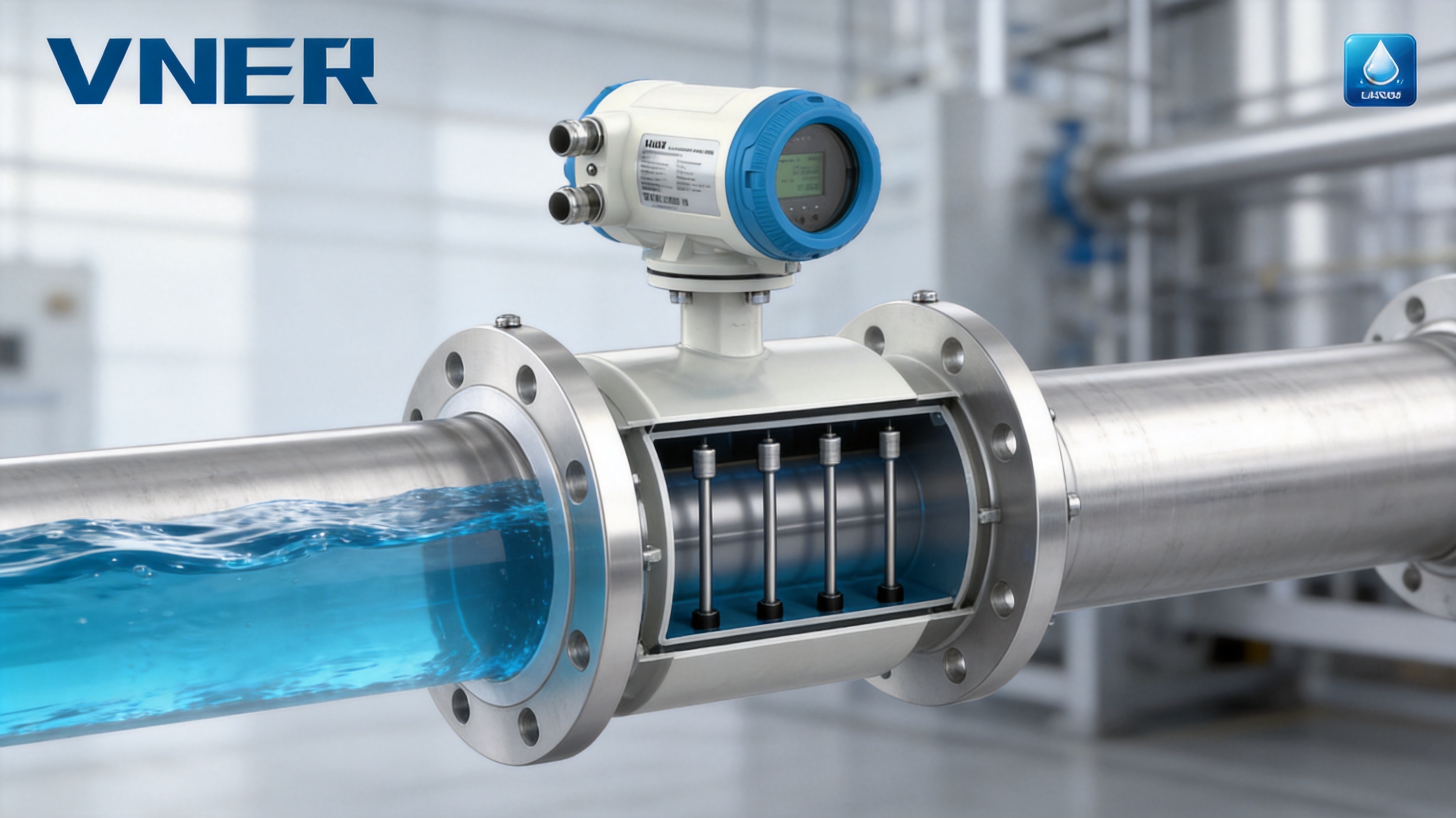
A defining feature of the VE801 Series is its four-electrode design. In electromagnetic flow measurement, electrodes are the contact points that detect the induced voltage generated by fluid movement through the magnetic field. A stable electrode signal is essential for accurate conversion of velocity into flow rate. Industrial fluids may contain bubbles, solids, variable conductivity, chemical deposits, or turbulence. These factors can influence signal quality if the sensor design is not robust.
The four-electrode design enhances measurement stability by improving signal acquisition and supporting dependable long-term performance. It helps the instrument maintain repeatable readings and contributes to reliable bidirectional measurement. In practical terms, this means fewer unexplained fluctuations, better confidence in process trends, and stronger suitability for demanding fluids.
Signal stability is especially important in automated systems. When flow measurement data is used for chemical dosing, pump speed control, water balance, or process interlocking, unstable readings can create downstream problems. A stable flowmeter allows control logic to respond to real process changes instead of noise. Over time, this improves process consistency and can reduce chemical waste, energy waste, and operator intervention.
Application Areas
Water and Wastewater Treatment
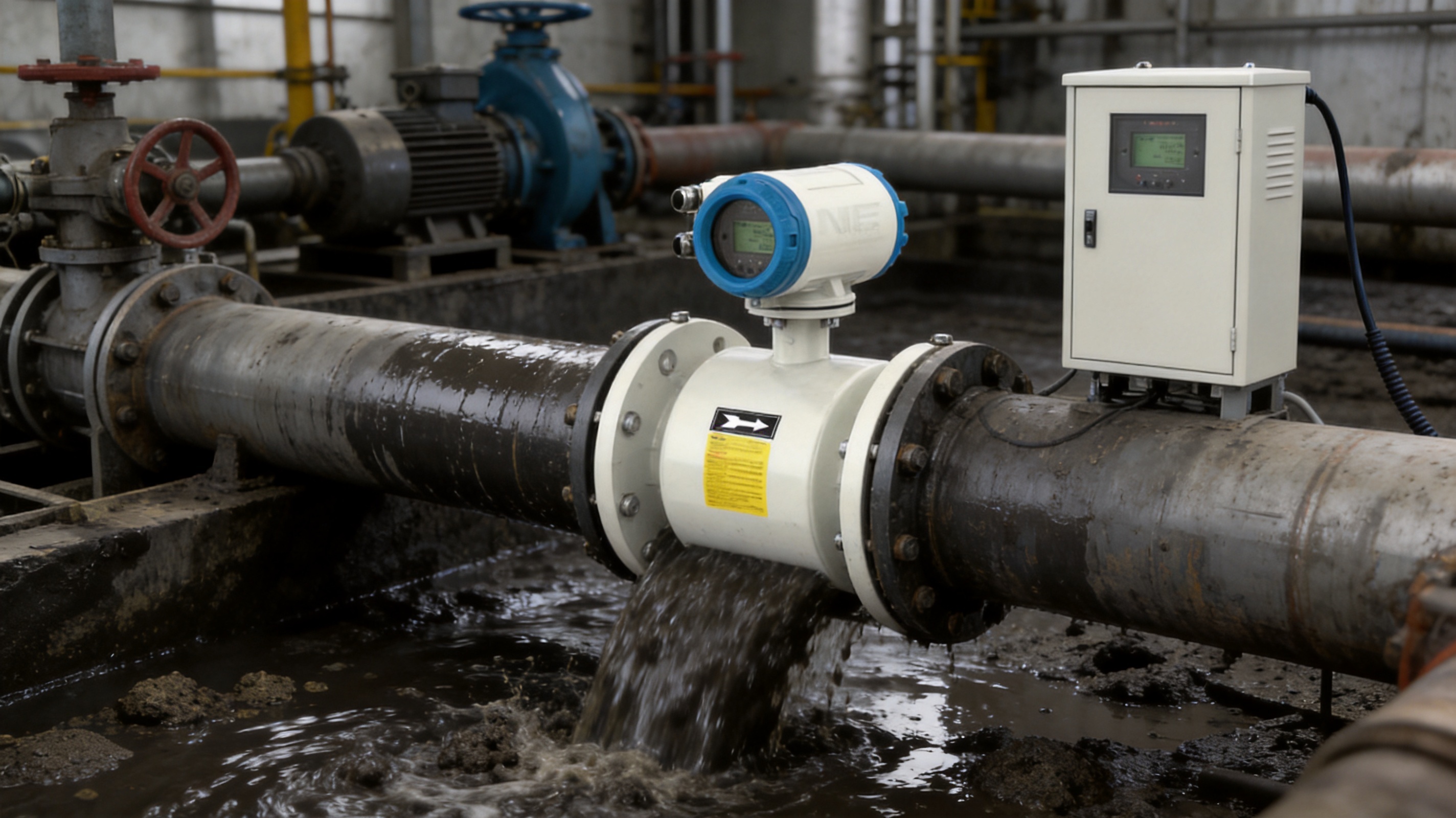
Water and wastewater treatment facilities require flow measurement at multiple stages: raw water intake, treated water output, sludge transport, chemical dosing, filter backwash, effluent discharge, and recycling lines. The VE801 Series is well suited to these applications because it can handle conductive liquids with suspended solids and does not rely on moving parts that may clog or wear.
In municipal wastewater facilities, accurate flow measurement supports regulatory reporting, process optimization, and chemical consumption control. For example, maintaining accurate dosing of treatment chemicals depends on reliable flow data. If the flowmeter under-reports, insufficient chemical may be added, leading to poor treatment results. If it over-reports, chemical waste and operating cost increase. A stable electromagnetic flowmeter helps maintain the balance.
Chemical Processing
Chemical plants often handle strong acids, alkalis, brines, solvents, and mixed process liquids. Many of these fluids are conductive and therefore suitable for electromagnetic measurement. The VE801 Series offers material selection flexibility, which is essential when measuring corrosive fluids. The ability to choose appropriate liners and electrodes allows the meter to be configured for compatibility with the actual process medium.
In chemical dosing and transfer applications, the combination of accuracy, repeatability, and communication options is valuable. Flow data can be transmitted to control systems through analog or digital communication, supporting automated batching, blending, neutralization, and consumption tracking.
Power Generation
Power plants use flowmeters for cooling water, boiler feedwater-related systems, condensate recovery, chemical treatment, and auxiliary water circuits. The VE801 Series can support thermal power plant applications where conductive liquid measurement is required and the process conditions fall within its temperature and pressure ratings.
In boiler feedwater control and cooling circuits, flow measurement contributes to energy efficiency and equipment protection. Incorrect flow readings can lead to poor heat transfer, pump inefficiency, or unstable control. A reliable electromagnetic flowmeter helps operators monitor and regulate water movement across critical systems.
Steel and Metallurgy
Steel plants and metallurgical facilities often use cooling water, pickling acids, process wastewater, and slurry-like media. Measuring corrosive acid flows in pickling lines requires careful material selection, while measuring cooling water requires reliable performance in large circulation systems. The VE801 Series supports these needs through its broad diameter range, high protection options, and flexible wetted materials.
Industrial environments in steel plants may involve heat, vibration, dust, moisture, and aggressive chemicals. Remote mounting can be particularly useful in such conditions because the converter can be installed in a more accessible or protected location while the sensor remains in the pipeline.
Irrigation and Agriculture
Irrigation systems, fertilizer injection lines, and recycled water networks need durable flow measurement. The VE801 Series can measure raw and recycled water as well as conductive fertilizer solutions. Bidirectional measurement may be useful in systems that include flushing, reversing, or seasonal operating changes.
Accurate agricultural flow measurement helps control water use, optimize fertilizer injection, and improve resource efficiency. As water management becomes more important worldwide, reliable metering supports both economic and environmental goals.
Desalination and Reverse Osmosis Systems
Desalination and reverse osmosis systems involve seawater, permeate, brine concentrate, and chemical dosing flows. Conductive liquids such as seawater and brine are suitable for electromagnetic measurement, while permeate suitability depends on conductivity. The VE801 Series can support appropriate points in desalination systems when the minimum conductivity requirement is met.
Accurate brine and feedwater flow measurement is important for system efficiency, membrane protection, and operational balance. Flowmeters in these systems may face corrosive chloride-rich media, making material selection a critical engineering step.
Mining and Pulp Slurry Monitoring
Slurry applications are among the most demanding for flow instrumentation. Mining operations may transport abrasive mixtures containing solids, while pulp processes may include fibers and varying consistencies. A mechanical flowmeter can suffer from wear or blockage in these environments. The full-bore electromagnetic design offers a major advantage by eliminating rotating parts and minimizing internal obstruction.
Monitoring abrasive slurry flow helps optimize separation processes and reduce pipe wear. If slurry velocity is too low, solids may settle; if it is too high, pipe abrasion and energy use may increase. A stable flowmeter supports better control of these operating conditions.
Manufacturing Strengths Behind Reliable Performance
A flowmeter’s field performance depends not only on its design specifications but also on manufacturing quality. The VE801 Series is produced by Jiangsu Vner Electronic Technology Co., Ltd., a specialized industrial flow meter manufacturer based in Yangzhou, China. Since 2011, the company has focused on flow measurement technologies including electromagnetic, Coriolis, vortex, swirl, turbine, thermal mass, ultrasonic, and rotameter solutions for liquid, gas, and slurry applications.
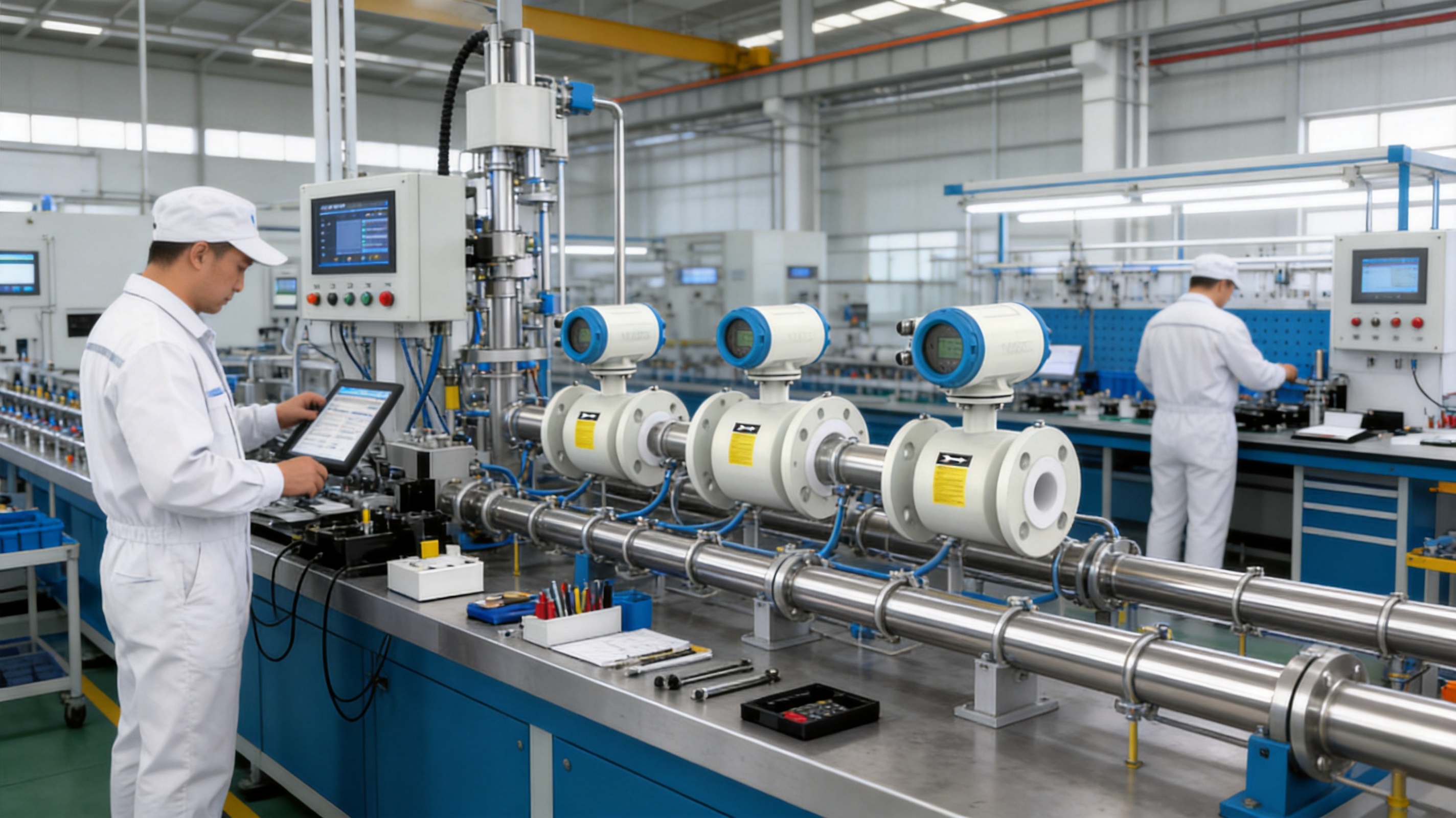
The company operates modern facilities covering 23,000 square meters across three plants and has a technical team of more than 150 people. It has delivered more than 2,000 engineering projects in over 30 countries, supporting EPC contractors, end users, and OEM partners in industries such as oil and gas, petrochemical, polysilicon, power, water, and wastewater. This engineering background matters because flowmeter selection is rarely a catalog-only decision. Correct sizing, material selection, process compatibility, calibration, documentation, and after-sales support all influence long-term success.
The manufacturing approach emphasizes stable, repeatable measurement, product consistency, traceability, and long-term reliability rather than one-off instrument supply. In-house calibration, certified quality processes, engineering-driven sizing and selection, and increasingly automated manufacturing help reduce variation between units. For customers, this means the meter they receive is not merely assembled; it is produced under a process intended to control quality from component selection to final testing.
Engineering-Driven Sizing and Selection
One of the most important manufacturing-related strengths is engineering-driven selection. A flowmeter must be matched to fluid conductivity, pipe size, velocity, pressure, temperature, installation conditions, chemical compatibility, and communication requirements. An incorrectly selected meter may technically function but fail to deliver stable measurement in the real process.
For the VE801 Series, the DN10 to DN300 range and velocity range of 0.3 to 10 m/s provide a practical selection window. Engineers can evaluate expected minimum, normal, and maximum flows to select a diameter that keeps velocity within a suitable measurement zone. They can also select the appropriate pressure rating and mounting type. This reduces the likelihood of oversized meters at low velocity, undersized meters causing excessive velocity, or material mismatches that shorten service life.
In-House Calibration and Traceability
Calibration is central to flowmeter credibility. Even a well-designed sensor must be verified against a controlled reference to ensure that its output corresponds to actual flow. In-house calibration capability supports quality control, product traceability, and delivery consistency. It allows the manufacturer to confirm meter performance before shipment and provide documentation for customer acceptance.
For industrial projects, calibration documentation may be required by quality systems, project specifications, or plant commissioning procedures. It also supports maintenance planning because baseline performance is established before installation. When combined with repeatable manufacturing processes, calibration helps ensure that instruments of the same model and size perform consistently across multiple project sites.
Controlled Assembly and Material Verification
Electromagnetic flowmeters require careful assembly. The liner must be properly formed and bonded, the electrodes must be accurately positioned, the measuring tube must maintain dimensional integrity, and the converter must process low-level signals reliably. Any inconsistency in these areas can affect zero stability, repeatability, insulation performance, and long-term durability.
Advanced manufacturing processes focus on controlling these details. Material verification helps ensure that the selected electrode and liner materials match the order requirements. Dimensional checks help ensure that the meter body corresponds to the specified nominal diameter and flange standard. Electrical checks confirm coil integrity, electrode signal paths, grounding, insulation resistance, and converter function. Protective enclosure testing supports the reliability of meters used in wet, outdoor, underground, or submerged conditions.
Automation and Consistency
Increasingly automated manufacturing can improve repeatability by reducing process variation. In flowmeter production, consistent welding, machining, assembly, inspection, and electronic testing contribute to stable product quality. Automation also supports production scalability, which is important for EPC projects and OEM customers who require multiple meters with consistent specifications and delivery schedules.
Consistency is a major advantage over suppliers that rely heavily on manual, undocumented, or inconsistent production practices. In large projects, different meters may be installed across many parts of a plant. If product quality varies significantly from unit to unit, commissioning becomes difficult and maintenance teams lose confidence. A controlled manufacturing system helps ensure that each instrument meets defined performance expectations.
Installation and Commissioning Considerations
Even the best flowmeter can perform poorly if installed incorrectly. Electromagnetic flowmeters require a full pipe, appropriate grounding, suitable straight pipe conditions, correct orientation, and protection from excessive vibration or electrical interference. The VE801 Series offers robust measurement capability, but correct installation remains essential for achieving its accuracy and repeatability potential.
Maintain a Full Pipe
The measuring tube should remain completely filled with liquid during operation. Partially filled pipes can cause unstable electrode contact and inaccurate readings. In horizontal installations, the electrode axis should be positioned to avoid air accumulation at the electrodes. In vertical installations, upward flow is often preferred because it helps keep the pipe full and reduces the risk of trapped air.
Consider Straight Pipe Requirements
Flow disturbances from elbows, valves, pumps, reducers, and tees can create uneven velocity profiles. While electromagnetic flowmeters are generally tolerant compared with some other technologies, proper upstream and downstream straight pipe sections improve measurement stability. When space is limited, installation should be reviewed carefully to minimize disturbance effects.
Grounding and Electrical Noise Control
Because electromagnetic flowmeters measure small induced voltages, grounding is important. Poor grounding can introduce noise, zero drift, and unstable output. The installation should follow recommended grounding practices, especially when pipes are non-metallic, lined, or subject to electrical interference. Proper cable routing is also important for remote mounting configurations.
Choose Integral or Remote Mounting Correctly
Integral mounting is compact and convenient. It is suitable when the pipeline location is accessible and the ambient temperature, vibration, humidity, and exposure conditions are within limits. Remote mounting is preferable when the sensor is installed underground, submerged, in a high-temperature process area, or in a location that is difficult for operators to access. Remote mounting also helps protect the converter from harsh local conditions.
Verify Fluid Conductivity
The VE801 Series requires fluid conductivity of at least 20 μS/cm. Many water, wastewater, brine, acid, alkali, and slurry media meet this requirement. However, ultra-pure water, certain solvents, hydrocarbons, and low-conductivity liquids may not be suitable. Conductivity should be verified during selection to avoid application mismatch.
Process Control Benefits
The value of a high-quality electromagnetic flowmeter extends beyond the instrument itself. Stable flow data improves the performance of the entire process. When the VE801 Series is integrated into a control system, operators can regulate pumps, valves, dosing systems, and treatment processes with greater confidence.
In wastewater treatment, accurate flow measurement can improve chemical dosing and aeration strategies. In chemical processing, it can support precise batching and blending. In power plants, it can contribute to efficient cooling and water circulation. In mining slurry systems, it can help maintain the correct transport velocity to reduce settling and excessive wear. In desalination, it can support feedwater and brine balance.
Communication flexibility increases this value. A 4–20 mA signal remains a universal choice for process control, while pulse and frequency outputs are useful for totalization and batching. HART and Modbus enable digital communication, diagnostics, and integration into modern monitoring systems. These options make the VE801 Series suitable for both traditional control panels and more advanced digital plant architectures.
How the Product Supports Lower Total Cost of Ownership
Purchase price is only one part of flowmeter cost. Total cost of ownership includes installation, commissioning, maintenance, downtime, spare parts, energy loss, process losses, and replacement frequency. The VE801 Series is designed to reduce several of these long-term costs.
The full-bore design helps minimize pressure loss, which can reduce pumping energy compared with restrictive flow elements. The absence of moving parts reduces wear-related maintenance compared with mechanical meters. Material flexibility reduces the risk of chemical incompatibility and premature failure. High repeatability reduces process instability, which can lower waste and improve efficiency. Protection classes up to IP68 support difficult installations where water ingress could otherwise shorten instrument life.
In addition, using a single meter family across multiple applications can simplify training and spare parts planning. Maintenance personnel become familiar with one platform, commissioning procedures become more standardized, and procurement teams can streamline specification management. For plants and EPC projects, this platform consistency can be a practical economic advantage.
Comparison With Common Competing Technologies
| Technology | Strengths | Limitations Compared With VE801 Series in Conductive Liquid Service |
|---|---|---|
| Turbine Flowmeter | Good for clean, low-viscosity fluids; fast response | Moving parts can wear or foul in dirty water, sludge, and slurry; pressure loss may be higher |
| Orifice Plate | Simple structure; widely understood | Creates permanent pressure loss; accuracy depends on pressure measurement and flow profile; not ideal for dirty fluids |
| Positive Displacement Meter | Useful for certain viscous fluids and batching | Internal mechanical components can wear; may not suit abrasive slurry or large wastewater lines |
| Ultrasonic Flowmeter | Can be non-intrusive in clamp-on form; useful for many liquids | Performance can depend on pipe condition, acoustic properties, installation quality, and bubbles or solids |
| Basic Electromagnetic Meter | Similar measurement principle for conductive liquids | May offer fewer material options, lower protection, less stable electrode design, or limited communication features |
| VE801 Series Electromagnetic Flowmeter | No moving parts, full-bore design, high accuracy, four-electrode stability, bidirectional measurement, material flexibility, IP68 option, multiple outputs | Requires conductive liquid of at least 20 μS/cm and correct installation grounding |
Realistic Application Scenarios
Municipal Wastewater Chemical Dosing
A municipal wastewater facility needs to control treatment chemical dosage based on influent or process flow. If the flow data is unstable, the dosing system may underfeed or overfeed. The VE801 Series provides repeatable measurement and can transmit flow signals to the control system through 4–20 mA or digital communication. Its ability to handle sludge and effluent makes it suitable for multiple locations in the plant.
Mining Slurry Transfer
In mining operations, abrasive slurry must be transported at a velocity high enough to prevent settling but not so high that pipe wear becomes excessive. The full-bore electromagnetic design is advantageous because it does not place mechanical moving components in the abrasive stream. Stable flow measurement helps optimize separation processes and reduce maintenance problems.
Thermal Power Plant Water Control
A thermal power plant may need accurate water flow monitoring in cooling circuits, boiler feedwater-related systems, and condensate recovery. The VE801 Series can be selected according to pressure, temperature, and diameter requirements. Reliable flow data supports energy efficiency and operational safety.
Steel Pickling Acid Measurement
Steel production often uses corrosive acid flows in pickling lines. A flowmeter in this environment must be compatible with the chemical medium and stable under industrial conditions. The VE801 Series allows liner and electrode material selection, supporting adaptation to corrosive conductive liquids when properly specified.
Desalination Brine Control
In desalination systems, brine concentrate measurement is important for process balance and environmental discharge management. Brine is conductive and often corrosive, making electromagnetic flow measurement a practical choice. Proper material selection and protection level help the VE801 Series perform in these demanding chloride-rich conditions.
Quality, Reliability, and Long-Term Support
For industrial users, a flowmeter supplier must provide more than a device. Project success depends on application support, correct documentation, reliable delivery, and after-sales responsiveness. Jiangsu Vner Electronic Technology Co., Ltd. supports EPC contractors, OEM partners, and end users with engineering selection, production capability, calibration, and project experience across more than 30 countries.
The company’s focus on industrial flow measurement since 2011 provides a strong foundation for product development. Its portfolio includes electromagnetic, Coriolis, vortex, swirl, turbine, thermal mass, ultrasonic, and metal tube rotameter technologies. This broad technical background helps engineers recommend the right technology rather than forcing one solution into every application. For conductive liquids, slurry, and wastewater, the VE801 Series is often an efficient choice, while other technologies may be better for gases, steam, non-conductive liquids, or mass flow applications.
The company’s facilities and technical team support stable production and project execution. Large industrial customers often need repeatable supply, consistent documentation, and technical communication during design, procurement, installation, and commissioning. A manufacturer with in-house expertise and production infrastructure can better meet these requirements than a purely trading-oriented supplier.
Selection Checklist for Engineers
Before selecting a VE801 Series electromagnetic flowmeter, engineers should confirm several key parameters. First, verify that the fluid is conductive and that conductivity is at least 20 μS/cm. Second, determine minimum, normal, and maximum flow rates and calculate expected velocity for the selected diameter. Third, confirm process temperature, ambient temperature, pressure rating, and installation location. Fourth, review chemical compatibility for liner and electrode materials. Fifth, decide whether integral or remote mounting is more suitable. Sixth, define output and communication requirements for the control system. Seventh, consider protection class requirements, especially for outdoor, underground, or submerged installations.
This structured selection process helps prevent common mistakes such as using the meter on a low-conductivity fluid, selecting a diameter that produces too low a velocity, ignoring corrosive media, or placing electronics in a harsh environment when remote mounting would be better. The product’s flexibility is most valuable when applied through careful engineering.
Maintenance Considerations
The VE801 Series requires less mechanical maintenance than many flowmeters with moving parts, but periodic inspection is still recommended. Operators should check wiring, grounding, display function, communication status, seals, and signs of external damage. In fluids that cause coating or scaling, the measuring tube and electrodes may need inspection or cleaning according to site maintenance procedures.
For remote-mounted systems, cable condition and shielding should be maintained. For submerged or underground installations, enclosure integrity and cable entries are especially important. If process conditions change significantly, such as a new chemical concentration, different slurry composition, or altered operating temperature, material compatibility and measurement stability should be reviewed.
Routine verification and calibration planning depend on plant requirements. Some facilities require periodic calibration according to quality systems, environmental reporting standards, or internal maintenance rules. Because the instrument supports stable repeatability, it can serve as a dependable part of a plant’s measurement management program when installed and maintained correctly.
Why This Flowmeter Is a Strong Choice for Industrial Buyers
The VE801 General Purpose Electromagnetic Flowmeter offers a strong combination of performance, flexibility, and manufacturing support. Its accuracy up to ±0.3%, repeatability as low as 0.1%, four-electrode design, DN10 to DN300 size coverage, bidirectional measurement, high process temperature capability, multiple pressure ratings, and protection classes up to IP68 make it suitable for many demanding conductive liquid applications.
Compared with mechanical flowmeters, it offers reduced wear and less obstruction. Compared with restrictive differential pressure elements, it helps reduce permanent pressure loss. Compared with basic electromagnetic meters, it offers a well-rounded package of signal stability, material flexibility, communication options, and robust installation choices. Combined with advanced manufacturing processes, in-house calibration, engineering-driven selection, and international project experience, the product provides more than a measurement point; it provides a practical platform for reliable industrial flow control.
Q&A Section
Q1: What type of fluids can the VE801 Series measure?
It is designed for conductive liquids with conductivity of at least 20 μS/cm. Typical fluids include water, wastewater, sludge, brine, acids, alkalis, seawater, conductive chemical solutions, and many slurry applications.
Q2: Can it measure gas, steam, or oil?
No. Electromagnetic flowmeters require conductive liquids. They are not suitable for gas, steam, hydrocarbons, or non-conductive oils. Other flowmeter technologies should be considered for those media.
Q3: What accuracy is available?
The product supports accuracy grades of ±0.3% and ±0.5%, depending on configuration and application conditions. Repeatability can be as low as 0.1%.
Q4: Why is the four-electrode design important?
The four-electrode design improves signal stability and supports reliable long-term measurement. It is especially useful for challenging conductive liquids where signal quality may be affected by process variation.
Q5: Can the meter measure reverse flow?
Yes. The VE801 Series supports bidirectional flow measurement, allowing forward and reverse flow to be measured without reconfiguration.
Q6: What pipe sizes are available?
The nominal diameter range is DN10 to DN300, covering small process pipelines as well as larger industrial and utility lines.
Q7: What is the recommended flow velocity range?
The flow velocity range is 0.3 to 10 m/s. During selection, engineers should confirm that expected minimum, normal, and maximum flow rates fall within a suitable velocity range for stable measurement.
Q8: Is the meter suitable for underground or submerged installation?
Yes, protection classes up to IP68 are available for demanding environments. Remote mounting is often recommended when the sensor is installed underground, submerged, or in a difficult-access location.
Q9: What output signals does it support?
The meter supports 4–20 mA, frequency, and pulse outputs, with HART and Modbus communication options for integration with automation and monitoring systems.
Q10: How does it reduce maintenance compared with turbine meters?
It has no moving parts in the measuring tube, so there are no rotors or bearings exposed to the fluid. This reduces wear and fouling risks, especially in dirty water, sludge, and slurry applications.
Q11: What industries commonly use this type of flowmeter?
Common industries include water and wastewater treatment, chemical processing, power generation, steel and metallurgy, agriculture, irrigation, desalination, reverse osmosis, mining, and pulp processing.
Q12: Why is manufacturer capability important when selecting a flowmeter?
Reliable measurement depends on correct design, material selection, calibration, assembly quality, and technical support. A manufacturer with advanced facilities, in-house calibration, engineering expertise, and project experience can help reduce selection risk and improve long-term reliability.
Conclusion
The VE801 General Purpose Electromagnetic Flowmeter is a practical and capable solution for conductive liquid measurement across diverse industrial environments. Its full-bore design, absence of moving parts, high accuracy, strong repeatability, bidirectional measurement, four-electrode stability, flexible materials, multiple communication outputs, and robust protection options make it a competitive choice for water, wastewater, chemical, power, metallurgy, desalination, and slurry applications.
Its value is strengthened by the manufacturing and engineering capabilities behind it. With modern production facilities, a large technical team, in-house calibration, certified quality processes, and international project experience, Jiangsu Vner Electronic Technology Co., Ltd. provides not only instruments but also the technical foundation needed for reliable industrial measurement. For buyers seeking a cost-efficient, flexible, and durable electromagnetic flowmeter platform, the VE801 Series offers a strong balance of performance, adaptability, and long-term operational value.
References
1. International Organization for Standardization. Measurement of Fluid Flow in Closed Conduits: Methods Using Electromagnetic Flowmeters.
2. International Electrotechnical Commission. Industrial Process Measurement, Control and Automation: Evaluation of System Properties for the Purpose of System Assessment.
3. Baker, R. C. Flow Measurement Handbook: Industrial Designs, Operating Principles, Performance, and Applications.
4. Miller, R. W. Flow Measurement Engineering Handbook.
5. Spitzer, D. W. Industrial Flow Measurement.
6. Liptak, B. G. Instrument Engineers’ Handbook: Process Measurement and Analysis.
Product: VE801 General Purpose Electromagnetic Flowmeter

We offer all our products and services at international standards.
Products
Contact Information
-

+86-18652789521
+86-18052582295
+86-0514-83633600 / 83633900 -

+86-0514-83633600 / 83633900
-

shawn@vnerflow.com
info@vnerflow.com -

No. 11 Xingye Road, Chenji Town Industrial Park, Yizheng, Yangzhou, China
