
 0
0
 EN
EN  English
 عربى
عربى Español
 русский
If you need any help, please feel free to contact us
Home / Author / Cai Shurong — After-Sales Project Coordinator / High-Precision Coriolis Mass Flow Measurement for Demanding Industrial Applications
High-Precision Coriolis Mass Flow Measurement for Demanding Industrial Applications
Introduction to Modern Mass Flow Measurement
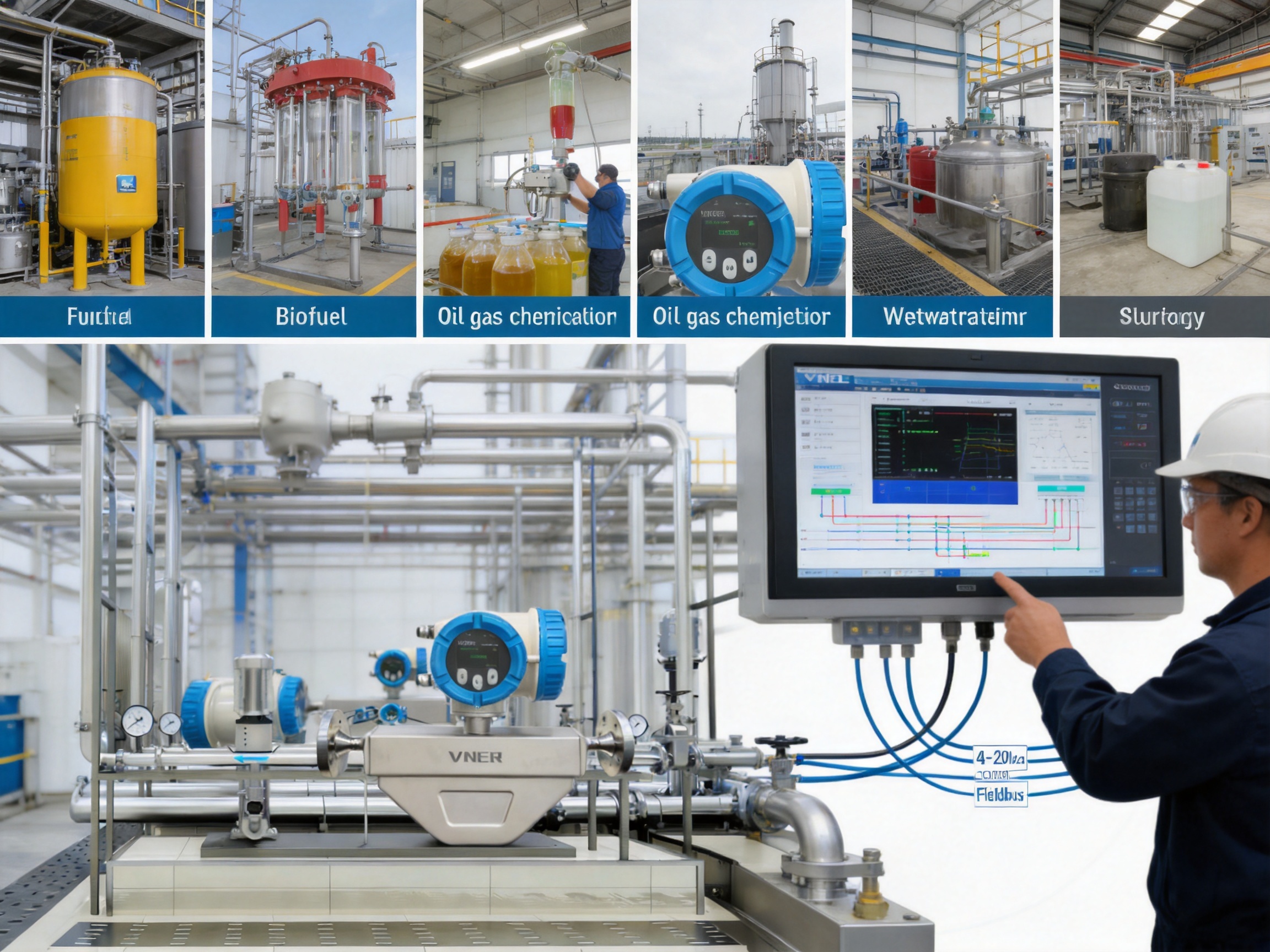
Accurate flow measurement is essential wherever a process depends on the controlled movement, transfer, dosing, blending, or custody-related accounting of liquids, gases, slurries, or high-value fluids. In many industrial applications, measuring only volumetric flow is not sufficient. Volume can change with temperature, pressure, density, composition, and operating conditions. For this reason, direct mass flow measurement has become increasingly important in chemical processing, refining, energy, food production, oil and gas, water treatment, and industrial automation.
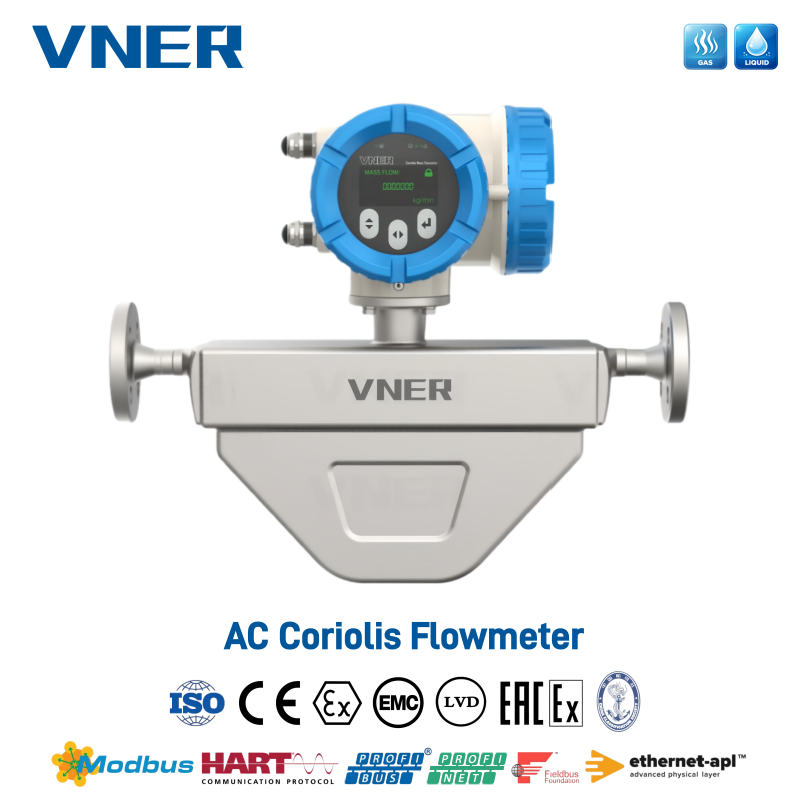
The AC Series Coriolis Mass Flowmeter is designed for applications that require direct measurement of mass flow together with density and process temperature. Based on the Coriolis effect and advanced digital signal processing, the instrument measures the movement of fluid through vibrating tubes and converts the resulting phase shift into a highly accurate mass flow value. It can also calculate volume flow in real time, while density and temperature data support process monitoring, quality control, compensation, and batch management.
Unlike conventional flowmeters that depend heavily on fluid velocity, upstream flow profile, or known fluid properties, a Coriolis meter directly responds to the mass moving through the measuring tubes. This makes the technology particularly useful for fluids whose density or viscosity varies during operation. It is also suitable for many liquids, slurries, gases, and selected two-phase or multiphase services when correctly sized and configured.
The AC Series is positioned as a high-precision, multi-variable measurement platform rather than a basic flow indicator. Its design combines controlled tube excitation, high-resolution signal processing, digital diagnostics, configurable communication, flexible installation options, and a broad range of process materials and temperature configurations. These features help users reduce measurement uncertainty, improve production consistency, simplify instrumentation, and strengthen traceability throughout the operating life of a facility.
AC Series Coriolis Mass Flowmeter
How the AC Series Coriolis Mass Flowmeter Works
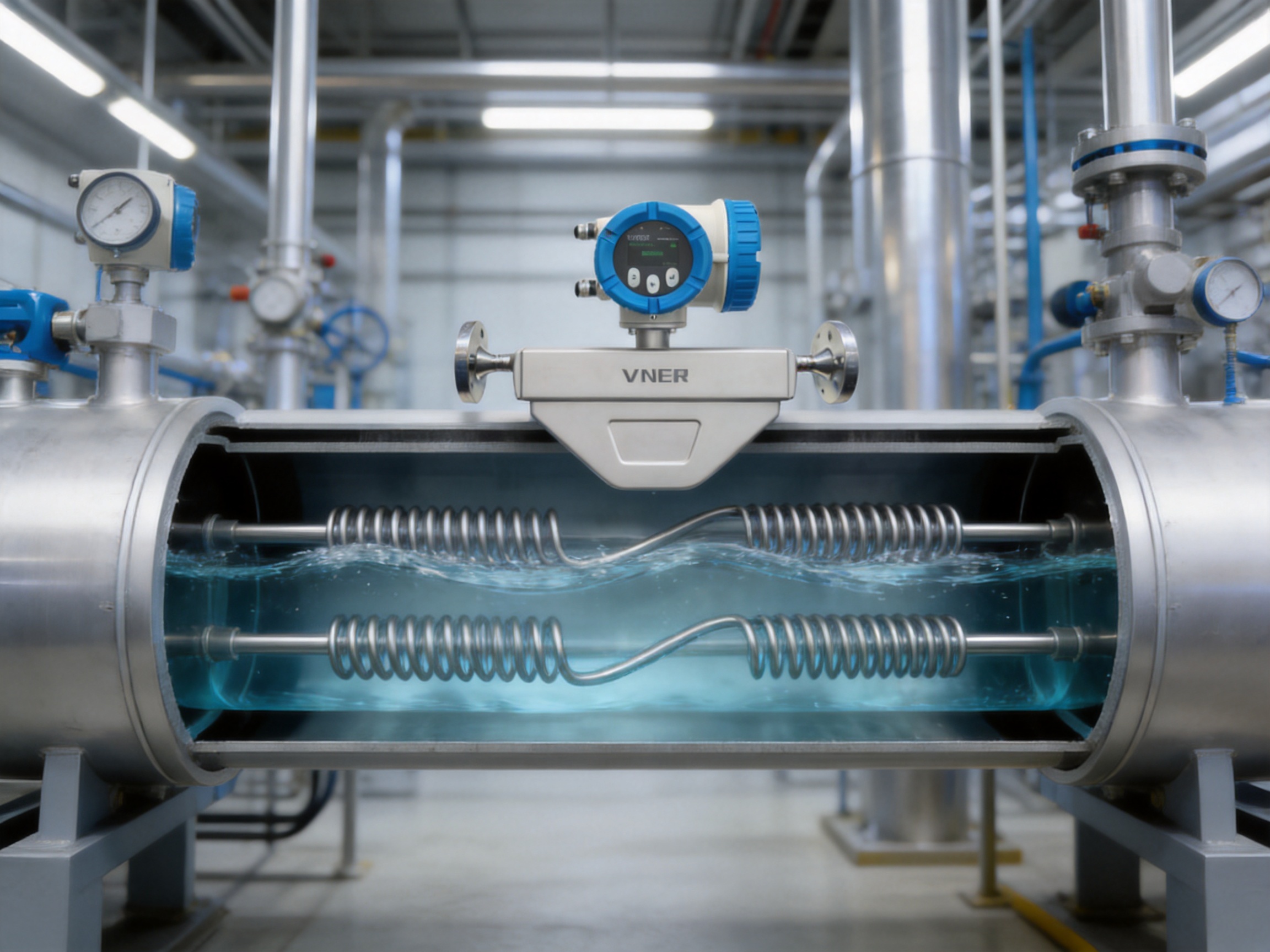
The measuring principle is based on the Coriolis effect. Within the sensor, one or more measuring tubes are driven into controlled oscillation. When there is no flow, the inlet and outlet sections of the tubes respond in a balanced manner. Once fluid passes through the oscillating tubes, Coriolis forces cause a small but measurable deformation of the tubes.
This deformation produces a phase difference between signals detected near the inlet and outlet sections. The magnitude of this time or phase shift is proportional to the mass flow rate. The transmitter receives the signals from the sensor, filters unwanted interference, analyses the phase relationship, and calculates the mass flow value.
The oscillation frequency of the tubes is related to the mass and density of the fluid contained within them. By analysing this frequency, the meter can determine fluid density. Integrated resistance temperature detectors provide process temperature measurement. Volume flow can then be derived from the measured mass flow and density rather than from a separate volumetric instrument.
This multi-variable capability allows the AC Series to provide more process information from a single meter. A user can monitor mass flow for transfer or dosing, density for quality assurance, temperature for compensation and process control, and calculated volume flow for operational comparison or reporting.
Direct Mass Measurement
Direct mass measurement is one of the principal advantages of Coriolis technology. Traditional volumetric meters measure the volume passing through a pipe and may require compensation when fluid density changes. The AC Series measures mass directly, reducing dependence on fixed density assumptions and improving consistency when products change temperature or composition.
This is valuable in applications such as fuel blending, chemical injection, syrup filling, edible oil transfer, and biofuel production. The required quantity can be controlled by mass even when the fluid expands, contracts, or changes density during the production cycle.
Integrated Density and Temperature Measurement
The integrated density and temperature functions extend the role of the instrument beyond flow measurement. Density can be used to identify product variation, verify concentration, support composition calculations, and detect abnormal process conditions. Temperature data can be used for compensation, quality monitoring, and batch documentation.
For facilities that would otherwise need separate density meters, temperature transmitters, and flow instruments, an integrated Coriolis platform can reduce the number of instruments installed in the process line. Fewer instruments can simplify piping, commissioning, signal integration, maintenance planning, and spare-parts management.
Performance Characteristics and Configurable Accuracy
Performance is model- and configuration-dependent, so final selection should always be based on the applicable sizing sheet and datasheet. The AC Series offers several accuracy classes to match the needs and budget of different industrial services. Liquid and slurry mass flow accuracy options include ±0.05%, ±0.10%, ±0.15%, or ±0.20% of rate. Repeatability options range from ±0.02% to ±0.10% of rate.
For liquid and slurry volume flow, accuracy can also be specified at ±0.05%, ±0.10%, ±0.15%, or ±0.20% of rate. Density accuracy is available at ±0.50, ±1.00, or ±3.00 kg/m³ depending on the selected performance class. Field calibration accuracy can reach ±0.20 kg/m³ under appropriate conditions, while the stated density measurement range extends from 0 to 5000 kg/m³.
Gas measurement requires different performance considerations because gas density is lower and gas velocity can be higher than in liquid service. The AC Series supports gas mass flow accuracy options of ±0.25%, ±0.50%, or ±1.00% of rate, with repeatability options of ±0.15%, ±0.25%, or ±0.50% of rate. Correct sensor sizing, pressure information, temperature conditions, and installation practices remain essential for achieving the intended result.
| Measurement category | Available performance or range | Application significance |
| Liquid and slurry mass flow accuracy | ±0.05%, ±0.10%, ±0.15%, or ±0.20% of rate | Supports precision transfer, dosing, batching, and process control |
| Liquid and slurry repeatability | ±0.02%, ±0.05%, ±0.075%, or ±0.10% of rate | Helps maintain consistent results over repeated operations |
| Density measurement range | 0–5000 kg/m³ | Suitable for a wide range of industrial liquids and mixtures |
| Temperature accuracy | Approximately ±1.0 °C | Supports compensation and process monitoring |
| Temperature repeatability | Approximately ±0.2 °C | Improves consistency of repeated measurements |
| Recommended turndown | Up to 20:1 for standard accuracy performance | Allows one meter to cover changing operating conditions |
| Standard maximum operating pressure | Up to 10.0 MPa | Suitable for many high-pressure industrial services |
| Higher-pressure configuration | Up to 15.0 MPa, subject to model and temperature | Extends suitability for demanding injection and process systems |
Zero stability is an important consideration for low-flow measurement. Typical values range from approximately 0.02 kg/h for the AC002 model to approximately 18.0 kg/h for the AC150 model, depending on the selected model. A stable zero allows the transmitter to distinguish small process flows from background signal variation, but actual low-flow performance depends on installation, vibration, fluid condition, pressure stability, and commissioning procedures.
Advantages Compared with Conventional Flowmeter Technologies
Measurement Independent of Changing Fluid Density
Many volumetric flowmeters require a known or compensated relationship between volume and mass. If the density changes because of temperature, pressure, composition, or blending, the calculated mass can become less accurate unless additional compensation equipment is installed. The AC Series measures mass directly and therefore provides a more robust basis for transfer, dosing, and material accounting.
Reduced Dependence on Flow Profile
Some velocity-based flowmeters require long straight pipe runs, flow conditioners, or careful control of upstream and downstream disturbances. Coriolis meters generally measure the interaction between fluid mass and tube motion rather than relying solely on a developed velocity profile. This can simplify installation in compact skids and confined process areas, although the manufacturer’s installation recommendations must still be followed.
Broad Fluid Compatibility
The AC Series is designed for liquids and slurries, including viscous and non-Newtonian fluids, as well as gases and selected two-phase or multiphase mixtures. The use of SS316 or SS316L wetted materials supports many general industrial services, while Hastelloy C22 and other alloy options can be considered for more corrosive applications.
Fluid compatibility must be evaluated based on concentration, temperature, pressure, erosive loading, chemical composition, and cleaning requirements. Nevertheless, the availability of different sensor materials and temperature configurations gives engineers more flexibility than a single-material, single-temperature meter design.
One Instrument for Several Variables
A conventional installation may require a flowmeter, density instrument, temperature transmitter, and separate calculation or control functions. The AC Series combines core measurement variables in one platform. This can reduce the physical footprint of the installation and simplify the collection of process data.
The instrument can support additional measurement modules for concentration, composition, crude oil water-cut, online viscosity, bidirectional flow, and batch functions. Availability depends on model, software, application, and configuration. These capabilities make the meter suitable for applications where the process objective extends beyond simple flow indication.
Strong Performance in Dosing and Batch Operations
Mass-based dosing is often more repeatable than volume-based dosing when the product temperature or density changes. The AC Series can provide a 4–20 mA output for continuous control and pulse or frequency outputs up to 0–10 kHz for totalizing, batching, and high-speed control.
For a filling machine, for example, the batch controller can stop the transfer based on measured mass rather than assumed volume. In a chemical injection skid, the meter can provide feedback for a dosing pump. In a blending system, several Coriolis meters can regulate mass ratios between streams, helping to improve final product consistency.
Sensor Construction, Materials, and Environmental Capability
The wetted parts of the AC Series are available in SS316 or SS316L, with Hastelloy C22 and other alloys available on request. These materials are widely used in industrial flow measurement because they offer a practical balance of mechanical strength, corrosion resistance, manufacturability, and lifecycle cost.
The sensor housing can be constructed from SS304, SS304L, SS316, or SS316L depending on the selected configuration. Transmitter housings are available in epoxy-coated aluminium or stainless steel. The choice depends on environmental exposure, corrosion risk, installation location, customer specifications, and hazardous-area requirements.
Temperature Configurations
Different industrial fluids require different process temperature capabilities. The standard sensor temperature range extends from approximately -100 °C to +200 °C. High-temperature configurations can cover approximately -60 °C to +260 °C, while ultra-high-temperature designs can reach approximately -60 °C to +380 °C. Cryogenic configurations support process temperatures from approximately -196 °C to +100 °C.
The transmitter ambient temperature range is approximately -40 °C to +60 °C, with humidity up to 95% relative humidity, non-condensing. For installations in cold or hazardous environments, the display and operating interface are designed to remain usable at low temperatures, with explosion-proof touch keys available down to approximately -40 °C in suitable configurations.
Pressure and Secondary Containment
Standard designs support operating pressures up to approximately 10.0 MPa, while higher-pressure models rated up to approximately 15.0 MPa are available subject to model and temperature. This makes the AC Series suitable for many chemical injection, process transfer, and high-pressure industrial applications.
Optional secondary containment housings provide an additional level of protection. Containment pressure ratings can reach approximately 2.5 MPa for AC002 through AC080 and approximately 1.5 MPa for AC100 through AC150, subject to the selected configuration. Secondary containment can be valuable where leakage prevention, operator safety, or environmental protection is a major concern.
Digital Transmitter and Signal Processing Platform
The A-Series transmitter uses full-digital drive and digital signal processing. The transmitter continuously analyses the low-level signals generated by the sensor and applies algorithms designed to separate the useful measurement signal from vibration, electrical interference, process disturbances, and other sources of instability.
High-resolution processing is especially important for low-flow measurement, gas applications, and fluids with changing operating conditions. The transmitter platform is designed to support accurate phase analysis, stable density calculation, fast response, configurable outputs, and detailed diagnostic information.
Gas Measurement Algorithm
Gas measurement presents special challenges because gas density is low and the relationship between pressure, temperature, velocity, and mass flow can change rapidly. The A-GAS gas measurement algorithm uses high-frequency resolution to help minimise errors associated with low gas density and high gas velocity.
As with all gas flow applications, the final result depends on correct line sizing, stable pressure, suitable operating conditions, adequate sensor installation, and the appropriate accuracy class. The availability of a dedicated gas measurement algorithm gives the AC Series a stronger basis for gas service than a liquid-focused transmitter that is used without gas-specific optimisation.
Multi-Frequency Drive for Two-Phase Service
Gas-liquid two-phase flow can interfere with the stable operation of many flowmeters. Entrained gas, intermittent voids, changing bubble size, and unstable flow patterns can produce fluctuations in the measurement signal. The AC Series uses MFD multi-frequency drive technology to excite the measuring tubes at multiple or variable frequencies.
This approach is intended to improve stability under gas-liquid two-phase conditions and provide more reliable signal analysis when the process contains a degree of entrained gas. It does not eliminate the need for proper process design. Excessive gas content, severe slugging, empty pipe conditions, or rapidly changing multiphase behaviour may exceed the practical limits of any Coriolis meter. Application review and sizing are therefore essential.
Intelligent Online Diagnostics
ILOD intelligent online diagnostics provide information about sensor status, signal quality, process conditions, configuration, and potential instrument faults. Diagnostic messages are aligned with the NAMUR NE107 approach, helping operators distinguish between maintenance requirements, process-related warnings, out-of-specification conditions, and critical failures.
Improved diagnostics can reduce troubleshooting time and support predictive maintenance. Instead of waiting for a complete instrument failure, maintenance teams can review changes in zero stability, drive gain, signal quality, density behaviour, temperature status, or other diagnostic indicators. This supports lifecycle traceability and helps engineering teams identify whether a problem originates from the instrument, the installation, or the process itself.
Communication, Outputs, and Integration
The AC Series supports 4–20 mA outputs with HART communication. The analogue channels can be assigned to mass flow, volume flow, density, temperature, or other available process variables. Pulse and frequency outputs up to 0–10 kHz support totalizing, batch control, and fast process regulation.
Digital communication options include HART, Modbus RS485, FOUNDATION Fieldbus, PROFINET, PROFIBUS-PA, Ethernet-APL, and discrete input/output functions, depending on the transmitter configuration. Up to five configurable I/O channels may be available with flexible combinations.
This communication flexibility makes the meter suitable for both traditional distributed control systems and modern industrial Ethernet architectures. It can be installed as an integral transmitter, extended-integral transmitter, remote transmitter, or wall-mounted transmitter. These options help engineers adapt the instrument to confined spaces, high-temperature locations, difficult access points, and control-room requirements.
A clear multi-line display provides local access to measurement values, configuration information, alarms, and diagnostic messages. In hazardous or harsh environments, explosion-proof touch keys can allow operation without opening the transmitter housing. This reduces unnecessary exposure to the surrounding atmosphere and simplifies local commissioning or inspection.
Advanced Manufacturing and Quality Control Strengths
The performance of a Coriolis mass flowmeter depends not only on its operating principle but also on the precision of its mechanical construction, sensor balancing, tube fabrication, welding, electronics, calibration, software, and final inspection. Small manufacturing variations can affect tube stiffness, vibration behaviour, zero stability, pressure integrity, and long-term repeatability.
Jiangsu VNER Electronic Technology Co., Ltd. operates as a specialised industrial flowmeter manufacturer based in Yangzhou, China. Since 2011, the company has focused on electromagnetic, Coriolis, vortex, swirl, turbine, thermal mass, ultrasonic, and rotameter technologies for liquid, gas, and slurry applications.
The company operates across approximately 23,000 square metres of modern facilities in three plants and has a technical team of more than 150 people. Its experience includes more than 2,000 engineering projects in over 30 countries. This project background is important because flowmeter performance is strongly connected to application engineering. A technically advanced instrument must still be correctly selected for the process conditions in which it will operate.
Controlled Sensor Production
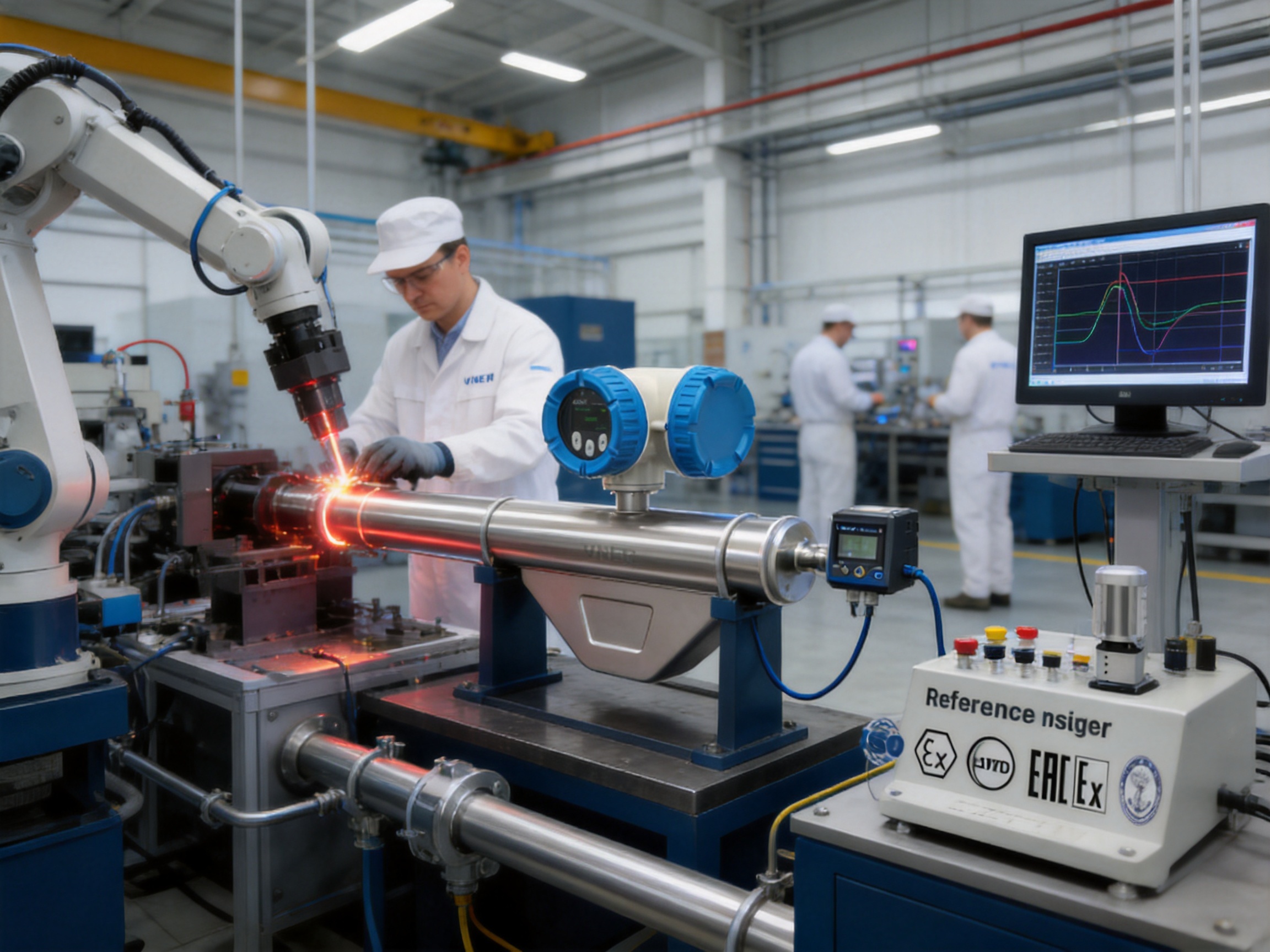
Manufacturing a Coriolis sensor requires careful control of tube geometry, material properties, welding quality, surface finish, pressure integrity, and mechanical balance. The measuring tubes must respond predictably to the drive signal and maintain stable behaviour across the specified process temperature and pressure range.
Precision forming and controlled assembly help maintain consistent tube characteristics from one sensor to another. Welding and sealing processes must be managed to protect the pressure boundary and avoid contamination of the wetted path. Material traceability is also important for applications involving corrosive chemicals, hygienic fluids, high pressures, and regulated transfer operations.
Sensor housings and transmitter enclosures require their own quality controls. Dimensional accuracy, sealing performance, ingress protection, coating quality, cable entry integrity, and grounding provisions all contribute to reliable operation in industrial environments.
Calibration and Verification
In-house calibration is a central manufacturing strength. The AC Series liquid and slurry performance classes are validated on ISO/IEC 17025-certified NIM calibration rigs according to the stated product information. Calibration provides a controlled comparison between the meter output and a traceable reference under known operating conditions.
Calibration is more than a final paperwork exercise. It helps verify sensor construction, transmitter performance, zero stability, linearity, repeatability, and selected accuracy class. It also provides data that can support customer acceptance testing, commissioning, quality records, custody-related measurement, and long-term maintenance planning.
For high-value fluids, a properly controlled calibration process can have a direct commercial impact. A small measurement error repeated over thousands of batches or large transfer volumes can create significant product losses or reconciliation disputes. A stable, traceable calibration process helps reduce this risk.
Engineering-Led Selection and Application Support
VNER supports EPC contractors, end users, and OEM partners with engineering-driven sizing and selection. This is particularly valuable for Coriolis applications because the correct meter is determined by more than nominal pipe size. Engineers must consider minimum and maximum flow, fluid density, viscosity, vapour pressure, pressure drop, temperature, gas content, line pressure, process connections, hazardous-area classification, and required accuracy.
A meter that is too large may provide insufficient drive stability or poor low-flow performance. A meter that is too small may create excessive pressure loss or operate beyond its recommended capacity. A suitable selection balances measurement accuracy, turndown, pressure drop, process safety, installation constraints, and lifecycle cost.
Automated and Consistent Manufacturing
Increasingly automated manufacturing can improve repeatability in assembly, testing, and production documentation. Automation does not replace engineering judgement, but it can reduce variation in repetitive operations and support more consistent product quality.
Combined with certified quality procedures, in-house calibration, inspection, and product traceability, an automated manufacturing approach helps build a more reliable production system. This is especially important when instruments are supplied in multiple sizes, material grades, pressure classes, temperature configurations, and communication options.
Industrial Applications
Chemical and Fine Chemical Processing
Chemical plants frequently handle acids, alkalis, solvents, specialty chemicals, additives, and intermediate products. These fluids may be corrosive, viscous, temperature-sensitive, or valuable enough to require precise batching. The AC Series can support precision dosing, recipe control, mass-based transfer, and density-based quality assurance.
In chemical production, density can provide an additional indication of concentration or formulation consistency. A change in density may indicate incorrect dosing, contamination, temperature variation, or a change in raw-material composition. Combining flow, density, and temperature measurement in one instrument can improve the speed of process response.
Petrochemical and Refining Operations
Refineries and petrochemical facilities handle LPG, diesel, gasoline, aromatics, intermediates, blending components, and other hydrocarbon streams. The AC Series can be used for mass-based transfer, blending, loading, unloading, and custody-related measurement when the appropriate local approvals and system requirements are satisfied.
Mass-based blending is a major application. Multiple hydrocarbon streams can be measured and controlled according to their mass ratio. This helps improve final product consistency and reduce off-specification material. Density measurement can provide additional information for quality verification and transfer reconciliation.
For custody-related applications, the complete measurement system must be evaluated. This includes the meter, calibration, installation, flow computer, proving method, software configuration, legal metrology requirements, and local approvals. The instrument can contribute to a traceable measurement system, but the final approval status depends on the selected model and jurisdiction.
Food and Beverage Production
Food and beverage facilities use syrups, honey, dairy fats, vegetable oils, flavourings, concentrates, and other liquids that may be viscous or temperature-dependent. In these applications, mass-based filling and dosing help maintain consistent product quantity across different production runs and packaging formats.
The AC Series can support high-speed filling and ingredient dosing while monitoring density and temperature. A filling operation that relies only on volume may experience variation when product temperature changes. Mass measurement can help maintain the intended net weight and reduce the effect of density variation.
Hygienic design, process connection selection, cleanability, material compatibility, and applicable food regulations must be reviewed during specification. The correct sensor configuration should be selected according to the customer’s cleaning process and sanitary requirements.
Energy and Biofuels
Biodiesel, ethanol, fuel blends, and related products often require accurate transfer and production measurement. Their density and composition can vary according to formulation and temperature. Direct mass measurement supports production control, distribution, blending, and inventory management.
For biofuel systems, the meter may also contribute to quality monitoring through density and temperature data. This can help operators identify changes in blend ratio or product condition. As with refined fuels, final custody or trade measurement applications require verification of the applicable approvals and system design.
Oil and Gas Chemical Injection
Oil and gas facilities inject corrosion inhibitors, methanol, scale inhibitors, hydrate inhibitors, and other treatment chemicals into pipelines, wells, manifolds, and processing systems. These services often involve low flow rates, high pressure, confined spaces, and the need for continuous reliability.
The compact design and high-pressure options of the AC Series are suitable for many injection skids. Direct mass measurement helps operators verify that the required quantity of chemical is being delivered. Accurate dosing can protect equipment, reduce chemical waste, and support compliance with treatment procedures.
Water and Wastewater Treatment
Water and wastewater plants use coagulants, pH adjustment chemicals, antiscalants, disinfectants, and other additives. Chemical dosing accuracy affects treatment performance, operating cost, and discharge quality.
The AC Series can provide mass-based feedback for dosing pumps and can help maintain consistent chemical-to-water ratios. Diagnostic functions can assist maintenance teams in identifying problems such as unstable flow, empty lines, poor pump performance, or instrument faults.
Mining and Metallurgy
Mining and metallurgical operations may use process reagents, pulp streams, and selected slurries. These fluids can contain solids, exhibit non-Newtonian behaviour, or change density during operation. The AC Series can be considered for slurry and reagent applications within the practical limits of Coriolis measurement.
Application review is especially important in mining because particle size, solids concentration, abrasive behaviour, settling, and intermittent flow can affect sensor performance. Correct installation, adequate line velocity, suitable material selection, and reliable process conditions are necessary for long-term operation.
Automotive and General Industrial Applications
AdBlue or urea solution, lubricants, fuel additives, coolants, and test-stand fluids require repeatable dosing and transfer. The AC Series can support component testing, filling, blending, lubrication systems, and industrial production equipment.
OEM builders can integrate the meter into skids, dispensing machines, automated filling systems, and test benches. Flexible communication and mounting options allow the instrument to be adapted to different control architectures and mechanical layouts.
Installation and Sizing Considerations
Correct installation is essential for achieving the specified performance of any Coriolis mass flowmeter. The sensor should be selected according to the actual minimum, normal, and maximum operating flow rather than simply matching the nominal pipe size. The meter should remain adequately filled during operation, and the process should avoid conditions that cause severe cavitation, flashing, or uncontrolled gas entrainment.
The installation structure must support the sensor without transmitting excessive vibration. Nearby pumps, compressors, control valves, reciprocating machinery, and unsupported pipe sections can introduce mechanical interference. Where necessary, the sensor should be isolated from strong vibration sources and installed with suitable supports.
Process valves and piping should be arranged to prevent unintended draining or gas accumulation. For liquid service, the sensor is generally installed in a manner that maintains a full measuring tube. For gas service, pressure and temperature conditions must be considered carefully because they influence density and the available measurement range.
The meter’s pressure drop should be evaluated, particularly for viscous fluids and high-flow applications. A larger sensor may reduce pressure loss but could compromise low-flow performance. A smaller sensor may improve sensitivity but increase pressure loss. This trade-off is one reason why engineering-based sizing is preferable to selecting a meter solely by line diameter.
Safety, Approvals, and Hazardous-Area Use
The AC Series is designed with safety and industrial compliance in mind. Product information identifies compliance with PED 2014/68/EU and relevant GB or ASME piping codes, depending on the selected design and application. Explosion protection options can include Ex d, Ex ib, and Ex tb configurations, with ATEX and IEC zone suitability subject to the applicable certificates.
Ingress protection can reach IP66/67 in suitable configurations. This supports use in industrial environments exposed to dust, water spray, weather, and washdown conditions, although the exact installation method and cable entry arrangement must match the environmental requirements.
Hazardous-area installation must be performed according to the instrument certificate, local regulations, approved wiring methods, grounding requirements, and site safety procedures. The selected transmitter, sensor, cable glands, barriers, power supply, and communication equipment must be considered as one complete system.
Lifecycle Value and Total Cost of Ownership
The purchase price of a flowmeter is only one part of its total cost. Measurement stability, calibration traceability, diagnostic capability, maintenance time, energy consumption, process losses, and downtime can have a greater effect over the operating life of the equipment.
The AC Series can provide lifecycle value in several ways. Its multi-variable measurement may reduce the need for separate density and temperature instruments. Digital diagnostics can shorten troubleshooting. Flexible outputs can simplify control-system integration. Robust housing and material options can support demanding process environments. Accurate mass measurement can reduce overfilling, under-dosing, blending errors, and transfer discrepancies.
For high-value products, the financial impact of measurement accuracy can be substantial. A small error in a continuous transfer operation may accumulate into a significant material balance difference. Reliable mass flow and density measurement can help improve reconciliation and provide better process visibility.
Maintenance teams can also benefit from a consistent product platform across different departments or plants. The same transmitter concepts, diagnostic structure, communication options, and calibration approach can reduce training requirements and simplify spare-parts planning.
Selection Guide for Project Engineers
Before ordering an AC Series Coriolis Mass Flowmeter, engineers should compile the process information required for correct sizing and configuration. The following points are especially important:
Minimum, normal, and maximum mass or volume flow rate.
Fluid name, composition, density, viscosity, and solids content.
Normal and maximum operating pressure.
Minimum, normal, and maximum process temperature.
Expected gas entrainment or two-phase behaviour.
Required mass flow, volume flow, density, and temperature accuracy.
Pipe size, process connection, installation orientation, and available space.
Required wetted-part and housing materials.
Hazardous-area classification and environmental protection requirements.
Required analogue, pulse, digital, and field communication interfaces.
Need for batching, bidirectional measurement, concentration, viscosity, or water-cut functions.
Calibration, inspection, documentation, and local approval requirements.
When the process includes gas-liquid mixtures, high viscosity, rapid density changes, or very low flow, the application should be reviewed in detail. A technically capable meter still requires a suitable operating window. The final model should be confirmed against the manufacturer’s datasheet and sizing calculations.
Q&A: Common Questions About the AC Series
What does a Coriolis mass flowmeter measure directly?
It directly measures mass flow by detecting the phase shift caused by Coriolis forces in vibrating measuring tubes. It also measures density and process temperature, while volume flow can be calculated from mass flow and density.
Can the AC Series measure both liquids and gases?
Yes. The product range is designed for liquids, slurries, gases, and selected two-phase or multiphase mixtures. Liquid, gas, and multiphase applications require different sizing and configuration considerations.
Is the meter suitable for viscous fluids?
It can be used for many viscous and non-Newtonian fluids. The final selection should consider viscosity across the full temperature range, required flow rate, pressure drop, and the possibility of product solidification or poor tube filling.
What accuracy can be expected for liquid measurement?
Depending on the model and performance class, liquid and slurry mass flow accuracy options range from ±0.05% to ±0.20% of rate. Repeatability options range from ±0.02% to ±0.10% of rate. The applicable datasheet and calibration conditions define the final specification.
Can it measure density as well as flow?
Yes. Density is derived from the oscillation characteristics of the measuring tubes. Available density accuracy depends on the selected performance class, with stated options of ±0.50, ±1.00, or ±3.00 kg/m³.
How does the instrument handle gas-liquid two-phase flow?
The MFD multi-frequency drive technology is designed to improve stability under gas-liquid two-phase conditions. However, excessive gas content, severe slugging, empty tube conditions, and unstable multiphase flow can affect any Coriolis meter. The application should be evaluated before selection.
What process temperatures are supported?
Available configurations include standard, high-temperature, ultra-high-temperature, and cryogenic designs. Approximate sensor ranges are -100 °C to +200 °C, -60 °C to +260 °C, -60 °C to +380 °C, and -196 °C to +100 °C respectively.
Is the AC Series available for high-pressure service?
Standard designs can support pressures up to approximately 10.0 MPa, while higher-pressure models up to approximately 15.0 MPa are available depending on the model and process temperature. Secondary containment options are also available for selected sizes.
Which communication protocols are available?
Available options include HART, Modbus RS485, FOUNDATION Fieldbus, PROFINET, PROFIBUS-PA, Ethernet-APL, and discrete I/O, subject to transmitter configuration. Analogue 4–20 mA and pulse or frequency outputs are also available.
Can the meter be installed remotely?
Yes. Integral, extended-integral, remote, and wall-mounted transmitter configurations are available. The best arrangement depends on ambient temperature, accessibility, hazardous-area requirements, and the distance between the sensor and control location.
What makes the product suitable for custody-related measurement?
High-accuracy mass and density measurement, digital totalizing, calibration capability, diagnostic information, and appropriate communication options can support custody-related systems. However, the complete installation must meet local legal metrology, approval, proving, and documentation requirements.
How should the correct model be selected?
The model should be selected using actual minimum, normal, and maximum flow rates together with density, viscosity, pressure, temperature, gas content, pipe size, material compatibility, and required accuracy. A sizing review should be completed before final purchase.
Conclusion
The AC Series Coriolis Mass Flowmeter provides a comprehensive solution for industrial applications that require direct mass measurement, density monitoring, temperature measurement, and dependable digital process integration. Its Coriolis operating principle reduces dependence on changing fluid properties, while its configurable accuracy classes allow users to match performance to application requirements.
The product’s advantages include direct mass flow measurement, broad liquid and gas capability, density and temperature measurement, low-flow options, high-pressure configurations, multiple temperature ranges, optional secondary containment, advanced digital signal processing, two-phase support, intelligent diagnostics, and flexible communication.
Its value is further strengthened by the manufacturer’s engineering and production capabilities. Modern facilities, a substantial technical team, in-house calibration, certified quality processes, project experience, controlled sensor manufacturing, and application-focused sizing support provide a foundation for consistent product performance. These capabilities are especially important when the meter is used for high-value fluids, chemical injection, refined-product transfer, blending, filling, and critical process control.
For engineers and operators, the most important step is to treat the flowmeter as part of a complete measurement system. Correct sizing, process compatibility, installation, calibration, control integration, hazardous-area compliance, and maintenance planning all contribute to the final result. When these factors are properly addressed, the AC Series can provide accurate, traceable, and information-rich flow measurement for demanding industrial environments.
References
1. Product technical information for the AC Series Coriolis Mass Flowmeter, including performance ranges, materials, process conditions, output options, and application data.
2. General principles of Coriolis-effect mass flow measurement and vibrating-tube sensor technology.
3. ISO/IEC 17025, General requirements for the competence of testing and calibration laboratories.
4. NAMUR NE107, Self-monitoring and diagnosis of field devices.
5. PED 2014/68/EU, European requirements for pressure equipment.
6. Applicable ATEX and IECEx principles for equipment used in potentially explosive atmospheres.
7. General engineering practices for flowmeter sizing, installation, commissioning, calibration, and maintenance in industrial process systems.
Product: AC Series Coriolis Mass Flowmeter

We offer all our products and services at international standards.
Products
Contact Information
-

+86-18652789521
+86-18052582295
+86-0514-83633600 / 83633900 -

+86-0514-83633600 / 83633900
-

shawn@vnerflow.com
info@vnerflow.com -

No. 11 Xingye Road, Chenji Town Industrial Park, Yizheng, Yangzhou, China
