
 0
0
 EN
EN  English
 عربى
عربى Español
 русский
If you need any help, please feel free to contact us
Home / Author / Cai Shurong — After-Sales Project Coordinator / High-Precision Coriolis Mass Flowmeters for Demanding Industrial Applications
High-Precision Coriolis Mass Flowmeters for Demanding Industrial Applications
Accurate flow measurement is essential wherever valuable liquids, gases, slurries, or specialty chemicals must be transferred, blended, dosed, or controlled. In many industrial installations, measuring only volumetric flow is not sufficient. Temperature, pressure, viscosity, density, and changing process conditions can significantly influence the relationship between volume and actual product quantity. A Coriolis mass flowmeter addresses this challenge by measuring mass flow directly while also providing density and temperature data in real time.
The AC Series Coriolis Mass Flowmeter is designed for high-precision measurement in process industries that require dependable performance, compact installation, broad fluid compatibility, and reliable long-term operation. Based on the Coriolis effect and advanced digital signal processing, the instrument measures mass flow, density, and process temperature simultaneously. It can also calculate volumetric flow from the measured mass and density values, giving operators a more complete view of the process without adding separate instruments.
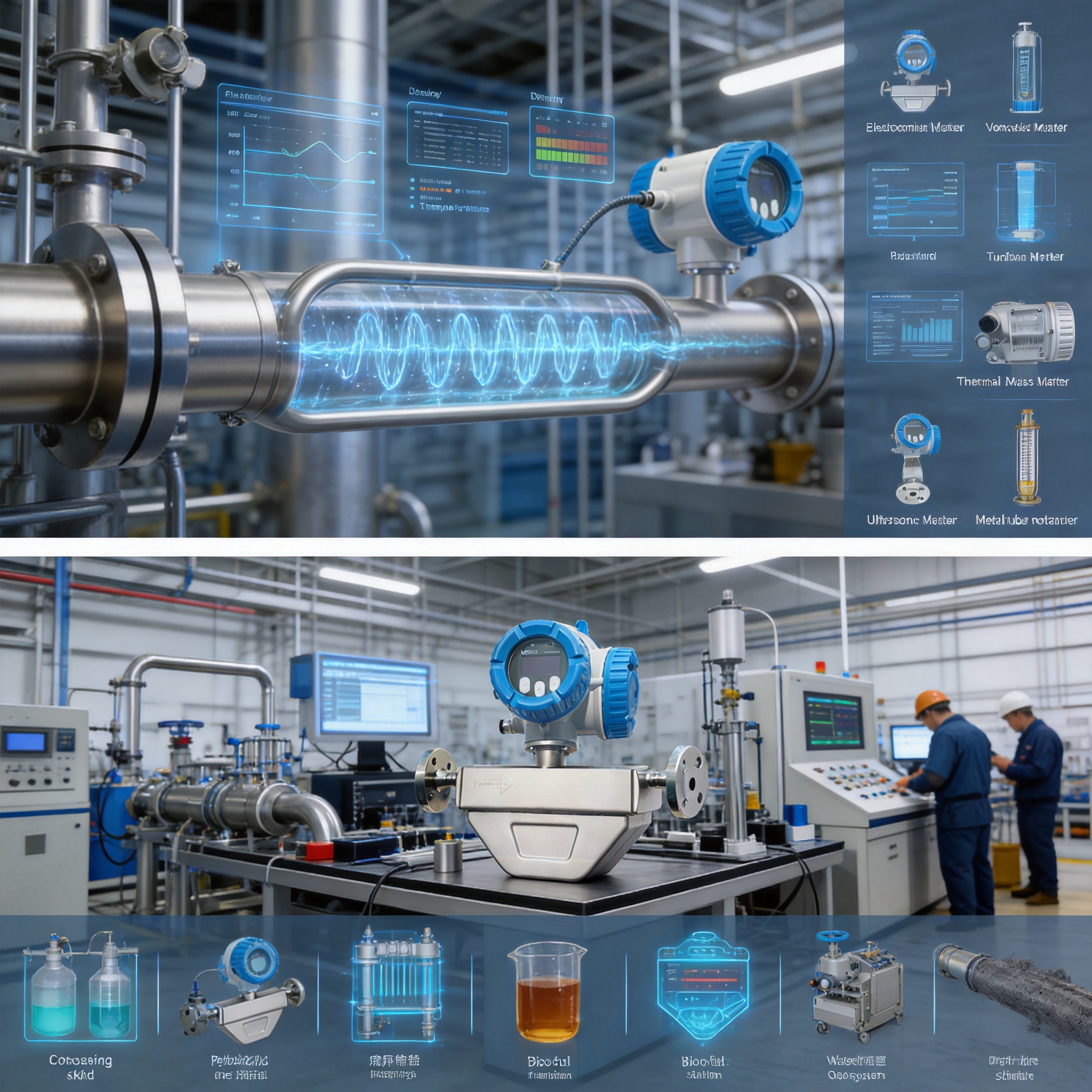
Manufactured by Jiangsu Vner Electronic Technology Co., Ltd., the AC Series forms part of a broader portfolio of industrial flow measurement technologies. The company develops electromagnetic, Coriolis, vortex, swirl, turbine, thermal mass, ultrasonic, and metal tube rotameter products for liquid, gas, and slurry applications. Its product development, calibration, manufacturing, and engineering capabilities support customers in oil and gas, petrochemical, power, water treatment, food and beverage, chemical processing, mining, and other industries.
Why Direct Mass Measurement Matters
Traditional flow measurement often begins with volume. A meter determines how much space a fluid occupies as it moves through a pipe, and the result is commonly expressed in liters per minute, cubic meters per hour, or another volumetric unit. However, the volume of a fluid can change when temperature or pressure changes. Density may also vary because of composition, concentration, mixing, or product quality.
Mass is different. The mass of a fluid remains a more stable indicator of the quantity being transferred, consumed, or dosed. For custody transfer, batching, formulation, and material accounting, direct mass measurement can reduce the uncertainty caused by changing process conditions. Instead of relying on a separate density correction or a calculated compensation factor, a Coriolis meter measures the mass flow through the mechanical response of the flowing fluid and vibrating measuring tubes.
This capability is particularly valuable when products are expensive, when the process operates over a wide temperature range, or when several fluids have different densities. It is also advantageous for systems in which the fluid composition changes during operation. A properly selected Coriolis flowmeter can continue to report mass flow accurately even when viscosity, density, or flow profile varies within the application range.
The AC Series is intended for these demanding measurement conditions. Its direct mass measurement principle reduces dependence on upstream flow conditioning and minimizes the need for separate compensation instruments. In applications such as chemical injection, fuel blending, syrup filling, and biofuel transfer, the result is a more direct connection between the measured signal and the actual quantity of product moving through the line.
How the Coriolis Measuring Principle Works
The measuring system contains one or more precision tubes that are driven into controlled oscillation. The transmitter supplies an excitation signal that makes the tubes vibrate at a defined frequency. When no fluid is moving, the tube motion remains symmetrical. As fluid begins to flow through the vibrating tubes, Coriolis forces are generated.
These forces cause a small, controlled deformation of the tubes. Sensors positioned near the inlet and outlet sections detect the motion of the tubes and produce two related sinusoidal signals. The phase difference between these signals changes according to the mass flow passing through the tubes. The transmitter analyzes this time shift using digital signal processing and converts it into a mass flow value.
The operating frequency of the tubes is also related to the mass of the fluid contained inside them. Because fluid density affects the vibrating system, the frequency response can be used to determine density. Integrated resistance temperature detectors provide process temperature information, allowing the instrument to report another important process variable without a separate temperature transmitter.
This combination of measurements distinguishes a Coriolis instrument from many conventional flow technologies. A turbine flowmeter primarily responds to fluid velocity and rotor movement. A vortex meter responds to alternating vortices formed behind a bluff body. An electromagnetic meter measures the velocity of conductive liquids. A thermal mass meter uses heat transfer characteristics. The Coriolis meter, by contrast, uses the interaction between fluid mass and tube motion to obtain a direct mass flow measurement.
Advanced signal processing is important because the phase shift generated by the Coriolis effect is often very small. The transmitter must separate the useful measurement signal from vibration, electrical interference, changing process conditions, and other sources of noise. The AC Series uses digital analysis to improve signal stability and provide repeatable output under demanding industrial conditions.
Core Performance Advantages
Direct and High-Precision Mass Flow Measurement
The AC Series provides direct mass flow measurement with accuracy up to ±0.1% of reading in liquid applications, subject to the selected model, installation conditions, calibration, and operating range. This level of accuracy is suitable for applications where small measurement errors can cause significant financial losses or quality problems.
Direct measurement is especially useful in batching and formulation. If a recipe requires a specified mass of solvent, additive, syrup, oil, or chemical reagent, the control system can use the measured mass value directly. The operator does not have to depend on a separate volume-to-mass conversion based on an assumed density. This simplifies process logic and can improve consistency from one batch to another.
Compared with many volumetric meters, a Coriolis meter is less dependent on the fluid flow profile. It does not require the same type of velocity profile interpretation as many velocity-based instruments. Nevertheless, good piping practice, proper sizing, complete pipe filling, and compliance with the manufacturer’s installation instructions remain important for achieving the specified performance.
Simultaneous Measurement of Multiple Variables
One of the strongest advantages of the AC Series is its multivariable measurement capability. The same instrument can provide mass flow, density, and temperature. Volumetric flow can then be derived in real time using the measured mass and density values.
These additional variables support more than basic flow indication. Density can be used as an online quality indicator. A change in density may reveal an incorrect blend ratio, contamination, concentration drift, air entrainment, or a change in product composition. Temperature information helps operators understand process behavior and can support compensation, alarm management, and production records.
Combining several measurements in one device can also reduce the number of instruments installed on a process line. This may reduce the number of pipe penetrations, transmitters, cable runs, signal interfaces, and maintenance tasks. For compact skids and packaged equipment, the reduction in instrumentation footprint can be particularly valuable.
Broad Fluid Compatibility
The AC Series is designed to operate with many different types of fluids. These include clean liquids, high-viscosity liquids, non-Newtonian fluids, certain slurries, light gas-liquid mixtures, chemicals, hydrocarbons, food products, and pharmaceutical process fluids.
High-viscosity products can be difficult for some flow technologies because pressure loss, rotor friction, or changes in velocity profile may affect performance. A Coriolis meter does not depend on a rotating mechanical element, which can make it suitable for products such as honey, syrup, heavy oil, lubricants, and concentrated chemical solutions when the meter is correctly sized.
Non-Newtonian fluids can change their apparent viscosity as shear conditions vary. The direct mass measurement principle can be advantageous in these applications because the measurement is not based solely on a fixed viscosity assumption. Slurry applications require careful consideration of particle size, concentration, settling behavior, erosion, and tube configuration, but Coriolis technology can provide useful mass flow information where conventional volumetric measurement is difficult.
For gas-liquid mixtures, the application must be evaluated carefully. Excessive entrained gas, unstable two-phase flow, or incomplete pipe filling can affect the measurement. However, the AC Series may be suitable for light gas-liquid multiphase conditions within the specified limits. Application engineering and accurate process data are essential before final selection.
Compact Construction and Low Pressure Loss
Space is frequently limited in process skids, mobile equipment, loading systems, and retrofit installations. The AC Series uses a compact micro-bend tube geometry intended to provide a smaller footprint than many traditional dual-loop Coriolis designs. This makes the meter easier to integrate into confined piping layouts and packaged systems.
Pressure loss is another important consideration. Every flowmeter introduces some resistance to the process, and excessive pressure drop may require larger pumps, increase energy consumption, or reduce available process capacity. The compact tube design is engineered to provide significantly lower pressure loss than conventional designs of similar function, helping the meter fit applications in which hydraulic efficiency is important.
Low pressure loss is beneficial in chemical dosing, fuel transfer, mobile blending equipment, and low-pressure process lines. It can also simplify the selection of upstream pumps and reduce the risk of inadequate flow caused by excessive meter resistance. The actual pressure drop depends on meter size, fluid density, viscosity, flow rate, and tube configuration, so it should always be confirmed during engineering selection.
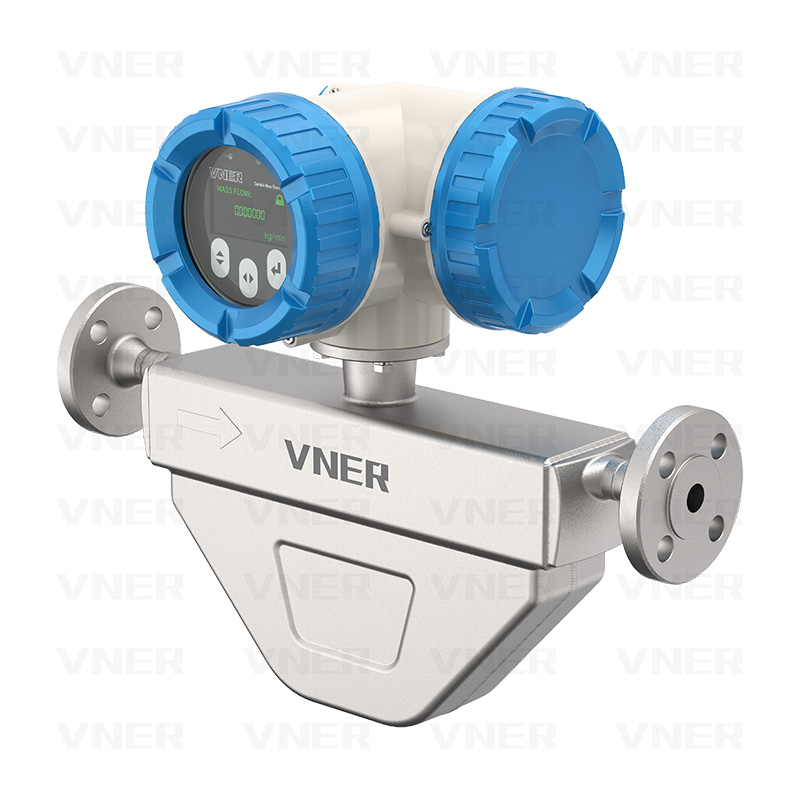
AC Series Coriolis Mass Flowmeter-副本
Materials and Mechanical Reliability
Industrial flowmeters must withstand more than normal operating flow. They may be exposed to pressure pulsation, vibration, temperature cycling, corrosive chemicals, cleaning fluids, installation stress, and repeated start-stop operation. The wetted materials and mechanical construction therefore have a direct effect on service life and measurement stability.
The AC Series can be supplied with 316L stainless steel measuring components for general industrial, sanitary, and many chemical applications. Hastelloy C and other special alloys are available for more aggressive fluids or higher corrosion resistance requirements. Material selection should be based on the complete chemical composition, concentration, temperature, pressure, cleaning procedure, and expected operating life rather than on the product name alone.
316L stainless steel is widely used because it offers a practical balance of corrosion resistance, strength, availability, and cleanability. It is suitable for many water-based fluids, food products, oils, chemicals, and pharmaceutical process services. Hastelloy alloys can provide additional resistance in applications involving aggressive acids, chlorides, or other corrosive media, although the final recommendation should be confirmed through application review.
The meter’s construction is also intended to support demanding pressure and temperature ranges. Extended process temperature and pressure capabilities allow the instrument to serve more applications than a basic general-purpose meter. High-temperature service, low-temperature transfer, pressurized chemical injection, and heated product lines can all be evaluated within the available model range.
Mechanical durability is supported by controlled tube fabrication, dimensional inspection, pressure testing, welding quality control, and calibration. These processes are important because the measuring tubes must maintain a precise mechanical relationship with the excitation and sensing system. Small changes in tube geometry, stiffness, or internal surface condition can influence the response of the instrument.
Manufacturing Strengths and Quality Control
Jiangsu Vner Electronic Technology Co., Ltd. operates as a specialized industrial flowmeter manufacturer in Yangzhou, China. Since 2011, the company has developed and produced flow measurement equipment for liquid, gas, and slurry applications. Its broader technical portfolio allows the company to compare different measurement principles and recommend a suitable technology according to fluid properties and process requirements.
The company has approximately 23,000 square meters of modern facilities distributed across three plants and a technical team of more than 150 people. This infrastructure supports product development, manufacturing, calibration, testing, technical service, and project coordination. More than 2,000 engineering projects in over 30 countries have provided experience across a range of process conditions and industrial sectors.
One of the key manufacturing strengths is in-house calibration. Calibration helps establish the relationship between the actual reference flow and the instrument output. For a precision Coriolis meter, calibration is especially important because the sensor response depends on mechanical geometry, electronics, signal processing, and fluid conditions.
In-house calibration can improve traceability and process control by keeping testing procedures, equipment management, data records, and product release decisions within an integrated quality system. It also allows engineering teams to investigate measurement deviations more efficiently and to connect calibration results with manufacturing improvements.
Quality processes extend beyond final testing. Incoming materials must be inspected, critical components must be controlled, welding and assembly must be monitored, and electronic modules must be tested before shipment. A stable manufacturing process reduces product-to-product variation and makes it easier for customers to maintain consistent measurement performance across multiple installations.
Automated and increasingly standardized manufacturing operations can further improve repeatability. Automation does not replace engineering judgment, but it can reduce variation in repetitive operations, improve production records, and support consistent assembly. For industrial customers, this combination of engineering control and manufacturing discipline is more valuable than a product that is optimized only for a single laboratory test.
Vner also supports engineering-driven sizing and selection. A flowmeter should not be selected solely by matching the line size. Fluid density, viscosity, normal and maximum flow, pressure, temperature, expected turndown, gas content, pipe arrangement, sanitary requirements, electrical area classification, and required outputs all affect the final choice. A manufacturer with experience across several flow technologies can evaluate these factors more comprehensively.
Comparison with Competing Flow Measurement Technologies
No flowmeter is ideal for every application. The best selection depends on process conditions, required accuracy, fluid properties, installation restrictions, maintenance expectations, and project cost. The following comparison illustrates where a Coriolis meter offers particular advantages.
| Measurement Technology | Primary Measurement Variable | Typical Strengths | Important Considerations |
|---|---|---|---|
| Coriolis | Mass flow, with density and temperature | High accuracy, direct mass measurement, multivariable output, broad fluid compatibility | Higher initial cost and careful sizing required for very large lines or heavy two-phase flow |
| Electromagnetic | Volumetric flow velocity | No moving parts, strong performance with conductive liquids and slurries | Requires sufficient electrical conductivity and a full, properly grounded pipe |
| Vortex | Volumetric flow based on vortex frequency | Suitable for many steam, gas, and liquid applications with relatively simple construction | Can be influenced by low flow, vibration, flow disturbances, and changing density |
| Turbine | Volumetric flow based on rotor speed | Good repeatability for clean, stable fluids and established applications | Moving parts require maintenance and performance may be affected by viscosity and contamination |
| Thermal Mass | Mass flow based on heat transfer | Useful for many gases and low-flow measurement applications | Gas composition, pressure, temperature, and contamination can influence calibration |
| Ultrasonic | Volumetric flow based on acoustic transit time or Doppler effect | Some designs offer non-invasive installation and large-pipe capability | Performance depends on acoustic conditions, fluid properties, pipe condition, and installation |
| Metal Tube Rotameter | Local indication of volumetric flow | Simple visual indication, robust construction, useful for local process monitoring | Usually offers fewer measurement variables and less automation than a multivariable Coriolis meter |
The principal competitive advantage of the AC Series is its ability to measure mass, density, and temperature in one integrated instrument. An electromagnetic meter may be an excellent choice for conductive water or slurry, but it cannot directly measure mass without density information. A turbine meter can provide reliable volumetric measurement for clean fluids, but its moving parts may be more vulnerable to wear and contamination. A vortex meter can work well with gas and steam, but it does not provide the same direct mass measurement capability for changing fluid conditions.
For high-value liquids, the additional information provided by the Coriolis meter can justify its initial investment. The meter may reduce the need for separate density instruments, temperature sensors, compensators, and correction calculations. It can also reduce product giveaway in filling operations and improve material balance accuracy in continuous processes.
Applications in Chemical and Fine Chemical Processing
Chemical plants often handle fluids with corrosive properties, high viscosity, changing density, or strict batching requirements. The AC Series can be used for precise dosing of acids, alkalis, solvents, additives, and specialty chemicals when the selected materials and process connections are compatible with the service.
Mass measurement is valuable in chemical formulation because recipes are frequently defined by mass ratios. If the density of a solvent changes with temperature, a volumetric meter may deliver a different mass than expected unless compensation is applied. A Coriolis meter measures the mass directly, helping the control system maintain the intended formulation.
Density measurement can provide an additional quality check. A density value outside the expected range may indicate incorrect raw material loading, insufficient mixing, concentration error, or contamination. Operators can use this information for alarms, batch release decisions, or automatic process correction.
Chemical injection systems also benefit from compact construction. On offshore platforms, skid packages, and compact dosing panels, installation space may be restricted. A low-pressure-loss micro-bend design can be integrated into a narrow piping arrangement while maintaining the required measurement function.
Petrochemical, Oil, and Gas Applications
Petrochemical facilities transfer and blend products such as LPG, diesel, gasoline, aromatics, solvents, and other hydrocarbon streams. These products can vary in density and temperature, and their commercial value makes accurate measurement essential. The AC Series can support mass-based transfer, blending, loading, unloading, and process control.
In blending systems, the meter can measure each component as it enters a common stream. The control system can compare actual mass flow rates with the target ratio and adjust valves or pump speeds. This helps improve final product consistency and reduce the overuse of expensive components.
For terminal loading and unloading, mass measurement can simplify accounting between suppliers, transporters, storage facilities, and customers. When used in a properly designed metering system with appropriate proving, documentation, and regulatory compliance, a Coriolis meter can support traceable custody transfer.
Offshore chemical injection is another important application. Corrosion inhibitors, hydrate control chemicals, scale inhibitors, and other specialty fluids may need to be injected at low rates into high-pressure lines. Compact dimensions, low pressure loss, corrosion-resistant materials, and high repeatability are important in this environment.
Hazardous-area installations require careful attention to approvals, wiring, grounding, enclosure selection, and installation practice. The AC Series product offering can be configured for applicable international requirements, including CE and ATEX-certified options where specified. The exact approval depends on the selected transmitter, sensor configuration, and project requirements, so customers should confirm the certification details before purchase.
Food, Beverage, and Pharmaceutical Processing
Food and beverage production requires accurate dosing, cleanable materials, and reliable operation during repeated production cycles. Products such as syrup, honey, dairy fat, vegetable oil, flavorings, sauces, and concentrates may have high viscosity or temperature-sensitive properties.
A Coriolis meter can measure these products by mass while also monitoring density and temperature. In filling lines, mass-based measurement can help maintain consistent net weight even when product temperature and density vary. This can reduce underfilling, minimize product giveaway, and improve packaging efficiency.
The meter can also support inline quality monitoring. Density trends may identify changes in concentration or recipe composition before the finished product reaches the packaging stage. Temperature information can help operators verify heating, cooling, and transfer conditions.
Sanitary construction requires more than a stainless steel body. The complete process connection, internal surface finish, gasket material, drainability, clean-in-place procedure, sterilization conditions, and hygienic design must be considered. For food and pharmaceutical applications, the selected AC Series configuration should be matched to the required sanitary standards and the customer’s cleaning and validation procedures.
CIP and SIP environments can expose the meter to elevated temperatures, cleaning chemicals, pressure changes, and repeated thermal cycles. Corrosion-resistant materials and stable mechanical construction help support these conditions. Proper installation is still essential, especially where trapped product, poor drainage, or air pockets could affect hygiene or measurement reliability.
Energy, Biofuel, and Automotive Applications
Biofuel production involves materials such as biodiesel, ethanol, feedstock oils, solvents, and blending components. Mass flow measurement supports process control, yield calculations, raw material accounting, and transfer operations. Because biofuel composition and density can vary, direct mass measurement can be more useful than relying only on volume.
In biodiesel production, the meter may be used for feedstock dosing, catalyst or reagent addition, product transfer, and blending. Density information can provide an immediate indication of process consistency, while temperature measurement helps operators evaluate the influence of heating and cooling on product behavior.
Automotive manufacturing uses precise fluid dosing in many areas. AdBlue or urea solution systems, engine oil filling, fuel additive blending, coolant preparation, and test-bench fuel delivery all require repeatable measurement. A mass flowmeter can help maintain the exact quantity of fluid delivered to a component or process.
For additive blending, the ability to measure very different fluids with one measurement principle can simplify equipment design. The final configuration must still account for the flow range, viscosity, pressure, temperature, chemical compatibility, and required accuracy for each fluid.
Water Treatment, Mining, and Metallurgy
Water treatment plants use chemical dosing systems to control pH, coagulation, disinfection, scale formation, and corrosion. The chemicals may include acids, alkalis, coagulants, polymers, antiscalants, and other treatment agents. Accurate dosing improves treatment efficiency and reduces chemical waste.
The AC Series can provide direct mass measurement for dosing skids where precise chemical delivery is important. Density information can also help detect dilution, concentration changes, or an empty chemical supply line. Compact installation is useful in modular treatment systems and containerized equipment.
Mining and metallurgical plants handle abrasive slurries, acidic reagents, flotation chemicals, and process water. Coriolis technology can provide mass flow information for certain slurry and pulp services, especially where mass balance is more meaningful than volume alone. However, abrasive wear, solids concentration, particle size, settling, and erosion must be assessed carefully.
In leaching operations, accurate acid or reagent feeding influences recovery and process stability. In flotation and sedimentation systems, mass flow data can support the control of pulp and reagent addition. The correct alloy, tube configuration, lining or surface treatment, and velocity range should be selected based on the specific slurry characteristics.
Engineering Selection Guidelines
Correct selection begins with reliable process information. The manufacturer or system integrator should receive the fluid name and composition, minimum and maximum flow rates, normal operating flow, density range, viscosity range, process pressure, temperature range, pipe size, expected gas content, and required accuracy.
Flow range is especially important. Selecting a meter solely according to the nominal pipe diameter may result in poor resolution at low flow or excessive pressure loss at high flow. The meter should operate within a range that provides adequate accuracy, stable signal quality, and acceptable hydraulic performance.
Fluid density and viscosity affect both the mechanical response and the pressure drop. A low-density gas, a high-viscosity syrup, a corrosive solvent, and a dense mineral slurry place very different demands on the sensor. The application data should include normal and abnormal conditions, such as startup, shutdown, cleaning, upset operation, and emergency flushing.
Gas entrainment should be considered before selecting a Coriolis meter. Large or unstable gas pockets can reduce measurement stability and may cause the tubes to behave differently from a completely liquid-filled condition. Upstream deaeration, proper pump selection, suitable piping slopes, and adequate back pressure can help reduce this risk.
Installation orientation should maintain a full measuring tube under normal operation. The meter should be supported according to the installation instructions without transferring excessive pipe stress to the sensor body. External vibration, nearby pumps, control valves, and pulsating equipment should be evaluated because mechanical interference can affect signal quality.
Electrical requirements include power supply, output signals, communication protocols, grounding, cable routing, enclosure protection, and hazardous-area classification. If the meter is installed in a potentially explosive atmosphere, the system designer must verify the complete certification and ensure that barriers, glands, wiring, and installation methods meet the applicable requirements.
Sanitary installations require suitable process connections and cleaning compatibility. High-pressure installations require confirmation of the pressure rating and temperature limits. Outdoor installations require appropriate enclosure protection and environmental consideration. These details should be finalized before production so that the delivered configuration matches the complete process system.
Installation and Commissioning Practices
Before installation, inspect the meter for transport damage and verify the model, size, material, process connection, calibration data, and electrical configuration. The piping should be cleaned so that welding debris, scale, and solid particles do not enter the measuring tubes or damage valves and pumps.
The meter should be installed in a location where it remains filled during operation and where maintenance personnel can access the transmitter and connections. Avoid placing the instrument at a high point where gas may collect or at a low point where unwanted solids may settle. Isolation valves and bypass arrangements may be considered when the process design requires maintenance without a complete shutdown.
Pipe alignment is important. The meter should not be used to correct large installation misalignment or to pull piping into position. Excessive mechanical stress can deform the sensor or alter the zero condition. Supports should be positioned to control vibration while allowing the instrument to operate within its intended mechanical environment.
After installation, flush the line and remove air before beginning measurement verification. The zeroing procedure should be performed under stable, no-flow conditions with the measuring tubes full of the process fluid or an appropriate commissioning fluid. Zero stability can be affected by vibration, temperature changes, pressure instability, and incomplete filling.
Commissioning should include verification of flow direction, units, output scaling, alarm limits, density and temperature readings, communication settings, and any batch or totalizer functions. A controlled comparison with a reference measurement can confirm that the complete installation, not only the sensor, is operating correctly.
Maintenance and Long-Term Operation
Coriolis flowmeters generally have no internal rotating parts, which can reduce mechanical wear compared with turbine meters. Routine maintenance nevertheless remains important. Operators should inspect process connections, wiring, enclosure seals, grounding, supports, and upstream equipment at planned intervals.
Changes in zero stability, pressure loss, density, or signal quality may indicate a process or installation issue. Possible causes include gas entrainment, coating on the tube surface, solids accumulation, external vibration, damaged wiring, changing fluid composition, or unstable process conditions. Troubleshooting should begin with process verification before replacing electronic components.
Calibration intervals depend on the application, regulatory requirements, accuracy target, fluid value, operating severity, and quality system. Custody transfer, pharmaceutical, and high-value batching applications may require more frequent verification than general process monitoring. Calibration records should be retained as part of the plant’s measurement management system.
When a meter is used with corrosive or abrasive fluids, material condition should be reviewed during planned shutdowns. For sanitary service, cleaning effectiveness and drainability should be checked. For high-temperature service, thermal cycling and insulation practices should be evaluated to ensure that the transmitter and sensor remain within their specified limits.
Good maintenance is supported by accurate documentation. The instrument tag, serial number, calibration information, material certificate, approval documentation, installation data, and service history should be kept together. This improves traceability and helps engineers determine whether a change in performance is related to the meter, the process, or the installation environment.
Advantages for OEMs, EPC Contractors, and End Users
Original equipment manufacturers need instruments that can be integrated consistently into multiple machine or skid designs. The compact AC Series construction, multivariable output, and available process configurations can simplify standardization across dosing systems, filling equipment, blending skids, and chemical injection packages.
Engineering, procurement, and construction contractors require dependable technical support during specification, sizing, documentation, and commissioning. A manufacturer with a broad product range can provide alternatives when a process includes several fluid types or line sizes. The ability to select between electromagnetic, Coriolis, vortex, turbine, thermal, ultrasonic, and rotameter technologies can help EPC teams avoid forcing one measurement principle into every service.
End users benefit from a combination of measurement performance and manufacturing support. Accurate measurement is important, but so are delivery consistency, spare parts availability, technical communication, calibration documentation, and responsiveness during commissioning. A long-term supplier relationship can reduce the total cost of ownership even when the initial purchase price is not the only deciding factor.
Vner’s experience with international projects and industrial sectors supports this broader approach. The company serves EPC contractors, end users, and OEM partners in more than 30 countries. Its engineering-driven selection process is intended to match the instrument to the actual application instead of treating every order as a standard catalog transaction.
Digital Signal Processing and Process Information
The transmitter is responsible for converting extremely small mechanical changes into useful industrial data. Digital signal processing allows the instrument to analyze phase differences, tube frequency, temperature signals, and diagnostic information in a coordinated manner.
Stable signal processing can improve repeatability when the process changes gradually or when the flow rate moves across a broad operating range. It can also help distinguish the true Coriolis response from external vibration and electrical noise. The quality of the final measurement depends on the complete system, including the sensor, transmitter, installation, grounding, and process stability.
Multivariable information enables more advanced control strategies. A programmable logic controller or distributed control system can use mass flow for dosing, density for quality alarms, temperature for operating limits, and derived volume for inventory reporting. These signals can be combined to create automatic batch control, blend ratio control, or preventative maintenance alerts.
In modern plants, measurement data is increasingly used for production optimization rather than simple display. A reliable Coriolis meter can contribute to energy management, product traceability, yield analysis, material balance, and continuous improvement programs. Its value therefore extends beyond the local indication on the transmitter.
Application Examples
Mass-Based Hydrocarbon Blending
A refinery or terminal blending skid may combine several hydrocarbon streams with different densities. Separate Coriolis meters can measure the mass of each component, while the control system adjusts valves to maintain the target blend ratio. Density data can be monitored as an additional indicator of product consistency.
Compared with a volume-only strategy, mass-based blending reduces the influence of temperature-related volume changes. The approach can improve repeatability and reduce the risk of producing off-specification material. It can also limit material waste caused by overcorrecting the blend ratio.
Offshore Chemical Injection
An offshore platform may need to inject corrosion inhibitor or another treatment chemical into a pressurized production line. Installation space can be limited, and the fluid may be chemically aggressive. A compact meter with corrosion-resistant wetted materials and low pressure loss can provide accurate dosing without imposing a large hydraulic burden on the injection system.
The measurement signal can be connected to a control system that regulates the injection pump. Mass flow provides a direct indication of chemical consumption, while alarms can identify an empty supply tank, blocked line, pump failure, or unexpected change in dosing rate.
Syrup and Oil Filling
Food packaging lines often require precise filling at high production speeds. Syrup, honey, edible oil, and flavoring products can change density as temperature changes. A Coriolis meter measures the delivered quantity by mass, helping maintain the required net weight across a range of product conditions.
Density and temperature information can also support production records and quality monitoring. The meter’s sanitary configuration, cleanable materials, and compatibility with CIP or SIP procedures should be selected according to the hygiene requirements of the facility.
Biofuel Transfer
In biofuel distribution, accurate mass measurement supports loading, unloading, inventory control, and contract settlement. Biodiesel and ethanol may be transferred at different temperatures and may have changing densities depending on composition. Direct mass flow measurement helps reduce the uncertainty associated with volume conversion.
Where legally traceable custody transfer is required, the complete metering system must be designed and verified according to the relevant metrological standards and local regulations. The Coriolis meter is one component of that system and must be supported by appropriate proving, calibration, documentation, and operating procedures.
Q&A: Frequently Asked Questions
What does a Coriolis mass flowmeter measure?
A Coriolis mass flowmeter directly measures mass flow. The AC Series also measures fluid density and process temperature, and it can derive volumetric flow from these measurements. The exact available outputs depend on the selected transmitter configuration.
Why choose mass flow instead of volumetric flow?
Mass flow is less directly affected by changes in temperature and pressure than volume. For batching, blending, dosing, and custody transfer, mass can provide a more meaningful indication of the actual quantity of material transferred. A volumetric measurement may require density compensation when process conditions change.
Can the AC Series measure high-viscosity liquids?
Yes, the AC Series is designed for a wide range of fluids, including many high-viscosity and non-Newtonian liquids. The meter must be sized according to the actual viscosity, density, temperature, flow range, and allowable pressure drop. Very high-viscosity applications should be reviewed by the manufacturer before selection.
Is a Coriolis meter suitable for slurry?
It can be suitable for certain slurry and pulp applications. The decision depends on solids concentration, particle size, abrasiveness, settling behavior, pressure, temperature, and required flow range. The selected tube material and configuration must be compatible with the process.
Can it measure gas-liquid mixtures?
The AC Series may operate with light gas-liquid multiphase mixtures within specified limits. Excessive or unstable gas content can affect measurement stability. The application should be reviewed with complete information about gas volume fraction, bubble size, pressure, flow regime, and process piping.
Does the meter require a straight pipe run?
Coriolis meters are generally less dependent on a developed velocity profile than many velocity-based meters. However, the instrument should still be installed according to the manufacturer’s instructions. Pumps, valves, reducers, vibration sources, pipe stress, and incomplete filling can affect performance even when long straight runs are not required.
What materials are available for corrosive fluids?
316L stainless steel is available for many general industrial, sanitary, and chemical services. Hastelloy C and other special alloys can be selected for more aggressive fluids. Material compatibility must be confirmed using the complete chemical composition, concentration, temperature, pressure, and cleaning conditions.
Can the meter be used in food and pharmaceutical plants?
Yes, suitable configurations can be used for food, beverage, and pharmaceutical processes. The process connections, surface finish, seals, drainability, cleaning procedures, and applicable sanitary certifications must be specified according to the facility’s requirements.
Is the meter suitable for hazardous areas?
Approved configurations may be available for hazardous-area installations, including applicable CE and ATEX-certified options. Customers must verify the certification of the exact model and transmitter, as well as the requirements for cable glands, barriers, grounding, wiring, and installation.
How does density measurement help process control?
Density can indicate changes in concentration, composition, contamination, or blend ratio. It may be used for quality alarms, batch verification, automatic correction, product identification, and inventory calculations. Density trends are particularly valuable when product quality must be monitored inline.
What information is needed for product selection?
Important information includes fluid composition, minimum and maximum flow, normal flow, density, viscosity, temperature, pressure, pipe size, gas content, process connection, accuracy requirement, installation environment, output signals, and cleaning or certification requirements.
How often should the meter be calibrated?
Calibration frequency depends on the application, required accuracy, regulations, fluid value, process severity, and the customer’s quality system. High-value transfer, pharmaceutical, and custody transfer applications may require regular verification or calibration. The interval should be established through risk assessment and operating history.
Why Manufacturing Capability Influences Product Value
A precision instrument is only as reliable as the processes used to design, build, test, and support it. For a Coriolis flowmeter, manufacturing quality affects tube geometry, weld integrity, sensor alignment, excitation stability, electronic performance, enclosure protection, and calibration consistency.
Jiangsu Vner Electronic Technology Co., Ltd. combines product development with manufacturing and calibration capabilities. Its experience across several industrial flowmeter technologies provides a broader understanding of process measurement challenges. This is useful when a project contains a mixture of liquid, gas, slurry, conductive, non-conductive, clean, corrosive, or high-temperature services.
The company’s facilities, technical team, international project experience, and engineering-based approach support both standard and customized requirements. Customers can work with a supplier that understands not only the instrument itself but also the way a flowmeter interacts with pumps, valves, control systems, piping, calibration procedures, and production targets.
For OEM and EPC customers, manufacturing consistency is especially important. Multiple instruments supplied for a project should have consistent documentation, configuration, calibration records, and communication interfaces. Standardized quality procedures and in-house testing help reduce variation and simplify commissioning.
For end users, long-term value includes accuracy retention, maintainability, traceability, application support, and the ability to obtain a suitable replacement or upgraded configuration in the future. These factors can be as important as the initial specification sheet when the instrument is installed in a continuous production facility.
Conclusion
The AC Series Coriolis Mass Flowmeter is designed for applications where accurate quantity measurement, process visibility, and reliable industrial construction are essential. Its direct mass flow measurement reduces dependence on volumetric correction, while simultaneous density and temperature measurement provides additional information for quality control, batching, blending, and transfer management.
Its compact micro-bend tube design, low pressure loss, broad fluid compatibility, corrosion-resistant material options, and extended operating capabilities make it suitable for demanding installations. The technology can serve chemical and fine chemical plants, petrochemical terminals, offshore injection systems, food and beverage lines, pharmaceutical processes, biofuel production, automotive dosing, water treatment, mining, and metallurgical operations.
The product’s competitive value is strengthened by the manufacturing and engineering capabilities of Jiangsu Vner Electronic Technology Co., Ltd. In-house calibration, controlled quality processes, modern production facilities, technical personnel, international project experience, and a broad flowmeter portfolio support dependable product selection and delivery.
For the best result, the flowmeter should be selected as part of a complete measurement system. Accurate process data, suitable materials, correct sizing, proper installation, stable filling conditions, appropriate electrical integration, and planned calibration all contribute to reliable performance. When these factors are addressed, a Coriolis mass flowmeter can become a central instrument for improving product quality, reducing waste, strengthening traceability, and controlling valuable fluids with confidence.
References
1. International Organization for Standardization, Measurement of Fluid Flow in Closed Conduits: General Principles and Requirements.
2. International Organization for Standardization, Measurement Management Systems: Requirements for Measurement Processes and Measuring Equipment.
3. International Organization for Legal Metrology, International Recommendations for Dynamic Measuring Systems for Liquids Other Than Water.
4. International Electrotechnical Commission, Industrial-Process Measurement and Control Documentation and Instrumentation Practices.
5. American Petroleum Institute, Manual of Petroleum Measurement Standards.
6. European Committee for Standardization, Principles for Hygienic Design and Cleanable Process Equipment.
7. Manufacturer technical materials for AC Series Coriolis Mass Flowmeters, including application, installation, calibration, and material selection guidance.
Product: AC Series Coriolis Mass Flowmeter-副本

We offer all our products and services at international standards.
Products
Contact Information
-

+86-18652789521
+86-18052582295
+86-0514-83633600 / 83633900 -

+86-0514-83633600 / 83633900
-

shawn@vnerflow.com
info@vnerflow.com -

No. 11 Xingye Road, Chenji Town Industrial Park, Yizheng, Yangzhou, China
