
 0
0
 EN
EN  English
 عربى
عربى Español
 русский
If you need any help, please feel free to contact us
Home / Author / Cai Shurong — After-Sales Project Coordinator / LWQ Series Gas Turbine Flowmeter: High-Accuracy Gas Measurement for Industrial Applications
LWQ Series Gas Turbine Flowmeter: High-Accuracy Gas Measurement for Industrial Applications
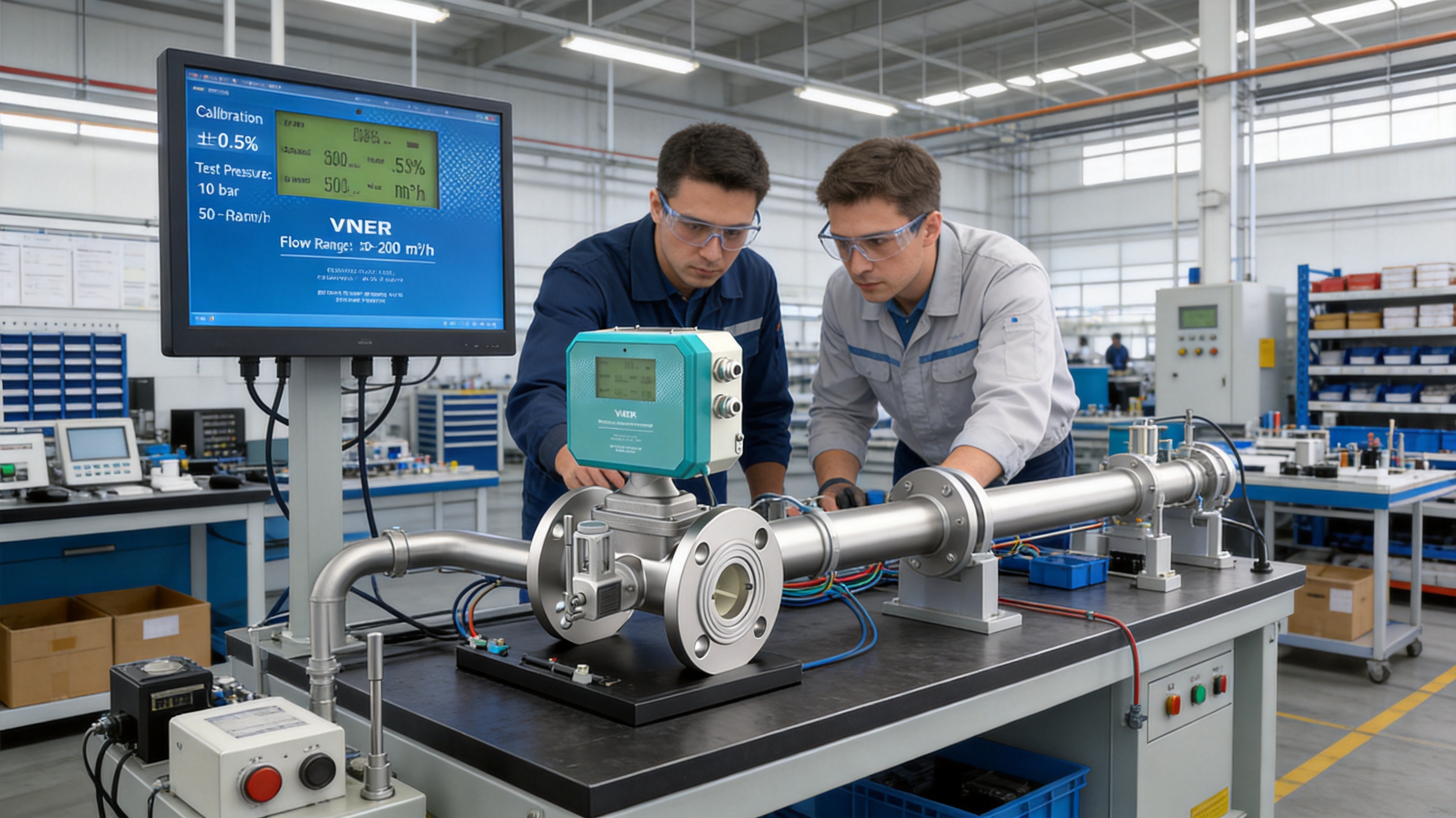
Accurate gas measurement is essential wherever energy consumption, production efficiency, process stability, environmental performance, or commercial billing depends on reliable flow data. Industrial gas systems rarely operate under perfectly constant conditions. Pressure changes with demand, temperature varies with weather and equipment loading, and flow profiles can be disturbed by valves, elbows, reducers, compressors, regulators, and other pipeline components. A flowmeter used in these systems must therefore do more than detect movement. It must provide stable, repeatable, and useful measurements under changing operating conditions.
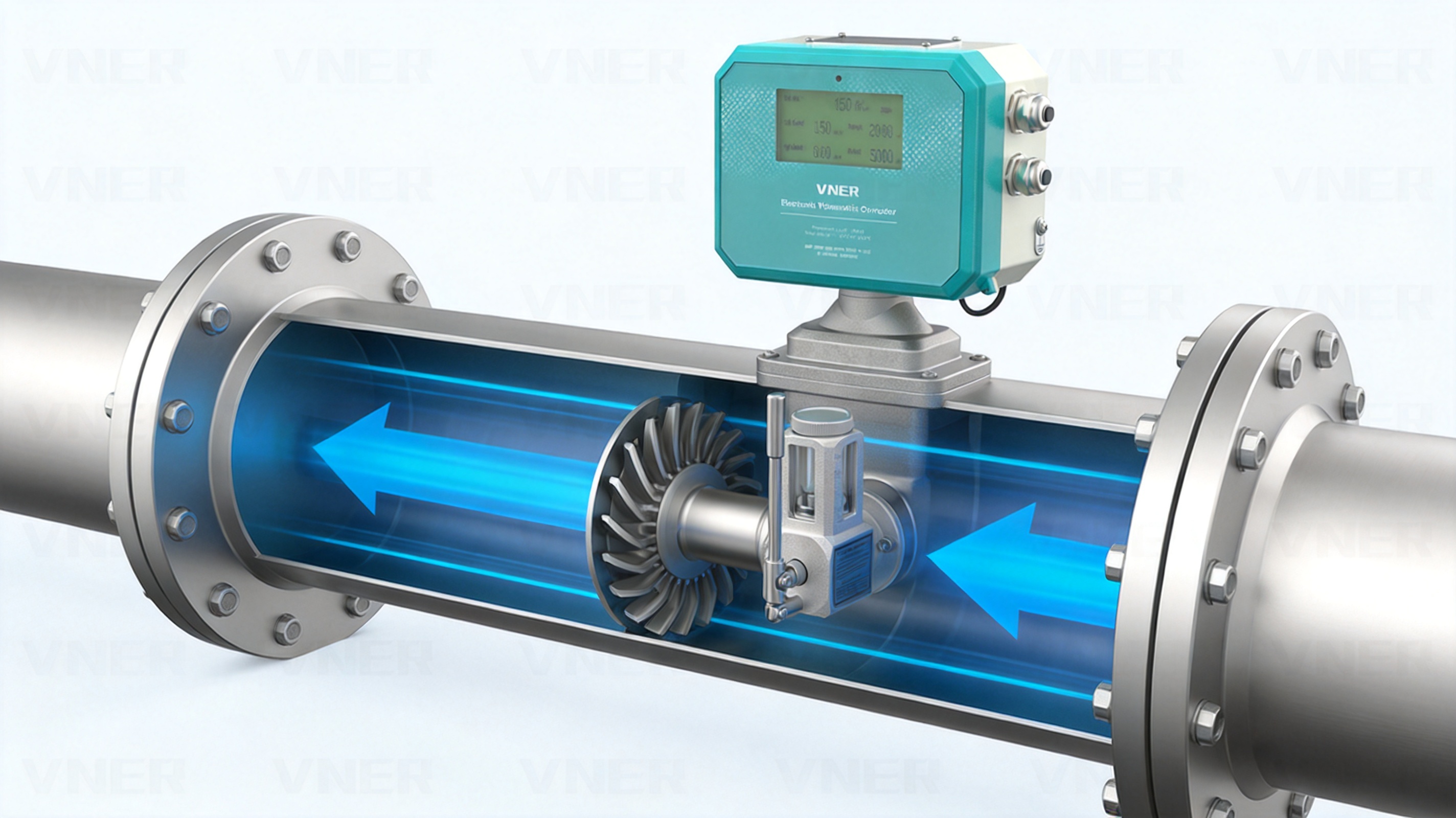
The LWQ Series Gas Turbine Flowmeter is designed for these requirements. It measures the volumetric flow of clean and dry gases through a precision turbine sensing structure. An inlet flow straightener conditions the incoming gas, reducing swirl and turbulence before the gas reaches the rotor. As the gas passes through the measuring section, it drives a multi-blade turbine. The rotational speed of the turbine is proportional to gas velocity, allowing the instrument to convert rotor movement into a flow signal.
With an inductive or magnetic pickup, the flowmeter generates a frequency signal corresponding to volumetric flow. When integrated temperature and pressure sensors are included, the transmitter can compensate for changing process conditions and calculate standard volume flow. This makes the LWQ Series suitable for applications where users need dependable readings expressed in standard units such as standard cubic meters per hour.
The instrument combines mechanical flow sensing, digital signal processing, temperature compensation, pressure compensation, local indication, and communication functions in a compact body. This integrated approach simplifies installation and reduces the need for separate measurement components. It also gives operators access to real-time flow rate, cumulative flow, pressure, and temperature information from one instrument.
Why Accurate Gas Flow Measurement Matters
Gas is compressible, which means that its volume changes significantly with pressure and temperature. A gas volume measured at one operating condition may not represent the same amount of gas measured at another condition. For this reason, industrial users often need both operating-volume measurement and compensated standard-volume measurement.
For example, a pipeline carrying natural gas may experience pressure fluctuations caused by changes in consumption. A compressed-air system may operate at different pressures across separate production lines. Nitrogen used for tank blanketing may be consumed intermittently, creating rapidly changing flow conditions. If the measurement system does not account for these changes, the reported volume may be inconsistent or misleading.
The LWQ Series addresses this issue by combining flow measurement with temperature and pressure data. Its digital transmitter uses compensation algorithms to calculate standard volume flow. This supports more consistent energy accounting, production reporting, process control, and internal cost allocation.
Accurate measurement is also important for detecting abnormal operating conditions. Unexpectedly high gas consumption can indicate leakage, valve malfunction, poor combustion control, or process instability. A properly installed and configured gas flowmeter gives operators a practical basis for comparing actual consumption with expected usage.
Operating Principle of the LWQ Series
Flow Conditioning
Gas entering a pipeline is not always evenly distributed. Elbows, tees, valves, reducers, filters, compressors, and partially open control devices can generate swirl or asymmetric velocity profiles. If this disturbed gas reaches a turbine rotor directly, the meter may experience unstable rotation or measurement error.
The LWQ Series uses an inlet flow straightener to condition the gas before it enters the turbine section. The straightener reduces unwanted swirl and turbulence and helps shape the velocity profile. This allows the rotor to respond more consistently to the actual gas velocity, improving repeatability and supporting reliable performance when the meter is installed in a practical industrial piping system.
Turbine Rotor Measurement
After conditioning, the gas passes through a multi-blade turbine rotor. The kinetic energy of the gas causes the rotor to rotate. Within the designed operating range, the rotational speed is proportional to the velocity of the gas passing through the meter.
The rotor is engineered to respond to low flow while maintaining stable operation at higher flow rates. Low starting flow is an important advantage in applications where consumption varies widely or where the gas demand periodically falls below the normal production rate. A meter that begins measuring at a low flow can provide better visibility during startup, standby, minimum-load, and intermittent operating conditions.
Signal Detection
An inductive or magnetic pickup detects the movement of the rotor and produces a frequency signal. Each pulse or frequency change represents rotor movement, and the transmitter converts this signal into a flow value. Depending on the configuration, the meter can provide pulse, frequency, and analog outputs for connection to control systems, counters, data acquisition units, or energy management platforms.
Temperature and Pressure Compensation
When temperature and pressure sensors are integrated into the instrument, the flowmeter can measure the conditions that affect gas density and volume. The transmitter then applies compensation algorithms to calculate standard volume flow. This is especially useful for gas distribution, energy management, industrial boilers, compressed-air monitoring, and process gas measurement.
Digital pressure measurement provides high-resolution pressure data for compensation and display. Temperature and pressure values can also help operators understand the operating state of the pipeline. When a flow reading changes, the additional data makes it easier to determine whether the cause is a process demand change, a pressure fluctuation, or a temperature effect.
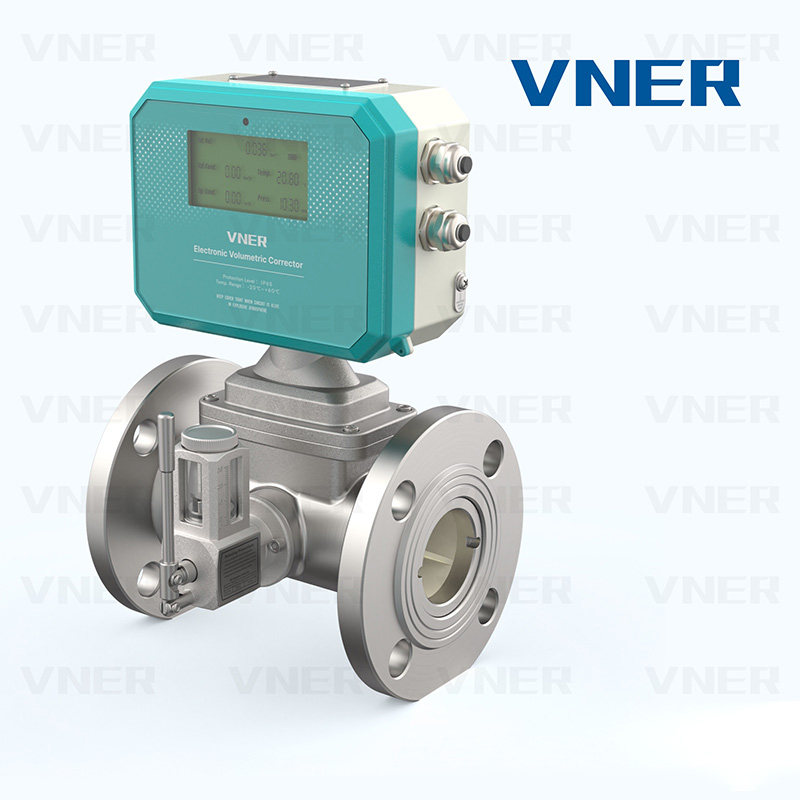
LWQ Series Gas Turbine Flowmeter-副本
Core Advantages of the LWQ Series
Integrated Measurement and Compensation
A major advantage of the LWQ Series is its integrated design. The instrument can combine the turbine sensing mechanism, temperature sensor, pressure transmitter, digital processing unit, display, and communication interface in one compact assembly. This reduces the amount of auxiliary equipment required in the field.
In comparison with a basic mechanical or pulse-only turbine meter, an integrated LWQ configuration provides more complete measurement information. Users do not have to depend exclusively on separate pressure and temperature instruments to perform manual corrections. The transmitter can process the relevant parameters continuously and present compensated results in real time.
High Accuracy and Repeatability
Gas measurement systems used for billing, energy allocation, or process control must provide consistent results. Accuracy is important, but repeatability is equally valuable. If a meter produces different results under the same conditions, operators cannot confidently compare production batches, operating shifts, or monthly energy consumption.
The LWQ Series supports repeatable measurement through a combination of flow conditioning, turbine rotor design, stable signal detection, digital processing, and compensation. Its design is intended for clean and dry gas applications where the gas stream can be maintained within the specified operating conditions.
For custody-related measurement, the complete installation remains important. Straight pipe requirements, flow profile, gas cleanliness, calibration, pressure and temperature inputs, and transmitter configuration all influence the final performance of the measuring system. The LWQ Series provides a strong measurement platform, while correct engineering selection and installation ensure that the platform performs as intended.
Low Starting Flow
Many industrial gas applications do not operate continuously at full capacity. Gas consumption may increase during production, decline during shift changes, and fall to a low level during equipment standby. A meter with low starting flow can capture more of these variations.
This helps users identify low-level consumption, standby losses, leakage, and intermittent demand. It also provides more complete data for production analysis. In systems where several users share one gas supply, low-flow performance can improve the accuracy of individual line monitoring and internal energy allocation.
Low Pressure Loss
Pressure loss is a key consideration in compressed-gas systems. Excessive restriction increases the load on compressors, reduces available pressure at downstream equipment, and may increase operating costs. The LWQ Series uses a streamlined flow path designed to reduce unnecessary backpressure.
Low pressure loss is beneficial in compressed air, natural gas distribution, instrument air, fuel gas, and industrial gas systems. It can help maintain downstream process conditions while limiting the energy penalty associated with forcing gas through a restrictive measuring device.
Wide Display Range
The segment LCD provides local access to essential operating information. Depending on the configuration, the display can show real-time flow rate, cumulative flow, pressure, and temperature. The display is designed to remain readable at ambient temperatures down to minus 30 degrees Celsius, supporting outdoor installations and cold industrial environments.
Local indication is useful during commissioning, inspection, maintenance, and troubleshooting. Technicians can compare the displayed value with a control-room signal or portable reference instrument without always requiring a laptop or separate reader.
Digital Communication
RS485 Modbus communication provides a practical connection to supervisory control and data acquisition systems, distributed control systems, building or energy management platforms, and industrial internet of things gateways. Digital communication allows operating data to be transmitted over a network rather than collected manually from the local display.
Through a digital interface, users may integrate flow, totalized volume, pressure, temperature, alarms, and diagnostic information into a broader monitoring system. This supports centralized reporting and makes it easier to compare gas consumption across different workshops, boilers, production lines, or facilities.
Flexible Output Options
Different projects require different signal formats. Some users need a pulse output for a totalizer, while others require a 4–20 mA signal for a control system. Frequency output may be preferred for certain counters or data acquisition devices. The LWQ Series can be configured with optional pulse, analog, and frequency outputs, allowing the instrument to fit existing automation architectures.
This flexibility is particularly valuable when replacing an older meter. A user may retain an existing control cabinet or data collection system while upgrading the field instrument. The ability to select a suitable output reduces the need for extensive system modification.
Comparison with Other Gas Flowmeter Technologies
No single flowmeter technology is ideal for every gas application. Selection depends on gas composition, cleanliness, pressure, temperature, flow range, required accuracy, installation conditions, maintenance expectations, and communication requirements. The LWQ Series has a specific set of advantages when compared with other common technologies.
| Technology | Typical Strength | Potential Limitation | Position of the LWQ Series |
|---|---|---|---|
| Gas turbine flowmeter | Good repeatability, broad practical application range, pulse and frequency signal capability | Requires clean gas and suitable installation conditions | Combines turbine measurement with pressure, temperature, display, compensation, and digital communication |
| Vortex flowmeter | No moving rotor and useful for many steam and gas applications | May require sufficient velocity and can be sensitive to flow disturbances or vibration | Offers low starting flow and a direct rotor-based signal for suitable clean-gas services |
| Thermal mass flowmeter | Direct mass-flow measurement and strong sensitivity at low flow | Performance can depend on gas composition, contamination, and calibration conditions | Provides volumetric and compensated standard-volume measurement with pressure and temperature data |
| Ultrasonic flowmeter | No moving parts and large-pipe measurement capability | May involve higher system cost and sensitivity to installation, gas composition, or acoustic conditions | Provides a compact and economical turbine-based alternative for suitable gas lines |
| Positive displacement meter | Good measurement at low flow for certain gas services | Moving chambers can create pressure loss and require mechanical maintenance | Uses a streamlined turbine path to reduce pressure drop and simplify integrated monitoring |
The comparison does not mean that turbine technology replaces every other flow measurement method. Instead, it shows why the LWQ Series is attractive for clean, dry gases where users need a combination of accuracy, repeatability, low pressure loss, digital compensation, and practical installation.
Compared with Basic Mechanical Turbine Meters
A basic turbine meter may provide a pulse signal or a mechanical indication, but it may not include integrated temperature and pressure compensation. Operators using such a meter may need separate transmitters, a flow computer, or manual calculations to obtain standard volume flow.
The LWQ Series builds these functions into the instrument architecture. The result is a more complete measurement solution with fewer separate components. This can reduce installation complexity, limit wiring requirements, and make system commissioning more straightforward.
Compared with Thermal Mass Meters
Thermal mass flowmeters are often selected for compressed air and low-flow gas applications because they can measure mass flow directly. However, their response may be affected by gas composition, humidity, contamination, coating, and changes from the original calibration gas. In a process where the gas composition is not stable, these factors must be carefully considered.
The LWQ Series measures gas velocity through turbine rotation and uses pressure and temperature information for standard-volume compensation. For clean and dry gases with known operating conditions, this approach can provide a robust alternative with clear physical measurement behavior and useful outputs.
Compared with Vortex Meters
Vortex flowmeters measure the frequency of vortices formed behind a bluff body. They have no rotating rotor and are widely used for gas and steam. However, they generally require an adequate flow velocity and a sufficiently developed flow profile. Mechanical vibration and pulsation may also require attention during installation.
The LWQ Series is advantageous in applications where low starting flow, turbine-based signal generation, and compact integrated compensation are priorities. The choice should be based on actual process conditions rather than technology preference alone.
Application Areas
Natural Gas Distribution
The LWQ Series can measure natural gas consumption in commercial and industrial pipelines. Typical users include factories, boiler rooms, heating plants, food-processing facilities, and manufacturing sites. The integrated pressure and temperature compensation supports standard-volume reporting for energy management and internal billing.
In a multi-user facility, meters can be installed on separate branches to monitor consumption by workshop, production line, or building. The collected data can support cost allocation and help identify unusual demand patterns.
Industrial Boilers and Energy Management
Boilers consume significant quantities of gas, and stable fuel measurement is essential for combustion control. By monitoring gas flow together with pressure and temperature, operators can evaluate fuel demand and compare it with steam production or thermal output.
When connected to an energy management system, the flowmeter can support daily, weekly, and monthly consumption analysis. The data may help identify inefficient operating periods, burner adjustment problems, excessive startup consumption, or changes in production demand.
Chemical and Petrochemical Processes
Nitrogen, hydrogen, fuel gas, and other process gases are commonly used in chemical and petrochemical facilities. Nitrogen may be applied for inerting, purging, blanketing, or pressure maintenance. Hydrogen can be used in processing and refining operations. Stable flow measurement helps verify that these gases are being supplied at the intended rate.
In these environments, gas cleanliness, material compatibility, pressure rating, hazardous-area requirements, and electrical classification must be reviewed during specification. The flowmeter should be selected and installed according to the process safety requirements of the site.
Oil and Gas Facilities
Gas flow measurement is required for fuel gas, instrument air, utility gas, and selected flare-gas monitoring applications. The LWQ Series can provide useful measurement for clean and dry gas streams where its flow range and pressure-temperature compensation are appropriate.
For flare gas and other difficult services, the gas composition, velocity range, pulsation, contaminants, and environmental conditions must be evaluated carefully. The instrument should be applied within its technical limits and supported by an appropriate installation design.
Power Plants and Energy Facilities
Gas-fired power plants and industrial energy centers need reliable fuel monitoring to support combustion efficiency and operating cost control. The LWQ Series can be used for boiler gas flow, fuel gas distribution, burner supply monitoring, and auxiliary gas systems.
Flow data can be compared with electrical output, steam output, or heat production to support efficiency calculations. A stable signal and digital communication also allow the meter to become part of a plant-wide control and energy monitoring system.
Industrial Gas Systems
Oxygen, argon, carbon dioxide, nitrogen, and compressed air may be distributed through plant pipelines. The LWQ Series is suitable for clean and dry gas applications, subject to correct material selection and operating range confirmation.
In gas bottling or blending operations, flowmeters can help verify filling rates, monitor individual gas components, and maintain repeatable production conditions. The optional outputs support integration with batch control or production data systems.
HVAC and Utilities
Gas-fired heating systems, cogeneration units, and utility plants require measurement of fuel consumption. Local display allows maintenance staff to inspect the flowmeter near the equipment, while RS485 Modbus communication allows building or facility management systems to collect the same data remotely.
Steel and Metallurgy
Steel plants use various gases in blast furnaces, converters, reheating furnaces, and other thermal processes. Monitoring blast furnace gas, converter gas, fuel gas, and instrument air can support combustion management and process stability. Because industrial steel environments can include vibration, dust, heat, and complex piping, installation protection and gas conditioning are important.
Textile and General Manufacturing
Textile production and general manufacturing facilities may use gas for heating, drying, coating, finishing, cutting, or other production processes. Gas consumption monitoring can reveal the energy requirements of individual production areas and help managers compare performance among shifts or product lines.
Typical Use Cases
Billing and Energy Allocation
An industrial boiler house may supply steam to several workshops. By installing LWQ flowmeters on the main gas line and selected branch lines, the facility can track total fuel consumption and allocate energy costs more fairly. The cumulative flow function supports reporting, while standard-volume compensation improves comparability when pipeline pressure or ambient temperature changes.
Nitrogen Inerting and Blanketing
A chemical storage tank may use nitrogen to prevent oxygen ingress and reduce the risk of unwanted reactions. The flowmeter can monitor the nitrogen supply, verify that the blanketing system is receiving the intended flow, and identify abnormal consumption that may indicate a leak or faulty regulator.
Compressed-Air Monitoring
Compressed air is often treated as a utility, but it can represent a considerable portion of factory energy consumption. Meters installed on production branches can show which lines use the most air. When combined with operating schedules, the data can expose leaks, unnecessary use during idle periods, and poor control of pneumatic equipment.
Flare-Gas Supervision
Oil refineries and processing plants may need to monitor flare gas for environmental reporting and operational awareness. The suitability of a turbine meter depends on gas cleanliness, flow range, composition, pressure, and the specific requirements of the flare system. Where the application conditions are appropriate, the LWQ Series can provide a frequency-based flow signal and compensated data.
Precision Heating and Reactor Feed
Industrial furnaces and reactors often require a stable gas feed to maintain temperature and product quality. A flowmeter with low starting flow, repeatable measurement, and fast signal transmission can help control the fuel or process gas supply. Operators can compare the flow rate with temperature and pressure to identify deviations before they affect production.
Gas Blending and Bottling
Gas blending and bottling stations require dependable flow verification. The LWQ Series can monitor gas streams entering a blending system or filling line, allowing users to confirm that the flow rate remains within the selected production parameters. Digital communication and pulse outputs can support batch records and automated control.
Engineering Selection Considerations
Gas Type and Cleanliness
The LWQ Series is intended for clean and dry gases. Solid particles, liquid droplets, oil, condensate, and excessive contamination can affect turbine movement, create wear, or cause unstable measurement. A suitable filter, separator, dryer, or upstream conditioning system may be required.
Users should provide the gas name, composition, density or molecular weight where available, expected contamination level, and whether the gas is corrosive or chemically aggressive. These details help determine materials, sealing arrangements, pressure ratings, and calibration requirements.
Flow Range
The normal flow, minimum flow, maximum flow, pressure, and temperature should all be provided during selection. The meter should not be chosen only according to pipe diameter. Two pipelines with the same nominal size may have very different flow ranges because of differences in pressure, gas composition, and operating demand.
Correct sizing is important because an oversized meter may spend too much time near its lower measurement limit, while an undersized meter may create unnecessary pressure loss or experience excessive rotor speed. Engineering-based selection helps balance accuracy, pressure drop, operating range, and long-term reliability.
Pressure and Temperature
Pressure and temperature influence the conversion from operating volume to standard volume. The expected minimum, normal, and maximum values should be reviewed. The pressure sensor range must be appropriate for the actual line pressure, and the temperature sensor must be suitable for the process environment.
Installation Conditions
The installation should provide a stable flow profile. Straight pipe sections upstream and downstream of the meter are normally important, especially after elbows, valves, reducers, or other disturbances. Where the available space is limited, a flow conditioner may be considered according to the application design.
The meter should be installed in a position that avoids liquid accumulation. In outdoor systems, protection from rain, snow, direct radiation, and freezing conditions may be necessary. The piping should be adequately supported so that external mechanical stress is not transferred to the meter body.
Electrical and Communication Requirements
Users should specify whether the application requires pulse, frequency, 4–20 mA, RS485 Modbus, or a combination of outputs. Cable routing, grounding, power supply, electromagnetic interference, and hazardous-area requirements should be evaluated before installation.
Communication parameters such as address, baud rate, parity, and register mapping should be configured consistently with the host system. Proper commissioning ensures that the digital value shown by the control system corresponds to the engineering unit and compensation mode selected for the field instrument.
Manufacturing Strengths and Quality Assurance
Product performance depends not only on the measurement principle but also on manufacturing consistency. Turbine meters contain precision mechanical and electronic components whose alignment, balance, calibration, sealing, and signal processing must work together. A reliable manufacturer therefore requires more than assembly capability. It needs engineering knowledge, process control, testing capacity, and application experience.
Jiangsu VNER Electronic Technology Co., Ltd. is a specialized industrial flowmeter manufacturer based in Yangzhou, China. Since 2011, the company has developed solutions for electromagnetic, Coriolis, vortex, swirl, turbine, thermal mass, ultrasonic, and rotameter applications. This broad product portfolio gives its engineering team experience across liquid, gas, and slurry measurement conditions.
The company operates three plants covering approximately 23,000 square meters and has a technical team of more than 150 people. Its products have supported over 2,000 engineering projects in more than 30 countries. This project experience is valuable because it exposes the manufacturer to different pipeline standards, process conditions, environmental requirements, communication systems, and customer expectations.
Engineering-Driven Product Development
An engineering-driven approach begins with understanding the measurement problem rather than simply offering a standard device. For the LWQ Series, this includes studying gas properties, flow range, pressure, temperature, installation conditions, required outputs, and the desired compensation method.
Engineering selection is particularly important for turbine flowmeters because the final measurement performance depends on how the meter interacts with the pipeline. A technically appropriate size, suitable flow conditioning, correct sensor range, and suitable output configuration can significantly improve project results.
In-House Calibration
Calibration is essential for confirming the relationship between actual flow and the signal produced by the instrument. In-house calibration capability allows the manufacturer to inspect and adjust products during production instead of relying entirely on outside facilities.
A controlled calibration process supports product consistency, traceability, and quality documentation. It also helps engineers identify deviations during manufacturing and verify that the finished instrument meets the required performance before shipment.
Certified Quality Processes
Certified quality processes provide a framework for controlling design, procurement, production, inspection, documentation, and after-sales support. For industrial instruments, this is important because a flowmeter may be installed in a remote facility and expected to operate continuously for many years.
Quality control should cover raw materials, pressure-bearing parts, rotor components, sensors, circuit boards, displays, connectors, seals, enclosure assembly, wiring, configuration, and final testing. Consistent procedures reduce variation between units and improve confidence in long-term operation.
Automated and Consistent Manufacturing
Increasing automation can improve repeatability in assembly and testing. Automated or semi-automated processes help control critical production parameters, reduce avoidable human variation, and improve manufacturing records. Automation is most effective when combined with experienced technicians and engineers who understand the functional requirements of the instrument.
For the LWQ Series, manufacturing consistency is important in the turbine rotor, sensing structure, transmitter assembly, and compensation system. The mechanical and electronic portions must be matched carefully so that the output remains stable across the specified operating range.
Traceability and Documentation
Industrial customers often require more than a product and an instruction manual. They may need calibration records, inspection documents, configuration information, material details, wiring diagrams, communication parameters, and test reports. Traceability helps users maintain a reliable record of what was supplied and how it was verified.
Good documentation also supports future maintenance. If a meter is relocated, reconfigured, or connected to a new control system, the original instrument data can help technicians restore the correct settings and engineering units.
OEM and Project Support
The company supports EPC contractors, end users, and OEM partners. This is important because gas flowmeter projects often involve multiple stakeholders. An EPC contractor may need dimensional drawings and technical submittals. An OEM may require a particular output, display orientation, enclosure, or communication configuration. An end user may require application guidance and commissioning assistance.
Project-oriented support allows the instrument to be adapted to the actual measurement system rather than treated as an isolated catalog item. This approach is especially useful for industrial customers who need repeatable supply across several sites or production lines.
Installation and Commissioning Guidance
Prepare the Pipeline
Before installation, the pipeline should be cleaned and inspected. Welding debris, rust, sealing material, and other foreign matter must be removed because loose particles can damage the rotor or interfere with measurement. The line should be checked for condensate and oil carryover, particularly in compressed-air and gas utility systems.
Confirm Flow Direction
The flow direction marked on the meter body must match the actual gas flow direction. Incorrect orientation can prevent proper measurement and may create an avoidable pressure loss. The meter should be installed so that it is accessible for inspection, display reading, wiring, and future maintenance.
Use Proper Pipe Supports
Pipeline supports should carry the weight of the pipe and associated components. The flowmeter should not be used as a structural support. Excessive external force, misalignment, or pipe strain may affect the meter body and reduce long-term reliability.
Check Electrical Connections
Power supply and signal wiring should follow the instrument documentation. Shielding and grounding should be considered where variable-frequency drives, large motors, compressors, or other sources of electrical noise are nearby. Communication wiring should be routed and terminated correctly for reliable RS485 operation.
Verify Configuration
Before putting the instrument into service, verify the gas parameters, standard reference conditions, pressure unit, temperature unit, flow unit, output range, pulse factor, communication address, and alarm settings. Incorrect configuration can produce apparently stable but technically incorrect readings.
Perform a Functional Check
After installation, compare the local display with the control system value. Confirm that flow changes are reflected in the transmitter and that the cumulative value increases in the correct direction. Check pressure and temperature readings against reasonable process values. If the system includes a known reference meter or calibrated test condition, use it during commissioning.
Maintenance and Long-Term Reliability
A well-selected LWQ Series flowmeter can provide dependable service with appropriate maintenance. The maintenance schedule should reflect the gas quality, operating hours, pressure, temperature, vibration, and criticality of the application.
Operators should periodically inspect the pipeline for leakage, condensation, abnormal vibration, and pressure fluctuations. The display and communication signal should be checked for consistency. If the flow reading changes unexpectedly, the investigation should include upstream filters, valves, regulators, gas supply conditions, wiring, and the actual process demand.
Clean gas is important for turbine meters. Where contamination is possible, filters and separators should be maintained according to their service requirements. A blocked filter can create pressure loss and reduce available flow, while a damaged filter may allow particles to reach the meter.
Calibration intervals should be determined according to the application, regulatory obligations, internal quality procedures, and historical performance. Custody-related or high-value energy measurement may require more frequent verification than a general utility monitoring point.
When maintenance is performed, technicians should record the instrument identification, operating conditions, observed flow, pressure, temperature, totalized value, alarm status, and any corrective action. This creates a useful operating history and can reveal gradual changes before they become serious problems.
Digitalization and Industrial Data Integration
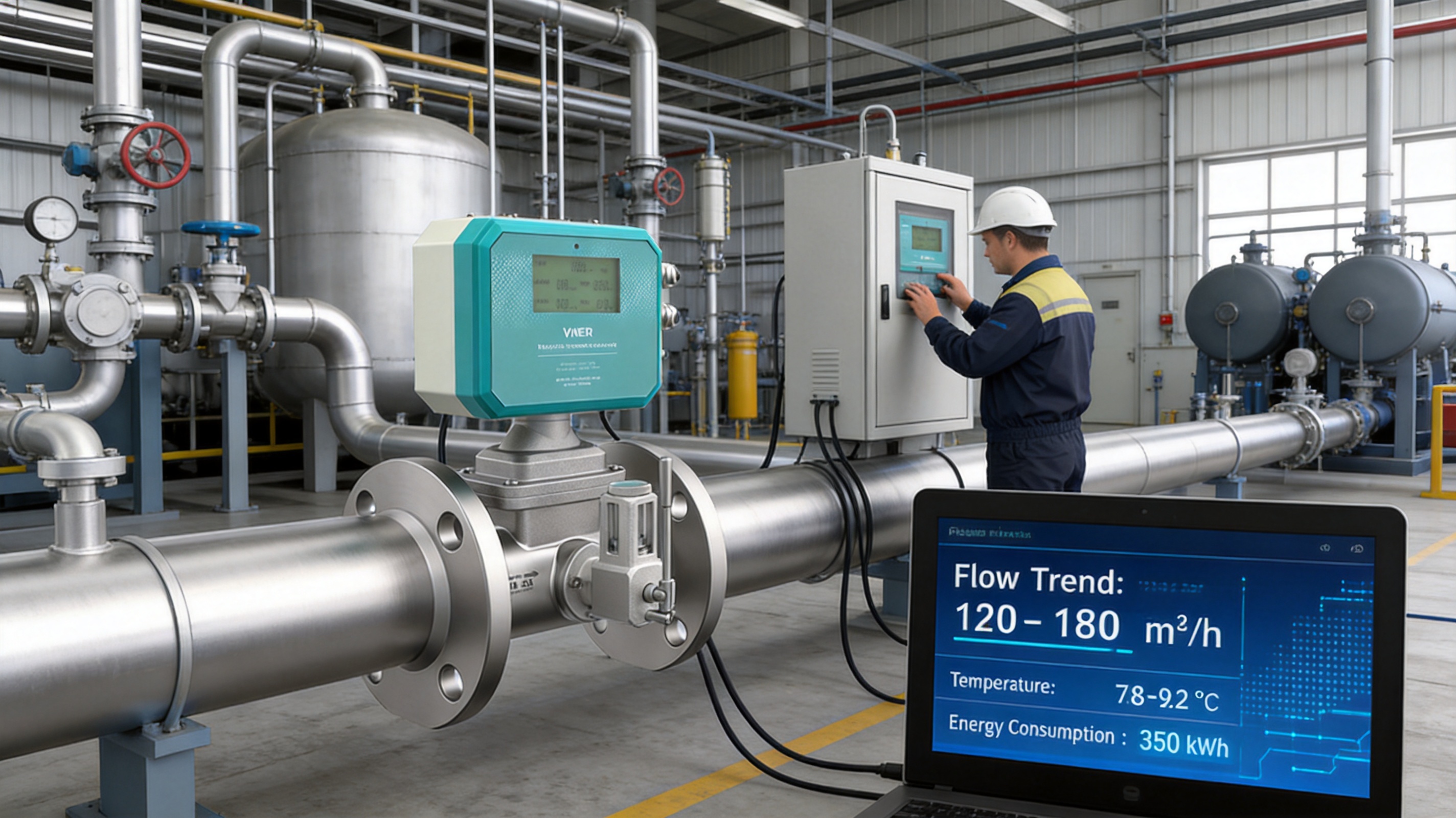
The LWQ Series is suitable for industrial digitalization because it can provide both local indication and network communication. RS485 Modbus allows flow data to move from the field instrument to a supervisory system, programmable controller, data logger, or industrial gateway.
Once connected, users can create dashboards showing real-time consumption, daily totals, peak demand, pressure, temperature, and operating trends. Data can be organized by building, department, process, or production line. This supports energy benchmarking and helps management focus improvement efforts where they will have the greatest effect.
Digital data also supports predictive maintenance. A gradual increase in pressure loss, an unusual change in minimum flow, or an abnormal relationship between gas consumption and production may indicate a problem. Early detection can reduce unplanned downtime and avoid energy waste.
For industrial internet of things applications, the flowmeter can act as a field data source within a larger architecture. A gateway may collect data from multiple meters, transform the values into a common format, and forward them to a local or cloud-based platform. The quality of the final analysis still depends on correct meter sizing, configuration, calibration, and data management.
How to Improve Energy Efficiency with Gas Flow Data
Measurement is the foundation of energy improvement. Without reliable data, users may know that gas consumption is high but not know where or when the waste occurs. The LWQ Series can support a structured energy management program.
First, the facility can establish a baseline by recording gas consumption over representative production periods. The baseline should include production volume, operating hours, ambient conditions, and major equipment status. Next, users can compare gas consumption per product unit, per ton of output, per hour of operation, or per unit of thermal energy produced.
Branch-line meters can identify high-consumption departments. Nighttime or weekend data can reveal leakage and unnecessary operation. Pressure information can help identify whether equipment is operating above the required supply pressure. Temperature and flow data together can support combustion and process analysis.
After an improvement is made, the same measurement system can verify the result. This makes energy projects more accountable and helps organizations prioritize investments based on actual performance rather than estimates.
Technical and Commercial Value
The value of a gas flowmeter is not limited to its initial purchase price. The total cost of ownership includes installation, wiring, commissioning, maintenance, calibration, energy consumption caused by pressure loss, data integration, and downtime risk.
The LWQ Series creates value through integrated functions that can reduce the need for separate pressure and temperature instruments. Its low pressure drop can help limit the energy impact of measurement in compressed-gas systems. Its standard communication options can reduce the effort required to connect the instrument to a monitoring system. Its local display can simplify field inspection and troubleshooting.
For manufacturers and system integrators, consistent production and configurable outputs can make it easier to standardize gas measurement across multiple projects. For end users, repeatable measurement and documented calibration support more reliable operational decisions.
Selection Checklist
Before ordering an LWQ Series Gas Turbine Flowmeter, users should prepare the following information:
Gas name and composition.
Minimum, normal, and maximum flow rate.
Operating pressure and temperature.
Required standard reference conditions.
Pipeline nominal size and connection requirements.
Gas cleanliness, dryness, and possible liquid carryover.
Required accuracy and repeatability.
Available straight pipe length and upstream disturbances.
Required outputs, including pulse, frequency, 4–20 mA, and RS485 Modbus.
Ambient temperature and outdoor installation conditions.
Hazardous-area, enclosure, and electrical requirements.
Calibration certificate and documentation requirements.
When this information is complete, the supplier can recommend an appropriate configuration and identify any installation measures needed to achieve stable performance.
Q&A
What type of gas can the LWQ Series measure?
The LWQ Series is intended for clean and dry gases such as natural gas, nitrogen, hydrogen, oxygen, compressed air, argon, carbon dioxide, fuel gas, instrument air, and suitable process gases. The gas composition, pressure, temperature, cleanliness, and compatibility must be checked before final selection.
How does the meter calculate standard volume flow?
The turbine rotor measures gas velocity and produces a signal proportional to volumetric flow. Integrated pressure and temperature sensors provide operating-condition data. The digital transmitter applies compensation algorithms to calculate standard volume flow according to the configured reference conditions.
Does the flowmeter provide local indication?
Yes. The integrated segment LCD can display real-time flow rate, cumulative flow, pressure, and temperature, depending on the selected configuration. It is designed for readability at ambient temperatures down to minus 30 degrees Celsius.
What communication protocol is available?
RS485 Modbus communication is available for connection to SCADA, DCS, PLC, energy management, and industrial internet of things systems. Output options may also include pulse, frequency, and 4–20 mA signals.
Is the LWQ Series suitable for compressed air?
It can be suitable for clean and dry compressed air when the pressure, flow range, pipe size, temperature, and installation conditions are within the specified limits. Upstream filtration and moisture control are important for protecting the turbine sensing structure.
Can it be used for custody-related measurement?
The LWQ Series is designed for high accuracy and repeatability and can be applied to custody-related or energy-related measurement when the complete system is correctly sized, installed, calibrated, configured, and operated according to the applicable project requirements.
Why is an inlet flow straightener important?
The flow straightener reduces swirl and turbulence and helps create a more uniform velocity profile before the gas reaches the turbine rotor. This improves measurement stability, particularly where upstream piping components disturb the flow.
What happens if the gas contains liquid or solid particles?
Liquid and solid contamination can affect rotor movement, cause wear, increase measurement uncertainty, and reduce service life. The gas should be properly conditioned with suitable filters, separators, dryers, or drainage arrangements before entering the meter.
How should the flowmeter be sized?
Sizing should consider minimum, normal, and maximum flow, operating pressure, temperature, gas composition, pipe size, and acceptable pressure loss. Selecting a meter only by nominal pipe diameter may produce an unsuitable measurement range.
Can the meter be connected to an existing control system?
Yes. The optional pulse, frequency, analog, and RS485 Modbus outputs allow the instrument to be connected to many existing control and data acquisition systems. The signal type and communication parameters should be confirmed before ordering.
What manufacturing capabilities support the product?
The manufacturer operates three plants covering approximately 23,000 square meters, has a technical team of more than 150 people, and maintains in-house calibration and quality processes. Its experience across multiple flowmeter technologies supports engineering-based selection and project customization.
What information should be included in a quotation request?
A quotation request should include gas type, composition, flow range, pressure, temperature, pipe size, connection standard, installation location, output requirements, communication requirements, environmental conditions, and documentation or certification needs.
Conclusion
The LWQ Series Gas Turbine Flowmeter provides a balanced solution for industrial gas measurement. Its turbine sensing principle offers direct and repeatable velocity measurement, while the inlet flow straightener helps control the flow profile before the rotor. Integrated pressure and temperature compensation allows the transmitter to calculate standard volume flow under changing operating conditions.
Its low starting flow, low pressure drop, wide local display range, digital pressure measurement, RS485 Modbus communication, and optional output signals make it suitable for modern industrial monitoring systems. Applications include natural gas distribution, boiler fuel measurement, compressed-air management, chemical process gases, oil and gas utilities, power plants, industrial gases, HVAC systems, metallurgy, textile production, and general manufacturing.
The product is further supported by an engineering-focused manufacturing organization with experience in multiple flow measurement technologies, in-house calibration, certified quality processes, modern production facilities, technical personnel, and international project experience. This combination of product design and manufacturing capability helps customers obtain not only a flowmeter, but also a measurement solution that can be selected, configured, integrated, and maintained for real industrial conditions.
When the gas is clean and dry and the instrument is correctly sized and installed, the LWQ Series can provide the stable flow information needed for process control, energy efficiency, operational analysis, and custody-related measurement.
References
International vocabulary and general principles of measurement terminology.
Industrial flow measurement practices for gas pipelines and process instrumentation.
General guidance for turbine flowmeter installation, calibration, and maintenance.
Modbus application principles for industrial serial communication.
Engineering practices for gas pressure and temperature compensation.
Industrial energy management methods for monitoring fuel gas and compressed-air consumption.
Product: LWQ Series Gas Turbine Flowmeter-副本

We offer all our products and services at international standards.
Products
Contact Information
-

+86-18652789521
+86-18052582295
+86-0514-83633600 / 83633900 -

+86-0514-83633600 / 83633900
-

shawn@vnerflow.com
info@vnerflow.com -

No. 11 Xingye Road, Chenji Town Industrial Park, Yizheng, Yangzhou, China
