
 0
 EN
 English
 عربى
 Español
 русский
If you need any help, please feel free to contact us
Home / Author / Cai Shurong — After-Sales Project Coordinator / Straight-Tube Coriolis Mass Flowmeters for Accurate, Low-Loss Industrial Measurement
Straight-Tube Coriolis Mass Flowmeters for Accurate, Low-Loss Industrial Measurement
Introduction
Accurate flow measurement is essential wherever liquids, gases, liquefied gases, chemicals, fuels, food products, pharmaceutical materials, or utility media must be transferred, dosed, blended, or controlled. In many industrial installations, measuring volume alone is not enough. Temperature, pressure, density, viscosity, and changing process conditions can affect the relationship between volume and actual material quantity. Coriolis mass flow measurement addresses this challenge by measuring mass directly while also providing valuable density and process temperature information.
The KSMF-S Series Coriolis Mass Flowmeter is a straight-tube, dual-measuring-tube instrument developed for demanding industrial applications. It is designed to measure liquids, gases, and liquefied gases with high repeatability and strong resistance to common installation challenges. The meter combines a direct mass measurement principle with density and temperature measurement, calculated volume flow, flexible process connections, and multiple output and communication options.
Compared with many conventional volumetric flowmeters, the KSMF-S provides a broader measurement picture. A turbine meter primarily responds to velocity, an electromagnetic flowmeter requires conductive liquid, and a vortex meter depends on the formation of vortices under appropriate flow conditions. The Coriolis meter, by contrast, measures the effect of mass moving through oscillating tubes. This gives the instrument a strong technical advantage when the process requires mass-based control, density monitoring, precise batching, or improved measurement stability across changing process conditions.
The straight dual-tube construction also provides practical benefits. It reduces flow restriction, supports low pressure loss, simplifies cleaning, and allows installation without mandatory upstream or downstream straight pipe runs. These characteristics make the KSMF-S suitable for compact skids, process lines, dosing systems, transfer stations, loading facilities, and applications where installation space is limited.
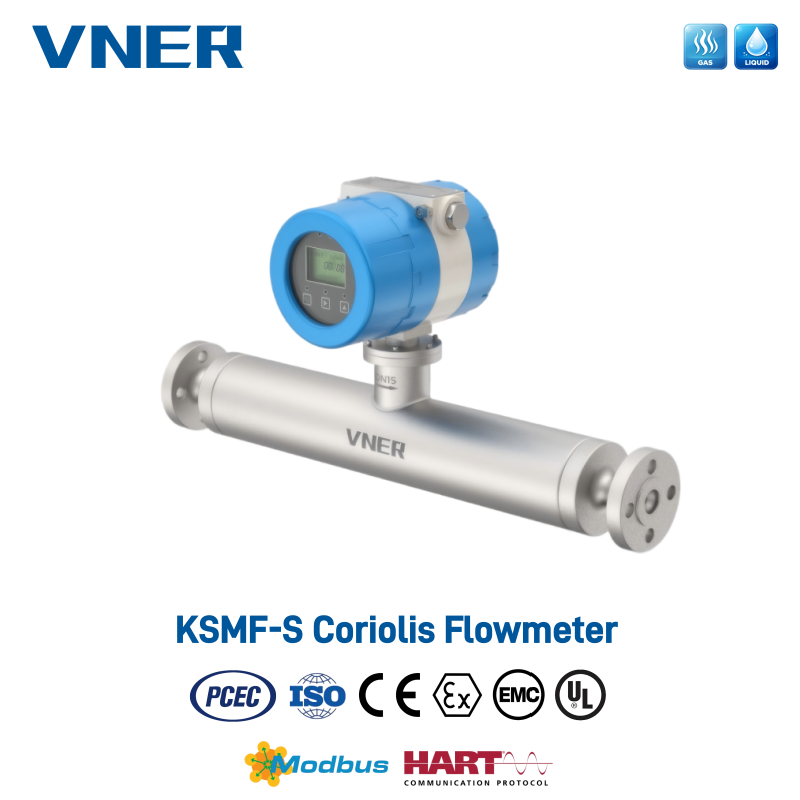
KSMF S-Series Coriolis Mass Flowmeter
Direct Mass Measurement Using the Coriolis Principle
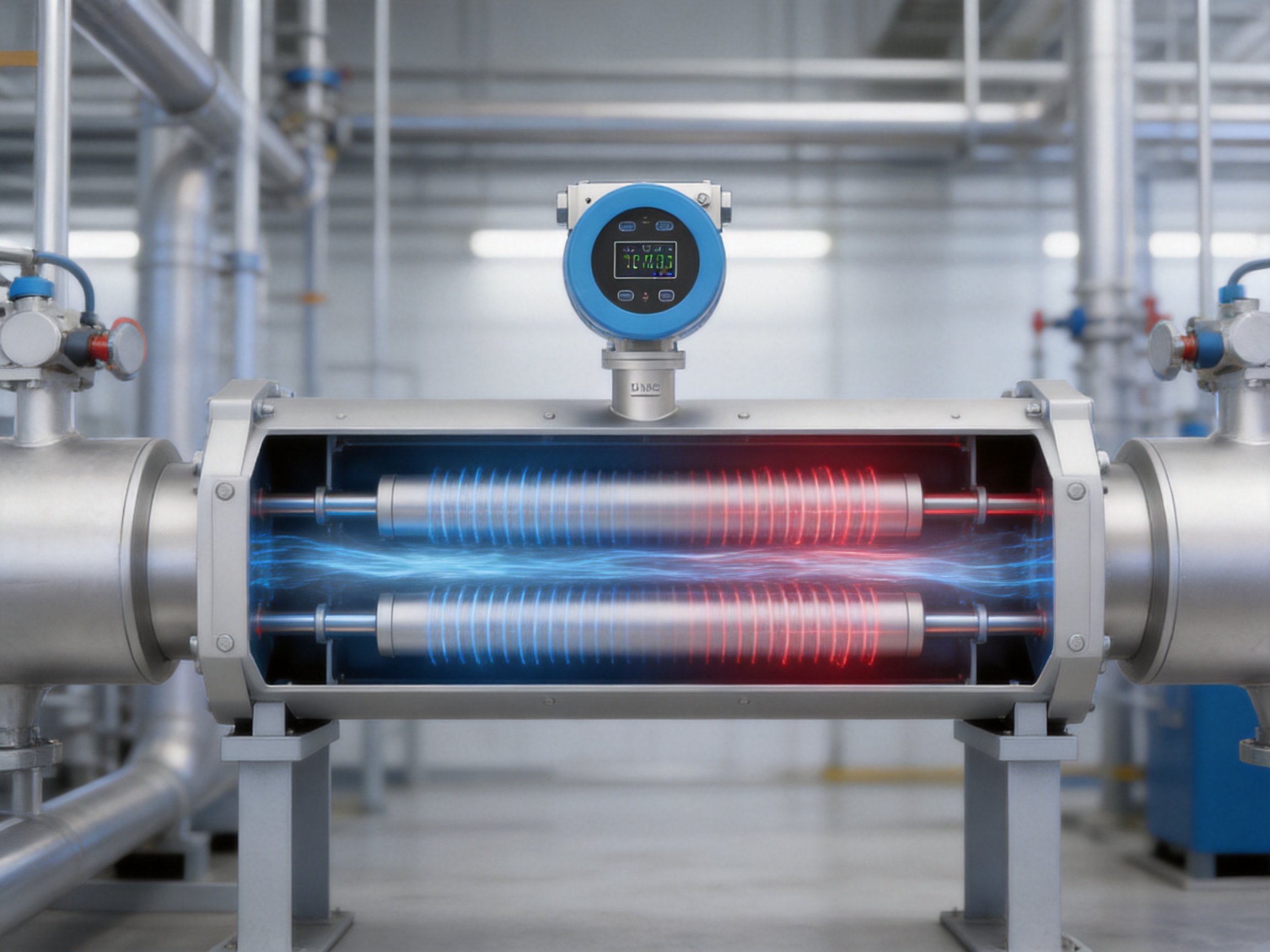
The KSMF-S uses two parallel measuring tubes that are excited into a controlled oscillation by an electromagnetic drive system. When the meter is filled but there is no flow, the inlet and outlet portions of the tubes vibrate in phase. Once fluid begins moving through the tubes, Coriolis forces act on the flowing mass. These forces produce a measurable difference in the phase or time relationship between signals detected at the inlet and outlet sections.
The resulting phase shift is directly related to mass flow. Because the measurement is based on mass rather than only on velocity or volumetric displacement, the meter can provide a direct indication of the quantity of material passing through the line. This reduces dependence on separate temperature and pressure compensation for many ordinary mass measurement tasks.
The oscillation frequency of the tubes is also used to determine fluid density. Density data can be used for process monitoring, concentration estimation, product identification, blend control, and quality assurance. Integrated temperature sensors provide process temperature information, while the transmitter can calculate volume flow from the measured mass flow and density values.
This multi-variable capability is one of the most important distinctions between a Coriolis meter and many traditional flow technologies. Instead of obtaining a single flow value, the user can receive mass flow, density, temperature, and calculated volume flow from one measuring device. Optional transmitter functions may also support concentration, composition, viscosity calculation, bidirectional measurement, and batch control, depending on the selected configuration.
Why Mass Measurement Matters
Volume changes when temperature, pressure, or density changes. For example, a liquid transferred at different temperatures may occupy different volumes even though the actual mass remains the same. Gases are even more sensitive to pressure and temperature variations. If the process requires accurate material accounting, relying only on uncorrected volume can introduce errors.
Mass flow is often the more meaningful process variable for dosing, blending, recipe control, chemical consumption, fuel transfer, and commercial measurement. The KSMF-S measures mass directly, helping reduce the uncertainty associated with converting between volume and mass through assumptions or separate compensation instruments.
Density measurement adds another layer of process information. A change in density may indicate a change in concentration, composition, temperature, product grade, or the presence of an unwanted phase. Operators can therefore use the instrument not only to control flow but also to monitor product consistency and detect process deviations.
Design Advantages of the Straight Dual-Tube Structure
The mechanical configuration of a Coriolis meter has a direct influence on pressure loss, cleanability, installation flexibility, and suitability for different media. The KSMF-S uses a straight dual-tube design rather than a strongly curved flow path. The two parallel tubes provide the required oscillating structure while allowing the fluid to pass through a relatively direct route.
Low Pressure Loss
Pressure loss is a significant consideration in pumping, gas compression, chemical transfer, and energy management. Excessive pressure drop increases pump load, reduces available process pressure, and may force the use of larger equipment. The straight flow path of the KSMF-S is designed to limit flow restriction and maintain a comparatively low pressure drop.
Low pressure loss is particularly valuable in high-viscosity liquid service. Syrups, concentrates, oils, polymer feedstocks, and some chemical products require more energy to move than water-like liquids. A meter with unnecessary internal restriction can reduce system efficiency and create operating problems. The straight-tube approach helps maintain process flow while still providing direct mass measurement.
Low Shear and Product Protection
Some products are sensitive to shear, turbulence, or excessive mechanical stress. Food products, pharmaceutical fluids, biological materials, emulsions, suspensions, and certain polymer solutions may experience quality changes if exposed to unsuitable flow conditions. The straight dual-tube configuration offers a relatively gentle flow path with limited internal obstruction, making it suitable for applications where low shear is important.
The actual suitability of a meter must always be confirmed against the product properties, solids content, viscosity, pressure, temperature, and cleaning requirements. Nevertheless, the low-shear design provides an advantage over technologies that use moving mechanical components or highly restrictive internal structures.
Excellent Cleanability
Cleanability is critical in food processing, beverage production, pharmaceutical manufacturing, biotechnology, and high-purity chemical operations. Residual product can contaminate a subsequent batch, promote microbial growth, create cross-contact risks, or reduce product yield. A straight-tube meter with an appropriate hygienic connection can simplify cleaning and support clean-in-place procedures.
The meter can be supplied with connection types such as Tri-Clamp for applications that require sanitary integration. Smooth internal passages and the absence of conventional mechanical moving parts in the flow path can reduce locations where product may accumulate. The final hygienic design must be selected according to the cleaning agent, cleaning temperature, pressure, surface requirements, and applicable sanitary standard.
No Mandatory Straight-Run Requirement
Many velocity-based flowmeters require a specific length of straight pipe upstream and downstream to stabilize the flow profile. Elbows, valves, reducers, pumps, and tees located too close to the meter can create swirl or asymmetric velocity distribution, affecting accuracy. These requirements can make retrofit projects more expensive and increase the physical size of a skid.
The KSMF-S is largely independent of velocity profile and does not require mandatory upstream or downstream straight pipe runs under normal installation conditions. This makes it easier to position near valves, elbows, pumps, and other equipment. It also helps engineers use available space more efficiently in compact plants and existing facilities.
Although the meter does not need conventional straight-run conditioning, good engineering practice remains important. The piping should support the meter without imposing excessive mechanical stress, the line should remain full where required, and the installation should prevent unwanted vibration, gas entrainment, or severe two-phase conditions.
Performance Range and Configuration Flexibility
The KSMF-S product family covers a broad range of process requirements. Depending on the model, the line diameter range extends from approximately DN8 to DN150, or about one-quarter inch to six inches. The total nominal flow range across the full family extends up to approximately 480,000 kilograms per hour. Actual flow capacity, accuracy, pressure loss, and turndown depend on the selected meter size and the process medium.
Available accuracy classes include approximately plus or minus 0.1 percent, plus or minus 0.15 percent, plus or minus 0.2 percent, and plus or minus 0.5 percent of rate, depending on the application and model. Typical repeatability is approximately 0.05 to 0.1 percent of rate. These performance levels allow the product family to serve both ordinary process control and higher-value transfer or batching duties when the applicable meter configuration and approval requirements are satisfied.
| Parameter | Typical KSMF-S Range or Option | Application Significance |
| Measurement principle | Straight dual-tube Coriolis measurement | Direct mass flow measurement with density and temperature data |
| Measured variables | Mass flow, density, process temperature, calculated volume flow | Supports process control, batching, quality monitoring, and material accounting |
| Accuracy classes | Approximately ±0.1%, ±0.15%, ±0.2%, or ±0.5% of rate | Selected according to model and application requirements |
| Repeatability | Typically 0.05% to 0.1% of rate | Useful for consistent dosing and repeatable production |
| Density range | Approximately 0.3 to 3.0 g/cm³ | Suitable for many industrial liquids and selected process media |
| Line diameters | Approximately DN8 to DN150 | Supports laboratory-scale, skid-mounted, and industrial lines |
| Nominal flow capacity | Up to approximately 480,000 kg/h across the family | Model-specific sizing is required |
| Process temperature | Low, normal, and high-temperature options from approximately -200°C to +300°C | Selection depends on sensor and construction option |
| Pressure rating | Standard rating around 0 to 4 MPa; high-pressure options up to approximately 25 to 40 MPa | Model, connection, and certification dependent |
| Wetted materials | 316L stainless steel; Hastelloy and titanium options | Supports corrosive or demanding media selection |
| Protection | IP67 | Suitable for many outdoor and industrial environments |
| Outputs | 4-20 mA and pulse output | Enables analog control, totalizing, and batch functions |
| Communication | Modbus RS-485 and HART | Integration with PLC, DCS, RTU, and supervisory systems |
Material Selection for Demanding Media
316L stainless steel is specified as the standard wetted material for many KSMF-S configurations. It provides a useful balance of corrosion resistance, mechanical strength, cleanability, and availability for general industrial service. For more aggressive or specialized media, Hastelloy or titanium wetted components may be available.
Material selection should be based on the complete process chemistry, not only the product name. Concentration, temperature, contamination, pressure, chloride content, cleaning chemicals, and exposure time can all affect corrosion behavior. The availability of alternative wetted materials allows the meter to be adapted to more demanding applications than a standard stainless steel configuration would support.
Temperature and Pressure Options
The KSMF-S family includes low-temperature, normal-temperature, and high-temperature options. Depending on the sensor configuration, process temperature ranges may extend from approximately minus 200 degrees Celsius to plus 200 degrees Celsius for low-temperature service, from approximately minus 50 to plus 200 degrees Celsius for normal service, and from approximately minus 50 to plus 300 degrees Celsius for high-temperature service.
Standard pressure ratings are available around 0 to 4 MPa, while high-pressure designs may reach approximately 25 to 40 MPa depending on the selected model. These options allow the meter to serve low-pressure process lines, compressed gas systems, liquefied gas transfer, and selected high-pressure applications.
Pressure and temperature limits must be checked together with the connection standard, flange rating, gasket material, transmitter configuration, and local safety requirements. A properly selected meter protects measurement performance and supports safe operation over the intended process range.
Outputs, Communications, and Control Integration
Modern flow measurement is rarely an isolated activity. The meter must exchange data with programmable logic controllers, distributed control systems, remote terminal units, plant historians, batch systems, energy management platforms, and supervisory software. The KSMF-S supports common industrial interfaces to simplify this integration.
Analog and Pulse Outputs
The 4-20 mA output can be assigned to important process variables such as mass flow, volume flow, density, or temperature, depending on transmitter configuration. The standardized current signal is widely supported by industrial control systems and remains useful for simple, reliable transmission over process plant distances.
Pulse output supports totalizing, batching, and quantity-based control. A pulse can represent a defined quantity of mass or volume, allowing external equipment to calculate totals or stop a batch at a target quantity. This is valuable in filling, loading, additive injection, and material transfer systems.
Digital Communication
Modbus over RS-485 and HART communication provide access to measurement values, configuration parameters, diagnostic information, and status data. Digital communication can reduce commissioning time and improve access to multiple process variables that cannot all be transmitted through a single analog output.
For larger installations, communication with a PLC or DCS can support automatic alarms, recipe management, density-based control, remote verification, and production reporting. Other fieldbus options may be available through the transmitter platform, subject to the selected configuration.
Explosion Protection and Environmental Protection
The meter can be supplied with IP67 protection for resistance against dust and temporary water exposure under applicable test conditions. Ex d explosion-proof options are available for selected models and markets. These features support use in harsh industrial environments and classified areas when the complete installation complies with the relevant certificate and local regulations.
Explosion protection is not limited to the flow sensor. The transmitter, cable glands, wiring, junction boxes, power supply, grounding, and installation methods must all comply with the hazardous-area requirements. The user should select the correct certification before purchase and confirm the permitted gas or dust group, temperature class, ambient range, and installation method.
Advantages Compared with Other Flow Measurement Technologies
Each flowmeter technology has an appropriate operating range, and the best choice depends on the medium and process conditions. The KSMF-S is not intended to replace every other flowmeter. Its advantage is strongest where direct mass measurement, density information, high repeatability, low installation sensitivity, and flexible media handling are important.
Compared with Turbine Flowmeters
Turbine meters use a rotating element whose speed is related to volumetric flow. They can provide good performance in clean, relatively low-viscosity liquids and gases when the flow profile is properly conditioned. However, the rotating mechanical element can be affected by wear, contamination, viscosity changes, and bearing condition. Turbine meters also generally require straight pipe sections and may need compensation when density changes affect the desired mass measurement.
The KSMF-S has no conventional rotating turbine element in the measurement path. It directly measures mass and also provides density and temperature data. This gives it a strong advantage in viscous liquids, variable-composition products, batching applications, and services where long-term repeatability is more important than the lowest initial instrument cost.
Compared with Electromagnetic Flowmeters
Electromagnetic flowmeters are highly effective for conductive liquids and slurries. They offer no moving parts and can provide low pressure loss. Their principal limitation is that the measured liquid must have sufficient electrical conductivity. They cannot normally measure nonconductive hydrocarbons, many oils, gases, liquefied gases, or most dry products.
The KSMF-S can measure a wider range of liquids, gases, and liquefied gases. It is therefore more versatile for mixed industrial plants that handle both conductive and nonconductive media. It also provides density measurement, which is not a standard direct output of most electromagnetic flowmeters.
Compared with Vortex Flowmeters
Vortex meters are useful for steam, gases, and clean liquids across many industrial services. Their measurement depends on the formation and detection of vortices behind a bluff body. They can be cost-effective in utility and general process applications, but performance may be influenced by flow profile, low flow velocity, vibration, and changing fluid conditions.
The KSMF-S measures the Coriolis effect rather than vortex frequency. It can provide mass flow directly and is less dependent on a developed velocity profile. This is useful for compact installations and for applications where the process value of mass flow is greater than volumetric flow.
Compared with Thermal Mass Flowmeters
Thermal mass flowmeters are particularly useful for clean, low-pressure gases and air. They infer mass flow from heat transfer between sensors. Changes in gas composition, humidity, pressure, contamination, or thermal properties can affect measurement behavior if not properly considered.
The KSMF-S uses tube oscillation and Coriolis forces, making it suitable for liquids as well as gases and liquefied gases. It also provides density and temperature measurement. For applications involving changing gas composition, high-value transfer, or liquid-gas flexibility, the Coriolis design can offer a broader measurement solution.
Compared with Positive Displacement Meters
Positive displacement meters can provide accurate volumetric measurement by trapping and counting fixed volumes. They are often effective for clean, viscous liquids, but they contain moving mechanical components and may create higher pressure loss. Maintenance can become more important when the fluid contains solids, abrasive particles, or contaminants.
The KSMF-S avoids a conventional mechanical displacement chamber and measures mass through tube vibration. It can therefore deliver density information and reduce the need for separate conversion from volume to mass. The appropriate choice still depends on viscosity, pressure loss, required approvals, and the economics of the installation.
| Technology | Main Measurement Basis | Typical Strength | Important Limitation |
| KSMF-S Coriolis | Phase shift caused by Coriolis force | Direct mass flow, density, temperature, low installation sensitivity | Higher initial investment and careful sizing required |
| Electromagnetic | Induced voltage in conductive liquid | Low pressure loss and strong slurry capability | Requires conductive liquid; not suitable for gases |
| Turbine | Rotor speed related to velocity | Compact and effective for clean fluids | Moving parts, straight-run requirements, viscosity sensitivity |
| Vortex | Frequency of vortices behind a bluff body | Useful for steam, gases, and general liquids | Can be affected by vibration, low flow, and profile conditions |
| Thermal mass | Heat transfer from heated sensor | Direct gas mass flow with low pressure loss | Gas composition and thermal property sensitivity |
| Positive displacement | Counting trapped fluid volumes | Strong volumetric performance for some viscous liquids | Moving parts and potentially higher pressure loss |
Industrial Applications
Oil and Gas and Petrochemical Operations
Oil and gas facilities handle crude oil, refined products, condensate, LPG, additives, solvents, and process gases. Many of these materials have significant commercial value, and accurate quantity measurement is required for custody transfer support, blending, loading, unloading, inventory control, and process optimization.
The KSMF-S can measure mass flow directly in transfer lines and loading systems. Density data can help identify product changes, monitor blending, and verify that a product remains within an intended specification. High-pressure and explosion-protected configurations may be selected for suitable classified-area installations.
Chemical and Fine Chemical Production
Chemical processes often involve acids, alkalis, solvents, additives, polymer feedstocks, and intermediate products. Dosing accuracy affects reaction yield, product quality, operating cost, and safety. A small error in a high-value additive can affect an entire batch.
The KSMF-S supports precise mass-based dosing and can provide density information at the same time. This is useful in neutralization, formulation, blending, polymer production, solvent transfer, and recipe control. Alternative wetted materials may be considered when stainless steel is not sufficient for the process chemistry.
Food and Beverage Processing
Food and beverage plants commonly process syrups, glucose, dairy products, edible oils, alcohols, concentrates, flavorings, and cleaning solutions. Viscosity may change with temperature and concentration, while hygienic design and cleanability remain essential.
The straight-tube structure provides low pressure loss and low shear for suitable products. Tri-Clamp and other hygienic connection options can support integration into sanitary process lines. Mass flow and density measurement can improve recipe control, filling consistency, transfer accounting, and concentration monitoring.
For products that require cleaning-in-place, the user should specify the cleaning chemicals, temperature, flow velocity, sterilization method, and hygienic requirements during selection. The meter must be installed in a way that avoids product traps and supports complete drainage where necessary.
Pharmaceutical and Biotechnology Applications
Pharmaceutical and biotechnology production demands accurate, repeatable, and traceable measurement. High-purity solvents, active pharmaceutical ingredients, intermediates, buffer solutions, and process fluids may be transferred in relatively small quantities but carry high product value.
The KSMF-S can support critical dosing, filtration transfer, filling, batch control, and process monitoring. Density and temperature values provide additional information for verifying fluid identity and consistency. Hygienic connections and suitable material selections can be specified for applications that require cleanable and corrosion-resistant wetted surfaces.
Validation, calibration, surface finish, documentation, and regulatory compliance must be addressed according to the pharmaceutical process. The meter should be evaluated as part of the complete validated system rather than as an independent component.
Water and Wastewater Treatment
Water treatment facilities use coagulants, flocculants, neutralizers, disinfectants, and conditioning chemicals. Overdosing wastes chemicals and increases operating cost, while underdosing may reduce treatment performance. Accurate flow measurement is therefore essential for chemical feed systems.
The KSMF-S provides mass-based dosing measurement and can help operators track chemical consumption. Compact installation is useful in packaged dosing skids, and digital communication allows the meter to exchange data with plant control systems. The selected material and pressure rating should match the chemical concentration and temperature.
Pulp and Paper Manufacturing
Pulp and paper plants use bleaching agents, sizing chemicals, coating materials, retention aids, and other process additives. Product consistency is often linked to precise chemical addition. Mass flow measurement can improve dosing stability and reduce dependence on density assumptions.
The meter can be used in additive systems where the fluid properties fall within the selected model's application limits. Its ability to handle selected viscous liquids and suspensions can be beneficial, although solids content, particle size, settling behavior, and multiphase conditions must be reviewed during sizing.
Energy and New Energy Applications
Energy-related applications include ethanol, biodiesel, thermal oils, liquefied gases, battery-related fluids, and blended fuels. These services may require accurate transfer measurement, blend ratio control, inventory management, and process monitoring.
The KSMF-S can measure mass flow and density in suitable energy fluids while maintaining a relatively low pressure drop. This combination is valuable in blending systems where both quantity and product composition matter. For hazardous or high-pressure services, the meter must be selected with the appropriate enclosure, materials, connection, and certification.
Manufacturing Strength and Engineering Support
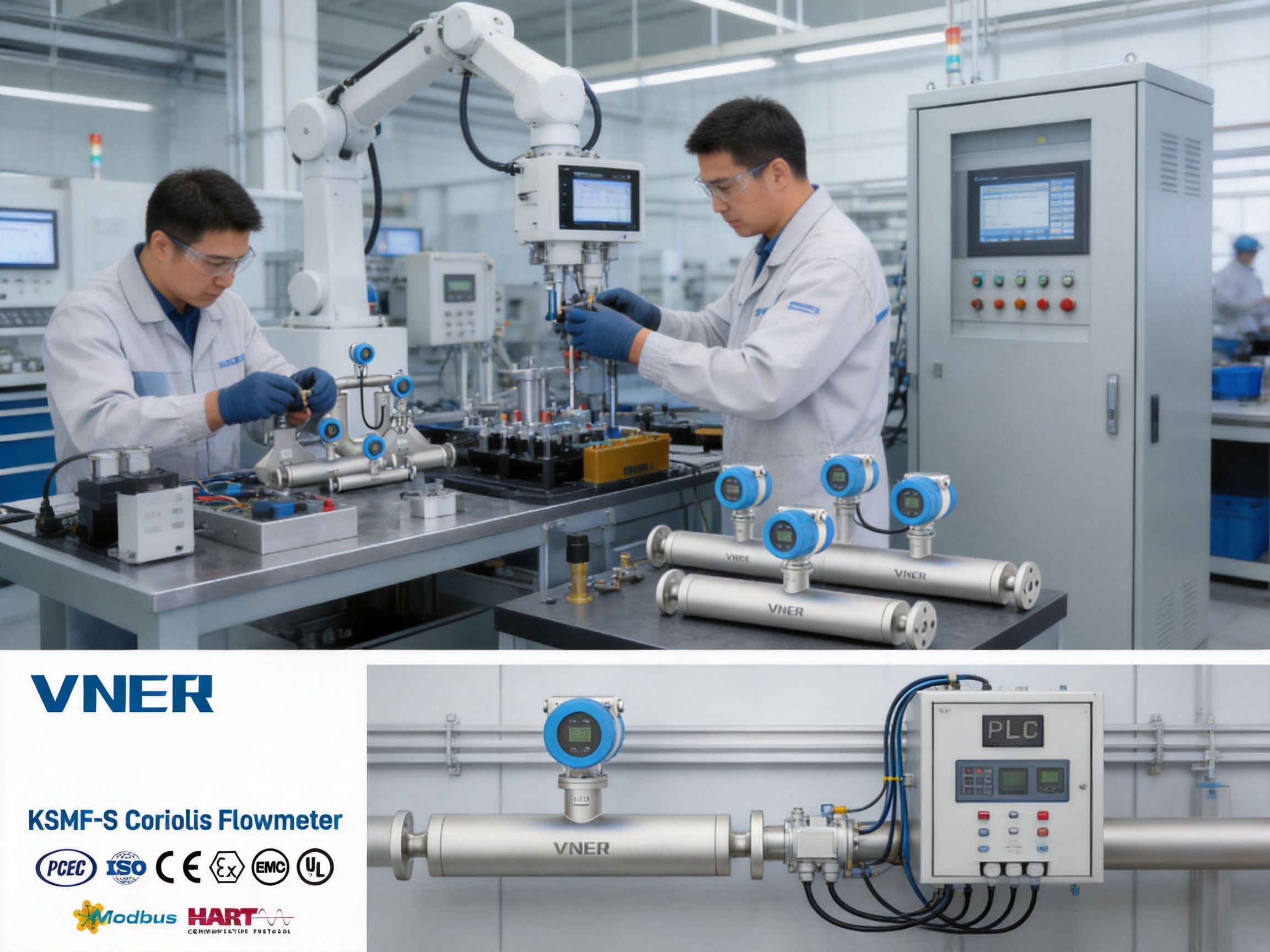
Product performance depends not only on the measurement principle but also on the manufacturing system behind the instrument. A Coriolis flowmeter contains precision mechanical structures, sensors, drive components, signal processing electronics, pressure-retaining parts, and calibration requirements. Consistency in production is essential because small mechanical or electronic variations can affect zero stability, sensitivity, and long-term reliability.
Jiangsu VNER Electronic Technology Co., Ltd. is a specialized industrial flowmeter manufacturer based in Yangzhou, China. Since 2011, the company has focused on flow measurement products covering electromagnetic, Coriolis, vortex, swirl, turbine, thermal mass, ultrasonic, and rotameter technologies. This broad product experience supports practical technology selection rather than forcing every application into one flowmeter principle.
Facilities and Technical Personnel
The company operates modern facilities totaling approximately 23,000 square meters across three plants and has a technical team of more than 150 people. A manufacturing base of this scale can support coordinated activities including product development, mechanical production, electronics assembly, calibration, inspection, documentation, and customer service.
The combination of product engineering and manufacturing resources is particularly important for Coriolis instruments. Straight measuring tubes must be manufactured and assembled with controlled geometry. Sensor positioning, drive response, tube balance, housing construction, welding, sealing, and transmitter configuration all influence the final product. A coordinated production system helps maintain consistency between design intent and delivered instruments.
Calibration and Quality Control
In-house calibration is a central strength for a flowmeter manufacturer. Calibration verifies the relationship between the actual reference flow and the instrument output. It also provides information needed for adjustment, accuracy confirmation, repeatability assessment, and production traceability.
For the KSMF-S, calibration and verification may involve mass flow, density, temperature, output signals, communication functions, zero stability, and alarm behavior. The exact procedure depends on model, range, application, and customer requirements. Maintaining internal calibration capability can shorten feedback cycles between production and engineering while improving control over product consistency.
Certified quality processes help establish repeatable procedures for incoming materials, machining, welding, assembly, electronics, pressure testing, calibration, final inspection, packaging, and after-sales support. Traceability is important for industrial users because flowmeters may be installed in regulated, safety-critical, or commercially sensitive systems.
Engineering-Driven Sizing and Selection
Coriolis flowmeters should not be selected by line size alone. A meter that is too large may operate at low velocities and reduced signal stability, while a meter that is too small may create unnecessary pressure loss or exceed its recommended capacity. The process medium, normal flow, maximum flow, minimum flow, density, viscosity, temperature, pressure, gas content, solids content, and required accuracy must all be considered.
VNER supports engineering-driven sizing and selection. This approach helps customers evaluate the trade-off between turndown, pressure drop, accuracy, process stability, and cost. The recommended sizing range is often within approximately 1:20 for best stability, while turndown up to approximately 1:50 may be possible depending on the application and model.
Good sizing also considers the operating phase. A liquid containing entrained gas may produce unstable readings even when the nominal flow rate is within range. A gas-liquid mixture may require specialized evaluation. Similarly, a high-viscosity product may require a larger or differently configured meter to keep pressure loss within an acceptable limit.
Increasingly Automated Manufacturing
Automation can improve repeatability in assembly, inspection, testing, and data collection. Automated or semi-automated processes help reduce variation in operations such as component positioning, fastening, electrical testing, and production records. Automation does not replace engineering judgment, but it provides a more controlled manufacturing environment.
For a precision instrument, manufacturing data can support root-cause analysis and continuous improvement. When calibration results, inspection records, component information, and final test data are connected, engineering teams can identify trends before they become widespread problems. This supports product consistency and long-term reliability.
Installation and Application Guidance
Correct installation is essential for achieving the performance expected from any Coriolis meter. The KSMF-S does not require conventional upstream or downstream straight pipe runs, but the pipework must still be designed carefully.
Keeping the Meter Full
Liquid measurement is generally most stable when the meter tubes remain completely filled. The meter should be positioned to reduce the risk of gas pockets, flashing, or unintended draining. In some systems, installation in a vertical upward-flow section can help maintain a full tube, while horizontal installation may be appropriate when the piping arrangement prevents gas accumulation.
Managing Gas Entrapment
Entrained gas can affect Coriolis measurement stability because gas and liquid respond differently to tube vibration. Pumps, valves, leaks on the suction side, inadequate back pressure, and sudden pressure drops can introduce gas into a liquid line. Engineers should review pump selection, valve location, venting, pressure margin, and line routing.
Supporting the Piping
The meter should not be used as a structural support for unsupported pipework. Pipe supports should be installed near the meter while avoiding excessive external stress. Vibration from pumps, compressors, or reciprocating equipment should be controlled because mechanical vibration can interfere with the sensor signal.
Grounding and Electrical Installation
Electrical wiring should follow the transmitter instructions and local installation standards. Correct grounding, shielding, cable routing, power supply selection, and separation from high-power equipment help protect the signal from interference. Hazardous-area installations require compatible glands, barriers where applicable, approved enclosures, and correct grounding practices.
Choosing Process Connections
Flanged, threaded, Tri-Clamp, and fitting-type connections are available for different applications. Flanges are common in industrial process and high-pressure lines. Threaded connections may suit smaller meters and compact equipment. Tri-Clamp connections are common in hygienic industries. The connection material, pressure class, gasket type, and sealing method must be compatible with the process.
Maintenance, Verification, and Lifecycle Value
The KSMF-S has no conventional rotor or mechanical displacement chamber in the flow path, which can reduce wear-related maintenance compared with some mechanical meters. Nevertheless, the instrument should be included in a planned maintenance and verification program.
Routine checks may include inspection of wiring, enclosure condition, process connections, grounding, zero stability, output signals, communication status, and alarm records. The meter should be protected from excessive external vibration, water ingress beyond its rated protection, unauthorized configuration changes, and process conditions outside the specified range.
Zero verification is especially important when the meter is used for precise dosing or commercial measurement. The meter should be filled with the intended medium or a suitable stable liquid, with flow fully stopped and the installation in a known condition. The appropriate zeroing procedure must follow the instrument documentation and process safety requirements.
Calibration intervals depend on accuracy requirements, regulatory obligations, process criticality, operating conditions, and the consequences of measurement error. High-value transfer, pharmaceutical manufacturing, and critical chemical dosing may require more frequent verification than general utility monitoring.
Lifecycle value should be considered rather than only purchase price. Direct mass measurement can reduce the need for additional compensation instruments. Low pressure loss may reduce pumping or compression energy. Density data can provide process insight without a separate densitometer. No mandatory straight runs can lower installation and piping costs. Reliable digital communication can simplify integration and reduce manual data collection.
Selection Checklist
Before ordering a KSMF-S meter, the user should prepare a complete process data sheet. The following information is particularly important.
Process medium and chemical composition.
Minimum, normal, and maximum mass or volume flow.
Minimum, normal, and maximum process pressure.
Minimum, normal, and maximum process temperature.
Expected density and viscosity range.
Gas content, solids content, suspension behavior, or multiphase conditions.
Required accuracy, repeatability, turndown, and totalizing performance.
Required line size and available installation space.
Connection type and applicable DIN, ANSI, ASME, JIS, hygienic, or other standard.
Wetted material and gasket compatibility.
Power supply, output signals, and communication protocol.
Ambient temperature, ingress protection, and hazardous-area classification.
Required certificates, inspection documents, calibration records, and approvals.
Providing complete information allows the manufacturer to verify pressure loss, meter capacity, material compatibility, output configuration, and certification requirements. It also reduces the risk of selecting a meter that is technically functional but poorly matched to the actual operating range.
Questions and Answers
What does the KSMF-S measure?
The meter measures mass flow directly and can also measure fluid density and process temperature. The transmitter can calculate volume flow from mass flow and density. Depending on the configuration, optional concentration, composition, viscosity, bidirectional, and batch functions may be available.
Can the meter measure both liquids and gases?
Yes. The product family is intended for liquids, gases, and liquefied gases. The final model must be selected according to the medium, density, pressure, temperature, flow range, and required accuracy. Gas applications often require careful sizing because gas density is lower and operating conditions may vary significantly.
Does the meter require straight pipe runs?
The straight dual-tube design does not require mandatory upstream or downstream straight pipe runs under normal installation conditions. However, the piping must still be properly supported, filled, vented, and protected from excessive vibration and mechanical stress.
Is the KSMF-S suitable for viscous liquids?
Yes, it can be used for selected high-viscosity liquids, including syrups, concentrates, oils, additives, and polymer-related fluids. The actual suitability depends on viscosity, flow rate, pressure drop, temperature, solids content, and the selected meter size.
Can it measure density as well as flow?
Yes. The oscillation frequency of the measuring tubes is used to determine density. Density data can support concentration monitoring, product identification, blend control, and quality assurance.
What is the standard wetted material?
316L stainless steel is the standard wetted material for many configurations. Hastelloy and titanium options may be available for corrosive or demanding media. Material compatibility must be checked against the complete process chemistry and temperature range.
What outputs are available?
Common outputs include 4-20 mA and pulse output. Modbus RS-485 and HART communication are also available. The outputs can be assigned to mass flow, volume flow, density, temperature, or other supported variables according to the transmitter configuration.
Can the meter be used in hazardous areas?
Ex d explosion-proof options are available for selected models. The complete installation must meet the applicable hazardous-area certificate and local regulations. The user should confirm the required gas group, temperature class, ambient range, cable entry, and installation method before ordering.
What accuracy can be expected?
Depending on the model and application, accuracy classes of approximately ±0.1%, ±0.15%, ±0.2%, or ±0.5% of rate may be available. Actual performance depends on meter size, medium, flow range, installation, operating stability, and calibration requirements.
How should the meter be sized?
Sizing should be based on minimum, normal, and maximum flow, density, viscosity, pressure, temperature, allowable pressure loss, and required turndown. Selecting a meter only by matching the pipe diameter may result in poor performance. Engineering review is recommended for demanding or commercial applications.
Is the meter suitable for food and pharmaceutical service?
Suitable configurations can be supplied with hygienic connections and materials for food, beverage, pharmaceutical, and high-purity applications. The user should specify cleaning, sterilization, surface, documentation, and validation requirements before selection.
What is the role of the manufacturer in application support?
The manufacturer can assist with model selection, material review, pressure-loss evaluation, output configuration, communication requirements, certification selection, and calibration documentation. Complete process information improves the quality of the recommendation and reduces commissioning risk.
Conclusion
The KSMF-S Series Coriolis Mass Flowmeter is designed for industrial users who need more than a basic volumetric flow indication. Its straight dual-tube Coriolis principle provides direct mass flow measurement together with density and process temperature data. The result is a flexible instrument for dosing, batching, transfer, blending, quality monitoring, and process control.
Its key advantages include low pressure loss, low shear, excellent cleanability, no mandatory straight pipe runs, broad media compatibility, flexible materials, multiple process connections, and integration with analog, pulse, Modbus, and HART systems. Compared with many turbine, vortex, electromagnetic, thermal, and mechanical technologies, the KSMF-S offers particular value when direct mass measurement and multi-variable process information are important.
The strength of the product is also supported by the manufacturing and engineering capabilities behind it. Jiangsu VNER Electronic Technology Co., Ltd. combines long-term flow measurement experience, modern facilities across three plants, a technical team of more than 150 people, in-house calibration, certified quality processes, engineering-driven selection, and increasingly automated production. These capabilities help support stable manufacturing, product traceability, and practical application support.
For industrial plants seeking accurate and dependable flow measurement across liquids, gases, liquefied gases, viscous products, chemicals, fuels, food products, pharmaceutical fluids, and utility services, the KSMF-S provides a strong combination of measurement performance, installation flexibility, and lifecycle value. Correct sizing, material selection, installation, calibration, and certification remain essential to achieving the best result in every application.
References
1. Coriolis Flow Measurement Principles, industrial instrumentation and mass flow measurement references.
2. International guidance for flow measurement, density measurement, calibration, and process instrumentation.
3. Product information and technical data for the KSMF-S Series Straight-Tube Coriolis Mass Flowmeter.
4. General engineering practices for flowmeter installation, grounding, piping support, and process measurement reliability.
5. Industrial guidance for hazardous-area equipment, explosion protection, ingress protection, and instrumentation integration.
6. Hygienic process design principles for food, beverage, pharmaceutical, and high-purity fluid systems.
Product: KSMF S-Series Coriolis Mass Flowmeter



Products
Contact Information
-

+86 18652789521
+86-0514-83633600 / 83633900 -

+86-0514-83633600 / 83633900
-

s@vner.com.cn
katherine@vner.com.cn -

No. 11 Xingye Road, Chenji Town Industrial Park, Yizheng, Yangzhou, China
