
 0
0
 EN
EN  English
 عربى
عربى Español
 русский
If you need any help, please feel free to contact us
Home / Author / Ding Yuchun — Overseas After-Sales Support Engineer / Economy General-Purpose Electromagnetic Flowmeter for Reliable Industrial Measurement
Economy General-Purpose Electromagnetic Flowmeter for Reliable Industrial Measurement
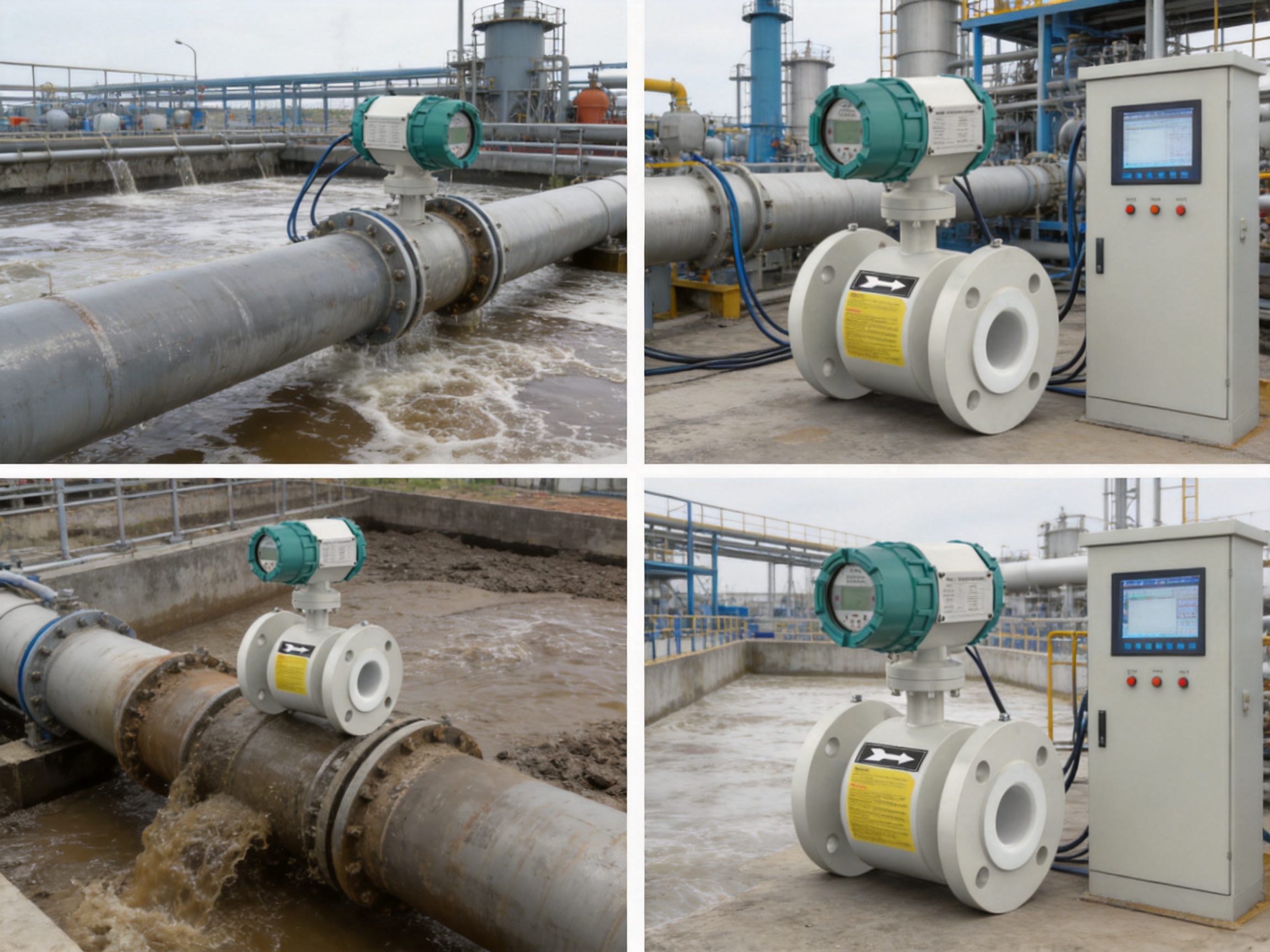
Accurate flow measurement is essential for controlling production, reducing operating costs, protecting equipment and maintaining regulatory compliance. In water treatment, chemical processing, mining, pulp and paper production, utilities and general industrial services, the selected flowmeter must provide dependable readings under changing flow conditions without creating unnecessary restrictions in the pipeline. The LDG Economy General-Purpose Electromagnetic Flowmeter is designed for these everyday measurement requirements.
The LDG Series is a cost-effective magmeter for electrically conductive liquids with a minimum conductivity of approximately 5 μS/cm. It is suitable for clean water, wastewater, acids, alkalis, cooling water, process liquids, slurries, suspensions and pulp. Its full-bore construction has no moving parts and no internal obstruction, allowing the instrument to measure flow with virtually no additional pressure loss. This design also reduces mechanical wear and makes the meter suitable for demanding services where conventional mechanical flowmeters may require frequent maintenance.
The flowmeter is available in a broad range of nominal diameters, lining materials, electrode materials, process connections, power supplies, communication interfaces and protection levels. This flexibility allows users to configure the instrument for standard utility duties as well as more challenging process applications. Depending on the selected version, the LDG can be supplied with an integral or remote transmitter, multiple output options, digital communication and protection for outdoor or hazardous-area installation.
Manufactured by Jiangsu Vner Electronic Technology Co., Ltd., the LDG reflects an engineering approach that combines practical product positioning with digital signal processing, in-house calibration, structured quality control and application-specific selection support. The result is a general-purpose electromagnetic flowmeter intended to deliver stable performance without the cost and complexity associated with highly specialized instruments.
What Is an Electromagnetic Flowmeter?
An electromagnetic flowmeter, also called a magnetic flowmeter or magmeter, measures the volumetric flow rate of conductive liquids by applying Faraday’s law of electromagnetic induction. When a conductive liquid moves through a magnetic field, a voltage is induced in the liquid. This voltage is detected by electrodes installed in the measuring tube. Because the induced voltage is proportional to the average velocity of the liquid, the transmitter can calculate flow velocity and volumetric flow rate.
The measuring tube is lined with an electrically insulating material. Coils positioned around the tube generate the magnetic field, while electrodes mounted opposite one another sense the induced voltage. The transmitter processes the low-level electrode signal, compensates for electrical interference and converts the result into a useful flow indication or control signal.
Unlike a turbine meter, an electromagnetic flowmeter does not require a rotor to rotate in the liquid. Unlike a vortex meter, it does not depend on the formation of vortices behind a bluff body. Unlike a differential-pressure meter, it does not require a permanent restriction that causes significant pressure loss. These characteristics make electromagnetic measurement especially useful for liquids containing suspended solids, fibers or abrasive particles.
The LDG operates only with electrically conductive media. Water, wastewater, many chemical solutions, acids, alkalis, slurries and pulp products normally meet the conductivity requirement. Nonconductive liquids such as many hydrocarbon fuels, oils and solvents generally require a different measurement technology unless their conductivity has been increased through formulation or additives.
LDG Series Product Positioning
The LDG is positioned as an economy, general-purpose electromagnetic flowmeter for utilities and standard process services. “Economy” refers to a practical balance between price, functionality and long-term operating value. It does not mean that the instrument is limited to simple applications. The meter incorporates digital processing, pulse excitation, configurable ranges, industrial outputs and multiple communication options.
Its broad application range makes it suitable for companies that need consistent measurement across many pipelines and facilities. A water treatment plant, for example, may use different diameters and lining materials while maintaining a familiar transmitter interface and operating philosophy. An industrial manufacturer may apply the same general product family to cooling water, process water, chemical transfer and wastewater lines.
The product consists of a flow sensor and a transmitter. The sensor contains the measuring tube, liner, excitation coils, electrodes and process connections. The transmitter supplies the excitation current, receives the electrode signal, performs digital processing and provides local indication and remote outputs. Depending on the configuration, the transmitter can be installed directly on the sensor or mounted remotely for easier access, lower ambient temperature exposure or improved visibility.
Key Technical Specifications
| Item | Specification |
|---|---|
| Measuring principle | Electromagnetic measurement based on Faraday’s law |
| Minimum liquid conductivity | Approximately 5 μS/cm |
| Accuracy | ±0.5% of rate |
| Repeatability | ≤0.15% of rate |
| Velocity range | 0.1 to 10 m/s |
| Nominal diameter | DN2.5 to DN2000, approximately 1/8 to 80 inches |
| Process connections | Flanged, hygienic or insertion type depending on version |
| Connection standards | DIN, ANSI/ASME and JIS |
| Medium temperature | -20 to +180 °C, configuration-dependent |
| Nominal pressure | PN10 to PN40; ANSI 150 or 300; JIS 10K or 20K |
| Body materials | Carbon steel, 304 stainless steel or 316 stainless steel |
| Lining materials | CR, polyurethane, PTFE or PFA |
| Electrode materials | 316 stainless steel, titanium, tantalum, Hastelloy or platinum-iridium |
| Protection class | IP65, IP67 or IP68 depending on model |
| Power supply | 24 V DC, 110 to 240 V AC or 3.6 V built-in battery version |
| Outputs | 4-20 mA and pulse output |
| Communication | RS-485 Modbus, Profibus, HART or selected wireless data options |
| Electrical interface | M20×1.5 or 1/2-inch NPT |
Actual performance depends on the selected diameter, lining, electrode material, process conditions, installation quality and calibration configuration. Proper sizing is particularly important because electromagnetic meters require a suitable liquid velocity to produce a strong and stable measurement signal. The stated velocity range provides flexibility for many industrial applications, but the final selection should consider minimum flow, normal flow, maximum flow, pipe size and potential future operating changes.
Measurement Principle and Digital Signal Processing
The LDG transmitter applies a controlled excitation signal to the magnetic coils. When conductive liquid moves through the energized measuring tube, the electrodes detect an induced voltage. This signal is typically very small and can be influenced by electrical noise, grounding conditions, pump vibration, nearby drives and changing process conditions. The transmitter therefore plays a critical role in achieving stable measurement.
The LDG uses fully digital signal processing and pulse excitation. Digital processing helps separate the useful flow signal from interference and supports stable zero-point behavior. Pulse excitation provides controlled magnetic-field operation while supporting low power consumption and repeatable signal acquisition. Together, these features improve the reliability of measurement in ordinary industrial environments.
The transmitter converts the processed signal into volumetric flow. It can display instantaneous flow, accumulated total, flow direction and diagnostic information through a back-lit LCD and menu-based human-machine interface. The range can be configured to match the process requirements, and the outputs can be connected to a programmable logic controller, distributed control system, batching system, totalizer or supervisory control platform.
Good signal processing is particularly important in wastewater, slurry and chemical applications. These services can include bubbles, suspended solids, variable conductivity and electrical interference from pumps or variable-frequency drives. Although no flowmeter can eliminate the need for correct installation, the LDG’s digital architecture provides a strong foundation for stable operation when the sensor, grounding and pipeline conditions are properly selected.
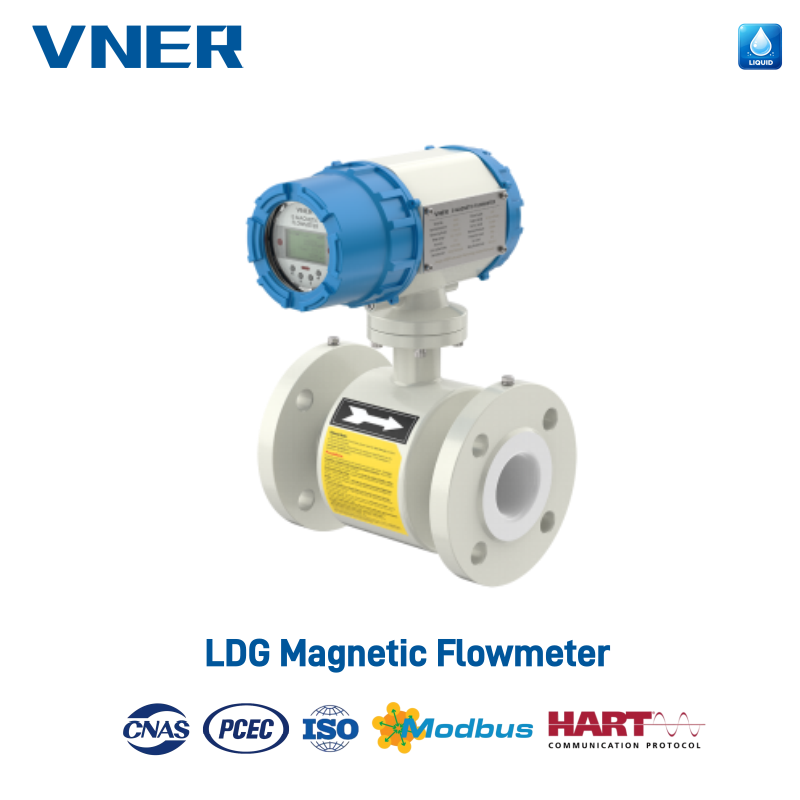
LDG Economy General-Purpose Electromagnetic Flowmeter
Full-Bore Construction with Minimal Pressure Loss
One of the most important advantages of the LDG is its unobstructed full-bore measuring tube. There are no rotating blades, throttling elements, bluff bodies or internal mechanical components projecting into the flow path. The liquid passes through the meter with virtually no additional pressure loss compared with an equivalent length of pipe.
This characteristic provides several practical benefits. Pumps do not need to overcome a significant permanent restriction, which can help reduce energy consumption over the operating life of the system. The absence of internal moving parts also reduces the risk of mechanical failure caused by wear, bearing damage or deposits on a rotor. In systems carrying suspended solids, the open passage reduces the likelihood of blockage or flow disturbance caused by internal components.
For large-diameter pipelines, pressure loss can be especially important because even a small permanent restriction may lead to considerable energy expenditure over many years. The LDG can therefore provide a favorable lifecycle value in municipal water mains, cooling-water networks, raw-water systems and slurry pipelines.
The full-bore design also makes the instrument easier to understand from a maintenance perspective. There are no internal gears to lubricate, no rotor to replace and no mechanical sensing element that must be removed for routine servicing. Maintenance attention can instead focus on electrical connections, grounding, process compatibility, installation condition and periodic verification.
Advantages Compared with Other Flowmeter Technologies
Compared with Mechanical Turbine Meters
Turbine flowmeters use a rotor that turns in response to liquid movement. They can provide good accuracy in clean, compatible liquids, but the rotor and bearings may be affected by suspended solids, fibers, deposits or abrasive particles. Mechanical wear can change the calibration over time, and small internal passages can become vulnerable to fouling.
The LDG has no moving parts and is therefore better suited to wastewater, pulp, suspensions and many slurries. It does not require the liquid to rotate a mechanical element, and it can continue operating without the wear mechanisms associated with a rotor. For conductive process liquids with solids or contamination, this can reduce service interruptions and maintenance requirements.
Compared with Vortex Flowmeters
Vortex meters measure the frequency of vortices generated by an obstruction in the flow. They are widely used for gases, steam and some clean liquids, but their performance can be affected by low flow velocity, vibration, upstream disturbances and changes in fluid conditions. They also introduce a flow obstruction into the pipe.
The LDG is designed specifically for conductive liquids and does not require a bluff body. It is generally more suitable for dirty liquids, slurries and fluids with suspended particles. It is not a replacement for a vortex meter in gas or steam service, but for conductive liquid applications it offers a more appropriate measurement principle and an unobstructed flow path.
Compared with Differential-Pressure Meters
Orifice plates, venturi tubes and other differential-pressure devices measure flow through a pressure difference created by a restriction or shaped passage. These systems can be robust, but permanent pressure loss, impulse-line maintenance and density-related compensation may be important considerations.
The LDG directly measures liquid velocity through electromagnetic induction. It does not need impulse tubing and does not create a significant permanent pressure drop. This can simplify installation and reduce the energy penalty associated with throttling devices, particularly in high-flow water systems.
Compared with Ultrasonic Flowmeters
Ultrasonic flowmeters can measure a broad range of liquids and may be installed externally in clamp-on form. However, their performance can depend on pipe-wall condition, acoustic coupling, liquid clarity, gas content, flow profile and installation location. Some applications are highly suitable for ultrasonic measurement, while others present challenges.
The LDG provides an integrated, in-line measurement solution with direct electrode sensing. For conductive liquids in permanent process lines, its full-bore design and fixed sensor geometry can provide a predictable installation arrangement. The best choice depends on the application, but the LDG is particularly attractive where a permanent in-line meter is preferred and the liquid conductivity requirement is satisfied.
Materials and Configuration Flexibility
Industrial liquids differ greatly in chemical composition, temperature, solids content and abrasion potential. For this reason, the LDG can be configured with different body, lining and electrode materials. Material selection should always be based on the actual liquid composition, concentration, temperature, pressure and cleaning conditions.
Body Materials
Carbon steel provides a practical solution for many standard industrial and utility installations when external environmental conditions are controlled and the process connection does not require stainless steel. Stainless steel bodies, including 304 and 316 grades, can be selected where improved corrosion resistance, hygienic appearance or more demanding environmental performance is required.
Lining Materials
Rubber or CR lining is commonly considered for water, wastewater and certain abrasive services. Polyurethane lining is useful in applications where abrasion resistance is important, such as mining slurries and mineral-processing fluids. PTFE and PFA linings provide higher chemical resistance for many acids, alkalis and aggressive process liquids, while their temperature and mechanical limits must be checked during selection.
Electrode Materials
316 stainless-steel electrodes are widely used for general water and compatible industrial liquids. Titanium can be suitable for selected chemical and water applications. Tantalum, Hastelloy and platinum-iridium electrodes are available for more demanding chemical compatibility requirements. The correct electrode material depends on the chemical composition, concentration, temperature and electrochemical behavior of the medium.
Material compatibility is not determined by the product name alone. A chemical described simply as an acid or alkali may have very different effects depending on concentration, temperature and impurities. For chemical dosing and transfer lines, users should provide a complete process description so the final liner and electrode selection can be verified by qualified technical personnel.
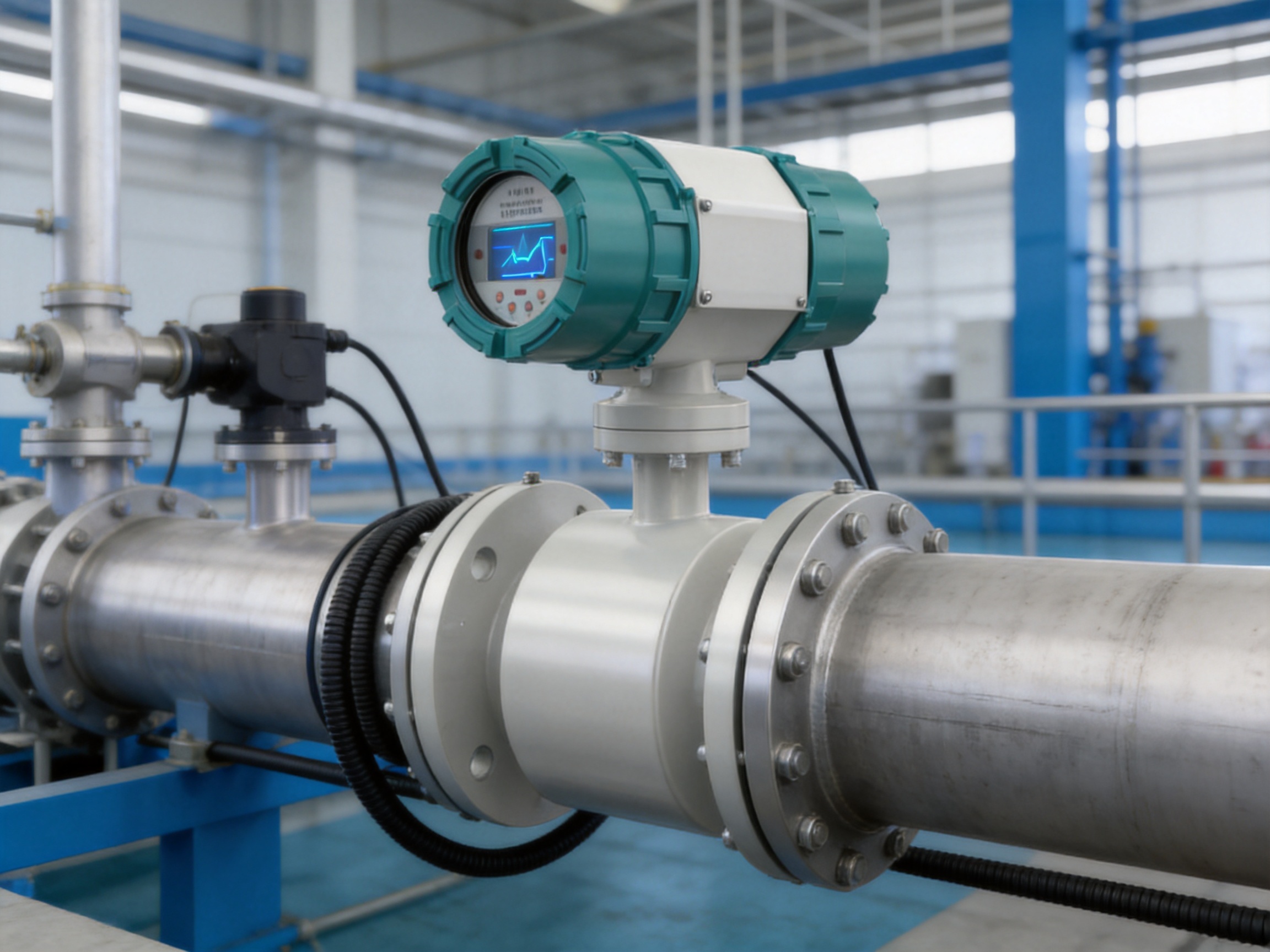
Process Connections, Pressure Ratings and Installation Options
The LDG Series supports flanged, hygienic and insertion-type configurations depending on the model and application. DIN, ANSI/ASME and JIS connection standards allow the meter to be incorporated into different international piping systems. Pressure ratings can include PN10 to PN40, ANSI Class 150 or 300 and JIS 10K or 20K, subject to diameter, flange design, liner and temperature.
Flanged meters are commonly selected for permanent industrial pipelines because they provide a robust and serviceable connection. Hygienic versions may be considered for suitable food, beverage or clean-process utility duties where the process connection and wetted materials meet the required sanitation standards. Insertion versions can be useful for large pipelines or retrofit applications where removing a section of pipe would be difficult.
The nominal diameter range extends from DN2.5 to DN2000. This allows the product family to cover small process lines as well as major water and wastewater pipelines. Correct sizing should consider the normal flow velocity rather than simply matching the meter diameter to the pipe diameter. In some systems, a reduced meter size can improve signal strength and maintain a suitable velocity, provided that the associated reducers, straight lengths and pressure conditions are acceptable.
The sensor should be installed in a location where the measuring tube remains full during operation. It should not normally be mounted at the highest point of a pipeline where air can accumulate or on a downward open discharge line where the pipe may run partially empty. Adequate upstream and downstream straight pipe, proper grounding and avoidance of excessive vibration are also important for reliable performance.
Outputs, Communication and Control-System Integration
The standard output configuration includes a 4-20 mA signal and pulse output. The analog signal can represent instantaneous flow and can be connected to a PLC, DCS, recorder, controller or remote indicator. The pulse output can be used for totalization, batching, dosing control or external flow counters.
RS-485 Modbus communication supports digital integration with supervisory systems and distributed field networks. Profibus and HART options may be selected when they are required by the plant automation architecture. Selected models can support GPRS or other remote data transmission functions for applications where instrument data must be collected from distant pumping stations, unmanned facilities or distributed water networks.
Digital communication reduces the need for separate signal converters and can provide access to configuration parameters, diagnostic information and accumulated flow data. In a multi-meter installation, communication networks can simplify centralized monitoring and help operators compare inlet, outlet, recirculation and consumption measurements.
The back-lit LCD and full menu interface allow local viewing and setup. Operators can review flow rate, total flow, measurement direction and selected status information without relying exclusively on a control-room display. Menu language and interface details may vary according to the selected configuration and project requirements.
Protection, Environmental Performance and Hazardous Areas
Protection classes of IP65, IP67 and IP68 are available depending on the model. IP65 protection can be suitable for many indoor and outdoor industrial environments where the instrument is exposed to dust and water jets. IP67 provides protection for temporary immersion under defined conditions. IP68 versions can be considered for buried chambers, flooded pits or locations where the sensor may remain submerged, provided the installation follows the specified conditions.
Outdoor installations should consider sunlight, ambient temperature, condensation, cable routing, grounding and the possibility of flooding. Remote transmitters can be useful when the sensor is installed in a difficult-to-access location or where process temperature and vibration make a directly mounted transmitter less desirable.
Explosion-proof Ex d versions are available for designated hazardous areas where applicable. ATEX or other certification requirements depend on the actual model, region, installation zone and project specification. Hazardous-area equipment must be selected, installed and maintained in accordance with the applicable regulations and the approved certification documentation.
Manufacturing Strengths and Engineering Capability
Product performance is influenced not only by the published specification but also by the manufacturing system used to produce the instrument. Jiangsu Vner Electronic Technology Co., Ltd. operates specialized industrial flowmeter facilities in Yangzhou, China. Since 2011, the company has developed and supplied electromagnetic, Coriolis, vortex, swirl, turbine, thermal mass, ultrasonic and rotameter products for liquid, gas and slurry applications.
The company reports modern facilities covering approximately 23,000 square meters across three plants and a technical workforce of more than 150 people. This manufacturing base supports product development, assembly, calibration, testing, project engineering and after-sales technical coordination. Experience across several flow technologies also helps the engineering team compare measurement principles and recommend a product according to actual process conditions rather than forcing every application into one meter type.
More than 2,000 engineering projects in over 30 countries have provided exposure to different process standards, environmental conditions, installation practices and industry requirements. This project experience is valuable when customers require customized flange standards, special liners, corrosion-resistant electrodes, remote transmitters, communication interfaces or hazardous-area versions.
In-House Calibration
Calibration is a central part of flowmeter manufacturing. A stable production process must verify that the sensor and transmitter work together as a measurement system. In-house calibration allows the manufacturer to assess performance across selected flow points, identify deviations and maintain traceability within the production process.
For project orders, calibration requirements can be coordinated with the customer’s technical specification. Depending on the project, users may require calibration documentation, test records, inspection data or specific acceptance criteria. The exact certificate and test scope should be confirmed before purchase.
Surface-Mount Electronics and Automated Assembly
The LDG electronics use SMD devices and SMT technology. Surface-mount production supports compact circuit design, consistent component placement and efficient automated assembly. It can also reduce manual wiring and improve repeatability between production batches when combined with controlled soldering, inspection and testing procedures.
Automated manufacturing does not replace engineering judgment, but it helps improve product consistency. Controlled assembly processes are particularly important for transmitters that must maintain stable analog outputs, reliable digital communication and repeatable signal processing over long operating periods.
Quality Control and Traceability
Industrial instrumentation requires more than a functional test at the end of production. Quality control should address incoming materials, sensor fabrication, liner installation, electrode assembly, electronics production, enclosure sealing, calibration and final inspection. Traceability helps connect the finished meter with its components, production records and test results.
Jiangsu Vner Electronic Technology Co., Ltd. emphasizes certified quality processes, engineering-driven sizing and selection, product consistency and long-term reliability. These capabilities are important for EPC contractors and industrial users who need predictable documentation and repeatable products across multiple project locations.
OEM and ODM Support
For distributors, system integrators and equipment builders, OEM and ODM support can be as important as the basic product specification. The company supports customized industrial instruments and can work with customers on product configuration, labeling, communication requirements, process connections and project documentation, subject to technical review and order conditions.
OEM cooperation is most successful when the customer provides complete information about the target market, application conditions, required approvals, preferred interface and expected annual volume. This allows the manufacturer to determine whether an existing LDG configuration is suitable or whether a modified design and validation plan is necessary.
Application Areas
Municipal Water and Wastewater
The LDG is suitable for raw water, treated water, sewage and sludge where conductivity is adequate. Typical installation points include plant inlets, outlet pipelines, distribution mains, pumping stations, process-water lines and sludge-transfer systems.
Wastewater often contains suspended solids, fibers, biological material and fluctuating quality. The full-bore sensor minimizes the risk of mechanical blockage, while polyurethane or rubber lining can be selected for appropriate abrasive or contaminated services. Stainless-steel or other suitable electrode materials may be used depending on the chemistry of the wastewater.
Industrial Utilities
Cooling water, process water, firewater and general plant services are common applications for a general-purpose magmeter. On cooling-water circuits, the LDG can measure circulation, make-up and discharge flows. These measurements help operators identify imbalance, detect abnormal consumption and optimize pump operation.
Because the meter introduces little additional pressure loss, it is suitable for systems where pumping energy and hydraulic efficiency are important. Modbus communication can connect several meters to a central SCADA or building-management system.
Chemical and Petrochemical Processing
Conductive acids, alkalis and other process liquids can be measured when the selected body, liner and electrodes are compatible with the medium. PTFE or PFA lining and corrosion-resistant electrodes may be selected for demanding services. The meter can provide flow feedback for transfer lines, dosing skids, neutralization systems, circulation loops and utility processes.
Chemical applications require careful engineering. The user should provide concentration, operating temperature, pressure, flow range, conductivity, cleaning chemicals and the presence of solids or gases. Material compatibility must be confirmed before the purchase order is finalized.
Mining and Mineral Processing
Mining plants commonly handle conductive slurries, tailings, process water and mineral suspensions. Mechanical meters may be exposed to rapid wear when abrasive solids are present. An electromagnetic meter with a suitable abrasion-resistant lining can provide a more practical solution for monitoring feed, discharge, grinding, flotation and tailings pipelines.
Stable slurry flow measurement supports mass-balance calculations, pump control and process optimization. The application engineer should consider particle size, solids concentration, density, settling behavior, minimum velocity and the potential for the pipeline to run empty during shutdown.
Pulp and Paper
Pulp suspensions, stock solutions and liquor circuits are often conductive and may contain fibers or suspended solids. The unobstructed measuring tube avoids the rotor fouling concerns associated with some mechanical meters. Appropriate lining and electrode selection can support stock preparation, approach-flow systems, white-liquor services and recovery circuits.
Food and Beverage Utilities
For non-hygienic utility services, the LDG can measure process water, cleaning-in-place return water and other conductive liquids. Hygienic process connections and wetted materials should be specified when the meter is installed in a regulated production area. The final configuration must meet the customer’s sanitation, cleaning and certification requirements.
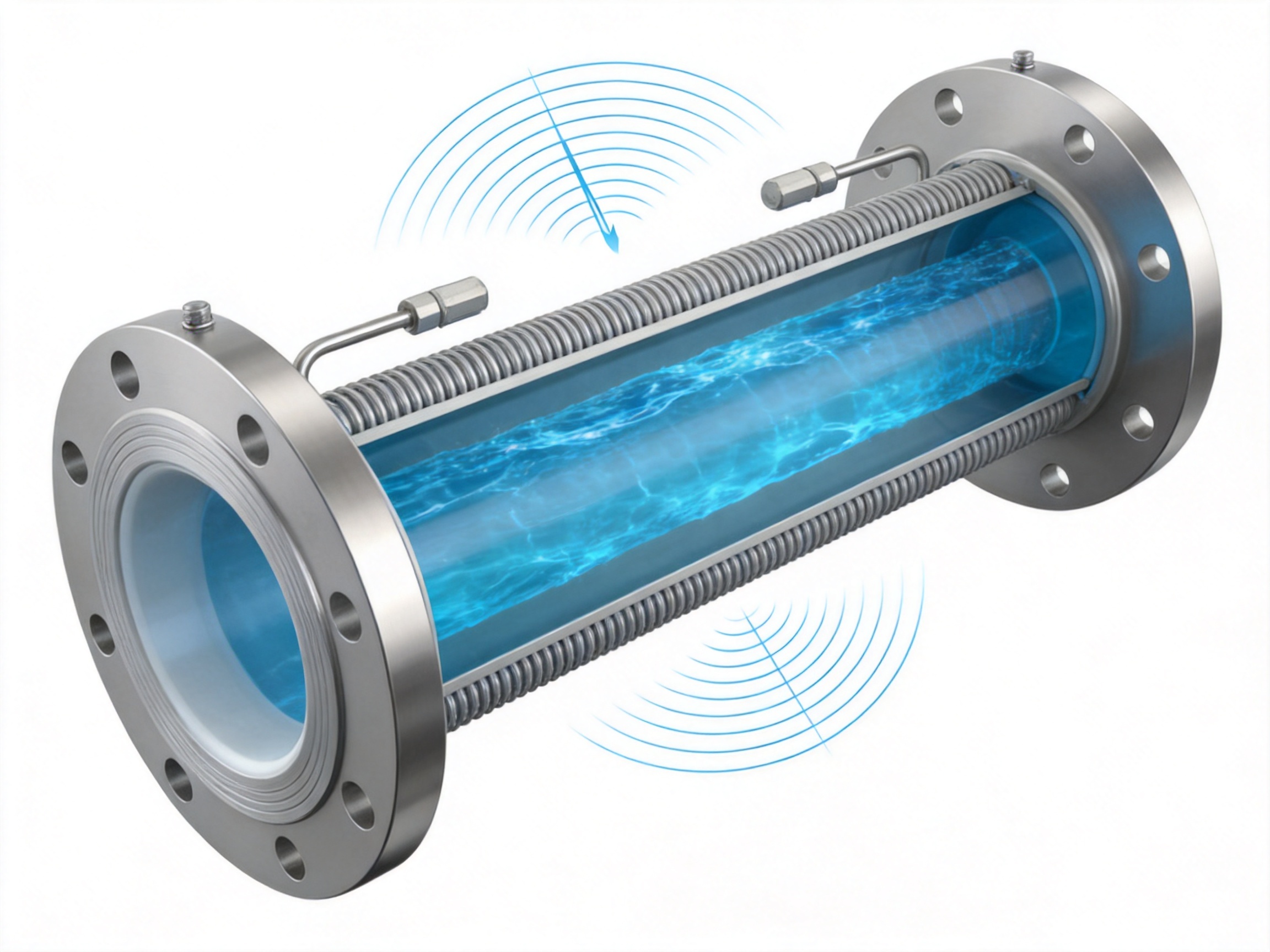
Representative Installation Examples
Wastewater Treatment Plant Inlet
On a large plant inlet pipeline, an LDG sensor can provide continuous flow data for treatment-load control, capacity planning and regulatory reporting. A large nominal diameter, such as DN600, can be supplied with a lining and electrode combination selected for contaminated water and moderate abrasion. IP68 protection may be considered where the sensor is installed in a chamber that can flood.
To achieve reliable results, the inlet line should remain full at the measurement point. The installation team should also assess upstream bends, pumps, gates and partially open channels that could create an unstable flow profile. Proper grounding and equal-potential connections are important because wastewater installations may have long cable runs and electrical interference from pumps.
Cooling-Water Network
On DN200 to DN400 cooling-water circuits, the LDG can measure circulation and make-up flow. Comparing these values can help identify leaks, fouling, valve problems or changes in plant demand. RS-485 Modbus allows multiple meters to communicate with a central control system, giving operators access to local and system-level flow data.
The low pressure-loss design is useful in recirculating systems where pumps operate continuously. The meter can be selected with a stainless-steel body or another suitable configuration based on water chemistry, ambient conditions and required pressure rating.
Chemical Dosing and Transfer
On DN50 to DN150 lines, an LDG with PTFE or PFA lining and corrosion-resistant electrodes can provide flow feedback for conductive acids or alkalis. The signal can be connected to a dosing controller or batch system through the 4-20 mA and pulse outputs.
Because chemical compatibility is application-specific, the engineering review should include concentration, temperature, pressure and cleaning conditions. The use of a suitable liner does not automatically make the instrument compatible with every aggressive chemical. Verification before ordering is essential.
Mining Slurry Pipeline
An LDG configured with abrasion-resistant lining can be installed on slurry feed or discharge pipelines. Continuous flow measurement supports grinding-circuit stability, flotation control and tailings management. The sensor should be sized to maintain adequate velocity and prevent solids settling during normal operation.
During shutdowns, the pipeline may drain or the slurry may settle. The control system should account for empty-pipe conditions and should not interpret an empty measuring tube as normal zero flow without evaluating the instrument’s diagnostic status.
Selection Guidelines
Choosing an LDG flowmeter begins with collecting accurate process data. The required information normally includes fluid name, conductivity, minimum and maximum flow, normal flow, pipe diameter, operating temperature, operating pressure, solids content, viscosity, density, liner requirements, electrode compatibility, installation location and output requirements.
Meter size should be selected according to velocity and process behavior. Excessively low velocity can reduce signal strength and make the measurement more sensitive to noise or settling solids. Excessively high velocity can increase wear, pressure effects at fittings or the risk of liner damage in abrasive service. A properly selected diameter balances signal quality, pressure conditions and long-term durability.
The liner should be chosen according to temperature, pressure, chemical resistance and abrasion. Rubber and polyurethane may be suitable for many water and slurry services, while PTFE and PFA are often considered for aggressive chemicals. Electrode selection should address corrosion, polarization, coating and the conductivity of the liquid.
The power supply and communication interface should match the plant infrastructure. A 24 V DC version may be convenient for control panels, while an AC-powered version can simplify installation in conventional utility areas. Battery-powered versions may be considered for remote or low-power applications, subject to the required measurement frequency, transmission interval and maintenance plan.
Installation and Commissioning Recommendations
The sensor should be installed with the flow direction matching the arrow or configuration marking. The pipe should be full during measurement, and the selected location should avoid air pockets, free-falling discharge and excessive turbulence. Straight-run requirements depend on the upstream and downstream piping arrangement and the manufacturer’s installation instructions.
Grounding is essential for electromagnetic measurement. The sensor, process liquid, pipeline and transmitter should be connected according to the installation design. Poor grounding can allow electrical noise to overwhelm the low-level electrode signal. When the pipeline is nonconductive or lined, grounding rings or grounding electrodes may be required.
During commissioning, the operator should verify the sensor size, flow direction, unit system, range, output scaling, totalizer settings, empty-pipe detection and communication parameters. The zero point should be checked with the measuring tube full and the liquid stationary, following the manufacturer’s recommended procedure.
Cable routing should separate sensor and signal cables from high-power lines, variable-frequency drives and strong electromagnetic sources where practical. Cable glands should be tightened correctly to maintain the enclosure protection rating. Outdoor and submerged installations require particular attention to sealing, condensation and cable entry arrangements.
Maintenance and Lifecycle Value
The LDG requires less mechanical maintenance than flowmeters with moving sensing elements because the measuring tube contains no rotor, gear or bearing. Routine maintenance should nevertheless include visual inspection, checking of cable glands, verification of grounding, review of diagnostic messages and confirmation that the process conditions remain within the selected limits.
In slurry services, operators should monitor liner wear and confirm that the actual solids concentration and velocity remain consistent with the original design. In chemical services, electrode and liner compatibility should be reviewed if the process formulation changes. In wastewater applications, deposits on electrodes or the liner may occur under unusual conditions and should be addressed according to the process and cleaning requirements.
Periodic verification can help identify changes in installation condition, zero stability or output scaling. The required interval depends on the criticality of the measurement, regulatory requirements, process risk and plant maintenance policy. For custody, billing or compliance-related measurements, the customer may require a defined calibration and verification schedule.
The combination of minimal pressure loss, no moving parts, configurable materials and digital electronics can reduce total ownership costs. Savings may result from lower pumping energy, fewer mechanical replacement parts, reduced downtime and easier integration with existing control systems.
Why Choose a Specialized Flowmeter Manufacturer?
A specialized manufacturer can provide more than a standard catalog instrument. Flow measurement performance depends on the relationship between sensor design, transmitter electronics, calibration, installation and process selection. A manufacturer with experience across electromagnetic and other technologies can help determine whether an electromagnetic meter is appropriate or whether another principle should be considered.
Jiangsu Vner Electronic Technology Co., Ltd. focuses on industrial flow measurement and supplies instruments for liquids, gases and slurries. Its product range includes electromagnetic, Coriolis, vortex, swirl, turbine, thermal mass, ultrasonic and metal-tube rotameter products. This breadth supports technical comparisons across different industries and operating conditions.
The company’s engineering-driven approach includes product sizing, material selection, calibration, quality documentation and project coordination. Support for EPC contractors, end users and OEM partners is important for projects that involve several pipe sizes, multiple international standards or customized communication and enclosure requirements.
Manufacturing across three plants and an established technical team provide capacity for both standard production and project-based configurations. Automated electronics assembly, controlled testing, in-house calibration and certified quality procedures help support repeatability from one instrument to the next.
Frequently Asked Questions
What liquids can the LDG measure?
The LDG is designed for electrically conductive liquids with conductivity of approximately 5 μS/cm or higher. Typical media include water, wastewater, acids, alkalis, cooling water, process liquids, slurries, suspensions and pulp. The exact suitability depends on conductivity, temperature, pressure, chemical compatibility and the presence of solids or gas.
Can the LDG measure wastewater containing suspended solids?
Yes. Its full-bore construction and lack of moving parts make it suitable for many wastewater services containing suspended solids. The lining and electrode materials should be selected according to abrasion, corrosion and temperature conditions. The pipeline should remain full and the flow velocity should be sufficient to prevent excessive settling.
Does the meter create pressure loss?
The unobstructed measuring tube introduces virtually no additional pressure loss. This is a significant advantage over flowmeters that use internal rotors, bluff bodies or permanent throttling elements.
Can it measure nonconductive liquids such as oil?
Generally, no. Electromagnetic flowmeters require the liquid to have sufficient electrical conductivity. Nonconductive liquids such as many oils and hydrocarbon products normally require another flow measurement technology.
What accuracy can be expected?
The stated accuracy is ±0.5% of rate, with repeatability of up to 0.15% of rate under specified conditions. Actual results depend on calibration, installation, grounding, process stability, liquid conductivity, flow profile and the selected model.
What is the available size range?
The LDG Series covers nominal diameters from approximately DN2.5 to DN2000, or about 1/8 to 80 inches, depending on the available configuration. Final size selection should be based on flow velocity and process requirements rather than pipe diameter alone.
Which liner should be used for chemical liquids?
PTFE or PFA may be considered for many chemically aggressive services, while rubber or polyurethane may be suitable for selected water and abrasive applications. The correct choice depends on chemical concentration, temperature, pressure and cleaning conditions. Compatibility should be confirmed before ordering.
Which electrode material is appropriate for acids and alkalis?
Electrode selection may include 316 stainless steel, titanium, tantalum, Hastelloy or platinum-iridium. There is no universal electrode for every chemical. The medium composition, concentration and temperature should be reviewed by the supplier’s application engineers.
Can the transmitter be installed remotely?
Depending on the selected model, the transmitter can be supplied in a remote configuration. Remote mounting may improve accessibility, protect the electronics from high temperatures or vibration and simplify installation in flooded chambers or difficult locations.
What communication protocols are available?
Available options include RS-485 Modbus, Profibus and HART. Selected models may support GPRS or other remote data functions. The communication option should be specified according to the plant control system and project requirements.
Is an explosion-proof version available?
Ex d explosion-proof versions are available for applicable configurations. The user must confirm the hazardous-area classification, certification requirements, ambient conditions, wiring method and regional regulations before selecting the instrument.
How should the meter be installed?
The sensor should be installed in a full pipe, with suitable upstream and downstream conditions, correct flow direction and proper grounding. Locations with air accumulation, free-falling discharge, severe vibration or unstable flow should normally be avoided. The manufacturer’s installation instructions should be followed for the selected model.
Does the company support OEM or ODM projects?
Jiangsu Vner Electronic Technology Co., Ltd. supports OEM and ODM cooperation for customized industrial instruments, subject to technical review and project requirements. Customization may involve configuration, labeling, communication, process connections, documentation or other agreed product details.
Conclusion
The LDG Economy General-Purpose Electromagnetic Flowmeter provides a practical solution for conductive liquid measurement across water, wastewater, utilities, chemical processing, mining, pulp and paper and other industrial sectors. Its Faraday-law measuring principle, full-bore construction and absence of moving parts deliver reliable volumetric measurement with minimal pressure loss and reduced mechanical maintenance.
Digital signal processing, pulse excitation, configurable measuring ranges, LCD operation, 4-20 mA and pulse outputs, industrial communication protocols and multiple protection options make the LDG suitable for modern plant automation. A wide range of body, lining and electrode materials allows the instrument to be adapted to clean liquids, aggressive chemicals and abrasive suspensions.
The value of the product is strengthened by the manufacturing and engineering capabilities of Jiangsu Vner Electronic Technology Co., Ltd. In-house calibration, SMT electronics production, controlled quality processes, multi-technology expertise and project experience support consistent product delivery for end users, EPC contractors, system integrators and OEM customers.
For the best result, users should provide complete process information and select the meter according to conductivity, flow velocity, temperature, pressure, chemical compatibility, installation conditions and control-system requirements. When correctly specified and installed, the LDG can provide stable, repeatable flow measurement while helping industrial operators control processes, reduce energy losses and improve long-term equipment reliability.
References
Faraday, M. Experimental Researches in Electricity. Original work describing electromagnetic induction and its relationship to induced voltage.
International Electrotechnical Commission. Industrial-process measurement and control guidance for electromagnetic flowmeters.
International Organization for Standardization. Industrial flow measurement principles, calibration practices and uncertainty evaluation.
American Society of Mechanical Engineers. Process piping guidance for flowmeter installation and pressure-rated connections.
Manufacturer’s LDG Series technical specifications, application notes and product configuration information.
Manufacturer’s quality, calibration, electronics assembly and industrial flow measurement documentation.
Product: LDG Economy General-Purpose Electromagnetic Flowmeter


We offer all our products and services at international standards.
Products
Contact Information
-

+86-18652789521
+86-18052582295
+86-0514-83633600 / 83633900 -

+86-0514-83633600 / 83633900
-

shawn@vnerflow.com
info@vnerflow.com -

No. 11 Xingye Road, Chenji Town Industrial Park, Yizheng, Yangzhou, China
