
 0
0
 EN
EN  English
 عربى
عربى Español
 русский
If you need any help, please feel free to contact us
Home / Author / Ding Yuchun — Overseas After-Sales Support Engineer / Straight-Tube Coriolis Mass Flowmeters: Precision Measurement for Demanding Industrial Processes
Straight-Tube Coriolis Mass Flowmeters: Precision Measurement for Demanding Industrial Processes
Accurate flow measurement is essential wherever materials are transferred, blended, dosed, loaded, or transformed. In many industrial installations, measuring volume alone is not enough. Temperature, pressure, density, viscosity, and changing process conditions can cause the relationship between volume and actual material quantity to vary considerably. For these applications, direct mass measurement provides a more reliable basis for process control, inventory management, quality assurance, and commercial transactions.
The KSMF-S Series Coriolis Mass Flowmeter is designed for this purpose. It is a high-precision, straight-tube Coriolis flowmeter for liquids, gases, and liquefied gases. The meter directly measures mass flow while also providing density and process-temperature data. Volume flow can be calculated from the measured variables, giving operators a broader understanding of process behavior from a single instrument.
Its straight dual-tube construction combines the measurement performance associated with Coriolis technology with practical installation and maintenance advantages. The design produces low pressure loss, limited shear, excellent cleanability, and minimal sensitivity to upstream flow-profile disturbances. It is therefore suitable for a wide variety of applications, from general process control and chemical dosing to food processing, pharmaceutical production, energy blending, and commercial metering.
Manufactured by Jiangsu Vner Electronic Technology Co., Ltd., the KSMF-S Series reflects an engineering approach centered on repeatable performance, controlled production, application-specific sizing, and long-term industrial reliability. The company combines flow measurement expertise, in-house calibration, certified quality procedures, modern manufacturing facilities, and international project experience to support both standard and customized instrumentation requirements.
Why Direct Mass Measurement Matters
Traditional volumetric flowmeters determine how much space a fluid occupies as it moves through a pipe. This can be entirely suitable when the fluid density is stable and the process is well controlled. However, density changes with temperature, pressure, composition, concentration, and phase condition. A volumetric measurement may consequently show the same flow rate even when the actual mass of material being transferred has changed.
A Coriolis flowmeter measures mass flow directly. This eliminates the need to rely on a fixed density value for the primary measurement. The result is particularly valuable in batching, recipe control, additive injection, fuel transfer, custody-related applications, and processes where material composition varies during operation.
The KSMF-S Series also measures fluid density through the oscillation behavior of its measuring tubes. Density data can be used for quality monitoring, concentration estimation, product identification, and process optimization. With suitable transmitter functions, the instrument can support calculated concentration, composition, viscosity, batch, and bidirectional measurement modules.
Process temperature is measured by integrated sensors. Having mass flow, density, and temperature available from the same meter allows operators and control systems to distinguish between actual production changes and changes caused by process conditions. This supports more stable control strategies and reduces the need for separate instruments and complex compensation calculations.
Operating Principle of the KSMF-S Series
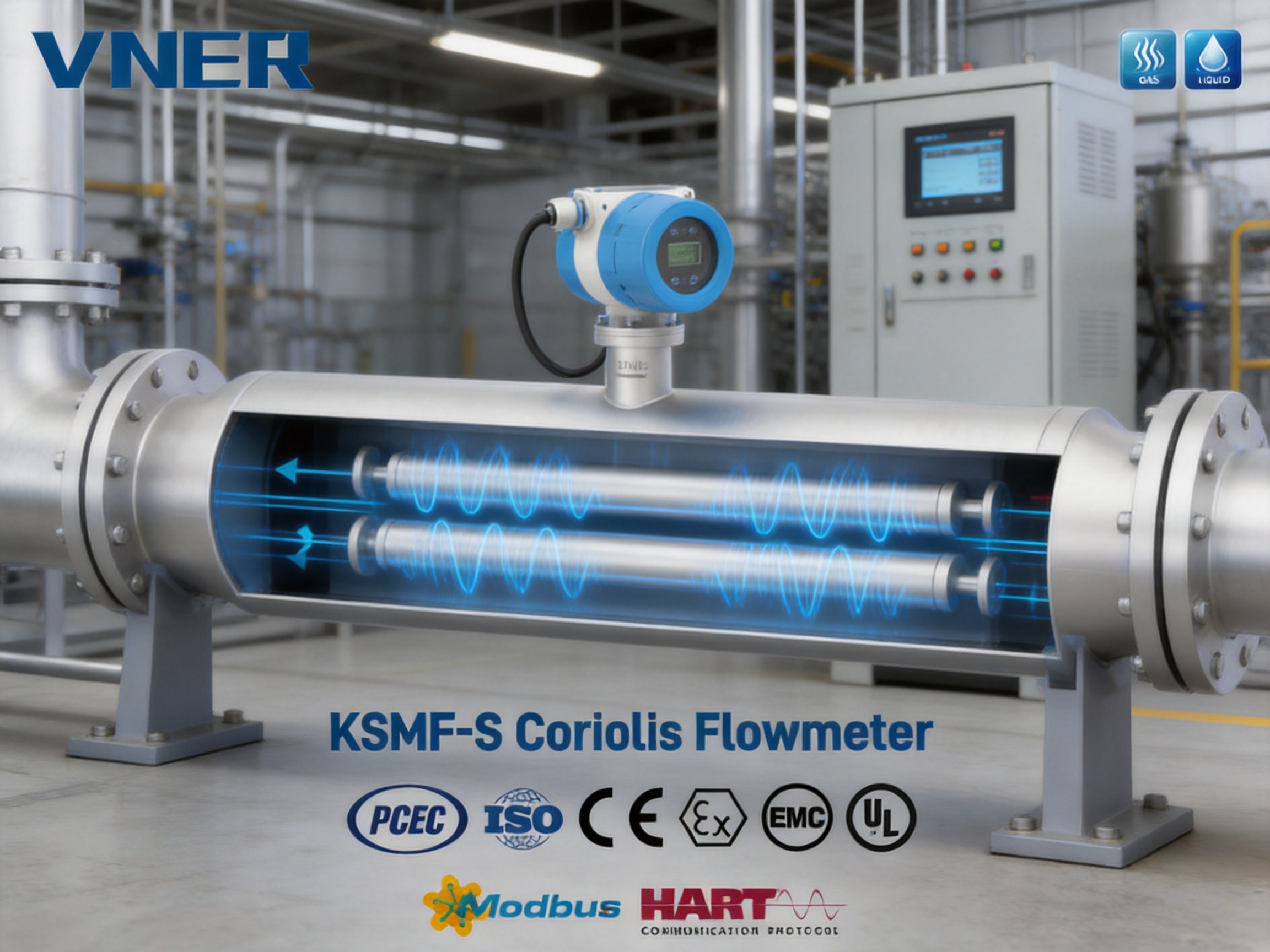
The KSMF-S Series uses two parallel straight measuring tubes. An excitation system causes the tubes to oscillate in a controlled manner. When the tubes are empty or when no fluid is flowing, the signals detected at the inlet and outlet sections remain substantially in phase.
When fluid passes through the vibrating tubes, Coriolis forces are generated. These forces cause the inlet and outlet portions of the tubes to respond differently, creating a measurable phase shift. The time difference between the signals is directly proportional to the mass flow rate. Because the measurement is based on the mechanical response of the tubes rather than on a simple velocity profile calculation, it remains highly effective across a broad range of process conditions.
The natural oscillation frequency of the measuring system is related to the density of the fluid inside the tubes. The transmitter evaluates this frequency to determine density. A temperature sensor compensates for changes in tube and fluid temperature and supplies process-temperature information.
This multi-variable measurement principle is one of the most important distinctions between a Coriolis flowmeter and many conventional flow technologies. A turbine meter, for example, primarily responds to fluid velocity and may require compensation for density and viscosity. An electromagnetic meter measures conductive liquid velocity and does not directly measure gas or non-conductive liquids. A vortex meter relies on vortex shedding and can be influenced by flow conditions, density, and installation factors. A Coriolis meter directly measures mass and can additionally provide density and temperature from the same sensing assembly.
Advantages of the Straight Dual-Tube Design
Low Pressure Loss
The straight-tube flow path creates limited obstruction to the process fluid. Compared with many bent-tube meter designs, the KSMF-S configuration can reduce pressure loss and conserve pumping or compression energy. This is useful in systems with restricted pressure budgets, long transfer lines, high-viscosity fluids, or processes where pressure must be carefully controlled.
Low pressure loss can also simplify system design. Pumps may be selected with lower differential-pressure requirements, control valves can operate with more available margin, and existing pipework may accommodate the meter without extensive modification. Actual pressure drop remains dependent on line size, flow rate, fluid viscosity, density, and meter model, so application-specific sizing is still required.
Low Shear
Some fluids are sensitive to mechanical stress. Food products, emulsions, biological materials, polymers, and suspensions can be affected by excessive shear or turbulence. The straight dual-tube path offers a comparatively gentle flow route, helping reduce unnecessary mechanical disturbance during measurement.
Low shear does not mean that every process fluid can be measured without evaluation. Particle size, solids concentration, gas entrainment, viscosity, pulsation, and pressure stability must still be considered. Nevertheless, the geometry provides an advantage in applications where maintaining product characteristics is important.
Excellent Cleanability
The straight internal passage helps reduce areas where material can accumulate. This supports cleaning procedures in food, beverage, pharmaceutical, biotechnology, and high-purity applications. When the meter is supplied with suitable hygienic connections and materials, it can be integrated into cleaning-in-place and sanitation routines.
Cleanability is not only a hygiene benefit. It can also improve measurement consistency. Deposits on internal surfaces may alter the effective tube condition, affect density response, or introduce contamination between batches. A meter that is easier to clean can reduce maintenance time and support more reliable changeover between products.
Reduced Installation Sensitivity
The KSMF-S Series does not require upstream or downstream straight pipe runs for normal installation. This is a major practical benefit in compact skids, equipment rooms, process revamps, and packaged systems where space is limited. The meter is largely independent of the velocity profile created by nearby elbows, valves, reducers, or other fittings.
Although no straight-run requirement simplifies installation, correct mechanical support remains important. The meter should be installed according to the applicable model instructions, with suitable pipe alignment, adequate support, proper orientation, and protection from excessive external vibration. A no-straight-run design does not remove the need for good engineering practice.
Broad Measurement Capability
The KSMF-S Series is intended for liquids, gases, and liquefied gases. Depending on the model and application limits, it can handle viscous liquids, suspensions, selected gas-liquid mixtures, and medium- or high-pressure gases. The practical measurement envelope is determined by line size, pressure, temperature, phase behavior, fluid properties, and the selected sensor construction.
Available accuracy classes include approximately plus or minus 0.1 percent, plus or minus 0.15 percent, plus or minus 0.2 percent, and plus or minus 0.5 percent of rate, depending on the model and application. Typical repeatability is approximately 0.05 to 0.1 percent of rate. These figures must be confirmed against the specific meter size, operating range, medium, temperature, pressure, and calibration conditions before an order is finalized.
Density measurement covers approximately 0.3 to 3.0 grams per cubic centimeter across the relevant product range. Liquid density accuracy can reach approximately plus or minus 0.002 grams per cubic centimeter under suitable conditions. This makes the instrument useful not only as a flow transmitter but also as a process analyzer for applications where density is a quality or concentration indicator.
Across the full KSMF size range, nominal flow capacity extends to approximately 480,000 kilograms per hour. Line diameters are available from approximately DN8 to DN150, or about one-quarter inch to six inches. Such a range allows the product family to serve laboratory-scale dosing lines, compact process equipment, utility piping, transfer systems, and high-capacity industrial lines.
| Parameter | Typical KSMF-S Capability | Application Consideration |
|---|---|---|
| Measurement principle | Straight dual-tube Coriolis measurement | Phase shift is proportional to mass flow |
| Measured variables | Mass flow, density, and process temperature | Volume flow can be calculated |
| Media | Liquids, gases, and liquefied gases | Confirm suitability for multiphase or abrasive service |
| Accuracy options | Approximately ±0.1% to ±0.5% of rate | Model and application dependent |
| Repeatability | Typically 0.05% to 0.1% of rate | Operating conditions affect performance |
| Density range | Approximately 0.3 to 3.0 g/cm³ | Density accuracy depends on fluid and temperature |
| Nominal line sizes | DN8 to DN150 | Equivalent to approximately 1/4 inch to 6 inches |
| Maximum family flow range | Up to approximately 480,000 kg/h | Actual capacity depends on selected model |
| Process temperature | Approximately -200°C to +300°C options | Low, normal, and high-temperature versions are available |
| Pressure rating | Standard up to approximately 4 MPa; higher options available | High-pressure versions may reach approximately 25 to 40 MPa |
| Wetted materials | 316L stainless steel; Hastelloy and titanium options | Material selection should reflect corrosion conditions |
| Protection | IP67 | Suitable for many outdoor and industrial environments |
| Outputs | 4-20 mA and pulse | Suitable for control and totalization |
| Communication | Modbus RS-485 and HART | Supports PLC, DCS, RTU, and supervisory integration |
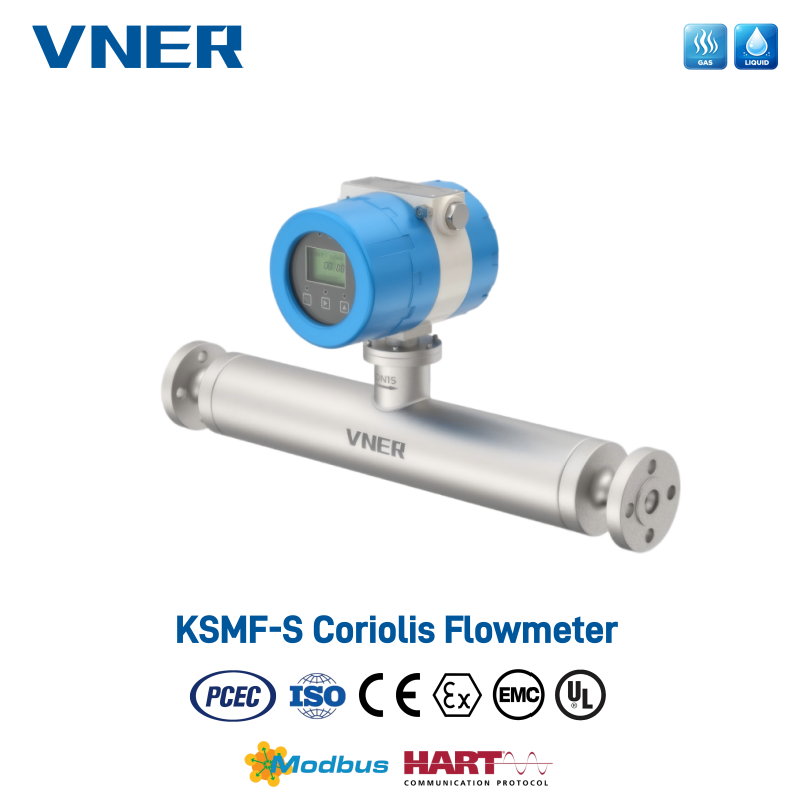
KSMF S-Series Coriolis Mass Flowmeter
Performance Benefits Compared with Conventional Flow Technologies
Compared with Volumetric Measurement
The primary advantage over purely volumetric meters is direct mass measurement. When density fluctuates, a volumetric meter may require additional pressure and temperature compensation or a separate densitometer. The KSMF-S Series obtains mass flow and density through the same instrument, reducing measurement complexity and improving material accounting.
This advantage is especially important in blending and batching. If two fluids have different densities or if product temperature changes during a transfer, a volume-based control system may deliver an incorrect mass quantity unless compensation is applied. A Coriolis meter can control the batch using mass as the primary variable, improving recipe accuracy and reducing off-specification production.
Compared with Electromagnetic Flowmeters
Electromagnetic flowmeters are effective for conductive liquids and often provide a highly economical solution for water, wastewater, slurries, acids, and other compatible fluids. However, they do not measure gases, liquefied gases, or many non-conductive liquids. They primarily measure volumetric flow and normally require density information from another source when mass flow is needed.
The KSMF-S Series offers broader media flexibility and direct mass measurement. It can therefore be selected for applications involving hydrocarbons, solvents, oils, gases, liquefied gases, and other media that may not be suitable for electromagnetic measurement. The trade-off is that the Coriolis meter may have a higher initial purchase cost, making application-based selection essential.
Compared with Turbine Flowmeters
Turbine meters can offer good repeatability in clean, stable, low-viscosity fluids. They may also be attractive for straightforward liquid or gas volume measurement. However, moving parts can be affected by wear, contamination, viscosity changes, and flow disturbances. Turbine meters generally require upstream and downstream straight pipe sections and may require flow conditioning.
The KSMF-S Series has no internal turbine rotor and is less dependent on a developed velocity profile. It directly measures mass and offers density information. This can reduce maintenance associated with moving parts and improve suitability for changing process conditions, although the meter must still be protected from severe external vibration and inappropriate multiphase conditions.
Compared with Vortex Flowmeters
Vortex meters are widely used for steam, gases, and clean liquids. They are robust and can be cost-effective in utility applications. Their measurement depends on vortex shedding and may be influenced by flow velocity, density, pressure, temperature, and installation conditions. They are also less suitable for very low flow rates, highly viscous fluids, or unstable multiphase service.
The Coriolis principle provides direct mass flow measurement over a broad range of liquid and gas applications. The KSMF-S Series also measures density and process temperature, making it more suitable when material quality and composition are part of the measurement objective.
Compared with Bent-Tube Coriolis Meters
Bent-tube Coriolis meters are established instruments with excellent performance. In some applications, however, their geometry can create greater pressure loss or more internal areas that require careful cleaning. The straight-tube KSMF-S design is intended to provide a lower-restriction flow path, low shear, and easier cleaning while preserving the fundamental benefits of Coriolis measurement.
The best choice depends on the fluid, size, pressure, temperature, hygienic requirements, and available installation space. The straight-tube design is particularly attractive for hygienic lines, viscous products, high-capacity transfer systems, and compact installations.
Industrial Applications
Oil and Gas and Petrochemical Processing
Oil and gas facilities require reliable measurement of crude products, refined fuels, condensate, LPG, additives, and blending components. Mass flow is often more meaningful than volume because product density can vary with temperature and composition. The KSMF-S Series can support loading, unloading, transfer, additive injection, blending, and process monitoring.
For hazardous areas, explosion-proof Ex d options are available subject to the selected configuration and certification requirements. Pressure and temperature options can be specified for demanding hydrocarbon service. High-pressure versions may be suitable for selected applications involving pressurized gases and liquids, provided the operating envelope remains within the certified rating.
Chemical and Fine-Chemical Production
Chemical processes frequently use corrosive, toxic, viscous, or composition-sensitive materials. Accurate dosing of acids, alkalis, solvents, polymer feedstocks, catalysts, and additives can directly affect product quality and operating cost.
The KSMF-S Series can be supplied with 316L stainless steel wetted components as standard, with Hastelloy and titanium options for more demanding corrosion conditions. Material compatibility must always be reviewed against concentration, temperature, pressure, chloride content, solids, and cleaning chemistry.
Simultaneous mass flow and density measurement can help identify concentration changes during production. In neutralization systems, for example, the meter can support more precise control of reagent quantity while density trends provide additional information about the process condition.
Food and Beverage Processing
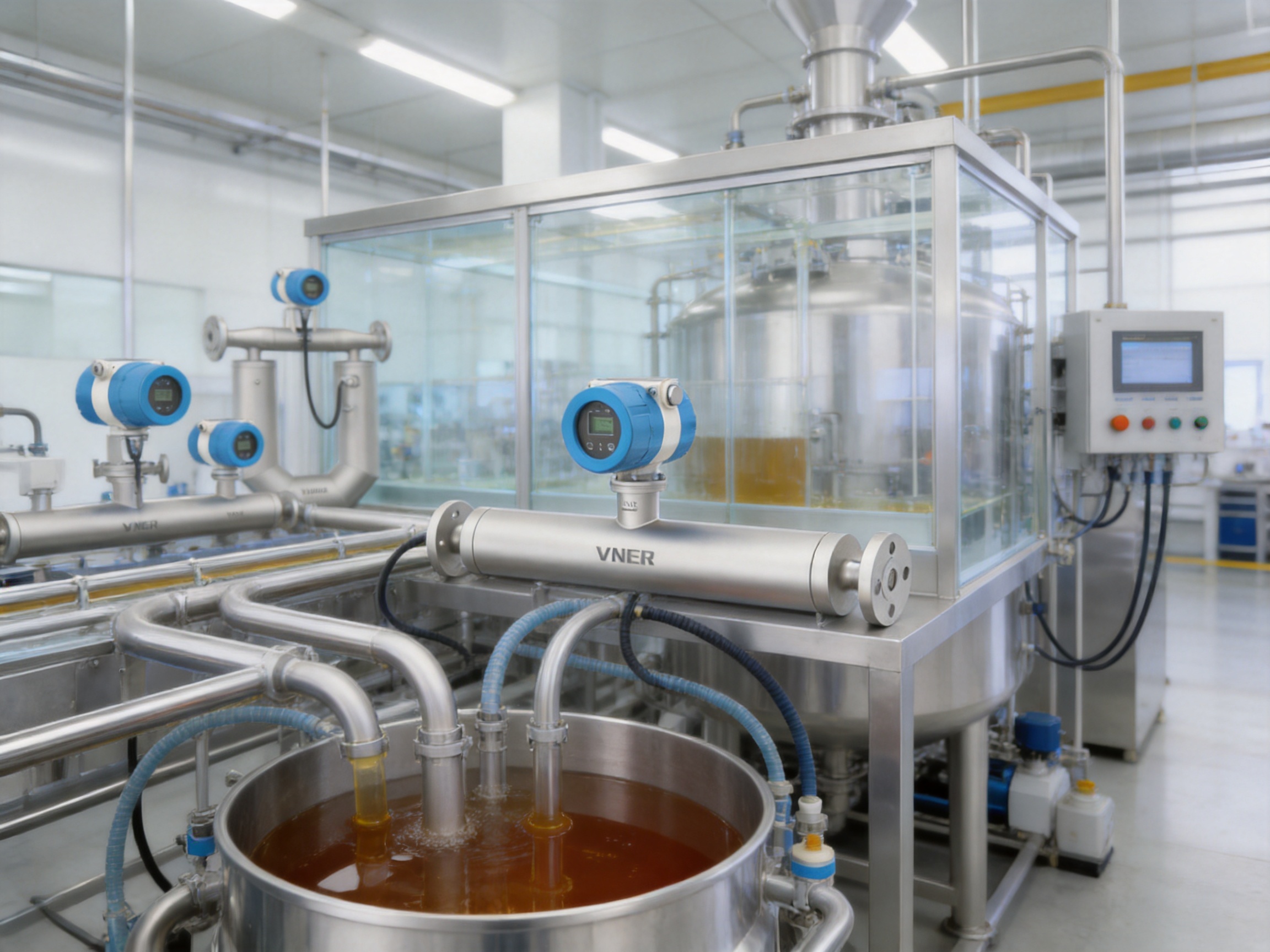
Food and beverage processes often require accurate transfer of dairy products, syrups, glucose, edible oils, alcohols, concentrates, and other products. The straight flow path and low-shear behavior are useful for products whose texture, consistency, or composition must be protected.
Hygienic process connections, such as Tri-Clamp configurations, can be selected where appropriate. The meter can support ingredient batching, syrup dosing, filling systems, transfer measurement, and product recovery. Density measurement can also help identify variation in sugar concentration or product composition.
Cleaning procedures should be designed according to the actual process fluid, cleaning agent, temperature, flow velocity, and sanitation standard. The meter's cleanable construction supports these procedures but does not replace a validated cleaning protocol.
Pharmaceutical and Biotechnology Production
Pharmaceutical and biotechnology manufacturing requires traceable, repeatable, and highly controlled measurement. Applications may include solvent transfer, active pharmaceutical ingredient processing, intermediate dosing, filtration systems, buffer preparation, and filling operations.
A straight-tube meter with suitable hygienic connections can reduce hold-up concerns and support cleaning and sanitation. Mass-based dosing improves batch consistency, while density and temperature data provide additional process information. For high-purity service, the selected materials, surface finish, connection style, calibration, and documentation should be reviewed as part of the complete equipment specification.
Water and Wastewater Treatment
Water-treatment systems use coagulants, flocculants, neutralizers, disinfectants, and conditioning chemicals. Although many water applications are well suited to electromagnetic flowmeters, Coriolis technology provides a valuable alternative when direct mass dosing, density monitoring, or chemical compatibility makes it preferable.
Precise chemical dosing can reduce overuse, improve treatment consistency, and support consumption tracking. In ultrapure water and electronics-related facilities, accurate measurement of conditioning chemicals and disinfectants can contribute to stable water quality and better operating control.
Pulp and Paper Production
Pulp and paper processes use bleaching agents, sizing liquids, coatings, and process additives. The KSMF-S Series can provide mass-based dosing where chemical quantity must remain consistent despite changes in temperature or concentration. Its density output can also support quality-relevant monitoring of additives and process fluids.
Energy and New-Energy Applications
Biofuel, ethanol, biodiesel, thermal-oil, and battery-material processes increasingly require accurate measurement of blended or composition-sensitive fluids. The KSMF-S Series supports production, transfer, inventory, and blending operations in both conventional and emerging energy industries.
In fuel blending, direct mass measurement helps maintain blend ratios. Density data can provide an additional check on product consistency. The low-pressure-drop straight-tube design is useful where pumping energy, line pressure, or product handling characteristics are important.
General Industry and Utilities
Compressed gases, liquefied gases, process liquids, and utility streams can all benefit from Coriolis measurement when the application falls within the meter's operating limits. The instrument can be integrated into plant-wide automation systems using 4-20 mA, pulse, Modbus RS-485, or HART communication.
It can be used for utility monitoring, equipment supply lines, process control, batch operations, and commercial metering where the required approvals are available. Its compact installation requirements make it suitable for skid-mounted equipment and retrofit projects.
Manufacturing Strengths Behind the Product
A high-performance flowmeter is not created by the sensor design alone. Measurement stability depends on material quality, tube geometry, welding, electronics, calibration, assembly control, software configuration, and final inspection. Jiangsu Vner Electronic Technology Co., Ltd. applies an integrated manufacturing and engineering process to these areas.
Specialized Flow Measurement Experience
Jiangsu Vner Electronic Technology Co., Ltd. has focused on industrial flow measurement since 2011. Its product portfolio includes electromagnetic, Coriolis, vortex, swirl, turbine, thermal mass, ultrasonic, and metal-tube rotameter technologies. This broad experience allows engineers to evaluate the KSMF-S Series not as an isolated product, but as part of a wider flow measurement system.
Understanding multiple measurement principles is valuable during instrument selection. A customer may need Coriolis measurement for one process line, electromagnetic measurement for another, and vortex or thermal mass measurement for a utility system. A manufacturer with broad technology coverage can compare these options more objectively and recommend the most appropriate solution according to fluid properties and process objectives.
Modern Production Infrastructure
The company operates approximately 23,000 square meters of modern facilities across three plants. This production infrastructure supports the manufacturing of industrial instruments at different stages of development and scale. Dedicated production resources can improve workflow organization, shorten internal logistics, and support more consistent assembly practices.
For Coriolis meters, manufacturing control is especially important because the measuring tubes must have carefully controlled mechanical characteristics. Tube dimensions, material condition, structural symmetry, welding quality, sensor placement, excitation components, and housing assembly all influence the final performance of the instrument.
Technical Engineering Team
With a technical team of more than 150 people, the company has resources for product development, application engineering, production support, quality control, and after-sales service. Coriolis flowmeter applications can involve complex interactions between fluid behavior, pipe vibration, pressure, temperature, density, gas entrainment, and control-system requirements. Engineering support is therefore an important part of the product value.
Application engineers can help determine the appropriate nominal diameter, flow range, process connection, wetted material, pressure rating, temperature class, output configuration, and hazardous-area option. Proper sizing is particularly important because selecting a meter that is too large or too small can affect pressure loss, turndown, zero stability, and measurement repeatability.
In-House Calibration
Calibration is a critical manufacturing and quality-control step. It establishes the relationship between the meter's sensor response and the actual flow value under controlled reference conditions. In-house calibration enables the manufacturer to verify instruments before shipment and maintain greater control over production consistency.
Calibration procedures can include checks for mass flow, density response, temperature measurement, zero stability, output signals, communication functions, and alarm behavior. The precise procedure depends on the meter model and customer requirements. Traceable calibration documentation can be supplied where required by the project specification.
In-house calibration also supports customized production. If a customer requires a particular range, output assignment, process connection, or application configuration, the instrument can be tested against the intended operating conditions before delivery.
Certified Quality Processes
Industrial flowmeters are frequently installed in systems where measurement errors can create material waste, quality problems, environmental risk, or financial loss. Certified quality processes provide a framework for controlling documents, materials, manufacturing steps, testing, nonconformities, and final release.
Product certification options may include ISO-related quality systems, CE, ATEX, PCEC, SIL, UL, and other approvals depending on the selected model and market. Certification availability must be confirmed for the exact instrument configuration and destination. An approval associated with one transmitter, enclosure, or sensor version cannot automatically be assumed to apply to every product combination.
Automated and Controlled Manufacturing
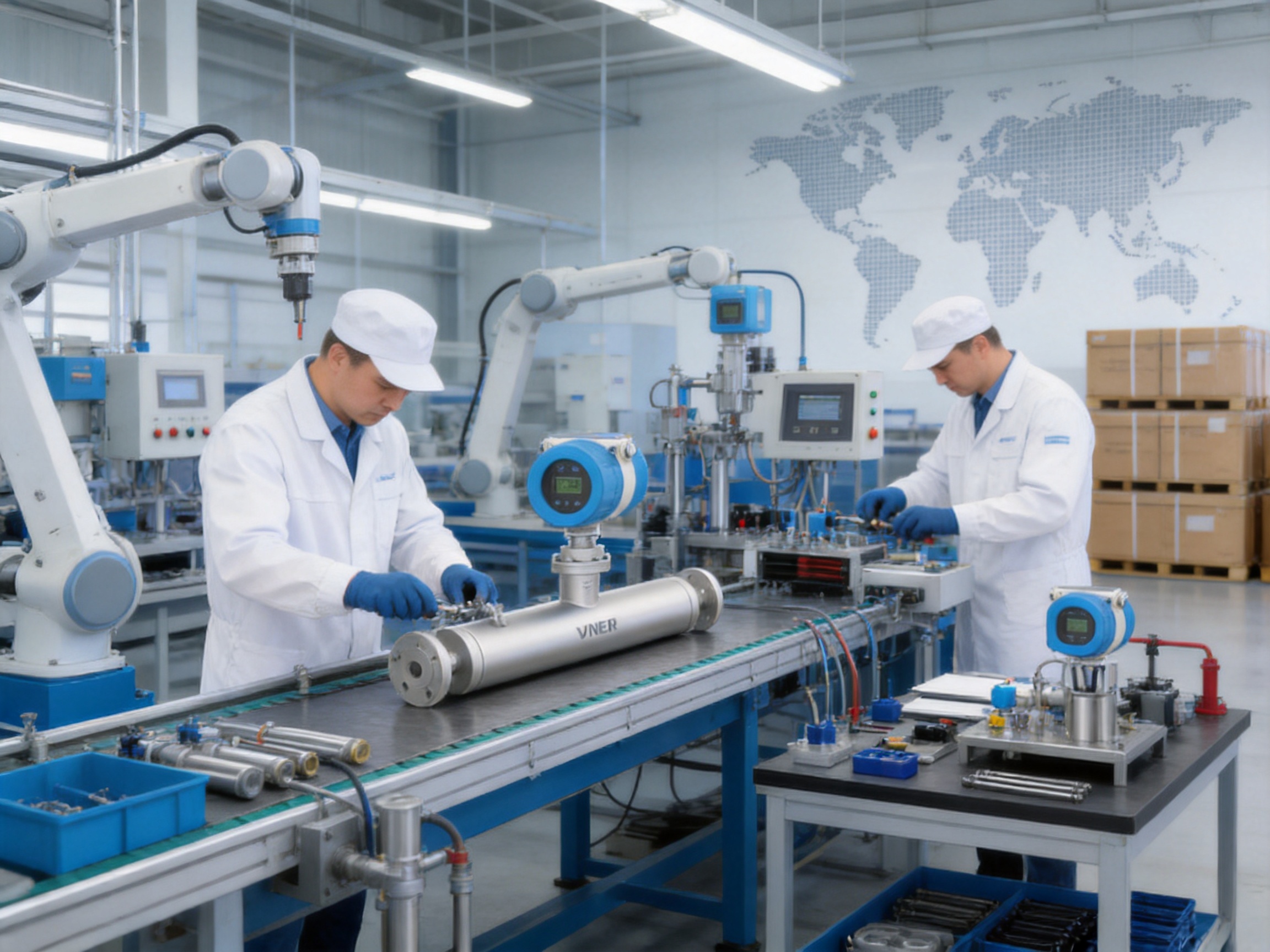
The company is increasing the use of automated manufacturing methods. Automation can improve repeatability in processes such as component handling, assembly, inspection, labeling, and data recording. It can also reduce variation caused by manual operations when properly validated and maintained.
Automation is most effective when combined with skilled engineering oversight. Coriolis meters require both precise mechanical production and application-specific judgment. Automated production helps create consistency, while experienced technicians and engineers verify that the product remains suitable for its intended service.
Traceability and Product Consistency
Traceability allows key product information to be associated with an individual meter or production batch. This may include material records, assembly information, calibration results, inspection data, configuration settings, and final test results.
For EPC contractors and industrial end users, traceability simplifies project documentation and future maintenance. When a meter is repaired, recalibrated, or replaced, historical information can help engineers understand its original configuration and operating requirements.
Configuration Options for Different Process Conditions
Process Connections
The KSMF-S Series can be configured with flanged, threaded, Tri-Clamp, and fitting-type process connections. DIN, ANSI/ASME, and JIS standards are available, with other connection requirements considered on request.
Flanged connections are widely used in industrial piping and high-pressure systems. Threaded and fitting-type connections can be suitable for smaller lines or compact equipment. Tri-Clamp connections are commonly selected for hygienic applications where rapid disassembly and cleanability are important.
Wetted Materials
316L stainless steel is the standard wetted material for many applications. Hastelloy and titanium options can be specified for selected corrosive or demanding media. The correct selection depends on the complete chemical environment rather than on the fluid name alone.
Important factors include concentration, temperature, pressure, contaminants, pH, chloride content, erosion potential, cleaning agents, and exposure time. Engineers should review the material compatibility of tubes, seals, gaskets, flanges, and other wetted components together.
Temperature Ratings
Low-temperature versions can operate in ranges extending approximately from -200°C to +200°C. Normal-temperature versions cover approximately -50°C to +200°C, while high-temperature options can reach approximately +300°C. The exact range depends on sensor construction, electronics, insulation, connection design, and application conditions.
Temperature rating should include both normal operating conditions and possible start-up, shutdown, cleaning, upset, and ambient conditions. Thermal expansion of connected piping should also be considered so that excessive mechanical stress is not transmitted to the meter.
Pressure Ratings
Standard versions are available for pressures up to approximately 4 MPa, with high-pressure options extending approximately to 25 or 40 MPa depending on the model. The pressure rating applies to the complete selected configuration and should not be inferred solely from the nominal line size.
Pressure pulsation, water hammer, compressor vibration, relief-valve operation, and pressure cycling should be evaluated during application review. When measuring gases or liquefied gases, maintaining suitable pressure and avoiding unwanted phase changes are particularly important.
Electrical and Communication Options
Power supply options include 26 V DC, 220 V AC, and wide-range variants covering approximately 22 to 245 V. Standard outputs include 4-20 mA and pulse signals. The analog output can be assigned to mass flow, density, temperature, or another available process variable according to the transmitter configuration.
Pulse output supports totalizing, batching, and quantity-based control. Modbus RS-485 and HART communication allow integration with PLC, DCS, RTU, SCADA, and supervisory systems. Additional fieldbus options may be available through the transmitter platform.
When specifying communication functions, the project team should define tag information, engineering units, damping, alarm limits, output scaling, totalizer behavior, communication addresses, and fail-safe settings. Clear configuration documentation reduces commissioning time and prevents misunderstandings between the meter supplier and control-system integrator.
Installation and Sizing Guidance
Correct sizing is one of the most important factors in Coriolis meter performance. A meter should not be selected solely by matching the nominal pipe diameter. The actual minimum, normal, and maximum flow rates should be compared with the meter's calibrated range, pressure-drop characteristics, and recommended turndown.
The KSMF-S Series can provide up to approximately 1:50 turndown depending on the model and application. For best stability, sizing is typically recommended within approximately 1:20. Operating far below the preferred range may reduce the practical resolution or make the measurement more sensitive to process noise and external vibration.
Engineers should provide the following information during selection:
- Fluid name and composition.
- Minimum, normal, and maximum mass or volume flow.
- Operating and design pressure.
- Operating and design temperature.
- Fluid density and viscosity.
- Solids concentration and particle size, if applicable.
- Gas content or expected two-phase behavior.
- Required accuracy and repeatability.
- Pipe size and process-connection standard.
- Hazardous-area classification.
- Required outputs, protocols, and power supply.
- Cleaning, sanitation, or sterilization conditions.
The meter can be mounted horizontally or vertically, depending on the application and model instructions. Orientation should support complete filling, drainage, venting, and stable operation. Liquid lines should generally remain full, while gas service should be arranged to avoid liquid accumulation. For fluids that may contain entrained gas, upstream separation, pressure control, or process conditioning may be necessary.
The meter should be protected from excessive external vibration. Although the Coriolis measurement principle is designed to detect very small mechanical responses, strong vibration from pumps, compressors, nearby equipment, or unsupported piping can affect zero stability or introduce noise. Proper pipe supports and flexible installation practices help maintain reliable operation.
Control-System Integration
The KSMF-S Series can be used as a local indicator, a stand-alone totalizer, or an integrated field instrument. The 4-20 mA output provides a simple and widely accepted connection to industrial control systems. Pulse output is useful when the primary objective is total quantity, batching, or a high-resolution pulse-based counter.
Modbus RS-485 communication provides access to multiple process variables and diagnostic values. HART communication allows configuration and digital data access over the analog signal loop. These interfaces can provide mass flow, volume flow, density, temperature, totalized quantities, alarms, status information, and diagnostic parameters according to the transmitter functions.
For advanced systems, density can be used as a control or verification variable. A filling system may use mass flow to determine the quantity delivered and density to identify product variation. A chemical dosing skid may use mass flow for primary control and density as an indication of concentration. A blending system may use the measured mass of each component to calculate an accurate recipe ratio.
Data from the meter can also support preventive maintenance. Changes in zero stability, density behavior, pressure drop, or diagnostic status may indicate process changes, gas entrainment, coating, vibration, or mechanical problems. Monitoring these trends allows maintenance teams to investigate conditions before a measurement failure affects production.
Safety and Environmental Protection
Industrial meters are often installed in areas exposed to moisture, dust, chemicals, outdoor weather, or potentially explosive atmospheres. The KSMF-S Series provides IP67 protection for suitable configurations, helping protect the enclosure against dust ingress and temporary immersion under defined test conditions.
Ex d explosion-proof versions are available for selected applications. Hazardous-area selection must be based on the area classification, gas or dust group, temperature class, installation method, cable entries, grounding, and applicable local regulations. The complete installation, not only the meter, must comply with the required safety standard.
Available certification options may include ATEX, PCEC, SIL, UL, CE, and ISO-related documentation, subject to the model, transmitter, sensor, and destination region. Project teams should request the applicable certificates and verify that the selected configuration matches the intended installation.
Reliable mass measurement can also support environmental management. Accurate chemical dosing reduces unnecessary consumption, while precise fuel and gas measurement helps identify losses and improve energy accounting. In transfer operations, better measurement can reduce spills, overfilling, and product imbalance.
Quality, Service, and Project Support
The value of an industrial flowmeter extends beyond its technical data sheet. Engineering selection, documentation, calibration, commissioning, troubleshooting, spare parts, and lifecycle support all influence the total cost of ownership.
Jiangsu Vner Electronic Technology Co., Ltd. supports EPC contractors, industrial end users, and OEM partners. Its experience covers more than 2,000 engineering projects in over 30 countries, including applications in oil and gas, petrochemical production, polysilicon, power generation, water and wastewater, and general process industries.
For EPC projects, consistent documentation and configuration control are essential. The supplier may need to provide dimensional drawings, wiring information, materials documentation, calibration certificates, inspection records, certificates for hazardous areas, communication maps, and operating manuals. Early confirmation of these requirements helps prevent delays during procurement and commissioning.
For OEM applications, repeatable configuration and reliable supply are particularly important. The meter may be integrated into dosing skids, packaged equipment, filling machines, blending systems, or process modules. Standardized electrical interfaces and available connection options simplify integration, while application engineering helps ensure that the selected model fits the OEM's operating envelope.
For end users, long-term reliability depends on correct commissioning and maintenance. Zero verification, grounding, pipe support, process stability, and transmitter configuration should be checked during start-up. Operators should understand the meaning of diagnostic alarms and the conditions that can affect Coriolis measurement, such as gas entrainment, incomplete filling, excessive vibration, or rapid process changes.
Recommended Selection Process
A structured selection process helps ensure that the KSMF-S Series delivers its intended performance.
Step One: Define the Measurement Objective
Determine whether the primary requirement is mass flow, density, volume flow, batching, concentration monitoring, custody-related transfer, or a combination of these functions. The measurement objective influences the required accuracy, output configuration, calibration, and approvals.
Step Two: Characterize the Fluid
Provide the fluid composition, density, viscosity, conductivity if relevant, vapor pressure, solids content, gas content, corrosivity, and expected temperature range. A product name alone may not be sufficient because the same material can behave differently at different concentrations and temperatures.
Step Three: Establish the Operating Envelope
List minimum, normal, and maximum flow, pressure, temperature, start-up conditions, shutdown conditions, and possible transients. Include cleaning and sterilization conditions where relevant. The meter should be selected for the complete operating envelope, not only the normal steady-state condition.
Step Four: Select the Mechanical Configuration
Choose line size, process connections, pressure rating, temperature version, wetted materials, housing, orientation, and any special hygienic or hazardous-area requirements. Verify face-to-face dimensions and available installation space before final approval.
Step Five: Select the Electrical Configuration
Define power supply, analog output assignments, pulse scaling, communication protocol, totalizer functions, alarm behavior, display requirements, and cable-entry specifications. Confirm compatibility with the plant control system and hazardous-area installation method.
Step Six: Confirm Documentation and Testing
Identify required calibration certificates, material certificates, inspection plans, test reports, quality records, approvals, manuals, and spare parts. For critical applications, factory acceptance testing or additional performance verification may be appropriate.
Typical Application Examples
Viscous Syrup Dosing
A beverage producer may need to dose a concentrated syrup whose viscosity changes with temperature. A volumetric meter could experience changing accuracy as viscosity and density vary. The KSMF-S Series directly controls the mass of syrup delivered, while density and temperature information help operators verify product consistency. The straight-tube path reduces pressure loss and supports cleaning procedures.
Chemical Neutralization
In a chemical dosing skid, acid and alkaline streams must be delivered in controlled proportions. A KSMF-S meter can measure the mass of each stream and provide density information that indicates concentration changes. The control system can use the mass signal for dosing and the density signal for process verification.
Liquefied Gas Transfer
During LPG or other liquefied-gas transfer, pressure and temperature can influence phase behavior and density. A properly selected Coriolis meter can provide direct mass measurement for loading and unloading operations. The pressure rating, temperature range, hazardous-area certification, and installation arrangement must be reviewed carefully to maintain stable single-phase conditions where required.
Biofuel Blending
A biofuel facility may blend ethanol, biodiesel, additives, or other components according to a mass-based recipe. Separate KSMF-S meters can measure the components independently, allowing the control system to calculate blend ratios and total material usage. Density data can provide a useful quality check after blending.
High-Purity Transfer
A pharmaceutical or electronics facility may transfer solvents, process chemicals, or high-purity liquids through a compact skid. A straight-tube meter with appropriate materials and hygienic or fitting-type connections can provide accurate mass measurement while simplifying installation and cleaning. Documentation and surface or connection requirements should be established before production.
Q&A
What does the KSMF-S Series measure?
The meter directly measures mass flow. It also measures fluid density and process temperature, and it can calculate volume flow from the available process variables.
Can the KSMF-S Series measure gas?
Yes. The product family is designed for liquids, gases, and liquefied gases. Gas applications must be evaluated for pressure, density, flow range, phase stability, vibration, and the selected model's operating limits.
Does the meter require upstream or downstream straight pipe?
The straight-tube design does not require upstream or downstream straight pipe runs under normal installation conditions. Correct alignment, support, orientation, and vibration control are still necessary.
What is the main advantage of direct mass measurement?
Direct mass measurement remains meaningful when density changes because of temperature, pressure, or composition. It reduces dependence on separate compensation instruments and improves batching, dosing, blending, and transfer accuracy.
What accuracy is available?
Depending on the selected model and application, accuracy classes include approximately plus or minus 0.1 percent, plus or minus 0.15 percent, plus or minus 0.2 percent, and plus or minus 0.5 percent of rate. The exact specification must be confirmed for the selected size and operating conditions.
What line sizes are available?
The KSMF-S range covers approximately DN8 to DN150, corresponding to about one-quarter inch to six inches. The maximum flow capacity is model-specific and can reach approximately 480,000 kilograms per hour across the complete family.
Can the meter handle viscous liquids?
Yes. The meter can be applied to many viscous liquids, including syrups, concentrates, oils, polymers, and chemical solutions. Fluid viscosity, pressure loss, temperature, and required flow range should be provided for sizing.
Is the meter suitable for food and pharmaceutical applications?
It can be suitable when configured with appropriate hygienic connections, materials, surface requirements, cleaning procedures, and documentation. The process owner should define the applicable sanitary and regulatory requirements before selection.
Which wetted materials are available?
316L stainless steel is standard for many configurations. Hastelloy and titanium options are available for selected corrosive or demanding media, subject to technical review.
What communication protocols are supported?
The standard communication options include Modbus RS-485 and HART. The transmitter platform may support additional fieldbus options depending on the selected configuration.
Can the meter be used in hazardous areas?
Ex d explosion-proof options are available for selected models. The complete instrument configuration must match the area classification and required certification, such as ATEX or other applicable regional approvals.
What power supplies are available?
Available options include 26 V DC, 220 V AC, and wide-range supplies covering approximately 22 to 245 V. The exact power requirement should be confirmed from the selected transmitter specification.
How does the manufacturer support quality assurance?
Quality support includes controlled manufacturing procedures, in-house calibration, engineering review, product testing, traceability, and certification options subject to the model and region. Project-specific documentation can be defined during procurement.
Why is professional sizing important?
Incorrect sizing can cause excessive pressure loss, poor low-flow stability, limited turndown, or unnecessary cost. The minimum, normal, and maximum flow rates, fluid properties, pressure, temperature, and installation conditions should all be reviewed.
Conclusion
The KSMF-S Series Straight-Tube Coriolis Mass Flowmeter combines direct mass measurement with density and temperature monitoring in a practical industrial instrument. Its straight dual-tube construction provides low pressure loss, low shear, excellent cleanability, and reduced installation sensitivity. These characteristics give it important advantages over conventional volumetric technologies when density varies, when multiple process variables are needed, or when installation space is limited.
The meter supports a broad range of applications, including oil and gas, chemical production, food and beverage, pharmaceuticals, water treatment, pulp and paper, energy, new-energy manufacturing, and general industrial utilities. With line sizes from approximately DN8 to DN150, pressure and temperature options for demanding service, corrosion-resistant wetted materials, IP67 protection, Ex d configurations, and flexible industrial communications, the product family can be adapted to many process environments.
Its performance is supported by the manufacturing and engineering capabilities of Jiangsu Vner Electronic Technology Co., Ltd. The company's specialized flow measurement background, 23,000-square-meter production infrastructure, more than 150 technical personnel, in-house calibration, certified quality processes, growing automation, and international project experience provide a foundation for consistent product delivery.
For operators seeking accurate dosing, reliable transfer measurement, stable blending, density monitoring, and simplified installation, a straight-tube Coriolis meter offers a compelling solution. Final performance depends on correct sizing, suitable configuration, stable process conditions, and proper installation. When these factors are addressed during engineering and procurement, the KSMF-S Series can provide dependable measurement and useful process intelligence throughout the life of the system.
References
1. International Organization for Standardization, ISO 10790, Measurement of fluid flow in closed conduits using Coriolis meters.
2. International Organization for Standardization, ISO 17025, General requirements for the competence of testing and calibration laboratories.
3. International Electrotechnical Commission, IEC 60079 series, Explosive atmospheres and equipment protection requirements.
4. International Electrotechnical Commission, IEC 61508 series, Functional safety of electrical, electronic, and programmable electronic safety-related systems.
5. International Society of Automation, industrial guidance on process measurement, instrumentation, and control-system integration.
6. KSMF Series straight dual-tube Coriolis mass flowmeter technical datasheet and application information.
Product: KSMF S-Series Coriolis Mass Flowmeter


We offer all our products and services at international standards.
Products
Contact Information
-

+86-18652789521
+86-18052582295
+86-0514-83633600 / 83633900 -

+86-0514-83633600 / 83633900
-

shawn@vnerflow.com
info@vnerflow.com -

No. 11 Xingye Road, Chenji Town Industrial Park, Yizheng, Yangzhou, China
