
 0
 EN
 English
 عربى
 Español
 русский
If you need any help, please feel free to contact us
Home / Author / Ding Yuchun — Overseas After-Sales Support Engineer / Industrial Vortex Flow Measurement for Steam, Gas, and Liquid Applications
Industrial Vortex Flow Measurement for Steam, Gas, and Liquid Applications
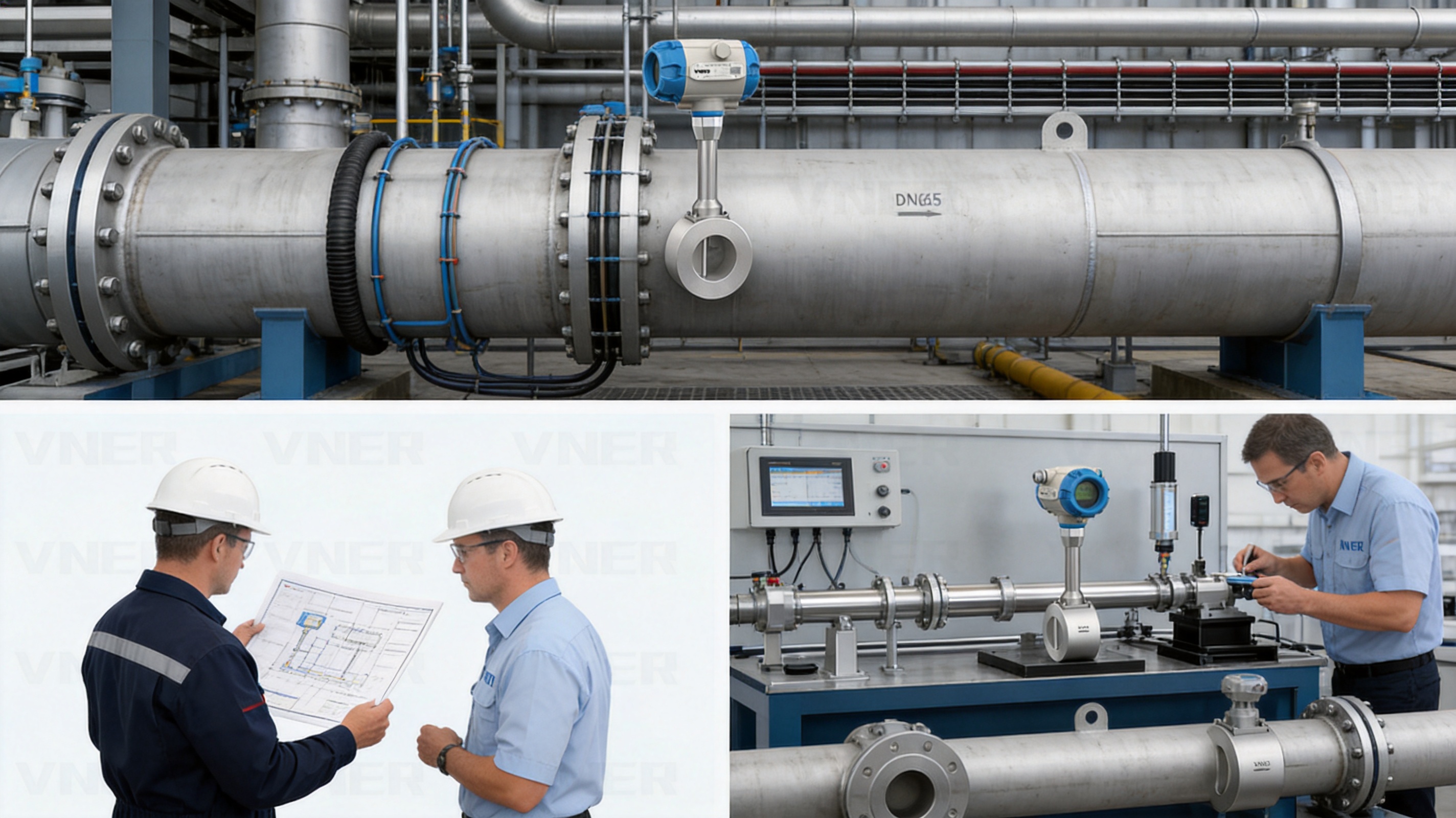
Reliable flow measurement is essential wherever steam, gas, or liquid must be monitored, controlled, balanced, or allocated. In modern industrial plants, a flowmeter is expected to do more than display a process value. It must provide stable readings, tolerate pressure and temperature changes, operate with minimal maintenance, integrate with control systems, and remain dependable in demanding environments. The MA80T Series Vortex Flowmeter is designed to meet these requirements through a robust Kármán vortex shedding principle, a non-moving-body construction, flexible installation options, and engineering support for a wide range of industrial duties.
Vortex technology is particularly valuable when one flowmeter platform must serve multiple media. Steam networks, compressed gas lines, natural gas systems, process water loops, utility headers, and chemical services all have different operating characteristics. The MA80T Series is designed for the measurement of steam, gases, and liquids, allowing users to standardize equipment across different areas of a facility while selecting the appropriate size, connection, and output configuration for each application.
This article explains the operating principle, design advantages, application possibilities, manufacturing strengths, quality approach, and selection considerations associated with the MA80T Series Vortex Flowmeter. It also compares vortex measurement with other common flow technologies, discusses installation and maintenance practices, and answers frequently asked questions from engineers, plant operators, EPC contractors, and system integrators.
1. The Role of Vortex Flow Measurement in Industrial Processes
Industrial processes depend on accurate knowledge of flow. Steam flow may determine energy consumption and production cost. Gas flow may influence combustion efficiency, process safety, or raw-material usage. Liquid flow may be needed for cooling, heating, dosing, water treatment, or production control. When the measured value is unstable or inaccurate, the consequences can include energy waste, poor product consistency, incorrect billing, excessive emissions, and unplanned downtime.
A suitable flowmeter must therefore balance several technical factors. It should have sufficient accuracy for the intended duty, a wide usable range, low pressure loss, resistance to process conditions, and compatibility with the pipe installation. It should also remain practical to maintain. Equipment with moving parts may experience mechanical wear, while some technologies require special fluid conductivity, long straight pipe runs, external sensors, or frequent cleaning.
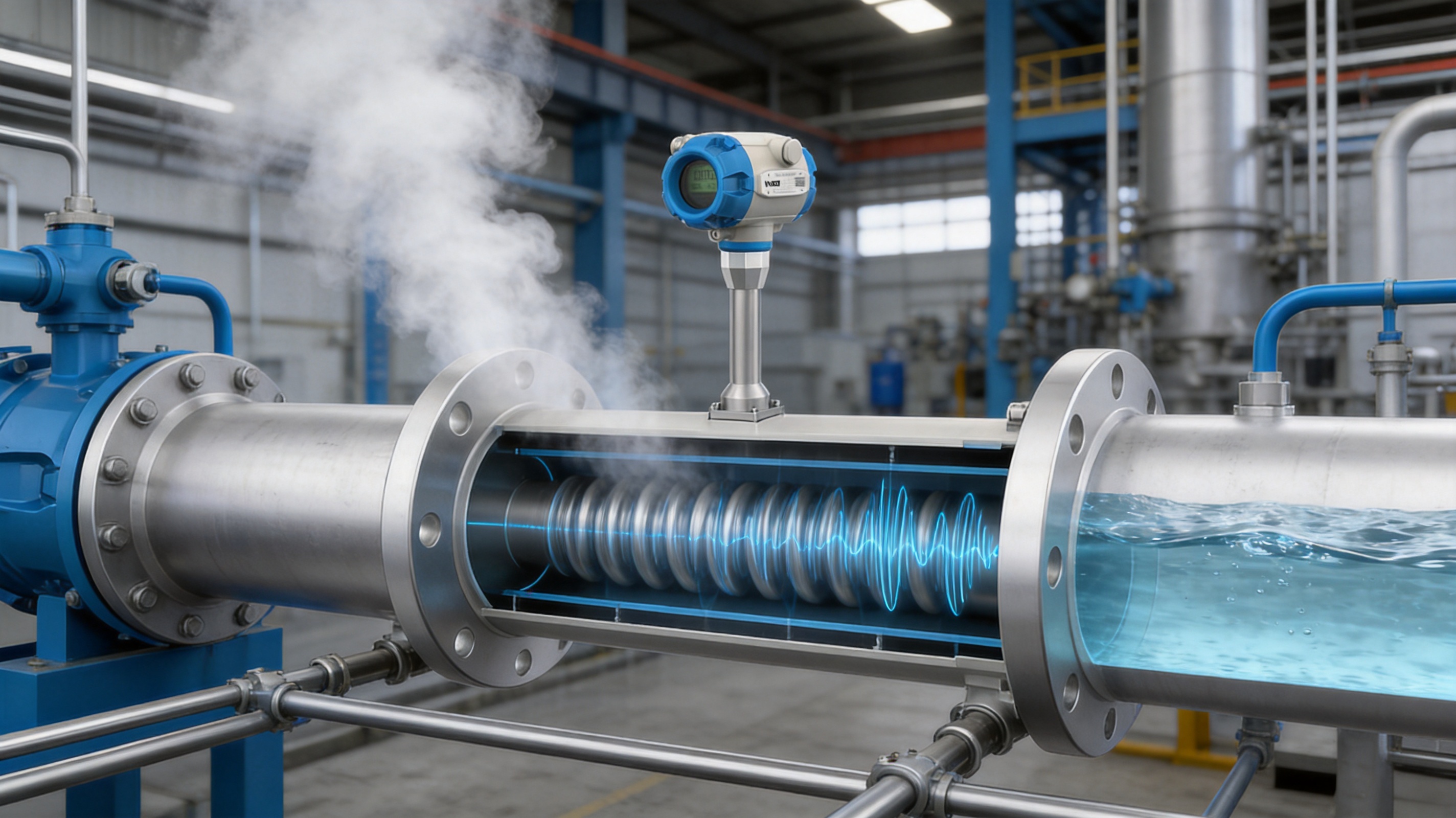
The MA80T Series addresses these challenges with a vortex flow structure. A bluff body, commonly called a shedder bar, is installed in the flow path. As the process medium passes around this body, alternating vortices form downstream. The frequency of vortex formation is related to flow velocity. A piezoelectric sensor detects the pressure changes associated with the vortices, and the electronic system converts the detected frequency into a flow-rate value.
This measurement method is well suited to clean and moderately conditioned steam, gases, and liquids. Because the sensing method is based on flow behavior around a fixed body rather than mechanical rotation, the instrument can provide stable operation with limited mechanical maintenance. The result is a practical solution for utility systems and process applications where reliability and repeatability are more important than unnecessary mechanical complexity.
2. How the MA80T Series Vortex Flowmeter Works
The working principle of the MA80T Series is based on the Kármán vortex street. When a fluid moves past a suitably shaped obstruction, the flow separates alternately from each side of the obstruction. This creates a regular series of rotating vortices downstream. The frequency of these vortices is related to the velocity of the fluid over an appropriate operating range.
The relationship between vortex frequency and flow velocity is commonly represented through the Strouhal relationship. In practical operation, the flowmeter uses calibrated characteristics associated with the shedder geometry, meter size, and process conditions. The piezoelectric sensing element detects the periodic pressure fluctuation caused by the vortex street. The transmitter then processes this signal and calculates the corresponding volumetric flow rate.
For gases and steam, the measured volumetric flow may be converted into a compensated value when pressure and temperature information is available. This is particularly important because gas and steam density changes with operating conditions. In applications requiring mass flow, thermal energy accounting, or more precise utility allocation, the meter can be incorporated into a system that receives pressure and temperature data or uses suitable compensation functionality.
The fixed-body structure is one of the defining features of vortex measurement. Unlike a turbine meter, the vortex meter does not depend on an impeller or rotor turning in the process stream. Unlike an electromagnetic meter, it does not require the liquid to have a specific electrical conductivity. Unlike some ultrasonic arrangements, the basic vortex body does not require external transducers mounted on opposite sides of the pipe. These differences make the technology attractive for many general-purpose industrial services.
Correct sizing remains essential. Vortex meters require sufficient flow velocity to generate a stable and detectable vortex signal. If the meter is oversized, the normal operating flow may fall below the effective measuring range. If it is undersized, pressure loss and excessive velocity may become concerns. Engineering selection should therefore consider minimum, normal, and maximum flow, fluid density, pressure, temperature, viscosity, line size, allowable pressure drop, and installation conditions.
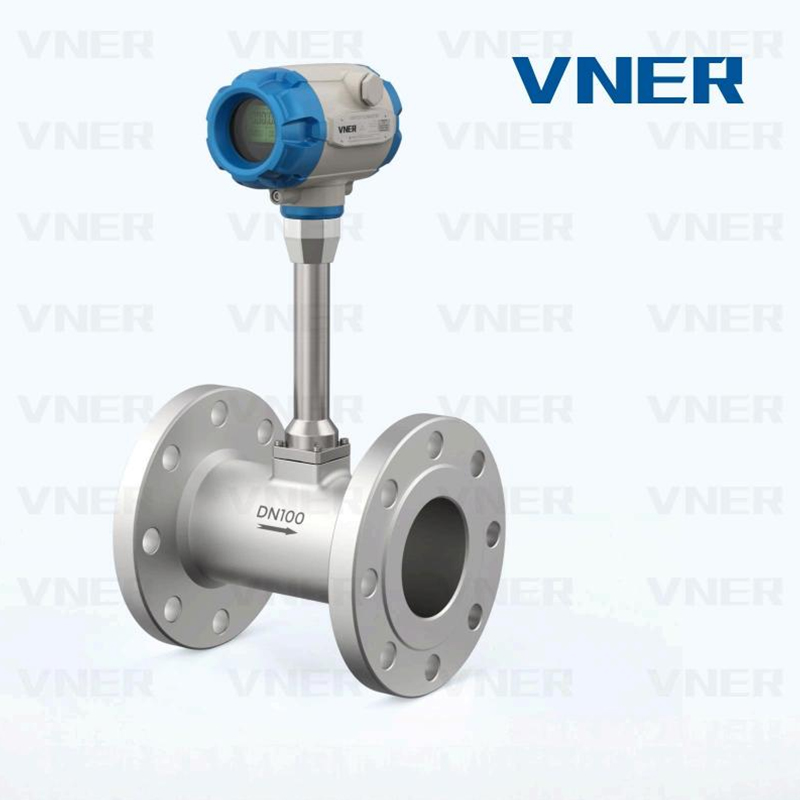
MA80T Series Vortex Flowmeter-副本
3. Core Design Advantages
3.1 One Platform for Steam, Gas, and Liquid Measurement
A major advantage of the MA80T Series is its suitability for multiple fluid categories. Industrial sites often use steam for heating, gas for combustion or processing, and water or other liquids for cooling and circulation. Using a vortex platform across these services can simplify instrument standardization, operator training, spare-parts planning, and maintenance procedures.
The meter is intended for the measurement of steam, gases, and liquids, including many common utility and process media. Its practical value is strongest in applications where the fluid is reasonably clean and the flow conditions are suitable for vortex generation. For heavily contaminated, highly viscous, or strongly pulsating media, an alternative technology may be more appropriate. Proper application engineering is therefore important, but the breadth of compatible services gives the MA80T Series a useful position in industrial instrumentation.
3.2 No Moving Parts in the Flow Body
The absence of moving mechanical elements reduces several common sources of maintenance. A rotating element can be affected by bearing wear, shaft damage, deposits, or changes in mechanical friction. A vortex meter instead uses a fixed shedder body and a piezoelectric sensor. This design supports long-term operational stability when the meter is correctly installed and the process medium is within the intended service range.
A non-moving-body design can also improve consistency over the equipment life cycle. There is no rotor speed to change as bearings age, and there is no mechanical assembly that must be routinely lubricated. Maintenance personnel can focus on process connections, electrical integrity, configuration, and periodic verification rather than repeated replacement of mechanical sensing components.
3.3 Low Flow Resistance and Efficient Operation
The MA80T Series uses a low-obstruction flow structure designed to limit unnecessary pressure loss. Any instrument installed in a pipeline creates some resistance, but minimizing that resistance helps protect system efficiency. This is especially important in steam distribution, compressed gas, combustion, and pumping systems, where pressure loss may increase energy consumption or reduce available process pressure.
Low pressure drop can be beneficial in both new installations and retrofit projects. In a new system, it supports efficient pipe and equipment design. In an existing system, it may allow measurement to be added without major changes to upstream or downstream operating conditions. The actual pressure loss depends on meter size, fluid properties, flow rate, and installation configuration, so a detailed sizing calculation should be completed before purchase.
3.4 High-Pressure and High-Temperature Capability
The stated design capability includes pressure up to 4.0 MPa and temperature up to 350°C under appropriate configuration and application conditions. This range allows the MA80T Series to address many industrial steam, hot-gas, and high-temperature process duties that would be unsuitable for basic general-purpose instrumentation.
High-temperature operation requires more than a suitable sensor. The flow body, sealing arrangement, electronics, connection design, and installation method must all be considered. Heat transfer from the process pipe can influence the transmitter and nearby wiring. Correct insulation practices, orientation, and thermal management are therefore important. Users should always confirm the exact pressure-temperature envelope for the selected model, material, connection, and operating condition.
3.5 Flexible Installation Configurations
The MA80T Series supports horizontal and vertical installation and is available in flange and wafer versions. This flexibility is valuable because industrial piping systems rarely follow a single layout. Utility headers may run vertically between floors, while process lines may be arranged horizontally around vessels, pumps, heat exchangers, or skids.
Flanged meters can be convenient for systems requiring robust, familiar connections and easier removal during maintenance. Wafer-style meters can offer a compact installation footprint and may be attractive where space and weight are important. The final selection should take into account the pipe standard, pressure class, gasket arrangement, bolt access, alignment, and maintenance clearance.
4. Comparison with Alternative Flowmeter Technologies
Every flow technology has a suitable operating window. The purpose of comparing technologies is not to suggest that one meter is universally superior, but to clarify where vortex measurement offers practical advantages. The MA80T Series is especially competitive in applications involving steam and general industrial gases, where electromagnetic measurement is not applicable and mechanical meters may require more maintenance.
| Flowmeter technology | Typical strengths | Important considerations | Where vortex measurement may offer an advantage |
|---|---|---|---|
| Vortex | Measures steam, gases, and liquids; no moving parts; useful for utility and process services | Requires suitable velocity and adequate straight-run conditions; sensitive to severe pulsation | Provides a common platform for multiple media with a robust fixed-body design |
| Electromagnetic | Excellent for conductive liquids; no obstruction in many designs; suitable for slurry services | Not suitable for non-conductive gases, steam, or many hydrocarbon liquids | Vortex can measure steam and gas where electromagnetic technology cannot |
| Turbine | Good accuracy for clean liquids and gases at appropriate conditions | Moving parts may wear; sensitive to contamination and mechanical damage | Vortex avoids a rotating rotor and related mechanical maintenance |
| Ultrasonic | Can provide low obstruction or clamp-on installation depending on design | Signal quality can depend on fluid properties, pipe condition, profile, and installation | Vortex offers an integrated, fixed-body measurement arrangement for many standard lines |
| Coriolis | Direct mass-flow measurement and high performance in many liquid and gas applications | Higher cost, greater weight, and possible pressure-drop or installation constraints | Vortex can be a more economical solution for utility volumetric flow and compensated steam or gas flow |
| Rotameter | Simple local indication and straightforward visual operation | Limited automation and installation flexibility; often dependent on orientation | Vortex supports electronic outputs, remote monitoring, and process integration |
Compared with turbine meters, the MA80T Series has the benefit of a non-rotating sensing arrangement. This can be important in fuel gas, steam, and utility systems where regular mechanical inspection is undesirable. Compared with electromagnetic meters, the vortex principle is more versatile for gas and steam because it does not depend on liquid conductivity. Compared with Coriolis meters, vortex technology can provide a more economical approach when the process requirement is volumetric measurement or compensated mass flow rather than direct mass measurement.
Compared with basic rotameters, the MA80T Series is better suited to plant-wide automation. Electronic flow data can be used by distributed control systems, programmable logic controllers, energy-management platforms, and supervisory monitoring systems. This makes it more appropriate for facilities seeking centralized data collection, alarm management, production reporting, and utility optimization.
5. Manufacturing and Engineering Strengths
Flowmeter performance depends not only on the measurement principle but also on manufacturing discipline. A well-designed vortex meter requires consistent shedder geometry, stable sensor assembly, dependable sealing, reliable electronics, and repeatable calibration. Small deviations in the flow body or signal-processing chain can influence repeatability, particularly when instruments are installed in different locations and expected to perform consistently.
Jiangsu VNER Electronic Technology Co., Ltd. is a specialized industrial flowmeter manufacturer based in Yangzhou, China. Since 2011, the company has focused on flow measurement products covering electromagnetic, Coriolis, vortex, swirl, turbine, thermal mass, ultrasonic, and metal-tube rotameter technologies. This product breadth provides experience across liquid, gas, steam, and slurry applications and supports the development of application-specific instrument solutions.
The company operates approximately 23,000 square meters of modern facilities across three plants and has a technical team of more than 150 people. This manufacturing base is relevant to the MA80T Series because production capacity, engineering resources, and process control all affect delivery reliability and product consistency. A flowmeter supplier must be able to support not only individual instruments but also repeat orders, project batches, spare units, replacement requirements, and technical documentation.
5.1 In-House Calibration and Verification
Calibration is central to flowmeter manufacturing. A meter may have a sound mechanical design, but the final measurement performance depends on how the complete assembly is verified. In-house calibration enables the manufacturer to evaluate instruments under controlled conditions, identify deviations, maintain production feedback, and create traceable test records.
For vortex flowmeters, calibration and verification may involve checking sensor response, signal stability, flow-body performance, transmitter processing, output behavior, and configuration parameters. The exact test method depends on the model and application, but the general objective is to confirm repeatable behavior before shipment. Calibration data also helps engineers investigate field questions and maintain a consistent quality record.
5.2 Engineering-Driven Sizing and Selection
Not every line should use the same meter size simply because the pipe diameter is the same. Flow range, density, pressure, temperature, viscosity, allowable pressure loss, and expected turndown all influence the appropriate selection. Engineering-driven sizing reduces the risk of installing a meter that is too large to produce a stable signal or too small to handle the maximum process condition.
Application engineering is especially important for steam and gas. Their density can vary substantially with pressure and temperature, influencing velocity and mass-flow calculations. The manufacturer’s technical team can assist with reviewing process data, selecting a meter body and connection, evaluating installation requirements, and identifying whether pressure-temperature compensation is necessary.
5.3 Certified Quality Processes and Traceability
Industrial customers increasingly require documented quality processes. Traceability supports project acceptance, maintenance planning, audits, and future replacement. A traceable instrument can be associated with production records, inspection results, configuration information, and calibration documentation. This is useful in regulated industries and in large projects where hundreds of instruments may be installed across several process units.
Consistent quality processes also help reduce variation between production batches. For EPC contractors and OEM partners, repeatability is essential because a meter supplied for one skid or plant area should behave predictably when another unit is ordered later. A structured manufacturing system supports this requirement through controlled procedures, inspection points, documentation, and feedback from field applications.
5.4 Automated and Modernized Production
Increasing automation in manufacturing can improve repeatability and reduce dependence on inconsistent manual operations. Automated or semi-automated processes may support component preparation, assembly control, inspection, data recording, and production scheduling. Automation does not replace engineering judgment, but it helps create a more stable production environment when combined with skilled personnel and appropriate quality checks.
For a flowmeter, manufacturing modernization should support the complete product lifecycle. It should improve the consistency of the flow body, sensor installation, enclosure assembly, electrical testing, calibration, labeling, packaging, and documentation. These details may appear small individually, but together they determine whether the product is easy to install, commission, operate, and maintain.
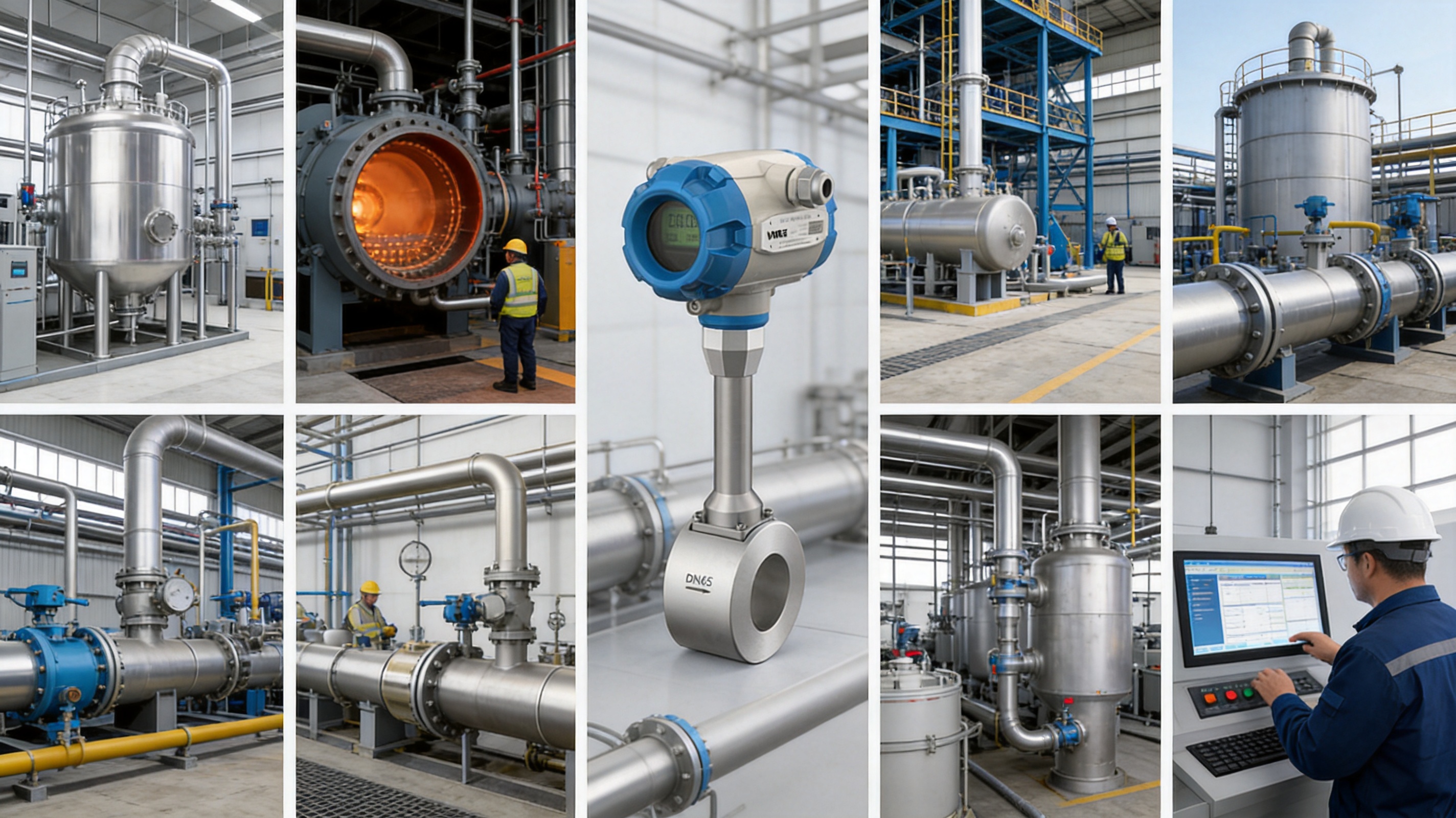
6. Industrial Applications
6.1 Oil and Gas Systems
Oil and gas facilities use flow measurement for fuel gas, natural gas, saturated steam, condensate, utility services, and burner systems. The MA80T Series can be considered for suitable gas and steam lines where the process conditions fall within its design range and the flow profile is properly managed.
In burner systems, reliable fuel-gas measurement supports combustion control and helps operators identify changes in consumption. In steam and condensate systems, flow data can contribute to energy accounting and equipment-performance monitoring. When the instrument is used for allocation or custody-related purposes, the complete measurement system must meet the applicable accuracy, calibration, and regulatory requirements.
6.2 Food and Beverage Processing
Food and beverage plants commonly require steam for cleaning and sterilization, carbon dioxide for carbonation or packaging, and liquid measurement for dosing and utility control. The MA80T Series can be used in suitable non-contact or utility applications where its materials, connection design, cleaning practices, and hygiene requirements are properly evaluated.
Clean steam measurement is particularly useful in sterilization systems. Operators can monitor steam delivery to autoclaves, sterilizers, and process cleaning systems, helping verify that the required utility is available and that consumption remains within expected limits. For hygienic applications, the meter selection must be reviewed alongside surface finish, connection type, cleanability, and applicable plant standards.
6.3 HVAC and Building Automation
Heating and cooling systems depend on balanced distribution of steam, hot water, chilled water, and sometimes compressed air. The MA80T Series can support monitoring of suitable water and steam services in district heating, central utility, and building automation systems.
Flow information allows operators to compare supply and return conditions, identify abnormal circulation, assess energy use, and optimize pump or valve operation. In a chilled-water loop, stable flow measurement supports thermal balancing and helps maintain consistent indoor conditions. In hot-water or steam systems, measurement assists with heat distribution, consumption reporting, and equipment diagnostics.
6.4 Chemical and Petrochemical Plants
Chemical and petrochemical facilities use a broad range of gases, vapors, liquids, and utility streams. The MA80T Series may be suitable for compatible process media, utility gases, steam, and other applications where the fluid is within the instrument’s material and operating limits.
In these environments, engineers must review chemical compatibility, pressure rating, temperature, possible solids, pulsation, vibration, and hazardous-area requirements. The meter should be selected as part of the complete instrumentation system rather than as an isolated component. Proper grounding, cable routing, process isolation, and maintenance access are also important.
6.5 Power Generation
Power plants and industrial cogeneration facilities depend heavily on steam and utility-flow monitoring. The MA80T Series can be considered for boiler-related steam lines, turbine auxiliary systems, heat-recovery systems, compressed air, fuel gas, and other suitable services.
Steam-flow measurement contributes to boiler efficiency analysis, heat-balance calculations, distribution monitoring, and maintenance planning. In heat-recovery applications, flow data helps operators understand the relationship between recovered energy and process demand. High-temperature capability is particularly relevant, although the specific material, pressure class, insulation method, and transmitter configuration must be confirmed for each service.
6.6 Pharmaceutical Manufacturing
Pharmaceutical plants require controlled utilities and documented process conditions. Clean steam used for sterilization-in-place systems and autoclaves must be monitored carefully. Flow data can complement pressure, temperature, conductivity, and validation records.
The MA80T Series may also be considered for suitable purified-water or utility-water services when the selected configuration meets the system’s material, hygienic, and validation requirements. In regulated production, instrument documentation, calibration records, installation qualification, and periodic verification are as important as the basic flow reading.
6.7 Textile and Dyeing Plants
Textile operations use steam for heating, drying, pressing, and process conditioning. Dyeing systems may also require measurement of water, dye liquor, and chemical solutions. The MA80T Series can support appropriate steam and liquid measurement duties where viscosity, solids content, conductivity, and chemical compatibility are acceptable.
Reliable flow information helps maintain repeatable dyeing conditions and identify changes in utility consumption. For liquids containing fibers, suspended solids, or high concentrations of chemicals, engineers should verify that the selected vortex meter will maintain a stable signal and that the flow body can withstand the process environment.
6.8 Pulp and Paper Production
Pulp and paper plants use large quantities of water, steam, condensate, process chemicals, and liquors. Flowmeters are required across stock preparation, paper machines, utility systems, chemical dosing, and recovery operations.
Vortex measurement may be appropriate for process steam, condensate, and selected liquors with suitable flow characteristics. The application review should consider solids content and viscosity because highly viscous or heavily entrained media may not be ideal for vortex measurement. Where the service is appropriate, the fixed-body construction and electronic output can support plant-wide monitoring and utility management.
7. Specialized Use Cases
7.1 Steam Monitoring in Sterilization Systems
In autoclaves and sterilization-in-place systems, steam delivery must be sufficiently consistent to achieve the required thermal conditions. A flowmeter can help operators monitor the amount and stability of steam supplied during a cycle. It can also support troubleshooting when pressure, temperature, or sterilization results vary unexpectedly.
The MA80T Series provides a non-mechanical approach for suitable clean-steam lines. Its measurement data may be integrated with the plant control system, recorded with batch information, or reviewed during validation activities. The meter itself does not replace sterilization validation; instead, it provides an additional process measurement that can improve visibility and accountability.
7.2 Gas Flow Optimization in Combustion
Burner systems require a controlled relationship between fuel and combustion air. Excess fuel can increase emissions and reduce efficiency, while insufficient fuel can affect output and flame stability. Measuring fuel gas flow provides a basis for control, alarm management, and performance analysis.
When installed in a properly designed gas line, the MA80T Series can supply real-time flow information for boiler burners, ovens, furnaces, dryers, and other combustion equipment. Engineers should consider pulsation, pressure regulation, flow range, gas composition, hazardous-area certification, and the required response time before selecting the instrument.
7.3 HVAC Water-Loop Control
In heating and cooling water systems, insufficient circulation can lead to uneven temperatures, reduced heat-transfer performance, or equipment alarms. Excessive circulation can increase pump energy consumption. Measuring flow at strategic points allows operators to balance the system and identify changes caused by blocked strainers, valve problems, air accumulation, or pump degradation.
The MA80T Series can be used for suitable water services in horizontal or vertical pipelines. Its electronic measurement output makes it suitable for integration with building-management systems and energy dashboards. Combined with supply and return temperature measurement, the flow value can help calculate thermal energy transfer and assess system efficiency.
7.4 Steam-Network Energy Balancing
Large steam networks often contain multiple boilers, production areas, heat exchangers, and users. Pressure and temperature vary across the network, making simple volume comparison insufficient for accurate energy analysis. A vortex meter with suitable compensation can contribute to mass-flow or energy-balance calculations when combined with reliable pressure and temperature data.
The MA80T-TP configuration is intended for applications requiring enhanced compensation capability. It can support monitoring of steam distribution under changing pressure and temperature loads, helping users analyze consumption, allocate utility costs, identify abnormal losses, and improve overall network efficiency. The accuracy of the final energy calculation depends on the quality and placement of all associated measurements.
8. Installation Considerations
Correct installation is essential for vortex meter performance. The flow should approach the shedder body with a reasonably developed and symmetrical profile. Valves, elbows, reducers, expanders, pumps, compressors, and other disturbances near the meter can create swirl or turbulence that affects measurement stability.
The required straight-run distance depends on the piping arrangement, meter design, process conditions, and applicable engineering guidance. Users should follow the manufacturer’s installation instructions and project standards rather than applying a universal distance to every installation. Flow conditioners may be considered when space is limited or upstream disturbances cannot be avoided.
The pipe should be properly aligned, and the meter should not be forced into position by misaligned flanges or excessive bolt loading. Gaskets must not extend into the flow path. Internal weld beads, protruding seals, heavy deposits, and damaged pipe sections near the meter can influence the flow profile and should be addressed during installation.
For liquid service, the pipe should remain full under all normal operating conditions. Installing the meter at a location where the line can partially drain may cause unstable readings. For gas and steam service, the line should be designed to minimize condensate accumulation where appropriate. Drainage, insulation, heat tracing, and orientation should be evaluated according to the process.
Vibration can interfere with low-level signal detection. The meter should be installed away from severe mechanical vibration, reciprocating equipment, or unsupported pipe sections. Electrical cables should be routed in a manner that limits interference from high-power equipment. Grounding, shielding, and enclosure protection should follow the applicable electrical requirements.
High-temperature services require particular attention to transmitter exposure and maintenance access. Insulation should be applied according to the approved installation method and should not prevent heat dissipation from components that must remain within their rated temperature. Operators should also ensure that isolation valves, bypasses, and pressure-relief provisions are suitable for safe maintenance.
9. Selection Guide for Engineers and Buyers
The first step in selecting an MA80T Series Vortex Flowmeter is to define the application clearly. The following information is normally required:
| Selection item | Why it matters |
|---|---|
| Measured medium | Determines compatibility, density, viscosity, phase behavior, and suitable measurement technology |
| Minimum, normal, and maximum flow | Confirms that the meter operates within a stable and useful range |
| Operating pressure | Influences density, mechanical rating, sealing, and compensation requirements |
| Operating temperature | Determines material selection, sensor suitability, insulation, and transmitter configuration |
| Pipe size and connection standard | Defines installation compatibility and available flange or wafer options |
| Required output | Determines compatibility with control systems, totalizers, alarms, and data platforms |
| Accuracy and repeatability target | Ensures that the instrument is matched to process control or energy-accounting needs |
| Installation layout | Identifies straight-run requirements, orientation, access, and possible flow disturbances |
| Area classification | Determines whether additional electrical or enclosure approvals are required |
| Maintenance and documentation requirements | Supports plant standards, calibration programs, validation, and lifecycle management |
It is also important to distinguish between volumetric flow, compensated volumetric flow, mass flow, and energy flow. A basic flow-rate display may be sufficient for local monitoring, while a steam network may require pressure and temperature compensation. A project specification should define the measurement basis, reference conditions, units, totalization method, alarm functions, and data communication requirements.
10. Operation, Maintenance, and Lifecycle Value
The MA80T Series is designed to provide stable measurement with limited routine mechanical maintenance. Even so, reliable operation depends on periodic inspection. Plant personnel should review the measured value against expected process conditions, compare the meter with upstream or downstream indicators when possible, and investigate sudden changes rather than assuming that every deviation is a calibration problem.
Common maintenance activities include checking electrical connections, examining the enclosure and cable entries, verifying process leakage is absent, inspecting nearby pipe conditions, reviewing configuration settings, and confirming that the flow body has not become heavily fouled. In applications with deposits or solids, the inspection interval may need to be shortened.
Because there are no moving parts in the flow body, the meter does not require rotor or bearing replacement. This can reduce lifecycle maintenance compared with mechanical flowmeters in suitable applications. However, non-moving construction does not make the instrument immune to all process problems. Severe vibration, excessive pulsation, cavitation, entrained liquid in gas service, or significant buildup around the shedder body can still affect performance.
Calibration intervals should be based on the criticality of the application, regulatory expectations, historical stability, process severity, and the consequences of measurement error. Utility monitoring may use a different verification schedule from pharmaceutical validation or commercial allocation. A documented risk-based approach is generally more effective than applying the same interval to every instrument.
Long-term value also depends on documentation and support. Clear identification, configuration records, calibration certificates, spare-part planning, technical assistance, and application review all help reduce downtime. A manufacturer with experience across multiple flow technologies can also advise when the existing measurement principle is no longer suitable because the process has changed.
11. Why Manufacturing Capability Matters to Project Customers
For a single instrument purchase, product specifications may appear to be the main concern. For a plant project, however, manufacturing capability becomes equally important. EPC contractors and end users need consistent delivery, complete documentation, responsive engineering support, and the ability to reproduce a selected configuration for future expansion.
VNER has delivered more than 2,000 engineering projects in over 30 countries and supports EPC contractors, end users, and OEM partners. This project experience is valuable because industrial flowmeter requirements often vary by industry, region, pipe standard, control architecture, and approval system. Lessons from previous projects can help engineers identify common installation risks and clarify specification details at an early stage.
The company’s product range includes electromagnetic, Coriolis, vortex, swirl, turbine, thermal mass, ultrasonic, and rotameter products. This allows customers to select a technology according to the actual medium and operating condition rather than forcing every application into one instrument type. A multi-technology supplier can also help standardize documentation, service contacts, and procurement processes across a facility.
Engineering-driven selection, in-house calibration, certified quality procedures, and increasingly automated production support the goal of stable, repeatable measurement. These strengths are particularly relevant when a project requires many meters with similar specifications. Consistency among instruments can simplify commissioning, reduce training requirements, and improve confidence in plant-wide data.
12. Practical Advantages for Different Users
For Plant Operators
Operators benefit from a flowmeter that provides stable readings, supports real-time process awareness, and can be used across common utility services. The MA80T Series is suitable for monitoring steam, gas, and liquid duties when properly selected. Its electronic output can help operators identify abnormal consumption, verify circulation, and respond to process changes.
For Maintenance Teams
Maintenance teams benefit from the absence of moving parts in the flow body and from a product family that can be standardized across several services. Fewer mechanical wear components may reduce routine intervention. Accessible installation, clear identification, and manufacturer documentation further support efficient maintenance.
For EPC Contractors
EPC contractors need predictable technical support, configuration consistency, documentation, and delivery coordination. The manufacturer’s experience with projects in multiple countries and industries can help with instrument schedules, data sheets, sizing reviews, connection selection, and batch supply.
For OEM Integrators
OEMs require compact, repeatable instruments that can be incorporated into skids, boiler packages, HVAC modules, combustion systems, and process equipment. Wafer and flange options provide installation flexibility, while the broad application range allows the same product family to be considered across different package designs.
For Energy Managers
Energy managers need trustworthy flow data for consumption reporting, thermal balancing, cost allocation, and efficiency improvement. Steam and gas measurement can become significantly more useful when combined with pressure and temperature compensation. The MA80T Series can contribute to these systems when the measurement architecture is designed correctly.
13. Application Limitations and Responsible Selection
A technically responsible product evaluation should include limitations as well as advantages. Vortex meters require a suitable flow velocity and a reasonably stable flow profile. Very low flow may produce a weak signal, while excessive pulsation can disturb vortex formation. Severe two-phase flow, heavy solids, high viscosity, or rapidly changing process conditions may require another technology.
Users should not select a meter solely by matching the pipe diameter. The meter must be sized according to the complete operating range. The process should also be reviewed for temperature cycling, pressure transients, vibration, water hammer, condensation, and possible chemical attack. These factors influence both measurement performance and mechanical service life.
In hazardous or regulated locations, the selected configuration must meet the required approvals and documentation. The same applies to sanitary, pharmaceutical, or food-processing applications. The general MA80T platform may support a wide range of industrial duties, but the final model and accessories must be confirmed for the exact environment.
14. Frequently Asked Questions
Q1: What media can the MA80T Series measure?
The MA80T Series is designed for measuring steam, gases, and liquids. Suitability depends on flow range, density, viscosity, temperature, pressure, cleanliness, chemical compatibility, and installation conditions. Engineers should provide complete process data for final selection.
Q2: Does the flowmeter contain a rotating turbine or impeller?
No. The vortex flowmeter uses a fixed bluff body and detects the frequency of vortices formed downstream. The absence of a rotating flow element reduces mechanical wear and related maintenance requirements.
Q3: How is the flow signal detected?
A piezoelectric sensor detects pressure fluctuations associated with vortex shedding. The electronics process the frequency signal and calculate the flow rate according to the meter’s calibrated characteristics.
Q4: Can it be used for steam measurement?
Yes. Steam measurement is one of the principal applications. Pressure, temperature, pipe conditions, flow range, insulation, and compensation requirements must be evaluated. For mass-flow or energy calculations, additional process information may be required.
Q5: What are the stated pressure and temperature capabilities?
The product information identifies capability up to 4.0 MPa pressure and up to 350°C temperature under suitable configuration and application conditions. The exact allowable limits must be confirmed for the selected meter size, materials, connection, and operating service.
Q6: Can the meter be installed vertically?
Yes. The MA80T Series supports horizontal and vertical installation. The correct orientation depends on the measured medium, drainage and condensation behavior, piping arrangement, and manufacturer instructions.
Q7: What is the difference between flange and wafer versions?
Flanged versions use integral flanged connections and may be preferred for robust, familiar industrial piping arrangements. Wafer versions are installed between pipeline flanges and may provide a more compact and lightweight option. The choice depends on pipe standards, pressure class, available space, maintenance access, and project requirements.
Q8: Is pressure and temperature compensation necessary?
It depends on the measurement objective. For basic volumetric monitoring under relatively stable conditions, compensation may be limited or unnecessary. For steam or gas mass-flow, energy accounting, or cost allocation, pressure and temperature compensation is often important because density changes with operating conditions.
Q9: Can it replace an electromagnetic flowmeter?
It can be an alternative in some applications, but the technologies are not interchangeable in every service. Electromagnetic meters are often preferred for conductive liquids and slurry applications, while vortex meters offer the ability to measure steam and gases. The medium and process requirements should determine the choice.
Q10: Can it replace a Coriolis flowmeter?
In suitable utility and process applications, vortex measurement may provide a more economical and lighter solution than Coriolis measurement. Coriolis meters provide direct mass-flow measurement and may be preferable where that capability is essential. Vortex is often attractive when volumetric flow or compensated flow is sufficient.
Q11: What information should be supplied for sizing?
Users should provide medium, minimum/normal/maximum flow, pressure, temperature, density or gas composition where relevant, viscosity, pipe size, connection standard, allowable pressure loss, installation layout, output requirements, and any hazardous-area or hygienic requirements.
Q12: What manufacturing support is available?
The manufacturer provides engineering-driven sizing and selection, in-house calibration, quality documentation, and support for EPC contractors, end users, and OEM partners. The company’s experience covers multiple flow technologies and industrial sectors.
Q13: How often should the flowmeter be calibrated?
There is no single interval for every application. The appropriate schedule depends on criticality, regulatory requirements, process severity, historical stability, and the consequences of inaccurate measurement. A risk-based calibration and verification plan is recommended.
Q14: Is the MA80T Series suitable for pharmaceutical applications?
It may be suitable for clean-steam and selected utility applications when the exact configuration satisfies the plant’s material, hygienic, validation, electrical, and documentation requirements. The instrument should be evaluated as part of the complete validated system.
15. Conclusion
The MA80T Series Vortex Flowmeter provides a practical measurement solution for industrial steam, gas, and liquid services. Its Kármán vortex principle, piezoelectric detection, fixed flow body, low-obstruction design, high-pressure and high-temperature capability, and flexible flange or wafer installation options make it suitable for a broad range of demanding applications.
Its principal advantage over many conventional alternatives is versatility. One platform can address steam and gas services that electromagnetic meters cannot measure, while avoiding the rotating mechanical elements found in turbine meters. Compared with more complex mass-flow technologies, vortex measurement can offer an economical and compact solution when compensated flow is sufficient. Electronic integration also makes it more suitable than basic local-indication instruments for modern automation and energy-management systems.
Product performance ultimately depends on correct sizing, installation, configuration, and maintenance. The manufacturer’s engineering resources, in-house calibration, quality processes, modern facilities, technical team, and project experience add value by supporting these activities before and after delivery. With appropriate application selection, the MA80T Series can contribute to process control, utility monitoring, energy optimization, equipment diagnostics, and long-term plant reliability.
References
1. Industrial flow measurement principles and application engineering practices.
2. Kármán vortex street theory and Strouhal relationship for bluff-body flow measurement.
3. General engineering guidance for steam, gas, and liquid flowmeter installation.
4. Process instrumentation practices for pressure and temperature compensation.
5. Industrial calibration, verification, and traceability procedures for flow measurement equipment.
6. Energy-management principles for steam distribution, HVAC water loops, and combustion systems.
7. Manufacturer technical information for the MA80T Series Vortex Flowmeter.
8. Industrial application practices for oil and gas, chemical, power, food, pharmaceutical, textile, and pulp and paper facilities.
Product: MA80T Series Vortex Flowmeter-副本



Products
Contact Information
-

+86 18652789521
+86-0514-83633600 / 83633900 -

+86-0514-83633600 / 83633900
-

s@vner.com.cn
katherine@vner.com.cn -

No. 11 Xingye Road, Chenji Town Industrial Park, Yizheng, Yangzhou, China
