
 0
 EN
 English
 عربى
 Español
 русский
If you need any help, please feel free to contact us
Home / Author / Ding Yuchun — Overseas After-Sales Support Engineer / MA80T Series Vortex Flowmeter: Precision Measurement for Steam, Gas, and Liquid Applications
MA80T Series Vortex Flowmeter: Precision Measurement for Steam, Gas, and Liquid Applications
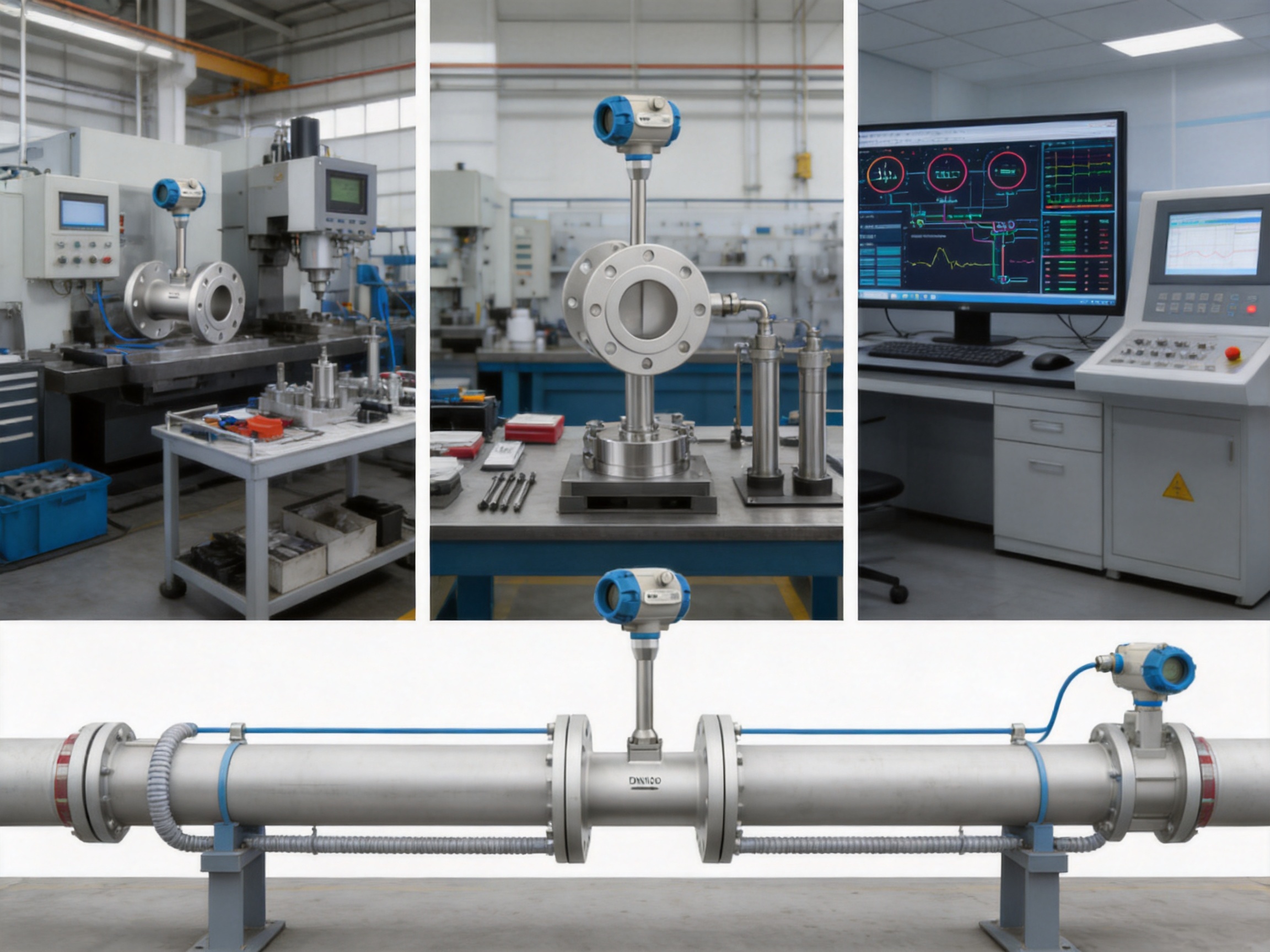
Reliable flow measurement is essential to the safe, efficient, and economical operation of modern industrial plants. Steam networks, compressed-air systems, fuel-gas lines, process utilities, heating loops, and clean-liquid services all depend on accurate knowledge of flow conditions. When flow data is unstable or unreliable, operators may face excessive energy consumption, poor process control, unplanned maintenance, inaccurate production accounting, and avoidable safety risks.
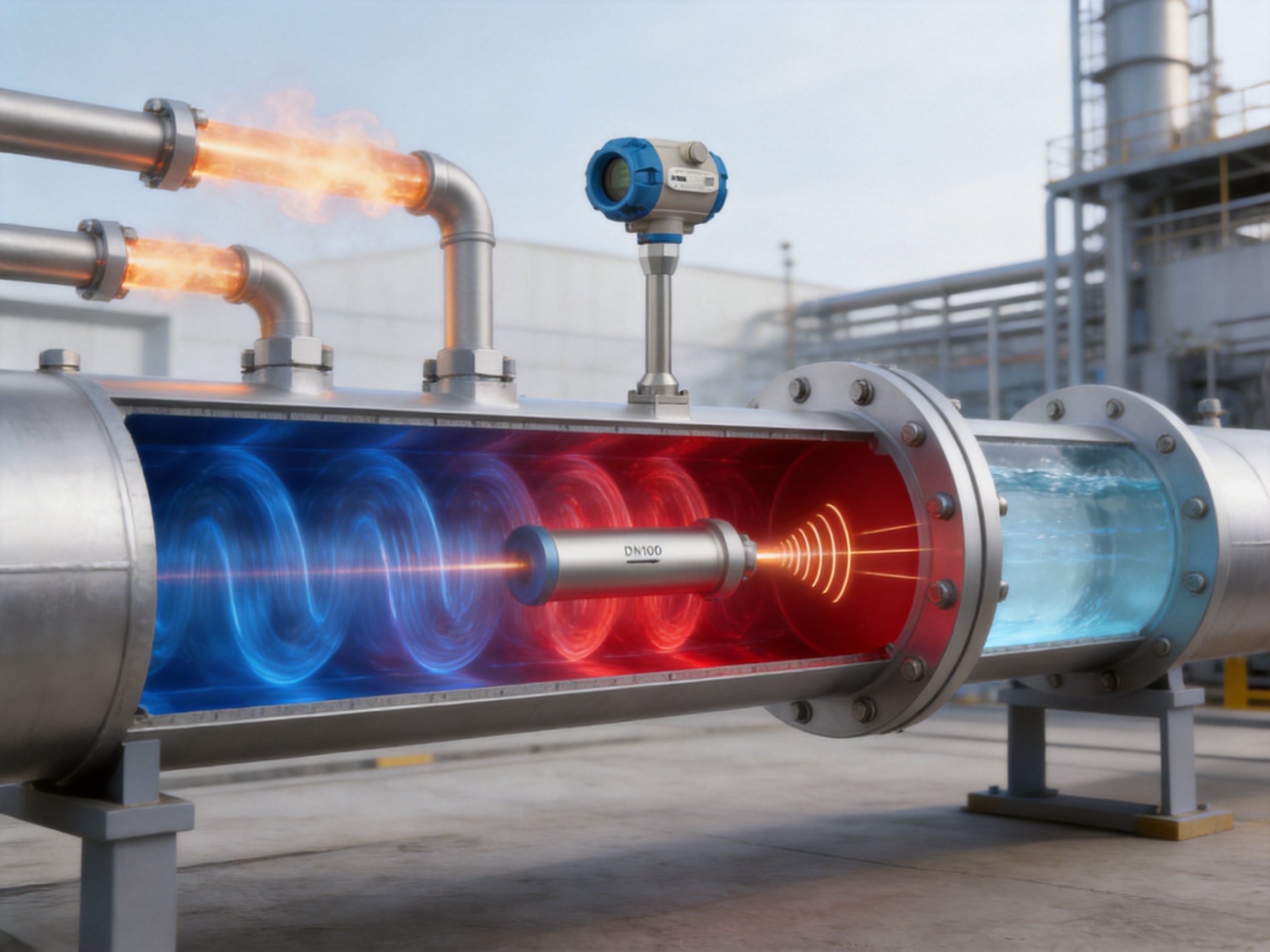
The MA80T Series Vortex Flowmeter is designed for industrial measurement of steam, gases, and clean or low-viscosity liquids. Based on the Kármán vortex street principle, the meter detects the frequency of vortices created as the process medium passes a precisely engineered bluff body. A piezoelectric sensor converts the vortex signal into an electrical measurement, and the instrument calculates the volumetric flow rate from the detected frequency.
With no moving parts, a robust stainless-steel flow body, multiple process connection options, and support for common industrial outputs and communication protocols, the MA80T provides a practical solution for demanding utility and process applications. It is suitable for saturated steam, superheated steam, compressed air, natural gas, nitrogen, inert gases, clean water, hot water, chilled water, and other compatible single-phase media.
Manufactured by Jiangsu VNER Electronic Technology Co., Ltd., the MA80T benefits from an engineering-oriented production system that combines product development, material selection, machining, assembly, calibration, testing, and technical support. The company’s experience across electromagnetic, Coriolis, vortex, swirl, turbine, thermal mass, ultrasonic, and rotameter technologies supports a broad understanding of industrial flow measurement and application-specific meter selection.
1. The Role of Vortex Flow Measurement in Industry
Vortex flowmeters occupy an important position between several common flow measurement technologies. They can measure liquids, gases, and steam with one general operating principle, while offering a relatively simple mechanical design and low maintenance requirements. Their operating principle does not rely on an impeller, rotor, gear, diaphragm, or other continuously moving element.
In a typical installation, a shedder bar is positioned inside the meter body. As fluid flows around this bluff body, alternating vortices are released from opposite sides. These vortices form a repeating pattern downstream of the shedder bar. The frequency of vortex formation is related to the velocity of the fluid over a suitable Reynolds number range.
The meter’s sensor detects the pressure or force fluctuations associated with vortex shedding. In the MA80T, a piezoelectric sensing element is used to detect these fluctuations. The electronic converter processes the signal, applies the relevant calibration and compensation parameters, and provides a flow output to the control or monitoring system.
This principle is particularly useful for steam and gas measurement because the same instrument architecture can be applied to many utility services. A plant can therefore use a consistent measurement approach for boiler steam, compressed air, nitrogen, fuel gas, process gas, and other compatible services. For liquids, vortex measurement is suitable when the fluid is clean, single-phase, and within the required velocity and viscosity range.
2. Operating Principle of the MA80T
2.1 Kármán Vortex Street
When a fluid passes a bluff body, the flow separates from the body’s surface. Under suitable flow conditions, alternating vortices are shed downstream. This repeating sequence is known as a Kármán vortex street. The shedding frequency is proportional to flow velocity within the meter’s operating range.
The relationship can be expressed in simplified form through the Strouhal number, which links vortex frequency, characteristic body dimension, and flow velocity. In practical operation, the meter is calibrated so that the detected frequency corresponds to a known volumetric flow rate. The electronics then convert the frequency into an output signal such as 4–20 mA or a pulse signal.
Because the measurement is based on frequency rather than a mechanical displacement, the instrument can provide stable repeatable readings without an internal rotor or bearing assembly. This is one of the principal reasons vortex flowmeters are widely used in plant utilities and process services.
2.2 Piezoelectric Signal Detection
The piezoelectric sensor responds to the alternating forces or pressure fluctuations generated by vortex shedding. The sensor does not need to be placed directly in the main flow path as a moving component. Instead, it detects the characteristic oscillation produced by the vortex pattern and passes the signal to the electronic converter.
Piezoelectric detection offers several practical benefits. It supports compact construction, avoids mechanical wear associated with rotating sensors, and provides a suitable signal for digital processing. The MA80T electronics can monitor signal quality and identify abnormal sensor conditions, helping operators distinguish a genuine change in flow from a possible measurement fault.
2.3 Volumetric Flow Calculation
The primary measurement provided by a vortex flowmeter is volumetric flow. The calculated value depends on the detected vortex frequency and the calibration characteristics of the meter. For gases and steam, process pressure and temperature may also be relevant when the application requires compensated mass flow or standardized volume flow.
Accurate sizing is therefore important. A meter that is too large may operate below its effective velocity range, while a meter that is too small may create excessive pressure loss or operate beyond the preferred measurement range. The MA80T should be selected according to the medium, minimum and maximum flowrates, operating pressure, operating temperature, line size, density, viscosity, and required output configuration.
3. Main Product Characteristics
The MA80T Series is intended for industrial users who need a durable and adaptable flow measurement instrument rather than a highly specialized laboratory device. Its design focuses on continuous service, straightforward integration, and reduced maintenance.
| Item | MA80T Description |
|---|---|
| Measuring principle | Kármán vortex street with vortex frequency proportional to flow velocity |
| Sensor | Piezoelectric sensor |
| Measured media | Saturated steam, superheated steam, gases, and clean or low-viscosity single-phase liquids |
| Body materials | Stainless steel 304 or stainless steel 316L; other materials subject to configuration |
| Sensor wetted materials | Stainless steel 304, stainless steel 316L, Hastelloy C, Hastelloy B, or titanium depending on model |
| Typical liquid accuracy | Up to ±1.0% of rate under calibrated conditions |
| Typical gas and steam accuracy | ±1.0% or ±1.5% of rate under calibrated conditions |
| Typical turndown | Approximately 1:10 to 1:20 depending on medium and installation conditions |
| Temperature capability | Standard versions up to 250°C; high-temperature versions up to 350°C |
| Pressure rating | Up to 4.0 MPa depending on model |
| Process connections | Flanged and wafer versions |
| Connection standards | GB, DIN, ANSI, and other standards on request |
| Outputs | 4–20 mA and pulse |
| Communication | HART and Modbus RTU options |
4. Advantages Compared with Conventional Flow Measurement Options
4.1 No Moving Parts
One of the most important advantages of the MA80T is the absence of moving parts in the measurement structure. Turbine meters depend on rotating components that can be affected by bearing wear, particulate contamination, lubrication requirements, and changes in mechanical friction. Mechanical displacement meters may require seals, diaphragms, gears, or other components that experience wear over time.
The vortex meter’s fixed shedder body and piezoelectric sensor reduce these mechanical failure mechanisms. This can be especially valuable in utility applications where the instrument must remain in service for long periods with limited maintenance access. Fewer wear components also simplify inspection and reduce the likelihood that meter performance will gradually change because of mechanical degradation.
No moving parts does not mean that installation and application conditions can be ignored. Correct sizing, proper grounding where required, suitable straight pipe, clean single-phase flow, and appropriate temperature and pressure limits remain essential. However, once correctly installed, the fixed-body design provides a strong foundation for long-term operation.
4.2 One Principle for Steam, Gas, and Liquid Services
Many industrial facilities need to measure several types of media across different utility systems. A vortex flowmeter can address a broad group of these requirements using the same basic principle. The MA80T is applicable to steam, compressed air, natural gas, nitrogen, inert gases, clean water, hot water, chilled water, and compatible low-viscosity liquids.
This versatility can reduce the number of different meter technologies that a plant needs to purchase, maintain, and stock. Engineering teams can apply a familiar configuration philosophy across multiple services, while maintenance personnel can use consistent procedures for basic inspection, transmitter setup, output verification, and troubleshooting.
4.3 Suitable Performance for Utility Measurement
Utility measurement does not always require the same specification as custody transfer or laboratory reference measurement, but it must still be stable and repeatable. Boiler steam monitoring, compressed-air consumption analysis, burner gas control, and HVAC energy management all depend on dependable trends rather than occasional readings.
With typical stated accuracy of up to ±1.0% of rate for liquids and approximately ±1.0% to ±1.5% of rate for gases and steam under calibrated conditions, the MA80T is suited to many plant monitoring and control duties. The actual result depends on meter size, flow velocity, Reynolds number, fluid properties, installation quality, calibration, and operating conditions.
4.4 High-Temperature Capability
Steam measurement often presents a combination of high temperature, pressure, thermal cycling, and demanding installation conditions. The MA80T is available in standard configurations rated up to 250°C, with high-temperature versions available up to 350°C depending on the selected model and construction.
This capability makes the instrument suitable for saturated steam and many superheated-steam applications. Material selection, gasket choice, flange rating, insulation practice, and transmitter mounting must be evaluated as part of the complete installation. For very high-temperature services, the installation should ensure that the electronics remain within their specified ambient temperature range.
4.5 Flexible Integration
The MA80T supports 4–20 mA and pulse outputs for connection to distributed control systems, programmable logic controllers, energy management systems, and data acquisition equipment. Optional HART and Modbus RTU communication provide additional access to configuration data, diagnostic information, and process values.
This flexibility allows the same meter family to serve a basic local indication task, a plant-wide supervisory system, or a more advanced digital instrumentation architecture. It also supports easier commissioning because technicians can use communication tools to check parameters and review basic diagnostic information without removing the instrument from the process line.
4.6 Robust Process Construction
Stainless steel 304 and stainless steel 316L body options support a broad range of industrial environments. Where corrosion resistance or special chemical compatibility is required, sensor wetted materials such as Hastelloy C, Hastelloy B, and titanium may be available depending on the model and application.
Material selection should always be based on the actual medium, concentration, pressure, temperature, cleaning chemistry, and possible contaminants. The availability of multiple material options gives engineering teams greater flexibility when specifying the instrument for chemical, petrochemical, pharmaceutical, food, or utility services.
5. Application Areas
5.1 Steam Measurement in Power and Energy Systems
Steam networks are among the most common applications for vortex flowmeters. The MA80T can be used to monitor steam generated by boilers, distributed to production areas, supplied to turbines, used in heat exchangers, or recovered through condensate systems.
In a boiler plant, flow measurement can support monitoring of steam production and distribution. In a process plant, branch-line meters can show how much steam is consumed by individual production units. This information helps operators detect abnormal demand, identify insulation problems, improve production cost allocation, and evaluate the efficiency of heat recovery systems.
For superheated steam, the meter should be sized using the operating density and velocity over the expected pressure and temperature range. For saturated steam, pressure and temperature conditions should be considered carefully, especially where wetness, condensation, or two-phase flow may occur. Vortex meters are intended for single-phase flow, so applications with significant liquid carryover require additional process evaluation.
5.2 Compressed-Air Monitoring
Compressed air is often one of the most expensive utilities in a factory because energy is consumed to compress, dry, distribute, and condition the air. Leaks, excessive pressure, poorly sized piping, and inefficient equipment can create substantial hidden costs.
The MA80T can be used in suitable compressed-air lines to monitor consumption by department, process unit, production line, or building. By comparing flow data with production output and operating schedules, plant managers can identify abnormal usage and quantify the benefits of leak repair or pressure optimization.
Compressed-air measurement requires attention to pressure, temperature, line size, minimum flow, and the possibility of pulsation. The installation should provide the recommended straight pipe length and avoid locations immediately downstream of strong disturbances such as partially open valves, elbows, reducers, or regulators unless the meter has been specifically sized and configured for the conditions.
5.3 Fuel Gas and Combustion Control
Fuel gas measurement is important in boilers, furnaces, ovens, dryers, heaters, and other combustion systems. The MA80T can provide flow information for burner management, air–fuel ratio supervision, energy accounting, and emissions reduction programs where the gas is compatible with the meter materials and operating limits.
Stable fuel-gas data enables operators to compare fuel consumption with heat production. Sudden changes may indicate burner problems, pressure variation, valve malfunction, or process disturbances. In larger systems, gas flow trends can be combined with oxygen measurements, combustion temperature, and production data to improve overall thermal efficiency.
5.4 Nitrogen and Inert-Gas Systems
Nitrogen and other inert gases are widely used for blanketing, purging, pressure control, drying, and process protection. Measuring these gases helps plants manage supply costs, identify unnecessary consumption, and verify that purge operations are performed according to procedure.
The MA80T can be considered for clean, dry, single-phase inert-gas service when the pressure, temperature, density, and velocity fall within the applicable measurement range. As with compressed air, accurate sizing is essential because gas density changes significantly with pressure and temperature.
5.5 HVAC and District Energy
Heating and cooling systems require flow measurement to maintain stable thermal performance. The MA80T can be used for hot-water, chilled-water, and steam services where fluid conditions are suitable for vortex measurement.
In district heating systems, flow data supports distribution monitoring, energy allocation, and system balancing. In commercial or industrial HVAC plants, meters installed on primary and secondary loops can help identify abnormal flow, clogged strainers, pump problems, valve issues, and changes in building load.
For liquid applications, the water should remain sufficiently clean and single-phase. The line should be full, and the meter should be located where the possibility of flashing, cavitation, air entrainment, or severe turbulence is minimized.
5.6 Food, Beverage, and Pharmaceutical Services
Food, beverage, and pharmaceutical facilities often use clean steam for sterilization, sanitation, and process heating. The MA80T can be applied to suitable clean-steam utility lines when the selected materials, surface requirements, process connections, installation practices, and validation documentation meet the facility’s standards.
In pharmaceutical manufacturing, clean steam flow monitoring can support sterilization-in-place and autoclave operations. Flow data can be combined with pressure and temperature records to improve process visibility and support validation activities. The complete system design should consider hygienic requirements, cleanability, material compatibility, and the customer’s quality management procedures.
In beverage facilities, compatible gas services such as carbon dioxide may be monitored where the operating range and installation conditions are appropriate. The meter should be selected using the actual gas properties and required measurement basis, whether actual volume or standardized volume.
5.7 Chemical and Petrochemical Processes
Chemical and petrochemical plants use large utility networks containing steam, air, nitrogen, fuel gas, and process liquids. The MA80T is suitable for many of these services when fluid composition and operating conditions are clearly defined.
The availability of stainless-steel and selected alloy sensor materials provides options for applications where corrosion resistance is important. However, no material should be selected solely on the basis of general industry usage. Engineering teams should review chemical compatibility, concentration, temperature, pressure, cleaning agents, and potential impurities before approving the final configuration.
5.8 Textile, Pulp, Paper, and General Manufacturing
Textile plants use steam and water throughout dyeing, washing, drying, finishing, and conditioning operations. Reliable measurement can help coordinate utility supply with production schedules and identify excessive consumption.
Pulp and paper facilities use steam in drying sections and process heating, while condensate recovery systems benefit from monitoring and comparison of supply and return flows. General manufacturing plants can use the meter for boiler rooms, compressed-air networks, utility headers, and thermal-energy loops.
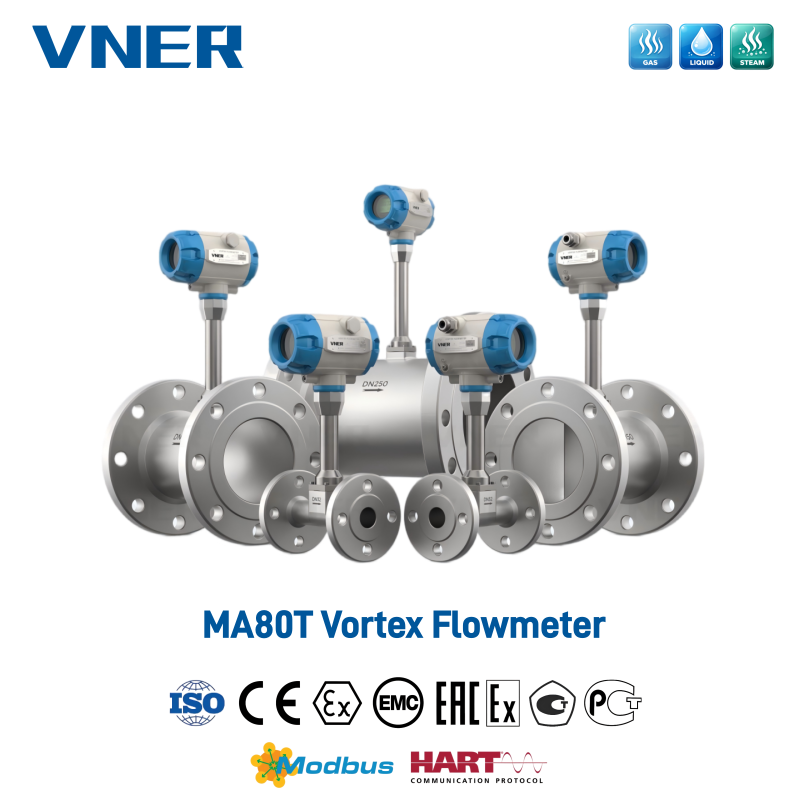
MA80T Series Vortex Flowmeter
6. Installation Requirements for Reliable Measurement
A high-quality instrument cannot compensate for an unsuitable installation. The MA80T should be installed according to the applicable product documentation, piping design, and project requirements. The following principles are important for achieving stable measurement.
6.1 Straight Pipe Length
A typical installation requirement is approximately 15 pipe diameters of straight pipe upstream and 5 pipe diameters downstream. The exact requirement should be confirmed for the selected model and the actual upstream disturbance.
Upstream fittings can create swirl, asymmetric velocity profiles, or pulsating flow. Elbows, tees, control valves, reducers, expanders, pumps, compressors, and partially closed valves may all influence the vortex signal. When the available straight length is limited, the engineering team should evaluate the piping arrangement and consider a suitable flow conditioner or an alternative meter location.
6.2 Full and Single-Phase Flow
For liquid service, the pipe should remain full under all expected operating conditions. The meter should not be installed at a location where the line can drain, where air can accumulate, or where flashing and cavitation may occur.
Vortex measurement is intended for single-phase flow. Two-phase mixtures, substantial entrained gas, unstable condensation, or severe wet-steam conditions can disturb the vortex pattern and reduce accuracy. Steam systems should be designed to minimize unwanted condensate accumulation and should include appropriate drainage and separation practices where required.
6.3 Orientation
The MA80T can be installed in horizontal or vertical pipe runs when the selected configuration and application conditions are suitable. Orientation should be chosen to avoid liquid collection in gas or steam lines and to prevent gas pockets in liquid lines.
For high-temperature applications, the installation should also consider heat transfer to the converter. Remote mounting or an extended connection may be appropriate where process temperature could exceed the allowable ambient temperature of the electronics.
6.4 Pressure and Temperature Conditions
The meter must be selected for the maximum operating pressure, design pressure, operating temperature, and possible transient conditions. The stated pressure rating can reach up to 4.0 MPa depending on model, but the actual rating is determined by the complete configuration, body size, flange standard, material, and temperature.
Steam applications should be reviewed for start-up conditions, thermal expansion, pressure surges, and the possibility of water hammer. Proper support and alignment of the pipe are important because excessive mechanical stress can affect the meter body and connections.
6.5 Electrical Installation
Output wiring should be installed according to the selected signal type and the requirements of the receiving control system. Shielding, grounding, cable routing, and separation from high-power equipment may be necessary to protect low-level sensor signals from electromagnetic interference.
For HART or Modbus RTU applications, the communication network should be configured with suitable addressing, cable quality, termination, and power requirements. Commissioning personnel should verify the engineering units, flow range, output scaling, pulse parameters, damping, and alarm settings before placing the meter into normal operation.
7. Manufacturing and Quality Strengths
7.1 Engineering-Based Product Development
The MA80T is produced by a company that focuses specifically on industrial flow measurement. Jiangsu VNER Electronic Technology Co., Ltd. develops and manufactures a range of instruments including electromagnetic, Coriolis, vortex, swirl, turbine, thermal mass, ultrasonic, and metal-tube rotameter products.
This broad technology portfolio contributes to better product selection. Different flow principles have different strengths and limitations. An engineering team with experience across several technologies is better positioned to determine when a vortex meter is appropriate, when a Coriolis meter is preferable, or when electromagnetic, turbine, thermal mass, or ultrasonic measurement may provide a better result.
7.2 Integrated Production Capabilities
VNER operates modern manufacturing facilities covering approximately 23,000 square meters across three plants. Its production system includes technical development, mechanical processing, instrument assembly, calibration, testing, quality control, and project support.
An integrated manufacturing structure can improve coordination between design and production. Feedback from machining, assembly, calibration, and field applications can be incorporated into product improvement. It can also support better control of component traceability, configuration accuracy, and delivery consistency.
7.3 Material and Mechanical Processing
Vortex meters depend on the dimensional accuracy and mechanical integrity of the flow body and shedder bar. The geometry of the bluff body affects the vortex signal, while the internal bore and process connections influence the velocity profile and pressure loss.
Controlled machining and fabrication processes are therefore essential. Stainless-steel bodies must be manufactured with appropriate dimensional control, surface quality, welding practice, and inspection. The selected sensor materials must be correctly matched to the specified configuration and protected during assembly.
For customized projects, attention to flange standards, face dimensions, pressure ratings, electrical enclosure arrangements, display orientation, temperature extensions, and communication options is important. Proper configuration management helps ensure that the delivered meter matches the approved technical specification.
7.4 Calibration and Verification
Calibration is a key part of flowmeter manufacturing. The company’s in-house calibration capability supports verification of meter performance before shipment. Calibration procedures should use controlled reference equipment, documented test conditions, and traceable records appropriate to the project requirements.
For customers, calibration documentation provides evidence that the meter has been tested against defined criteria. It also supports commissioning, maintenance planning, and future performance review. Where a project requires a specific calibration range, medium, or certificate format, these requirements should be identified during the quotation and ordering stages.
7.5 Quality Processes and Traceability
Industrial instrumentation must provide more than a nominal measurement range. Customers also need confidence that the instrument was assembled correctly, tested consistently, and supplied with accurate configuration data. Certified quality processes and traceability help reduce the risk of documentation errors, component substitution, and inconsistent production.
A mature quality system typically includes incoming inspection, process control, assembly verification, electrical testing, pressure or leak checks where applicable, calibration, final inspection, and shipment documentation. These steps are especially important for EPC projects and plants with formal vendor approval procedures.
7.6 Technical Team and Project Experience
VNER has a technical team of more than 150 people and has supplied instruments for more than 2,000 engineering projects in over 30 countries. This experience exposes the organization to a broad range of piping standards, environmental conditions, process media, communication requirements, and customer documentation practices.
International project experience can be valuable when a customer requires a combination of GB, DIN, ANSI, or other connection standards. It can also help with export packaging, technical submittals, nameplate requirements, inspection documentation, and coordination with EPC contractors and plant engineering teams.
7.7 Automated and Consistent Manufacturing
Increasingly automated manufacturing processes can improve repeatability in assembly and testing. Automation does not replace engineering judgment, but it can reduce variation in recurring production steps and improve production efficiency.
For a flowmeter, consistency is important because the instrument’s mechanical geometry, sensor installation, electronic configuration, and calibration parameters all contribute to final performance. Standardized work instructions, controlled software settings, and documented inspection points help ensure that products within the same series behave consistently.
8. Digital Communication and Diagnostics
The MA80T can be supplied with 4–20 mA and pulse outputs for conventional industrial control systems. The 4–20 mA signal is widely used for continuous flow indication, while the pulse output can be used for totalization or connection to equipment that accepts frequency or pulse inputs.
Optional HART communication can provide digital access while retaining the familiar analog current loop. Modbus RTU can support integration with plant monitoring systems, remote terminals, building management systems, or other digital platforms where serial communication is suitable.
Basic diagnostics may include signal-quality monitoring, sensor fault indication, and self-check functions. These features help maintenance personnel evaluate whether a reading is affected by a process change, a poor installation condition, a wiring problem, or an instrument fault.
Digital communication can also simplify commissioning. Authorized personnel may review or adjust measurement units, range parameters, damping, output settings, and other configuration values without removing the meter from the pipeline. Configuration security and change management should be controlled according to the plant’s instrumentation procedures.
9. Selecting the Correct MA80T Configuration
Correct product selection begins with a complete process data sheet. The following information should be available whenever possible:
Process medium and composition.
Minimum, normal, and maximum flowrate.
Operating pressure and maximum pressure.
Operating temperature and maximum temperature.
Line size and pipe schedule.
Required measurement units and output signals.
Required communication protocol.
Process connection standard and pressure class.
Material compatibility requirements.
Ambient temperature and hazardous-area requirements where applicable.
Available straight pipe length and installation orientation.
For gases and steam, pressure and temperature are particularly important because density changes influence velocity and measurement range. For liquids, viscosity, solids content, entrained gas, and conductivity may influence whether vortex measurement is appropriate.
The meter should be sized so that the normal operating point is comfortably within the effective measurement range. The expected turndown is typically approximately 1:10 to 1:20, but the practical value depends on fluid properties, line conditions, Reynolds number, installation quality, and the required accuracy.
10. Maintenance and Long-Term Operation
The MA80T’s fixed-body design reduces mechanical maintenance compared with flowmeters that contain rotating or reciprocating components. Nevertheless, periodic inspection remains advisable, especially in critical services.
Maintenance personnel should check for external damage, flange leakage, abnormal vibration, loose wiring, moisture ingress, corrosion, and unusual signal behavior. Process conditions should also be reviewed if the meter begins to show unstable or unexpectedly low readings.
Common causes of poor vortex measurement include operation below the effective velocity range, excessive turbulence, two-phase flow, severe pulsation, entrained gas in liquids, condensation in steam lines, incorrect parameter settings, and inadequate grounding or signal wiring.
If process conditions change significantly after commissioning, the meter should be reevaluated. Changes in pressure, temperature, gas composition, production rate, pipe configuration, or valve arrangement can affect the suitability of the original selection.
11. Economic and Operational Benefits
The value of the MA80T is not limited to its purchase price. A correctly selected vortex flowmeter can contribute to lower lifecycle cost through reduced maintenance, stable utility monitoring, easier integration, and improved process visibility.
In compressed-air systems, accurate consumption data can support leak reduction and compressor optimization. In steam systems, measurement can expose distribution losses and improve allocation of energy costs. In fuel-gas systems, reliable flow data supports combustion control and may reduce unnecessary fuel use.
In HVAC and district-energy systems, flow measurement supports thermal balancing and identifies abnormal operating conditions. In pharmaceutical, food, and beverage applications, clean-steam monitoring can improve process documentation and operational control.
The absence of moving parts can also reduce spare-parts requirements. Plants may need fewer replacement bearings, rotors, seals, or mechanical repair kits than they would for certain alternative technologies. The exact savings depend on the process, installation quality, maintenance strategy, and operating environment.
12. Comparison with Other Flowmeter Technologies
| Flowmeter Type | Typical Strength | Consideration Compared with MA80T |
|---|---|---|
| Vortex | Measures steam, gases, and suitable liquids with no moving parts | Requires suitable velocity, straight pipe, and single-phase flow |
| Electromagnetic | Excellent for conductive liquids and slurry applications | Not suitable for non-conductive gases or steam |
| Coriolis | Direct mass flow and high accuracy for many liquids and gases | Often higher cost, greater weight, and more demanding installation |
| Turbine | Good performance in clean fluids with suitable flow conditions | Contains moving parts and may be affected by wear or contamination |
| Thermal mass | Direct mass measurement for selected gas applications | Gas composition and thermal properties can influence performance |
| Ultrasonic | Non-intrusive or low-pressure-loss options are available | Performance depends on installation, acoustic conditions, and fluid properties |
| Rotameter | Simple local indication and low installation complexity | Usually less suitable for advanced remote monitoring and large process lines |
This comparison does not mean that one technology is universally better than another. The best instrument depends on the application. The advantage of the MA80T is its balanced combination of media flexibility, durable construction, no moving parts, industrial outputs, and suitability for steam and gas utility measurement.
13. Recommended Engineering Workflow
A successful flowmeter project usually follows a structured workflow. First, the process data should be collected and checked for completeness. Second, the application should be screened for single-phase operation, acceptable velocity, material compatibility, and installation feasibility.
Third, the meter size and configuration should be selected using the minimum, normal, and maximum operating conditions. Fourth, the process connection, body material, sensor material, temperature version, output, communication, display, and documentation requirements should be confirmed.
Fifth, the installation drawing should be reviewed for straight pipe, valves, reducers, supports, drainage, venting, insulation, access, and electrical routing. Finally, commissioning should include configuration verification, signal testing, leak inspection, comparison with process expectations, and operator training.
Jiangsu VNER Electronic Technology Co., Ltd. can support this process through product selection, engineering consultation, customized configuration, calibration documentation, and technical communication with end users, system integrators, and EPC contractors.
14. Frequently Asked Questions
Q1: What media can the MA80T measure?
The MA80T is designed for saturated steam, superheated steam, gases, and clean or low-viscosity single-phase liquids. Typical applications include compressed air, natural gas, nitrogen, inert gas, utility steam, clean water, hot water, and chilled water. The actual suitability depends on pressure, temperature, velocity, density, viscosity, and material compatibility.
Q2: How does the MA80T measure flow?
A bluff body inside the flow passage generates alternating vortices as the medium passes around it. A piezoelectric sensor detects the vortex shedding frequency. Because the frequency is related to fluid velocity, the electronics calculate the volumetric flow rate and transmit the result through the selected output.
Q3: Does the MA80T contain a rotating turbine or impeller?
No. The MA80T uses a fixed bluff body and piezoelectric sensor. It has no rotating impeller, gear, or bearing assembly in the measurement structure. This reduces mechanical wear and supports lower maintenance requirements.
Q4: Can it be used for steam at high temperature?
Yes. Standard versions can support temperatures up to approximately 250°C, while high-temperature versions can reach up to approximately 350°C depending on the model and configuration. The complete installation must consider pressure rating, insulation, ambient temperature, transmitter location, flange class, and thermal expansion.
Q5: What accuracy can be expected?
Typical stated accuracy is up to ±1.0% of rate for liquids under calibrated conditions. For gases and steam, typical accuracy is approximately ±1.0% or ±1.5% of rate. Actual performance depends on sizing, calibration, flow conditions, installation, fluid properties, and operating range.
Q6: What straight pipe length is recommended?
A typical recommendation is approximately 15 nominal pipe diameters upstream and 5 nominal pipe diameters downstream. The exact requirement should be confirmed for the selected meter and the specific upstream piping arrangement.
Q7: Can the MA80T measure mass flow?
The basic vortex measurement is volumetric. For gases and steam, mass flow or standardized volume can be calculated when pressure, temperature, density, and other required compensation data are available through the instrument configuration or an external control system.
Q8: What outputs are available?
The standard output options include 4–20 mA and pulse signals. HART and Modbus RTU communication are available as optional digital interfaces depending on the selected configuration.
Q9: Is the meter suitable for dirty or two-phase fluids?
Vortex flowmeters are generally intended for clean or relatively clean, single-phase media. Significant solids, entrained gas, unstable condensation, wet steam, or two-phase flow may interfere with vortex formation and reduce accuracy. Such applications require specific engineering review.
Q10: Which body materials are available?
Common body materials include stainless steel 304 and stainless steel 316L. Sensor wetted materials may include stainless steel 304, stainless steel 316L, Hastelloy C, Hastelloy B, and titanium depending on the model. Material selection should be based on the actual process chemistry and operating conditions.
Q11: Can the meter be supplied with flanged and wafer connections?
Yes. The MA80T is available in flanged and wafer versions. Connection standards can include GB, DIN, ANSI, and other standards upon request. The pressure class and dimensions should be confirmed during ordering.
Q12: What information is needed for product selection?
The most useful information includes medium, minimum and maximum flow, normal flow, pressure, temperature, line size, process connection, required accuracy, output, communication protocol, material requirements, available straight pipe, and installation orientation.
Q13: Does the manufacturer provide calibration?
In-house calibration and verification are part of the manufacturer’s production capabilities. Calibration requirements, test conditions, certificates, and documentation should be confirmed as part of the project specification.
Q14: What industries use the MA80T?
Typical industries include power and energy, oil and gas, chemical and petrochemical processing, HVAC and district energy, food and beverage, pharmaceutical manufacturing, textile production, pulp and paper, and general industrial manufacturing.
Q15: Why choose a manufacturer with several flowmeter technologies?
Different applications require different measurement principles. A manufacturer experienced in electromagnetic, Coriolis, vortex, swirl, turbine, thermal mass, ultrasonic, and rotameter technologies can compare alternatives more effectively and recommend a solution based on the actual process rather than forcing every application into one product category.
15. Conclusion
The MA80T Series Vortex Flowmeter is a versatile industrial instrument for measuring steam, gases, and suitable liquids. Its Kármán vortex street principle, piezoelectric detection, fixed-body construction, and absence of moving parts provide a practical combination of stability, durability, and low maintenance.
With typical accuracy up to ±1.0% of rate for liquids, suitable performance for gas and steam measurement, temperature capability up to 250°C in standard versions and up to 350°C in high-temperature versions, and pressure ratings up to 4.0 MPa depending on model, the MA80T can serve a wide range of plant applications.
Its flanged and wafer configurations, common industrial connection standards, 4–20 mA and pulse outputs, optional HART and Modbus RTU communication, and diagnostic functions support integration into modern control and energy-management systems.
The product is strengthened by Jiangsu VNER Electronic Technology Co., Ltd.’s broader manufacturing and engineering capabilities. With modern facilities, a large technical team, in-house calibration, quality processes, international project experience, and a wide portfolio of flow measurement technologies, the company is positioned to support both standard instrument orders and customized industrial projects.
For the best result, the MA80T should be selected through a complete engineering review that considers medium properties, flow range, pressure, temperature, piping, materials, installation, communication, and documentation. When correctly sized and installed, it can provide dependable data for process control, utility management, energy optimization, production monitoring, and long-term industrial performance improvement.
References
1. Industrial Flow Measurement Principles, internal engineering and application guidance.
2. General Principles of Vortex Shedding and Strouhal Number Applications.
3. Industrial Piping Installation Practices for Flow Measurement Devices.
4. Instrumentation Signal Standards for 4–20 mA, Pulse, HART, and Modbus RTU Systems.
5. Steam and Compressed-Gas Measurement Engineering Guidelines.
6. Process Instrument Material Compatibility and Selection Practices.
7. Manufacturer’s MA80T Series Vortex Flowmeter Technical Information.
8. Industrial Calibration, Verification, and Traceability Procedures.
Product: MA80T Series Vortex Flowmeter



Products
Contact Information
-

+86 18652789521
+86-0514-83633600 / 83633900 -

+86-0514-83633600 / 83633900
-

s@vner.com.cn
katherine@vner.com.cn -

No. 11 Xingye Road, Chenji Town Industrial Park, Yizheng, Yangzhou, China
