
 0
0
 EN
EN  English
 عربى
عربى Español
 русский
If you need any help, please feel free to contact us
Home / Author / Ren Xiaotong — Technical Sales Engineer for Gas Flow Meters / High-Precision Electromagnetic Flowmeters for Demanding Industrial Applications
High-Precision Electromagnetic Flowmeters for Demanding Industrial Applications
Introduction
Accurate flow measurement is essential wherever liquids or slurries must be monitored, controlled, transferred, dosed, or accounted for. In water distribution, chemical processing, power generation, oil and gas production, pulp and paper manufacturing, and general industrial utilities, flow data directly influences product quality, energy consumption, equipment protection, environmental compliance, and operating cost. A flowmeter must therefore do more than display a number. It must maintain dependable accuracy under changing process conditions, resist corrosion and abrasion, integrate with modern control systems, and continue operating with limited maintenance over many years.
The VE11 Series is a high-precision, full-bore electromagnetic flowmeter designed for conductive liquids and slurries. It applies Faraday’s law of electromagnetic induction to measure volumetric flow without internal moving parts. As the process medium passes through a magnetically energized measuring tube, electrodes detect the voltage generated by the movement of the conductive liquid through the magnetic field. The converter then processes this signal and calculates flow velocity, volumetric flow rate, totalized flow, and related diagnostic information.
This operating principle gives the VE11 several important advantages over mechanical flow technologies. Because there are no rotors, bearings, gears, or turbine blades in the flow path, the meter does not introduce mechanical wear into the measurement system. Its unobstructed bore also produces negligible additional pressure loss and allows the instrument to handle many liquids containing suspended solids. When properly selected and installed, the measurement is largely independent of fluid density, viscosity, pressure, and temperature changes within the specified operating limits.
The instrument is available in a broad range of nominal diameters, lining materials, electrode materials, pressure classes, power supplies, communication options, and converter configurations. This allows the same product family to address small chemical dosing lines, large municipal transmission mains, corrosive process services, wastewater pipelines, cooling-water loops, and slurry applications.
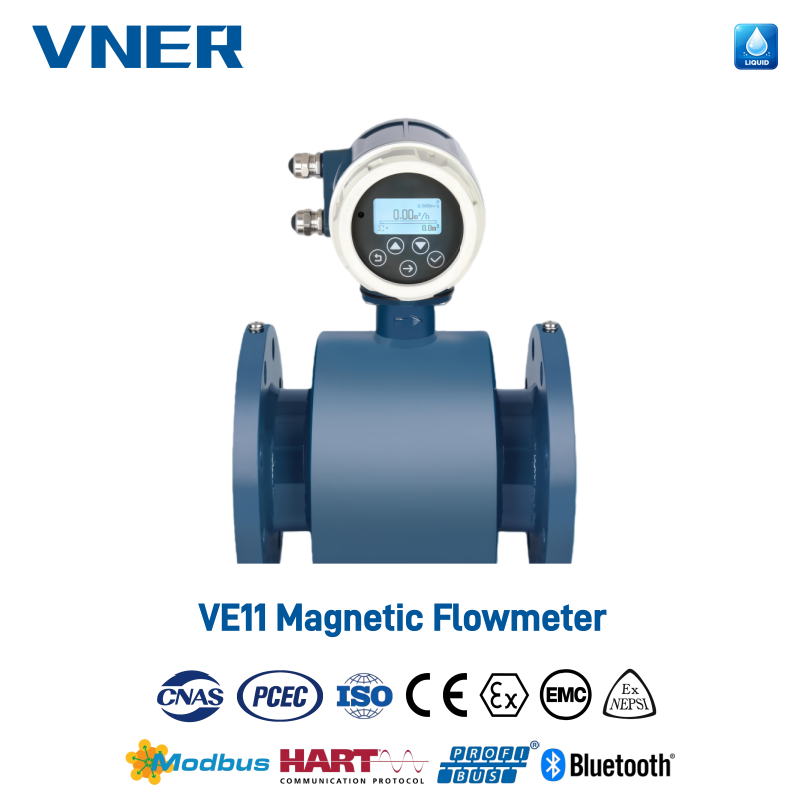
VE11 High-Precision Electromagnetic Flowmeter
Operating Principle and Measurement Concept
Faraday’s Law in Industrial Flow Measurement
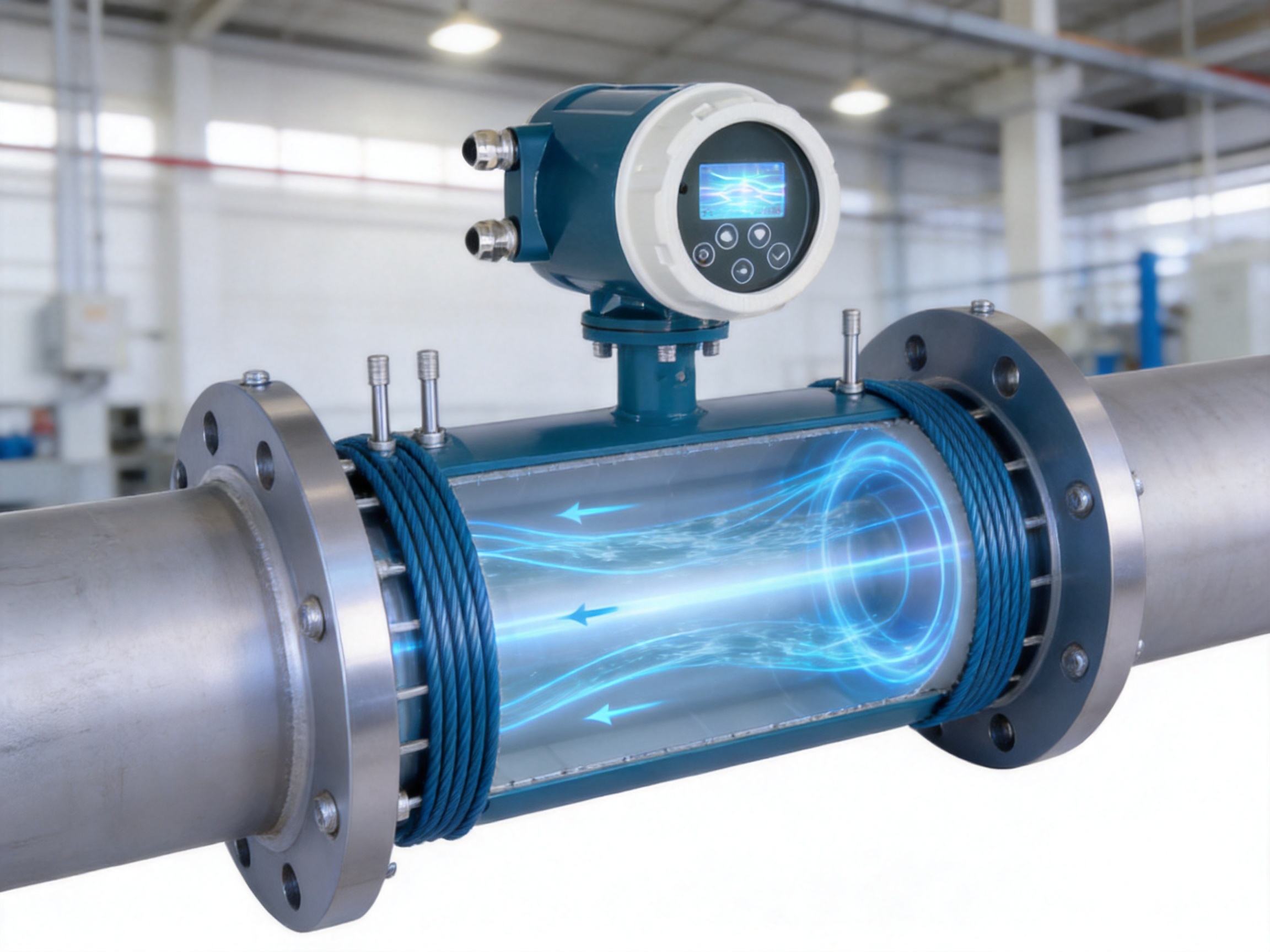
The VE11 uses the electromagnetic measurement principle described by Faraday’s law. When an electrically conductive liquid moves through a magnetic field, a voltage is induced in the liquid. The magnitude of this voltage is proportional to the velocity of the liquid. The measuring tube contains excitation coils that establish a controlled magnetic field, while two or more electrodes positioned in the tube detect the induced signal.
The converter receives the low-level electrode signal, removes unwanted interference, applies digital processing, and converts the result into a flow measurement. Since the internal cross-sectional area of the measuring tube is known, the system can calculate volumetric flow from the measured velocity. The result can be transmitted through analog, pulse, frequency, or digital communication outputs.
Unlike differential-pressure flowmeters, electromagnetic meters do not depend on a permanent restriction such as an orifice plate or venturi throat. Unlike turbine meters, they do not rely on a rotating element whose speed is affected by friction, wear, or contamination. Unlike many positive-displacement meters, they do not contain chambers or moving mechanical components that can become blocked by suspended particles.
Requirements for the Measured Medium
Electromagnetic flowmeters require the process medium to have sufficient electrical conductivity. The standard VE11 configuration is intended for conductive liquids and slurries with conductivity typically at or above 20 microsiemens per centimeter. Special low-conductivity configurations may support media down to approximately 1 microsiemens per centimeter, depending on the selected design and application conditions.
Suitable media may include raw water, drinking water, wastewater, acids, alkalis, brines, process chemicals, cooling water, boiler feedwater, condensate in suitable conditions, mineral slurries, pulp suspensions, and many other conductive fluids. Nonconductive liquids such as most hydrocarbons, refined oils, and gases are not suitable for a conventional electromagnetic flowmeter.
Correct material selection remains essential. The conductivity requirement alone does not determine whether a liquid can be measured reliably. The lining must resist the chemical composition and temperature of the fluid, while the electrodes must tolerate corrosion, erosion, and possible coating. Process pressure, vacuum conditions, solids concentration, flow velocity, ambient temperature, and cleaning procedures must also be considered during sizing and specification.
Core Technical Specifications
| Item | Typical VE11 Specification | Engineering Significance |
|---|---|---|
| Measuring principle | Electromagnetic measurement based on Faraday’s law | Provides volumetric flow measurement without moving parts |
| Measured medium | Electrically conductive liquids and slurries | Suitable for water, chemicals, wastewater, and many suspended-solid services |
| Conductivity | Typically at least 20 microsiemens per centimeter; low-conductivity options available | Determines whether the medium can generate a stable electrode signal |
| Accuracy classes | Plus or minus 0.2 percent, 0.3 percent, or 0.5 percent of rate | Allows selection according to custody, process, utility, or control requirements |
| Repeatability | Typically 0.07 to 0.16 percent of rate | Supports stable control, batching, and trend analysis |
| Velocity range | Approximately 0.3 to 10 meters per second | Covers common industrial and utility flow conditions |
| Nominal diameter | DN3 to DN2000 | Supports small-bore dosing lines through large transmission pipelines |
| Process temperature | Approximately minus 40 to plus 200 degrees Celsius | Depends on lining, electrode design, converter arrangement, and process conditions |
| Nominal pressure | Approximately 0.6 to 10 MPa; ANSI 150 to 600 options | Enables use in low-pressure utilities and demanding industrial pipelines |
| Flow direction | Bidirectional | Measures and totalizes forward and reverse flow where configured |
| Power supply | 24 V DC or 220 V AC; broader voltage options available | Accommodates plant, skid, panel, and remote installation requirements |
| Protection rating | IP65, IP67, or IP68 depending on version | Provides options for ordinary, outdoor, submerged, or flood-prone locations |
The range of specifications is one of the product family’s principal strengths. A single electromagnetic platform can be adapted to different line sizes, process media, installation environments, and control architectures. This reduces the need for customers to manage many unrelated measurement technologies across a facility.
Accuracy, Repeatability, and Long-Term Stability
Accuracy for Critical Process Decisions
Measurement accuracy is especially important in applications involving chemical dosing, water balance, production yield, energy optimization, batch control, and internal allocation. The VE11 can be configured with accuracy classes of plus or minus 0.2 percent, 0.3 percent, or 0.5 percent of rate, depending on the model and selected options. The appropriate class should be chosen based on the process objective, expected operating range, calibration requirements, and allowable measurement uncertainty.
High accuracy is not useful if it is unstable. For this reason, the sensor design, excitation circuit, signal conditioning, converter electronics, manufacturing controls, and calibration process must work together. The VE11’s digital signal processing and programmable low-frequency rectangular excitation are intended to provide a stable measurement signal with low noise and controlled power consumption.
Repeatability for Control and Batching
Repeatability describes the ability of the instrument to produce consistent results when the same process condition is measured repeatedly. This is valuable in recipe-driven production, dosing systems, filling operations, chemical neutralization, and performance monitoring. The VE11 typically provides repeatability in the range of 0.07 to 0.16 percent of rate, depending on configuration and application conditions.
In a batch process, repeatability can be as important as absolute accuracy. If an instrument produces inconsistent readings, operators may compensate incorrectly, resulting in over-dosing, under-dosing, variable product quality, or unexplained material balances. A repeatable signal allows the control system to respond predictably and helps engineers identify genuine process changes instead of instrument noise.
Low Sensitivity to Fluid Properties
One of the most significant advantages of electromagnetic measurement is that the reading is largely unaffected by changes in density and viscosity. This is particularly useful when temperature changes alter the viscosity of a liquid or when the concentration of dissolved substances varies during production. The meter measures the velocity of the conductive medium rather than relying on a mechanical response that could be strongly influenced by fluid friction.
The meter is also largely independent of static pressure and, within the specified temperature limits, can operate across a broad range of process conditions. Proper grounding, full-pipe operation, suitable straight-run conditions, and correct material selection remain necessary to achieve the stated performance.
Full-Bore Construction and Reduced Maintenance
The VE11 has an unobstructed measuring bore. There is no impeller, rotor, paddle, bearing, or internal restriction that interrupts the process flow. This construction provides several practical benefits for plant operators.
First, pressure loss is negligible compared with instruments that use a permanent restriction or mechanical measuring element. Lower pressure loss can reduce pumping demand, particularly in large water networks and continuously operating utility systems. Even a small reduction in hydraulic resistance can become significant when a pipeline operates around the clock.
Second, the full-bore design is suitable for liquids containing suspended solids. Wastewater, sludge, pulp stock, mineral slurries, and process fluids may contain particles that could damage or obstruct mechanical meters. Although the lining and electrode selection must still account for abrasion and coating, the absence of moving parts reduces the number of failure mechanisms.
Third, maintenance requirements are generally lower. Mechanical meters may need periodic inspection of bearings, rotors, seals, or internal clearances. The VE11 instead depends on the condition of its lining, electrodes, coils, converter, cabling, grounding, and installation environment. Built-in diagnostics can assist personnel in identifying electrode, coil, signal-quality, or wiring problems before they develop into major process interruptions.
These characteristics provide a meaningful advantage over many conventional flowmeter competitors in dirty, corrosive, variable-viscosity, or continuously operating services. The product is not universally suitable for every fluid, but for conductive liquids and slurries, its nonmechanical design offers a strong combination of reliability, flexibility, and low operating cost.
Materials for Corrosive and Abrasive Services
Lining Selection
The lining forms the wetted surface between the process medium and the meter body. It protects the body from corrosion and provides the hydraulic surface through which the liquid flows. Available lining materials include ETFE, PTFE, PPU, FEP, PFA, and ceramic, with the appropriate choice depending on chemical compatibility, temperature, abrasion, vacuum resistance, and process velocity.
PTFE is commonly selected for chemically aggressive media because of its broad chemical resistance. PFA, FEP, and ETFE may be considered when a combination of chemical resistance, temperature capability, and mechanical performance is required. PPU can be useful in selected abrasive services, while ceramic linings may provide excellent resistance in demanding chemical or wear conditions when the application is properly engineered.
No lining material should be selected solely from a general chemical-resistance chart. Actual service conditions may include mixtures, elevated temperatures, pressure cycling, cleaning agents, crystals, solids, or rapidly changing concentrations. Application engineers should review the complete process description before finalizing the material.
Electrode Selection
The electrodes are in direct contact with the measured medium and must maintain a reliable electrical signal. Available materials include 316L stainless steel, Hastelloy B or C, titanium, tantalum, platinum-iridium, and tungsten carbide. These choices allow the instrument to be adapted to neutral water, acidic or alkaline chemicals, chloride-bearing media, aggressive process liquids, and abrasive slurries.
Hastelloy alloys are often selected for challenging chemical environments. Titanium can be suitable for many chloride-containing or oxidizing services, while tantalum provides excellent resistance in selected highly corrosive applications. Platinum-iridium may be specified for special chemical compatibility requirements. Tungsten carbide can be considered where erosion resistance is important, subject to the chemistry of the medium.
Body Materials and Mechanical Connections
The meter body is available in carbon steel, 304 stainless steel, 316 stainless steel, or 316L stainless steel, depending on size, pressure class, environmental conditions, and corrosion requirements. Flanged connections are provided according to DIN and ANSI/ASME standards, supporting integration into existing industrial piping systems.
Correct flange alignment and gasket selection are important. The pipe must not impose excessive mechanical stress on the sensor, and the gasket must not extend into the measuring bore. A well-designed installation protects the lining, avoids disturbances in the flow profile, and helps preserve measurement accuracy.
Signal Processing and System Integration
Modern flow measurement depends on more than a sensor body. Plant operators need reliable communication, diagnostics, totalization, alarms, and compatibility with distributed control systems and programmable logic controllers. The VE11 converter includes digital signal processing and programmable low-frequency rectangular excitation to improve signal stability and reject common sources of interference.
The standard output configuration includes 4-20 mA and pulse or frequency signals. The 4-20 mA output is widely used for continuous flow transmission to a control system, recorder, indicator, or supervisory platform. Pulse outputs are useful for totalizing flow, batch control, proportional dosing, and high-resolution counting applications.
Digital communication options include Modbus over RS-485 and HART, with Profibus available on selected models. These protocols enable remote configuration, status monitoring, parameter review, diagnostics, and integration with plant automation systems. Digital access can reduce the need for technicians to visit the instrument, especially when sensors are installed in underground chambers, hazardous areas, elevated pipe racks, or restricted process zones.
| Integration Function | Available Capability | Typical Benefit |
|---|---|---|
| Continuous process signal | 4-20 mA output | Transmits flow rate to a PLC, DCS, recorder, or display |
| Totalized measurement | Pulse or frequency output | Supports batch quantity, cumulative flow, and consumption tracking |
| Remote configuration | Modbus, HART, or selected Profibus versions | Reduces manual adjustment and simplifies commissioning |
| Bidirectional measurement | Forward and reverse flow functions | Useful in reversible systems, circulation lines, and network analysis |
| Instrument health | Self-diagnostics for coil, electrode, and signal quality | Assists troubleshooting and preventive maintenance |
| Converter arrangement | Integral or remote mounting | Allows adaptation to high temperature, vibration, access, and space constraints |
The integral converter provides a compact arrangement when the sensor can be accessed safely and environmental conditions are suitable. A remote converter is advantageous when the sensor is installed in a high-temperature area, a flooded chamber, a high-vibration location, or a position where the display and controls need to be placed separately.
Installation Considerations for Reliable Measurement
Maintaining a Full Pipe
An electromagnetic flowmeter must normally operate with the measuring tube completely filled. A partially filled pipe can expose the electrodes to air and cause unstable or incorrect readings. Installation should therefore avoid locations where the pipe drains, siphons, or operates with an open surface downstream of the sensor.
Suitable locations may include vertical upward-flow sections, low points in a pressurized pipeline, or sections with sufficient back pressure. In wastewater and slurry systems, the installation must also consider the possibility of sediment accumulation. The selected location should keep the bore filled while preventing solids from settling around the electrodes.
Grounding and Electrical Noise
Because the electrode signal is relatively small, grounding and electrical installation quality are important. The sensor, process piping, grounding rings where required, converter, and control-system wiring should be installed according to the manufacturer’s technical instructions and applicable electrical standards.
Variable-frequency drives, large motors, welding equipment, radio transmitters, and poorly shielded cables can introduce interference. Signal cables should be routed appropriately and kept away from strong electromagnetic sources where practical. Correct grounding gives the converter a stable electrical reference and helps protect signal quality.
Straight Runs and Flow Profile
The full-bore electromagnetic design is less sensitive to flow disturbances than some velocity-based technologies, but valves, pumps, elbows, reducers, expansions, and other fittings can still create turbulence or asymmetrical velocity profiles. The sensor should be installed with adequate straight pipe according to the application instructions and the upstream and downstream piping arrangement.
Careful installation improves accuracy and repeatability. It also reduces the risk that a process change, such as a new valve position or pump configuration, will alter the flow pattern at the measuring section.
Temperature, Pressure, and Environmental Protection
The process temperature range can extend approximately from minus 40 to plus 200 degrees Celsius, depending on lining, construction, and converter arrangement. The maximum temperature must be evaluated together with ambient temperature and enclosure conditions. A remote converter may be required when the sensor is exposed to elevated temperatures.
Protection ratings of IP65, IP67, and IP68 are available depending on the version. IP68 configurations are particularly valuable in buried chambers, outdoor installations, wet wells, and locations subject to temporary or continuous immersion. Protection against water ingress must be considered together with cable glands, conduit seals, junction boxes, and installation practices.
Applications Across Major Industries
Water and Wastewater
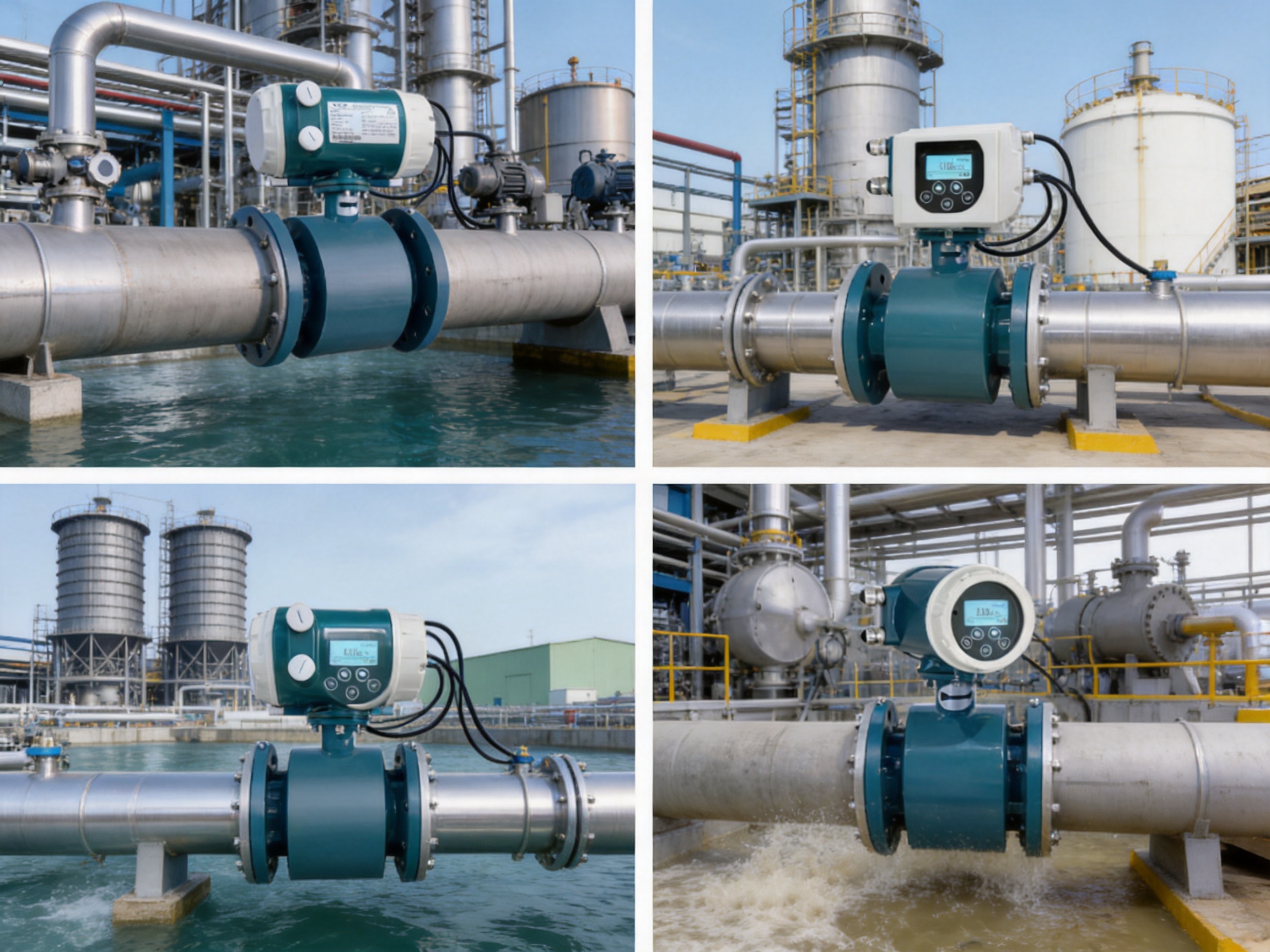
Water and wastewater utilities require accurate measurement at treatment plants, pumping stations, transmission mains, reservoirs, district-metering areas, and discharge points. The VE11 can measure raw water, drinking water, wastewater, sludge, and other conductive fluids across large line sizes.
In a district water network, a DN600 sensor can provide master-meter data for zone balancing, leak detection, and non-revenue-water analysis. IP68 protection is useful when the meter is installed in a buried chamber that may experience flooding. A full-bore design avoids significant pressure loss in a continuously pressurized transmission main, while the lack of moving parts reduces concerns about mechanical wear.
At wastewater facilities, the meter can be applied to influent, effluent, activated sludge, return sludge, chemical feedwater, and process-transfer lines. Material selection must account for solids, biological activity, cleaning chemicals, and abrasion. Where the liquid contains fibers, grit, or suspended solids, the absence of an internal obstruction can be a significant operational advantage.
Chemical and Petrochemical Processing
Chemical plants often handle corrosive liquids whose temperature, concentration, and viscosity change during production. The VE11 can be configured with PTFE, PFA, ETFE, FEP, ceramic, or other suitable lining options, combined with corrosion-resistant electrode materials.
In reactor-feed service, accurate flow measurement supports dosing, recipe repeatability, mass-balance calculations, and production consistency. For a fine-chemicals application, a PTFE-lined meter with Hastelloy electrodes may be selected for corrosive feedstock, subject to detailed compatibility review. Digital communication allows the measurement to be connected to the batch-control system, while diagnostics help maintenance teams evaluate electrode condition and signal quality.
In neutralization systems, accurate measurement of acid, alkali, or brine flow helps maintain the target pH and reduces chemical consumption. In circulation loops, the instrument can monitor stable operation and identify changes caused by pump problems, blocked lines, or control-valve performance.
Oil and Gas Operations
Electromagnetic flowmeters are not intended for nonconductive hydrocarbons, but they are highly useful in oil and gas applications involving conductive water-based services. Produced water, injection water, utility water, chemical-water mixtures, and selected process liquids can often be measured effectively.
Produced-water systems may experience changes in density, viscosity, temperature, and solids concentration. Because electromagnetic measurement is largely independent of density and viscosity, the VE11 can simplify operation when these properties vary within the acceptable conductivity and material limits. Injection-water measurement supports reservoir management, pump control, allocation, and process monitoring.
Where the instrument is installed in a hazardous area, an explosion-proof converter or Ex d variant may be specified, subject to the applicable certificate, zone classification, temperature class, wiring method, and regional requirements. Hazardous-area suitability must always be confirmed for the complete installation, not just for an individual component.
Power Generation and Energy Facilities
Power plants use flowmeters in cooling-water systems, boiler feedwater circuits, condensate return, makeup-water lines, water-treatment systems, and auxiliary utilities. Stable flow information helps operators monitor equipment performance, detect abnormal distribution, and optimize pump operation.
In cooling-water loops, the low-pressure-loss design can support hydraulic efficiency. In boiler and turbine water circuits, the sensor materials and temperature rating must be selected carefully. In condensate service, conductivity should be verified because very low conductivity can affect electromagnetic measurement. When conditions are suitable, the meter’s long-term stability can reduce unnecessary recalibration and support plant-wide energy-efficiency programs.
Pulp and Paper Manufacturing
Pulp and paper processes contain liquids and suspensions that can be chemically aggressive, fibrous, abrasive, or difficult for mechanical meters. White liquor, black liquor, bleaching liquor, stock suspensions, and process water are potential applications for electromagnetic measurement.
Ceramic or high-performance polymer linings may be selected for demanding chemical or abrasive environments. Electrode choice depends on the liquor chemistry and the tendency of the medium to coat the electrode surfaces. The full-bore design helps accommodate fiber-bearing fluids without introducing a rotor or narrow internal passage that could become obstructed.
General Industrial Utilities
Manufacturing plants use conductive liquids in cleaning systems, cooling circuits, water treatment, chemical preparation, process transfer, and utility distribution. A versatile electromagnetic meter can standardize measurement across many of these services.
For clean-in-place systems, the lining and electrode materials must be compatible with the cleaning chemicals and temperature cycles. For plant utilities, the main benefits may be low pressure loss, dependable totalization, simple PLC integration, and reduced mechanical maintenance. For process lines, accuracy and diagnostics can support production control and maintenance planning.
Application Examples
District Water Network Master Metering
A municipal water authority may install a large-diameter VE11 on a transmission main supplying several distribution zones. The primary objectives are to obtain accurate totalized flow, compare supply with customer-meter data, and identify unexplained losses. The meter can provide a continuous 4-20 mA signal to the supervisory system while pulse output records total volume.
Because the installation may be located below ground, an IP68 sensor and suitable remote converter arrangement can improve reliability in a damp or flood-prone chamber. The absence of a moving element reduces the risk of mechanical failure over long service periods, while the unobstructed bore avoids creating a significant pressure penalty in the main.
Batch Reactor Feed Control
A chemical manufacturer may use the VE11 to measure corrosive feedstock entering a batch reactor. The required performance includes accurate repeatability, compatibility with the chemical, reliable operation over varying temperature, and communication with the batch-control platform.
A PTFE-lined sensor with a suitable high-alloy electrode can provide the required resistance to chemical attack. The converter’s digital processing supports a stable signal, while totalization allows the control system to confirm the quantity delivered to each batch. Diagnostic functions can alert operators to abnormal electrode conditions, coil faults, or signal-quality problems.
Produced-Water and Injection-Water Measurement
In an upstream oil and gas facility, electromagnetic flowmeters may be installed on produced-water and injection-water lines. The process conditions can change as wells, pumps, and treatment systems operate at different rates. The instrument’s low sensitivity to density and viscosity variation can simplify measurement across these changing conditions.
Remote digital communication enables the meter to exchange data with the central control system. Engineers can review flow rate, totalized volume, alarms, and configuration parameters without frequent access to the field installation. For hazardous locations, the selected Ex version must match the area classification and project certification requirements.
Cooling-Water and Condensate Monitoring
A power plant can install VE11 meters on main cooling-water loops, makeup-water lines, and selected condensate circuits. Flow data can be used to evaluate pump performance, confirm distribution between equipment trains, detect abnormal changes, and support energy optimization.
In large cooling-water systems, negligible additional pressure loss is valuable because the pumps move substantial volumes continuously. In condensate service, the conductivity of the fluid should be evaluated before selection. If conductivity is adequate and the materials are compatible, the meter can provide stable measurement without the maintenance associated with rotating mechanical elements.
Advantages Compared with Competing Flow Technologies
| Comparison Factor | Electromagnetic Flowmeter | Typical Mechanical or Restriction-Based Meter |
|---|---|---|
| Moving parts | None in the measuring bore | May include rotors, bearings, gears, or moving displacement chambers |
| Pressure loss | Negligible additional pressure drop | Can be significant where a restriction or mechanical element is present |
| Suspended solids | Suitable for many conductive slurries and suspensions | Particles may cause wear, blockage, or mechanical damage |
| Viscosity sensitivity | Generally low within the application limits | Can influence mechanical friction, differential pressure, or calibration |
| Bidirectional flow | Natively available | May require special configuration or may be less convenient |
| Maintenance | Focuses on electrodes, lining, electronics, grounding, and diagnostics | May require inspection or replacement of mechanical components |
| Fluid compatibility | Requires adequate conductivity and suitable wetted materials | Some technologies can measure nonconductive fluids but may have other limitations |
| Automation integration | 4-20 mA, pulse/frequency, Modbus, HART, and selected Profibus options | Depends heavily on meter type and model |
The VE11’s competitive advantage is strongest when the application involves conductive liquids, variable viscosity, suspended solids, high operating hours, or a need for low pressure loss. A turbine meter may be appropriate for certain clean liquids or gases, a vortex meter may be preferred for steam or gases, and a Coriolis meter may be selected when direct mass flow and high density information are required. The electromagnetic meter should therefore be selected according to the process rather than treated as a universal replacement.
Within its intended application range, however, the VE11 combines high accuracy, broad size availability, material flexibility, bidirectional measurement, digital communication, and low mechanical maintenance in one platform. This combination can reduce the total cost of ownership and simplify instrument standardization across a plant.
Manufacturing and Quality Strengths
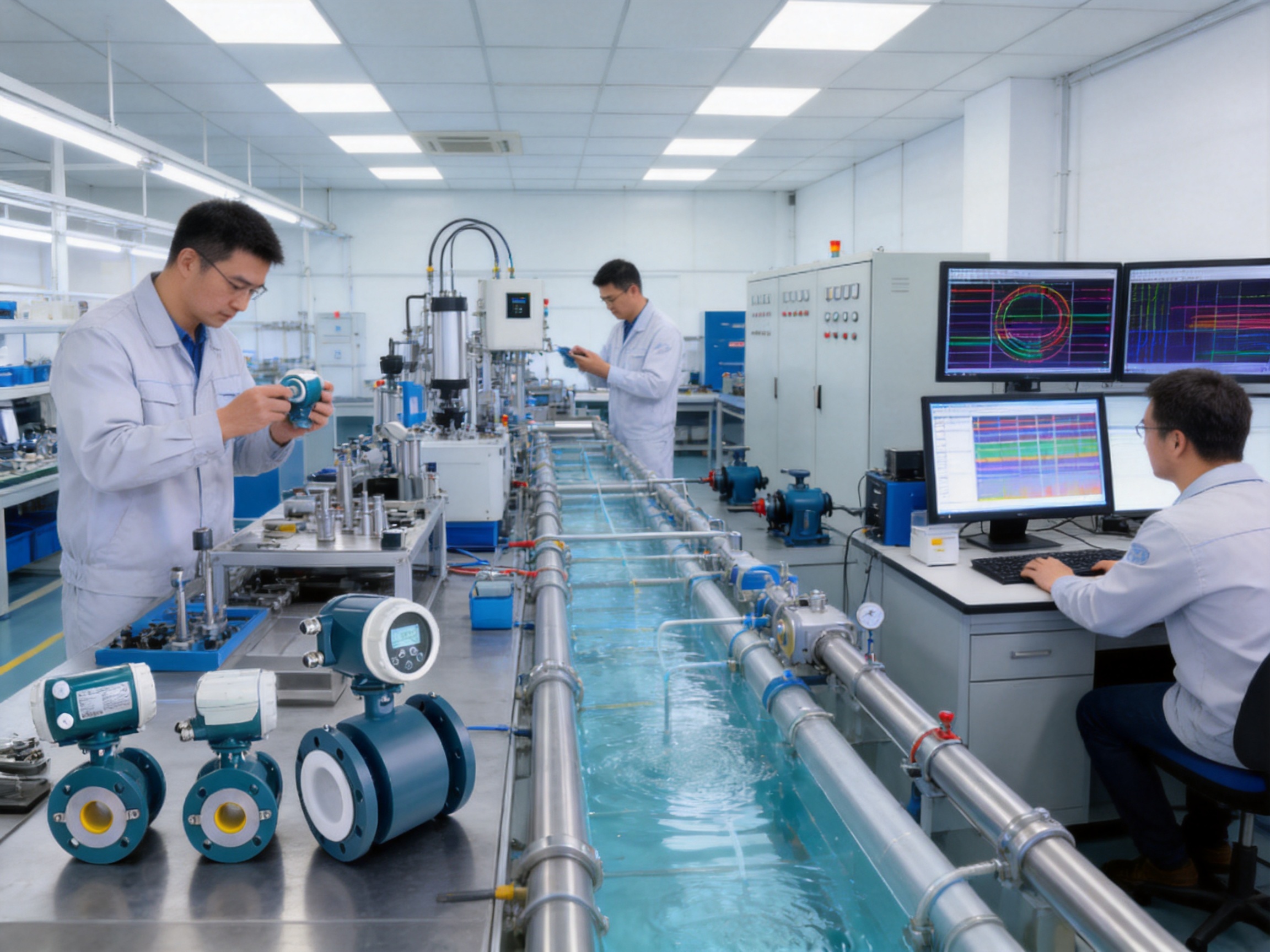
Product performance depends not only on the published design but also on how consistently each sensor and converter is manufactured. The manufacturer behind the VE11 operates as a specialized industrial flowmeter producer based in Yangzhou, China, with experience across electromagnetic, Coriolis, vortex, swirl, turbine, thermal mass, ultrasonic, and metal-tube rotameter technologies.
Since 2011, the company has focused on flow measurement for liquid, gas, and slurry applications. Its product experience across multiple measurement principles helps its engineering team understand the practical differences between technologies and recommend an appropriate solution for the actual process. This broad technical background is useful when a project includes several fluid types or requires a combination of flowmeter technologies.
Modern Production Facilities
The company has approximately 23,000 square meters of modern facilities distributed across three plants. This production capacity supports manufacturing, assembly, calibration, testing, engineering, and logistics activities for a broad range of industrial instruments.
Multiple facilities can help organize production according to product type, size, or manufacturing process. Large-diameter electromagnetic sensors require different handling, lining, welding, testing, and calibration arrangements from small-bore instruments. A structured manufacturing environment provides the foundation for controlling these differences while maintaining consistent procedures.
Technical Personnel and Engineering Capability
A technical team of more than 150 people supports product development, application engineering, production, calibration, quality control, and service activities. Flow measurement is application-sensitive: the correct lining, electrode, size, excitation mode, grounding arrangement, and converter configuration must be selected together.
Engineering support is particularly important for complex projects involving corrosive chemicals, high temperatures, large pipe diameters, buried installations, hazardous areas, abrasive slurries, or challenging conductivity. The goal is not simply to supply an instrument but to match the sensor design to the process and installation environment.
In-House Calibration and Traceability
In-house calibration is a major manufacturing strength for a precision flowmeter producer. Calibration provides an opportunity to verify the completed instrument, identify deviations, document performance, and support customer quality requirements. It also helps connect design and production feedback with actual measurement results.
Traceable calibration records are valuable for water utilities, chemical plants, power stations, EPC projects, and other users that maintain formal instrument management systems. Calibration does not eliminate the need for correct installation or periodic verification, but it provides a documented performance baseline for commissioning and future maintenance.
Certified Quality Processes
Certified quality processes help establish repeatable methods for purchasing, incoming inspection, assembly, testing, documentation, nonconformance control, and final release. For industrial users, process consistency is as important as individual product specifications. A meter that meets its design requirements only occasionally cannot support reliable plant operation.
The manufacturer’s stated experience in more than 2,000 engineering projects across over 30 countries indicates familiarity with varied standards, environmental conditions, process industries, and customer documentation requirements. International project experience can also help engineering teams coordinate with EPC contractors, end users, and OEM partners.
Automated and Consistent Manufacturing
Increasing automation in manufacturing can improve repeatability in production tasks, reduce variation, and support more consistent product assembly. Automation is especially valuable when combined with controlled inspection and testing. For electromagnetic flowmeters, important quality areas include coil installation, lining integrity, electrode positioning, enclosure sealing, wiring, converter configuration, and final calibration.
Automation does not replace engineering judgment. Instead, it provides a controlled production foundation that allows skilled personnel to focus on application design, process compatibility, quality verification, and customized requirements. This combination of automated production and engineering oversight supports stable, repeatable instruments for industrial service.
Customization and Project Support
Industrial flowmeter projects often involve requirements that go beyond a standard catalog configuration. Customers may need a specific flange standard, pressure class, lining, electrode alloy, cable length, converter arrangement, communication protocol, enclosure rating, hazardous-area approval, display language, or customized range setting.
The VE11 platform supports this type of configuration. Nominal diameters from DN3 to DN2000 cover a wide range of pipe sizes. Flanged connections can be supplied to DIN or ANSI/ASME standards. Power supplies may be selected for 24 V DC, 220 V AC, or broader voltage requirements. Integral and remote converters allow the instrument to fit different physical layouts.
For OEM equipment and packaged systems, repeatable product configuration and documentation are particularly important. The meter may need to fit a skid, communicate with a specific controller, operate within an enclosure, or comply with a project-wide instrument specification. Engineering support can assist with sizing, material selection, connection details, signal requirements, and test documentation.
For EPC contractors, the ability to manage multiple process applications through one supplier can simplify procurement and technical coordination. For end users, standardized instruments can reduce spare-parts complexity and training requirements. For OEM partners, configurable electronics and mechanical options can help integrate flow measurement into packaged systems.
Reliability, Diagnostics, and Lifecycle Value
Reliability is a lifecycle characteristic rather than a single specification. It depends on design, materials, manufacturing quality, installation, environmental protection, commissioning, and maintenance. The VE11 addresses several of these factors through its nonmechanical measuring principle, robust material options, digital processing, enclosure choices, and built-in diagnostics.
Self-diagnostics can monitor conditions associated with the coil, electrodes, and signal quality. These functions support troubleshooting by helping maintenance personnel distinguish between a process change, an installation problem, an electrical issue, and a possible sensor fault. Faster diagnosis can reduce downtime and prevent unnecessary replacement of functioning components.
The IP65, IP67, and IP68 options allow the instrument to be selected for different environmental conditions. For outdoor or underground locations, enclosure protection must be combined with appropriate cable entry and installation practices. In hazardous areas, the Ex d option and associated certification can provide an engineered solution when correctly applied.
Long-term value also comes from low pressure loss and reduced mechanical wear. A meter that does not require a rotor or bearing replacement can reduce scheduled maintenance. A meter that does not significantly restrict the pipeline can help limit the energy required for pumping. These benefits should be evaluated over the complete operating life rather than only by comparing initial purchase prices.
Selection Guide for Engineers and Buyers
Before ordering a VE11, engineers should collect complete process and installation information. The following questions provide a practical starting point.
What is the fluid composition and minimum electrical conductivity?
Does the fluid contain suspended solids, fibers, crystals, or abrasive particles?
What are the minimum, normal, and maximum flow rates?
What is the internal pipe diameter and required connection standard?
What are the normal and maximum process pressure and temperature?
Could the pipeline operate empty, partially full, or under vacuum?
Which lining and electrode materials are compatible with the medium?
Is the installation indoors, outdoors, underground, submerged, or hazardous?
Is an integral or remote converter more suitable?
Which outputs and communication protocols are required?
Are special approvals, calibration certificates, or inspection documents required?
Meter sizing should balance accuracy, velocity, pressure loss, and future operating conditions. Oversizing can reduce velocity below the preferred range, while undersizing can increase velocity, erosion, or pressure requirements. A qualified application review should consider the complete operating envelope rather than sizing only from the normal flow rate.
The material selection should be based on the actual chemical and mechanical environment. For example, a liquid that is compatible with PTFE at room temperature may behave differently at elevated temperature or concentration. A slurry that appears chemically mild may still cause significant erosion at high velocity. Electrode selection should also consider coating, polarization, cleaning, and the possibility of gas bubbles.
Commissioning and Maintenance Practices
Commissioning begins with confirming the mechanical installation. Flanges should be aligned, gaskets should be correctly positioned, bolts should be tightened in a suitable sequence, and the meter bore should be protected from damage during installation. The pipe should be flushed when appropriate so that construction debris does not collect around the electrodes or lining.
The electrical installation should then be checked. Power supply voltage, grounding, signal-cable routing, shielding, output wiring, and communication connections should match the approved design. The converter should be configured with the correct sensor data, measuring range, flow direction, units, damping, output behavior, and totalizer settings.
During startup, the operator should confirm that the measuring tube remains full and that the process is stable. The displayed flow should be compared with expected operating conditions, and any diagnostic messages should be reviewed. If the reading is unstable, possible causes include poor grounding, an empty or partially filled pipe, excessive air, unsuitable conductivity, electrode coating, incorrect sensor data, or electrical interference.
Routine maintenance is generally focused on inspection rather than mechanical replacement. Operators can review diagnostic information, verify process conditions, inspect exposed cabling and enclosures, and compare totalized data with other plant records. In severe services, the condition of the lining and electrodes should be evaluated according to the process risk and maintenance program.
Why the Product Fits Modern Industrial Measurement Strategies
Industrial facilities are increasingly expected to improve efficiency, reduce waste, document performance, and make decisions from reliable data. A flowmeter is an important field-level source of that data. The VE11 supports this strategy through accurate measurement, digital communication, totalization, diagnostics, and flexible installation options.
In water networks, its data can support loss analysis and demand management. In chemical production, it can improve dosing accuracy and batch consistency. In power plants, it can help optimize cooling and water circuits. In pulp and paper mills, it can provide dependable measurement in chemically challenging and solids-bearing services. In oil and gas facilities, it can monitor conductive water-based processes under changing conditions.
The instrument’s value is also connected to standardization. A company operating several facilities can use a common electromagnetic platform across many conductive-liquid applications while selecting different sizes, linings, electrodes, communication interfaces, and converter arrangements. Standardization can simplify training, spare-parts planning, configuration management, and maintenance documentation.
At the supplier level, manufacturing capacity, technical personnel, in-house calibration, quality systems, international project experience, and automated production all contribute to the product’s suitability for demanding applications. These strengths help connect the published technical design with consistent field delivery.
Questions and Answers
What type of fluid can the VE11 measure?
The VE11 is designed for electrically conductive liquids and slurries. Typical applications include water, wastewater, sludge, acids, alkalis, brines, conductive process chemicals, cooling water, and pulp suspensions. Standard conductivity is typically at least 20 microsiemens per centimeter, while special options may support lower conductivity.
Can it measure liquids containing suspended solids?
Yes. The full-bore design has no moving parts or internal restriction, making it suitable for many conductive slurries and suspended-solid services. The lining and electrode materials must be selected for the chemical and abrasive characteristics of the medium.
Does the meter measure mass flow?
The VE11 measures volumetric flow. It does not directly measure mass flow in the manner of a Coriolis mass flowmeter. If mass flow is required, the volumetric signal may be combined with independently measured or calculated density, provided the application permits this approach.
Can the VE11 measure forward and reverse flow?
Yes. The instrument supports bidirectional measurement. Configuration of forward and reverse outputs, totalizers, and control-system logic should be completed according to the project requirements.
What accuracy can be expected?
Available accuracy classes include approximately plus or minus 0.2 percent, 0.3 percent, or 0.5 percent of rate, depending on the model and selected option. Actual performance also depends on conductivity, installation, grounding, full-pipe conditions, flow velocity, calibration, and process stability.
What are the available line sizes?
The nominal diameter range is approximately DN3 to DN2000, or about one-eighth inch to eighty inches. The correct size should be selected from the minimum, normal, and maximum operating flow rates and the desired velocity range.
What lining materials are available?
Available options include ETFE, PTFE, PPU, FEP, PFA, and ceramic, depending on the model. The choice depends on chemical compatibility, temperature, abrasion, vacuum conditions, and process velocity.
Which electrode material should be selected?
Options include 316L stainless steel, Hastelloy B or C, titanium, tantalum, platinum-iridium, and tungsten carbide. Selection must be based on the chemistry, temperature, concentration, solids, and possible electrode coating of the measured medium.
Can it be used in a hazardous area?
Ex d explosion-proof variants are available for selected configurations. The complete installation must comply with the applicable hazardous-area classification, certification, wiring, temperature, and regional requirements.
Is a remote converter available?
Yes. The VE11 can be supplied with an integral compact converter or a remote split converter. Remote mounting is useful for high-temperature, high-vibration, submerged, inaccessible, or space-constrained installations.
Which communication protocols are supported?
The instrument supports 4-20 mA and pulse or frequency outputs. Modbus over RS-485 and HART are available, while Profibus is offered on selected models. The required communication option should be specified before production.
How does the instrument reduce maintenance?
It has no moving parts in the measuring bore, so there are no internal rotors, bearings, or gears to wear. Maintenance typically focuses on installation condition, grounding, cable integrity, enclosure protection, electrode condition, lining condition, diagnostics, and periodic verification.
What manufacturing capabilities support the product?
The manufacturer operates approximately 23,000 square meters of facilities across three plants, has a technical team of more than 150 people, performs in-house calibration, uses certified quality processes, and supports industrial projects in more than 30 countries. Its broader product portfolio includes multiple flow measurement technologies, supporting application engineering and customized project solutions.
Conclusion
The VE11 Series is a high-precision electromagnetic flowmeter for conductive liquids and slurries in demanding industrial and utility environments. Its Faraday-based measurement principle, full-bore construction, absence of moving parts, negligible pressure loss, bidirectional capability, broad material selection, and digital communication options make it a practical alternative to many mechanical and restriction-based flow technologies.
Its strongest advantages appear in applications where fluid viscosity or density changes, suspended solids are present, pressure loss must be minimized, maintenance access is difficult, or long-term measurement stability is important. Water and wastewater networks, chemical plants, oil and gas water systems, power stations, pulp and paper mills, and general industrial facilities can all benefit when the meter is correctly sized, installed, grounded, and configured.
The product is supported by a specialized manufacturing organization with modern facilities, a substantial technical team, international project experience, in-house calibration, quality controls, and increasingly automated production. These capabilities strengthen consistency from engineering selection through final testing and delivery.
For plant owners, EPC contractors, OEMs, and system integrators, the VE11 offers a flexible measurement platform that can be adapted to different pipe sizes, process media, installation conditions, and automation architectures. With proper application review and material selection, it can provide reliable flow data, lower lifecycle maintenance demands, and a strong foundation for efficient and controllable industrial operations.
References
1. Faraday, M. Experimental Researches in Electricity, foundational principles of electromagnetic induction.
2. International Organization for Standardization. Measurement of Fluid Flow in Closed Conduits, general principles and installation considerations.
3. International Electrotechnical Commission. Degrees of Protection Provided by Enclosures for Electrical Equipment.
4. International Electrotechnical Commission. Requirements for Electrical Installations in Hazardous Areas.
5. American Society of Mechanical Engineers. Flanged Piping Systems and Pressure-Temperature Ratings.
6. Manufacturer’s VE11 Series technical specifications, application data, material options, and product information.
Product: VE11 High-Precision Electromagnetic Flowmeter

We offer all our products and services at international standards.
Products
Contact Information
-

+86-18652789521
+86-18052582295
+86-0514-83633600 / 83633900 -

+86-0514-83633600 / 83633900
-

shawn@vnerflow.com
info@vnerflow.com -

No. 11 Xingye Road, Chenji Town Industrial Park, Yizheng, Yangzhou, China
