
 0
0
 EN
EN  English
 عربى
عربى Español
 русский
If you need any help, please feel free to contact us
Home / Author / Ren Xiaotong — Technical Sales Engineer for Gas Flow Meters / SA80T Series Swirl Flowmeter for Reliable Liquid, Gas, and Steam Measurement
SA80T Series Swirl Flowmeter for Reliable Liquid, Gas, and Steam Measurement
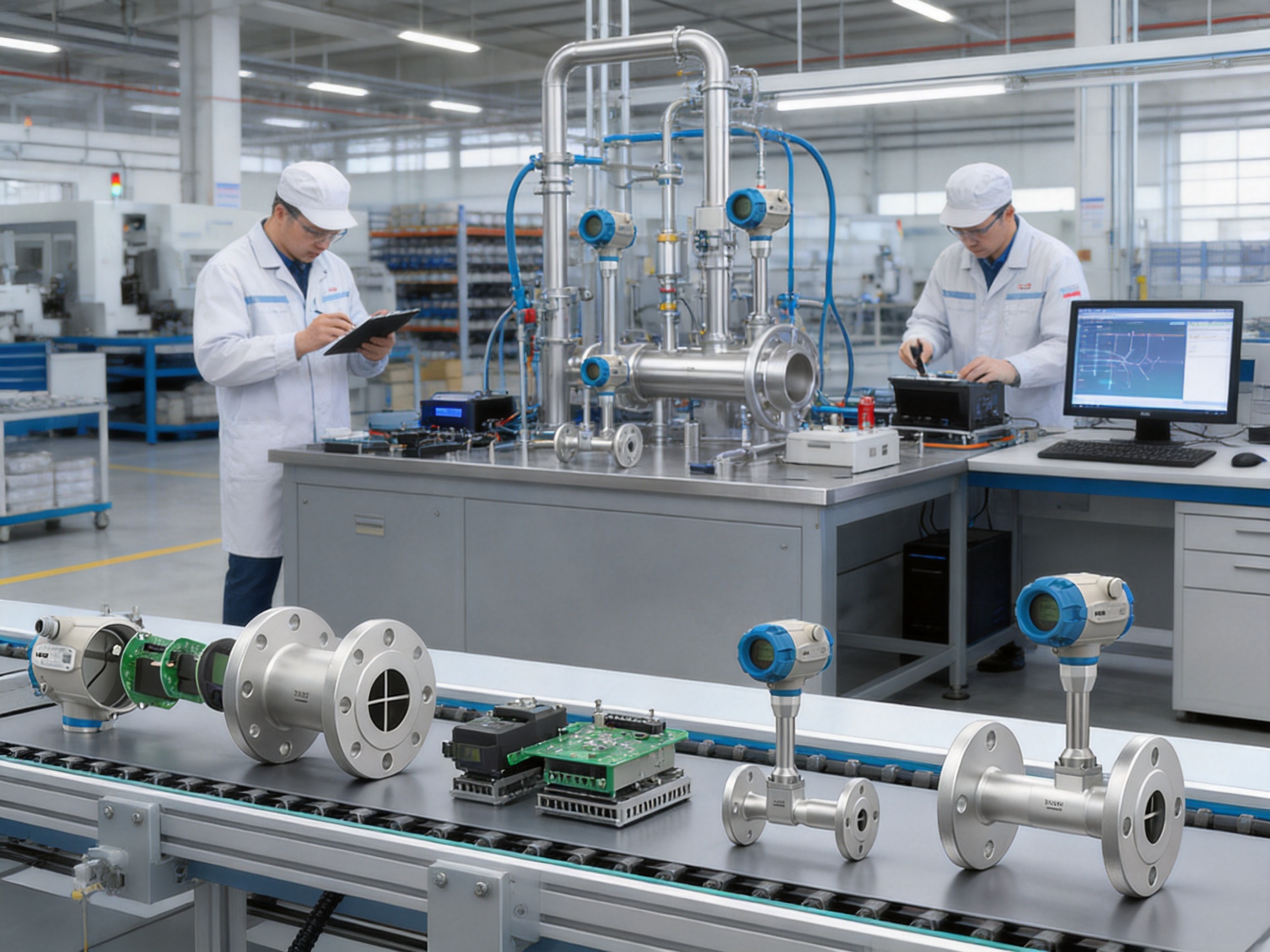
Accurate flow measurement is essential for process control, energy management, production quality, and plant safety. Industrial facilities often need one flowmeter platform that can handle gases, liquids, saturated steam, and superheated steam while maintaining stable performance under changing operating conditions. The SA80T Series Swirl Flowmeter is designed for this purpose. It applies the vortex precession measuring principle to provide real-time volumetric flow measurement without moving parts and without direct contact between the sensing element and the process medium.
The SA80T Series is suitable for chemical plants, power stations, oil and gas facilities, pharmaceutical utilities, food and beverage production lines, steel plants, textile operations, pulp and paper mills, and many other industrial environments. Its design combines a fixed swirl generator, a stable rotating flow pattern, a non-intrusive piezoelectric sensor, integrated signal processing, and optional temperature and pressure compensation. These features allow the meter to deliver dependable measurement across a wide range of industrial applications.
Compared with conventional mechanical flowmeters, the SA80T Series has no moving components exposed to the process stream. Compared with many vortex meters, it can require shorter straight pipe runs and can offer stable measurement in installations where space is limited. Compared with traditional differential-pressure systems, it can reduce the need for impulse tubing, pressure taps, and regular maintenance. Its flexible output options also allow it to operate as part of modern automation, energy monitoring, and digital process management systems.
1. Operating Principle of the SA80T Series
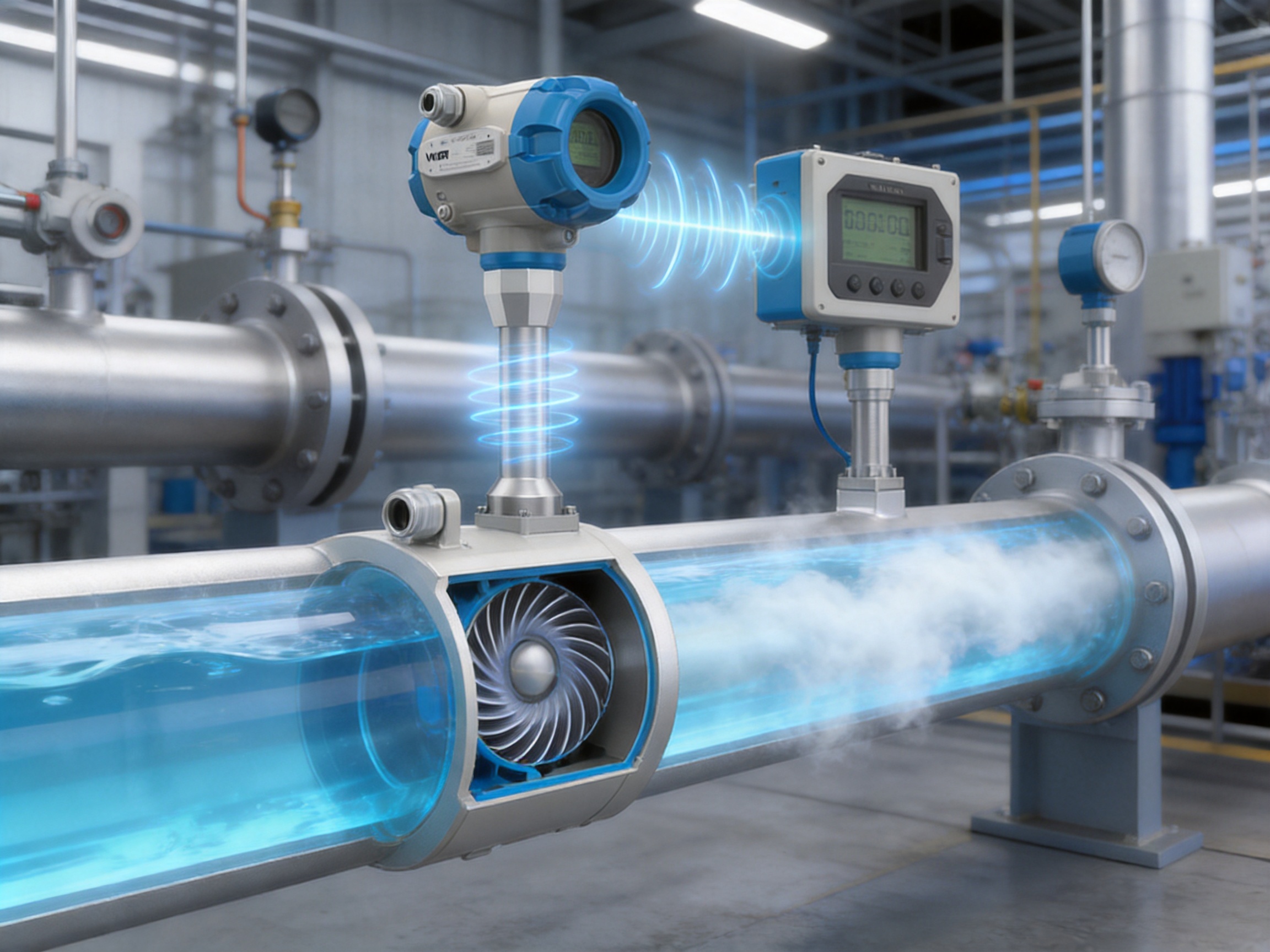
The SA80T Series is a vortex precession flowmeter, also commonly called a swirl flowmeter. Its measurement principle begins when the process medium enters the meter body and passes through a fixed swirl generator. The internal geometry forces the fluid into a controlled rotating motion. Downstream of the swirl generator, the rotating flow develops a stable vortex that gradually precesses around the flow axis.
The frequency of this precession is directly related to the volumetric flow rate. As the flow increases, the precession frequency increases. As the flow decreases, the frequency decreases. A piezoelectric sensor detects the pressure fluctuations associated with this rotating flow. Because the sensor is installed outside the direct flow path and does not depend on mechanical movement, the signal can be detected without placing a moving turbine, paddle, or impeller inside the process medium.
The electronic converter processes the sensor signal and calculates the flow rate. Depending on the selected configuration, the instrument can provide a volumetric flow output, a compensated standard-volume output, or a mass-related output when temperature and pressure inputs are available. Analog, pulse, HART, and Modbus RTU communication options support connection to flow computers, programmable logic controllers, distributed control systems, supervisory control systems, and plant energy management platforms.
The controlled internal flow structure is important to measurement stability. A poorly designed swirl generator can create excessive pressure loss, unstable signals, or sensitivity to changes in installation conditions. The SA80T Series is engineered to establish a repeatable vortex precession pattern so that the sensor receives a clear and consistent signal across its specified operating range.
2. A Practical Solution for Multiple Process Media
Many industrial sites use separate flowmeter technologies for water, process liquids, compressed air, natural gas, nitrogen, steam, and thermal fluids. This can increase instrument variety, spare-parts requirements, training needs, and maintenance complexity. The SA80T Series provides a common measurement approach for clean or slightly contaminated liquids, gases, saturated steam, and superheated steam.
For gas applications, the meter can measure compressed air, nitrogen, natural gas, oxygen-related process services, furnace gases, and other compatible gases when the pressure, temperature, density, and flow velocity are within the specified design limits. Gas measurement frequently requires compensation because the volume occupied by a gas changes with pressure and temperature. The optional integrated temperature and pressure compensation function helps convert measured operating volume into standard or normalized volume where the application requires it.
For steam applications, the SA80T Series can measure both saturated and superheated steam. Steam measurement is particularly important for boiler efficiency, production cost allocation, heat transfer control, sterilization, drying, and steam injection. The instrument can be configured for high-temperature service, with standard designs supporting temperatures up to 250°C and extended versions available for higher-temperature steam applications up to approximately 400°C, subject to the selected construction and process conditions.
For liquid applications, the meter is suitable for many clean or slightly contaminated process liquids. Typical services may include cooling water, heating water, glycol-water mixtures, thermal fluids, liquid reactants, purified utility water, and selected process solutions. Application suitability depends on conductivity, viscosity, corrosiveness, solids content, pressure, temperature, and the required flow range. Proper sizing and material selection remain essential for achieving long-term reliability.
The ability to serve several media categories does not mean that all applications use identical settings. Each installation should be evaluated according to density, viscosity, operating pressure, operating temperature, line size, flow velocity, fluid compressibility, and required output. Engineering-based sizing ensures that the meter operates within its optimum velocity and signal range rather than merely matching the nominal pipe size.
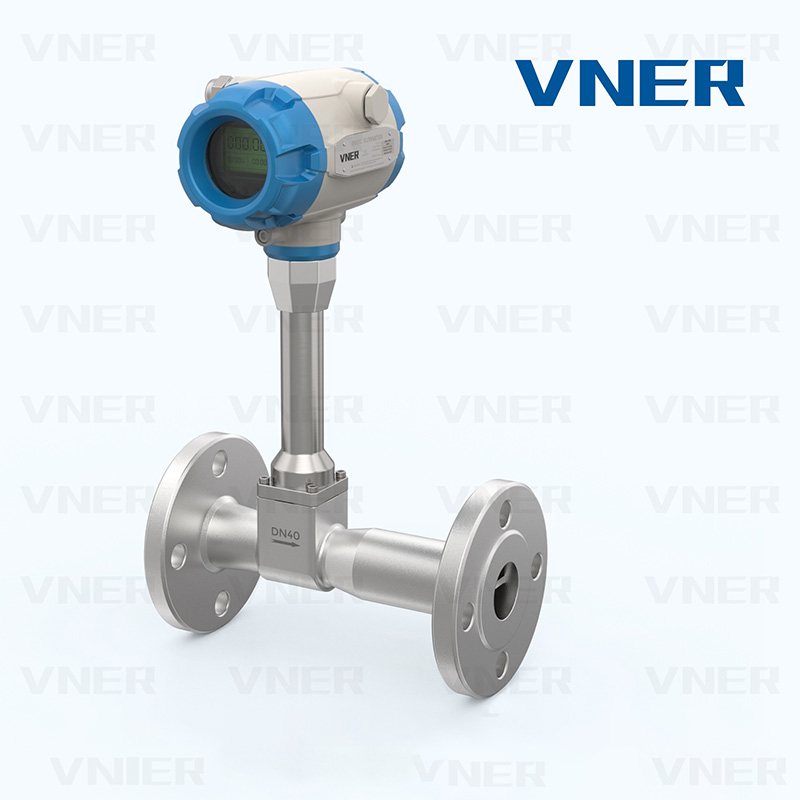
SA80T Series Swirl Flowmeter-副本
3. Measurement Performance and Operating Range
The SA80T Series is designed to provide stable and accurate readings in demanding industrial conditions. Under calibrated conditions, typical accuracy can reach approximately ±0.5% for liquids and ±1.0% for gases and steam. Actual performance depends on the selected size, process medium, Reynolds number, installation, calibration, pressure and temperature compensation, and the quality of upstream and downstream piping.
A turndown ratio of up to 1:20 may be available depending on the medium and installation conditions. This wide dynamic range is valuable in plants where demand changes throughout the day or where equipment operates under variable loads. For example, a boiler system may experience low steam consumption during standby periods and high consumption during production. A process gas line may operate at different rates during startup, normal production, and cleaning cycles. A flowmeter with an appropriate turndown ratio can reduce the need for frequent instrument changes or parallel metering arrangements.
Measurement stability is also influenced by signal quality. The piezoelectric sensing method produces an electrical response from pressure fluctuations generated by the vortex precession. Since the sensor does not require a rotating shaft or mechanical seal, there is no mechanical friction to create gradual wear or changes in rotational behavior. This helps maintain repeatable operation over extended service periods.
The meter should nevertheless be selected and installed correctly. Extremely low flow may not generate a sufficiently strong signal, while excessive velocity may increase pressure loss, noise, vibration, or erosion. A suitable flow range should be established using actual minimum, normal, and maximum process conditions. Engineering calculations should include operating density and viscosity, not only nominal pipe size.
4. Advantages Over Conventional Flowmeter Technologies
4.1 Compared with Mechanical Turbine Flowmeters
Liquid and gas turbine flowmeters use a rotor that turns as the process medium passes through the meter. These instruments can provide good accuracy in suitable applications, but the rotor, bearings, and support structure are exposed to wear. Small particles, lubricating contamination, sudden flow changes, and excessive velocity can affect the rotor. Maintenance may eventually be required because of bearing wear, rotor damage, or changes in mechanical response.
The SA80T Series has no moving parts in the measuring structure. Its fixed swirl generator and non-intrusive piezoelectric sensor reduce the number of wear-sensitive components. This can be particularly beneficial in continuous process plants, utility systems, and installations where instrument access is difficult. The absence of a moving rotor also reduces the risk of measurement drift caused by mechanical friction or bearing deterioration.
A turbine meter may still be preferred for certain clean-liquid applications requiring very high accuracy at a narrow operating range. However, the SA80T Series can offer a more robust and lower-maintenance alternative where a broad operating range, steam capability, or reduced mechanical complexity is important.
4.2 Compared with Differential-Pressure Flowmeters
Differential-pressure flowmeters measure the pressure difference created by an orifice plate, nozzle, venturi, or other restriction. They are widely used and supported by established standards. However, an orifice-based system normally requires pressure taps, impulse lines, isolation valves, and a differential-pressure transmitter. Impulse lines can become blocked, frozen, corroded, or filled with condensate in unsuitable configurations. Maintenance and troubleshooting may therefore involve more components than a compact flowmeter installation.
The SA80T Series measures the frequency of vortex precession rather than relying on a separate pressure-tap system. This can simplify installation and reduce auxiliary tubing. Its pressure loss can also be lower than that of a sharp-edged restriction, depending on the selected meter size and application. The result may be a more compact installation with fewer potential leakage points.
Differential-pressure systems remain valuable where very large line sizes, established plant standards, or specialized high-pressure measurement arrangements are required. The appropriate choice depends on total installed cost, maintenance requirements, pressure loss, accuracy, and process conditions. For many general industrial liquid, gas, and steam services, the SA80T Series offers a practical alternative.
4.3 Compared with Electromagnetic Flowmeters
Electromagnetic flowmeters are highly effective for conductive liquids and are widely used in water, wastewater, chemical, and slurry applications. They cannot measure non-conductive gases or steam, and their performance depends on the electrical conductivity of the liquid. Some process fluids, hydrocarbons, gases, and steam are therefore outside their operating principle.
The SA80T Series is not restricted to conductive liquids. Its vortex precession principle allows it to measure gases and steam as well as selected liquids. This makes it useful for facilities that need one instrument family across several utility systems. For highly conductive liquids with large amounts of solids, an electromagnetic flowmeter may still be more suitable. However, for mixed plant requirements involving gas, liquid, and steam, the SA80T Series provides broader media flexibility.
4.4 Compared with Conventional Vortex Flowmeters
Conventional vortex flowmeters generate alternating vortices behind a bluff body. They are effective for many gas, liquid, and steam services, but they can require relatively long straight pipe runs to establish a sufficiently developed flow profile. Space limitations, elbows, valves, reducers, and pumps near the meter may complicate installation.
The SA80T Series uses a controlled swirl generator to create a vortex precession pattern. Its installation design can require minimum straight pipe runs of approximately 3D upstream and 1D downstream under suitable conditions, which is significantly shorter than the requirements often associated with conventional vortex meters. Actual requirements depend on the piping arrangement, disturbance type, process medium, meter size, and application specifications.
The reduced straight-run requirement can provide important project benefits. It may allow the meter to fit into compact skid systems, retrofit projects, utility rooms, packaged equipment, and congested process areas. It can also reduce the need to relocate valves or extend piping. Even with a compact installation, good engineering practice remains necessary. Severe disturbances, pulsating flow, two-phase flow, or strong vibration should be assessed before final selection.
5. Integrated Electronics and Digital Communication
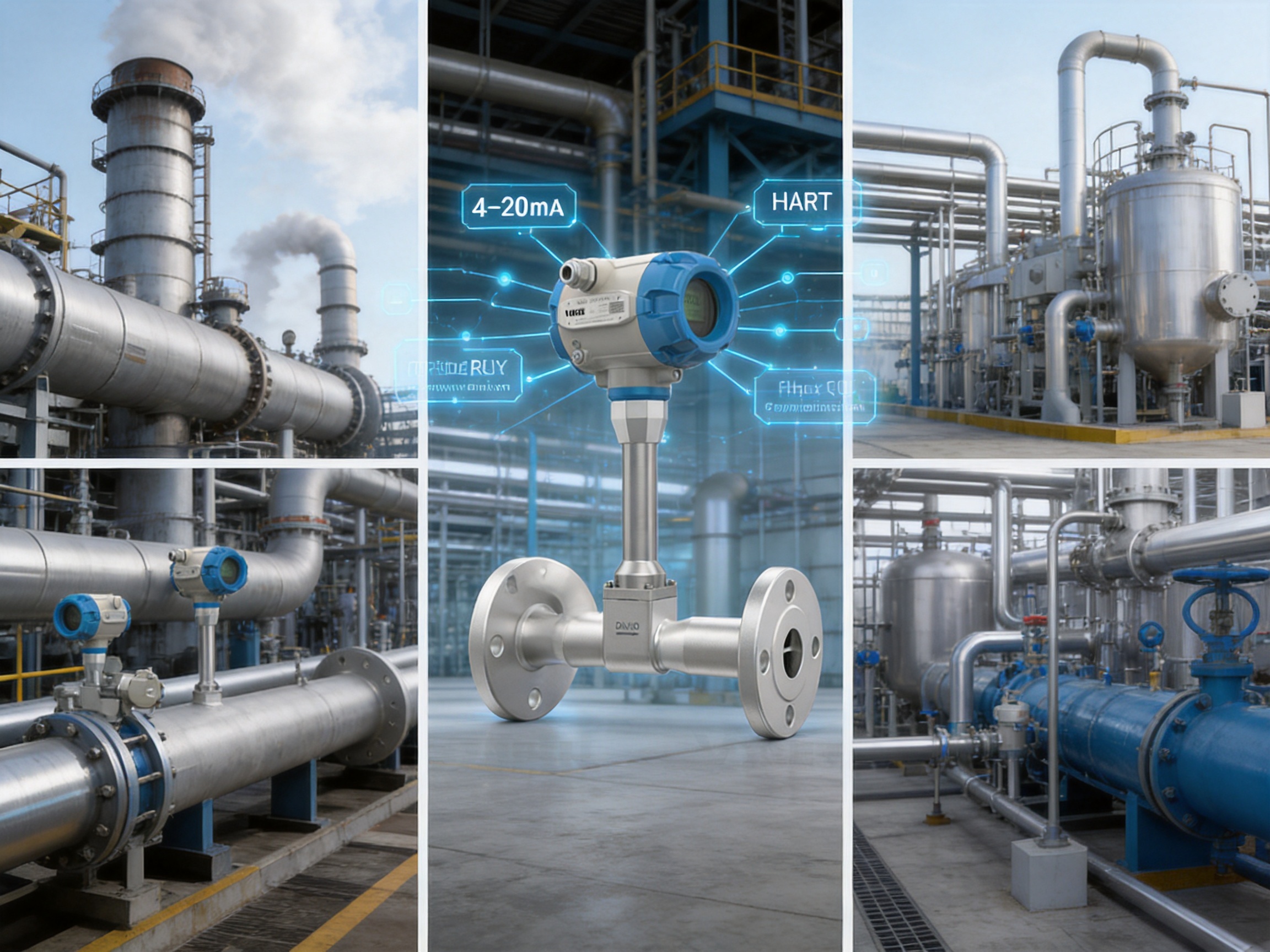
Industrial users increasingly expect a flowmeter to do more than display a local reading. The SA80T Series integrates signal processing and configurable output functions to support plant-wide measurement and control. A 4–20 mA output can transmit a proportional flow signal to a control system. Pulse output can support totalization and batch measurement. HART communication can provide digital configuration and diagnostic data over a conventional analog loop. Modbus RTU can connect the instrument to supervisory systems, remote terminals, energy platforms, and automation networks.
Integrated processing improves the ability to filter unwanted disturbances and distinguish a valid vortex signal from external electrical or mechanical interference. Configuration parameters can be adjusted for the process medium, measurement unit, output range, damping, totalizer function, and compensation requirements. Access to these settings can simplify commissioning and reduce the time needed for field adjustments.
Optional pressure and temperature compensation is especially useful in gas and steam applications. A gas flow value measured at actual operating conditions may not be directly comparable with a standard-volume value. Similarly, steam mass flow depends on pressure and temperature relationships. Compensation allows the instrument to produce a more useful engineering value for production accounting, boiler management, compressed-air monitoring, or energy analysis.
Self-diagnostic functions can support fault detection, zero-drift monitoring, and remote configuration. These functions do not eliminate the need for inspection, calibration, or process knowledge, but they help maintenance teams identify abnormal conditions earlier. A diagnostic message may indicate a sensor problem, an unstable process signal, an electronics issue, or an operating condition outside the normal range.
6. Mechanical Construction for Demanding Conditions
Industrial flowmeters must survive more than normal measurement conditions. They may encounter temperature cycling, pressure fluctuations, vibration, moisture, corrosive atmospheres, thermal shocks, and occasional process upsets. The SA80T Series uses a robust mechanical structure designed for continuous operation in demanding environments.
The fixed internal swirl generator has no rotating bearings or exposed moving shafts. This reduces mechanical wear and helps the meter remain functional during long operating periods. The sensor arrangement separates the measuring element from direct contact with the process medium, which can reduce the influence of contamination and minimize the risk of mechanical damage to the sensing component.
High-temperature and high-pressure versions can be selected for steam, thermal oil, and other high-energy services. Standard designs support process conditions up to approximately 250°C and 4.0 MPa, while extended configurations may support temperatures up to approximately 400°C for selected steam applications. Final limits depend on body material, connection type, sealing design, electronics configuration, ambient temperature, and certification requirements.
Materials should be selected according to the medium and site environment. Carbon steel, stainless steel, and other compatible options may be considered based on corrosion resistance, pressure rating, temperature, and plant standards. For chemically aggressive or hygienic applications, the wetted construction and connection design should be reviewed carefully before ordering.
Temperature management is also important. If a high-temperature process is connected directly to electronics, the converter may be exposed to excessive ambient or process heat. Remote electronics or an extended neck design may be appropriate in such installations. Proper insulation practices should preserve the required heat transfer conditions while preventing damage to the converter and sensor assembly.
7. Installation Advantages and Engineering Considerations
One of the practical benefits of the SA80T Series is its relatively compact installation requirement. Straight pipe requirements of approximately 3D upstream and 1D downstream can reduce the space needed around the meter in many suitable applications. This is useful for replacement projects where existing piping cannot easily be modified.
Despite the reduced straight-run requirement, installation quality remains critical. The pipe should be correctly aligned, internally clean, and free from weld beads, gaskets, or protrusions that extend into the flow path. The meter should be installed in the direction indicated by the flow arrow. Flanges, gaskets, reducers, and valves should be selected so that they do not create unnecessary disturbance or leakage.
For liquid service, the piping arrangement should help keep the meter completely filled. Installing the meter at a high point where air can accumulate may cause unstable readings. Downward flow sections, partially filled pipes, and locations immediately downstream of pumps should be reviewed carefully. If the liquid contains entrained gas, a separator or other process improvement may be required.
For gas service, the piping should prevent liquid accumulation and condensate collection near the meter. Drainage and orientation should be selected according to the gas composition, operating temperature, and expected dew point. For steam, condensate management is essential. The system should be designed to avoid excessive wet steam, slug flow, or two-phase conditions that may affect the measurement signal and place mechanical stress on the meter.
Strong vibration should be avoided because external vibration can influence signal quality. If the meter is installed near reciprocating machinery, compressors, pumps, or high-vibration equipment, the mechanical support and signal stability should be evaluated. Electrical grounding, cable routing, shielding, and separation from high-power equipment are also important for reliable signal transmission.
Before commissioning, the user should verify the meter size, process connection, flow direction, power supply, output configuration, pressure and temperature inputs, communication settings, and engineering units. A controlled startup can help confirm that the signal responds correctly to changes in process demand.
8. Applications in Power Generation and Steam Systems
Steam is one of the most important industrial energy carriers. Accurate steam flow data helps operators balance boiler production, monitor equipment efficiency, allocate energy costs, and identify abnormal consumption. The SA80T Series can measure saturated and superheated steam in boiler outlets, process headers, turbine auxiliary systems, heat exchangers, drying systems, and steam distribution networks.
In a boiler system, continuous steam measurement can be combined with fuel, combustion-air, feedwater, and flue-gas data. This creates a more complete picture of boiler performance. Operators can identify changes in steam demand, optimize combustion control, and reduce unnecessary fuel consumption. In multi-user facilities, branch-line flowmeters can support internal energy accounting and highlight equipment with unusually high steam consumption.
The meter can also monitor cooling-water circulation for turbines, generators, condensers, and heat exchangers. Stable cooling-water flow is important for thermal efficiency and equipment protection. If flow falls below the expected level, operators may investigate pump performance, valve position, blockage, fouling, or exchanger restrictions before a temperature excursion develops.
Superheated steam applications require careful attention to temperature, pressure, insulation, and electronics protection. An extended high-temperature configuration may be appropriate, and the selected meter must be rated for the actual operating envelope rather than only the normal operating point.
9. Chemical, Petrochemical, and Oil and Gas Applications
Chemical and petrochemical plants handle a wide range of gases, vapors, liquids, and utility media. The SA80T Series can support compressed-air monitoring, nitrogen distribution, natural-gas measurement, process-vapor monitoring, and liquid reactant dosing. Its non-mechanical sensing structure is advantageous where maintenance access is restricted or where the process must remain stable for long production campaigns.
In chemical reactors, accurate gas flow control is essential for stoichiometric balance. Hydrogen, oxygen, nitrogen, and other process gases may need to be introduced at controlled rates during batch or continuous production. A stable flow signal helps the control system regulate valves and maintain the desired gas-to-liquid or gas-to-reactant ratio. Better control can support reaction yield, product consistency, and process safety.
Liquid reactants may be affected by pressure and temperature changes between storage, pumping, and injection points. Proper meter sizing and compensation can improve process visibility. In corrosive applications, material compatibility must be evaluated carefully, including the meter body, seals, gaskets, flanges, and any temperature or pressure sensing connections.
Oil and gas facilities can use the SA80T Series for steam injection, fuel-gas monitoring, furnace gas control, and selected utility services. Steam injection in enhanced oil recovery requires reliable flow data to maintain reservoir-management targets and monitor injection efficiency. Fuel-gas measurement supports burner control, production accounting, and energy optimization. For hazardous areas, the selected configuration must comply with the required electrical and certification standards.
10. Pharmaceutical, Food, and Hygienic Utility Services
Pharmaceutical and food manufacturing facilities require reliable utility measurement and careful attention to material selection, cleaning, and process documentation. The SA80T Series can be applied to clean steam, sterilization systems, SIP utilities, purified water services, and selected process or thermal media where the construction meets the required hygiene and compatibility criteria.
In pharmaceutical plants, clean steam measurement can support sterilization-cycle monitoring and utility balance. Flow data helps confirm that the required steam supply is available during SIP operations. Purified water and water-for-injection systems may also benefit from accurate flow monitoring at generation, storage, distribution, and point-of-use locations, subject to the conductivity and hygienic requirements of the specific application.
Food and beverage plants may use the meter for carbon dioxide dosing, cleaning solutions, thermal media, hot-water circulation, and utility steam. CIP and SIP systems often operate through changing flow conditions, making a wide operating range valuable. The instrument should be selected with appropriate body materials, connection standards, surface finish, cleaning compatibility, and installation orientation.
Not every hygienic application is automatically suitable for a general industrial flowmeter. The user should specify the required sanitary standards, connection design, cleaning chemicals, sterilization temperature, pressure, and validation documentation. The manufacturer’s engineering team can then determine whether the standard SA80T configuration or a specialized version is appropriate.
11. Thermal Management and Advanced Manufacturing Applications
Modern production systems increasingly depend on precise thermal management. Semiconductor manufacturing, high-speed machining, laser processing, battery production, data-center cooling, and advanced electronics assembly can all require stable cooling or heating liquid flow. The SA80T Series can measure glycol-water mixtures, thermal oils, and other compatible liquids used to control equipment temperature.
In a cooling loop, the meter can provide feedback to a control valve or pump inverter. If the flow falls below the required value, the system can respond before equipment temperature reaches a dangerous level. If the flow is higher than necessary, pump energy may be reduced while maintaining thermal stability. Accurate measurement can therefore support both equipment protection and energy efficiency.
Thermal fluids may have viscosity and density values that differ significantly from water. These properties change with temperature and can affect the operating range and pressure loss. Engineering sizing should use the actual minimum and maximum fluid properties. A meter that is correctly sized for water may not provide the same performance with a high-viscosity thermal oil.
The SA80T Series can also support heating systems in which hot water, steam, or thermal oil is circulated through a process. Continuous flow data helps operators maintain heat-transfer performance, identify fouling, and balance different production zones.
12. Applications in Pulp, Paper, Textile, and Metallurgy
Pulp and paper plants use large quantities of water, steam, black liquor, white liquor, compressed air, and process chemicals. Flow measurement supports recovery-boiler operation, chemical balance, drying, water management, and production control. The SA80T Series can be considered for selected liquor and utility services when the fluid properties and solids content are within the instrument’s application range.
High-temperature steam measurement is important in paper drying because steam pressure and flow influence dryer-cylinder temperature and production speed. Reliable measurement can help operators balance steam distribution, reduce energy losses, and identify blocked or underperforming sections.
Textile and dyeing facilities often have variable demand and pulsating process conditions. Process water, dye liquors, hot water, steam, and compressed air may all require monitoring. The meter’s broad application range and digital output options can help integrate utility measurement with production management systems. For fluids containing fibers, suspended solids, or high concentrations of chemicals, the final selection should be based on laboratory or process data.
Steel and metallurgy plants use cooling water, shielding gases, furnace gases, compressed air, steam, and various process liquids. Cooling-water measurement helps protect continuous-casting machines, rolling equipment, furnaces, and hydraulic systems. Gas measurement can support argon and nitrogen distribution, furnace-atmosphere control, and energy monitoring. The robust no-moving-parts construction is useful in environments where maintenance access may be limited and ambient conditions may be demanding.
13. Manufacturing Strengths and Quality Control
The performance of a flowmeter depends not only on its measuring principle but also on manufacturing consistency. Small variations in internal geometry, sensor installation, welding, sealing, electronics assembly, or calibration can affect repeatability. Jiangsu VNER Electronic Technology Co., Ltd. combines product engineering, in-house calibration, quality control, and automated manufacturing practices to support consistent production of industrial flow instruments.
The company operates modern facilities across three plants, with approximately 23,000 square meters of production and engineering space. A technical team of more than 150 people supports product development, application analysis, process engineering, calibration, production, quality assurance, and after-sales service. This structure allows manufacturing feedback to reach product design and application engineering rather than treating each function as an isolated activity.
In-house calibration is a significant manufacturing strength. Calibration allows the production team to verify sensor response, flow signal stability, output accuracy, and configuration parameters before shipment. It also supports traceability and helps identify variation at an early stage. For customers with demanding process-control requirements, calibration records and test documentation can contribute to project acceptance and maintenance planning.
Engineering-driven sizing and selection further improve the probability of successful field operation. The company’s product range includes electromagnetic, Coriolis, vortex, swirl, turbine, thermal mass, ultrasonic, and metal-tube rotameter technologies. This broad portfolio allows engineers to compare different principles according to fluid properties, accuracy, pressure loss, conductivity, viscosity, temperature, contamination, and installation constraints.
Automated manufacturing can improve repeatability in machining, assembly, testing, and data recording. Automation does not replace skilled engineering; instead, it helps reduce avoidable variation in repetitive processes. Combined with controlled work instructions and inspection procedures, it supports product consistency across different batches and sizes.
Quality processes should cover incoming materials, machining dimensions, welding quality, pressure integrity, sensor installation, electronics performance, enclosure protection, calibration, final inspection, and packaging. For industrial customers, stable documentation and traceability are almost as important as the initial measurement specification. They support commissioning, audits, spare-parts management, and long-term service.
14. Project Experience and Customer Support
Since 2011, Jiangsu VNER Electronic Technology Co., Ltd. has focused on industrial flow measurement for real process environments. The company has supplied instruments for more than 2,000 engineering projects in over 30 countries. This experience includes applications in oil and gas, petrochemical production, polysilicon, power generation, water and wastewater, and other industrial sectors.
Project experience is valuable because flowmeter selection is rarely based on a single specification. A successful application requires consideration of process behavior, piping layout, environmental conditions, control objectives, installation standards, communication requirements, and maintenance practices. Lessons from different industries can help engineers recognize potential problems before equipment is ordered.
The company supports EPC contractors, end users, and OEM partners. EPC projects often require compliance with project specifications, data sheets, inspection plans, document submittals, and delivery schedules. End users may need assistance with replacement selection, troubleshooting, calibration planning, and system upgrades. OEM customers may require stable dimensions, customized outputs, private-label arrangements, or integration into packaged equipment.
Application support should begin with accurate process information. The most useful data generally includes medium name, minimum and maximum flow, normal flow, pressure, temperature, density, viscosity, line size, connection standard, material requirements, hazardous-area classification, power supply, output signal, and installation drawing. When these details are available, the engineering team can recommend a more appropriate meter size and configuration.
15. Comparison of Key Selection Considerations
| Selection factor | SA80T Series capability | Practical customer benefit |
|---|---|---|
| Measured media | Liquids, gases, saturated steam, and superheated steam | One product family can support multiple plant utilities and process services |
| Measurement principle | Vortex precession generated by a fixed swirl element | Stable frequency-based measurement without moving mechanical parts |
| Typical accuracy | Approximately ±0.5% for liquids and ±1.0% for gases and steam under calibrated conditions | Suitable for process monitoring, control, and utility management when properly sized |
| Turndown | Up to approximately 1:20 depending on medium and installation | Supports variable demand and changing production loads |
| Sensor construction | Non-intrusive piezoelectric detection | Reduces direct sensor exposure and mechanical wear |
| Compensation | Optional temperature and pressure compensation | Supports standard-volume, normalized-volume, or mass-related calculations |
| Outputs | 4–20 mA, pulse, HART, and Modbus RTU options | Fits conventional control loops and digital automation systems |
| Temperature capability | Standard designs up to approximately 250°C; extended steam versions may reach approximately 400°C | Suitable for many high-temperature steam and thermal-fluid systems |
| Straight pipe requirement | Typically approximately 3D upstream and 1D downstream in suitable layouts | Allows installation in more compact piping arrangements |
| Mechanical design | No moving parts in the measurement structure | Lower wear potential and reduced routine mechanical maintenance |
| Industry support | Power, chemical, oil and gas, pharmaceutical, food, pulp and paper, textile, and metallurgy | Applicable to diverse process and utility systems |
16. How to Select the Correct Configuration
The first step is to identify the process medium accurately. The terms “gas,” “steam,” and “liquid” are not sufficient by themselves. The engineer should know whether the gas is air, nitrogen, natural gas, oxygen, hydrogen, or another composition. For liquids, density, viscosity, conductivity, solids content, and corrosiveness may affect the selection. For steam, pressure, temperature, dryness, and whether the steam is saturated or superheated are essential.
The second step is to define the complete flow range. Minimum, normal, and maximum flow should be provided rather than only the expected average. If the minimum flow is too low for the selected meter, the signal may become unstable. If the maximum flow is too high, pressure loss, vibration, noise, or over-range conditions may occur. A correctly sized meter should cover the normal operating point while retaining adequate range for process variation.
The third step is to confirm pressure and temperature. These values determine the mechanical rating, sealing requirements, compensation settings, and electronics arrangement. Transient conditions such as startup pressure, shutdown temperature, steam flushing, or emergency operation should also be considered.
The fourth step is to review installation conditions. The location of elbows, reducers, valves, pumps, compressors, control valves, strainers, and branches should be shown on a piping sketch. The engineer should also evaluate whether the pipe remains full, whether condensation or gas pockets can form, and whether vibration or pulsation is present.
The fifth step is to define the required output and communication method. A simple local display may be enough for a standalone utility line, while a modern plant may require 4–20 mA, HART, Modbus RTU, pulse totalization, alarms, or remote configuration. If standard-volume or mass-related measurement is required, pressure and temperature compensation should be included in the instrument specification.
Finally, the user should specify materials, flange or threaded connections, enclosure requirements, ambient temperature, hazardous-area classification, calibration documentation, and inspection requirements. Complete specifications reduce delays and avoid mismatches between the meter and the process system.
17. Commissioning, Maintenance, and Service Life
Although the SA80T Series has no moving parts, routine inspection remains good industrial practice. Maintenance personnel should check for external damage, corrosion, loose connections, cable deterioration, moisture ingress, abnormal vibration, and changes in process behavior. Diagnostic information should be reviewed when available, particularly if the output becomes unstable or differs from another independent measurement.
Process conditions should be compared with the original design data. A change in gas composition, steam pressure, liquid viscosity, operating temperature, or flow range can affect measurement performance. If the process has changed substantially, the meter may require reconfiguration or a new sizing review.
Calibration intervals depend on the application, regulatory requirements, criticality, process cleanliness, and site quality system. Critical custody-transfer or energy-accounting applications may require more frequent verification than general monitoring applications. Verification can include comparison with a reference meter, process balance analysis, output simulation, or laboratory calibration, depending on the required level of confidence.
A long service life is supported by correct installation and operation within the specified limits. Avoiding two-phase flow, excessive velocity, severe vibration, thermal shock, and incompatible chemical exposure is as important as the design of the meter itself. When the process and installation are properly managed, the no-moving-parts construction can reduce wear-related failures and maintenance requirements.
18. Sustainability and Total Cost of Ownership
Flow measurement contributes to sustainability by making resource consumption visible. Steam, compressed air, cooling water, fuel gas, process water, and thermal fluids all carry energy or production costs. Accurate data helps operators identify leaks, reduce over-supply, optimize pump and compressor operation, and improve boiler performance.
The total cost of ownership includes purchase price, installation, commissioning, energy loss from pressure drop, maintenance, calibration, spare parts, downtime, and replacement. A flowmeter with a slightly higher initial cost may provide better value if it reduces maintenance, fits an existing compact piping arrangement, supports digital diagnostics, or avoids frequent replacement of mechanical components.
The SA80T Series can contribute to lower lifecycle cost through its no-moving-parts construction, broad media compatibility, optional compensation, compact installation requirements, and flexible communications. These benefits should be evaluated together rather than judged only by the initial instrument price.
In energy-intensive industries, even a small improvement in steam, gas, water, or thermal-fluid management can produce significant annual savings. The value of the flowmeter is therefore not limited to its local display. It becomes part of a larger system for production optimization, predictive maintenance, energy accounting, and environmental performance improvement.
19. Frequently Asked Questions
Q1: What is a swirl flowmeter?
A swirl flowmeter measures flow by creating a controlled rotating motion in the process medium. A fixed swirl generator produces a vortex precession pattern, and the frequency of this pattern is proportional to volumetric flow rate. The SA80T Series detects the pressure fluctuations associated with the precession using a piezoelectric sensor.
Q2: Can the SA80T Series measure both liquids and gases?
Yes. The meter is designed for selected liquid, gas, saturated-steam, and superheated-steam applications. The actual suitability depends on the medium properties, flow range, pressure, temperature, viscosity, density, and installation conditions.
Q3: Does the meter contain moving parts?
No moving measuring components are used in the SA80T Series. The fixed swirl generator creates the flow pattern, while the piezoelectric sensor detects the signal without relying on a rotating shaft, rotor, or bearing.
Q4: What accuracy can users expect?
Typical calibrated accuracy is approximately ±0.5% for liquids and ±1.0% for gases and steam. Actual accuracy depends on meter size, process conditions, installation, calibration, compensation, and operation within the specified range.
Q5: How wide is the flow range?
The turndown ratio can reach approximately 1:20 depending on the medium and installation conditions. The final usable range must be calculated from actual minimum, normal, and maximum flow conditions.
Q6: Can it measure steam?
Yes. The SA80T Series can be used for saturated and superheated steam. High-temperature versions are available for demanding steam services. Pressure, temperature, dryness, insulation, condensate management, and electronics protection should be reviewed during selection.
Q7: Is temperature and pressure compensation available?
Optional integrated temperature and pressure compensation is available for applications requiring standard-volume, normalized-volume, or mass-related flow information. The required pressure and temperature inputs should be included in the project specification.
Q8: What communication options are available?
The meter can be configured with analog 4–20 mA, pulse, HART, or Modbus RTU outputs. The best option depends on the plant control architecture, totalization requirements, remote configuration needs, and existing communication network.
Q9: Does the SA80T Series require long straight pipe runs?
Typical requirements can be approximately 3D upstream and 1D downstream in suitable installations, which may be shorter than the requirements of many conventional vortex meters. The exact requirement depends on the piping disturbance and application conditions.
Q10: Can the meter be installed in a compact skid?
It can be suitable for compact skid systems because of its relatively short straight-run requirement. The piping layout must still be reviewed for elbows, valves, pumps, reducers, vibration, full-pipe conditions, and two-phase flow.
Q11: Is the meter suitable for dirty fluids?
The SA80T Series is intended for clean or slightly contaminated media. Heavy solids, severe fouling, highly viscous liquids, or unstable two-phase flow may require another measurement principle. The fluid composition and contamination level should be discussed during engineering selection.
Q12: How does it compare with a turbine flowmeter?
The SA80T Series does not use a rotor or bearing, so it can reduce wear-related maintenance and avoid mechanical measurement drift associated with moving components. A turbine meter may still be appropriate for certain clean liquids and narrow flow ranges, but the swirl meter offers broader media capability and high-temperature steam measurement.
Q13: How does it compare with an electromagnetic flowmeter?
An electromagnetic flowmeter requires a conductive liquid and cannot measure gases or steam. The SA80T Series can measure selected liquids, gases, and steam, making it more versatile for facilities with mixed utility and process services.
Q14: What information is needed for quotation and sizing?
Important information includes medium, minimum and maximum flow, normal flow, operating pressure, operating temperature, density, viscosity, line size, connection standard, material requirements, output signal, power supply, installation conditions, and hazardous-area requirements.
Q15: Where is the product manufactured and supported?
The SA80T Series is manufactured and supported by Jiangsu VNER Electronic Technology Co., Ltd., an industrial flowmeter producer based in Yangzhou, China. The company provides engineering, calibration, quality control, production, and project support for customers and partners in multiple countries.
20. Conclusion
The SA80T Series Swirl Flowmeter provides a practical combination of measurement flexibility, mechanical simplicity, digital functionality, and installation efficiency. Its vortex precession principle allows it to measure selected liquids, gases, saturated steam, and superheated steam without moving parts in the measurement structure. Typical accuracy of approximately ±0.5% for liquids and ±1.0% for gases and steam, together with a possible turndown ratio of up to 1:20, supports a broad range of process and utility applications.
Its advantages over competing technologies include reduced mechanical wear compared with turbine meters, broader media capability than electromagnetic meters, fewer auxiliary components than many differential-pressure installations, and potentially shorter straight pipe requirements than conventional vortex meters. Optional pressure and temperature compensation, self-diagnostics, 4–20 mA, pulse, HART, and Modbus RTU outputs further improve its value in automated plants.
The product is supported by the manufacturing and engineering capabilities of Jiangsu VNER Electronic Technology Co., Ltd. In-house calibration, modern facilities, a large technical team, automated production practices, application-driven sizing, and experience across more than 2,000 engineering projects provide a strong foundation for consistent industrial measurement.
For users seeking reliable flow measurement across steam, gas, liquid, and thermal-management systems, the SA80T Series offers a scalable solution. Its best performance is achieved when the meter is correctly sized, installed in a suitable piping arrangement, configured for the actual process conditions, and maintained as part of a complete measurement-management program.
References
1. International Organization for Standardization. Industrial Flow Measurement Principles and General Application Practices.
2. International Organization for Standardization. Measurement of Fluid Flow in Closed Conduits.
3. International Society of Automation. Process Measurement and Control Engineering Practices.
4. American Society of Mechanical Engineers. Measurement of Fluid Flow in Industrial Applications.
5. International Electrotechnical Commission. Industrial-Process Measurement and Control Equipment Requirements.
6. Manufacturer technical documentation for the SA80T Series Swirl Flowmeter.
7. Manufacturer application information for liquid, gas, saturated-steam, and superheated-steam measurement.
8. Manufacturer quality, calibration, and industrial flowmeter production information.
Product: SA80T Series Swirl Flowmeter-副本

We offer all our products and services at international standards.
Products
Contact Information
-

+86-18652789521
+86-18052582295
+86-0514-83633600 / 83633900 -

+86-0514-83633600 / 83633900
-

shawn@vnerflow.com
info@vnerflow.com -

No. 11 Xingye Road, Chenji Town Industrial Park, Yizheng, Yangzhou, China
