
 0
0
 EN
EN  English
 عربى
عربى Español
 русский
If you need any help, please feel free to contact us
Home / Author / Ren Xiaotong — Technical Sales Engineer for Gas Flow Meters / Industrial U-Shaped Coriolis Mass Flowmeter for High-Accuracy Process Measurement
Industrial U-Shaped Coriolis Mass Flowmeter for High-Accuracy Process Measurement
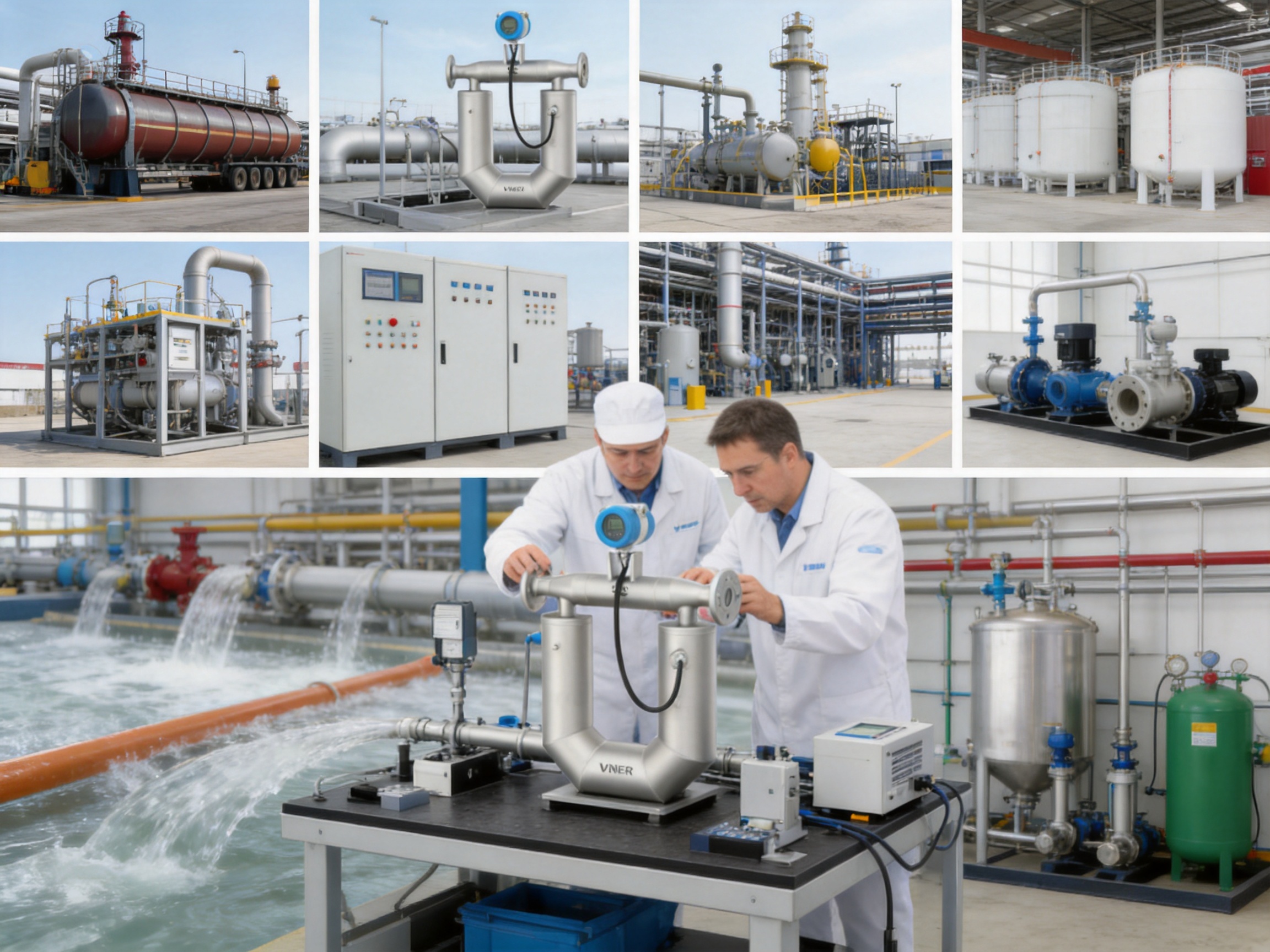
Accurate flow measurement is essential wherever a process depends on reliable control of material movement, composition, energy consumption, or product transfer. In many industrial installations, measuring volume alone is not enough. Temperature, pressure, viscosity, density, phase condition, and changing process composition can all influence the relationship between volume and actual material quantity. For these applications, direct mass measurement provides a stronger foundation for process control, batching, custody transfer, inventory management, and production optimisation.
The KSMF-U Series Coriolis Mass Flowmeter is designed for demanding industrial services in which accurate mass flow, density, and temperature measurement are required in a single instrument. Its U-shaped dual-tube construction uses the Coriolis effect and controlled mechanical vibration to measure the movement of liquids, gases, and liquefied gases. The design combines high sensitivity with a robust mechanical structure, allowing the meter to operate across a broad flow range and in applications where installation space, flow profile, or process conditions may limit the use of conventional flow technologies.
With nominal sizes from DN20 to DN300 and series flow capacity up to 2,040,000 kg/h, the meter is suitable for both compact process skids and large industrial pipelines. Depending on the selected model and application, it can provide accuracy classes of ±0.10%, ±0.15%, ±0.20%, or ±0.50% of rate. It can also measure density and process temperature, while calculated volume and standard volume functions can support production, transfer, and reporting requirements.
The instrument is manufactured by Jiangsu VNER Electronic Technology Co., Ltd., an industrial flow measurement specialist based in Yangzhou, China. The company develops electromagnetic, Coriolis, vortex, swirl, turbine, thermal mass, ultrasonic, and rotameter technologies for liquid, gas, and slurry applications. Its engineering capability, in-house calibration resources, multi-plant manufacturing base, and experience with international industrial projects support the development and supply of reliable measurement solutions for demanding process environments.
Direct Mass Measurement Using the Coriolis Effect
The operating principle of the KSMF-U Series is based on the Coriolis effect. Inside the sensor, the process medium passes through two precision tubes that are mechanically excited at a controlled frequency. When the tubes are empty or when there is no mass flow, their vibration remains balanced. As the process medium moves through the vibrating tubes, Coriolis forces create a measurable phase difference between the inlet and outlet sections of the tubes.
This phase difference is proportional to the mass flow rate. Because the measurement is based on the inertia of the moving medium rather than only on velocity or volumetric displacement, the meter can determine mass flow directly. This reduces the need for separate pressure and temperature compensation in many applications and helps maintain reliable measurement when process density changes.
The resonant frequency of the measuring tubes also provides information about the density of the medium. A temperature sensor monitors the process temperature, allowing the transmitter to calculate additional variables such as volume flow or standard volume when the relevant process data and configuration parameters are available.
Direct measurement of mass is particularly valuable for liquids with changing density, gases whose density varies significantly with pressure and temperature, and products where accurate material quantity is more important than volumetric flow. It is also useful for dosing and blending operations because recipes are often defined by mass rather than volume.
U-Shaped Dual-Tube Construction
The U-shaped dual-tube design is one of the key structural characteristics of the KSMF-U Series. Two parallel measuring tubes are arranged in a balanced configuration and driven into controlled mechanical vibration. The dual-tube arrangement improves sensitivity to the Coriolis phase shift while helping reject external vibration and other common-mode disturbances.
A well-balanced sensor structure is important in industrial installations. Pumps, compressors, valves, nearby rotating machinery, and pipeline vibration can introduce mechanical disturbances that affect measurement stability if the sensor is not properly designed. The symmetrical U-shaped configuration helps the meter distinguish the process-related Coriolis signal from external mechanical influences.
The design also supports broad application flexibility. Depending on the selected size, process connection, and material configuration, the meter can be installed in horizontal or vertical pipelines. Flanged, threaded, Tri-Clamp, and fitting-type connections are available for different process systems, skid packages, hygienic services, and retrofit requirements.
The mechanical structure is designed to provide high sensitivity without sacrificing robustness. This balance is important because a very sensitive sensor must still withstand pressure, temperature cycling, process vibration, and long-term operation. Stainless steel 316L is available as the standard wetted material, while Hastelloy and titanium options can be selected for aggressive or demanding media.
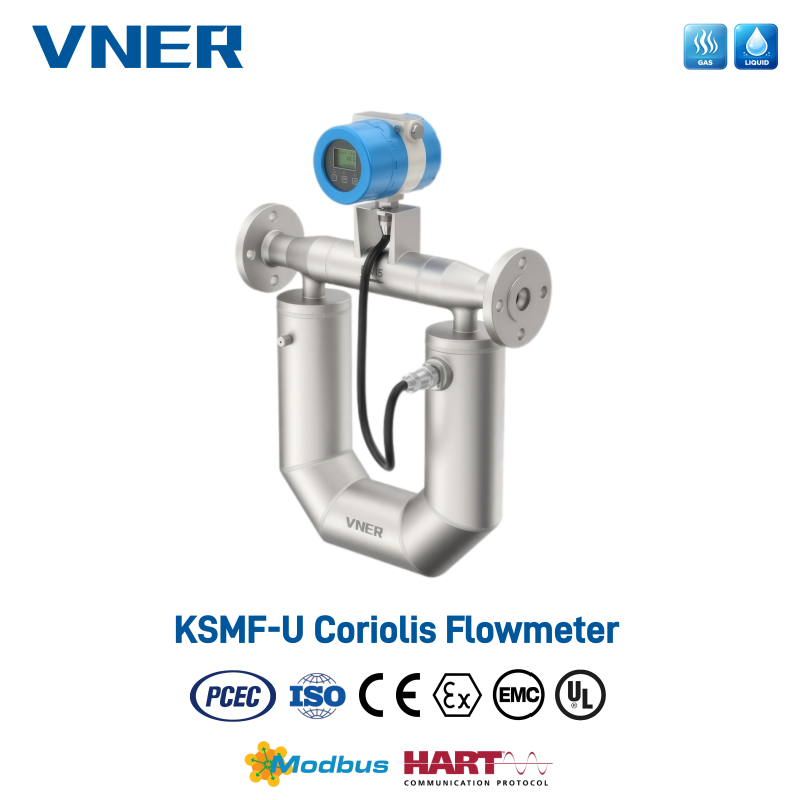
KSMF U-Series Coriolis Mass Flowmeter
Measurement of Mass Flow, Density, and Temperature
The KSMF-U Series can measure several important process variables in one instrument. Its primary measured variable is mass flow, while density and process temperature are also measured directly or derived through the sensor and transmitter system. Volume flow and standard volume can be calculated when required by the application.
| Measured Variable | Industrial Value | Typical Application |
|---|---|---|
| Mass flow | Provides direct measurement of material quantity independent of normal density changes | Dosing, transfer, batch control, allocation metering, and product loading |
| Density | Indicates product composition, concentration, or quality changes | Blend monitoring, concentration control, product identification, and process optimisation |
| Process temperature | Supports process monitoring and compensation functions | Thermal process control, product condition monitoring, and calculated volume functions |
| Volume flow | Allows comparison with volumetric process requirements | Piping balance, pump monitoring, utility measurement, and production reporting |
| Standard volume | Supports gas and liquefied-gas reporting under defined reference conditions | Gas transfer, energy management, and inventory calculations |
Having these variables in a single measurement point can reduce the number of instruments required in a process line. It can also simplify system integration because the flowmeter can provide assignable analog outputs, pulse signals, and digital communication through Modbus RS-485 or HART.
Density measurement adds another layer of process information. For example, density changes can indicate variations in crude oil composition, blending errors, concentration changes in chemical solutions, or product quality deviations. In a dosing system, mass flow can control the amount of material being delivered while density provides a secondary check on product consistency.
For gas and liquefied-gas applications, the combination of mass flow and density information can be useful when process pressure and temperature vary. The correct configuration depends on the medium, operating conditions, phase stability, and required reporting standard. Application engineering is therefore important when selecting a sensor size and transmitter configuration.
Performance Across a Wide Flow Range
Industrial processes rarely operate at one fixed flow rate. Start-up, shutdown, production changes, batch transitions, product changes, and temporary low-load conditions can create large variations in flow. The KSMF-U Series is designed to maintain useful performance across a wide operating range, with a turndown ratio of up to 1:50 depending on the model and application.
For many installations, the most stable operating range is approximately 1:20. The final selection should consider normal flow, minimum flow, maximum flow, pressure loss, medium viscosity, gas content, and the accuracy required at the lower end of the range. Oversizing a Coriolis meter may reduce pressure loss but can also reduce the available signal at low flow. Undersizing may improve low-flow sensitivity but increase pressure loss or restrict maximum capacity.
Nominal diameters from DN20 to DN300 allow the product family to cover a wide range of process requirements. The series capacity can reach up to 2,040,000 kg/h, with the actual maximum flow determined by the selected sensor size, medium properties, pressure, temperature, and permissible pressure loss.
Compared with many velocity-based instruments, the meter is less dependent on a fixed flow profile. It does not require upstream or downstream straight pipe runs under normal Coriolis installation principles. This can be a significant advantage in compact plants, packaged equipment, loading skids, and brownfield projects where long sections of straight pipe are unavailable.
Reduced Installation Constraints
Traditional flow technologies may require carefully controlled piping conditions. Elbows, reducers, valves, pumps, and other disturbances can create swirl or an uneven velocity profile. In such cases, the installer may need to provide upstream and downstream straight pipe lengths or install flow conditioners. These requirements can increase the footprint and cost of a measurement station.
The KSMF-U Series is largely independent of flow profile and does not normally require upstream or downstream straight pipe runs. This allows engineers to position the meter closer to process equipment while maintaining a practical installation arrangement. The feature is especially valuable in congested plants, modular skids, compact utility systems, and retrofit projects.
Although the meter is less sensitive to flow-profile effects, good installation practice remains important. The pipeline should support the meter properly, the tubes should remain full in liquid service, and the process should be managed to avoid excessive entrained gas or unstable two-phase flow unless the application has been specifically evaluated. Isolation valves, strainers, drains, vents, and bypass arrangements should be considered according to the process design.
Correct orientation depends on the medium and operating condition. Horizontal or vertical mounting may be used, but the selected arrangement should help prevent gas accumulation in liquid services and liquid retention in gas services. For high-viscosity liquids, the piping should also be designed to avoid unnecessary restrictions and allow suitable start-up and shutdown procedures.
Comparison with Other Flow Measurement Technologies
Different flowmeter technologies are suited to different process conditions. The advantage of a Coriolis meter is not that it replaces every other technology, but that it provides a distinctive combination of direct mass measurement, density measurement, broad media compatibility, and low installation dependence.
Compared with Turbine Flowmeters
Turbine flowmeters measure the rotational speed of an internal rotor. They can provide good performance in clean, relatively low-viscosity fluids when the flow is stable and the meter is correctly installed. However, turbine meters are velocity-based devices, and their moving parts can be affected by wear, contamination, viscosity changes, and flow disturbances.
The KSMF-U Series has no rotating turbine rotor in the measurement principle. It directly measures mass flow and can also measure density and temperature. This makes it more suitable for applications involving changing product conditions, higher viscosity, mixtures, or demanding transfer requirements. Turbine meters may remain a practical choice for clean and stable liquid services, but Coriolis technology offers broader process information and stronger flexibility when product properties change.
Compared with Vortex Flowmeters
Vortex meters detect vortices formed behind a bluff body and are often used for steam, gases, and clean liquids. They are useful in many utility and process applications, but their performance can be influenced by flow velocity, fluid density, Reynolds number, and upstream piping conditions. They measure volumetric flow or velocity-related flow and normally require compensation when mass flow is needed under changing conditions.
A Coriolis meter measures mass flow directly and is not dependent on vortex formation. It can therefore be advantageous in applications where density changes, low flow stability, or direct mass measurement are important. The choice should still account for pressure loss, line size, gas-phase stability, and the economic requirements of the installation.
Compared with Electromagnetic Flowmeters
Electromagnetic flowmeters are effective for conductive liquids, including many water-based fluids, slurries, acids, alkalis, and process liquids. They have no obstruction in the measuring tube and can offer low pressure loss. However, they cannot measure non-conductive liquids or most gases, and they generally do not provide direct density measurement.
The KSMF-U Series can measure liquids, gases, and liquefied gases, subject to application limits. It also measures density and temperature. This broader media capability is valuable for plants that handle several product types or need one measurement technology across different process areas. Electromagnetic meters may still be preferable for very large conductive-liquid pipelines where low pressure loss and a full-bore design are the main priorities.
Compared with Thermal Mass Flowmeters
Thermal mass flowmeters are commonly used for clean gases, compressed air, nitrogen, and other gas utilities. They measure the heat transfer effect around a heated sensor and can provide direct gas mass flow under suitable conditions. Their application can become more complex when gas composition, contamination, humidity, or temperature changes significantly.
The KSMF-U Series uses mechanical vibration and Coriolis forces rather than thermal properties. It can support both liquid and gas applications and can provide density information in addition to mass flow and temperature. For gas service, the meter should be evaluated carefully for pressure loss, gas density, line size, vibration, and the presence of liquid carryover.
Compared with Ultrasonic Flowmeters
Ultrasonic flowmeters can measure liquids or gases without placing a mechanical obstruction directly in the flow path. They are often selected for large pipelines and applications where low pressure loss is critical. Their performance can depend on acoustic properties, flow profile, installation conditions, and the presence of bubbles or suspended solids.
A Coriolis meter offers direct mass measurement and density information, while ultrasonic technology may provide advantages for very large line sizes or non-invasive measurement arrangements. The KSMF-U Series is most attractive when measurement accuracy, direct mass calculation, compact installation, and product-property information outweigh the need for an entirely unobstructed flow path.
Suitability for Difficult Process Media
The meter is designed for a broad range of industrial media, including high-viscosity liquids, suspensions, gas-liquid mixtures within Coriolis application limits, medium- and high-pressure gases, liquefied gases, and aggressive chemicals when appropriate wetted materials are selected.
High-viscosity applications are often challenging for conventional velocity-based meters because viscosity can affect the relationship between flow velocity and meter output. A Coriolis meter measures mass flow directly, which can reduce the influence of viscosity on the primary measurement. Nevertheless, viscosity still affects pressure loss, start-up behaviour, tube filling, and the dynamic response of the process. These factors must be evaluated during sizing.
Suspensions and slurries can also be measured when the solids concentration, particle size, abrasiveness, settling tendency, and flow regime remain within the application limits of the selected model. The pipeline should be designed to keep the material moving and avoid sedimentation during operation or shutdown. Material selection is important when the process contains abrasive or chemically aggressive components.
Gas-liquid mixtures require particular care. Coriolis meters can tolerate some entrained gas in liquid applications, but large, unstable, or continuously changing gas fractions may reduce accuracy and cause unstable measurement. The process engineer should review phase distribution, pressure, temperature, gas content, and the required measurement uncertainty before approval.
For corrosive media, 316L stainless steel is a common starting point, while Hastelloy or titanium options may provide improved compatibility. Material selection should be based on actual chemical concentration, temperature, pressure, impurities, and cleaning conditions rather than on the medium name alone.
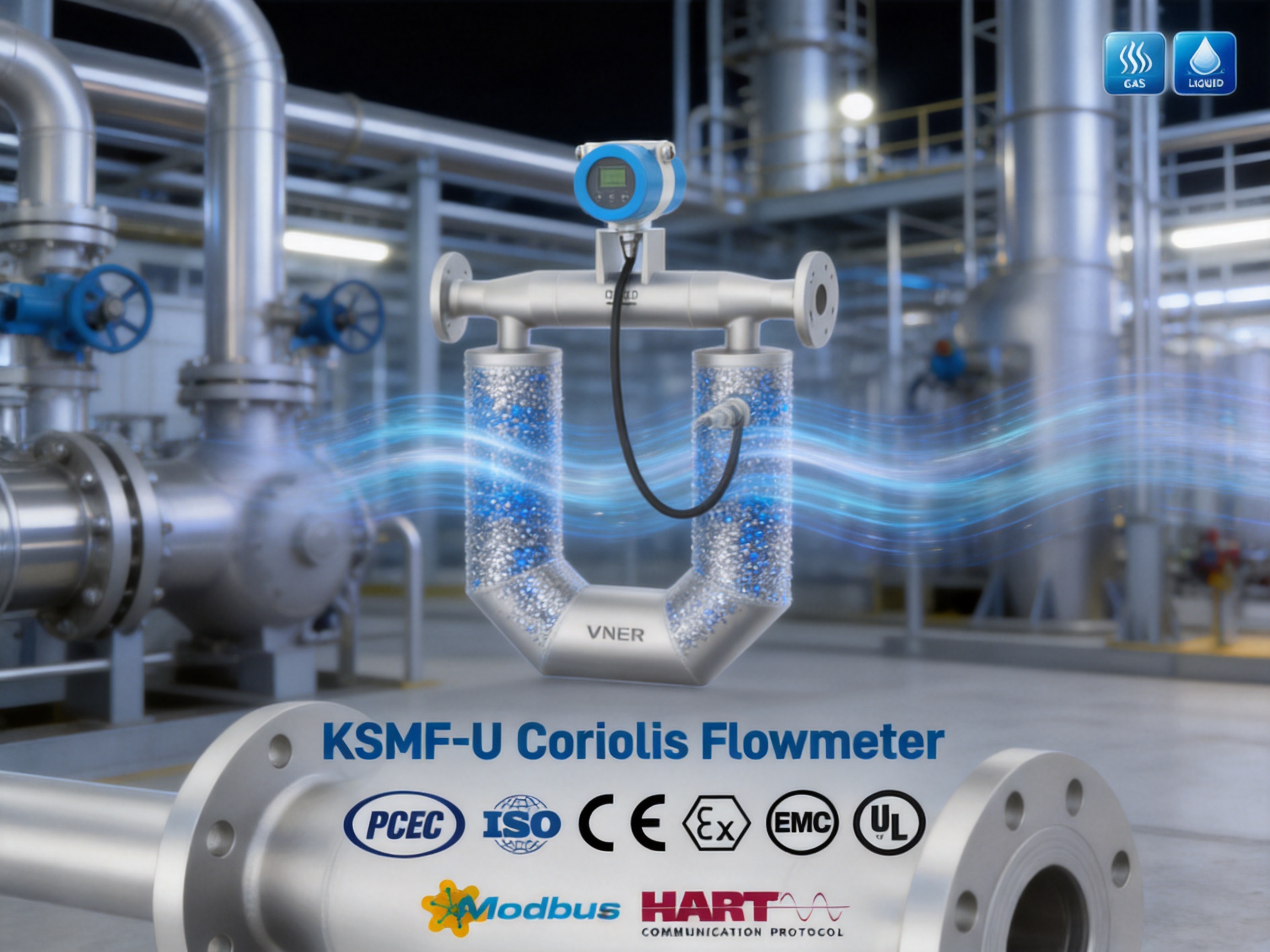
Industrial Applications
Oil and Gas Production
In oil and gas facilities, accurate mass measurement is required for crude oil, condensate, refined products, injection water, liquefied gases, and other process streams. The KSMF-U Series can support production monitoring, allocation measurement, transfer operations, loading and unloading, and injection systems.
Density measurement is particularly useful in hydrocarbon service because product composition can vary. Combining mass flow and density data allows operators to monitor product consistency and improve material accounting. For custody transfer or commercial metering, the complete meter installation must meet the applicable legal, calibration, proving, and approval requirements. The selected accuracy class and certification package should be confirmed before use in a transactional application.
Large line sizes up to DN300 and series flow rates up to 2,040,000 kg/h make the meter suitable for high-capacity liquid hydrocarbon lines when pressure loss and process conditions are acceptable. Its reduced straight-pipe requirement can simplify installation near pumps, manifolds, storage tanks, and loading systems.
LPG and Liquefied Gas Transfer
Loading and unloading liquefied petroleum gas and other liquefied gases require stable measurement under pressure. A mass-based measurement approach avoids relying solely on volume under changing temperature and density conditions. High-pressure options rated up to approximately 25–40 MPa may be available depending on the model and configuration.
The KSMF-U Series can be considered for truck loading, rail loading, storage transfer, filling systems, and process skids involving liquefied gases. The final selection must account for vapour pressure, operating temperature, pressure rating, phase stability, flashing risk, hazardous-area requirements, and the possibility of gas breakout.
For these applications, the meter can provide pulse output for totalising and batch control, while analog and digital communication can connect the instrument to a loading controller, PLC, DCS, or supervisory system.
Petrochemical and Refining Processes
Refineries and petrochemical plants handle a wide variety of intermediate fractions, aromatics, LPG, process liquids, gases, additives, and blended products. The ability to measure mass flow, density, and temperature from one instrument can support unit feed measurement, product transfer, blending, recycle streams, and utility monitoring.
During blending, mass flow is often more useful than volume because recipes are defined according to mass ratios. Density data can provide an additional indication of blend quality and help identify changes in composition. In transfer lines, the meter can support totalisation and reconciliation between tanks, process units, and loading systems.
Chemical Dosing and Continuous Processing
Chemical plants require precise dosing of acids, alkalis, solvents, polymer feedstocks, catalysts, additives, and other process materials. A small dosing error can affect product quality, reaction conditions, energy consumption, or downstream treatment requirements.
The KSMF-U Series provides direct mass flow measurement for continuous dosing and transfer. This is beneficial where fluid density or viscosity changes during production. Optional measurement modules may support concentration, composition, viscosity, bidirectional, or batch measurement functions, depending on the selected configuration.
For aggressive chemicals, the wetted material should be selected through a detailed compatibility review. Hastelloy and titanium options may be considered when 316L stainless steel is not sufficient. Seals, gaskets, process connections, cleaning fluids, and temperature cycling should all be included in the material assessment.
Pulp and Paper Production
Pulp and paper plants use chemical liquors, bleaching agents, sizing materials, coating liquids, and other additives. Consistent chemical dosing affects brightness, strength, surface properties, printability, and overall product quality.
Mass-based measurement helps operators track chemical consumption more accurately than a volume-only method when concentration or temperature changes. The meter can be installed in dosing and transfer lines, provided that the solids content, viscosity, abrasiveness, and gas entrainment remain within the selected model’s operating limits.
Biofuels and New Energy Applications
Biofuels, fuel blends, thermal oils, liquefied energy carriers, and alternative process fluids often have variable composition and density. These characteristics make direct mass measurement useful for production, blending, storage, and transfer control.
In a blending skid, separate streams can be measured by mass to maintain a defined recipe. Density information can be used to monitor product changes, while pulse output can support batch totalising. The meter can also contribute to inventory management by improving the accuracy of material received, transferred, and consumed.
General Industrial Utilities
Industrial plants use compressed gases, liquefied gases, industrial liquids, and thermal fluids in many utility systems. The KSMF-U Series can support high-pressure gas measurement and general mass flow control when the application is properly sized.
For utility measurement, the required accuracy may be lower than for commercial metering, but stable operation and simple integration remain important. The 4–20 mA output can be assigned to flow, density, temperature, or another selected variable. Modbus RS-485 and HART communication can provide configuration, diagnostics, and process data to a plant control system.
Construction, Protection, and Process Compatibility
The standard meter body is manufactured from stainless steel, with 304 and 316L options available according to the model. Wetted parts are commonly supplied in 316L stainless steel, while alternative alloys can be specified for more demanding chemical conditions.
The process temperature range depends on the selected version. Low-temperature configurations may operate from approximately -200°C to +200°C. Normal-temperature versions may cover approximately -50°C to +200°C, while high-temperature options may extend from approximately -50°C to +300°C. These ranges are model-dependent and should be verified against the final data sheet.
Standard pressure ratings may cover up to approximately 4 MPa, while high-pressure options can extend to approximately 25–40 MPa depending on the sensor design, connection, size, and certification requirements. The maximum pressure is not determined by the transmitter alone; the complete sensor and connection assembly must be evaluated.
IP67 ingress protection helps protect the enclosure against dust and temporary water immersion under defined test conditions. Ex d explosion-proof variants are available for classified industrial areas where the selected certification is appropriate. Depending on the model and region, certification packages may include CE, ATEX, PCEC, SIL, or other relevant approvals.
| Feature | Available Specification | Selection Consideration |
|---|---|---|
| Nominal diameter | DN20 to DN300 | Select according to normal, minimum, and maximum flow |
| Accuracy | Approximately ±0.10% to ±0.50% of rate | Depends on model, medium, calibration, and application |
| Temperature | Approximately -200°C to +300°C according to version | Confirm sensor, seal, insulation, and process connection limits |
| Pressure | Standard and high-pressure options | Check maximum operating and design pressure |
| Wetted materials | 316L, Hastelloy, titanium options | Match material to chemistry, temperature, and concentration |
| Connections | Flanged, threaded, Tri-Clamp, and fitting types | Match the plant standard and maintenance requirements |
| Protection | IP67; Ex d options | Specify enclosure and hazardous-area requirements |
| Power supply | 24–26 V DC, 220 V AC, and wide-range options | Confirm available site power and wiring arrangement |
| Outputs | 4–20 mA and pulse | Assign variables for control, totalising, or batch functions |
| Communication | Modbus RS-485 and HART | Confirm compatibility with PLC, DCS, SCADA, or RTU systems |
Signal Outputs and Control-System Integration
The KSMF-U Series provides 4–20 mA and pulse outputs as standard functions. The analog output can be assigned to mass flow, density, temperature, volume flow, or another configured process variable. This allows the instrument to serve both basic indication systems and more advanced control architectures.
Pulse output is useful for totalising, loading, unloading, and batch control. A controller can count pulses to calculate the transferred quantity, while the analog signal can provide real-time flow information for valve or pump control.
Modbus RS-485 and HART communication support integration with plant automation systems. Digital communication can provide measurement values, configuration parameters, diagnostic information, and status data. This reduces the need for separate local instruments and can help maintenance teams identify process or sensor conditions before they become failures.
When integrating the meter into a control system, the engineering team should define the required measurement variables, scaling, alarm limits, pulse value, communication address, update rate, fail-safe behaviour, and hazardous-area interface. A clear signal list helps prevent commissioning delays and ensures that the meter is used to its full capability.
Manufacturing Strength and Quality Control
Product performance depends not only on the measurement principle but also on manufacturing consistency. Precision tube geometry, balanced mechanical construction, reliable excitation, stable electronics, correct welding, accurate temperature sensing, and effective calibration all influence the final result.
Jiangsu VNER Electronic Technology Co., Ltd. has focused on industrial flow measurement since 2011. The company operates across three plants with approximately 23,000 square metres of modern facilities and a technical team of more than 150 people. Its product range covers multiple flow technologies, allowing the company to match a measurement principle to the actual medium and process rather than forcing every application into one instrument category.
The company has delivered more than 2,000 engineering projects in over 30 countries. This project experience supports practical product development because industrial installations often involve more than nominal flow rate. Engineers must consider pipe size, pressure, temperature, viscosity, gas content, corrosion, hazardous-area classification, communications, calibration, maintenance, and local standards.
In-house calibration is an important part of the manufacturing process. Calibration helps verify the relationship between the instrument output and the reference flow under defined conditions. It also supports product consistency, traceability, and confidence during commissioning. For high-accuracy applications, calibration requirements should be agreed during the quotation and engineering stage, including the medium, flow range, uncertainty, certificate format, and any inspection requirements.
Certified quality processes help control production activities from incoming materials through assembly, testing, inspection, and final release. Traceability is particularly valuable for Coriolis meters because the sensor, transmitter, process materials, calibration data, and configuration parameters must remain correctly matched.
Increasingly automated manufacturing can improve repeatability in production operations while reducing variation between individual instruments. Automation does not replace engineering judgement, but it can provide more consistent assembly, testing, and documentation. Combined with an experienced technical team, it supports stable product quality for both standard and customised instruments.
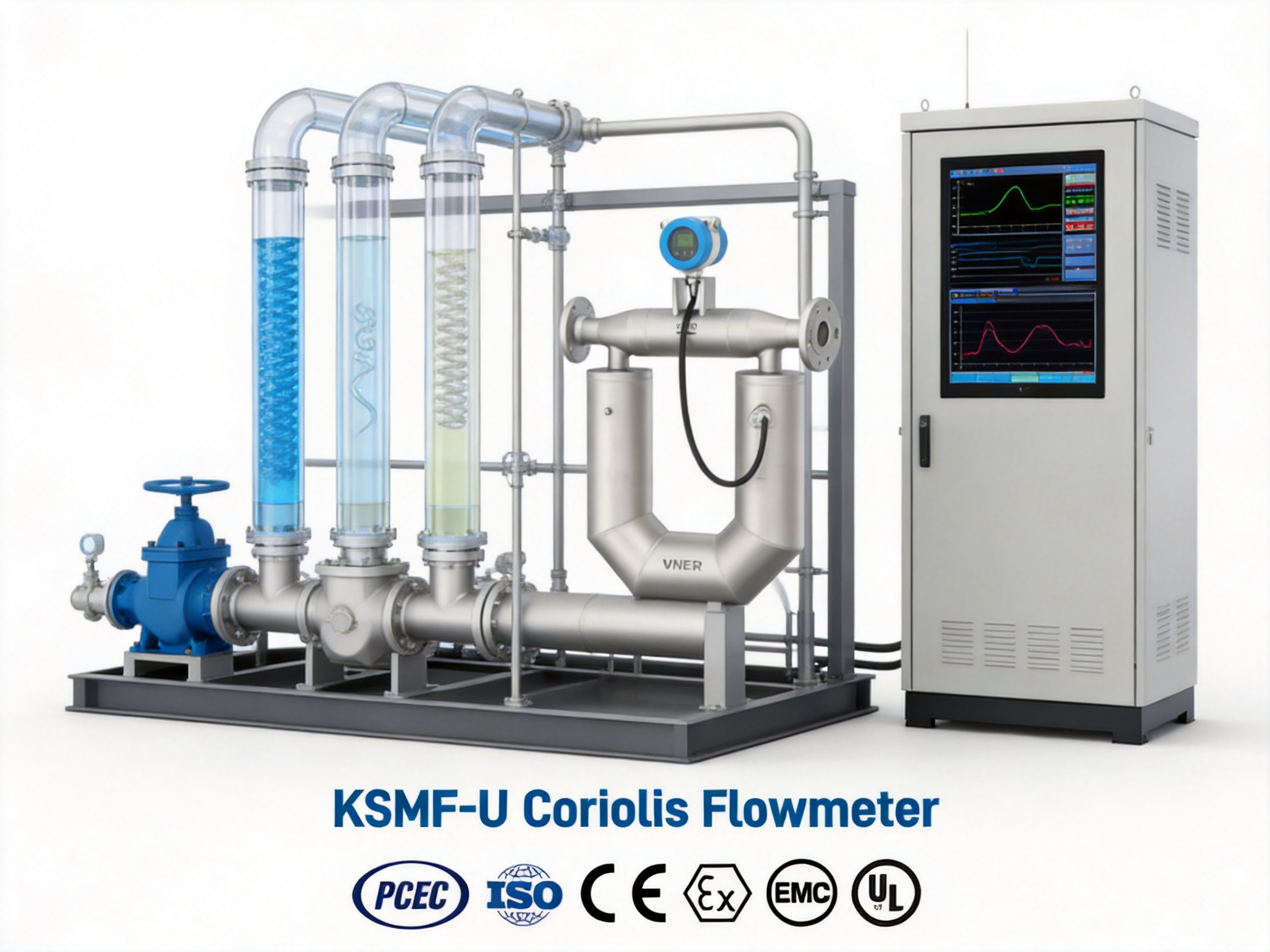
Engineering Support for Selection and Customisation
Correct sizing is one of the most important factors in Coriolis meter performance. The selected size should be based on actual process conditions rather than line diameter alone. Engineers should review normal, minimum, and maximum flow; medium density; viscosity; operating temperature; pressure; pressure loss; gas content; solids content; pipe connection; output requirements; and hazardous-area classification.
A meter that is too large may have reduced sensitivity at the lowest operating flow, even though it may offer low pressure loss at the maximum flow. A meter that is too small may create excessive pressure loss or restrict production capacity. The best selection normally balances measurement stability, pressure loss, turndown, process response, and future operating conditions.
Customisation can include process connection standards, wetted materials, temperature version, pressure rating, transmitter supply, output arrangement, communications, enclosure, explosion protection, calibration documentation, and optional measurement modules. DIN, ANSI/ASME, and JIS connection standards support use in different international projects.
The company’s product portfolio also provides a practical advantage during project development. If a Coriolis meter is not the best choice for a specific pipeline, the engineering team can evaluate electromagnetic, vortex, swirl, turbine, thermal mass, ultrasonic, or rotameter alternatives within the same industrial flow measurement organisation. This can simplify technical communication for EPC contractors and end users managing multiple measurement points.
Installation and Commissioning Considerations
The meter should be installed in a location where the measuring tubes remain properly filled for liquid service. A position downstream of a pump may be acceptable, but the system should be reviewed for cavitation, flashing, pressure pulsation, and unstable gas release. In gas service, the installation should minimise the possibility of liquid accumulation.
Pipe supports should prevent excessive mechanical stress from being transferred to the meter. The process line should be aligned before the meter is bolted or welded into position. Strain, forced alignment, and unsupported pipe weight can affect long-term reliability and measurement stability.
Valves should be selected and positioned to support isolation, zero verification, maintenance, and safe draining or venting. In applications with solids or viscous products, the design should consider cleaning, flushing, heat tracing, insulation, and shutdown procedures.
During commissioning, the meter should be checked for correct wiring, power supply, output configuration, communication settings, flow direction, engineering units, density units, temperature units, and totaliser parameters. A zero verification may be required when the meter is filled and stable with no flow. The process should be allowed to reach stable temperature and pressure before final performance checks are made.
For hazardous-area installations, the complete wiring and barrier arrangement must comply with the applicable certificate and site regulations. The Ex d version, cable glands, conduit, grounding, and enclosure installation must be treated as one certified system rather than as independent components.
Maintenance and Long-Term Reliability
One advantage of Coriolis technology is that the measuring principle does not depend on a rotating impeller or a mechanical obstruction that must move freely. This can reduce wear-related concerns compared with some mechanical flowmeters. However, maintenance requirements still depend on the process medium and installation environment.
Periodic inspection should include enclosure condition, cable entries, grounding, process connections, signs of corrosion, external vibration, and abnormal temperature. Operators should review diagnostic information and compare the meter output with expected process behaviour. Sudden changes in density, zero stability, or drive performance may indicate process conditions such as gas entrainment, coating, blockage, or external mechanical stress.
For applications involving coating or deposits, a cleaning procedure may be needed. The cleaning method must be compatible with the sensor materials, seals, temperature rating, and process connection. Chemical cleaning, flushing, steam cleaning, or mechanical cleaning should be approved by the process and equipment engineers.
Calibration intervals depend on accuracy requirements, service criticality, legal metering rules, medium properties, operating severity, and site quality procedures. A plant may require more frequent verification for custody transfer or high-value product measurement than for general utility monitoring.
Advantages for EPC Contractors and Industrial End Users
For EPC contractors, the KSMF-U Series offers a combination of technical flexibility and practical project support. Multiple connection standards, power options, output types, materials, temperature classes, and pressure ratings make it easier to align the meter with project specifications.
The reduced straight-pipe requirement can help engineers design compact skids and avoid extensive piping modifications. Direct mass measurement can also reduce the need for separate pressure and temperature compensation instruments in suitable applications. Digital communication supports integration into modern automation systems, while pulse output supports transfer and batch functions.
For end users, the ability to obtain mass flow, density, and temperature from one meter can improve process visibility. Better measurement data can support production accounting, material balance, recipe control, energy management, and maintenance decisions. The meter can also be applied across multiple departments, from raw material receiving and chemical dosing to finished product transfer.
For OEM partners, the available process connections, supply voltages, communication protocols, and enclosure options support integration into packaged equipment. The product can be configured for skids, loading systems, dosing units, blending systems, and other industrial packages.
Application Selection Checklist
Before ordering a KSMF-U Series meter, the following information should be prepared:
- Process medium name and chemical composition.
- Minimum, normal, and maximum mass or volume flow rate.
- Operating pressure and maximum design pressure.
- Normal, minimum, and maximum temperature.
- Density and viscosity at operating conditions.
- Gas content, solids content, or possibility of two-phase flow.
- Pipeline nominal diameter and required process connection.
- Required accuracy and repeatability.
- Acceptable pressure loss.
- Required power supply.
- Analog, pulse, relay, or digital communication requirements.
- Hazardous-area classification and certification needs.
- Required calibration range and documentation.
- Installation orientation and available space.
- Cleaning, flushing, insulation, or heat-tracing requirements.
Providing complete process information at the selection stage helps prevent incorrect sizing and reduces the risk of changes during production or commissioning. It also enables the manufacturer to recommend the appropriate sensor material, pressure class, temperature version, transmitter configuration, and calibration arrangement.
Q&A
What does the KSMF-U Series measure?
It directly measures mass flow and also measures density and process temperature. Depending on the configuration, it can calculate volume flow and standard volume. These variables can be displayed locally or transmitted to a control system.
What is the measurement principle?
The meter uses two U-shaped vibrating tubes. The Coriolis force generated by the moving medium creates a phase shift in the tube vibration. The phase shift is proportional to mass flow, while the tube resonant frequency provides density information.
Does the meter require straight pipe runs?
The KSMF-U Series normally does not require upstream or downstream straight pipe runs because its measurement is largely independent of flow profile. Good installation practice is still necessary, including correct support, full pipe conditions for liquids, and control of gas entrainment.
Can it measure gases?
Yes. The meter can measure gases and liquefied gases when the selected model is properly sized for gas density, pressure, temperature, flow range, and pressure loss. Gas applications should be reviewed carefully because gas density is much lower than liquid density.
Can it measure high-viscosity liquids?
Yes, high-viscosity liquids are among the possible applications. The selection must consider the effect of viscosity on pressure loss, start-up, filling, and operating range. The appropriate wetted material and connection should also be selected.
Can it measure slurries or suspensions?
It may measure suspensions and selected slurry applications when solids concentration, particle size, abrasiveness, viscosity, and flow stability remain within the application limits. The process should be designed to prevent settling and unstable flow.
What accuracy can be achieved?
Available mass or volume accuracy classes include approximately ±0.10%, ±0.15%, ±0.20%, and ±0.50% of rate, depending on the model and application. Actual performance depends on sizing, medium properties, installation, calibration, and operating conditions.
What are the available line sizes?
The product family covers nominal diameters from approximately DN20 to DN300, or about 3/4 inch to 12 inches. The maximum flow capacity is model-specific and can reach approximately 2,040,000 kg/h across the series.
What process connections are available?
Flanged, threaded, Tri-Clamp, and fitting-type variants are available. Connection standards may include DIN, ANSI/ASME, and JIS, depending on the selected model and project requirements.
What materials are used for the wetted parts?
316L stainless steel is available as a standard wetted material. Hastelloy and titanium options may be selected for aggressive or demanding media after a compatibility review.
Can the meter be used in hazardous areas?
Ex d explosion-proof variants are available. The correct model, certificate, cable entry, wiring method, and installation arrangement must match the hazardous-area classification and applicable regulations.
What outputs and communication protocols are supported?
The meter provides 4–20 mA and pulse outputs as standard functions. Modbus RS-485 and HART communication are available for integration with PLC, DCS, SCADA, and pipeline monitoring systems.
What power supplies are available?
Depending on the model, power options include 24–26 V DC, 220 V AC, and wide-range supplies covering approximately 22–245 V.
Is the meter suitable for custody transfer?
It can be considered for commercial or transactional metering when the selected model, calibration, installation, and approval package meet the applicable legal and project requirements. Approval requirements should be confirmed before ordering.
How should the meter be sized?
Sizing should consider minimum, normal, and maximum flow, density, viscosity, pressure, temperature, gas content, pressure loss, and required accuracy. Line diameter alone is not sufficient for selecting a Coriolis meter.
What manufacturing support is available?
The manufacturer provides engineering-driven sizing and selection, in-house calibration, certified quality processes, traceability, and customised configurations. Its multi-technology product portfolio also allows alternative flowmeter solutions to be evaluated when Coriolis measurement is not the most suitable option.
Conclusion
The KSMF-U Series Coriolis Mass Flowmeter provides a direct and information-rich approach to industrial flow measurement. Its U-shaped dual-tube design combines sensitivity, stability, and mechanical robustness, while its Coriolis operating principle allows direct mass flow measurement with additional density and temperature data.
The product is suited to applications involving hydrocarbons, liquefied gases, chemicals, pulp and paper process materials, biofuels, industrial gases, and general process liquids. Its broad size range, high-capacity models, multiple process connections, optional materials, pressure and temperature variants, digital communications, and explosion-proof configurations support a wide variety of industrial projects.
Compared with conventional velocity-based meters, the KSMF-U Series offers important advantages where density changes, direct mass measurement, compact installation, and process-property monitoring are important. Its reduced dependence on flow profile can simplify piping design, while its ability to measure multiple variables can reduce the need for separate instruments.
Behind the product is an industrial manufacturer with experience in flow measurement, in-house calibration, modern multi-plant production facilities, a substantial technical team, and international project experience. Through controlled manufacturing, engineering-based selection, traceability, and application support, Jiangsu VNER Electronic Technology Co., Ltd. provides a practical foundation for reliable measurement in demanding process environments.
References
1. Coriolis Flow Measurement Principles, technical reference literature for industrial mass flow measurement.
2. International Electrotechnical Commission, guidance on flow measurement and industrial instrumentation practices.
3. International Organization for Standardization, general principles for flow measurement, calibration, accuracy, and uncertainty evaluation.
4. Industrial process measurement engineering manuals covering mass flow, density measurement, pressure loss, and instrument sizing.
5. Manufacturer technical information for the KSMF-U Series U-shaped Coriolis Mass Flowmeter.
6. Manufacturer quality, calibration, product configuration, and application engineering information supplied for industrial flow measurement projects.
Product: KSMF U-Series Coriolis Mass Flowmeter

We offer all our products and services at international standards.
Products
Contact Information
-

+86-18652789521
+86-18052582295
+86-0514-83633600 / 83633900 -

+86-0514-83633600 / 83633900
-

shawn@vnerflow.com
info@vnerflow.com -

No. 11 Xingye Road, Chenji Town Industrial Park, Yizheng, Yangzhou, China
