
 0
 EN
 English
 عربى
 Español
 русский
If you need any help, please feel free to contact us
Home / Author / Ren Xiaotong — Technical Sales Engineer for Gas Flow Meters / Large-Diameter Insertion Electromagnetic Flowmeters for Reliable Industrial Flow Measurement
Large-Diameter Insertion Electromagnetic Flowmeters for Reliable Industrial Flow Measurement
Accurate flow measurement becomes increasingly challenging as pipeline diameter, process complexity and installation constraints increase. In municipal water systems, industrial cooling networks, irrigation mains, wastewater outfalls, mining slurry lines and pulp-and-paper facilities, pipelines may reach diameters of several metres. Installing a conventional full-bore flowmeter in these lines can require extensive pipe modification, long shutdowns, heavy lifting equipment and substantial capital expenditure. The VE15 Insertion Electromagnetic Flowmeter provides an alternative approach by measuring the velocity of conductive liquid through an insertion probe installed in a large-diameter pipeline.
Designed for pipelines from DN200 to DN4000, or approximately 8 to 160 inches, the VE15 combines electromagnetic measurement technology with a compact insertion structure. Its probe extends into the process line, detects the induced voltage generated by conductive liquid movement and transfers the signal to a microprocessor-based converter. The converter calculates volumetric flow using the measured velocity and the known pipeline diameter.
This configuration is intended for customers who need dependable flow data without the cost and disruption associated with replacing a large section of pipeline. The instrument has no moving parts, no internal turbine or rotor and no significant obstruction across the pipe. As a result, it produces minimal additional pressure loss while remaining suitable for water, wastewater, process liquids, viscous media, pulp, sludge and selected conductive slurries.
The product is manufactured and supported by Jiangsu Vner Electronic Technology Co., Ltd., a specialized industrial flowmeter producer based in Yangzhou, China. Since 2011, the company has developed electromagnetic, Coriolis, vortex, swirl, turbine, thermal mass, ultrasonic and variable-area flow measurement technologies for liquid, gas and slurry applications. Its experience across multiple measurement principles supports practical product selection, application engineering and customization for industrial users.
1. The Measurement Challenge in Large-Diameter Pipelines
Large pipelines are essential to water transmission, power generation, chemical processing, mining, metallurgy, oil and gas utilities, food production and environmental management. However, the greater the pipeline diameter, the more difficult it becomes to install and maintain a conventional meter. A full-bore electromagnetic meter must normally match the pipe diameter and be installed between flanges. For a DN1000, DN1600 or DN2400 line, the meter body can be heavy, expensive and difficult to transport. The associated civil works may include pipeline cutting, foundation construction, bypass arrangements, lifting operations and extended commissioning.
In many existing networks, the pipeline cannot be taken out of service for a long period. Raw water transmission mains may supply an entire treatment plant. Cooling-water circuits may support furnaces, reactors or heat exchangers that cannot tolerate an extended shutdown. Irrigation lines may serve large agricultural areas during a limited operating season. Wastewater outfalls may be subject to regulatory monitoring requirements and cannot simply be bypassed.
These conditions create a need for a flowmeter that can be installed with less disruption while still offering stable and repeatable measurement. An insertion electromagnetic design addresses this requirement by placing the sensing electrodes and magnetic field generator within the pipeline through a mounting assembly. The main pipe remains in service, provided that the installation method, pressure rating, isolation arrangement and safety procedures are suitable for the operating conditions.
The VE15 is therefore not simply a smaller version of a full-bore meter. It is a measurement solution designed around the economic and practical realities of large pipelines. Its value is particularly clear where line size makes a full-bore instrument disproportionately expensive or where the process owner needs a retrofit solution rather than a complete piping reconstruction.
2. Operating Principle Based on Faraday’s Law
The VE15 works according to Faraday’s law of electromagnetic induction. When an electrically conductive liquid passes through a magnetic field, a voltage is induced in the liquid. The magnitude of this voltage is proportional to the average velocity of the liquid crossing the magnetic field.
The insertion probe contains the components needed to create the measuring field and detect the induced signal. Electrodes positioned on the probe contact the conductive liquid. As the liquid moves, the electrodes sense the voltage generated by the interaction between the fluid velocity and the magnetic field. The converter amplifies and processes this low-level signal, applies calibration data and converts the measured velocity into a volumetric flow rate.
Because the measurement is based on liquid velocity rather than mechanical displacement, the instrument does not require a rotor, paddle, bearing or other moving element. There is no mechanical element that must rotate with the fluid, and there is no turbine blade that can become clogged or worn in the same way as a mechanical flow device.
The converter uses low-frequency rectangular excitation and microprocessor-based signal processing. This approach supports stable measurement, noise rejection and reliable operation under changing industrial conditions. The electronics can provide 4–20 mA and pulse outputs, while digital communication options include Modbus over RS-485, HART and Profibus, depending on configuration.
Electromagnetic measurement is largely independent of liquid pressure, temperature, density and viscosity when the medium remains within the specified operating range and maintains adequate electrical conductivity. This is an important advantage in applications where liquid composition or temperature varies. Unlike differential-pressure devices, the measurement does not depend on maintaining a fixed relationship between flow and pressure drop. Unlike mechanical meters, it does not rely on the density or viscosity being constant for the rotor to behave consistently.
3. Product Scope and Main Specifications
The VE15 is intended for electrically conductive liquids in large-diameter pipelines. The nominal pipe size range extends from DN200 to DN4000, corresponding approximately to 8 to 160 inches. Depending on the selected model and application, the instrument can be supplied with flanged or plug-in insertion mounting.
| Item | Specification |
|---|---|
| Measuring principle | Electromagnetic measurement based on Faraday’s law |
| Product type | Insertion or plug-in electromagnetic flowmeter |
| Suitable media | Electrically conductive liquids, including water, wastewater, viscous liquids, pulp and sludge |
| Nominal pipe size | DN200 to DN4000, approximately 8 to 160 inches |
| Flow velocity range | 0.5 to 8 m/s |
| Accuracy | ±1.0% or ±1.5% of rate, depending on model and conditions |
| Repeatability | ±0.33% or ±0.5%, depending on configuration |
| Nominal pressure rating | Up to 1.6 MPa, subject to the selected installation assembly |
| Medium temperature | -40 to +200°C, depending on configuration |
| Body material | Stainless steel 304 |
| Lining | PTFE |
| Electrode materials | 316L stainless steel or Hastelloy |
| Protection classes | IP65, IP67 or IP68, depending on version |
| Explosion protection | Ex d versions available |
| Outputs | 4–20 mA and pulse |
| Digital communications | Modbus RS-485, HART and Profibus options |
| Power supply | 24 V DC or 220 V AC |
| Electrical interface | M20 × 1.5 or 1/2-14 NPT |
The figures in the table should be evaluated together with the selected configuration, process connection, lining, electrode material, installation method and certification requirements. Actual performance depends not only on the converter but also on pipeline geometry, grounding, flow profile, liquid conductivity, insertion depth and site conditions.
4. Advantages Compared with Conventional Flow Measurement Technologies
4.1 Lower installation burden than large full-bore meters
The most significant advantage of the VE15 is its insertion structure. A full-bore meter for a very large pipeline must occupy the entire pipe cross-section and normally requires a matching meter body, substantial flanges and structural support. By contrast, the VE15 uses a probe and mounting assembly installed through the pipe wall. This can reduce the amount of pipe replacement and the weight of equipment handled during installation.
For retrofit projects, the insertion concept can help reduce shutdown duration and civil work. A suitable branch connection, isolation valve and access arrangement can be integrated into the pipeline, allowing the measuring device to be installed without replacing a long pipe section. Each project still requires a detailed mechanical and hydraulic assessment, but the basic installation philosophy is well suited to existing large-diameter assets.
4.2 Minimal pressure loss
The VE15 has no internal rotor, constriction or obstruction extending across the full pipe bore. Its probe is designed to introduce minimal additional resistance compared with devices such as orifice plates, venturi tubes or some mechanical meters. Lower pressure loss can help reduce pumping energy and preserve the available pressure head in long transmission systems.
This characteristic is especially valuable in water distribution, cooling-water circulation and irrigation applications, where the flowmeter may operate continuously and any permanent pressure loss can contribute to significant lifetime energy consumption. The absence of moving parts also reduces the risk that a mechanical obstruction will collect fibres, debris or suspended solids.
4.3 Better suitability for difficult liquids
Electromagnetic meters are often selected for conductive liquids that are unsuitable for mechanical flowmeters. The VE15 can be applied to raw water, treated water, wastewater, sludge, pulp suspensions, process water, selected chemical liquids and conductive slurries. PTFE lining provides a chemically resistant wetted surface for many applications, while 316L stainless steel or Hastelloy electrodes can be selected according to the liquid chemistry.
Viscosity changes generally have less influence on an electromagnetic measurement than on a turbine or variable-area measurement. Suspended solids do not need to pass through a close-clearance mechanical mechanism. Nevertheless, abrasive slurries require careful evaluation of particle size, concentration, velocity and electrode exposure. A suitable lining and electrode material should be confirmed before ordering.
4.4 No moving parts and reduced mechanical wear
Mechanical flowmeters can experience wear in bearings, shafts, rotors, gears or other moving components. Solids, corrosion, scaling and sudden changes in flow can shorten the service interval. The VE15 eliminates these moving elements. Its measurement depends on electromagnetic sensing and electronic processing, which can reduce routine mechanical maintenance and support long-term repeatability.
The absence of moving parts also means that the meter does not require a mechanical starting threshold in the same way as some variable-area or turbine devices. The specified operating range begins at approximately 0.5 m/s, and the complete application should be sized to maintain a useful signal and appropriate measurement accuracy during normal operation.
4.5 Wide communication and control compatibility
Modern flow measurement is rarely limited to a local display. Operators need to transmit values to a supervisory control and data acquisition system, distributed control system, programmable logic controller or energy management platform. The VE15 supports 4–20 mA and pulse outputs and can be configured with Modbus RS-485, HART or Profibus communications.
This flexibility allows the instrument to serve simple monitoring duties as well as integrated control schemes. A water utility can use the flow signal for pumping control and leakage analysis. A factory can compare supply and return flows in a cooling loop. A wastewater facility can use the measured volume for reporting, process balancing and abnormal-flow alarms.
5. Signal Processing and Electronic Reliability
Large industrial pipelines often operate in electrically noisy environments. Motors, variable-frequency drives, welding equipment, power cables and switching systems can interfere with low-level measurement signals if the instrument design and installation are not properly coordinated. The VE15 uses microprocessor-based electronics and programmable low-frequency rectangular excitation to support stable signal acquisition and noise immunity.
The converter processes the electrode signal, applies measurement algorithms and produces a usable flow output. Low-frequency excitation is commonly used in electromagnetic flow measurement to improve the relationship between the generated magnetic field and the sensed signal while helping the electronics distinguish process information from unwanted interference. The exact performance depends on grounding, cable routing, installation quality and process conditions.
The use of surface-mount technology and SMD components supports compact electronics, repeatable assembly and efficient production. Automated or increasingly automated manufacturing methods can improve component placement consistency and reduce variation between units. Combined with in-house calibration and certified quality processes, this provides a foundation for stable product performance and traceability.
Protection classes up to IP68 are available depending on the version. These options are important for outdoor chambers, humid process areas, buried or partially buried pipelines and locations where the sensor or connection housing may be exposed to water. The selected protection level must match the actual installation method; an IP rating does not replace correct cable sealing, grounding, enclosure mounting or drainage design.
6. Materials and Configuration for Process Compatibility
Material selection is central to the service life of a flowmeter. The VE15 uses a stainless steel 304 body, while wetted components include PTFE lining and electrodes made from 316L stainless steel or Hastelloy. These materials provide a range of options for water, wastewater, chemical feed, pulp, sludge and other conductive process liquids.
PTFE is widely used where chemical resistance is important. It can support applications involving aggressive or corrosive liquids, subject to temperature, concentration and permeation limits. 316L stainless steel electrodes are suitable for many general industrial and water applications. Hastelloy options can provide improved resistance in more demanding chemical environments, although the final choice should be based on a documented compatibility review.
The medium temperature range can extend from -40 to +200°C depending on the configuration. Temperature limits are influenced by the lining, electrode construction, gasket materials, mounting arrangement and converter separation. Users should provide the actual minimum and maximum operating temperature, including cleaning, sterilisation or upset conditions where applicable.
For classified hazardous areas, Ex d explosion-proof versions are available. The certification and enclosure selection must correspond to the local hazardous-area classification, gas group, temperature class and installation regulations. Where the process liquid or surrounding atmosphere presents a potential hazard, the complete installation—not only the flowmeter—must be reviewed by qualified personnel.
7. Manufacturing Strengths and Quality Control
Product performance begins with engineering and manufacturing discipline. Jiangsu Vner Electronic Technology Co., Ltd. operates modern facilities covering approximately 23,000 square metres across three plants and maintains a technical team of more than 150 people. This scale enables the company to combine product development, assembly, calibration, application support and project coordination within an established industrial organisation.
The company has supplied more than 2,000 engineering projects in over 30 countries. Experience across different climates, industries, pipe standards, electrical systems and process fluids gives the engineering team a broad reference base. Such experience is valuable when a project involves unusual pipe dimensions, difficult access, corrosive media, hazardous areas, complex communications or a requirement for replacement compatibility.
In-house calibration is a significant manufacturing strength. Flowmeters should not be treated as generic electronic instruments because accuracy depends on sensor geometry, excitation, converter algorithms and calibration constants. Maintaining calibration capabilities within the manufacturing organisation helps connect final test results with the actual product configuration. It can also support quality records, inspection documentation and project traceability.
Certified quality processes provide a structured basis for incoming inspection, production control, assembly verification, electrical testing, calibration and final release. The use of SMD components and SMT technology supports consistent electronic assembly, while increasingly automated manufacturing can improve repeatability and production efficiency. Automation does not eliminate the need for engineering judgement; rather, it creates a more controlled process for repeatable operations.
The company’s product portfolio includes electromagnetic, Coriolis, vortex, swirl, turbine, thermal mass, ultrasonic and rotameter technologies. This broad portfolio gives customers access to different measurement principles through one specialised supplier. More importantly, it allows the engineering team to compare technologies instead of forcing every application into one product type. Where electromagnetic measurement is appropriate, the VE15 can be selected. Where the liquid is non-conductive or the process requires a different principle, another instrument family may be more suitable.
Customization is another important strength for engineering projects. A large pipeline project may require a specific flange standard, pressure rating, electrode material, liner, cable length, display arrangement, output protocol, enclosure, power supply or certification. The ability to configure the instrument around actual process requirements is often more useful than a narrow catalogue product with limited options.
8. Installation Design and Measurement Accuracy
Insertion flowmeters require careful installation because the probe measures velocity at a selected location within the pipe rather than averaging velocity across a full-bore sensing tube. The insertion depth, probe orientation and position must represent the flow profile as accurately as possible. Poor positioning can create a systematic error even when the electronics are functioning correctly.
The installation team should identify suitable upstream and downstream straight runs and avoid locations immediately after pumps, partially closed valves, sharp elbows, tees, reducers or other components that produce severe turbulence or swirl. The required straight-run distance depends on the piping arrangement and the manufacturer’s installation guidance. Where ideal straight runs are not available, an engineering assessment or site calibration may be needed.
The probe should be aligned with the intended flow direction and installed at the specified depth. The mounting nozzle, valve and insertion assembly must be mechanically rated for the line pressure and temperature. For pressurised pipelines, the use of an isolation valve and a suitable hot-tap or insertion procedure may be required. Installation work must follow site safety rules, particularly in hazardous areas or lines containing toxic, corrosive or biologically hazardous liquids.
Grounding and electrical installation are also essential. The converter, pipeline and process liquid need an appropriate reference arrangement. Signal cables should be routed separately from high-power cables, variable-frequency drive wiring and sources of electromagnetic interference. Cable glands must match the enclosure protection level, and unused entries must be properly sealed.
When these requirements are addressed, the VE15 can deliver the specified accuracy class of approximately ±1.0% or ±1.5% of rate, depending on model and application. Repeatability may reach ±0.33% or ±0.5% according to configuration. Accuracy claims should always be evaluated at the actual velocity range, conductivity, pipe condition and installation geometry.
9. Applications Across Industrial Sectors
9.1 Municipal water and wastewater
Water utilities operate extensive transmission mains, treatment-plant inlet lines, treated-water outlets, distribution networks and wastewater outfalls. Many of these lines are large enough that a full-bore replacement meter is expensive and disruptive. The VE15 can provide flow data for raw-water intake, treated-water transfer, network balancing, pumping control, non-revenue-water analysis and discharge monitoring.
In wastewater service, the absence of moving parts is useful where solids, fibres and variable liquid consistency are present. The PTFE-lined probe and suitable electrode materials can support chemically challenging conditions, subject to compatibility verification. IP67 or IP68 versions may be useful in wet chambers, while hazardous-area versions may be considered where the surrounding atmosphere is classified.
9.2 Industrial cooling-water systems
Steel plants, petrochemical facilities, power stations and general manufacturing sites often use large closed-loop cooling-water networks. Poor flow distribution can reduce heat-transfer performance, increase equipment temperature and create avoidable energy consumption. The VE15 can be installed on supply and return lines to monitor flow to furnaces, exchangers, reactors and other major consumers.
The velocity range of approximately 0.5 to 8 m/s allows the instrument to cover a broad operating window. Stainless steel construction, industrial communication options and low-maintenance electromagnetic sensing support continuous plant operation. The final material selection should account for corrosion inhibitors, biocides, suspended solids and any chemical treatment used in the cooling circuit.
9.3 Irrigation and water-resource management
Regional irrigation systems depend on reliable volume measurement for allocation, billing, loss analysis and seasonal planning. Trunk lines may have large diameters and may be difficult to isolate during the growing season. An insertion design can help create master metering points on existing pipelines with less modification than a full-bore meter.
Flow data from several VE15 installations can be compared across intake, branch and delivery points. This supports the identification of leaks, unauthorised withdrawals, excessive losses and unbalanced distribution. Because the flowmeter can communicate with supervisory systems, readings can be integrated into remote monitoring platforms where suitable power and communication infrastructure is available.
9.4 Food and beverage utilities
Food and beverage factories use large utility lines for process water, cleaning water, cooling water and conductive liquid ingredients. The instrument can be considered for applications where the wetted materials are compatible with the liquid and the installation meets the required hygiene and process standards. It is especially relevant to utility monitoring, where line size and retrofit cost are significant factors.
For ingredient or product-contact service, users must verify material certification, cleanability, temperature, cleaning chemicals and applicable regulatory requirements. The standard industrial configuration should not automatically be assumed to meet hygienic-process requirements without a project-specific review.
9.5 Pulp and paper production
Pulp suspensions, white liquor, black liquor, mill effluent and process water can be difficult to measure using mechanical devices. Fibres and suspended solids may interfere with moving parts or create maintenance problems. Electromagnetic measurement is well suited to conductive process liquids because the signal is generated through the liquid rather than by mechanical displacement.
Electrode material and lining selection are important in pulp and chemical liquor service. Abrasion, scaling and chemical exposure should be evaluated together. The process engineer should provide concentration, temperature, conductivity, pH and expected solids information before final selection.
9.6 Mining and metals
Mining operations use large pipelines for process water, tailings, concentrate transport and return water. Conductive slurries can be measured electromagnetically, but abrasive service requires special attention to velocity, particle size, solids concentration and lining life. The VE15 can support monitoring of large return-water lines and selected slurry systems when the probe and wetted materials are properly specified.
In remote or harsh environments, enclosure protection, cable routing, grounding and maintenance access are critical. A project may benefit from IP68 protection, robust mounting hardware, remote electronics or communication with a central control system. The measurement point should be selected to minimise air entrainment, sediment deposition and severe flow distortion.
10. Practical Project Examples
10.1 Raw-water transmission to a treatment plant
A municipal treatment plant receives raw water through a DN1200 transmission main. Replacing a long pipe section with a full-bore meter would require a major shutdown, bypass pumping and extensive civil work. An insertion electromagnetic meter can be installed through a prepared connection, reducing the physical scope of the retrofit.
The measured flow can be used for pump sequencing, treatment-plant loading, leak detection and energy optimisation. The project team should confirm that the probe location has adequate straight pipe, that the line can be safely isolated during installation and that the pipe is full under all relevant operating conditions.
10.2 Cooling-water distribution in a heavy industrial plant
A plant operates several DN800 to DN1600 cooling-water circuits. Flow imbalance causes some equipment to receive excessive flow while other consumers operate close to their minimum requirement. Installing meters at selected supply branches allows operators to compare demand, identify restriction or valve problems and improve distribution.
The VE15’s lack of moving parts reduces maintenance exposure in continuously operating circuits. The 4–20 mA signal can be connected to the plant control system, while Modbus, HART or Profibus can provide additional diagnostic or configuration access where supported by the selected version.
10.3 Wastewater outfall monitoring
A wastewater facility needs continuous flow data on a DN1000 outfall for process control and regulatory reporting. The liquid contains suspended solids and may vary in conductivity and temperature. An electromagnetic insertion design can provide a non-mechanical measurement method, while PTFE lining and suitable electrodes address the chemical environment.
The facility should document calibration, inspection and verification procedures. The meter’s reading should be checked against operating conditions, level behaviour and any available reference measurement. Correct installation is particularly important because an outfall line may experience changing backpressure, entrained air or partially full conditions.
10.4 Irrigation master metering
A regional irrigation network uses DN600 to DN1400 pipelines to distribute water among several service areas. Insertion meters are installed at major branch points to measure allocation and compare delivered volume with downstream demand. Because the instruments can be installed on existing infrastructure, the network operator can expand monitoring gradually rather than replacing every large pipe section at once.
Historical data can reveal seasonal demand, abnormal loss and differences between supplied and delivered volume. This supports better water planning and helps maintenance teams prioritise inspections.
11. Selection Guidance for Engineers and Buyers
Before selecting a VE15, the user should provide the following process information: nominal pipeline diameter, pipe material, wall thickness, operating pressure, maximum pressure, minimum and maximum temperature, normal and maximum velocity, liquid conductivity, density, viscosity, solids content, chemical composition and expected flow profile.
The customer should also identify whether the pipeline is always full. Electromagnetic insertion meters are intended for full-pipe measurement. If the line may run partially full, contain large air pockets or experience severe surging, another measurement arrangement may be needed or additional engineering controls may be required.
Communication and power requirements should be defined at the project planning stage. The available supply may be 24 V DC or 220 V AC. The control system may require 4–20 mA, pulse, Modbus RS-485, HART or Profibus. Cable length, gland type, remote display location and hazardous-area requirements should be included in the specification.
Mechanical installation details should include the mounting orientation, access platform, isolation valve, insertion mechanism, flange standard and maintenance clearance. DIN and ANSI/ASME connection standards are available depending on configuration. The selected pressure rating must be suitable for normal pressure, surge pressure and testing conditions.
For corrosive or abrasive liquids, material selection should be reviewed by both process and materials engineers. PTFE, 316L stainless steel and Hastelloy offer different levels of resistance and should not be selected solely on the basis of general industry practice. Compatibility depends on concentration, temperature, velocity, exposure time and cleaning conditions.
12. Maintenance and Long-Term Operation
Because the VE15 has no moving parts, routine maintenance can be simpler than for turbine or mechanical meters. Nevertheless, periodic inspection remains important. Operators should check the converter enclosure, cable glands, grounding connections, display condition, mounting hardware and signs of leakage or corrosion.
In dirty or scaling services, the probe and electrodes may require inspection. Deposits can affect the electrode contact with the liquid and may alter the measurement signal. The inspection interval should be based on actual process behaviour rather than a generic calendar. Wastewater, pulp, sludge and mineral slurry applications may need more frequent review than clean-water service.
Verification can include comparison with a reference meter, tank volume, pump performance, mass balance or temporary clamp-on instrument. Any comparison should account for differences in measurement location, time delay, flow stability and operating condition. A stable long-term trend is often as important as a single spot check.
Where the instrument is installed in a hazardous or submerged location, maintenance procedures must respect the applicable certification and protection rating. The enclosure must remain correctly sealed after inspection, and cable entries must be restored to their original protection level.
13. Why Choose an Engineering-Focused Manufacturer
Large-pipeline flow measurement is a project activity rather than a simple catalogue purchase. The product must be matched to the pipe, process liquid, installation geometry, control system and site environment. An engineering-focused manufacturer can contribute during sizing, material selection, connection definition, signal configuration and commissioning preparation.
Jiangsu Vner Electronic Technology Co., Ltd. combines a broad flowmeter portfolio with dedicated technical personnel and international project experience. Its products cover liquid, gas and slurry applications, allowing the company to discuss alternatives when process conditions do not suit a single measurement principle. This can reduce the risk of selecting a technically unsuitable device merely because it is familiar.
The company’s modern manufacturing facilities, in-house calibration, quality procedures and technical team support product consistency. Its experience with EPC contractors, end users and OEM partners also supports different purchasing and project-delivery models. For customers requiring customized instruments, the combination of product engineering and manufacturing capability can simplify communication and reduce the number of interfaces between design and production.
The practical advantage is not limited to the instrument itself. It includes the ability to interpret application data, recommend a suitable configuration, prepare technical documentation, support inspection requirements and provide a product that can be integrated into the customer’s wider measurement system.
14. Limitations and Responsible Application
The VE15 is designed for electrically conductive liquids. It is not the correct choice for most hydrocarbon liquids, oils, gases or other media with insufficient conductivity. Conductivity must be confirmed for the actual process, including the lowest expected value and any dilution or cleaning condition that may occur.
Accuracy depends heavily on installation. A technically advanced converter cannot compensate fully for an unsuitable flow profile, incorrect insertion depth, poor grounding, a partially full pipe or severe air entrainment. The manufacturer’s installation recommendations should be followed, and unusual piping arrangements should be reviewed before fabrication.
Insertion meters may not provide the same flow-profile averaging behaviour as a full-bore meter. In very demanding custody-transfer applications or systems requiring the highest possible uncertainty control, a full-bore calibrated meter may remain preferable. The VE15 is particularly attractive where large pipe size, retrofit limitations, cost and pressure-loss reduction are important design factors.
Finally, explosion protection, pressure containment and chemical compatibility must be treated as engineering requirements. Users should not assume that one version covers every environment. The model, materials, enclosure, mounting assembly and certification must be selected as a complete system.
15. Frequently Asked Questions
Q1: What pipe sizes can the VE15 measure?
The VE15 is designed for large-diameter pipelines from DN200 to DN4000, approximately 8 to 160 inches. The correct probe, mounting arrangement and calibration configuration depend on the actual pipe diameter and installation design.
Q2: What liquids can be measured?
The instrument measures electrically conductive liquids. Typical applications include raw water, treated water, wastewater, cooling water, process water, viscous liquids, pulp, sludge and selected conductive slurries. Conductivity and material compatibility should be confirmed before selection.
Q3: Does the VE15 create a significant pressure drop?
No. The insertion probe has no moving parts and does not create a full-bore restriction. It is designed to introduce minimal additional pressure loss compared with many conventional differential-pressure or mechanical meters.
Q4: Can it replace a full-bore electromagnetic flowmeter?
It can be an economical alternative for many large-pipeline monitoring and control applications, especially retrofit projects. However, the choice depends on accuracy requirements, flow profile, installation conditions and project standards. Full-bore meters may remain preferable for certain high-accuracy or custody-transfer duties.
Q5: Is the meter suitable for wastewater and sludge?
Yes, provided the liquid is conductive and the selected lining and electrodes are compatible. The absence of moving parts is beneficial in liquids containing suspended solids. Sludge concentration, air content, abrasion and scaling should be assessed during sizing.
Q6: What outputs are available?
Standard output options include 4–20 mA and pulse. Digital communication options include Modbus RS-485, HART and Profibus, depending on the selected configuration. These interfaces support connection to PLC, SCADA and DCS systems.
Q7: What power supplies are available?
The VE15 can be configured for 24 V DC or 220 V AC power, subject to the selected model and project requirements.
Q8: Can it be used outdoors or in wet chambers?
Versions with IP65, IP67 or IP68 protection are available. The correct version should be selected according to exposure, installation depth, cable arrangement and enclosure requirements. Proper sealing and installation remain essential.
Q9: Are hazardous-area versions available?
Ex d explosion-proof versions are available for suitable applications. The complete installation must comply with the applicable hazardous-area classification, certification and local regulations.
Q10: How important are straight pipe runs?
Correct installation is essential. Upstream and downstream disturbances can distort the velocity profile and affect accuracy. The installation should follow the manufacturer’s guidance, and special piping arrangements should be reviewed by an engineer.
Q11: What materials are used for wetted components?
The standard configuration uses PTFE lining with 316L stainless steel or Hastelloy electrodes. The most appropriate option depends on liquid chemistry, temperature, concentration, abrasion and cleaning conditions.
Q12: What support can the manufacturer provide?
Support may include application review, product sizing, material selection, connection definition, communication configuration, calibration documentation and project-specific customization. Customers should provide complete process and installation information to obtain the most reliable recommendation.
Conclusion
The VE15 Insertion Electromagnetic Flowmeter is designed to solve a specific and important industrial problem: how to obtain reliable liquid flow measurement on large pipelines without the cost, pressure loss and disruption associated with a large full-bore meter. Its Faraday-law measurement principle, absence of moving parts, minimal obstruction, flexible communication options and compatibility with conductive liquids make it suitable for water, wastewater, industrial utilities, irrigation, pulp and paper, mining and other process applications.
Its strongest competitive advantages are practical as much as technical. The insertion structure can simplify retrofit work, the electromagnetic principle supports difficult liquids, the no-moving-parts design reduces mechanical wear, and the microprocessor-based converter provides stable signal processing. With IP65, IP67 and IP68 options, Ex d versions, multiple power supplies, DIN or ANSI/ASME connections and several digital protocols, the product can be configured for diverse industrial environments.
Performance ultimately depends on correct engineering. Pipe geometry, liquid conductivity, insertion depth, straight runs, grounding, pressure rating, materials and communication requirements must all be considered. When these factors are properly addressed, the VE15 can provide dependable data for process control, energy optimisation, water allocation, leak detection, network balancing and regulatory monitoring.
Supported by modern facilities, in-house calibration, certified quality processes, a broad technical team and experience across more than 2,000 projects in over 30 countries, the manufacturer offers more than a standalone instrument. It provides an engineering-oriented approach to flow measurement, combining product development, manufacturing, calibration and application support for customers who need stable and repeatable performance in demanding industrial service.
References
1. Faraday, M. Experimental Researches in Electricity. Foundational work concerning electromagnetic induction and the relationship between magnetic fields and induced voltage.
2. International Electrotechnical Commission. Electromagnetic flowmeter principles, performance considerations and industrial measurement practices.
3. International Organization for Standardization. Industrial flow measurement guidance covering installation, calibration, uncertainty and verification.
4. Manufacturer technical information for the VE15 Insertion Electromagnetic Flowmeter, including product specifications, materials, communication options and application guidance.
5. Manufacturer quality and company information concerning industrial flowmeter production, calibration, engineering support and international project experience.
6. General engineering practice for electromagnetic flowmeter installation, grounding, straight-run assessment, pipe filling and process-material compatibility.
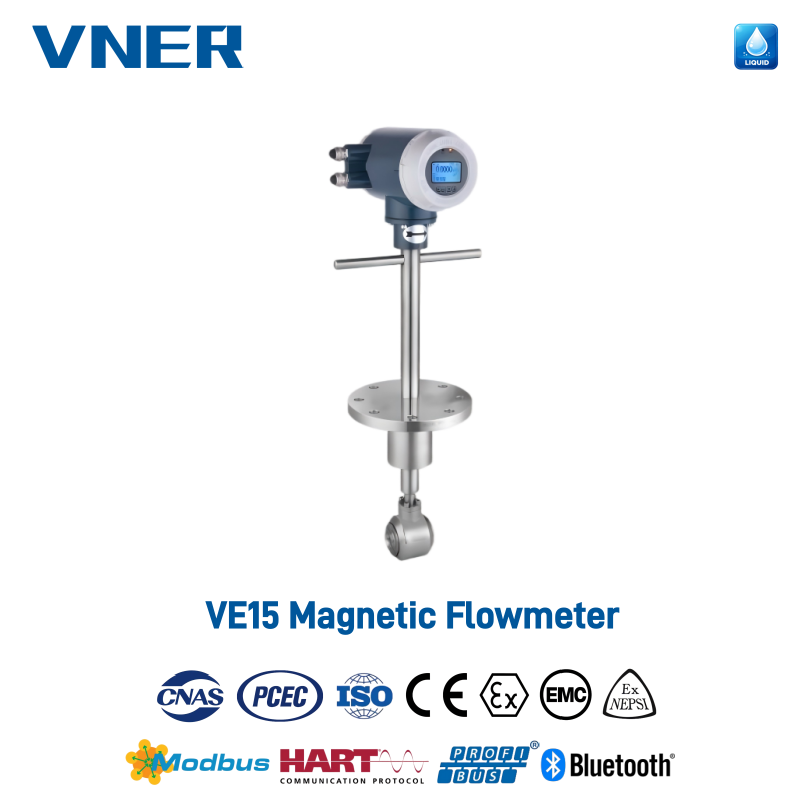
VE15 Insertion Electromagnetic Flowmeter
Technical Data Summary
The following summary consolidates the principal information used in this article.
| Design feature | Practical benefit |
|---|---|
| Insertion probe for DN200–DN4000 pipelines | Reduces the need for large full-bore meter bodies and extensive pipe replacement |
| Electromagnetic measurement | Suitable for conductive liquids and largely independent of density and viscosity |
| No moving parts | Lower mechanical wear and reduced risk of blockage from suspended solids |
| Minimal internal obstruction | Low additional pressure loss and reduced pumping-energy impact |
| PTFE lining and selectable electrodes | Supports a range of water, wastewater, chemical and slurry applications |
| Microprocessor-based converter | Stable processing, programmable excitation and flexible signal management |
| Multiple communication options | Integration with PLC, SCADA, DCS and plant information systems |
| IP65/IP67/IP68 versions | Adaptation to outdoor, wet and submerged installation environments |
| Ex d versions | Availability for designated hazardous-area applications |
| In-house calibration and engineering support | Improved traceability, configuration control and project assistance |
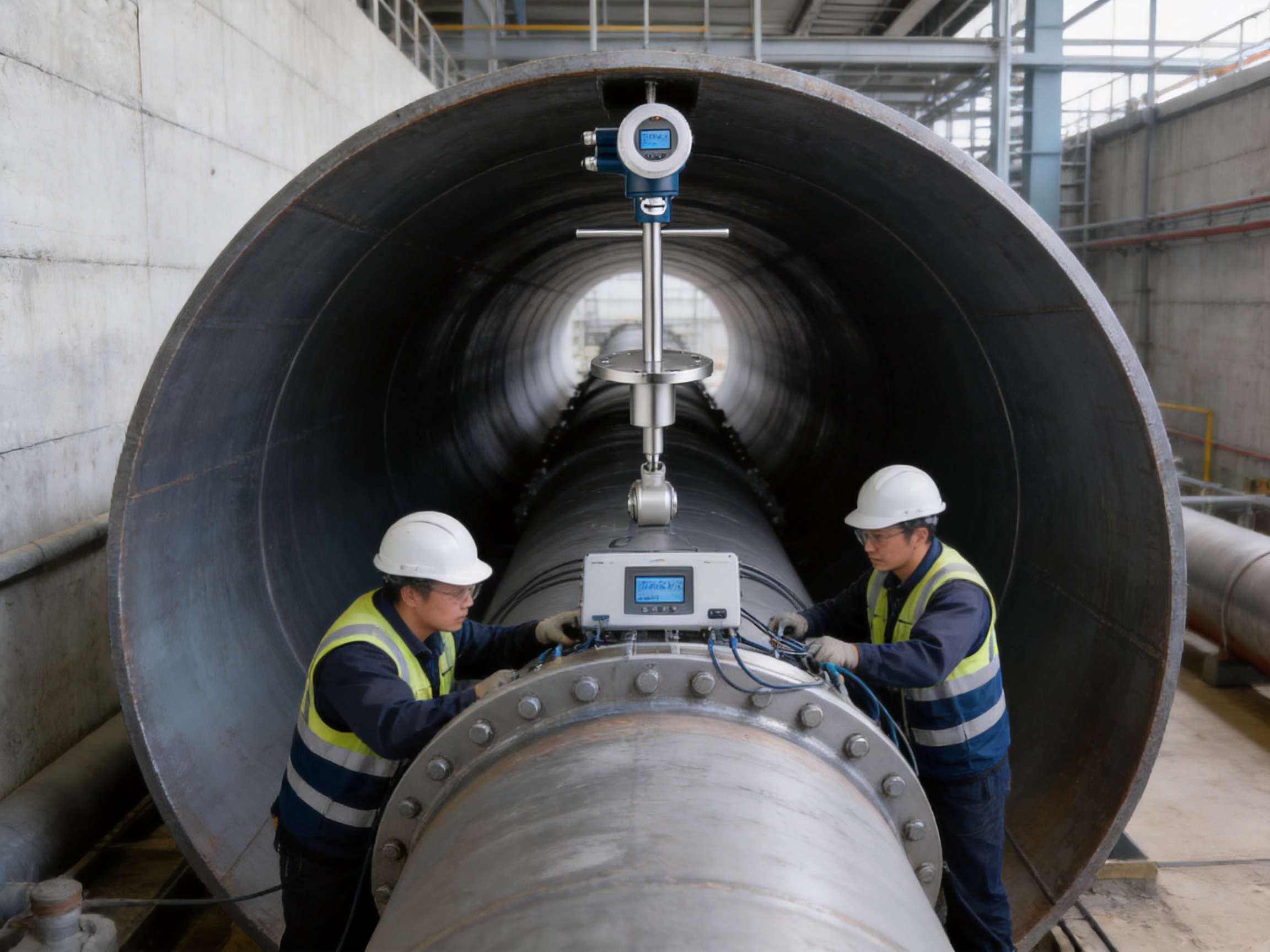
The final instrument configuration should always be confirmed against the actual process data, pipeline drawings, hazardous-area requirements, local installation standards and required measurement uncertainty.
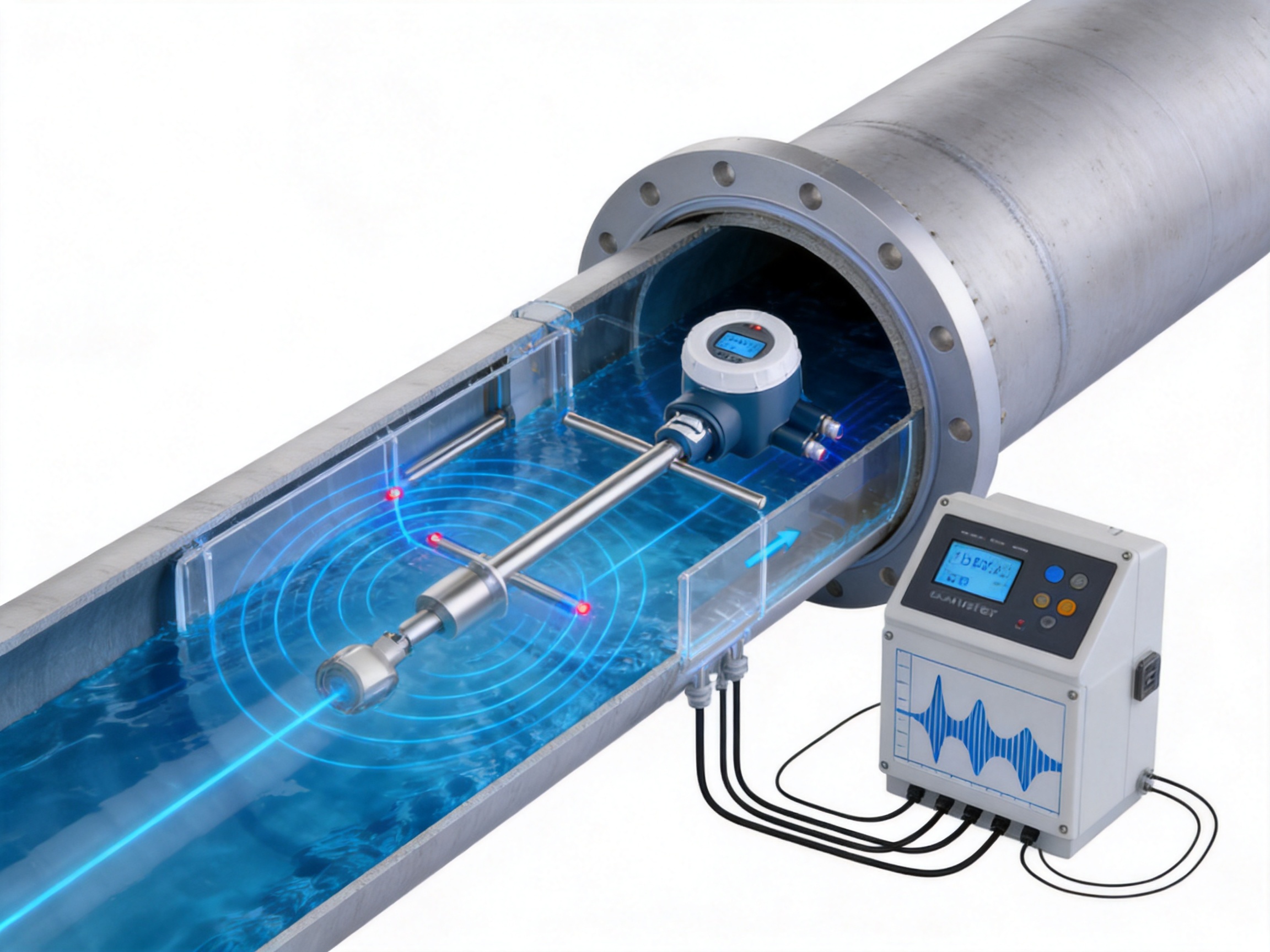
For engineering projects, early communication between the end user, EPC contractor, installation team and flowmeter manufacturer helps ensure that the measurement point is accessible, the pipeline remains full, the probe is correctly positioned and the selected materials and certifications match the service.
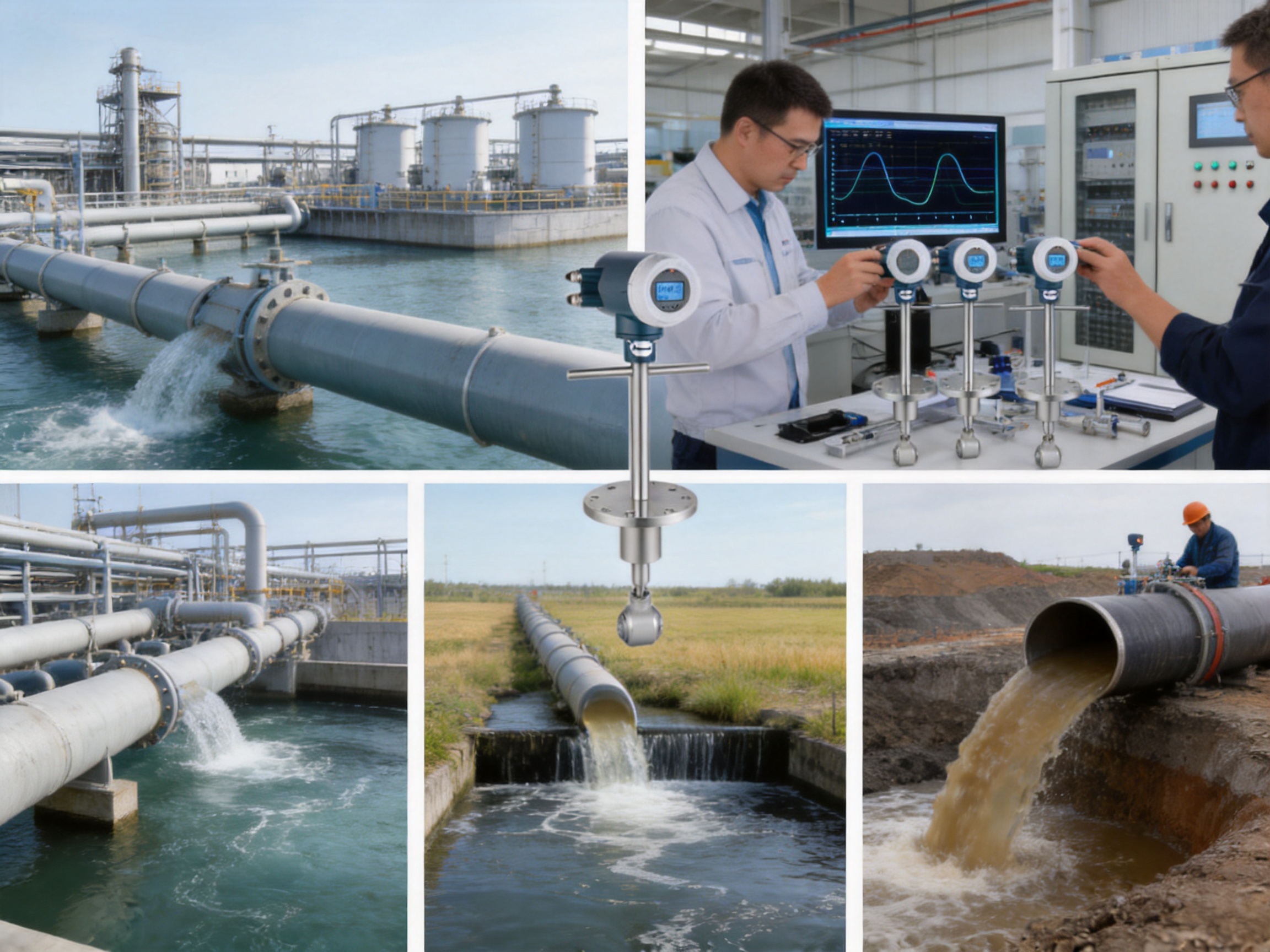
Product: VE15 Insertion Electromagnetic Flowmeter



Products
Contact Information
-

+86 18652789521
+86-0514-83633600 / 83633900 -

+86-0514-83633600 / 83633900
-

s@vner.com.cn
katherine@vner.com.cn -

No. 11 Xingye Road, Chenji Town Industrial Park, Yizheng, Yangzhou, China
